Oxalis Triangularis Watering: Schedule, Dormancy & Rot
Oxalis Triangularis Watering: Schedule, Dormancy & Rot
Oxalis Triangularis Watering: Schedule, Dormancy & Rot
What Oxalis Triangularis Needs From Water
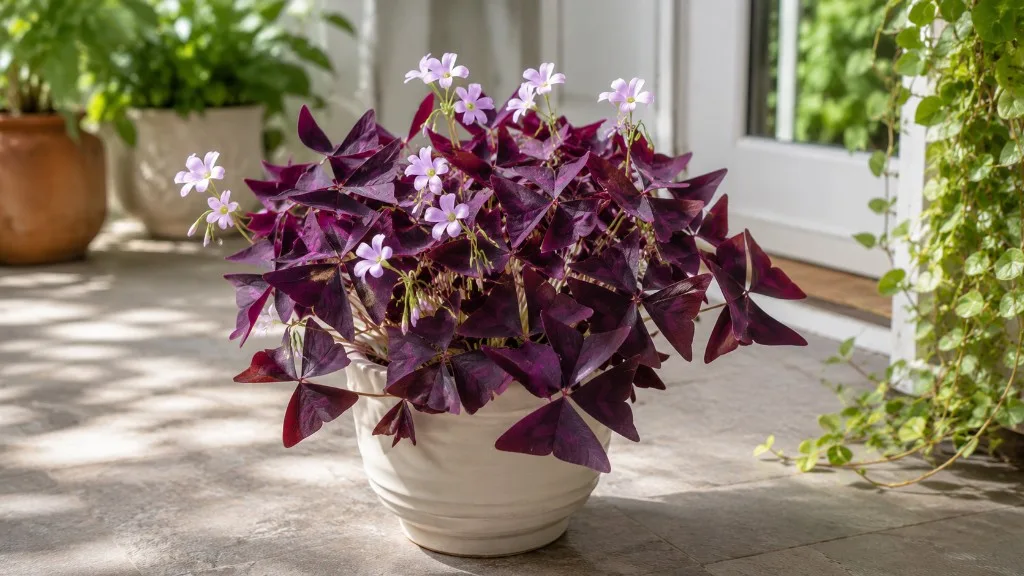
Oxalis triangularis - the purple shamrock, false shamrock, or love plant - is not a thirsty tropical foliage plant and it is not a desert succulent. It sits in a middle zone that confuses a lot of growers. The North Carolina Extension Gardener Plant Toolbox describes it as a rhizomatous herbaceous perennial native to South America, grown indoors for its deep maroon, triangular leaflets that fold at night. Those rhizomes - often called corms or bulbs in casual care guides - store water and nutrients the way an elongated bulb does. That storage changes everything about how you should water.
During active growth, the plant wants the potting mix evenly moist. Not wet. Not bone dry for days on end. Evenly moist, with a short dry-down at the surface between drinks. The University of Missouri Extension puts it plainly for shamrock species including purple-leaf oxalis: keep the medium evenly moist during active growth, allow the surface to dry slightly between waterings, and avoid waterlogging because shamrocks are sensitive to excess moisture and may develop root or tuber rot.
The second half of the story is dormancy. Oxalis triangularis naturally enters a rest period - often after flowering, sometimes after heat stress, sometimes when day length drops - and the foliage yellows, wilts, and dies back. That is not a watering emergency. It is biology. During this phase you reduce watering sharply, and once growth has fully collapsed you keep the mix nearly dry or completely dry until new shoots appear. Continuing to water on an active-growth schedule while the plant is dormant is the fastest route to rhizome rot, because a resting plant is not pulling moisture from soggy soil and the underground structures sit in the exact conditions rot pathogens prefer.
Why the Plant Stores Water in Its Rhizomes
The “bulb” of a purple shamrock is actually a rhizome with scale leaves that store water and nutrients, as NC State Extension notes. Those structures let the plant survive short dry spells and power the daily leaf movements - shamrocks fold their leaflets at night in a nyctinastic rhythm that MU Extension describes as “rockin’ by day, dozin’ at night.” The storage also means the plant can tolerate a missed watering during active growth far better than it can tolerate a week of saturated mix.
That storage is why the watering goal is rhythm, not frequency for its own sake. In growth, the plant drinks on a steady cycle and expects the mix to hold moisture without staying swampy. In dormancy, the rhizomes rest, and extra water has nowhere to go except into rotting tissue. Treating both phases the same is the core mistake.
Evenly Moist in Growth, Not Soggy at the Roots
“Evenly moist” does not mean wet all the time. It means the root zone holds usable moisture while the top inch (about 2.5 to 3 cm) of mix is allowed to dry before the next watering. The New York Botanical Garden advises keeping the potting mixture barely moist during active growth and allowing the soil to just dry between waterings. That is the same idea stated from a slightly drier angle: the surface dries, the middle stays lightly moist, and you water again when the dry-down reaches the right depth.
What kills purple shamrock is not missing one watering. It is soggy soil - mix that stays wet for days, pots with no drainage, decorative outer pots holding runoff, or heavy peat-heavy mixes that compact and hold water at the bottom. NYBG is blunt: wet soil is a quick way to kill a false shamrock plant. Good drainage, a drain hole, and attentive watering matter as much as the calendar.
How Often to Water Oxalis Triangularis Indoors
There is no single correct interval because frequency depends on pot size, pot material, light, temperature, humidity, and whether the plant is in active growth or dormancy. For most indoor Oxalis triangularis plants in active growth, a practical starting range is every 5 to 8 days, checking that the top 2 to 3 cm of mix has dried before adding water. In cooler, dimmer months when growth slows but the plant has not yet gone fully dormant, that often stretches to every 10 to 14 days. During dormancy, the interval is measured in weeks of near-zero water, not days of regular drinks.
Use those ranges as starting points. The soil, the pot weight, and the plant’s growth phase make the final call.
Active-Growth Frequency by Season
In spring and summer, when leaf unfurling is steady and the plant is in Oxalis Triangularis light guide, most indoor pots dry on a 5-to-8-day rhythm. Hot, sunny windows and small terracotta pots can dry faster. Large plastic pots in dim corners can hold moisture much longer. Check before you pour.
In autumn, growth often slows before dormancy begins. Stretch checks to every 7 to 10 days, and watch for yellowing or collapsing foliage that signals the rest period is starting. As soon as die-back is obvious, stop thinking in terms of “every week” and switch to the dormancy protocol below.
In winter, an actively growing plant - not every purple shamrock goes fully dormant every year - may need water only every 10 to 14 days. NYBG notes that plants kept cool (under about 70°F / 21°C), adequately watered, and in somewhat reduced light after flowering are less likely to experience dormancy, though the pattern varies by plant and conditions. If your plant stays in leaf through winter, keep the evenly moist rule but expect a slower dry-down.
| Season / phase | Typical check interval | Water when… | Key note |
|---|---|---|---|
| Spring–summer (active growth) | Every 5–8 days | Top 1 in (2.5 cm) dry | Most water use; do not let mix go dust-dry for long |
| Autumn (slowing growth) | Every 7–10 days | Top 1 in dry; plant still in leaf | Watch for dormancy onset |
| Winter (active but slow) | Every 10–14 days | Top 1 in dry | Low light = slow dry-down; avoid autopilot weekly watering |
| Early dormancy (foliage dying) | Every 2–3 weeks | Light sip only if mix is cracking | Taper, do not flood |
| Full dormancy (no foliage) | Stop 2–12 weeks | Do not water | Rot risk is highest here |
Why the Calendar Is a Reminder, Not a Rule
The most reliable growers use the calendar as a reminder to check, not permission to water. Oxalis triangularis in a 4-inch terracotta pot on a bright sill can need water twice as often as the same plant in a 6-inch glazed pot across the room. A fixed Tuesday schedule overwaters one and underwatering on Oxalis Triangularis the other.
Build the habit: on the day your calendar nudges you, lift the pot, test the top inch of mix, and look at the plant. If foliage is firm, new leaflets are opening, and the mix is dry at the right depth, water thoroughly. If the pot is still heavy, the skewer comes out damp, or the plant is yellowing into dormancy, do not water on schedule. Adjust to the phase the plant is actually in.
How to Tell If Your Oxalis Triangularis Needs Water
The fastest way to read a purple shamrock’s thirst is to test the soil and the pot, not the leaf fold alone. Oxalis leaflets fold at night even when the plant is well watered, so leaf posture is a poor solo signal. Two tests together - surface moisture and pot weight - prevent most watering mistakes.
The Finger Test and the Skewer Test
Push a clean finger into the mix to the first knuckle, about 1 inch (2.5 cm) deep. If the surface feels cool, damp, or clings to your skin, wait. If it feels dry and your finger comes out clean, the plant is likely ready for water during active growth.
For deeper pots or a more precise read, use a wooden skewer or chopstick. Insert it 2 to 3 inches into the mix, wait a minute, and pull it out. Damp mix sticks to the wood and darkens it. Dry mix leaves it clean. During active growth, you want that top inch dry while the middle still holds light moisture - not a pot that is dry all the way through, and not one that is wet at the surface.
The Pot Weight Test
Lift the pot right after a thorough watering and notice how heavy it feels. Lift it every day or two for the first two weeks in a new spot. As the mix loses moisture, the pot loses noticeable weight. Most growers can water by weight alone after a short learning period.
The weight test is especially valuable when you are learning a new container or when winter light slows evaporation without slowing your watering habit. A pot that still feels heavy almost always means wait - even if it has been ten days since the last drink.
How to Water Oxalis Triangularis the Right Way
A good watering wets the entire root zone, lets excess drain freely, and leaves no standing water in the saucer or cachepot. Purple shamrock prefers consistency in active growth: a full drink followed by a proper dry-down at the surface, not a daily splash that keeps the top wet and the bottom stale.
Place the pot in a sink or over a saucer. Pour room-temperature water slowly and evenly across the surface, moving around the inner edge so water soaks in rather than running straight down the side of the root ball. Keep pouring until water runs from the drainage hole. Let the pot rest several minutes, then empty the saucer. NYBG recommends checking back after about 15 minutes to remove any water sitting in the runoff dish - a small step that prevents the lowest roots from re-absorbing stagnant water.
Top Watering Done Cleanly
Top watering is the default method because it flushes salts and gives you a clear view of how fast the mix absorbs. Use a watering can with a narrow spout for control. Avoid blasting the crown if the plant is compact; wet debris on collapsed dormant stems matters less, but in active growth you want water on the mix, not pooled on folded leaf clusters.
After watering, confirm water did not collect in a decorative outer pot. If you use a cachepot, the inner nursery pot must lift out easily and the outer vessel must be dry before you set the plant back.
Bottom Watering and When It Helps
Bottom watering - setting the pot in a shallow tray of water and letting the mix wick upward - helps when the mix has become hydrophobic and repels water from the top, or when you want a gentler rehydration after a dry spell. It is a tool, not a better everyday method.
If you bottom water, use a shallow tray, leave the pot 15 to 30 minutes, and remove it as soon as the surface feels slightly moist. Do not leave the pot sitting in water for hours. That mimics the waterlogged conditions that cause rhizome rot. After bottom watering, let the pot drain fully before returning it to its spot.
Watering Oxalis Triangularis During Dormancy
Dormancy is the phase that separates long-lived purple shamrocks from pots that get thrown away in winter. The plant may yellow, wilt, and collapse over days or weeks. Leaves that stood tall by day fold and do not reopen. New growth stops. Many growers assume the plant is dead. It is usually resting.
NC State Extension notes that Oxalis triangularis may go dormant for a while in autumn, or if it gets too hot or too dry, and advises to cut back on watering and wait for new growth to appear. University of Missouri Extension describes the same cycle: reduce watering to keep the soil barely moist, move the pot to a cool, dry location with indirect light, do not fertilize, and after several weeks to a few months resume normal watering when new growth emerges.
Translate that into a practical three-step watering shift:
Step 1 - Early die-back: When yellowing and limp stems appear but some foliage remains, taper watering. A light drink every 2 to 3 weeks is enough for many pots - just enough to keep the mix from cracking hard in a very small container. Do not water on your old 5-to-8-day rhythm.
Step 2 - Full dormancy: Once above-ground growth has died back completely, stop watering for roughly 2 to 12 weeks, depending on temperature and the plant. NYBG advises keeping the plant in a cool, dark spot without watering and watching for regrowth over 1 to 3 months. Check occasionally for tiny white or pink nubs at the soil surface. Until you see them, more water is liability, not care.
Step 3 - Wake-up: At the first sign of new shoots, move the pot back to bright indirect light, water thoroughly once, let it drain, and return to the active-growth evenly moist rhythm as new leaves expand.
Dormant or dead? A dormant rhizome is firm when you gently unpot and inspect - not mushy, not hollow, not smelling sour. Rot smells earthy-sour or swampy, and affected rhizomes feel soft or slimy. A dormant plant with no leaves but firm underground structures is resting. A plant with mushy rhizomes in wet soil is a rot case, not a dormancy case.
Signs You Are overwatering on Oxalis Triangularis Oxalis Triangularis
Overwatering is the leading cause of purple shamrock failure, and dormancy is when the damage most often happens - not because the plant needs less light alone, but because growers keep watering a plant that is no longer using water. University of Missouri Extension lists yellowing or drooping leaves as usually caused by overwatering or poor drainage, while noting that sudden leaf drop is most likely dormancy. The trick is reading soil moisture and timing together.
Watch for these signs in combination:
- Yellowing that spreads while the mix stays wet. Healthy older leaves yellow naturally, but widespread yellowing with damp soil points to root-zone stress.
- Soft, collapsing stems that do not recover overnight. Night folding is normal; permanent limpness in wet soil is not.
- Sour or musty smell from the pot. That odor is anaerobic decomposition - rot signature.
- Mushy, dark rhizomes when you inspect the root zone. Healthy rhizomes feel firm. Rotten ones feel like wet cardboard.
- Persistent fungus gnats. They thrive in constantly moist mix.
- Watering on schedule through visible die-back. If foliage is collapsing and you have not changed rhythm, assume overwatering until proven otherwise.
If the mix is wet, the pot is heavy, and the plant is dying back, stop watering immediately. Do not fertilize. Do not repot into fresh wet mix without inspecting rhizomes first.
Overwatered vs Underwatered: A Quick Comparison
| Clue | Overwatered Oxalis triangularis | Underwatered Oxalis triangularis |
|---|---|---|
| Leaf appearance | Yellow, limp, may collapse in wet soil | Dry edges, wilted but often still colored |
| Night folding | May still fold; limpness persists by day | Folds; slow to reopen even by morning |
| Soil condition | Wet, heavy, may smell sour | Dry top to middle; may pull from pot edge |
| Pot weight | Heavy | Light |
| Rhizomes | Soft, dark, mushy if inspected | Firm; may be slightly shriveled if prolonged |
| Growth phase context | Often during dormancy or winter overcare | Often hot window, small pot, missed checks |
| First action | Stop water; inspect rhizomes; dry rest | Thorough rehydration; resume even-moist rhythm |
Underwatering happens, especially in small terracotta pots in strong summer light, but it is less common and easier to reverse than rhizome rot. A thirsty purple shamrock usually perks up within a day or two after a proper drink. A rotted rhizome does not.
How to Save Oxalis Triangularis From Rhizome Rot
Rhizome rot - often called bulb rot in casual guides - is serious but not always fatal if firm tissue remains and you act before the whole structure turns mushy. The goal is to remove saturated mix, cut away infected tissue, dry the survivors, and restart in fast-draining soil.
Step-by-Step Recovery From Bulb Rot
- Stop watering and unpot the plant. Gently remove the mix so every rhizome is visible. Healthy tissue is firm and pale. Rotten tissue is brown, black, soft, or slimy.
- Trim all mushy material. Use clean, sharp scissors or a knife. Cut until you reach firm tissue. Sterilize the blade with rubbing alcohol between cuts if rot is extensive.
- Let healthy rhizomes dry. Place firm rhizomes on a paper towel in a dry, shaded, airy spot for 1 to 3 days so cut surfaces callous. Skipping this step invites fresh rot in moist mix.
- Repot in fresh, fast-draining mix. Use a clean pot with a drainage hole. A standard houseplant mix amended with 20 to 25 percent perlite matches what Oxalis Triangularis overview needs: moisture without waterlogging. Set rhizomes at their previous depth; do not bury them deeply.
- Hold off on watering briefly. Wait 3 to 5 days after Oxalis Triangularis repotting guide, then give a moderate watering - not a flood. Let the pot drain fully.
- Resume active-growth rhythm only when you see new growth. If the plant enters dormancy during recovery, switch to the dormancy protocol instead of pushing water.
Some rot cases leave only a few firm scale leaves or small rhizome sections. Those can still produce new plants - NC State Extension notes propagation by dividing the rhizome or breaking off scale leaves. Recovery may take a full growing season. Patience beats another early soak.
Common Oxalis Triangularis Watering Mistakes to Avoid
- Watering on a fixed weekly schedule without checking the mix. Calendar watering causes winter rot and summer drought in the same home.
- Keeping evenly moist confused with keeping wet. Even moisture means a dry surface and a lightly moist root zone - not perpetual dampness.
- Continuing active-growth watering when foliage is dying back. Dormancy requires tapering, then stopping - not reassurance drinks every few days.
- Leaving the pot in a full saucer or cachepot. Stagnant runoff re-wets the bottom of the mix and mimics waterlogging.
- Using heavy, moisture-retention mix without perlite. Peat-heavy indoor mixes compact and hold water at the bottom where rhizomes sit.
- Overpotting. A much larger pot holds unused wet soil around resting rhizomes. Size up only when roots need space.
- Throwing the plant away during dormancy. Bare soil in a cool closet for a month is often normal, not death.
- Misting leaves instead of fixing soil moisture. Purple shamrock does not need foliar mist for watering purposes, and wet collapsed stems in cool dormancy storage can invite fungal issues.
- Watering immediately after repotting rot-damaged rhizomes. Calloused, dry tissue needs a short rest before the first moderate drink.
Conclusion
Oxalis triangularis watering comes down to two rhythms and one danger. During active growth, keep the mix evenly moist by watering thoroughly when the top inch of soil dries, then letting the pot drain completely - a cycle that usually falls around every 5 to 8 days in warm, bright conditions and stretches longer in cool, dim months. During dormancy, when foliage yellows and dies back, taper watering sharply and keep the mix nearly dry or dry until new growth appears. The danger that ties both phases together is soggy soil: wet mix around resting rhizomes is the primary cause of bulb and rhizome rot, and it kills more purple shamrocks than occasional dryness ever will.
Use your finger, a skewer, and pot weight to decide - not the calendar alone. When something goes wrong, read the soil before reacting to collapsed leaves: wet mix plus die-back during dormancy means stop watering, not add more; dry, light pot plus wilt in active growth means a thorough rehydration. Fast-draining mix with perlite, a drainage hole, and an empty saucer are not separate topics from watering - they are what make evenly moist possible without rot.
A healthy Oxalis triangularis can live for many years through repeated dormancy cycles. Respect the rest period, keep the root zone breathing, and the plant will tell you what phase it is in if you slow down long enough to check.
When to use this page vs other Oxalis Triangularis guides
- Oxalis Triangularis overview - Start here for whole-plant context before deep-diving this topic.
- Oxalis Triangularis problems hub - Jump to symptom-specific fix guides when this care topic does not resolve the issue.
- Overwatering on Oxalis Triangularis - Escalate here when watering adjustments are not enough.
- Underwatering on Oxalis Triangularis - Escalate here when watering adjustments are not enough.
- Root Rot on Oxalis Triangularis - Escalate here when watering adjustments are not enough.
Related Oxalis Triangularis guides
- Oxalis Triangularis overview
- Oxalis Triangularis light
- Oxalis Triangularis soil
- Oxalis Triangularis propagation
- Oxalis Triangularis fertilizer
- Oxalis Triangularis repotting
- Overwatering on Oxalis Triangularis
- Underwatering on Oxalis Triangularis
- Root Rot on Oxalis Triangularis
- Wilting on Oxalis Triangularis
- Drooping Leaves on Oxalis Triangularis
- Mold on Soil on Oxalis Triangularis
Related tool
Try the Plant Watering Calculator with oxalis-triangularis pre-selected to estimate needs for your setup.