Drooping Leaves on Oxalis Triangularis: Causes, Checks &
Quick answer
Drooping leaves on Oxalis Triangularis usually mean the plant cannot hold turgor-often from dry soil, wet corms, or natural dormancy. First step: probe soil moisture 5 cm deep and lift the pot before watering or stopping water.
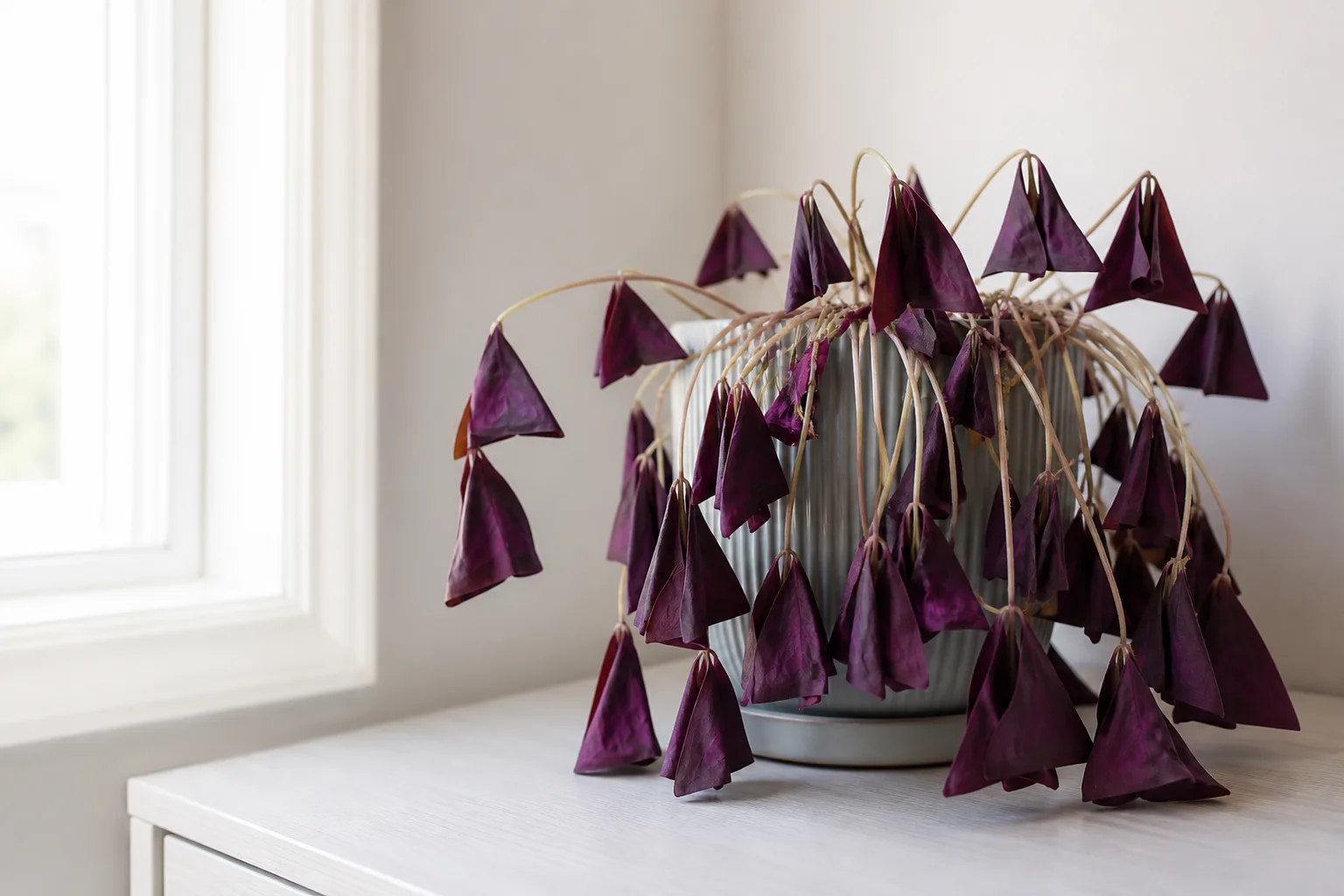
Drooping Leaves on Oxalis Triangularis: Causes, Checks & Fixes
This guide covers drooping leaves on Oxalis Triangularis. See also the general Drooping Leaves guide, watering, and light pages for this plant.
Drooping Leaves on Oxalis Triangularis: Causes, Checks & Fixes
Quick answer
Drooping leaves on Oxalis Triangularis (Oxalis triangularis, purple shamrock) mean the triangular leaflets and thin stems have lost turgor-internal water pressure that keeps foliage upright. On this corm-based plant, that usually traces to one of three buckets: dry soil, saturated soil damaging corms, or natural dormancy after flowering or heat stress.
First step: probe soil moisture 5 cm deep and lift the pot. Do not water because leaves look sad, and do not assume the plant is dying because it collapsed. Purple shamrock stores water in underground rhizomes and can look dead during dormancy while corms stay firm below the surface. Your first job is separating thirst, rot, and rest-not stacking fixes.
What drooping leaves look like on Oxalis Triangularis
Healthy purple shamrock holds its deep purple, triangular leaflets on slender stems above the soil. When turgor drops, the whole plant slumps:
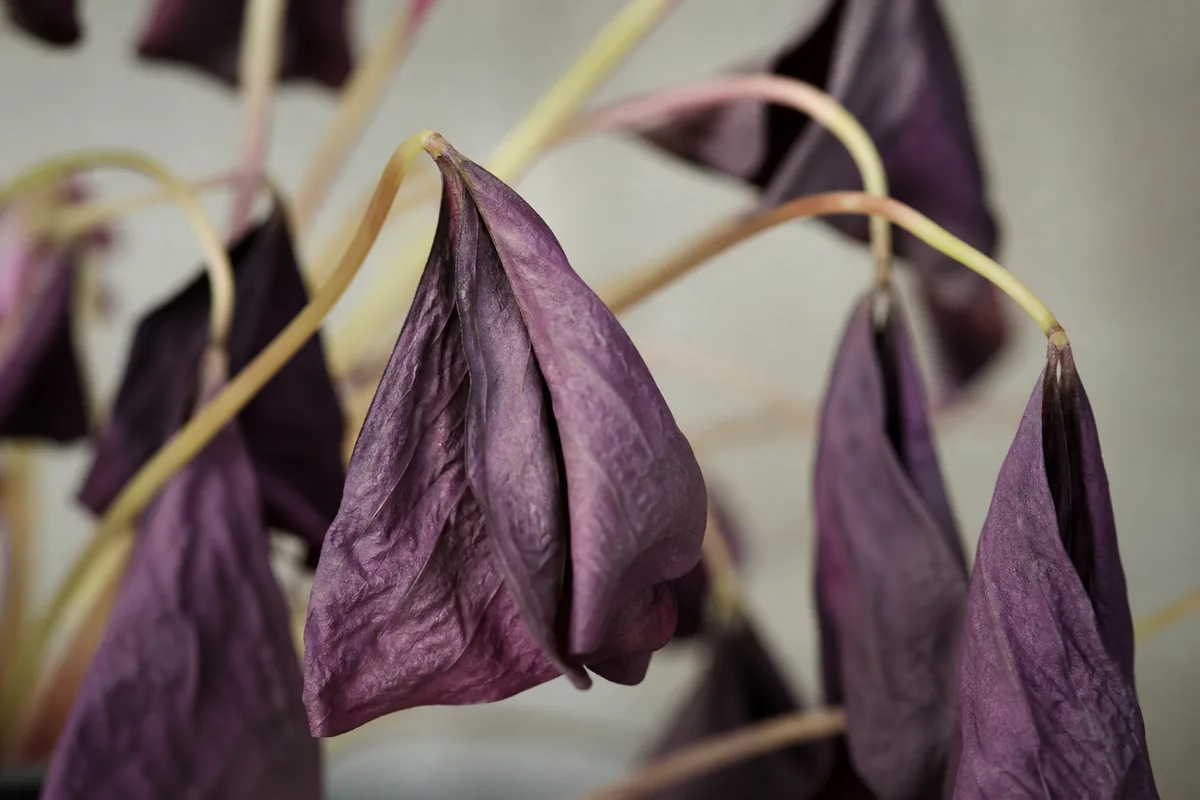
Drooping Leaves symptoms on Oxalis Triangularis - compare with healthy tissue on the same plant.
- Stems hang downward instead of standing at their usual angle
- Leaflets lose their crisp triangle shape and look soft or limp
- The plant may look smaller or flatter from above
- Color may stay purple at first, then fade to pale green or bleached tones as stress continues
- In advanced overwatering on Oxalis Triangularis, lower leaves yellow while stems soften at the base
Not the same as normal night folding. Oxalis leaflets close and fold at night (nyctinasty) and reopen in morning light-that daily rhythm is healthy, not droop. Worry when stems stay collapsed through the day in normal room light, or when collapse spreads over several days without reopening.
Dormancy droop looks different from acute thirst. During dormancy entry, leaves often fade gradually, stems soften uniformly, and the plant dies back over weeks-not hours. Acute underwatering on Oxalis Triangularis can collapse a perky plant within a day or two when soil goes fully dry. Both look dramatic; soil moisture and corm firmness tell them apart.
Why Oxalis Triangularis gets drooping leaves
Purple shamrock grows from rhizomatous corms that store water and nutrients. That storage helps it survive brief dry spells-but corms rot quickly in saturated mix, which then blocks water uptake even when soil feels wet.
Underwatering
When the top 2–3 cm of mix dries and you wait too long, roots cannot replace water lost through transpiration. Leaflets lose rigidity and stems collapse. Wilting may follow underwatering on Oxalis in bright light or small pots that dry faster than a calendar schedule predicts. This is the most common correctable cause of daytime droop during active growth.
Overwatering and corm rot
Wet soil with poor drainage deprives corms of oxygen. Decay spreads through roots and storage tissue. Leaves droop because damaged roots cannot move water upward-the same wilt you see in drought, but with heavy, damp soil. Yellowing, mushy stems, and sour smell from the pot point here. Watering more makes it worse.
Natural dormancy
Many false shamrock plants rest after flowering or when days shorten, temperatures rise above comfortable range, or the plant gets too dry. Leaves yellow, droop, and die back. This is biology, not failure. Continuing to water a dormant plant is a leading cause of corm rot during rest.
Heat, light shock, and drafts
Sudden moves to a hot south window, heat vents, or cold AC blasts stress a plant that prefers cooler household temperatures with stable light. Heat increases water loss faster than roots can supply it. Harsh direct sun can scorch leaflets while the plant still looks limp. Draft stress slows root function and shows as temporary collapse.
Low light (secondary)
Insufficient light produces weak, elongated stems that flop more easily. Leggy growth droops under its own weight even when watering is adequate. This is slower and usually pairs with pale foliage and sparse new leaves.
How to confirm the cause
Work through these checks in order before changing care:
- Time of day - Did leaflets reopen this morning? Night folding alone is normal.
- Soil moisture at depth - Dry 5 cm down with a light pot = thirst. Wet deep mix with a heavy pot = overwatering or rot until proven otherwise.
- Recent history - Did you water heavily during leafless dormancy? Repot recently? Move to a brighter window? Match the pattern.
- Leaf color and speed - Gradual fade of all foliage after blooms suggests dormancy. Fast collapse with green leaves suggests water stress.
- Stem feel - Firm stems with dry soil fit drought. Soft, mushy stems at the base with wet soil fit rot.
- Corm check (if unsure) - Gently tip the pot and feel corms through the drainage hole or unpot carefully. Firm corms with dry soil often mean dormancy or thirst. Mushy, foul-smelling corms mean rot.
- Drainage - Holes open? Saucer empty after watering? Mix still loose, or compacted and waterlogged?
If soil is bone dry throughout and corms are firm, treat as underwatering. If soil stays wet for days and stems soften, treat as root/corm stress. If leaves faded slowly after flowering and corms are firm while mix is dry, treat as dormancy.
First fix for Oxalis Triangularis
Probe soil 5 cm deep and lift the pot-then act on what you find.
- If dry: Water thoroughly until a little runs from drainage holes, empty the saucer after 15 minutes, and recheck in a few hours. Do not leave the pot sitting in runoff.
- If wet: Stop watering immediately. Do not soak “because it looks wilted.” Let the surface dry and inspect corms if droop continues beyond 48 hours.
- If entering dormancy (gradual fade, firm corms, post-flowering): Taper water, then keep soil nearly dry. Move to a cool, dim spot and wait for new shoots-do not discard the pot.
Everything else-Oxalis Triangularis repotting guide, pruning, fertilizing-waits until this moisture read is clear.
Step-by-step recovery
For underwatering
- Bottom-water or top-water until mix is evenly moist, not just the surface dampened.
- Place in Oxalis Triangularis light guide-not hot direct sun on a stressed plant.
- Expect leaflets to lift within 6–24 hours if thirst was the only issue.
- Resume watering when the top 2–3 cm dries again; track pot weight weekly.
For overwatering and corm stress
- Stop all watering and move the plant to bright indirect light with good airflow.
- If soil stays wet more than a week or stems are mushy, unpot and rinse corms gently.
- Trim soft, brown, or foul-smelling corm tissue back to firm white or cream tissue with clean scissors.
- Repot remaining firm corms into fresh, well-draining mix with 20–25% perlite. Use a pot with drainage holes sized to the corm mass-not oversized.
- Wait until new growth appears before resuming normal watering. Hold fertilizer until the plant is actively growing again.
For dormancy
- Remove fully dried leaves once they crumble-do not pull green tissue.
- Store the pot in a cool, dark, dry location without regular watering.
- Check monthly for new shoots. When growth emerges, return to bright indirect light and resume watering sparingly at first.
- Expect one to three months before full foliage returns, depending on conditions.
For heat or light shock
- Move the plant away from heat vents, radiators, and harsh midday sun.
- Acclimate gradually to brighter spots over a week.
- Water based on dry-down, not panic-heat increases use, but rot risk remains if soil stays wet.
Recovery timeline
Simple thirst: Leaflets often firm up within hours to one day after proper watering. Stems that were only limp, not damaged, recover fully.
Overwatering without advanced rot: Stabilization takes one to two weeks after drying out or repotting firm corms. New leaflets from the center mark success; old collapsed leaves may not re-turgify and can be removed once the plant is stable.
Corm rot after trimming: New shoots may take two to six weeks in warm active conditions. Severe rot with few firm corms left lowers survival odds sharply.
Dormancy: Foliage loss is complete and expected. New growth typically appears in one to three months. Do not measure recovery by old leaves-they will not return.
Worsening signs: Stems turn mushy after you stopped watering, sour smell intensifies, or no new shoots appear by mid-spring after dormancy care-those need deeper inspection or corm division from remaining healthy tissue.
Lookalike symptoms
- Nyctinasty (night folding) - Leaflets close each evening and open by morning. No care change needed.
- Dormancy - Gradual fade after flowering or in autumn; firm corms; dry rest. Stop watering; do not repot unnecessarily.
- Wilting from same causes on Oxalis Triangularis - Wilting and drooping share roots; the moisture check path is identical.
- Yellow leaves from overwatering - Often pairs with droop and wet soil; fix drainage before feeding.
- Leggy weak stems from low light - Slow flop over weeks with long petioles; increase light, do not overwater.
What not to do
Do not water on a fixed calendar without checking soil-purple shamrock needs less in dormancy and more in bright active growth. Avoid misting as a droop fix; surface moisture does not rehydrate corms.
Do not fertilize a collapsed or dormant plant-salts stress damaged roots. Do not repot on day one unless corms are mushy or mix is clearly failing; transplant shock adds wilt.
Do not throw out a leafless pot with firm corms-that is often dormant, not dead. Do not place a stressed plant in full midday sun to ” perk it up.”
When handling corms or soil, wash hands after-Oxalis contains oxalates toxic to pets if ingested. Keep the plant out of reach of cats and dogs.
How to prevent drooping leaves next time
Match watering to how fast your pot dries: every 5–8 days in active growth when the top 2–3 cm is dry, and nearly stop during dormancy. Allow the surface to dry between waterings and use standard potting mix amended with 20–25% perlite, pots with open drainage, and empty saucers after every drink.
Give bright indirect light with some direct morning sun-not harsh afternoon rays on a windowsill. Keep temperatures in the 15–24°C (60–75°F) comfort band and away from heat and AC vents.
Plan for annual dormancy after flowering: taper water, rest the plant cool and dry, then resume when shoots appear. Press corms gently through the drainage hole during the growing season-early softness is easier to fix than a collapsed plant.
When to worry
Escalate quickly if stems are mushy at the base, soil smells sour while leaves droop, or wet mix persists more than a week after you stopped watering. Unpot and inspect corms the same day in those cases.
Dormancy with firm corms and gradual leaf loss is not an emergency-adjust care and wait. Acute collapse with dry soil and firm corms can usually wait for one thorough soak before deeper intervention.
If most corms are soft after inspection, survival depends on how much firm tissue remains-divide and repot only healthy corms rather than watering a failing mix again.
Conclusion
Drooping leaves on Oxalis Triangularis are a signal to read the root zone, not a command to water. Confirm dry versus wet soil, distinguish dormancy from distress, and feel corms when the story is unclear. Thirst fixes fast with one good soak; rot needs dry-down and sometimes corm surgery; dormancy needs patience and withheld water. Get the first read right, and purple shamrock usually bounces back-often dramatically-within days or a single rest cycle.
When to use this page vs other Oxalis Triangularis guides
- Oxalis Triangularis watering guide - Use for routine moisture checks before assuming drooping leaves is the main issue.
- Oxalis Triangularis problems hub - Browse all 17 common issues on this species.
- Underwatering on Oxalis Triangularis - Different entry point when symptoms overlap with drooping leaves.
- Overwatering on Oxalis Triangularis - Different entry point when symptoms overlap with drooping leaves.
- Root Rot on Oxalis Triangularis - Different entry point when symptoms overlap with drooping leaves.