Oxalis Triangularis Light Needs: Windows, Sun & Color
Oxalis Triangularis Light Needs: Windows, Sun & Color
Oxalis Triangularis Light Needs: Windows, Sun & Color
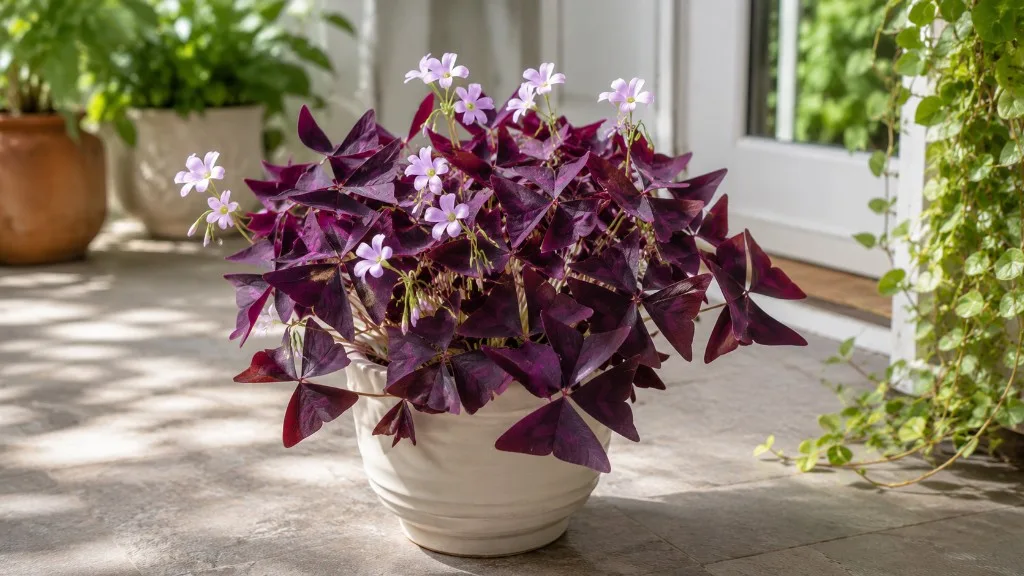
Oxalis triangularis - the purple shamrock, false shamrock, or love plant - is sold for one reason above all others: those triangular, butterfly-wing leaves in deep burgundy-purple that fold and unfold like a living clock. That color is not a paint finish applied for your shelf. It is anthocyanin pigment built inside leaf cells, and anthocyanin production is light-dependent. Give purple shamrock the wrong exposure and you do not get a slow, dignified decline. You get faded greenish foliage in dim corners, crispy brown edges when hot afternoon sun hits unfiltered glass, or an unexpected dormancy die-back when chronic low light drains the corms faster than photosynthesis can refill them.
The practical target for Oxalis triangularis indoors is bright indirect light for most of the day, with some direct morning sun tolerated and even helpful when acclimated. Missouri Extension describes shamrock plants as preferring bright, indirect light from east- or west-facing windows, with too little light producing sparse growth and too much harsh direct sun scorching leaves. (MU Extension) North Carolina Extension lists the species as accepting partial shade to full sun outdoors in warm zones, but as a houseplant the useful band is narrower: strong ambient brightness without sustained hot direct beams on the leaf surface. (NC State Extension)
Light is also the dial that sets everything else in motion - nyctinastic leaf opening, watering dry-down speed, flowering potential, and whether the plant enters its natural corm dormancy on schedule or prematurely under stress. Treat light as the primary environmental decision, not a decorative afterthought.
How Much Light Oxalis Triangularis Actually Needs
Oxalis triangularis is a rhizomatous perennial in the wood sorrel family (Oxalidaceae), native to South America, where it grows from underground corms rather than a conventional fibrous root ball. (NC State Extension) In cultivation it behaves like a compact foliage houseplant roughly 6 to 18 inches (15 to 45 cm) tall, spreading into a clumping mound of trifoliate leaves that respond visibly to daily light cues.
For home growers, translate “bright indirect” into placement you can verify. Oxalis triangularis should live where the canopy receives strong diffuse illumination for roughly 4 to 6 hours daily at minimum, with additional ambient brightness beyond that during active growth. Care references commonly cite 4 or more hours of bright indirect light as the baseline for healthy purple shamrock indoors, with gentle morning direct rays layered on top when the window exposure allows. (NC State Extension) That is not a ceiling - many specimens thrive with 6 to 10 hours of bright indirect exposure - but it is the floor below which purple color weakens, internodes stretch, and dormancy risk climbs.
University of Missouri Extension describes shamrock plants as preferring bright, indirect light with some direct morning sun tolerated when acclimated - about 4 to 6 hours of filtered sunlight daily near an east-facing window. That guidance aligns with how the plant is sold and grown: a display foliage plant that needs real photon budget, not a survival-only low-light filler.
Light also sets the pace for your Oxalis Triangularis watering guide. A purple shamrock in proper bright indirect light metabolizes faster, opens leaves more fully during the day, and dries its pot on a predictable schedule. The same plant in a dim corner with the summer watering cadence from a bright window sits in wet soil too long - a common silent stressor that can accelerate dormancy or invite corm rot. Treat light as the throttle, not a detail you set once and forget.
The Short Answer for Busy Growers
If you only remember four rules, use these. Default placement: bright indirect light within 1 to 3 feet (30 to 90 cm) of an east-facing window, where the plant gets 1 to 3 hours of gentle morning sun followed by indirect brightness the rest of the day. Color goal: prioritize enough brightness that new leaves emerge deep purple, not washed green; fading on old leaves alone is not the test. Direct sun rule: morning sun is fine when acclimated; unfiltered afternoon sun through south or west glass is high scorch risk. Diagnostic habit: judge light by the newest leaf or shoot after 10 to 14 days in a spot - old damage does not heal, only new growth tells the truth.
Do not change light, watering, and pot size in the same week. Move the plant, wait for a new leaf, then adjust water if dry-down speed changed.
Why Light Controls Purple Color and Leaf Movement
Oxalis triangularis is two showpieces in one pot: a purple foliage plant and a nyctinastic movement plant. Both features are light-linked, and conflating them causes most of the confusion new growers report.
The purple color comes from anthocyanins - pigments that deepen the burgundy-lavender look and act partly as photoprotective sunscreen. In brighter, well-filtered light, anthocyanin production supports the iconic color; in dim conditions, the plant invests less in pigment and new leaves emerge paler and more green-tinged.
The daily fold-and-unfold cycle is nyctinasty - a circadian rhythm where specialized cells in the pulvinus, the motor organ at the base of each leaflet, swell and shrink to raise or lower the leaf in response to light cues. (MU Extension) Research on Oxalis triangularis shows that light intensity directly affects opening rate: stronger light generally promotes faster leaf unfolding in the morning, while the pulvinus - not the leaflet blade itself - is the primary light-perceptive tissue driving the movement. (KCI Repository)
Understanding both mechanisms matters because a purple shamrock that looks “sad” at night is often perfectly healthy, while one that stays clamped shut at noon is sending a different message entirely.
Anthocyanins and Photoprotection
Anthocyanins are why Oxalis triangularis looks like a different plant from green wood sorrels. They absorb certain wavelengths and deepen the visual contrast between leaf surface and the pink-fuchsia markings many cultivars carry. They also change how the leaf handles light stress.
In practical terms, low light reduces the pigment budget. Move to brighter indirect light, acclimate over 7 to 14 days, and inspect the next two new leaves - returning depth of color confirms a light problem. Excessive direct sun overwhelms the same system, producing brown crispy margins and bleached patches, especially on leaves moved from shade without acclimation.
Nyctinasty - Normal Closing vs Stress Closing
Healthy Oxalis triangularis folds leaflets downward in the evening as light fades, then opens them wide in the morning as brightness returns. Missouri Extension describes this as the plant “sleeping” at night and waking with morning light - normal, expected, and one of the plant’s main charms. (MU Extension)
Normal nyctinasty follows a clock. Leaves close after dusk, reopen within an hour or two of meaningful morning light, and stay open through the bright part of the day if water and temperature are adequate. On very cloudy days, opening may be slower or less complete - that alone is not an emergency.
Stress closing during daylight is different. If leaflets remain folded through midday while soil is appropriately moist, suspect excess light (leaves shielding themselves from harsh rays), underwatering on Oxalis Triangularis (the plant conserving water - check soil moisture first), or recent shock from a sudden move to a much brighter or dimmer spot. University of Missouri Extension notes that if the plant droops and closes in daytime, check whether the soil is dry before assuming light is wrong. A good soak often restores daytime opening when thirst is the cause; if soil is moist and leaves still clamp shut in bright conditions, pull back from direct sun.
Do not fertilize or repot to “fix” folding leaves until you know whether you are looking at night rhythm, thirst, or light stress.
Bright Indirect Light and the Color Sweet Spot
Bright indirect light is the phrase every purple shamrock care sheet repeats, and it is also the phrase most growers misunderstand. It does not mean “any room that feels airy.” It means the plant receives strong, diffuse illumination - enough to cast a soft, readable shadow at midday - without sustained direct sun on the leaf surface during the hottest hours.
For Oxalis triangularis, bright indirect light supports three outcomes simultaneously. It supplies enough energy for compact, upright growth rather than a thin leaning stem. It maintains deep purple anthocyanin coloration on new foliage. And it keeps metabolism high enough that your watering rhythm stays predictable - a dim plant in wet soil is a common path to corm stress and premature dormancy.
Rotate the pot a quarter turn weekly so growth does not lean hard toward one window vector and so you detect one-sided scorch on the glass-facing leaf face early.
What Bright Indirect Means in a Real Room
Use these room-level checks instead of guessing from ceiling brightness.
Shadow test: At midday, hold your hand between the plant and the window. A fuzzy, soft shadow with visible edges means useful indirect brightness. A sharp, dark shadow means direct sun is hitting the plane - fine for a few cool morning minutes if acclimated, risky at midday on purple leaves. No meaningful shadow means the spot is too dim for strong color long term.
Leaf-level test: Place the pot so light lands on the leaf canopy, not just the floor beside it. Oxalis triangularis is often displayed on a shelf or desk where the room looks bright but the leaves sit below window height in a shadow pool. Raise the pot or move it forward until the top leaves see window sky.
Duration test: Bright indirect is not a five-minute sunbeam. The plant needs hours of usable brightness spread across the day. An east window that delivers morning sun plus afternoon ambient light often hits the duration target naturally. A north room may not without supplemental LED.
Reading New Growth for Color Health
Old leaves are history. On Oxalis triangularis, judge light by the newest emerging leaflet cluster and the youngest fully opened leaves at the crown.
Healthy bright-indirect growth looks like this: new leaves open firm and deeply purple within days of unfurling; leaf size matches or slightly exceeds recent predecessors during active season; stems stay relatively short, so the plant looks mound-like rather than ladder-like; and leaves open fully during daylight when soil moisture is appropriate. Flowering is not guaranteed indoors, but Missouri Extension notes that insufficient light is a common reason for sparse growth and fewer blooms when bloom season arrives. (MU Extension)
Low-light new growth looks different: leaves emerge smaller and paler, with more green wash through the purple; petioles elongate before the blade fills in; the whole plant leans sharply toward the brightest window; and consecutive new leaves show progressively weaker color. These are not cosmetic flaws - they are the plant reporting photon deficit before dormancy follows.
High-light new growth failures show up as tan or brown dry patches at leaflet margins, bleached lavender zones, persistent daytime folding even in moist soil, or sudden collapse of soft tissue after a move to unfiltered south glass. If scorch appears only on the window-facing leaflets while the shaded side looks fine, you are almost certainly looking at direct sun or reflected heat, not corm rot.
Best Window Placement for Oxalis Triangularis
Window direction is a map, not a guarantee. A “south window” shaded by a porch roof may behave like east light, while an east window with no outdoor obstructions can deliver surprisingly strong morning rays. Still, compass orientation gives a reliable starting point for distance from glass and curtain strategy.
Oxalis triangularis performs best when it can live close enough to benefit from window brightness but protected from sustained hot direct beams on its delicate purple leaves. For many homes, that means east exposure or offset placement from south and west glass - not pressed against unfiltered panes all afternoon.
The New York Botanical Garden notes that false shamrock prefers some bright, direct early light with protection from harsher afternoon sun - close to an east-facing window or a filtered spot in a south-facing room. (NYBG Research Guide) That is the same pattern Missouri Extension and commercial growers converge on: east-first placement, with west and south used cautiously.
East, South, West, and North Windows Compared
An east-facing window is the most reliable default for Oxalis triangularis indoors. Morning sun is bright but relatively cool compared with afternoon rays, which helps trigger healthy nyctinastic opening and anthocyanin expression without instantly scorching purple tissue. Many growers can place purple shamrock on the sill or 1 to 2 feet (30 to 60 cm) from east glass, especially if morning direct exposure lasts only 1 to 3 hours before shifting to pure indirect brightness - the pattern New York Botanical Garden describes as ideal for false shamrock near an east-facing window.
A south-facing window delivers the strongest year-round sun in the northern hemisphere. In winter, south light can be excellent for Oxalis behind sheer fabric or pulled slightly back from the pane. In summer, south glass can magnify heat and push purple leaves into scorch within days. Use south windows when you can provide diffusion at peak hours or place the plant far enough back that it sees sky brightness without sitting in the sun disk.
A west-facing window is higher risk than east for purple shamrock. Afternoon sun carries more heat load, and the plant’s broad leaflets can heat faster than small succulent foliage. West can work with 3 to 5 feet (90 to 150 cm) of setback, solar film, or a sheer curtain during peak hours - but treat west as a trial placement, not a default.
A north-facing window in the northern hemisphere usually provides low to moderate indirect light. Oxalis triangularis may survive here in summer at higher latitudes, especially if the room has white walls and open floor plan reflection, but purple fade, leggy growth, and dormancy acceleration are likely without supplemental LED. North is a grow-light candidate if you want display-quality color, not just greenish survival.
Distance From Glass and Seasonal Shifts
Distance controls intensity more precisely than compass labels. Use distance as your fine dial after choosing the best available window.
East glass: start on sill to 2 feet (0 to 60 cm) from the window. Move closer if new leaves show low-light fade; move back if morning-facing leaflets crisp at the edges.
South glass: start 2 to 4 feet (60 to 120 cm) back or on the sill behind sheer curtain. Watch the window-facing leaf face daily for the first week after any move.
West glass: start 3 to 5 feet (90 to 150 cm) back unless curtained. Heat plus light damages purple tissue faster than light alone.
North glass: keep as close as possible to the brightest zone; add a full-spectrum grow light overhead if new leaves shrink or green out.
Seasonal shifts matter because Oxalis responds quickly and damage is visible. In winter, lower sun angle can pull rays onto a previously safe sill - scorch appears on purple margins even though “nothing changed” in your routine. In summer, longer days and higher heat may require pulling the pot back or adding diffusion even if winter placement was perfect. NYBG also notes that moving to slightly reduced light after flowering may lower dormancy probability for some plants - a nuance for growers who want to extend active foliage season. (NYBG Research Guide)
Direct Morning Sun - Helpful Within Limits
Oxalis triangularis is not a full-sun desert plant, but it is also not a deep-shade plant. The useful band includes gentle direct morning exposure - especially in cool seasons - and multiple reputable sources describe that pattern as color-enhancing rather than harmful when introduced correctly.
New York Botanical Garden notes that false shamrock prefers some bright, direct early light with protection from harsher afternoon sun - gentle morning exposure can support compact growth, while intense afternoon sun turns leaves brown-edged and stressed. That is the key distinction for home placement: morning direct versus afternoon direct are different treatments, not interchangeable.
If your plant developed in lower light at a nursery or grocery display, acclimate before giving it full morning sill exposure. Move it closer to the window over 7 to 14 days, watching the newest leaflets for bleaching at each step. Leaves formed in shade have less structural tolerance for sudden photon spikes.
Brief morning sun can also improve nyctinastic responsiveness - the plant opens faster and more completely when daylight returns, which is one reason an east sill often “feels right” beyond color alone.
Afternoon Sun, Heat, and Scorched Purple Leaves
Afternoon sun through west or south glass combines three stresses: higher photon intensity, elevated leaf temperature, and lower relative humidity near the pane. Oxalis triangularis leaflets are thin relative to many houseplants, so they intercept energy quickly and show damage fast.
Scorch typically manifests as brown, crispy edges, bleached-looking patches on purple tissue, or leaflets that stay folded during daylight as the plant attempts to reduce exposure. (New York Botanical Garden) MU Extension lists harsh direct sunlight as a scorch risk alongside sparse growth from too little light - opposite failure modes with overlapping confusion when growers only glance at the plant once a week. (MU Extension)
When scorch happens, move immediately to bright indirect light. Remove fully dry, brown leaflets later if they are unsightly - they will not re-purple. Oxalis triangularis contains oxalic acid and is listed as toxic to pets if ingested in quantity; wear gloves if sap contact bothers your skin and keep trimmed debris away from curious cats and dogs. (ASPCA)
Low Light, Faded Foliage, and Dormancy Triggers
Oxalis triangularis is often marketed as an easy houseplant, and the species tolerates lower light better than many purple-leaved tropicals - for a while. Tolerance is not the same as quality performance. In dim conditions, purple shamrock usually lives while anthocyanin color fades, stems stretch, new leaves shrink, and the underground corms gradually weaken until the plant enters dormancy - the natural die-back phase where foliage yellows and collapses.
Dormancy itself is normal. Missouri Extension emphasizes that shamrock plants naturally enter a resting period after flowering or during stress such as high temperatures or reduced light, and that sudden leaf drop is often dormancy, not disease. (MU Extension) The light-linked problem is chronic under-lighting, which keeps the plant in a low-energy state long enough that fade and die-back arrive out of season or feel premature to the grower.
Stress including lighting changes can trigger dormancy lasting 2 to 4 months; taper water, store cool and dim, then resume bright placement when shoots return. (New York Botanical Garden) Low light also slows dry-down - a dim plant overwatered on a bright-window schedule yellows and weakens corms. Heat above 75 to 80°F (24 to 27°C) can push dormancy even when light is adequate. (New York Botanical Garden)
When Dim Rooms Still Work - and When They Don’t
Dim rooms can work for Oxalis triangularis when your goal is basic survival and you accept muted purple color and possible seasonal dormancy on a normal schedule. A hallway with reflected office light, a north room with large white walls, or a spot several meters from a bright window may keep the corms alive for months if watering is conservative.
Dim rooms fail purple shamrock when you want deep burgundy display color, compact mound shape, and predictable active growth without early die-back. If the plant leans sharply, produces small greenish new leaves, or shows fading color on consecutive new growth cycles, the room is below the display threshold even if the plant is technically alive.
No fertilizer fix restores purple depth without more light. Relocate the plant, add a grow light, or accept muted foliage until the next growth phase.
Grow Lights for Purple Shamrock Indoors
When window light cannot support deep purple color - north rooms, deep floor plans, winter sun angle loss, or office cubicle constraints - a full-spectrum LED grow light is the cleanest fix. Grow lights restore photon budget without scorching purple tissue the way unfiltered south glass can.
Start with a full-spectrum LED 12 to 24 inches (30 to 60 cm) above the canopy, run 10 to 12 hours daily on a timer, and aim for even coverage rather than a spotlight. If new growth stays pale or stretches toward the bulb, lower the fixture 2 inches (5 cm) at a time and wait for one new leaf between changes. If margins crisp despite good watering, raise the fixture or shorten hours. Combine with whatever window light exists, and increase watering checks slightly after adding light - but do not change fertilizer at the same time.
Warning Signs Your Oxalis Has the Wrong Light
Light stress on Oxalis triangularis is readable if you separate too little from too much and ignore old leaves that only tell you where the plant used to live.
Too little light usually shows as leggy stems with long spaces between leaf clusters; strong lean toward the brightest source; smaller new leaves than older ones; faded purple color with increasing green wash; slow unfurling; and yellowing foliage paired with soil that stays wet too long because metabolism dropped. MU Extension explicitly lists leggy growth as a low-light indicator requiring brighter exposure without harsh midday sun. (MU Extension) If you see this cluster, increase indirect brightness first - closer to window with diffusion if needed, or add LED - rather than fertilizing.
Too much light usually shows as bleached lavender patches turning paper-thin before browning; crispy necrotic spots at leaflet margins; persistent daytime folding in moist soil; and sudden damage on the window-facing side after a move. If damage is one-sided, rotate and reduce direct beam intensity immediately.
Mixed mistakes happen when a plant is moved from dim to harsh sun in one jump - shock, leaf drop, and scorched margins at once. Always bridge through bright indirect for a week before adding morning direct.
Use the two-leaf rule: one new leaf after a correction tells you direction; two consecutive new leaves confirm the placement works.
Light Changes During Dormancy and Revival
Dormancy is where light guidance forks. During active growth, Oxalis triangularis wants bright indirect light with optional morning sun. During dormancy, the corms rest - and bright light on bare soil is irrelevant until new shoots emerge.
When foliage yellows and dies back on schedule or from stress, NYBG and Missouri Extension both recommend moving the pot to a cool, dim location, reducing water sharply, and waiting for new growth. (NYBG Research Guide) That dim period is temporary storage, not the long-term placement that caused color fade. Treat it like storing a resting bulb, not like choosing a permanent shelf.
When new purple shoots appear - often after 1 to 3 months, sometimes longer - move the plant back to your bright indirect baseline immediately. New growth formed in dim storage is adapted to low light; acclimate to final window placement over 7 to 14 days rather than jumping straight to a hot south sill. The first leaves after dormancy are your diagnostic report: deep purple and firm means the light band is right; pale and stretched means slow down or filter more.
Do not confuse post-dormancy revival with low-light fade during active growth. Revival pale leaves need gradual brightening. Active-growth pale leaves need a permanent brighter home.
Conclusion
Oxalis triangularis rewards a specific light band: bright indirect strong enough to keep deep purple anthocyanin color on new leaves, plus gentle morning sun when acclimated - without hot afternoon direct rays that scorch delicate purple tissue. East and filtered bright windows are the practical starting map; south and west need distance, diffusion, or both; north usually needs LED if color is the goal. Low light does not kill purple shamrock quickly - it fades the signature pigment, stretches the mound, and can hasten dormancy when corms exhaust their reserves.
Place the pot where the leaf canopy sees sky brightness, not where the room merely feels lit to you. Learn nyctinasty so you do not panic at normal night folding, but take daytime clamping seriously as a thirst, sun, or shock signal. Acclimate changes over 7 to 14 days, judge results on new growth, and adjust water when dry-down speed shifts. When windows fail, a full-spectrum grow light at sane distance restores color without the scorch lottery of hot glass. Get that band right and Oxalis triangularis stays the living purple clock it was meant to be - opening wide with morning light, deep burgundy triangles by afternoon, and a growth rhythm that matches the corms’ natural cycle instead of fighting it.
When to use this page vs other Oxalis Triangularis guides
- Oxalis Triangularis overview - Start here for whole-plant context before deep-diving this topic.
- Oxalis Triangularis problems hub - Jump to symptom-specific fix guides when this care topic does not resolve the issue.
- Not Enough Light on Oxalis Triangularis - Escalate here when light adjustments are not enough.
- Leggy Growth on Oxalis Triangularis - Escalate here when light adjustments are not enough.
Related Oxalis Triangularis guides
- Oxalis Triangularis overview
- Oxalis Triangularis watering
- Oxalis Triangularis soil
- Oxalis Triangularis propagation
- Oxalis Triangularis fertilizer
- Oxalis Triangularis repotting
- Not Enough Light on Oxalis Triangularis
- Leggy Growth on Oxalis Triangularis
- Oxalis Triangularis problems
Related tool
Try the Plant Problem Diagnosis Tool with oxalis-triangularis pre-selected to estimate needs for your setup.