Oxalis Triangularis Fertilizer: When, How, and Mistakes
Oxalis Triangularis Fertilizer: When, How, and Mistakes
Oxalis Triangularis Fertilizer: When, How, and Mistakes
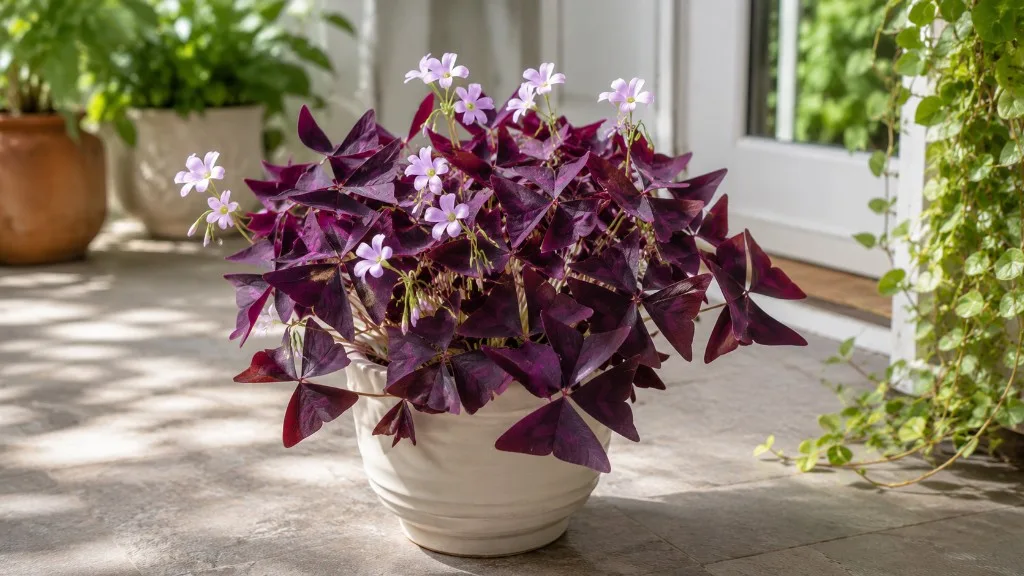
Oxalis triangularis fertilizer is one of the simpler decisions in houseplant care - and one of the easiest to get wrong. Oxalis triangularis, the purple shamrock or false shamrock, grows from underground corms that store energy the way a battery stores charge. During active growth, the plant pushes out triangular purple leaves that fold at night (a movement called nyctinasty), produces delicate pink or white flowers, and draws modest nutrients from the potting mix. During dormancy, those leaves fade, stems collapse, and the corms rest. Fertilizer belongs only in the first phase.
The practical routine most home growers need is this: use a balanced water-soluble fertilizer diluted to half the label strength, apply it every three to four weeks while the plant is actively growing, and stop entirely the moment dormancy begins. Water onto moist soil, never onto dry corms. Do not feed a stressed, dry, or newly repotted plant. Resume feeding only after new growth has been visible for about two weeks following dormancy. Purple shamrock is a light feeder compared with heavy foliage crops - the corm already holds reserves, and excess salts damage the tender roots that bulb plants depend on.
This guide covers when to fertilize, how much to use, which formulas work best, how dormancy and bulb energy storage change the rules, and the mistakes that cause more harm than skipping a month ever would.
Why Fertilizer Matters for Oxalis Triangularis
Oxalis triangularis is a bulb-forming houseplant native to South America, valued for its deep purple, clover-like foliage and charming night-folding leaves. Unlike fast-growing tropical foliage plants that burn through potting mix in a single season, purple shamrock has modest nutritional demands because the corm stores carbohydrates and minerals between growth cycles. Fertilizer during active growth tops up what watering leaches and what new leaves, stems, flowers, and root tips consume. It does not replace the corm’s internal reserves - and it cannot rescue a plant that is failing from wrong light, soggy soil, or heat stress.
The New York Botanical Garden’s false shamrock guide notes that nutrition needs are light and that a quarter-strength feeding with a balanced organic fertilizer every month during active growth is sufficient (NYBG - False Shamrock Houseplant). That conservative framing matches how bulb plants behave in containers: small soil volumes, slow nutrient depletion relative to fast annuals, and high sensitivity to salt accumulation near corm tissue. Think of feeding as maintenance for steady, active growth - fuller leaf clusters, stronger petioles, and healthy flowering - not as a rescue tool for a plant whose leaves are bleaching from too much afternoon sun or collapsing from overwatering on Oxalis Triangularis.
Fix light, drainage, and watering first. Feeding a plant that is not metabolically active pushes soluble salts into soil the roots cannot use, causing brown margins and corm stress. Half-strength liquid during confirmed active growth beats full label rates or constant weak dosing every watering.
When to Fertilize Purple Shamrock: Active Growth vs Dormancy
Timing follows the plant’s growth phase, not a calendar you copy from a generic houseplant chart. Feed when purple shamrock is producing new leaves, extending stems, and opening flowers on a regular rhythm. Stop when growth slows sharply, foliage bleaches and wilts across the whole plant, or the classic dormancy pattern appears - often after flowering, though not always on the same schedule every year.
Oxalis triangularis runs on cycles: active growth, flowering, die-back, dormancy, revival. Fertilizer supports only the first stage. During dormancy the corm stores energy while above-ground growth stops; unused salts concentrate in the mix until growth resumes.
Spring Through Summer Feeding Window
Start feeding when you see fresh growth after a rest period or when an established plant pushes new shoots in spring. Active growth signals include leaves opening fully during daylight, new stems emerging from the soil surface, and flowers forming at the crown. In many homes, that window runs from late spring through early fall, roughly April through September in temperate climates - but indoor plants under consistent conditions may grow on a different rhythm tied to when they last went dormant.
During this window, a half-strength balanced liquid feed every three to four weeks suits most container-grown purple shamrock. Growers who prefer extra caution - matching NYBG’s organic guidance - can use quarter strength monthly and still see healthy foliage if light and water are correct. Both schedules are reasonable if leaves stay deeply purple (for the cultivar), petioles stay firm, and the soil surface stays free of heavy white crust.
| Month (temperate climate) | Growth phase | Feeding guidance |
|---|---|---|
| March–April | Waking up, new shoots | Wait for 2 weeks of visible new growth, then start half-strength liquid |
| May–August | Peak foliage and flowering | Every 3–4 weeks at half strength |
| September | Slowing, possible dormancy onset | Reduce to every 4–6 weeks or stop if die-back begins |
| October–February | Dormancy or low growth | No fertilizer unless strong year-round growth under lights |
| Post-dormancy revival | First new nubs | Resume after ~2 weeks of active new growth at half strength |
The table is a framework, not a law. A purple shamrock on a bright east windowsill in July may dry its pot every five days and use nutrients slightly faster than one in moderate indirect light. Watch the plant: if it is building new purple leaves steadily and folding normally at night, the timing is right. If it is static, solve light and moisture before adding food.
Temperature interacts with timing more than many growers expect. NYBG notes that household temperatures above 75°F (24°C) can trigger dormancy, causing leaf drop regardless of season (NYBG - False Shamrock Houseplant). If your plant enters rest in midsummer after flowering, that is natural for many false shamrocks - not a failure on your part. Stop feeding when dormancy starts, even if the calendar says it is still “summer.”
Stop Feeding at the First Sign of Dormancy
Do not fertilize Oxalis triangularis during dormancy. Full stop. The moment you see widespread leaf bleaching, limp stems collapsing across the plant rather than one or two old leaves, and the growth rhythm stopping after flowering or heat stress, cut fertilizer entirely. A dormant purple shamrock has no use for nitrogen, phosphorus, or potassium in the root zone; salts sit concentrated against corm tissue until the next growth flush.
Dormancy signs overlap with stress - NYBG notes gradual summer fade after bloom versus rebound within days when water or light is corrected (NYBG - False Shamrock Houseplant). Either way, withhold fertilizer until new growth returns. Taper watering, move the pot to a cool, low-light spot, and let foliage die back before removing it so energy transfers into the corm. University of Missouri Extension advises reducing watering during dormancy, moving to a cool dry location, and not fertilizing until new growth emerges.
Best Fertilizer Type for Oxalis Triangularis
The best oxalis triangularis fertilizer for most homes is a complete, water-soluble, balanced houseplant formula with moderate nitrogen and equal or near-equal phosphorus and potassium. You want enough nitrogen for leaf color and petiole strength, phosphorus for root function at modest levels, potassium for overall vigor, and micronutrients - iron, magnesium, manganese - listed on the label. Purple shamrock is not a heavy nitrogen consumer like coleus, and it is not a flowering crop that needs high-phosphorus bloom boosters.
Avoid shopping by the word “shamrock” on the bottle unless you trust the brand’s dosing. A standard balanced indoor formula applied conservatively outperforms specialty products used at full strength.
Balanced Liquid Formulas and NPK Ratios
A 10-10-10 or 20-20-20 water-soluble fertilizer diluted to half strength is the default recommendation for purple shamrock. University of Missouri Extension recommends feeding with a balanced water-soluble fertilizer at half strength every three to four weeks during active growth. Equal ratios keep feeding simple when your main goal is steady foliage and healthy corms, not maximum flower size. Some experienced growers use a slightly nitrogen-leaning foliage formula such as 9-3-6 during active growth; that is reasonable if you already own it and dilute properly.
Liquid formulas win for control and safety on bulb roots. You mix a known concentration, apply it once, and stop until the next scheduled feed. Slow-release pellets in a small pot release unpredictably and can overlap with liquid feeds you forgot were still active in the mix. For a typical purple shamrock in a 4- to 6-inch pot, mix fertilizer at half the label’s recommended strength for houseplants, then apply until a little water drains from the bottom. Discard saucer water so corms are not sitting in concentrated runoff.
If you are choosing between two bottles: pick balanced, water-soluble, with micronutrients. Skip high-phosphorus bloom boosters, tomato formulas, and anything marketed for “maximum blooms” on a plant you grow primarily for foliage architecture and color.
Organic Options and What to Skip
Organic liquid options - diluted fish emulsion, seaweed extract, or compost tea - work at quarter to half strength if you already use them. NYBG’s recommendation of quarter-strength balanced organic feed monthly during active growth is a safe anchor for organic-minded growers (NYBG - False Shamrock Houseplant). Organic liquids can smell and may attract fungus gnats if over-applied to constantly moist surfaces; keep doses light and the soil surface reasonably dry between waterings.
Skip slow-release granules in small indoor pots unless you commit to no liquid feeding for several months and accept less precise control. Skip foliar feeding as a routine - purple shamrock absorbs nutrients primarily through roots, and wet leaf surfaces in strong window light can scorch. Skip fertilizer combined with pesticide products unless you have a specific pest issue and follow label safety for indoor use.
Pet note: The ASPCA lists oxalis species as toxic to cats, dogs, and horses due to oxalic acid content, with ingestion causing drooling, vomiting, and tremors (ASPCA - Oxalis). Concentrated fertilizer solution and crusty soil are not safe for pets either. Keep pots and runoff out of reach.
How Much Fertilizer to Use on Purple Shamrock
If you remember one number, make it half strength - and if your plant has ever shown salt sensitivity, default to quarter strength without guilt.
Houseplant fertilizer labels assume a range of species and pot sizes. Oxalis triangularis sits in the light to moderate feeder category - more demanding than a succulent, far less tolerant of salt buildup than a mature fiddle-leaf fig in a huge pot. Cutting the label rate to one-half is the safest default for liquid feeding during active growth. Quarter strength monthly matches NYBG’s organic guidance and is appropriate for plants in moderate light, older corms with good reserves, or any history of tip burn.
Dilution math is straightforward. If the label says 1 teaspoon per gallon for houseplants, use ½ teaspoon per gallon at half strength or ¼ teaspoon per gallon at quarter strength. Mix fresh each time; do not store diluted solution for weeks. Apply enough that the mix is evenly moist but not saturated for days - purple shamrock still needs the top inch to dry between waterings even on feed day.
Never apply full label strength to a container-grown purple shamrock unless you have experience flushing salts monthly and the label specifically targets fast-growing outdoor annuals in ground beds. Indoor corms in 4-inch pots cannot dilute localized hot spots of concentrated fertilizer the way garden soil can.
How Often to Fertilize Oxalis Triangularis
Frequency follows the same conservative logic as dose: less is safer than more on a corm plant.
For most healthy purple shamrock in active growth:
- Every 3–4 weeks with half-strength balanced liquid fertilizer
- Every 4 weeks with quarter-strength organic liquid if you prefer NYBG-style light feeding
- Plain water only between scheduled feeds - no “weak tea” every watering
- Zero feeds from dormancy onset until ~2 weeks of post-dormancy new growth
Plants in bright east or filtered south light with warm active-season temperatures may sit at the three-week end if they are visibly pushing new leaves continuously. Plants in moderate indirect light or cooler rooms may need only monthly feeding at half strength. If you are unsure, monthly at half strength is the better default than biweekly - salt buildup from over-frequency shows up as brown leaf edges long before under-feeding shows as pale growth.
Young plants may benefit from the shorter interval; mature corms with good reserves need only light feeding. Doubling feeds after a slow month rarely fixes light or root problems.
Step-by-Step: How to Feed Oxalis Safely
Feeding purple shamrock is simple once the pre-checks become habit. The goal is even distribution through moist mix without splashing concentrated solution onto corm crowns or leaving the pot in salty runoff.
Step 1 - Confirm active growth. New leaves opening, stems extending, no whole-plant dormancy pattern. If in doubt, wait a week and reassess.
Step 2 - Water check. Top inch of mix should be dry or approaching dry, but the deeper mix should not be bone-cracking dry. If the pot is parched, plain water first, feed 24 hours later.
Step 3 - Mix fertilizer at half strength (or quarter if you feed monthly with organic liquid). Stir thoroughly in lukewarm water.
Step 4 - Apply slowly around the soil surface, avoiding the crown where corms sit near the top. Use enough volume that a small amount drains from the bottom - roughly 10–20% of pot volume depending on size.
Step 5 - Discard drainage from the saucer within 15 minutes. Never let the pot sit in fertilizer runoff.
Step 6 - Mark the date on a calendar or phone reminder for three to four weeks out. Plain water only until then.
Optional monthly maintenance: on a non-feed week, run plain water through the pot until drain water runs clear to leach accumulated salts. NYBG recommends annual Oxalis Triangularis repotting guide in fall as growth resumes partly because fertilizer salt buildup damages tender roots in old compacted mix (NYBG - False Shamrock Houseplant). Leaching between repots extends mix life.
Pre-Feed Checks and the Moist-Soil Rule
Before every feed, run this 30-second checklist:
- Season and phase - Is the plant in active growth, not entering dormancy?
- Soil moisture - Is the mix moist below the surface, not dust-dry?
- Salt crust - Is the soil surface white or flaky? If yes, flush and skip feed.
- Recent stress - Repotted, relocated, or heat-shocked in the last 2–3 weeks? If yes, wait.
- Leaf signal - Are newest leaves normal purple and firm, not widespread bleached collapse?
The moist-soil rule is non-negotiable for bulb plants. Fertilizer on dry roots creates osmotic shock - water rushes out of root tissue toward concentrated salts, causing burn within hours. Water the day before feeding if needed, or water lightly first, wait an hour, then apply fertilizer solution to already-damp mix. Never foliar-spray fertilizer onto purple shamrock leaves as a shortcut.
Signs Your Oxalis Needs More Nutrition
Under-feeding on Oxalis triangularis is less common than over-feeding, but it happens - especially in the same small pot for two or more years without repotting or leaching, or when bright light drives faster leaf turnover than your schedule supports.
Watch for these patterns only after ruling out wrong light and watering:
- Pale new leaves that stay lighter than older growth for multiple leaf cycles, not just one transitional leaf after dormancy
- Smaller leaf size on new growth compared with last season’s foliage, with otherwise good light
- Slow stem extension during what should be peak active growth - no new shoots for many weeks in warm bright conditions
- Weak flowering or absent blooms during a season when the plant previously flowered freely, with no dormancy skip
Pale, collapsing leaves across the entire plant usually mean dormancy or overwatering, not hunger. A single yellow lower leaf is often normal senescence. If light is adequate - bright indirect with some gentle morning sun - and you water when the top inch dries, a light increase from quarter to half strength or from monthly to every three weeks is a reasonable test. Do not jump to full strength.
Signs of Over-Fertilizing and Salt Buildup
Over-fertilizing is the most common fertilizer mistake on purple shamrock because growers treat it like a standard foliage houseplant and feed through dormancy or at full label rates.
Symptoms include:
- Brown or crispy leaf margins on otherwise well-watered plants, often starting on newest leaves
- White or yellowish crust on the soil surface and pot rim
- Sudden leaf drop or failure of new shoots to open after a feed
- Stunted or distorted new growth - tiny leaves, short petioles, darkening at tips
- Sour or musty smell from the mix, indicating salt stress and possible root decline
- Corm softness when you unpot - advanced case after repeated over-feeding in wet mix
University of Maryland Extension notes that excessive or frequent fertilizer use is a primary cause of high soluble salts in indoor plants, producing brown leaf tips and marginal necrosis (University of Maryland Extension - Fertilizer Toxicity). Bulb roots are particularly vulnerable because corm tissue sits close to the soil surface where salts concentrate as water evaporates.
If you see crust plus tip burn, stop feeding immediately and flush - do not “dilute” the problem with another weak feed.
How to Flush Oxalis After Over-Feeding
Recovery is usually possible if corms are still firm and rot has not set in from concurrent overwatering.
Step 1 - Stop all fertilizer for at least four to six weeks, longer if burn was severe.
Step 2 - Flush the pot by running lukewarm plain water through the mix slowly until drain water runs clear - often three to five pot volumes over 20–30 minutes. Let it drain fully.
Step 3 - Remove visible salt crust from the soil surface gently with a spoon, taking care not to damage corm tops.
Step 4 - Resume plain watering only on the normal dry-top-inch schedule. Watch for new growth quality.
Step 5 - Reintroduce fertilizer at quarter strength only after two healthy new leaf cycles, then return to half strength if no new burn appears.
Badly scorched leaves will not green up again - judge recovery by new tissue. If the plant enters dormancy during recovery, follow normal dormancy rules: no feed, reduced water, cool rest. Forcing nutrients during rest undoes the flush.
If roots are mushy or the corm smells, repot into fresh mix after trimming rot, and do not fertilize for six to eight weeks.
Dormancy, Bulb Energy Storage, and Why Fertilizer Stops
Understanding why fertilizer stops during dormancy makes the whole schedule click. Oxalis triangularis is not dying when it collapses - it is relocating energy. The corm (often called a bulb in casual houseplant language) is a storage organ built from modified stem tissue. During active growth, photosynthesis in purple leaves produces sugars that move downward into the corm, alongside minerals taken up by roots. When the plant flowers and days lengthen or heat rises, many specimens trigger a rest phase that protects the corm from stress and consolidates reserves for the next cycle.
As dormancy begins, leaves fade and dry while the plant reabsorbs mobile nutrients into the corm - do not cut green or yellow foliage early. Fertilizer during this phase adds salts while demand is near zero. NYBG notes dormancy most often follows summer flowering but timing varies by plant, temperature, and light (NYBG - False Shamrock Houseplant). Respond to signals rather than forcing a calendar.
When white or pink nubs push through soil after rest, move the pot back to bright light, resume cautious watering, and wait about two weeks of visible active growth before the first post-dormancy feed at half strength. That delay lets roots re-establish uptake capacity before salts arrive. The corm’s stored energy fuels the first leaves; fertilizer supports the second wave - a distinction that prevents the most common post-dormancy burn mistake.
Seasonal and Situational Adjustments
Beyond the core active-growth schedule, a few situations change how aggressively you should feed.
Late summer taper: Extend intervals to every four to six weeks as days shorten, or skip the last fall feed - salty mix at dormancy onset causes more harm than slightly depleted mix.
Heat-triggered midsummer dormancy: Above 75°F after flowering, stop feed and taper water even in July.
Grow lights year-round: Continuous growth under strong lights may justify light winter feeding every four weeks - watch for salt crust and leach monthly. Most homes should default to winter pause.
Hard water: High-mineral tap water accelerates salt buildup; leach monthly and consider quarter-strength feeds.
After Repotting, Stress, and Young vs Mature Plants
Newly repotted plants: Wait four to six weeks after repotting before feeding. Fresh mix often contains starter nutrients, and damaged root hairs from handling need time to heal. NYBG repots false shamrock annually in fall as growth resumes - that fresh mix resets salt load (NYBG - False Shamrock Houseplant).
Stressed plants - recent move, pest treatment, extreme heat - get plain water only until new growth stabilizes.
Young vs mature plants: Young purple shamrock with small corms benefits from consistent light feeding during active growth to build initial reserves. Mature plants with large corms tolerate skipped feeds more gracefully; prioritize salt avoidance over pushing maximum leaf size.
Container size: Tight pots dry faster and concentrate salts faster. A plant filling a 4-inch pot needs conservative feeding and more frequent leaching than one in a 6-inch pot with the same light.
Common Oxalis Triangularis Fertilizer Mistakes
Feeding through dormancy tops the list. The plant cannot use nutrients; salts accumulate against corms. When leaves bleach and collapse after flowering, stop - do not “help” with one last boost.
Full-strength label doses in small pots cause tip burn within days. Half strength exists for a reason on bulb houseplants.
Feeding every watering with diluted solution builds salts faster than intermittent full feeds because there is no plain-water interval to leach. Use a clear schedule and water without nutrients between.
Cutting back dying leaves too early steals corm energy and is often paired with mistaken winter feeding on a plant that is actually entering summer dormancy.
Ignoring salt crust until roots fail - scrape, flush, and pause feeds at the first white rim on the pot.
Using bloom booster for a foliage-forward plant adds phosphorus the corm does not need at elevated levels, shifting metabolism toward flowering at the expense of balanced storage - balanced 10-10-10 at half strength is the safer default.
Fertilizing dry soil after forgetting to water for two weeks - always moisten first.
Conclusion
Oxalis triangularis fertilizer works best when you treat purple shamrock as the bulb plant it is, not a generic foliage houseplant. During active growth, a half-strength balanced liquid feed every three to four weeks on moist soil supports healthy purple leaves, steady stems, and flowering without overwhelming corm roots. During dormancy - whenever your plant signals rest, often after bloom in warm months - stop feeding entirely and let the corm store energy from dying foliage undisturbed. Resume at half strength only after about two weeks of new post-dormancy growth.
When in doubt, choose less fertilizer, more flushing, and better timing over stronger doses. Salt burn on a small corm pot recovers slowly; a skipped month in active growth rarely hurts a plant with good light and drainage. Match feeding to the growth phase, protect bulb energy storage during rest, and your purple shamrock will cycle through dormancy and revival for years - sometimes decades - without the fertilizer mistakes that shorten its life.
When to use this page vs other Oxalis Triangularis guides
- Oxalis Triangularis overview - Start here for whole-plant context before deep-diving this topic.
- Oxalis Triangularis problems hub - Jump to symptom-specific fix guides when this care topic does not resolve the issue.
Related Oxalis Triangularis guides
- Oxalis Triangularis overview
- Oxalis Triangularis watering
- Oxalis Triangularis light
- Oxalis Triangularis soil
- Oxalis Triangularis propagation
- Oxalis Triangularis repotting
- Oxalis Triangularis problems
Related tool
Try the Fertilizer Dilution Calculator with oxalis-triangularis pre-selected to estimate needs for your setup.