Not Enough Light on Oxalis Triangularis: Causes, Checks &
Quick answer
Oxalis triangularis needs bright indirect light to hold its purple color and compact shape. If new leaves fade to pale green, petioles stretch, or the clump leans toward a window, move it within 1–3 feet of an east-facing window or add a grow light before changing water or fertilizer.
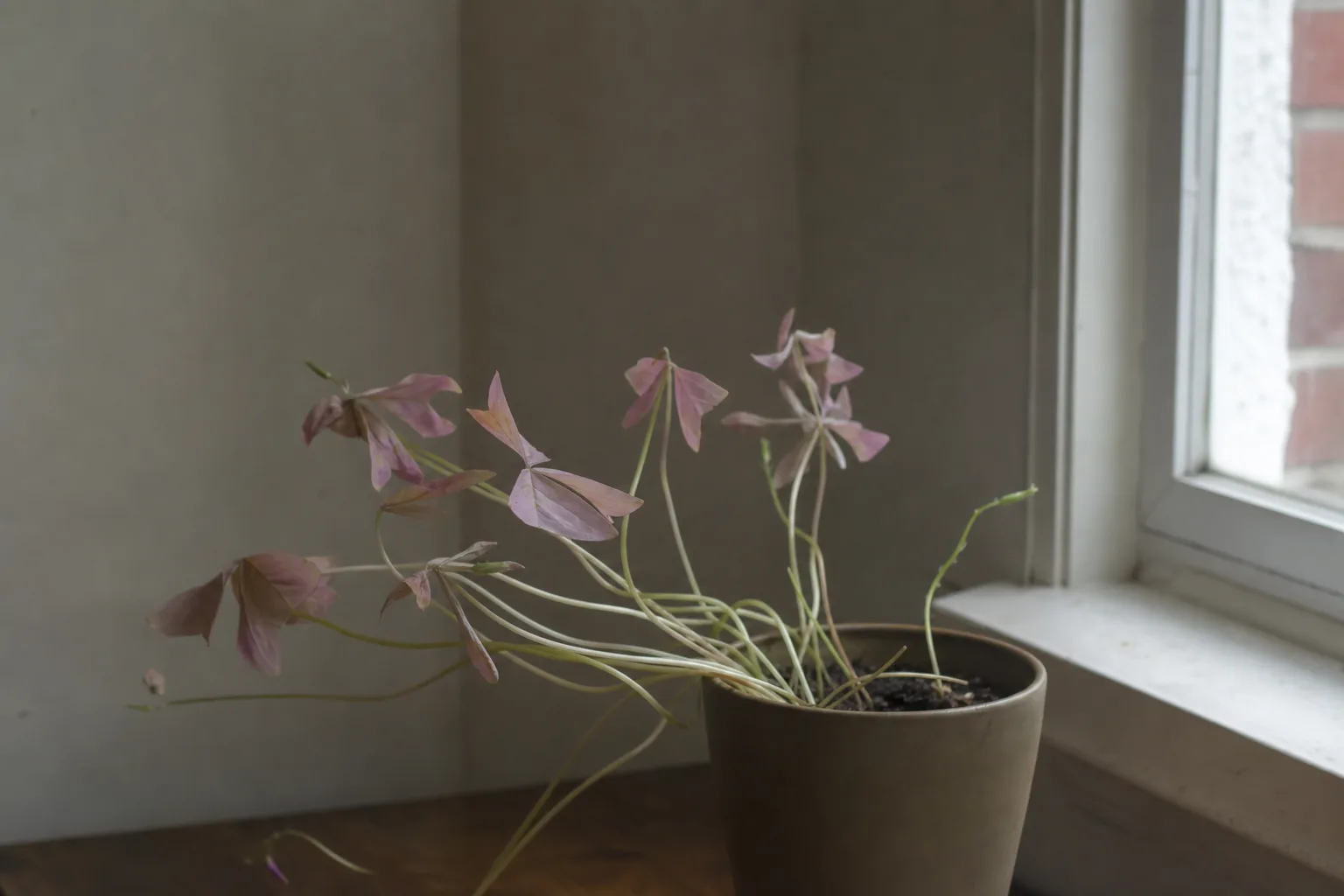
Not Enough Light on Oxalis Triangularis: Causes, Checks & Fixes
This guide covers not enough light on Oxalis Triangularis. See also the general Not Enough Light guide, watering, and light pages for this plant.
Not Enough Light on Oxalis Triangularis: Causes, Checks & Fixes
Quick answer
Oxalis triangularis - the purple shamrock or false shamrock - is sold for its deep burgundy trifoliate leaves, and that color is not decorative paint. It comes from anthocyanin pigments that the plant invests in when light is adequate. In dim corners, new leaves fade toward pale green, petioles stretch between leaf sets, and the clump leans toward the brightest direction.
First step: move the plant to the brightest safe indirect spot you have - typically within 1–3 feet of an east-facing window - and leave it there for two weeks. Do not repot, fertilize, or increase watering until you see how new growth responds. Brighter light changes how fast the corm dries the pot, and extra water in a dim corner is a common path to corm stress.
Not enough light vs. leggy growth vs. dormancy on Oxalis triangularis
These three problems overlap on purple shamrock, but they answer different questions:
| Problem | What this page covers | Sibling guide |
|---|---|---|
| Not enough light | Placement audit, purple fade on new leaves, window distance, north-window insufficiency, grow-light triggers | You are here |
| Leggy growth | Etiolated petiole morphology, base pruning after relight, corm-shoot cuts at the soil line | Leggy growth |
| Dormancy | Post-flowering or seasonal die-back with firm corms and dry soil - not a placement fix | Overview dormancy notes |
Low light is the cause; leggy stretch is often the visible result. If your plant already has long arching petioles and you need pruning steps after light improves, use the leggy growth guide. If the whole mound yellows and collapses after flowering with firm corms, allow dormancy rest rather than forcing bright light - see the overview for rest-phase care.
What not enough light looks like on Oxalis triangularis
Low light on purple shamrock shows up as a pattern over weeks, not a single folded leaf at night.
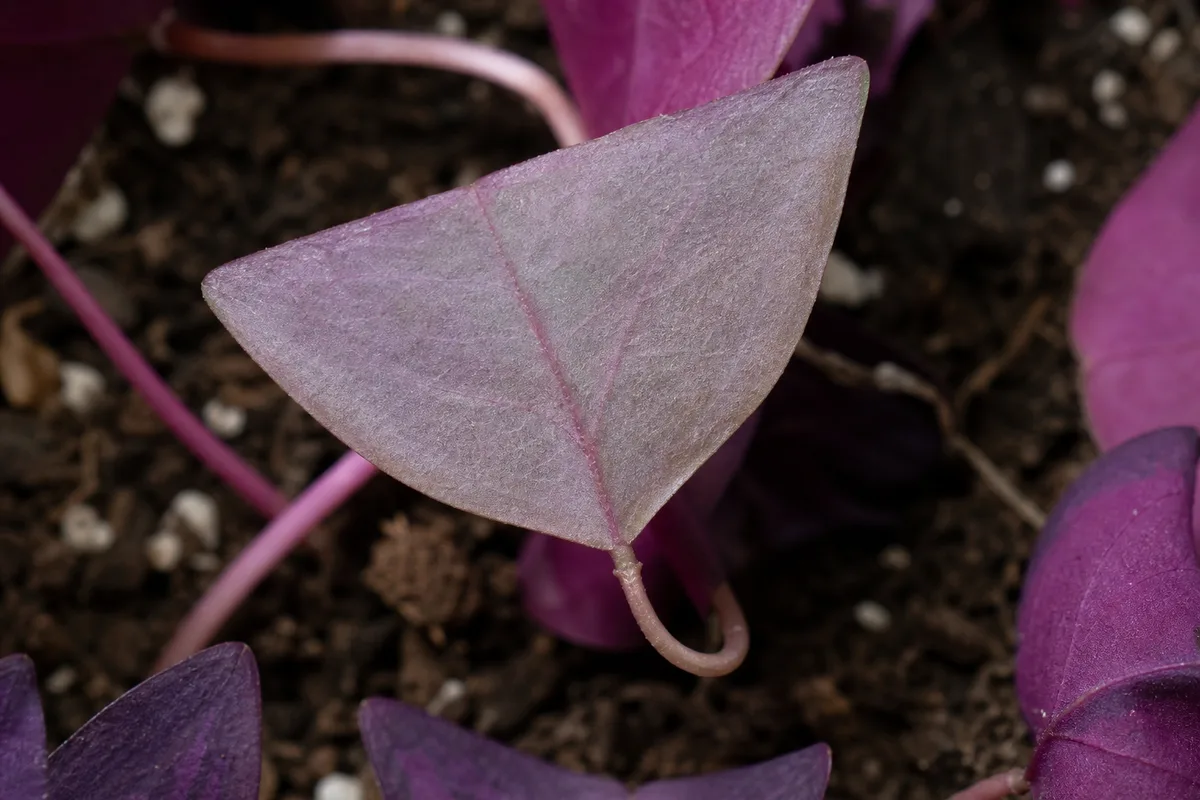
Not Enough Light symptoms on Oxalis Triangularis - compare with healthy tissue on the same plant.
Typical signs:
- Purple fade on new leaves - anthocyanin production drops in dim conditions, so fresh trifoliate leaves emerge paler, more green-tinged, or washed-out compared with older burgundy foliage lower on the clump
- Longer petioles with wider spacing - the stem-like stalk holding each three-part leaf stretches as the plant reaches for photons; internodes between successive leaf sets lengthen
- Smaller new leaflets on those stretched petioles compared with compact growth from a well-lit plant
- One-sided lean or all new growth pointing toward a window or lamp
- Sparse, open clump instead of the tight mound purple shamrock forms in good light
- Reduced or absent flowering during active growth when light has been marginal for months
- Slow dry-down - the same watering schedule leaves soil wet longer because metabolism is low
What low light is not: crisp brown patches on sun-facing leaflets - that pattern points to sunburn after a sudden move into hot direct afternoon sun. Leaves that fold at dusk and reopen by mid-morning are normal nyctinastic behavior, not a light deficiency. A full yellowing die-back after flowering that follows seasonal rhythm is often dormancy, not stretch from shade alone.
Why Oxalis triangularis gets not enough light
Oxalis triangularis grows from underground corms - energy stores that push up trifoliate leaves on upright petioles, not conventional woody stems. NC State Extension lists the species as a rhizomatous perennial in the wood sorrel family, native to South America, accepting partial shade to full sun outdoors but needing strong ambient brightness indoors to maintain color and compact form.
Several home situations starve it:
Distance from windows. Light intensity drops rapidly with distance from the glass. A spot that looks bright to your eyes may be too dim for a plant that needs roughly 4–6 hours of bright indirect light daily at minimum. Interior shelves, desks across the room, and pots set below window height in a shadow pool are frequent culprits.
North-facing windows alone. In the Northern Hemisphere, north exposures provide the lowest natural intensity. Purple shamrock may survive there briefly but usually loses deep color and stretches unless you supplement with artificial light.
Winter daylight. Shorter days and weaker sun reduce effective hours even if you never moved the pot. Many owners see fade and stretch every November through February in the same corner that worked in July.
Anthocyanin cost in dim light. The purple pigment is energetically expensive. In low light, the plant prioritizes chlorophyll for photosynthesis and produces less anthocyanin on new tissue - the signature fade to pale green that owners notice before stretch becomes obvious.
Competing factors that mimic thirst or dormancy. In low light, Oxalis uses water slowly. If you keep watering on a summer schedule, soil stays wet longer, corms lose oxygen, and foliage yellows or collapses - looking like overwatering when light was the root cause. Chronic dim light also keeps corms in a low-energy state and can accelerate dormancy die-back sooner than the normal post-flowering rest.
Marketing confusion. Purple shamrock tolerates brief adjustment better than many high-light tropicals, so it is easy to treat it like a snake plant in a hallway. Shamrock plants prefer bright, indirect light from east- or west-facing windows, with too little light producing sparse growth and too much harsh direct sun scorching leaves.
How to confirm the cause
Work through these checks before treating pests, repotting, or feeding:
- Window direction and distance - Stand where the pot sits. Can the leaf canopy see sky through the window, or is the plant more than 1–3 feet back in the room? Is the only exposure north-facing?
- Purple on newest leaves - Compare the freshest trifoliate leaf to one from six months ago. Fading toward pale green on new growth while older leaves still hold color confirms a current light deficit.
- Petiole spacing trend - Are gaps between successive leaf sets on new shoots longer than on older shoots? That stretch confirms etiolation from low light.
- Growth direction - Are newest petioles all oriented toward one light source? Lean confirms active seeking.
- Midday leaf opening - Healthy Oxalis opens leaflets wide by late morning. If soil is moist and leaflets stay clamped shut through midday in a dim spot, low light may be involved - but check underwatering first; a good soak often restores opening when thirst is the cause.
- Season and dormancy rhythm - Did fade and stretch begin as days shortened, or did yellowing follow normal flowering without a light-related lean? Post-flowering collapse without stretch fits dormancy better than chronic shade.
- Corm firmness - Gently unpot if soil has stayed wet in a dark corner. Firm, pale corms with no sour smell support a light diagnosis; soft, brown, mushy corms mean rot - see root rot and fix drainage and light together.
If purple fade on new leaves, petiole stretch, and lean align with a dim placement - and corms are firm - not enough light is confirmed. If soil is sour-smelling and corms are soft, investigate corm rot alongside light correction.
First fix for Oxalis triangularis
Move the plant to the brightest location that still avoids harsh midday sun on the leaflets.
Practical targets:
- East window: Often ideal. Purple shamrock can sit 1–3 feet from the glass and receive 1–3 hours of gentle morning sun, then bright indirect light the rest of the day - the placement east- or west-facing windows support.
- South or west window: Brightest exposure; place the pot 2–4 feet back or behind a sheer curtain so hot afternoon rays do not scorch purple leaflets.
- No usable window: Set a full-spectrum LED grow light 15–30 cm (6–12 in) above the canopy for 12–16 hours daily - supplement for no more than 16 hours total light per day.
Make one move, then wait. Keep watering only when the top inch of soil dries - the same rule as normal Oxalis care - but expect the interval to shorten in brighter light. Check soil every few days for the first two weeks rather than assuming the old calendar still applies. Full watering guidance covers seasonal dry-down after a relight move.
Do not jump straight to unfiltered south-window afternoon sun if the plant has lived in deep shade for months. Acclimate over 7–14 days by stepping brightness gradually; purple leaflets scorch quickly when moved from shade to harsh direct beams.
If you share the home with cats or dogs, remember Oxalis species contain soluble oxalates and are toxic to pets - keep bright window placements out of reach or behind a barrier when pets can access sills. Contact your veterinarian or ASPCA Poison Control at (888) 426-4435 if ingestion is suspected.
Step-by-step recovery
Once the plant is in better light:
- Hold fertilizer until you see fresh leaves opening with improved purple depth. Feeding a light-starved Oxalis does not replace photons.
- Rotate the pot a quarter turn weekly so growth does not freeze in a permanent lean.
- Dust leaflets lightly if they collect grime - clean surfaces photosynthesize more efficiently.
- Prune only after new growth proves the spot works. If you cut stretched petioles before light improves, you remove stored energy the corm needs while it rebalances. See pruning for corm-shoot cuts at the soil line.
- Adjust watering to the new dry-down speed. Lighter pots mean drink sooner; heavy pots after a week mean wait longer.
- Optional: add a grow light in winter rather than accepting fade until spring - short days alone can push a borderline east window into deficiency. The light guide covers window placement and grow-light distance.
If the plant enters true dormancy after flowering, follow dormancy care - cool, dim rest with reduced water - rather than fighting rest with forced bright light and heavy feeding.
Recovery timeline
Expect visible improvement in new growth within two to three weeks after a meaningful light increase during active growth. The first new trifoliate leaf should sit closer to the previous one on the petiole and show deeper purple if anthocyanin production is recovering.
Older stretched petioles will not shorten. They remain long even when conditions improve - judge success on the next two leaf sets, not on tissue that formed in the dark.
Full clump recovery - a compact mound with rich color throughout - can take several months of consistent bright indirect light and may require trimming the worst etiolated shoots once replacement growth is established.
If nothing new appears after four to six weeks in a clearly brighter spot during warm weather, reassess: corms may be damaged, dormancy may have started, or the “upgrade” may still be too dim (common with north windows in winter).
Low light vs. lookalike problems
| What you see | Often confused with | How to tell them apart | Urgency |
|---|---|---|---|
| Pale new leaves, long petioles, lean | Leggy growth from any cause | Leggy growth is the low-light form on Oxalis; confirm placement and window distance | Routine - move within days |
| Yellowing, die-back after flowering | Normal dormancy | Dormancy: follows bloom, corms firm, often seasonal. Low light: gradual fade and stretch over weeks in one dim spot without bloom trigger | Rest - reduce water; do not force growth |
| Yellow leaves, wet soil, collapse | Overwatering / corm rot | Rot: soil wet throughout, sour smell, soft brown corms. Low light: stretch and lean present; soil may stay wet because growth is slow | Same-day unpot if corms are soft and soil is sour |
| Leaves folded at night only | Nyctinasty (normal) | Nyctinasty: closes after dusk, opens by mid-morning. Stress: clamped shut at noon with moist soil in dim light | Routine - confirm nyctinasty first |
| Leaves folded at midday, dry soil | Underwatering | Thirst: soil dry, perky return after soak. Low light: soil may be moist; stretch and fade still present | Water within 24 hours if soil is dry |
| Brown crispy leaflet edges | Too much direct sun | Sunburn: damage on window-facing leaflets after sudden bright move. Low light: no scorch patch pattern | Acclimate - step back from harsh sun |
Mistakes to avoid
Do not water more because leaves look limp in a dark corner - corms in soggy mix cannot fix a light problem. Do not fertilize heavily to “purple up” a faded plant; salts build up while photosynthesis stays weak.
Avoid moving Oxalis into direct hot afternoon sun in one step after months of shade. Purple leaflets scorch quickly. Do not assume a north window is enough without watching new leaf color - many homes need supplemental light in winter.
Do not prune the entire clump before light improves; you remove stored corm energy and slow recovery. Do not confuse normal nightly folding with low-light stress - check whether leaflets open by midday after a thorough watering test.
Do not ignore dry-down changes after a move - overwatering in brighter light is less common, but underwatering can happen if you forget to recheck the pot.
How to prevent not enough light next time
Place purple shamrock where bright indirect light is realistic every month, not only where the pot looks best on a shelf. East exposures with morning sun, filtered south or west windows, or a dedicated grow shelf all work better than north panes or interior rooms alone.
Rotate weekly for even growth. Clean windows seasonally - grime cuts intensity more than people expect. In autumn, move plants closer to glass or add artificial light before fade and stretch begin rather than after the clump opens up.
When buying, avoid specimens already etiolated in a shop with poor lighting; starting with compact new growth and deep purple on fresh leaves is easier than rehabbing a stretched clump.
Match watering to how the pot actually dries in that light level. A corm that metabolizes quickly in summer sun needs more frequent checks; winter dim spells mean longer dry-down even with less water volume per drink.
When to worry
Escalation fork:
- Move within days when new leaves fade and petioles stretch in a dim interior spot but corms feel firm and soil dries on a normal schedule.
- Unpot same-day when the whole clump collapses while soil stays wet in a dark location - inspect corms for rot, improve light and drainage together, and follow root rot recovery if tissue is soft.
- Allow dormancy rest when yellowing follows normal flowering, corms stay firm, and there is no progressive lean toward a window - do not fight rest with forced bright light and heavy feeding.
Worry if new growth stops entirely for more than a month in warm conditions despite a light move; the new spot may still be insufficient or dormancy may have started.
A few older leaves yellowing after a large light improvement can happen as the plant rebalances; widespread soft collapse with sour soil is not a normal low-light pattern - check corms immediately.
Frequently asked questions
How can I confirm my Oxalis triangularis is not getting enough light?
Compare the newest trifoliate leaves to older ones-paler green-purple color, longer gaps between leaf sets on each petiole, and a lean toward the brightest direction all point to insufficient light. If the plant sits more than a few feet from any window or relies on a north-facing pane alone, light is the likely limiter, not a nutrient deficiency.
What should I check first when my purple shamrock fades or stretches?
Note window direction, distance from glass, and whether winter days have shortened. Then feel the top inch of soil and inspect whether leaves open normally by midday. Wet soil with weak, faded growth often means the corm is using little water because light is low-not because it needs more water.
Will old stretched petioles on Oxalis triangularis shorten after I add light?
No. Existing long petioles and pale leaves will not revert to a tighter form. Judge recovery by the next one or two new trifoliate leaves-they should sit closer together, look smaller relative to the gap, and show deeper purple color if light was the cause.
Should I use a north-facing window for purple shamrock?
A north window alone is usually too dim to maintain deep purple color on Oxalis triangularis in most Northern Hemisphere homes. The plant may survive briefly but new leaves fade and petioles stretch unless you supplement with a full-spectrum grow light 12–16 hours daily or move the pot to an east or filtered south or west exposure.
How do I prevent not-enough-light stress on Oxalis triangularis long term?
Keep the plant in bright indirect range year-round-often 1–3 feet of an east window with 1–3 hours of gentle morning sun, or filtered south or west glass. Rotate the pot weekly. In short winter days, move it closer to the window or run a full-spectrum grow light 12–16 hours daily rather than leaving it on an interior shelf.
Related Oxalis Triangularis guides
- Light - window placement, anthocyanin color, nyctinasty, and grow lights
- Overview - corm biology, dormancy rhythm, and full care hub
- Leggy growth - etiolated petiole pruning after relight
- Pruning - corm-shoot cuts at the soil line and dormancy cleanup
- Watering - dry-down rhythm after a relight move
- Overwatering - wet-soil stress when dim light slows metabolism
- Root rot - soft corms when wet soil and dark corners collide
- Underwatering - midday folding with dry soil, not stretch