How to Prune Oxalis Triangularis: When, Where & What to Cut
How to Prune Oxalis Triangularis: When, Where & What to Cut
How to Prune Oxalis Triangularis: When, Where & What to Cut
Quick Answer - Your First Cut
First, remove only fully yellow, collapsed, mushy, or clearly dead stems by cutting each one flush at the soil line with clean, sharp scissors. Do not trim healthy purple leaflets, shape the mound, or cut back green foliage until you have decided whether the plant is in normal dormancy, suffering from overwatering on Oxalis Triangularis rot, or simply needs leggy stems cleared at the base.
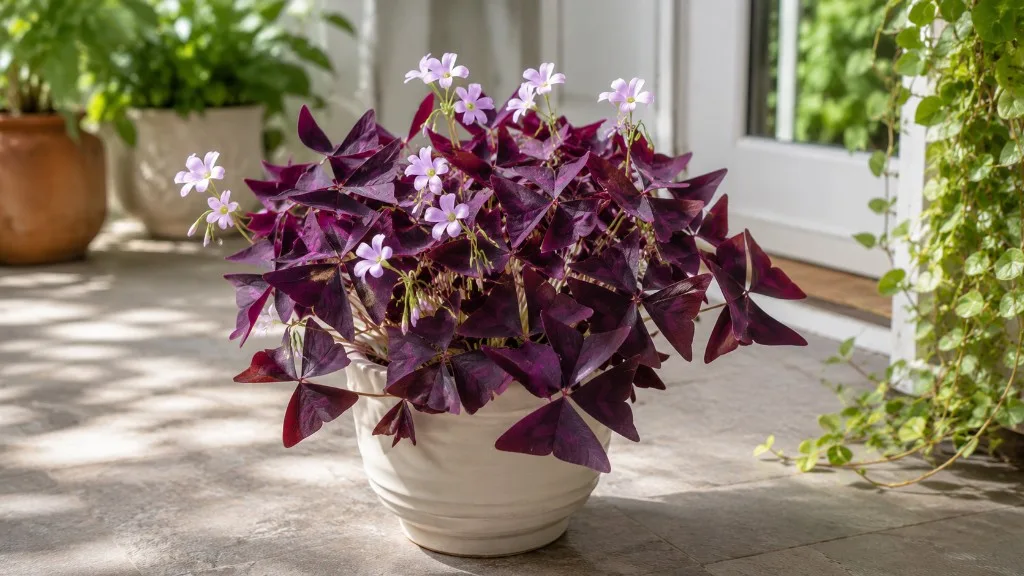
Purple shamrock (Oxalis triangularis) grows from corms - compressed underground stems that store energy and push up new shoots. Each thin stem carries three trifoliolate leaflets that fold at night. Pruning here is grooming tied to corm biology, not node-based shaping like a pothos vine. New foliage emerges from corm buds below the soil, not from mid-stem cuts on existing petioles.
The Missouri Botanical Garden lists purple shamrock as a bulbous ornamental grown for distinctive foliage. NC State Extension describes it as rhizomatous, with scale leaves that store water and nutrients - structurally similar to an elongated bulb. RHS Oxalis triangularis guidance covers dormancy and indoor culture. Pruning keeps decaying stems from holding moisture against healthy corms and tidies active plants - but it cannot reverse corm rot caused by watering during dormancy.
What Pruning Means for Purple Shamrock
Oxalis pruning covers four practical jobs:
- Sanitation - removing mushy, foul-smelling, or pest-damaged stems immediately
- Dormancy cleanup - cutting fully dead yellow stems after the plant finishes its rest cycle
- Shape grooming - removing leggy or flopping stems that spoil the compact mound
- Cosmetic leaflet removal - snipping a single damaged leaflet only when the rest of the stem stays healthy
There is no useful tip-pinching that forces bushiness. The plant fills out when corms produce new shoots, not when you shorten existing stems. During active growth (spring through fall indoors), light removal of excessive leggy stems improves appearance. During dormancy, wait until stems are fully yellow and dry, then cut at the base and sharply reduce watering.
Corms, Stems, and Where New Growth Comes From
Each above-ground stem arises from a corm beneath the soil surface. Triangular leaflets sit at the tip of thin petioles. Cutting one leaflet does not regenerate new tissue on that petiole - the severed leaflet browns and the stem eventually fails unless the corm sends up a replacement shoot.
When a stem is unwanted, follow it to where it emerges from the mix and cut at or just above the soil line. NC State Extension notes the plant can go dormant in autumn or when conditions get too hot or dry, and advises cutting back on watering until new growth appears - the same pause applies after you remove dead dormancy foliage.
Why Cut at the Soil Line, Not the Leaflet
Snipping a single purple triangle off a healthy stem leaves an awkward stub that cannot branch. Removing the whole stem at the base tells the corm to allocate energy to remaining shoots or produce a new one when conditions are right. Reserve leaflet-only cuts for isolated mechanical damage - a torn corner or sun-scorched tip on an otherwise firm blade.
What to Check Before You Cut
Walk the pot in good light before reaching for scissors. Purple shamrock reacts dramatically to moisture and day length; pruning during a care crisis removes symptoms without fixing cause.
Dormancy Yellow vs Overwatering Rot
Normal dormancy often follows shorter days or seasonal rest. Leaflets stop opening fully, stems yellow from the outside in, and the mound collapses over one to three weeks. Corms feel firm when you gently brush soil aside at the crown. After foliage is fully dead, base cuts and near-zero watering are appropriate.
Overwatering rot shows soft, water-soaked stems, sour-smelling mix, and mushy corms. Yellowing may appear during active growth with wet soil that never dries. Remove rotted stems immediately, but do not treat this like dormancy - inspect all corms, discard any that dissolve, and improve drainage before resuming water.
Never water heavily into a pot of yellowing dormant oxalis. Corms rot in saturated mix when top growth is absent.
Leggy or Flopping Active Growth
Pale, stretchy stems with smaller leaflets usually mean insufficient light. Deep purple color needs Oxalis Triangularis light guide with some morning sun. Cut flopping stems at the base for immediate tidiness, but move the plant to a brighter spot or legginess returns within weeks. Pruning alone cannot substitute for light correction.
When to Prune Oxalis Triangularis
Active season (spring through fall): Remove individual damaged leaf clusters, fully yellow stems outside a dormancy transition, and leggy stems that flop outside the pot rim.
Dormancy: After foliage dies back naturally - often in autumn indoors, though timing varies by plant age and environment - remove all dead stems at the base. Resume watering only when new shoots break the surface.
Any time: Remove mushy, foul-smelling stems the same day you notice them. Sterilize tools between cuts on diseased tissue.
When to wait: Do not cut back green foliage because you expect dormancy soon. Leaves still recharge corms while yellowing progresses. Do not batch-groom heavily right after Oxalis Triangularis repotting guide or during a heat-stress wilt - stabilize care first.
How to Prune Purple Shamrock Step by Step
- Diagnose the pattern - dormancy yellow with firm corms, rot with mushy tissue, or leggy active growth in low light.
- Sterilize scissors or snips with rubbing alcohol or a 10% bleach solution, especially before and after touching rotted stems. Iowa State Extension recommends sanitizing pruning tools to limit disease spread between plants.
- Cut unwanted stems at the soil line - one stem at a time, pulling trimmings clear of the crown.
- Remove single damaged leaflets only when the petiole and remaining leaflets are firm and deeply colored.
- Bag and discard rotted or pest-infested material separately from compost.
- For dormancy cleanup: clear all dead stems, move the pot to a cool bright shelf, and nearly stop watering until new growth.
- For active plants: maintain normal watering when the top 2–3 cm of mix dries; do not fertilize heavily on pruning day.
How Much You Can Safely Remove
During active growth, limit removal of healthy purple foliage to about one-third of the mound per session. Corms need leaf area to photosynthesize and store reserves for the next rest cycle. Fully yellow dormancy stems, mushy rotted tissue, and clearly dead material do not count toward that cap - remove all of that promptly.
If more than one-third of active foliage looks leggy or stressed, spread grooming across two sessions two to three weeks apart rather than stripping the pot in one go.
Tools, Sanitation, and Handling Safety
Sharp household scissors or small snips handle thin oxalis stems cleanly. Dull blades crush petioles and leave wet stubs that invite fungus near the crown.
Wear gloves when handling cut material. Oxalis contains oxalates in all parts. The ASPCA lists Oxalis triangularis as toxic to cats and dogs if ingested in quantity. Wash hands after grooming, keep trimmings off floors where pets explore, and bag clippings securely.
Aftercare and Recovery Timeline
Single dead-stem removal during active growth needs no special recovery beyond normal care.
Dormancy cleanup followed by dry rest: new shoots typically emerge within two to four weeks once watering resumes and temperatures stay in the 15–24 °C (60–75 °F) comfort range. Some plants rest longer - four to eight weeks of near-zero water is normal before fresh triangles appear.
Active-season leggy grooming: remaining stems should hold color and reopen leaflets nightly within days. Expect new corm shoots within two to four weeks in warm, bright conditions.
Allow the top 2–3 cm of mix to dry between waterings during active growth. Nearly stop watering during dormancy. Excellent drainage remains non-negotiable for corm health after any pruning session.
What Pruning Cannot Fix
Pruning does not cure corm rot from watering during dormancy, chronic overwatering in low light, or pale leggy growth without a light upgrade. It does not produce propagation material from leaflets - purple shamrock spreads through corm division at repotting (NC State Extension notes propagation by dividing the rhizome), not stem cuttings from grooming scraps.
It also cannot rush a dormant plant back into growth. Cutting green tissue early shortens the recharge period and weakens corms before rest completes.
Mistakes to Avoid
Watering on schedule during dormancy after cleanup. Saturated mix rots resting corms - the leading post-pruning failure for Oxalis Triangularis overview.
Cutting leaflets expecting regrowth on the stem. Remove the whole stem at the base instead.
Confusing dormancy yellow with rot. Firm corms and gradual collapse suggest rest; mush and sour soil suggest emergency removal and care correction.
Pruning repeatedly without improving light. Leggy stems return until brightness increases.
Ignoring pet toxicity. Secure trimmings away from cats, dogs, and curious children.
Heavy grooming right after repotting. Let roots settle before removing more than dead tissue.
Keeping the Mound Tidy Between Major Cuts
During active growth, scan the pot weekly for single yellow stems, floppers crossing the rim, and leaflets with mechanical tears. Remove small failures at the base as they appear rather than waiting for a large cleanup. Rotate the pot a quarter turn monthly so all sides receive even light - balanced exposure reduces one-sided legginess and the need for corrective cuts.
When dormancy approaches, stop grooming green tissue and let the cycle finish. A clean base cut after full dieback, followed by dry rest, sets up a fuller mound when corms wake than repeated mid-season shearing ever could.
When to use this page vs other Oxalis Triangularis guides
- Oxalis Triangularis overview - Start here for whole-plant context before deep-diving this topic.
- Oxalis Triangularis problems hub - Jump to symptom-specific fix guides when this care topic does not resolve the issue.
- Leggy Growth on Oxalis Triangularis - Escalate here when pruning adjustments are not enough.
- Slow Growth on Oxalis Triangularis - Escalate here when pruning adjustments are not enough.
- Brown Tips on Oxalis Triangularis - Escalate here when pruning adjustments are not enough.
Related Oxalis Triangularis guides
- Oxalis Triangularis overview
- Oxalis Triangularis watering
- Oxalis Triangularis light
- Oxalis Triangularis soil
- Oxalis Triangularis propagation
- Oxalis Triangularis fertilizer
- Leggy Growth on Oxalis Triangularis
- Slow Growth on Oxalis Triangularis
- Brown Tips on Oxalis Triangularis
- Oxalis Triangularis problems