Brown Tips on Oxalis Triangularis: Causes, Checks & Fixes
Quick answer
Brown tips on Oxalis triangularis usually trace to dry winter air, hard tap water, fertilizer salts, drought, or afternoon sun-not disease. First step: check whether margins crisped after heating season started, whether white crust sits on the soil, and whether the corm is firm-then fix one cause at a time.
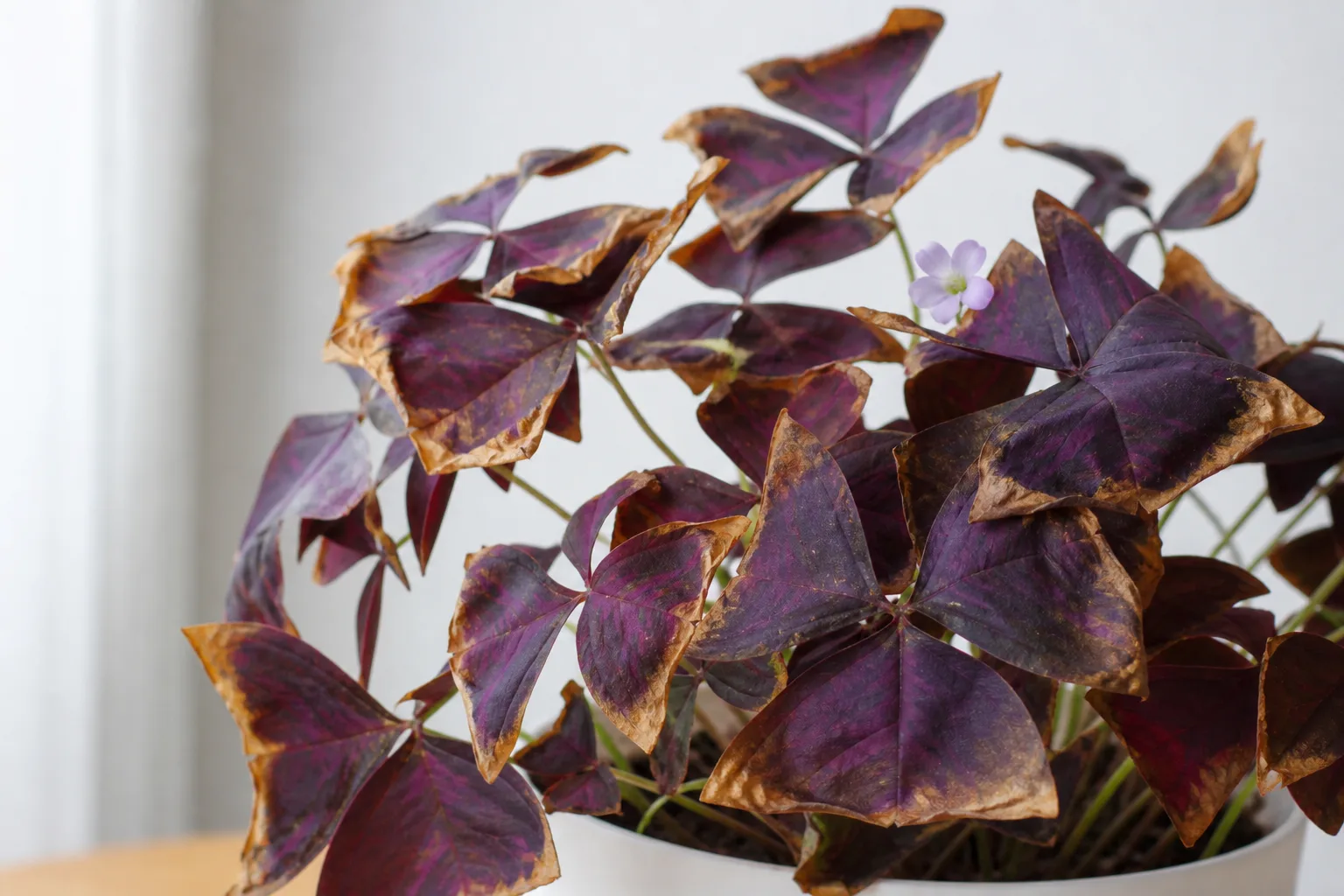
Brown Tips on Oxalis Triangularis: Causes, Checks & Fixes
This guide covers brown tips on Oxalis Triangularis. See also the general Brown Tips guide, watering, and light pages for this plant.
Brown Tips on Oxalis Triangularis: Causes, Checks & Fixes
Quick answer
Brown tips on Oxalis triangularis - purple shamrock or false shamrock - are localized edge damage on thin trifoliate leaflets, not a sign that every leaf is dying. The plant’s triangular purple leaves lose moisture at the margins first when indoor air is dry, tap water carries minerals, fertilizer salts build up, or afternoon sun scorches sun-facing tissue. NC State Extension describes the species as a rhizomatous houseplant that needs fast-draining soil and surface dry-down between waterings - so the fix is rarely “water more often.”
First step: read the pattern on the newest leaves and feel the corm. If only margins are tan and crispy while the leaflet center stays purple, soil moisture is appropriate, and the rhizome is firm when you gently tip the plant out, treat air moisture, water quality, or light - not root disease. If the whole plant is fading pale after flowering, see dormancy guidance below before humidifying or flushing.
For whole-margin crisping across many leaves in a dry heated room, the dedicated low humidity on Oxalis Triangularis guide covers hygrometer thresholds, HVAC placement, and spider mite escalation in more depth. This page focuses on brown tip and margin patterns, salt and tap-water burn, sun scorch, drought lookalikes, and dormancy confusion.
What brown tips look like on Oxalis Triangularis
Brown tips on purple shamrock have a recognizable shape once you separate cosmetic edge burn from dormancy, rot, or pests.
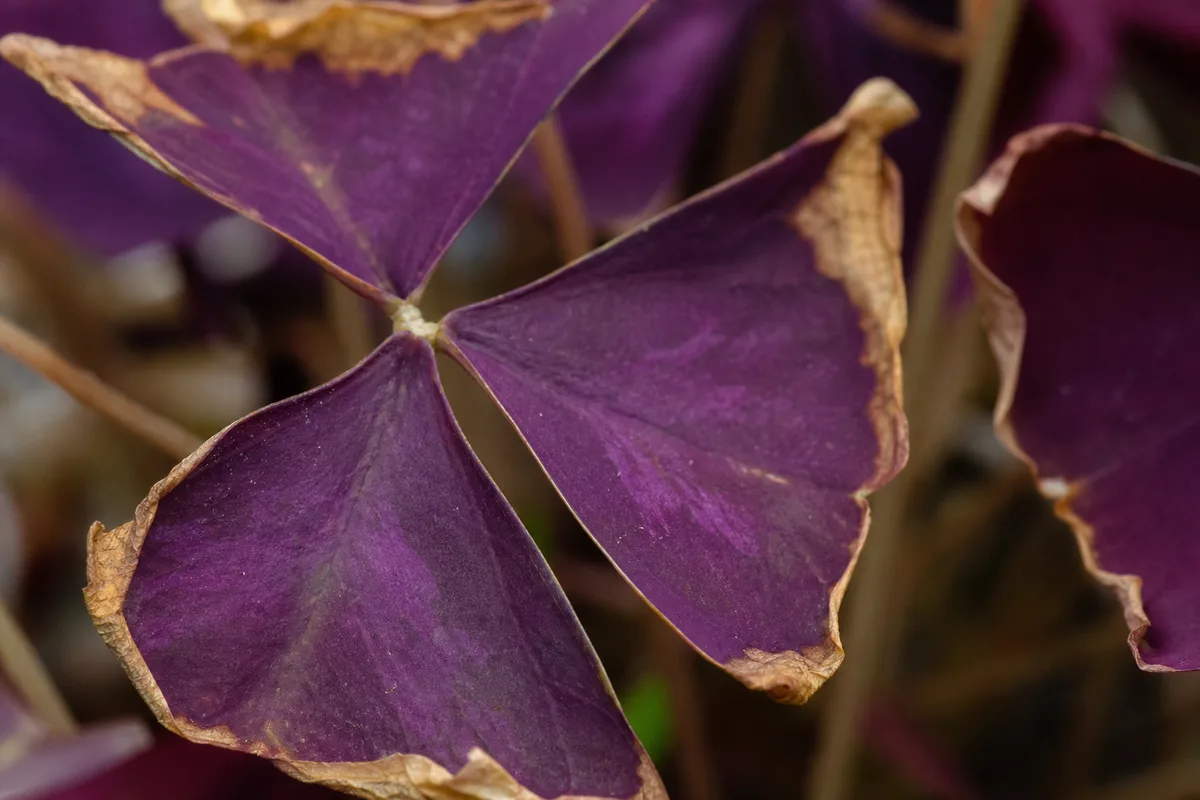
Brown Tips symptoms on Oxalis Triangularis - compare with healthy tissue on the same plant.
Classic tip or margin burn (environmental):
- Tan to dark-brown crispy band at the leaflet tip or along the outer margin while the center of the triangle stays colored
- Dry, papery texture - symmetrical at edges, not wet brown patches
- Often worse on leaves nearest a radiator, heating vent, sunny window glass, or the dry side of a room
- Newest shamrock leaves may arrive with crisp edges already damaged if stress is ongoing
Tap-water or salt signature:
- Browning that worsens slowly over months of straight tap watering
- White crust on soil surface or pot rim from mineral buildup
- Tips may appear on multiple leaves even when humidity and watering rhythm seem fine
Drought crisp edges:
- Limp petioles and a light, dry pot - edges brown while the whole leaflet may curl or feel thin
- Soil dry several centimeters down; plant may fold leaflets shut through midday beyond normal nyctinasty
Sun scorch:
- Bleached or brown patches on the sun-facing side of purple leaflets, not just isolated tip bands
- Follows a sudden move to harsh afternoon glass or water droplets left on leaves in direct sun
What tip burn is not: leaves that fold at dusk and reopen by mid-morning are normal nyctinastic behavior. All leaves fading pale then brown together after flowering often signals dormancy, not margin burn. Soft stems with sour-smelling wet soil point to corm rot - see root rot. Stippling with fine webbing on undersides means spider mites in dry heat - see spider mites.
Why Oxalis Triangularis gets brown tips
False shamrock is native to South American forest floors with dappled light and steady air moisture. Indoors, several stresses converge on the same symptom - crispy leaflet margins - more often than on thick succulents.
Low humidity and HVAC microclimates. Iowa State Extension lists low humidity as the most likely cause of brown leaf tips and edges on houseplants. Winter heating and summer AC drop relative humidity; registers and radiators create pockets far drier than the rest of the room. Thin purple leaflets transpire quickly in those zones. For humidity-first diagnosis and humidifier placement, cross-check the low-humidity guide.
Hard tap water, fluoride, and chlorine. Municipal water can carry fluoride, chlorine, and minerals that accumulate in leaf margins. Iowa State Extension notes that too much chlorine and other chemicals such as fluoride cause brown tips over time on sensitive species. Oxalis is not always listed among the most fluoride-sensitive plants, but repeated hard-water watering plus fertilizer salts commonly browns margins on thin-leaved houseplants.
Fertilizer salt buildup. Iowa State Extension also ties excess fertilizer salts in soil to brown leaf tips. NYBG warns that without periodic soil refresh, fertilizer salts can damage tender roots - margins may crisp even when you water correctly.
Inconsistent watering / drought. Allowing soil to dry too long between drinks concentrates stress at the hydraulically distant leaf tips. NC State recommends allowing the surface to dry between waterings - the species tolerates brief dry-down but not chronic drought during active growth. Crisp edges on a light, dry pot with limp stems fit underwatering better than humidity stress.
Afternoon sun scorch. NYBG notes that false shamrock leaves can burn if sun is too strong, showing dry edges and brown patches that need less intense afternoon light. Purple shamrock wants bright indirect light with protected afternoon sun - details in the light guide.
Spider mites in dry heat. Warm, dry rooms favor spider mites that stipple leaf undersides before margins crisp. Humidity correction alone does not erase an active infestation.
Natural aging. The oldest shamrock leaflets at the base of the clump often develop minor edge browning as they senesce while new growth stays clean - cosmetic, not a care crisis.
Dormancy confusion. After flowering, many false shamrock plants fade pale, then brown and drop leaves together - a normal rest cycle NYBG describes, not isolated tip burn. Chasing humidity or salt flush during dormancy misses the real need: taper water and cool rest.
Brown tips vs. lookalike symptoms
| What you see | Likely cause | First direction |
|---|---|---|
| Crispy tips/margins; firm corm; steady soil moisture | Low humidity or tap-water minerals | Hygrometer + water switch; see low humidity |
| White soil crust; tips worsen after feeding | Fertilizer / salt burn | Flush pot; pause fertilizer |
| Crisp edges; light dry pot; limp stems | Drought | Thorough soak; see underwatering |
| Brown patches on sun-facing leaflet side | Sun scorch | Move inward; filter afternoon glass |
| Stippling + fine webbing on undersides | Spider mites | Rinse; treat; raise humidity |
| All leaves pale, then brown post-flowering | Dormancy | Taper water; cool rest - not a tip-burn fix |
| Wet soil, sour smell, soft rhizome | Corm rot | Stop watering; inspect roots |
| Brown tips on oldest leaves only; new growth clean | Natural aging | Trim cosmetic damage; no emergency |
How to confirm the cause
Work through these checks in order. Change one variable at a time so you can read the plant’s response over the next two weeks.
-
Newest-leaf pattern - Inspect the freshest trifoliate shamrock leaves. Crispy margins on new growth mean stress is still active. Clean new leaflets with only old leaves browned suggests you already fixed the cause or aging alone is involved.
-
Humidity and placement - Hold a hygrometer within 30 cm of the foliage. Readings below about 40% beside a vent or radiator strongly support dry-air tip burn. If whole margins crisp across many leaves in dry heat, confirm with the low-humidity checklist.
-
Water source and soil crust - Note whether you use straight tap, softened water, or filtered water. White crust on the soil surface or pot rim points to mineral or salt accumulation. Iowa State Extension recommends switching water source when fluoride or chlorine is suspected.
-
Soil moisture and corm firmness - Press a finger 2–3 cm into the mix. NC State advises surface dry-down between waterings. Firm rhizomes with appropriate moisture support environmental tip burn; soft, mushy corms on wet soil mean rot - not a humidity fix.
-
Light direction - Check whether damage concentrates on the window-facing side or followed a recent move to stronger sun. Bleached patches with dry margins fit scorch, not fluoride.
-
Dormancy screen - Did yellowing follow normal flowering with many leaves fading together? NYBG notes post-flowering die-back and summer dormancy patterns - taper water instead of flushing salts.
-
Pest check - Tap a leaflet over white paper or magnify undersides. Stippling plus webbing in dry heat confirms mites layered on margin stress.
You have likely confirmed environmental tip burn when margins are dry and symmetrical, the corm is firm, soil cycles correctly, and newest leaves either improve after one targeted fix or clearly match a single cause in the table above.
First fix for Oxalis Triangularis
Match the first action to the most likely cause - not every fix at once.
If dry winter air or HVAC placement is the driver
Move the pot at least 60 cm from heating vents and raise ambient humidity toward 40–50% at plant level with a humidifier or pebble tray (base above the water line). Do not water more because edges look dry. Full humidifier protocol: low humidity on Oxalis Triangularis.
If hard tap water or white soil crust is present
Switch to filtered or rainwater for all watering. Flush the pot by running plain water through until drain runs clear, letting excess drain fully - especially if you have fertilized heavily. Pause fertilizer until new leaflets open clean. NYBG recommends annual soil refresh partly to prevent salt buildup.
If the pot is light, soil is dry, and stems are limp
Water thoroughly until a little runs from the drain hole, discard saucer water after 15 minutes, then resume the normal surface dry-down rhythm. Do not keep the rhizome soggy between drinks.
If sun-facing leaflets show bleached brown patches
Move the plant to bright indirect light with protected afternoon sun - typically an east window or filtered south or west glass per NYBG light guidance.
If stippling and webbing accompany crisp margins
Rinse leaf undersides, isolate the plant, and treat with insecticidal soap or horticultural oil labeled for houseplants if webbing persists after humidity rises. See spider mites.
If whole-plant fade follows flowering
Taper watering and provide cool, dim rest - dormancy is not fixed by trimming tips or blasting humidity. NC State notes the plant may go dormant in autumn or when too hot or dry; cut back watering and wait for new growth.
Cosmetic trim (any confirmed environmental cause)
Once the stress is addressed, snip fully brown leaflet tips with clean scissors, following the natural triangle contour. Oxalis contains soluble calcium oxalates toxic to cats and dogs if chewed - NC State lists toxicity to dogs and cats; wash hands after trimming and keep cuttings away from pets.
Recovery timeline
Existing brown tissue will not turn green again. Improvement shows on new shamrock leaflets opening with intact margins and firm upright petioles.
Under corrected humidity, water quality, or light, expect cleaner new growth within two to four weeks during active growth. Winter recovery may take longer if the plant is cool and slow. Old leaves with trimmed tips can remain - they are cosmetic.
Watch for steady new trifoliate leaves, normal night folding only, and no spreading stippling as signs you are on track. Worsening webbing, pale collapsing stems on wet soil, or sour-smelling mix means reassess watering and roots - not another humidity boost.
What not to do
- Watering wet soil because tips look dry - Oxalis rhizomes rot in soggy mix; fix air moisture or water quality instead. See overwatering.
- Stacking flush, repot, feed, and mist on day one - one clear fix per two-week window.
- Misting as the only humidity strategy - brief leaf wetting does not fix chronic dry air; see low humidity.
- Confusing dormancy with tip burn - whole-plant fade after bloom needs rest, not salt flush.
- Ignoring spider mites in dry winter - humidity alone will not erase an active infestation.
- Repotting solely for brown tips - repot only if mix is compacted, drainage failed, or salts are extreme after flushing.
How to prevent brown tips next time
- Humidity: Target 40–50% near foliage in heated months; use a humidifier rather than guessing. Cross-check low-humidity prevention for vent placement and pebble-tray setup.
- Water: Use filtered or rainwater if tap is hard; allow the top 2–3 cm to dry between drinks during active growth.
- Salts: Fertilize lightly at quarter strength during growth per NYBG; flush or refresh soil annually if tips recur.
- Light: Bright indirect with protected afternoon sun - avoid sudden moves to harsh west glass.
- Monitoring: Keep a hygrometer beside the plant in winter; inspect undersides monthly in dry heat.
- Dormancy: Taper water when post-flowering fade begins instead of fighting rest with extra water.
Brown tips on Oxalis Triangularis are a readable stress signal on thin purple leaflets. Confirm whether dry air, tap water, salts, drought, sun, mites, aging, or dormancy fits your pattern - fix one cause, trim cosmetic damage, and judge new shamrock leaves, not old crispy edges.
When to worry
Escalate beyond cosmetic trimming if:
- Most new leaflets arrive already burned despite stable humidity and filtered water
- Stems soften, soil stays wet, and rhizomes feel mushy - possible corm rot
- Fine webbing spreads across undersides despite treatment
- Whole-plant collapse on wet soil without a dormancy rhythm
For baseline culture, dormancy, and sun-scorch context, see the Oxalis Triangularis overview.
Related Oxalis Triangularis guides
- Low humidity - whole-margin crisping, hygrometer thresholds, and HVAC fixes
- Underwatering - drought crisp edges on a light dry pot
- Watering - rhizome dry-down rhythm and dormancy taper
- Light - sun scorch vs. healthy purple color
- Spider mites - stippling in dry heated rooms
- Root rot - wet-soil urgency when tips accompany collapse