Spider Mites on Oxalis Triangularis: Causes, Checks & Fixes
Quick answer
Spider mites on Oxalis triangularis show as fine webbing, yellow or silver stippling on purple triangular leaflets, and dusty leaf undersides in dry indoor air. First step: isolate the plant, rinse leaflets under lukewarm water, and raise humidity while you inspect undersides with bright light.
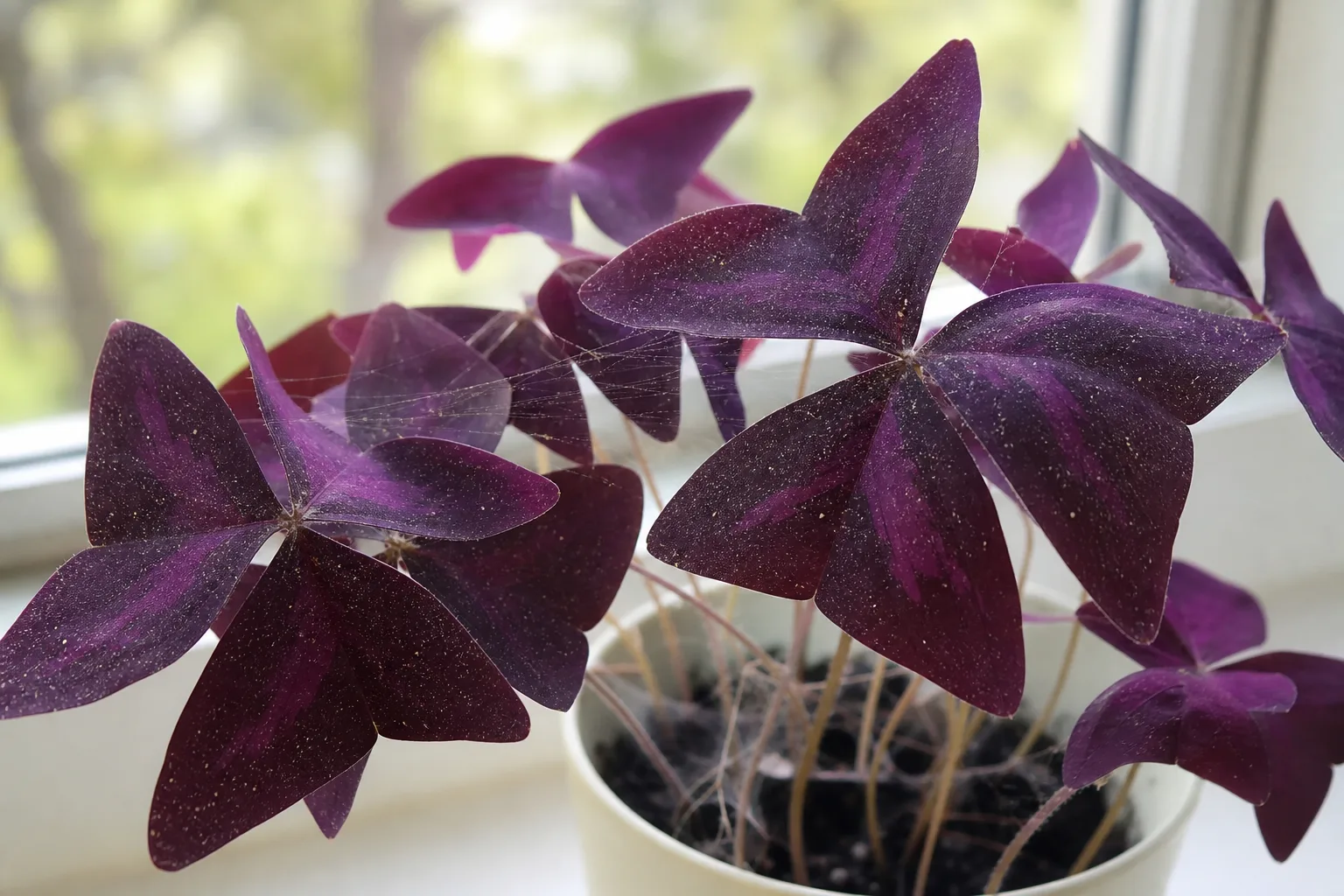
Spider Mites on Oxalis Triangularis: Causes, Checks & Fixes
This guide covers spider mites on Oxalis Triangularis. See also the general Spider Mites guide, watering, and light pages for this plant.
Spider Mites on Oxalis Triangularis: Causes, Checks & Fixes
Quick answer
Spider mites on Oxalis triangularis - purple shamrock, false shamrock, or love plant - show as fine webbing, yellow or silver stippling that dulls the signature purple leaflets, and tiny moving dots on undersides in warm, dry indoor air. Spider mites are arachnids, not insects, and low humidity in most indoor rooms favors their development - winter heating, AC vents, and sunny window ledges are common triggers on this species.
First step: isolate the plant and rinse every leaflet under lukewarm water, directing flow to undersides where dense trifoliate clusters hide colonies. Follow with weekly inspection and treatment until webbing clears - one rinse rarely ends the cycle because mites develop from egg to adult in about two weeks at 75°F.
For whole-margin crisping across many leaves in a dry heated room, cross-check the low humidity on Oxalis Triangularis guide - dry air and mites often stack. This page focuses on webbing, stippling, confirmation tests, rinse-and-soap recovery, and dormancy lookalikes.
What spider mites look like on Oxalis triangularis
Purple shamrock leaflets are thin and packed in tight clusters - perfect cover for mites until stippling steals the anthocyanin color that makes the plant distinctive.
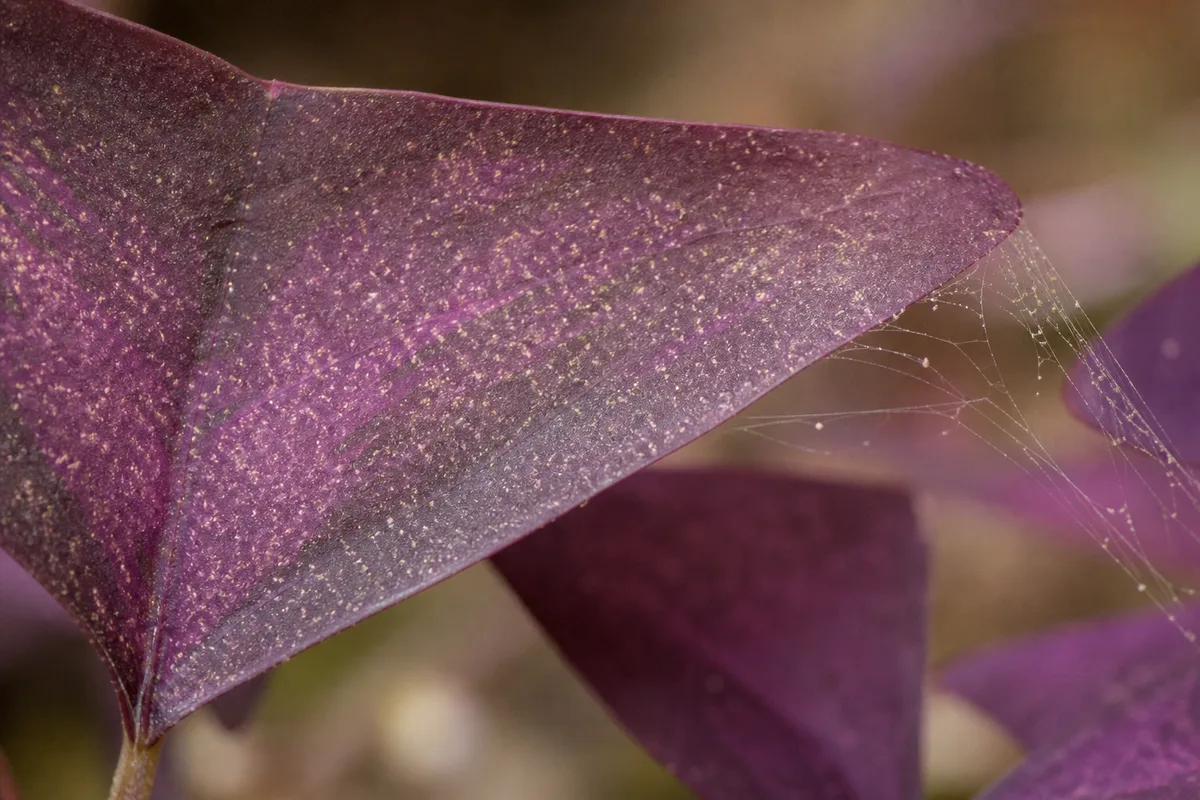
Spider Mites symptoms on Oxalis Triangularis - compare with healthy tissue on the same plant.
Classic spider mite signature:
- Fine silk webbing between leaflets, along petioles, and at stem tips - not the clean fold lines of normal nyctinasty
- Stippling - pale yellow or silver pinprick dots that make purple leaflets look dusty or washed out
- Leaflets curling or drying at edges on heavy infestations while webbing is visible
- Tiny moving specks on undersides - adults are about 0.02 inch (0.5 mm) long and need bright light or a 10× lens to see clearly
- Paper shake test - tap a leaflet over white paper; specks that crawl and smear red when crushed are mites, not dust
What mite damage is not: purple shamrock folds leaflets at dusk and reopens by mid-morning as normal nyctinasty - that nightly fold has no webbing or stippling. Natural dormancy drops leaves cleanly after seasonal fade without stippled tissue on remaining foliage. Wet soil with sour smell and soft rhizomes point to overwatering or root rot - not mites.
Why Oxalis triangularis gets spider mites
Spider mites reproduce rapidly in dry conditions. They are not picky about species - they follow warm, dusty, low-humidity microclimates. Oxalis triangularis makes those microclimates more likely in several specific ways:
Dense leaflet clusters on undersides. Each trifoliate leaf sits close to its neighbors. Mites colonize the sheltered underside pockets where airflow is weakest and rinse water often misses - stippling dulls purple color before owners notice movement on top.
Winter heating and window ledges. Purple shamrock is commonly grown on bright south- or west-facing sills for color. Winter glass plus central heat drops relative humidity beside the foliage into the mite-favored zone - often below 40% - while the plant still photosynthesizes actively under supplemental light.
Dormancy confusion delays treatment. After flowering or summer heat, shamrock naturally fades and drops foliage during its rest period. Owners who assume all leaf loss is seasonal may miss webbing on the last remaining leaflets - mites keep feeding until the plant is bare and rhizomes are stressed.
Low-humidity stacking. Dry air alone can crisp margins on thin purple leaflets. When humidity stays low, mites establish faster and stippling accelerates edge burn. See low humidity when whole margins crisp without early webbing.
Dusty leaf surfaces. Dusty indoor conditions favor mite activity on leaves that are rarely rinsed. Shamrock’s smooth leaflets collect dust on upper surfaces while colonies breed underneath.
The mites are the visible pest. The underlying culture risk on purple shamrock is chronic dry air beside heat sources - the same environment that invites yellow leaves from stress and slows recovery after treatment.
Spider mites vs. lookalike symptoms
| What you see | Likely cause | Quick check |
|---|---|---|
| Fine webbing + stippling on undersides | Spider mites | Paper shake; moving red-smear specks |
| Crispy margins only; no webbing; hygrometer below 40% | Low humidity | No mites on shake test; see low humidity |
| Uniform yellowing on older leaves; steady soil moisture | Natural aging or nutrient stress | No webbing; see yellow leaves |
| Pale stretch; wide internodes; weak color | Too little light | No stippling; see not enough light |
| Limp stems; wet heavy pot; no stippling | Overwatering | Sour soil; firm corms absent - see overwatering |
| All leaves fade pale together post-flowering; no webbing | Natural dormancy | Firm rhizomes below soil; clean leaf drop |
| White cottony clumps in leaf axils | Mealybugs | Waxy coating, not silk webbing - see mealybugs |
| Leaflets fold at night only | Normal nyctinasty | Reopens by morning; no stippling |
How to confirm the cause
Work through these checks before reaching for sprays. Confirm mites on the plant - not just in the room.
-
Isolate first - Move the pot away from neighbors. Mites walk and drift on air currents; quarantine limits spread while you treat.
-
Inspect undersides with bright light - Tilt each trifoliate cluster and look at the underside plane. Stippling appears before webbing is obvious on purple tissue.
-
Webbing at leaflet bases - Silk threads at petiole joints and between adjacent leaflets confirm active colonies - not the smooth fold of nyctinasty.
-
Paper shake test - Hold white paper under a leaflet, tap firmly, wait 10 seconds. Moving specks that smear red are spider mites.
-
Humidity and placement - Hold a hygrometer within 30 cm of foliage. Readings below about 40% beside a vent or radiator support mite risk even before webbing spreads.
-
Dormancy screen with corm-firmness test - If many leaves are dropping, gently tip the pot and inspect rhizomes. NC State notes that rhizomes with scale leaves store water - firm, plump corms with clean leaf abscission and no stippling on the last leaves fit natural dormancy. Soft, mushy corms on wet soil mean rot, not mites. Webbing plus stippling on fading foliage means treat pests before assuming seasonal rest.
-
Rule out watering and light errors - Steady soil moisture with firm corms but stippling still points to mites. Wet heavy pots without stippling point to overwatering. Pale stretch without webbing points to not enough light.
You have likely confirmed spider mites when webbing or stippling is present on undersides, shake-test specks move and smear red, and lookalike rows in the table above are ruled out.
First fix for Oxalis triangularis
Rinse every leaflet thoroughly under lukewarm water - especially undersides.
Take the pot to a sink or shower. Support each trifoliate cluster with one hand and direct lukewarm (not hot) water across the underside plane until runoff carries away webbing and mobile mites. UC IPM recommends washing leaf surfaces with water as a primary mite management step. Repeat the rinse twice in the first session - once for tops, once angling for undersides.
After rinsing:
- Increase humidity modestly toward 40–50% at plant level with a humidifier or pebble tray (pot base above water - not soggy soil). See low humidity for placement away from vents.
- Keep the plant isolated until two weekly inspections show no new webbing.
- Do not fertilize while foliage is stippled - stressed shamrock does not need feed; fix the pest first.
If webbing returns within one week after a thorough rinse, move to the step-by-step recovery protocol below - rinsing alone rarely clears overlapping generations.
Step-by-step recovery
Layer treatments in this order based on severity. Do not stack every product on day one.
-
Repeat rinse every 3–5 days for two weeks - Mites hatch on overlapping cycles; a single wash misses eggs. Shower undersides until runoff is clear each session.
-
Raise humidity and fix placement - Move the pot at least 60 cm from heating vents and AC returns. Run a humidifier to hold 40–50% beside the foliage during active growth. Humidity supports recovery but does not replace rinsing or sprays on an active infestation.
-
Prune heavily stippled leaflets (optional) - Snip individual trifoliate leaves that are more web than tissue. Bag and discard clippings - do not compost near other pots. Purple shamrock pushes new leaflets from rhizomes when culture is corrected.
-
Escalate to insecticidal soap if webbing persists after one week of rinsing - See the soap protocol in the next section. Skip this step if rinsing alone is winning.
-
Horticultural oil as a labeled alternative - UC IPM lists horticultural oil alongside soap for mite control when soap is insufficient. Use only products labeled for houseplants and spider mites. Test one leaflet first; avoid water-stressed plants and temperatures above 90°F.
-
Inspect neighbors - Mites spread to pots on the same shelf. Rinse and monitor any shamrock or thin-leaved plant within 1 meter even if symptoms are not visible yet.
-
Match watering to growth phase - During active growth, water when the top inch of mix dries per the watering guide. During dormancy, taper sharply - mite-stressed plants in soggy mix invite rot on rhizomes already weakened by feeding.
Do not reach for broad-spectrum houseplant insecticides first - some products kill mite predators and can spike populations.
Insecticidal soap on Oxalis triangularis
Insecticidal soap is the first chemical escalation after rinsing fails - not the opening move.
When to start: Webbing or stippling returns 5–7 days after two thorough rinses, or shake-test specks still move on multiple leaflets.
How to apply safely on purple shamrock:
- Use a commercial insecticidal soap labeled for houseplants and mites - not dish detergent, which can burn thin leaflets.
- Spray until runoff on undersides of every leaflet cluster, including petioles and stem tips where webbing anchors.
- Apply in bright indirect light or shade - avoid hot direct sun on wet purple leaves, which can bleach.
- Test one trifoliate leaf and wait 48 hours before full application. Oxalis is generally soap-tolerant, but variegated or recently repotted plants are more sensitive.
- Repeat every 5–7 days for 3–4 weeks - soap kills on contact and does not persist; eggs hatch on a rolling schedule. Missing one week lets the population rebound.
- Rinse leaflets 24 hours after each soap application if the label allows - removes residue that can dull purple color and dislodges survivors.
When to stop soap: Two consecutive weekly inspections with no webbing, no new stippling on newest leaflets, and a clean paper shake test.
When to escalate past soap: If stippling spreads to new growth after three soap cycles, switch to a labeled horticultural oil per UC IPM guidance, or consider discarding a severely infested small pot to protect the collection - UC IPM notes that discarding may be best when infestation persists on a heavily infested plant.
Recovery timeline
Stippling on old leaflets does not reverse - purple tissue that turned silver or yellow stays damaged. Judge success on new trifoliate leaves opening clean without stippling or webbing.
| Phase | What to expect |
|---|---|
| Week 1 | Webbing reduced after first rinses; some stippling remains on older leaves |
| Weeks 2–3 | New leaflets emerge with stronger color; shake test shows fewer specks |
| Weeks 3–4 | With consistent rinse or soap cycles, webbing absent on two consecutive weekly checks |
| Dormancy overlap | If the plant enters natural rest during treatment, continue underside checks on any remaining foliage; firm corms can carry a low population into dormancy if untreated |
Signs you are winning:
- Newest shamrock leaves open fully purple without pinprick stippling
- Paper shake test produces no moving specks
- No fresh silk at leaflet bases after weekly inspection
- Petioles stay firm; rhizomes remain plump when you tip the pot
Signs the problem is deepening:
- Webbing spreads to new growth despite weekly rinsing
- Leaflets drop with heavy stippling while corms soften on wet soil - possible rot layered on pest stress
- Mites appear on neighboring pots
- Purple color does not return on new leaves after four weeks of treatment
Mistakes to avoid
Do not assume all leaf drop is dormancy when webbing or stippling is present - confirm corm firmness and inspect the last leaves before stopping treatment. Do not mist leaves as your only humidity fix while skipping underside rinses - misting does not dislodge established colonies. Do not spray insecticidal soap in hot afternoon sun on purple leaflets. Do not use dish soap instead of labeled insecticidal soap. Do not stop treatment after one application because adults disappeared - eggs still hatch. Do not place the plant back beside neighbors before two clean weekly inspections. Do not overwater because leaflets look dry - mite-stressed shamrock on soggy mix risks rhizome rot. Do not apply pyrethroid sprays casually; they often harm mite predators without controlling mites.
Oxalis triangularis care cross-check
While clearing mites, align culture with growth phase:
| Phase | Humidity target | Watering | Mite risk if ignored |
|---|---|---|---|
| Active growth | 40–50% at foliage | Top 1 in dry between drinks | Dry vent zones → rapid reproduction |
| Slow winter growth | 40%+; humidifier if heated | Longer intervals; verify by touch | Window ledge + heat = hotspot |
| Early dormancy (foliage fading) | Moderate; do not soak | Taper sharply | Treat mites before assuming rest |
| Full dormancy (no foliage) | Low requirement | Nearly dry mix | Low visible risk; inspect stored pots nearby |
Also cross-check:
- Light - Bright indirect exposure supports recovery; see the light guide if new leaves arrive pale and thin after mite clearance.
- Airflow - Gentle room air helps dry leaf surfaces after rinsing; avoid stagnant hot corners.
- Quarantine - Hold new shamrocks six weeks before placing beside established pots; inspect undersides at intake.
How to prevent spider mites on Oxalis triangularis
Maintain 40–50% humidity beside the foliage in heated or air-conditioned rooms - humidifier beats occasional misting. Keep pots away from heating vents, radiators, and blowing AC. Rinse undersides monthly during active growth to remove dust and early colonists before webbing forms. Inspect undersides weekly in winter when indoor air is driest. Quarantine new plants six weeks and run a paper shake test at arrival. When whole margins crisp without mites, fix dry air per low humidity - prevention and mite control share the same humidity culture.
When to worry
Act beyond basic rinsing if:
- Webbing covers most leaflet clusters and new growth arrives already stippled
- Mites spread to multiple pots on the same shelf despite isolation
- Leaf drop accelerates with soft rhizomes and wet soil - possible root rot overlapping pest stress
- Four weeks of rinse-and-soap cycles fail to produce clean new leaves
- You cannot isolate the plant and the collection includes rare or hard-to-replace specimens
In those cases, consider discarding a severely infested small pot per UC IPM guidance, sterilizing the shelf, and starting fresh from firm dormant rhizomes rather than fighting a reservoir infestation through dormancy.
Frequently asked questions
How can I confirm spider mites on Oxalis triangularis?
Confirm with fine silk webbing between leaflets and stems, tiny moving dots on leaf undersides when viewed with bright light or magnification, and stippling that dulls the purple color. Shake a leaflet over white paper - specks that smear red are mites, not dust.
Why does Oxalis triangularis get spider mites indoors?
Spider mites thrive in warm, dry air - common near heaters, AC vents, and sunny windows in winter. Purple shamrock’s dense leaflet clusters create sheltered dry pockets on undersides where mites reproduce fast when humidity drops below 40%.
Will spider mites trigger Oxalis dormancy?
Heavy feeding stress can cause leaf drop that resembles natural dormancy, but mite damage shows stippling and webbing first. Natural dormancy follows seasonal rhythm with firm rhizomes - do not assume all leaf loss is seasonal if webbing is present.
Is insecticidal soap safe on Oxalis triangularis?
Diluted insecticidal soap on leaf undersides works when applied in shade and rinsed after the label interval. Test one leaflet first. Avoid spraying during hot direct sun - purple leaves can bleach. Repeat weekly for 3–4 weeks to catch new generations.
How do I prevent spider mites on Oxalis triangularis?
Maintain moderate humidity, avoid placing pots directly under heating vents, inspect undersides weekly during dry months, and quarantine new plants. A light shower rinse monthly in warm months dislodges early colonies before webbing spreads.
Pet safety note
The ASPCA lists shamrock plant (Oxalis spp.) as toxic to cats and dogs due to soluble calcium oxalates. Mites themselves are not a pet hazard, but keep rinsed leaflets and spray bottles away from curious animals. Wash hands after handling damaged foliage. Contact your veterinarian or ASPCA Poison Control at (888) 426-4435 if ingestion is suspected.
Conclusion
Spider mites on Oxalis triangularis - purple shamrock - are a dry-air pest problem on thin purple leaflets, not a mysterious collapse. Confirm webbing and stippling on undersides, run the paper shake test, rule out dormancy with a firm-rhizome check, then isolate and rinse before escalating to insecticidal soap on a 3–4 week schedule. When new trifoliate leaves open clean and webbing stays gone for two weekly inspections, the infestation is beat - and correcting humidity beside heat sources keeps mites from returning.
This guide was written by sai-ananth, reviewed by the LeafyPixels Review Board on 2026-06-16, and checked against NC State Extension, UC IPM, University of Maryland Extension, Colorado State Extension, Missouri Botanical Garden, and MU Extension references plus our Oxalis care data. For baseline culture, see the Oxalis Triangularis overview.
Related guides:
- Low humidity - dry air that stacks with mite risk
- Yellow leaves - stress yellowing without webbing
- Not enough light - pale stretch lookalike
- Overwatering - wet-soil stress during recovery
- Root rot - soft rhizomes when mites and moisture collide
- Mealybugs - waxy clumps, not silk webbing
- Oxalis Triangularis overview - full care hub
When to use this page vs other Oxalis Triangularis guides
- Oxalis Triangularis watering guide - Use for routine moisture checks before assuming spider mites is the main issue.
- Oxalis Triangularis problems hub - Browse all 17 common issues on this species.
- Low Humidity on Oxalis Triangularis - Different entry point when symptoms overlap with spider mites.
- Slow Growth on Oxalis Triangularis - Different entry point when symptoms overlap with spider mites.