Yellow Leaves on Oxalis Triangularis: Causes, Checks & Fixes
Quick answer
Widespread yellowing on Oxalis Triangularis is often normal dormancy after flowering-not overwatering. First, check rhizome firmness and soil moisture before adding water. If corms feel firm and the pot is not sour-wet, taper watering and let die-back finish; if rhizomes are mushy in wet mix, stop watering and inspect for rot.
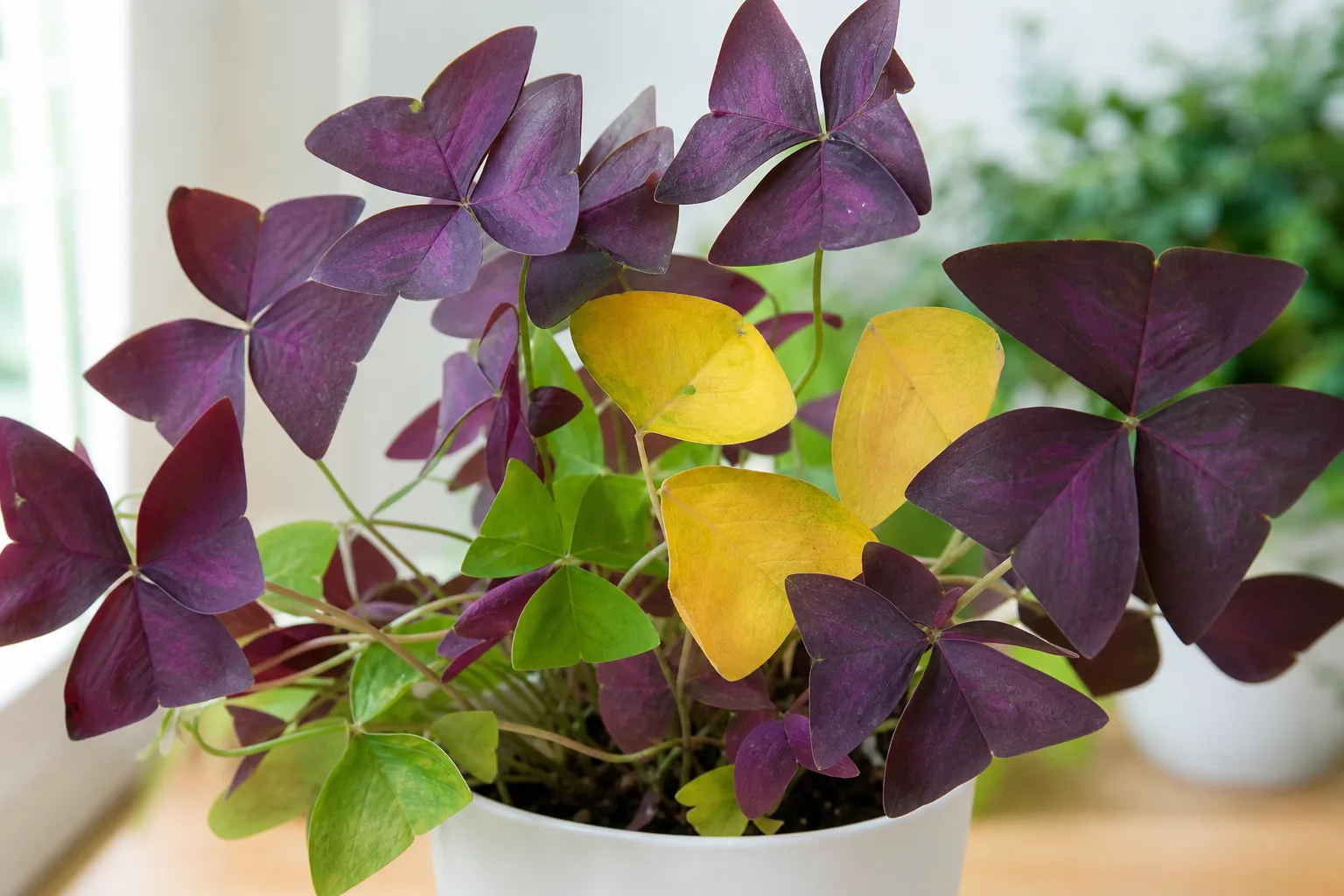
Yellow Leaves on Oxalis Triangularis: Causes, Checks & Fixes
This guide covers yellow leaves on Oxalis Triangularis. See also the general Yellow Leaves guide, watering, and light pages for this plant.
Yellow Leaves on Oxalis Triangularis: Causes, Checks & Fixes
Quick answer
Yellow leaves on Oxalis Triangularis (Oxalis triangularis, purple shamrock) are not one problem-they are a symptom cluster where the same color change can mean normal dormancy, rhizome rot, low light, or harmless aging. The mistake that kills more pots than any pest is watering a yellowing shamrock on an active-growth schedule while it is trying to rest.
First step: check rhizome firmness and soil moisture before you change anything else. Lift the pot. Push a finger or wooden skewer about 1 inch (2.5 cm) deep into the mix. Gently brush soil from the crown and feel the rhizomes-underground structures with scale leaves that store water and nutrients. Firm corms with gradually drying mix during widespread yellowing usually mean dormancy or seasonal die-back-taper watering, do not repot, and wait for new shoots. Mushy rhizomes in wet, sour-smelling soil mean rot risk-stop watering immediately and inspect before adding moisture.
Separate normal nyctinastic folding at night from stress wilt. Purple shamrock folds leaflets after dusk and reopens with morning light-that rhythm is expected. Daytime collapse with a heavy wet pot is not.
Why Oxalis Triangularis gets yellow leaves
Purple shamrock yellows for reasons tied to its rhizome storage biology, dormancy cycle, and light-dependent purple pigment-not the generic rosette senescence pattern many houseplant guides assume.
The dormancy trap: widespread yellowing that is often normal
Many false shamrock plants enter a rest period after flowering, in autumn, or after prolonged heat. Foliage yellows from the outside in, stems collapse, and leaflets stop reopening in daylight. NC State Extension notes the species may go dormant for a while in autumn or if conditions get too hot or dry, and advises cutting back on watering until new growth appears.
This die-back looks alarming-owners often assume overwatering or underwatering on Oxalis Triangularis when biology is simply shifting energy underground. The distinguishing check is firm rhizomes and mix that dries down as foliage disappears, not a perpetually heavy wet pot.
Overwatering and rhizome rot during active growth or die-back
University of Missouri Extension lists yellowing or drooping leaves as usually caused by overwatering or poor drainage. Shamrocks store water in rhizomes but cannot tolerate soggy mix-wet soil is a quick way to kill a false shamrock.
Rot risk peaks when growers keep evenly moist rhythms through visible die-back. A resting plant is not pulling moisture; saturated soil around dormant rhizomes invites decay. Yellowing with limp stems that stay limp through midday, sour odor, and soft dark rhizomes is rot-not dormancy.
Low light and anthocyanin fade
Deep burgundy color comes from anthocyanin pigments that are costly to maintain in dim conditions. In low light, new leaves emerge paler, greener, or yellow-green while petioles stretch toward windows. Chronic shade also slows dry-down, so soil stays wet longer-yellowing from rot and light stress can overlap in the same pot.
See the Oxalis Triangularis light guide for placement targets and fade recovery.
Natural lower-leaf senescence during active growth
During active growth, one or two oldest bottom leaves may yellow and dry over months while the crown stays purple and new leaflets keep opening. That pattern is cosmetic aging-not dormancy and not rot. Remove spent stems at the soil line when fully yellow and dry.
Nyctinasty confusion: nightly fold is not always wilt
Healthy purple shamrock closes leaflets in the evening and opens them after morning light returns-MU Extension describes shamrocks as “rockin’ by day, dozin’ at night.” Owners see folded, drooping foliage at bedtime and water, sometimes into already-wet soil.
Morning test: if leaflets reopen within an hour or two of meaningful daylight and soil is appropriately dry at the surface, nyctinasty-not yellow-leaf stress-is what you observed. If leaflets stay clamped shut through midday with moist heavy soil, investigate overwatering before assuming thirst.
What yellow leaves look like on Oxalis Triangularis
Dormancy die-back vs. stress yellowing
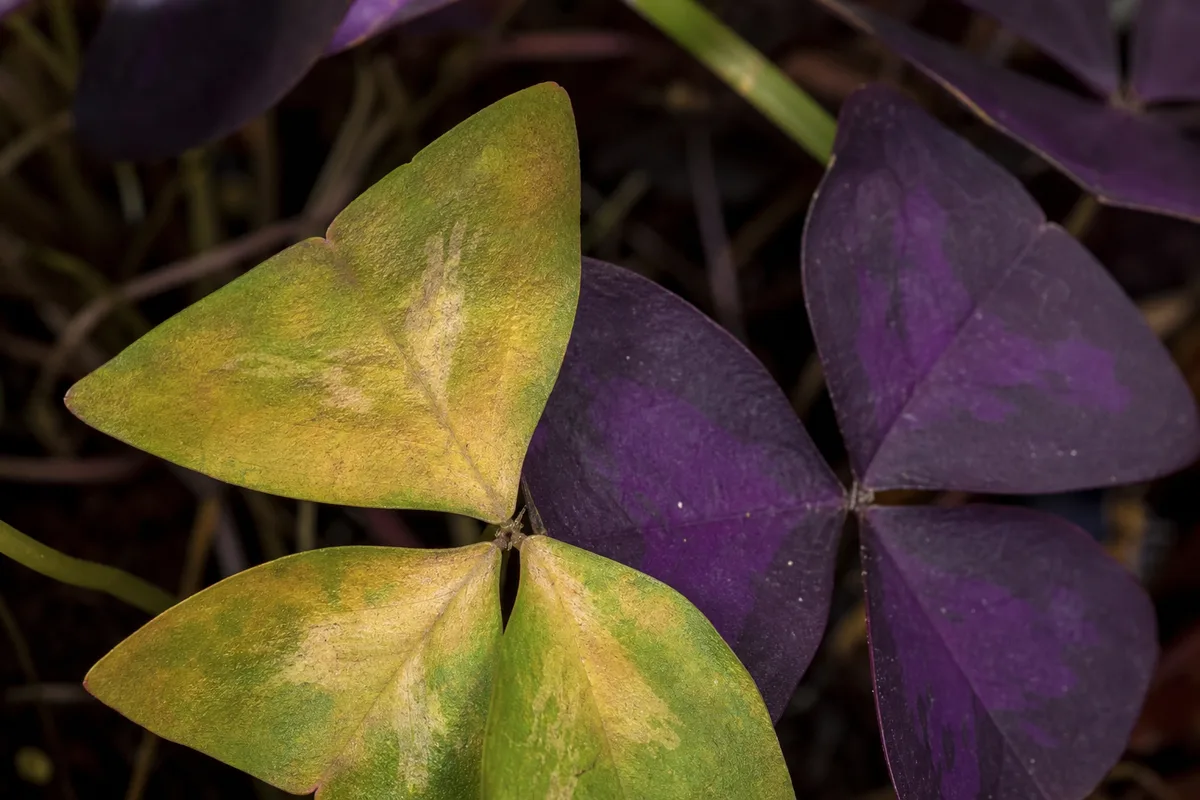
Yellow Leaves symptoms on Oxalis Triangularis - compare with healthy tissue on the same plant.
Dormancy pattern: widespread yellowing across the mound over one to three weeks, often after bloom or as days shorten; leaflets stop opening in daylight; mix gradually dries; rhizomes firm when inspected.
Active-growth stress: yellowing on living foliage while you are still on a regular watering rhythm; may be scattered rather than whole-mound die-back; new leaves may still emerge briefly before collapse if rot or severe underwatering is involved.
Overwatering signs: wet pot, limp stems, sour mix
- Yellowing spreads while soil stays wet and the pot feels heavy
- Stems limp through midday, not just at night
- Sour or musty smell from the mix
- Mushy, dark rhizomes at the crown
- Fungus gnats in constantly moist soil
For wet-soil deep dives, see overwatering and root rot on this plant.
Low-light fade: pale upper leaves and leggy stems
- Newest leaves emerge washed green or yellow-green, not deep purple
- Long thin petioles lean toward the brightest direction
- Older purple leaves may stay colored while new growth pales
- Pot may stay wet longer because evaporation is slow in dim corners
Lookalikes: aging vs. root rot vs. spider mite stippling
| Pattern | Clues | Likely cause |
|---|---|---|
| One to two bottom leaves yellow over months | Crown green, new leaflets purple, firm rhizomes | Normal aging |
| Whole mound yellows after flowering | Firm rhizomes, mix drying, seasonal timing | Dormancy |
| Yellow spread + wet heavy pot + sour smell | Mushy rhizomes, midday limpness | Overwatering / rot |
| Pale new growth + stretch, no sour soil | Dim placement, slow dry-down | Low light |
| Fine stippling, webbing on leaflets | Spotty yellow dots, not uniform wash | Possible spider mites |
How to confirm the cause
Work through these checks in order before fertilizing, Oxalis Triangularis repotting guide, or moving the plant repeatedly:
- Pot weight and surface moisture - Lift the pot. Heavy with damp surface during widespread yellowing suggests overwatering or rot, not dormancy alone.
- Finger or skewer at 1 inch depth - Dry surface during active growth means thirst may contribute; persistently wet top inch during die-back means stop scheduled watering.
- Rhizome firmness - Gently expose crown rhizomes. Firm and pale supports dormancy or aging. Soft, slimy, or dark requires rot protocol.
- Morning nyctinasty check - Reopening leaflets after light return rules out simple nightly folding as the problem.
- Light audit - Can you read comfortably without a lamp at midday near the foliage? Pale new leaves in a dim corner fit light fade.
- Season and bloom history - Yellowing after a flower wave or in autumn fits dormancy; sudden yellowing in a hot wet summer pot fits rot risk.
Confirmation decision table
| If you see… | And rhizomes are… | And soil is… | First read |
|---|---|---|---|
| Whole-mound yellow die-back | Firm | Drying down | Dormancy-taper water |
| Widespread yellow + midday limpness | Mushy or soft | Wet, sour | Rot-stop water, inspect |
| Pale new leaves + stretch | Firm | Often wet too long | Low light (+ possible secondary rot) |
| One to two bottom leaves only | Firm | Normal dry-down | Aging-remove spent stems |
| Folded leaves at 10 p.m. only | Firm | Appropriate moisture | Normal nyctinasty |
First fix for Oxalis Triangularis
Pick one branch based on confirmation-do not stack repot, fertilizer, and heavy watering the same day.
Dormancy cases: taper, then stop
When die-back is widespread and rhizomes are firm:
- Taper watering to a light drink every 2 to 3 weeks while some foliage remains
- Once above-ground growth is fully gone, stop watering for roughly 2 to 12 weeks until new shoots appear
- Move to a cool, dim rest spot if desired; do not fertilize into yellowing foliage
- Do not repot unless rhizomes are mushy
Full dormancy watering steps live in the Oxalis Triangularis watering guide.
Active-growth overwatering: stop watering and improve drainage
When mix is wet and rhizomes are soft:
- Stop watering immediately
- Empty saucers and cachepots; confirm drainage holes are open
- Unpot and inspect-trim mushy rhizome tissue with sterile tools, callous survivors 1 to 3 days, repot in mix with 20 to 25 percent perlite
- Resume water only when new growth appears-or follow dormancy protocol if the plant finishes die-back during recovery
Low light: move to bright indirect light
Relocate to bright indirect light within 1 to 3 feet (30 to 90 cm) of an east-facing window or equivalent. Acclimate over 7 to 14 days to avoid sun scorch. Judge success by the next two new leaves-returning purple depth confirms light was the driver.
Adjust watering after the move because dry-down speed will change.
Aging: remove spent lower leaves only
Cut fully yellow, dry stems at the soil line. Leave green foliage untouched. No repot or fertilizer needed.
Recovery timeline
Dormancy: old yellow leaves drop; bare soil for 2 to 12 weeks is normal. Success is firm rhizomes and eventually white or pink nubs at the surface, then new purple leaflets within days of the first thorough wake-up watering.
Overwatering / rot: yellow leaves do not re-green-watch for stopped spread and new shoots over 2 to 8 weeks after rhizome rescue. Severe rot may need a full season.
Low light: existing pale leaves do not revert; new growth shows color improvement within 10 to 14 days after adequate light.
Aging: recovery is immediate once spent stems are removed; the crown keeps producing new leaflets.
What not to do
Do not water on a calendar while foliage is yellowing into dormancy-rot risk is highest when top growth is absent and mix stays wet. Do not fertilize yellowing shamrock during dormancy or on soggy soil; salts stress roots further. Do not repot into fresh wet mix without inspecting rhizomes when soil smells sour.
Do not mistake nightly folding for wilt and add water when the pot is already heavy. Do not discard the pot when all leaves yellow if rhizomes are firm-dormancy is often mistaken for death. Do not shear healthy purple foliage trying to “refresh” a plant that is entering rest.
How to prevent yellow leaves next time
During active growth, keep mix evenly moist with the top inch allowed to dry between waterings-check with finger, skewer, and pot weight, not leaf fold alone. Place the plant in bright indirect light so anthocyanins stay strong and pots dry predictably.
After flowering, watch for dormancy cues and taper water before the mound fully collapses. Use fast-draining mix with perlite, a drainage hole, and empty saucers after every drink. Remove one or two spent bottom stems promptly so decaying tissue does not hold moisture against the crown.
When to worry
Escalate when rhizomes feel mushy, soil smells sour or swampy, or rapid widespread collapse happens outside normal post-flowering or autumn timing with a perpetually wet pot. Those patterns need rhizome inspection within days-not next month.
Lower urgency: one or two bottom leaves yellow over months with firm rhizomes; whole-mound die-back after bloom with drying mix and firm corms; folded leaflets at night that reopen by morning.
Conclusion
Yellow leaves on Oxalis Triangularis reward a slow diagnosis. Confirm whether rhizomes are firm or mushy, whether soil is drying or sour-wet, and whether folding is nightly nyctinasty or midday wilt. Dormancy yellowing is often normal biology-taper and stop water. Rot yellowing in wet mix is urgent-stop water and rescue rhizomes. Low-light fade fixes with brighter placement and adjusted watering. Match the fix to the branch, and measure recovery by firm underground tissue and new purple leaflets, not by re-greening old yellow blades.
This guide was written by sai-ananth, reviewed by the LeafyPixels Review Board on 2026-06-16, and checked against NC State Extension, MU Extension, and NYBG references plus our Oxalis care data.
Related guides:
- Watering - evenly moist active growth, dormancy taper, and rot prevention
- Light - anthocyanin fade, nyctinasty, and window placement
- Overwatering - wet-soil yellowing deep dive
- Root rot - rhizome rescue when yellowing pairs with mushy corms
- Not enough light - placement audit when fade precedes collapse
- Oxalis Triangularis overview - full care hub
When to use this page vs other Oxalis Triangularis guides
- Oxalis Triangularis watering guide - Use for routine moisture checks before assuming yellow leaves is the main issue.
- Oxalis Triangularis problems hub - Browse all 17 common issues on this species.
- Overwatering on Oxalis Triangularis - Different entry point when symptoms overlap with yellow leaves.
- Underwatering on Oxalis Triangularis - Different entry point when symptoms overlap with yellow leaves.
- Not Enough Light on Oxalis Triangularis - Different entry point when symptoms overlap with yellow leaves.