Slow Growth on Oxalis Triangularis: Causes, Checks & Fixes
Quick answer
Slow growth on Oxalis Triangularis is often normal dormancy or a cautious post-dormancy wake-up. First, confirm which phase your plant is in before repotting or feeding.
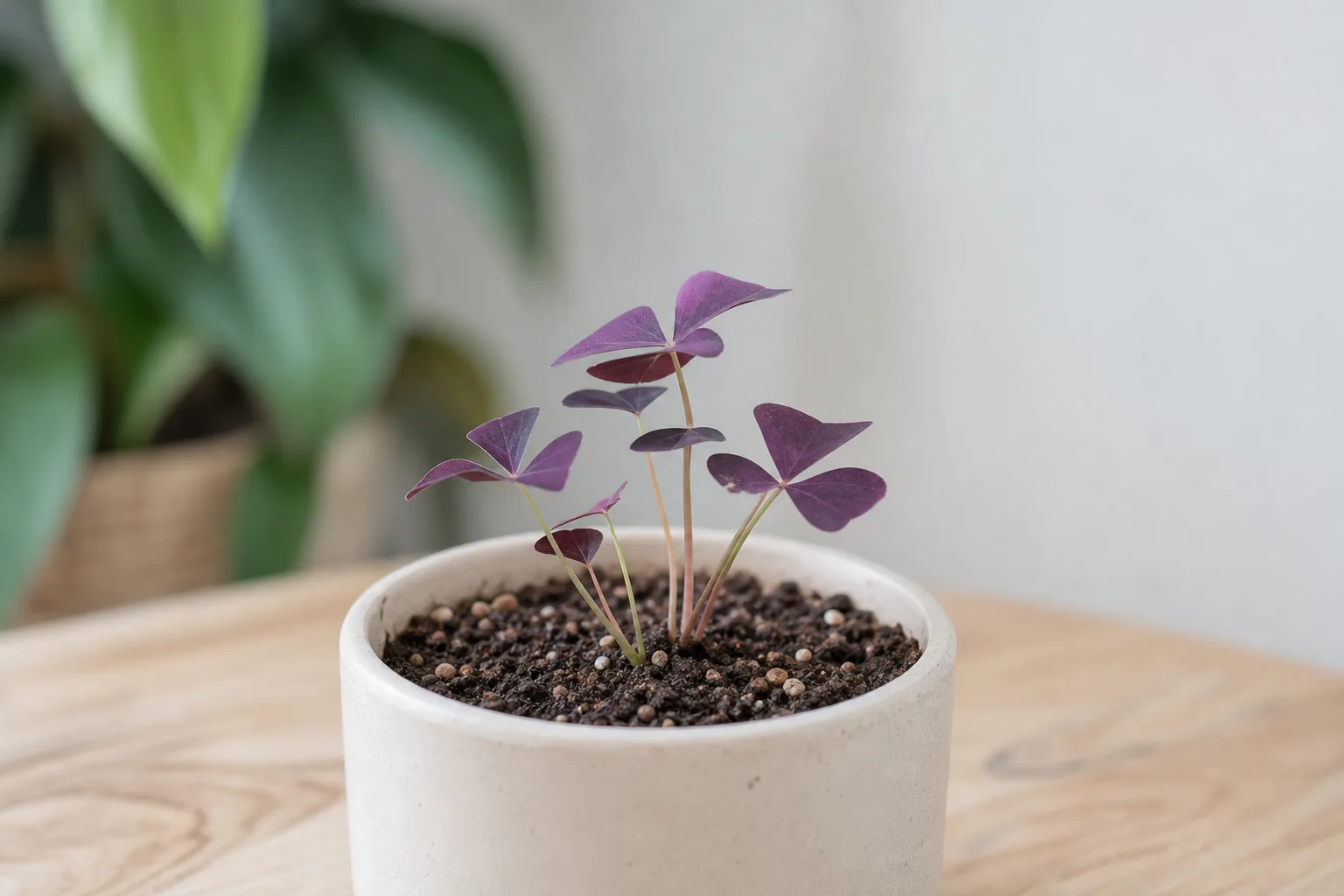
Slow Growth on Oxalis Triangularis: Causes, Checks & Fixes
This guide covers slow growth on Oxalis Triangularis. See also the general Slow Growth guide, watering, and light pages for this plant.
Slow Growth on Oxalis Triangularis: Causes, Checks & Fixes
Quick answer
Slow growth on Oxalis triangularis - purple shamrock, false shamrock, or love plant - is often normal biology, not a sign your plant is failing. This species grows from underground rhizomes with scale leaves that store water and nutrients, and it naturally rests for weeks to months after flowering, in autumn, or when stressed by heat or dryness. After that rest, new shoots emerge slowly at first - a post-dormancy establishment period that catches many owners off guard.
Bare pot + dry soil + firm rhizomes = rest, not failure. Do not repot, fertilize, or water heavily until you confirm which phase your plant is in.
First step: confirm whether your shamrock is dormant, waking, or actively stalled. If foliage is yellowing, collapsing, or already gone and the mix is dry, treat dormancy - reduce water and wait. If green leaves are present but no new ones appear for weeks during spring or summer, move the pot to brighter indirect light before any other fix. For ongoing watering rhythm during each phase, see the Oxalis Triangularis watering guide.
Nyctinasty vs. daytime growth stall
Purple shamrock folds its trifoliate leaflets at night and reopens them by mid-morning - a nyctinastic rhythm MU Extension describes as “rockin’ by day, dozin’ at night.” Nightly folding is normal. A growth stall is different: daytime leaves stay closed, new trifoliate leaves fail to unfurl for weeks during what should be active growth, or the plant produces no new shoots at the soil line while existing foliage looks static. If leaves open each morning but the plant adds no new ones, suspect light, temperature, or crowded corms - not nyctinasty confusion.
What slow growth looks like on Oxalis Triangularis
On this plant, “slow” can mean three very different things:
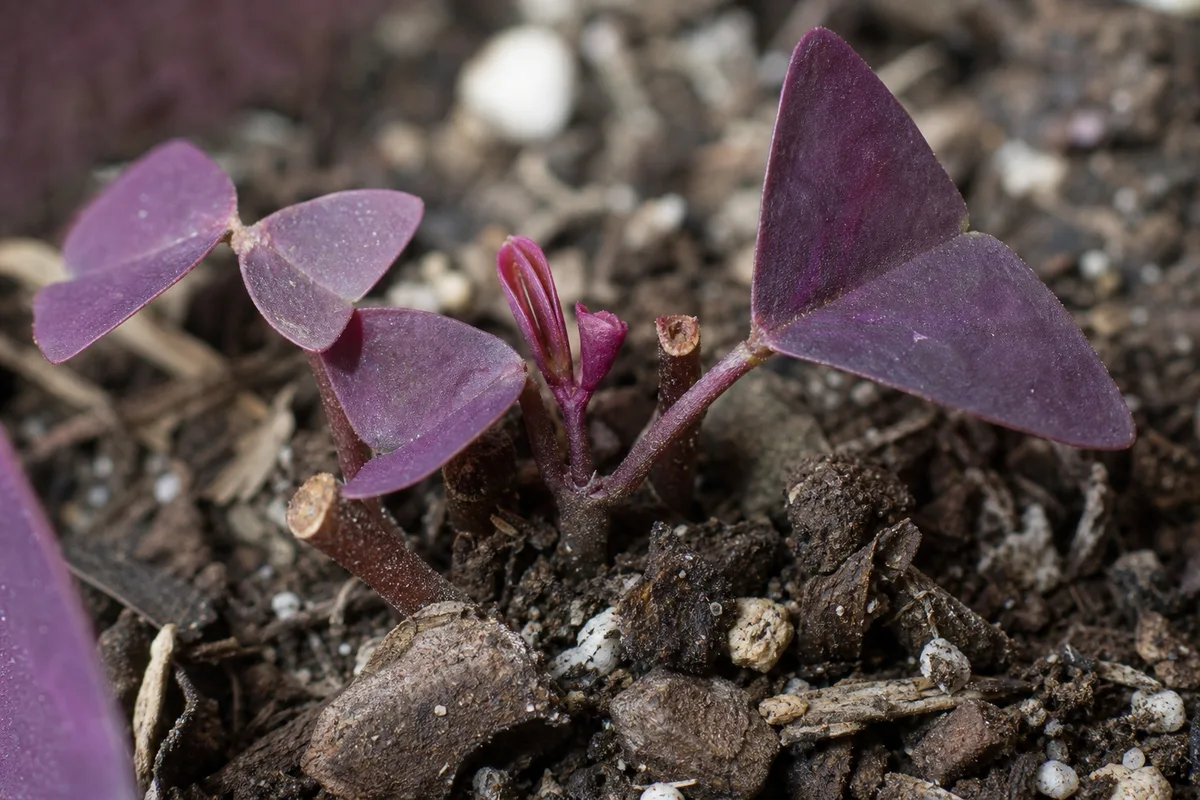
Slow Growth symptoms on Oxalis Triangularis - compare with healthy tissue on the same plant.
Normal dormancy - Leaves fade from purple to pale green, then brown. Stems collapse. Daytime leaf opening stops before full dieback. The pot may look empty while firm rhizomes sit below dry soil. Growth is not slow; it is paused by design.
Post-dormancy wake-up - Tiny white or pink nubs push through the soil. The first leaves are small and spaced far apart. New stems may take two to four weeks to reach the size of last season’s foliage. That cautious start is typical after rest.
Active-season stall - The plant keeps existing leaves but produces few or no new trifoliate leaves for weeks while light is dim, temperatures stay cool, or corms are crowded in an unchanged pot. Stems may stretch toward the window. Purple color often fades toward green on new growth - overlap with leggy growth when internodes lengthen.
Signs that point to a problem, not normal rest:
- Green upper leaves stay static for six or more weeks in bright spring light with appropriate watering
- New leaves emerge smaller and paler each cycle while stems lengthen
- Soil stays wet for days after one drink while growth stops - roots may be struggling
- Yellowing spreads through living foliage while soil is damp - see root rot, not simple slow growth
Healthy Oxalis during active growth often unfurls new leaves regularly when light and water are matched. NC State Extension lists a medium growth rate for the species - not fast like a pothos, but visibly forward during the growing season.
Why Oxalis Triangularis grows slowly
Dormancy and post-dormancy rest
Purple shamrock enters dormancy after flowering, in autumn, or when conditions turn too hot or too dry. NC State Extension notes the plant may go dormant for a while in autumn, or if it gets too hot or too dry - cut back on watering and wait for new growth. On purple shamrock, that means a bare pot is often the expected autumn or post-flowering endpoint, not evidence the corms died. MU Extension describes shamrock plants entering a resting period after flowering or during stress; leaves yellow, droop, or die back completely, then new growth emerges from underground tubers after several weeks to a few months.
That cycle is annual and expected. Growth does not resume on your schedule - it resumes when the corms have rested and conditions improve. Post-flowering stall often precedes this rest - see bud drop when flowers fade and growth pauses together.
Insufficient light
Oxalis triangularis builds purple pigment and new tissue from light energy. MU Extension states that too little light results in sparse growth and fewer blooms, while leggy growth indicates low light. In dim corners, the plant survives on stored rhizome reserves but adds little new foliage. Growth looks “stuck” even when watering is fine - the same bottleneck drives not enough light and leggy growth pages.
Cool temperatures and seasonal slowdown
This species prefers roughly 15–24°C (60–75°F) during active growth. Michigan State University Extension notes that shamrock exposed to temperatures above 80°F (27°C) can wilt and go dormant - heat stress shuts growth down. On purple shamrock, a mid-summer heat wave can flip an actively growing plant into dormancy within days. Cool rooms below about 15°C also slow metabolism. Winter windowsills with cold drafts can stall new leaves without triggering full dormancy.
Crowded corms and old mix
Oxalis spreads by dividing rhizomes. After a strong season, multiple corms compete in one pot. Roots and rhizomes circling the container limit uptake efficiency, and depleted substrate holds less air. Growth continues but at a crawl - often with the pot drying very fast between waterings. Repot with 20–25% perlite in fresh mix when corms fill the container, timing the job for early active growth per the watering guide.
Overwatering during low-growth phases
Shamrocks are sensitive to excess moisture. MU Extension warns that waterlogging can cause root or tuber rot. MSU Extension adds the species cannot tolerate overly wet soils. Watering on an active-growth schedule while the plant is dormant or barely waking keeps rhizomes wet when they are not drinking - rot risk rises and genuine new growth may never start. That wet-dieback pattern is overwatering during dormancy, not slow growth alone.
Chronic mild stress
Repeated drafts, sudden moves between very different light levels, or feeding during dormancy do not usually kill Oxalis quickly, but they consume energy that would otherwise fuel new leaves. Slow growth from stacked small stressors is common after repotting or a harsh season.
Slow growth vs. lookalike symptoms
| What you see | Likely cause | Quick check |
|---|---|---|
| Bare pot, dry light mix, firm rhizomes | Normal dormancy | No sour smell; corms plump below soil |
| Tiny nubs at soil line, small first leaves | Post-dormancy wake-up | Sprouts present; patience + bright light |
| Green leaves, no new growth, faded purple, long stems | Low-light stall | See leggy growth |
| Yellowing + wet soil + sour smell + soft corms | Corm or root rot | Urgent - see root rot |
| Sprouts stall, dust-dry mix throughout | Underwatering during wake-up | Pot very light; one thorough soak then dry-down |
| Flowers fade, then growth pauses | Post-flowering dormancy approach | Seasonal; see bud drop |
| Leaflets fold at night, open by morning | Normal nyctinasty | Not a growth stall |
| Brief pause 1–2 weeks after repot | Transplant adjustment | Firm corms; resume if no growth by week four |
How to confirm the cause
Work through these checks in order:
- Foliage status - Is the plant bare, dying back, or fully leafed? Bare or dying back = dormancy or post-dormancy until proven otherwise. Full green canopy = active-season diagnosis.
- New shoots from soil - Look for nubs at the soil surface. Even ¼-inch sprouts mean the corms are alive and waking; patience and bright light are the main needs.
- Season and recent history - Did it flower recently? Did leaves stop opening in daytime before collapse? Did a heat wave or dry spell precede the stall? Those patterns fit dormancy.
- Light exposure - How many hours of bright indirect light does the pot receive? Can you read comfortably without a lamp next to the plant? If not, light is a likely bottleneck.
- Soil moisture and pot weight - Stick a finger 2–3 cm deep. During dormancy, mix should stay barely moist to dry. Wet deep soil with stalled growth and yellowing leaves suggests rot stress, not dormancy alone.
- Temperature - Note if the pot sits near AC vents, radiators, or a cold window. Consistent cool or hot microclimates slow growth.
- Corm and root check (if uncertain) - Gently unpot only if soil smells sour or has been wet for weeks during dieback. Firm, plump rhizomes point to rest or light issues; soft, brown rhizomes point to root rot.
If the pot is light, mix is dry throughout, corms feel firm, and no shoots appear after two to three months of proper dormancy storage, scratch the surface lightly and confirm the rhizomes are not shriveled to paper - extreme desiccation slows wake-up.
First fix for Oxalis Triangularis
Match your next action to the growth phase you confirmed.
- Dormant or dying back: Stop regular watering. Keep the pot in a cool, dry spot with indirect light. Do not fertilize. Wait for new shoots before resuming normal care - full dormancy protocol on the watering guide.
- Post-dormancy with tiny new shoots: Move to bright indirect light (east window or filtered south/west light). Water lightly when the top 2–3 cm of mix is dry - enough to support new roots, not soak dormant corms.
- Fully leafed but stalled in active season: Move the pot to brighter indirect light today. Hold fertilizer and repotting until you see new leaf production within three to four weeks.
Do not repot, divide corms, or feed heavily on day one unless you confirmed rot or severe root binding with firm corms and appropriate light already in place.
Step-by-step recovery
Once you know the cause, follow the matching path:
After dormancy or post-dormancy wake-up
- When new nubs appear, return the pot to bright indirect light and resume watering as the top 2–3 cm dries - roughly every five to eight days in active growth for most homes.
- Accept that the first leaves may be small and slow. Track weekly shoot count rather than daily changes.
- After two to three weeks of steady new growth, feed balanced liquid fertilizer at half strength once if the plant looks stable - not during bare-soil rest.
- Repot or divide crowded corms in spring or early active growth if roots fill the container; use well-draining mix with perlite.
For light-limited active plants
- Move to an east-facing window or back a south/west window with a sheer curtain. Acclimate over seven to ten days if the jump in brightness is large.
- Rotate the pot weekly so all sides receive light - Oxalis grows toward brightness and can look one-sided.
- Watch the next two new leaves for deeper purple and shorter internodes. That confirms light was the limiter.
- If no new leaves appear in four weeks despite brighter light, inspect for crowded corms and repot one size up in fresh mix.
For crowded corms
- Unpot during active growth, not mid-dormancy.
- Separate healthy rhizomes gently; discard soft or foul-smelling pieces.
- Replant at 2–3 cm depth in fresh, airy mix with drainage holes.
- Water once, then return to your normal dry-down rhythm. Expect a brief pause - two weeks - before growth resumes.
Hold off on doubling fertilizer to “force” speed. Oxalis responds to light and seasonal rhythm first; excess feed on a stressed plant salts the mix without fixing the bottleneck.
A real recovery pattern to expect
A typical post-dormancy wake-up in a home east window often looks like this: Week 1 - two pinhead nubs at the soil line, no watering beyond a light surface moistening. Week 2 - four to six nubs, first leaflets unfurl small and pale green-purple. Week 3 - shoot count doubles; internodes still long. Week 4–6 - new leaves arrive closer together; purple deepens on the second and third trifoliate clusters. Week 8 - growth matches last season’s pace with weekly new leaf production. This is editorial observation aligned with NYBG regrowth windows of one to three months after dieback plus two to four weeks for first true leaves - not a guarantee, but a realistic benchmark for tracking your own pot.
Recovery timeline
Dormancy rest typically lasts several weeks to a few months depending on species rhythm and storage conditions. NYBG guidance for false shamrock notes watching for regrowth one to three months after dieback in a cool, dark rest spot.
Post-dormancy wake-up often shows the first true leaves within two to four weeks after sprouts appear, then builds to normal pace over four to eight weeks in bright indirect light and stable temperatures.
Light correction during active growth usually produces visible new leaves within three to four weeks if corms are healthy. Purple color on fresh foliage may take an additional cycle to deepen.
Repot recovery may pause new leaves for one to two weeks while roots settle - that brief stall is normal; continued absence beyond four weeks warrants a light and moisture review.
Old leaves from before the stall do not grow larger; judge success by new shoots from the crown and soil line.
What not to do
Do not throw out a bare pot - dormant Oxalis rhizomes often look dead above soil while still viable below.
Do not water on your summer schedule during dormancy - wet resting corms rot easily.
Do not fertilize a dormant or barely waking plant - MU Extension advises avoiding fertilizer during dormancy; salts stress inactive roots.
Do not repot into a much larger container to “encourage growth” - extra wet soil volume slows drying and can stall roots further.
Do not assume slow growth always needs feed - without adequate light, fertilizer adds salt without new leaves.
Do not place the pot in hot afternoon sun to speed growth - harsh direct sun scorches purple shamrock leaves and can trigger heat dormancy.
Do not force wake-up with heat mats or heavy feeding - shamrock dormancy is biological; forcing rarely produces strong growth and raises rot risk on resting rhizomes.
How to prevent slow growth next time
Give bright indirect light during every active growth phase - enough that new leaves keep unfurling through spring and summer. Allow the surface to dry between waterings and use a pot with drainage holes. Plan for annual dormancy: taper water when leaves fade, store cool and dry, then return to bright light when shoots emerge - full phase tables on the watering guide.
Repot every one to two years or when corms crowd the container, timing the job for early active growth. Keep temperatures in the 15–24°C comfort band and avoid prolonged heat above 27°C that can force dormancy mid-season.
Track monthly new leaf count during active growth so a stall shows up early - before the plant has spent months in a dim corner.
When to worry
Treat as urgent if yellowing spreads through living leaves while soil stays wet, the mix smells sour, or rhizomes feel soft on inspection - that pattern fits rot, not benign slow growth.
Seek a viability check if no shoots appear after three months of proper dry dormancy storage and firm corms begin to shrivel severely.
Chronic stall with progressively smaller pale leaves despite bright light and appropriate watering over two full active seasons may indicate depleted mix or hidden pest pressure - inspect leaf undersides and consider repotting into fresh medium.
Frequently asked questions
My purple shamrock looks dead in a bare pot - should I throw it out?
Probably not. Oxalis triangularis dies back above soil during dormancy while firm rhizomes rest below. A light, dry pot with plump corms underground is rest, not death. Wait at least two to three months in cool dry storage before discarding - only throw out corms that stay soft, shriveled, or foul-smelling after inspection.
How long should I wait after dormancy before worrying?
Expect one to three months of bare-soil rest after foliage dies back, then two to four weeks for the first true leaves after tiny nubs appear. Worry when firm corms shrivel severely during dry storage, or when green leaves in bright spring light produce no new growth for six or more weeks.
Can I force Oxalis out of dormancy with fertilizer or heat?
No - forcing rarely works and often causes rot or weak growth. Dormancy is triggered by seasonal rhythm, heat above about 80°F, or post-flowering energy depletion. Resume bright indirect light and light watering only when you see new shoots from the soil, then wait two to three weeks before half-strength fertilizer.
Why are my shamrock leaves so tiny after waking from dormancy?
Small first leaves are normal post-dormancy establishment. Rhizomes rebuild reserves before producing full-size trifoliate foliage - the first cycle often shows spaced, pale, miniature leaves. Track weekly shoot count; if new leaves deepen in purple and shorten internodes over four to eight weeks in bright light, wake-up is on track.
Should I repot or fertilize when growth stalls after flowering?
Not immediately. Post-flowering stall often signals approaching dormancy, not a nutrient shortage. Taper watering, skip fertilizer, and let foliage fade naturally. Repot crowded corms in spring when new shoots appear - not while the pot is bare or barely waking.
Related Oxalis Triangularis guides
- Watering - dormancy taper, active-growth rhythm, rot prevention
- Overview - rhizome biology, nyctinasty, full care hub
- Root rot - wet soil + soft corms during dieback
- Bud drop - post-flowering stall before dormancy
- Leggy growth - low-light stretch overlapping slow leaf production
- Overwatering - watering during dormancy mistakes
- Not enough light - dim-room active-season stalls
Related tool
Use the Plant Problem Diagnosis Tool to narrow causes for slow growth on this plant before changing multiple variables at once.