Leggy Growth on Oxalis Triangularis: Causes, Checks & Fixes
Quick answer
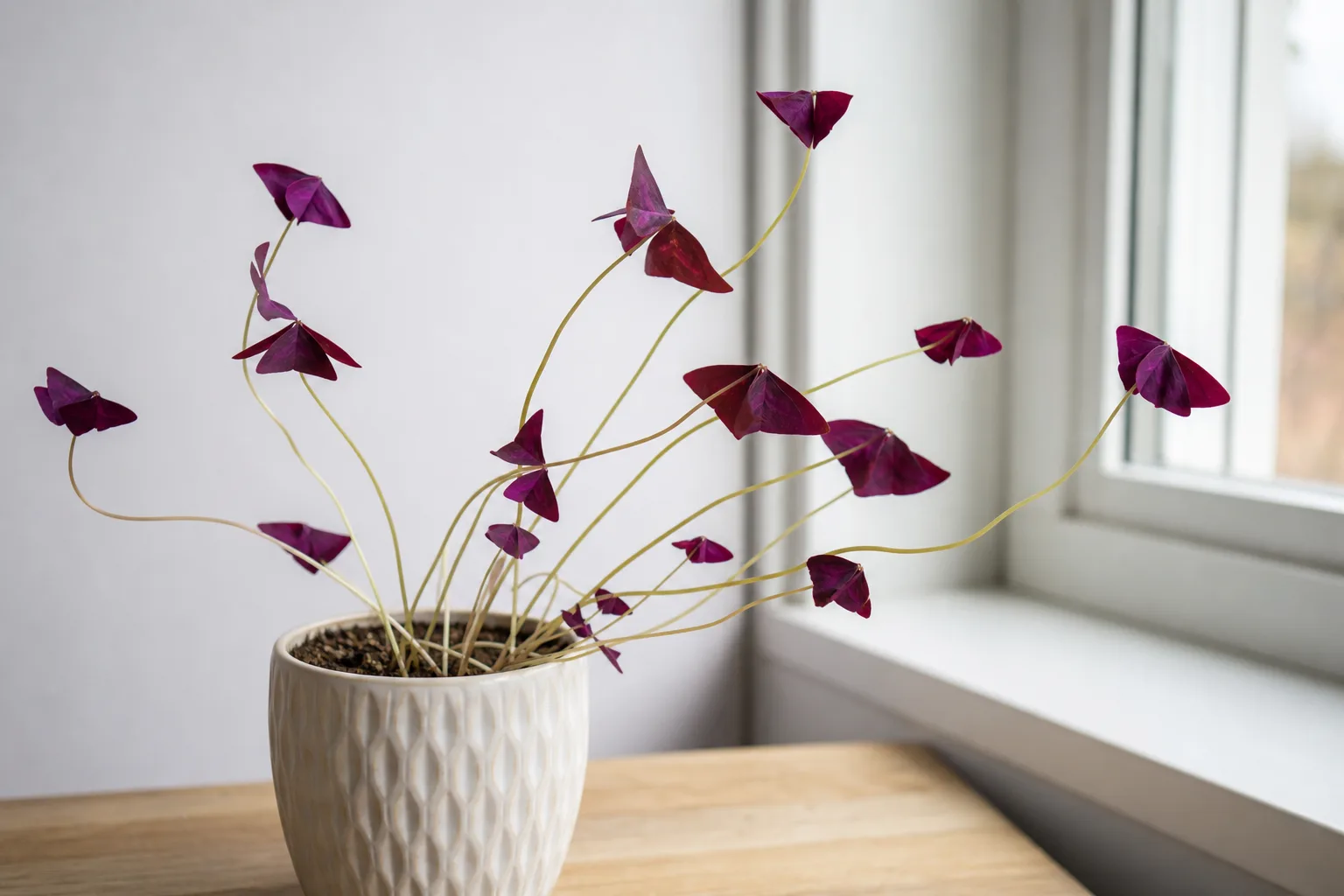
Leggy growth on Oxalis Triangularis means thin petioles stretch between trifoliate leaf clusters and the plant leans toward light. Purple shamrock is a corm-based clumper, not a vine. First step: move gradually to brighter indirect light and judge recovery on new petiole spacing.
Leggy Growth on Oxalis Triangularis: Causes, Checks & Fixes
This guide covers leggy growth on Oxalis Triangularis. See also the general Leggy Growth guide, watering, and light pages for this plant.
Leggy Growth on Oxalis Triangularis: Causes, Checks & Fixes
Quick answer
Leggy growth on Oxalis Triangularis (Oxalis triangularis, purple shamrock or false shamrock) is almost always low-light etiolation, not a fertilizer shortage. This species grows from underground corms as a compact clumping mound of thin petioles topped with trifoliate leaflets-it does not climb, vine, or need a moss pole. In dim corners, petioles stretch toward photons, new leaves emerge smaller and greener as anthocyanin pigment fades, and the whole clump leans toward the brightest window.
First step: move the pot gradually to brighter indirect light over seven to ten days. Do not jump from a dark shelf to hot afternoon sun through south glass. Judge success on the next new trifoliate leaf-tighter petiole spacing and returning purple depth confirm the fix. Old elongated petioles stay long unless you prune them at the soil line after compact replacements appear.
What leggy growth looks like on Oxalis Triangularis
Healthy purple shamrock forms a low, dense mound roughly 6 to 18 inches tall with upright to slightly arching petioles and deep burgundy-purple triangles at each tip. Leggy Oxalis looks different:
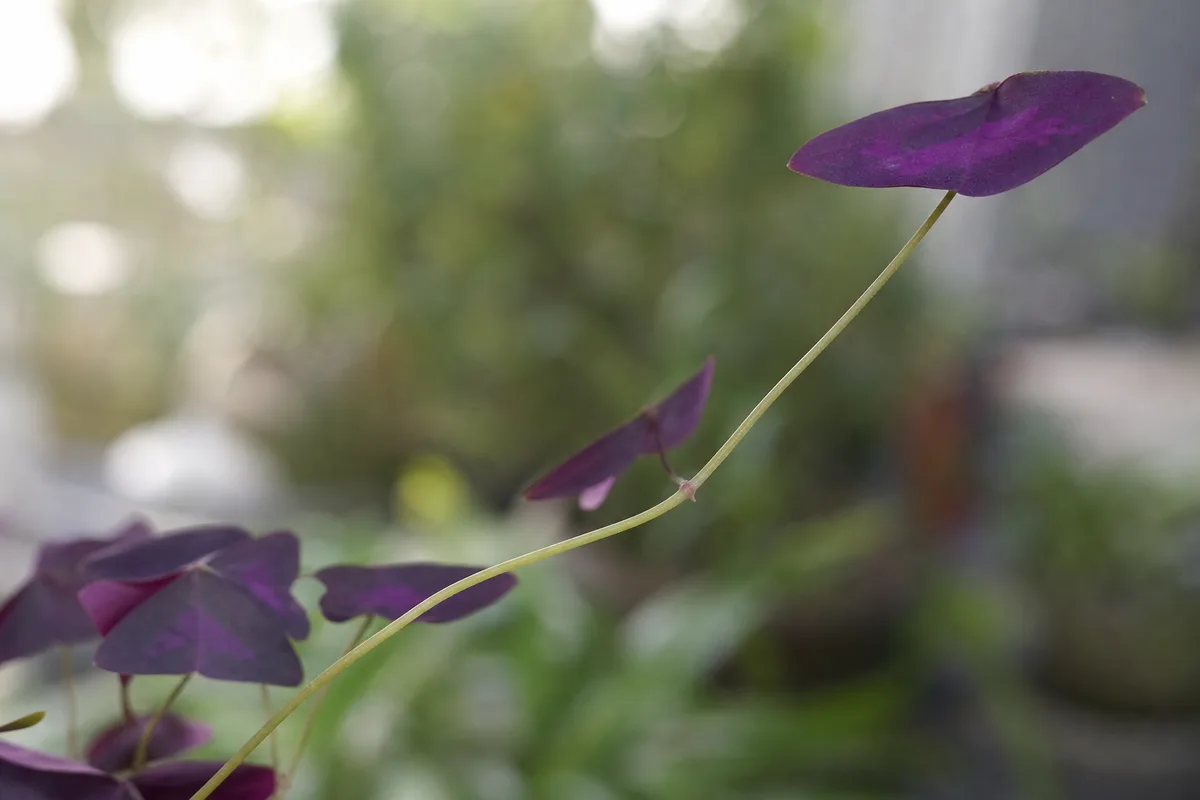
Leggy Growth symptoms on Oxalis Triangularis - compare with healthy tissue on the same plant.
- Elongated petioles - visible gaps between trifoliate leaf clusters widen compared with older compact growth
- Smaller new leaflets - fresh triangles are thinner and less vivid than earlier foliage
- Purple fade - new growth shifts greenish or pale lavender while older leaves may still hold color
- Directional lean - the clump angles hard toward one window or lamp
- Thin, floppy stems - stretched petioles feel weaker and may arch or flop when the plant is watered
- Slow daytime opening - leaflets may stay partially folded through midday in marginal light (distinct from normal nyctinastic night folding)
Unlike a pothos or philodendron, Oxalis does not produce aerial roots, nodes along stems, or climbing tissue. Each petiole rises from a corm below the soil. Leggy shamrock is phototropism and etiolation on a corm-based foliage plant, not a support problem.
Leggy etiolation is not the same as dormancy die-back. Dormancy yellows and collapses the whole mound over one to three weeks while corms stay firm and soil goes dry. Leggy plants keep green or fading-purple foliage but stretch progressively in a spot that is merely too dim for compact growth.
Why Oxalis Triangularis gets leggy
Insufficient light intensity is the primary cause. When photosynthesis drops, the plant elongates petioles to intercept more light-a response called etiolation. Stems stretch faster than leaf tissue can expand, producing weak architecture on a plant that NC State Extension lists as preferring partial shade to full sun outdoors but needing strong ambient brightness indoors.
Anthocyanin cost in dim light deepens the visual problem. Purple shamrock’s burgundy color comes from light-dependent pigments. In low light, the plant invests less in anthocyanin and new leaves emerge greener-so legginess and color fade often appear together. MU Extension notes that shamrock plants in too little light produce sparse growth, while harsh direct sun scorches leaves-the useful band indoors is bright indirect with some morning sun when acclimated.
Short winter days worsen stretch even at the same window. December light delivers fewer hours and lower intensity; petioles that looked acceptable in summer may elongate through winter unless you supplement.
One-sided exposure creates uneven lean. Petioles on the shaded side grow longer reaching for the window while the lit side looks relatively normal.
Slow dry-down in dim light compounds risk indirectly. A purple shamrock in a dark corner metabolizes slowly, so soil stays wet longer. Owners who keep a summer watering cadence invite corm stress-legginess and overwatering on Oxalis Triangularis often share the same poorly lit placement. Iowa State Extension describes shamrocks as preferring slightly moist, well-drained soil in bright indirect light-dim rooms break that balance.
Overfertilizing in low light can push soft elongated shoots. Oxalis stores energy in corms and needs only light feeding during active growth; extra nitrogen without matching light produces weak tissue that cannot support itself.
How to confirm the cause
Work through these six checks before pruning, Oxalis Triangularis repotting guide, or feeding:
- Light at the leaf canopy - Can you cast a soft, readable shadow on the leaves at midday? If the room feels bright but leaves sit below window height in a shadow pool, light is still too low. Oxalis needs roughly 4 to 6 hours of strong diffuse brightness daily at minimum.
- Growth direction - Strong lean toward one window confirms phototropism from low light, not random weakness.
- Petiole spacing on new growth - Compare the newest trifoliate cluster to petioles from when the plant looked full. Increasing gaps on fresh shoots confirm ongoing stretch.
- Purple depth on new leaves - Pale green or washed lavender on the latest leaf while older ones hold color supports a light diagnosis alongside etiolation.
- Corm firmness at the soil line - Gently brush mix aside at the crown. Firm corms support etiolation. Soft, dented tissue with damp sour-smelling soil points to rot-treat that first.
- Season and nyctinasty - Leaflets that fold at night and reopen by morning are normal. Leaflets clamped shut through a bright midday with moist soil may signal thirst or excess sun-not legginess alone. Yellowing collapse across the whole mound in autumn may be dormancy entering, not etiolation.
If petioles are firm, corms are hard, the plant leans toward light, and new growth shows wider spacing, you have confirmed etiolation. Proceed with a light upgrade-not fertilizer, not repotting.
First fix for Oxalis Triangularis
Move the pot to the brightest indirect location available, acclimating over seven to ten days.
Each day or two, shift the plant one step closer to an east-facing window (ideal-1 to 3 hours of gentle morning sun plus indirect brightness) or farther from a south or west window until leaflets receive strong reflected light without sustained hot midday beams on the glass. NYBG’s false shamrock guide recommends bright early light with protection from harsh afternoon sun-unfiltered afternoon rays commonly scorch purple leaf margins.
This single step addresses the root cause. After relocation:
- Rotate the pot 90 degrees weekly so all sides share exposure and lean stops worsening.
- Reduce watering frequency to match slower uptake in the brighter spot-allow the top inch of mix to dry before watering again during active growth.
- Wait for new growth before heavy pruning. A fresh petiole with tighter spacing may take two to four weeks to appear.
If natural light is inadequate, add a full-spectrum grow light 6 to 12 inches above the canopy for 12 to 16 hours daily. Even corm plants produce more compact growth under supplemental lighting than in a dark interior corner.
Pet safety note: Oxalis is toxic to cats and dogs if chewed. When moving to a brighter windowsill, keep the pot out of reach or behind a barrier if pets access the sill.
Pruning stretched corm shoots
Oxalis does not prune like a vine. There are no nodes to cut back for branching. Each thin stem emerges from a corm; removing one leaflet leaves a stub that will not regenerate on that petiole.
When to prune: After you see at least one new petiole with tighter spacing in improved light, cut the worst elongated stems flush at the soil line with sterilized scissors. Remove the whole stem at the base, not individual purple triangles off a healthy petiole.
How much to remove: During active growth, limit removal of healthy purple foliage to about one-third of the mound per session. Fully flopping leggy stems that spoil the silhouette count toward grooming, not emergency cuts.
What not to cut: Do not shear the mound while light is still too low-new shoots will emerge just as stretched. Do not prune during active dormancy die-back unless stems are fully yellow and dry.
For detailed technique, see the Oxalis Triangularis pruning guide.
Recovery timeline
Oxalis is a medium-paced grower from corms-not as slow as a ZZ plant, not as fast as a pothos. Expect two to four weeks before the first new petiole with noticeably tighter spacing after a light upgrade, and several weeks to a few months before pruned areas look filled in. Cool rooms below about 60°F (15°C) extend the timeline.
Signs recovery is working:
- New trifoliate leaves emerge closer together on shorter petioles
- Purple color deepens on fresh growth, not only on old leaves
- Corms remain firm at the soil line
- Lean stops worsening once rotation and brighter light are consistent
- Daytime leaf opening returns to a normal rhythm in adequate moisture
Signs the problem is worsening or misdiagnosed:
- Yellowing spreads while soil remains damp and corms soften-switch to a rot protocol
- New growth still sparse after six to eight weeks in clearly brighter light-verify location or add a grow light
- Leaf margins brown or bleach after a sudden sun move-pull back from direct glass and acclimate slower
- Whole mound yellows and collapses in autumn-may be entering dormancy, not failing from legginess alone
Leggy growth vs. lookalike problems
| Pattern | Leggy etiolation | Not enough light (placement) | Dormancy | Overwatering collapse |
|---|---|---|---|---|
| Main signal | Long petioles, lean, purple fade on new leaves | Dim placement audit; may not yet show extreme stretch | Whole mound yellows and dies back | Soft stems, wet soil, mushy corms |
| Corm feel | Firm | Firm | Firm | Soft or foul-smelling |
| Soil | Often slow to dry in dim spot | Variable | Dry during rest | Stays wet |
| First fix | Gradual relight + optional base prune | Broader placement upgrade | Dry rest, wait for shoots | Stop water, inspect corms |
Nyctinasty vs. stress: Healthy Oxalis folds leaflets at night and opens them with morning light. Daytime folding with dry soil often means thirst. Daytime folding with moist soil in harsh direct sun means pull back from the window.
This page focuses on etiolation morphology and corm-shoot pruning. For a full placement audit and grow-light hours, see not enough light. For comprehensive window guidance, see the Oxalis Triangularis light guide.
Mistakes to avoid
- Assuming stretch equals healthy vigor - Fast upward reach in dim light is etiolation, not strength.
- Using a moss pole or trellis - Purple shamrock is not a climber; support hardware will not fix phototropism.
- Pruning before improving light - Cut stems regrow just as leggy if brightness stays low.
- Moving straight to hot afternoon sun - Purple leaflets scald quickly on unfiltered south or west glass. Acclimate to indirect brightness first.
- Watering on a calendar in dim corners - Slow dry-down means less frequent drinks, not the same schedule as a bright window plant.
- Heavy fertilizing to “wake up” the plant - Extra nitrogen without light produces soft weak shoots.
- Confusing legginess with dormancy - Seasonal die-back is normal rest; do not repot or feed heavily into a dying mound.
- Ignoring purple fade - Green new leaves in dim light confirm the same light problem as long petioles.
Oxalis Triangularis care cross-check
Leggy growth often signals a placement mismatch with how purple shamrock actually grows:
- Light: Bright indirect light with some morning sun supports compact purple foliage; dim survival produces stretch and fade.
- Water: Allow surface to dry between waterings during active growth; dim rooms need longer intervals.
- Dormancy: May rest after flowering or in autumn-reduce water when foliage dies back; do not confuse with etiolation.
- Soil: Well-draining mix prevents rot when metabolism is sluggish in low light.
- Feeding: Light balanced fertilizer monthly during active growth only-after light and watering are stable.
How to prevent leggy growth
Position new purple shamrock plants in bright indirect light from the start rather than the darkest corner that merely keeps leaves alive. An east windowsill with morning sun is the classic compact-growth placement.
Rotate the pot every week. Supplement winter light when days shorten at higher latitudes. Match watering to the pot’s dry-down rate in that specific location-dimmer spots need longer intervals between drinks.
When buying, choose specimens with evenly spaced trifoliate clusters along petioles, not only at the tips of long arching stems. A young compact plant in adequate light stays manageable longer than rescuing a severely etiolated mature clump.
Keep bright windowsills pet-safe if cats or dogs chew plants.
When to worry
Legginess alone is cosmetic. Escalate when:
- Weak floppy petioles sit in soil that stays wet for weeks-inspect corms for rot
- Yellowing spreads through living foliage while soil remains damp-stop watering and check corm firmness
- Multiple stems collapse at the base despite a light upgrade-confirm rot is not the primary issue
- Whole mound dies back rapidly in summer heat-that may be heat-triggered dormancy; do not water heavily into collapse
For most owners, leggy Oxalis Triangularis is a reversible placement problem. Firm corms, a brighter indirect location, patient base pruning, and realistic expectations for corm-regrowth pace will produce a tighter purple mound over time-without the emergency response that rot or severe underwatering on Oxalis Triangularis demand.
When to use this page vs other Oxalis Triangularis guides
- Oxalis Triangularis watering guide - Use for routine moisture checks before assuming leggy growth is the main issue.
- Oxalis Triangularis problems hub - Browse all 17 common issues on this species.
- Not Enough Light on Oxalis Triangularis - Different entry point when symptoms overlap with leggy growth.
- Slow Growth on Oxalis Triangularis - Different entry point when symptoms overlap with leggy growth.
- Yellow Leaves on Oxalis Triangularis - Different entry point when symptoms overlap with leggy growth.