Low Humidity on Oxalis Triangularis: Causes, Checks & Fixes
Quick answer
Low humidity on Oxalis Triangularis shows as crispy leaf edges, stalled growth, and spider mite risk in heated dry rooms. First step: hold a hygrometer beside the plant and move it away from HVAC vents before adding a humidifier or pebble tray.
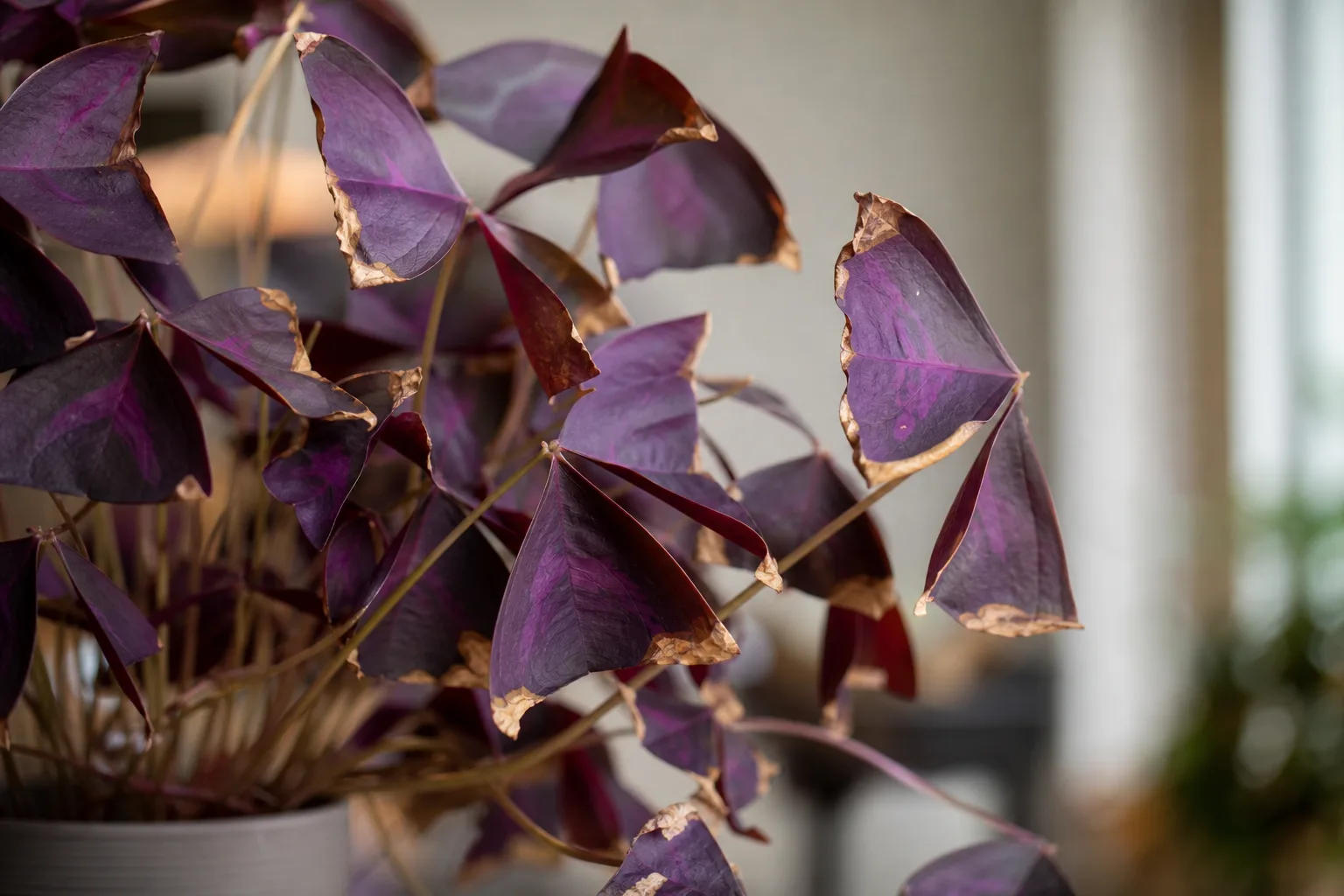
Low Humidity on Oxalis Triangularis: Causes, Checks & Fixes
This guide covers low humidity on Oxalis Triangularis. See also the general Low Humidity guide, watering, and light pages for this plant.
Low Humidity on Oxalis Triangularis: Causes, Checks & Fixes
Quick answer
Low humidity on Oxalis Triangularis (Oxalis triangularis, purple shamrock or false shamrock) is environmental stress on thin leaf tissue, not a mysterious disease. The plant’s triangular purple leaves lose moisture at the margins first when indoor air drops-especially below about 40% relative humidity during winter heating or air-conditioned summer rooms.
First step: measure humidity right beside the plant and move it away from HVAC vents. Hold a hygrometer within 30 cm of the foliage, note the reading, and relocate the pot if it sits above a register, beside a cold window, or in the path of a space heater. Only after placement is stable should you add a humidifier or pebble tray. Oxalis stores water in rhizomes and needs fast-draining soil, so chasing dry air by watering more often invites corm rot instead of fixing the symptom.
What low humidity looks like on Oxalis Triangularis
On Oxalis Triangularis overview, dry air usually shows on leaf edges and tips before the whole plant collapses. Typical signs:
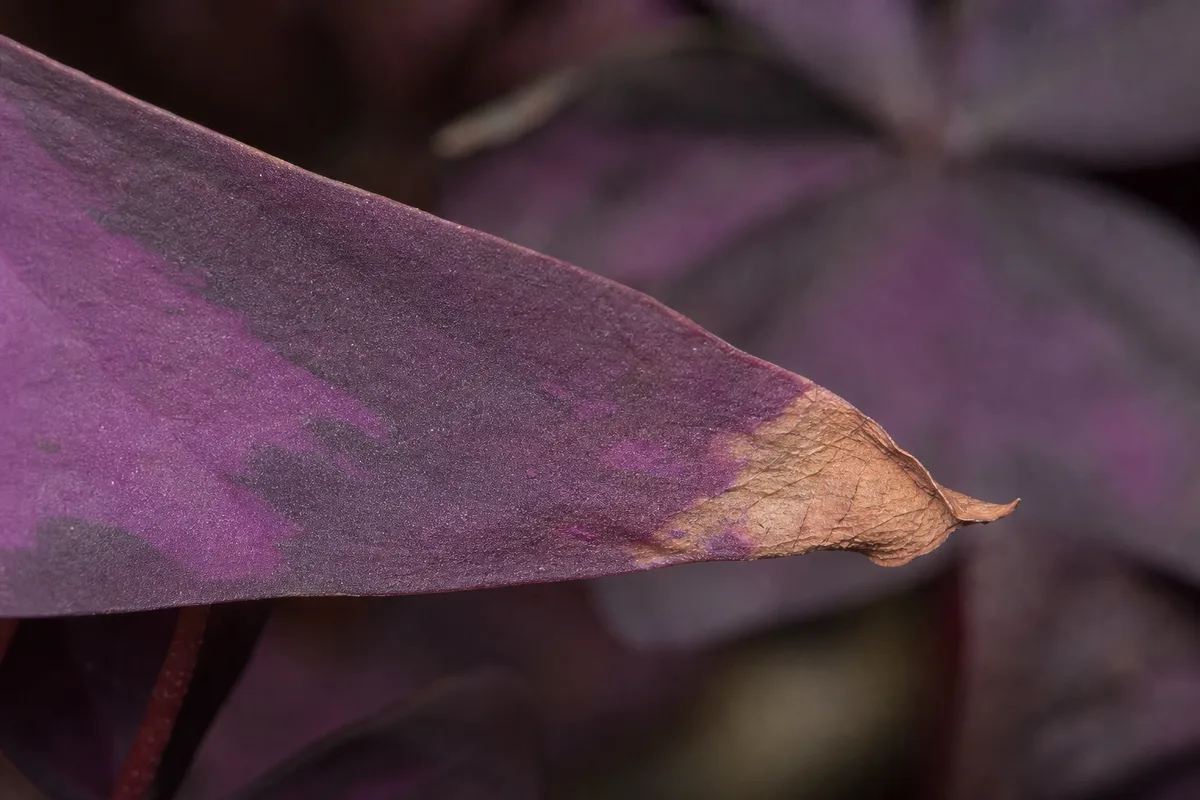
Low Humidity symptoms on Oxalis Triangularis - compare with healthy tissue on the same plant.
- Tan to brown, crispy margins on purple shamrock leaves while the center of each leaflet stays colored
- Slow or stunted new leaf unfurling during active growth, even when Oxalis Triangularis watering guide is correct
- Fine stippling or webbing on leaf undersides in warm dry rooms-spider mites thrive when humidity falls
- Localized damage on leaves closest to a heat vent, radiator, or sun-baked window glass
- Bud or flower drop when dry air pairs with cool drafts or insufficient light-not always humidity alone
Because Oxalis leaves fold at night (nyctinasty), do not confuse normal evening folding with daytime curl from dry air. Low-humidity stress keeps margins crisp during the day and often affects several leaves at once in the same microclimate.
Not low humidity: All leaves fading pale then brown and dropping together after flowering often signals dormancy, a normal rest cycle for false shamrock. Soft stems with sour-smelling wet soil point to overwatering on Oxalis Triangularis or corm rot, not dry air. Random wet brown patches suggest disease rather than margin burn.
Why Oxalis Triangularis suffers in dry air
False shamrock is native to South America and grows as a low forest-floor plant under dappled light. NC State Extension notes it is widely grown as a houseplant with fast-draining soil and surface dry-down between waterings-conditions that do not protect leaf margins when the air, not the soil, is too dry.
Winter and summer HVAC strip moisture from indoor air. University of Maryland Extension states that most indoor environments lack sufficient humidity for healthy houseplants, particularly in winter, and recommends raising humidity near plants rather than relying on occasional misting.
Thin purple leaflets transpire quickly near hot dry air. The New York Botanical Garden notes that leaves can look dry around the edges with brown patches when sun is too strong or air is too dry, and recommends humidity above 50% during active growth.
Spider mites multiply faster in warm, dry conditions. Colorado State University Extension explains that dry conditions favor spider mites because lower humidity lets them process plant sap more efficiently-winter heated rooms are peak mite territory on Oxalis and other thin-leaved houseplants.
Placement mistakes stack the problem: registers, space heaters, and sunny window glass create microclimates far drier than the rest of the room. NYBG specifically warns against locations near heat or air-conditioning vents because rapid microclimate swings stress false shamrock.
Overwatering as a misguided fix is an Oxalis-specific trap. Wet soil around rhizomes causes rot while margins still look crispy because roots cannot balance transpiration. NC State emphasizes allowing the surface to dry between waterings and cutting back during dormancy-humidity fixes should target air moisture, not soggy mix.
How to confirm the cause
Work through these checks in order before stacking treatments:
- Humidity at plant level - Place a hygrometer beside the foliage. Readings below about 40% with crispy margins strongly implicate dry air. Central heating often drops whole rooms into the 20–30% range.
- Placement audit - Note distance to vents, radiators, fireplaces, and window glass. Damage on only one side of the plant fits localized dry air or chill, not root disease.
- Soil moisture - Stick a finger 2–3 cm into the mix. If the surface is appropriately dry between waterings and roots are firm when you gently tip the plant out, margin burn is environmental-not rot.
- Daytime vs nighttime leaf posture - Folding after dark is normal nyctinasty. Persistent daytime curl or crisp edges while soil moisture is steady points to humidity or heat stress.
- Dormancy screen - Is the plant post-flowering, losing many leaves at once, or kept above 24°C (75°F)? NYBG notes higher temperatures can trigger dormancy with pale fading leaves-a different pattern from margin burn on otherwise full plants.
- Pest check - Tap a leaf over white paper or use a magnifier on undersides. Stippling plus webbing in dry heat confirms mites layered on humidity stress.
If humidity reads above 45%, watering is appropriate, and only one old leaf shows a crisp edge, suspect natural aging or salt buildup before treating a whole-room humidity crisis.
First fix for Oxalis Triangularis
Move the plant away from dry-air sources and raise ambient humidity toward 40–50%.
Relocate the pot at least 60 cm from heating vents and off cold window sills in winter. Run a small humidifier near the plant, set a pebble tray beneath the pot with the container base above the water line, or group Oxalis with other houseplants so collective transpiration raises local moisture. University of Maryland Extension recommends pebble trays, plant grouping, and automatic humidifiers as effective humidity strategies.
Do not increase watering frequency because leaf edges look dry-that keeps rhizomes wet and risks rot. Do not mist heavily as your only strategy; NYBG and Maryland Extension both note that misting rarely provides sustained humidity and wet foliage can invite fungal issues on crowded leaves.
Step-by-step recovery
Once humidity and placement are addressed, follow this sequence:
- Stabilize placement - Keep the plant in Oxalis Triangularis light guide with some morning sun as NC State describes, but pull it back from harsh afternoon glass that magnifies dry heat.
- Run the humidifier consistently - Target roughly 40–50% at plant level for two weeks before judging results. NYBG recommends a hygrometer to confirm you stay in range during active growth.
- Trim cosmetic damage - Snip fully brown leaflet tips following the natural triangle shape; leave a thin brown edge if needed to avoid cutting into green tissue.
- Treat spider mites if present - Rinse leaf undersides in the sink, isolate the plant, and use insecticidal soap or horticultural oil labeled for houseplants if webbing persists after humidity rises.
- Hold fertilizer and Oxalis Triangularis repotting guide - Stressed Oxalis does not need feeding. Repot only if mix is compacted or drainage has failed-not as a first response to dry edges.
- Respect dormancy if triggered - If the plant is entering rest with widespread leaf fade after flowering, taper watering per NYBG dormancy guidance rather than humidifying aggressively into a dry-soil rest period.
Recovery timeline
Existing crispy margins will not turn green again. Improvement shows on new shamrock leaves opening with intact edges and firm upright stems.
Under corrected humidity and stable placement, expect cleaner new growth within two to four weeks during active growth. Winter recovery may take longer if the plant is cool and slow. Old leaves with trimmed tips can remain-they are cosmetic.
Watch for steady new leaflets, closed folding only at night, and no new stippling as signs you are on track. Worsening webbing or pale collapsing stems despite wet soil means reassess watering and roots-not humidity alone.
Lookalike symptoms
| What you see | Likely cause | What to do |
|---|---|---|
| Crispy margins after heat or AC season starts | Low humidity / dry air | Humidifier; move away from vents |
| All leaves pale, then brown and drop post-flowering | Normal dormancy | Taper water; cool dark rest-not a humidity fix |
| Limp leaves, wet soil, sour smell | Overwatering / corm rot | Stop watering; inspect rhizomes |
| Leaves fold only after dark | Normal nyctinasty | No action if daytime foliage looks healthy |
| Stippling + fine webbing on undersides | Spider mites in dry heat | Raise humidity; rinse; treat if needed |
| Brown patches on sun-facing side only | Sun scorch through glass | Filter afternoon light; move inward |
Mistakes to avoid
- Watering more because edges look dry - Oxalis rhizomes rot in wet mix; fix air moisture instead.
- Misting instead of humidifying - Brief leaf wetting does not fix chronic low humidity.
- Sitting the pot in pebble-tray water - Keep the base above the water line to protect corms.
- Ignoring spider mites in dry winter - Humidity alone will not erase an active infestation.
- Confusing dormancy with humidity stress - Whole-plant fade after bloom needs rest, not a humidifier blast.
- Repotting or feeding on day one - Stabilize environment first unless roots are clearly failing.
How to prevent low humidity next time
Match care to how false shamrock actually grows indoors:
- Humidity: Target 40–50% near the foliage; boost with a humidifier when heating runs.
- Placement: Away from vents and cold glass; bright indirect light with protected afternoon sun.
- Monitoring: Keep a hygrometer beside the plant during winter and AC season.
- Watering: Allow the top 2–3 cm to dry between drinks; nearly stop during dormancy.
- Pebble trays: Water beneath pebbles only-never submerge the pot.
- Pest vigilance: Inspect undersides monthly in dry months; mites spread fast on stressed Oxalis.
Low humidity on Oxalis Triangularis is a correctable placement and air-moisture problem. Measure at the plant, move it off the dry microclimate, raise humidity steadily, and read new purple leaves-not old crispy edges-to know you have solved it.
When to use this page vs other Oxalis Triangularis guides
- Oxalis Triangularis watering guide - Use for routine moisture checks before assuming low humidity is the main issue.
- Oxalis Triangularis problems hub - Browse all 17 common issues on this species.
- Brown Tips on Oxalis Triangularis - Different entry point when symptoms overlap with low humidity.