Wilting on Oxalis Triangularis: Causes, Checks & Fixes
Quick answer
Wilting on Oxalis Triangularis starts with one check: is the soil dry or wet 2–3 cm down, and do leaves reopen by morning? Dry soil means thirst; wet soil with limp leaves means stop watering and inspect the rhizomes.
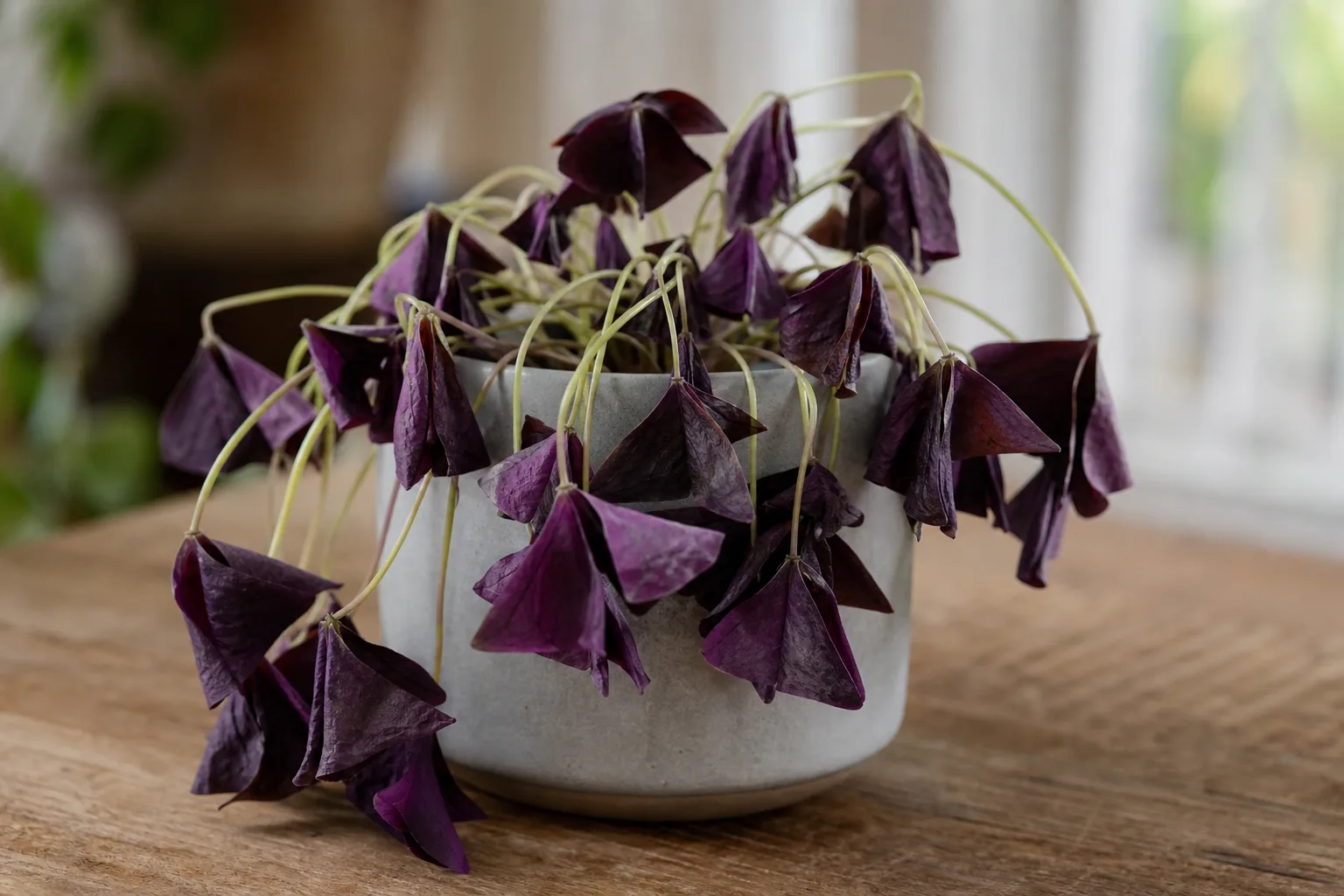
Wilting on Oxalis Triangularis: Causes, Checks & Fixes
This guide covers wilting on Oxalis Triangularis. See also the general Wilting guide, watering, and light pages for this plant.
Wilting on Oxalis Triangularis: Causes, Checks & Fixes
Quick answer
Wilting on Oxalis Triangularis (Oxalis triangularis, purple shamrock) is not always a watering emergency-and the wrong first move can kill the plant. This species stores water in rhizomes underground and folds its trifoliate leaves at night, which looks dramatic but is normal nyctinasty, not collapse.
First step: check soil moisture 2–3 cm deep and compare pot weight before you add water. Dry mix with a light pot and limp leaves through the day usually means thirst. Wet mix with limp, yellowing leaves means [damaged roots cannot move water upward](https://www.missouribotanicalgarden.org/gardens-gardening/your-garden/help-for-the-home-gardener/advice-tips-resources/insects-pests-and-problems/environmental/[overwatering on Oxalis Triangularis](/plants/oxalis-triangularis/overwatering/))-stop watering and inspect corms instead of soaking again.
What wilting looks like on Oxalis Triangularis
True wilt shows as limp, soft stems and drooping purple leaves that stay collapsed during daylight hours. The shamrock-shaped leaflets hang instead of holding their usual angle, and the whole clump may look flattened. Lower leaves often yellow first; advanced dehydration adds crispy brown edges. In rot cases, stems feel weak and waterlogged at the soil line even though the surface looks damp.
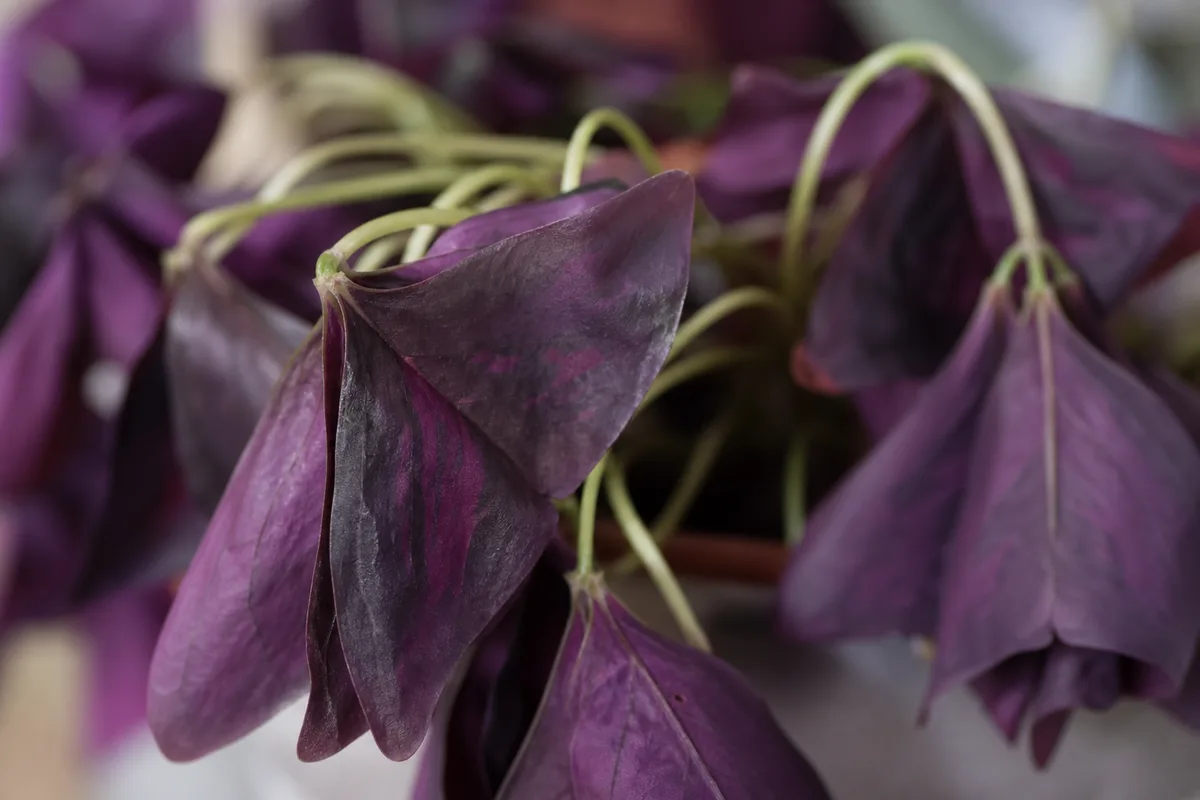
Wilting symptoms on Oxalis Triangularis - compare with healthy tissue on the same plant.
What is not wilt:
- Night folding - Leaflets close at night like butterfly wings at dusk and open again by morning. That rhythm is healthy behavior on Oxalis Triangularis overview.
- Brief midday droop in hot sun - Leaves may sag in strong afternoon heat, then firm up by evening if roots and soil moisture are sound. Persistent daytime collapse is the problem.
Compare with dormancy entry: flowers fade, leaves yellow and fold progressively, and the plant can look dead over one to two weeks. That pattern is expected when the rhizomes are firm and you have tapered water-not the same as sudden rot wilt mid-season on wet soil.
Why Oxalis Triangularis wilts
Purple shamrock wilts when roots and rhizomes cannot supply enough water to support leaf turgor-or when tissue is so damaged that water sits in soil but never reaches leaves.
underwatering on Oxalis Triangularis is the straightforward case. During active growth, this plant prefers evenly moist mix with the surface allowed to dry between waterings. Letting the entire root ball go bone dry too long collapses the thin stems. Because rhizomes store some reserve water, oxalis tolerates brief drought better than constantly wet feet-but extended dryness still wilts foliage.
Overwatering and corm rot produce the counterintuitive pattern: limp leaves with wet soil. Saturated mix suffocates roots, fungi attack rhizomes, and decayed tissue cannot transport water. Many growers water more because the plant looks thirsty; that deepens rot. Heavy peat mix, blocked drainage holes, oversized pots, and watering during dormancy are common triggers indoors.
Natural dormancy mimics severe wilt. After flowering or during heat or dry stress, oxalis may go dormant and die back to rhizomes. Foliage yellows, collapses, and disappears while corms rest. This is reversible when rhizomes stay firm-not an automatic death sentence.
Heat and light stress add temporary wilt. High temperatures increase water loss through thin leaves; direct hot sun can scorch and collapse tissue. Low light weakens stems over time, producing soft droop without crisp drought edges.
Recent Oxalis Triangularis repotting guide or root disturbance can cause short-term wilt while fine roots re-establish-especially if the plant was watered heavily right after transplanting.
How to confirm the cause
Work through these checks in order before changing care:
- Day versus night leaf position - Do leaflets reopen after sunrise? If yes, you may be seeing normal folding, not wilt.
- Soil moisture at 2–3 cm depth - Dry throughout with a lightweight pot suggests thirst. Wet deep mix with surface algae or a sour smell suggests rot.
- Pot weight and drainage - Heavy pot days after watering, full saucer, or blocked hole?
- Rhizome firmness - Gently tip the plant out. Healthy rhizomes feel firm, tan or white. Soft, brown, or disintegrating corms confirm rot.
- Season and recent history - Did flowers just finish? Was the plant moved to a hot window or AC vent? Did you repot or change watering recently?
- Stem base - Soft, blackening tissue at soil line means advanced decay, not simple underwatering.
- New growth - Any firm shoots emerging from soil? That signals recovery potential even when old leaves are gone.
If soil is dry, rhizomes are firm, and only daytime leaves droop, underwatering or heat is likely. If soil is wet and rhizomes are soft, treat rot as confirmed until inspection proves otherwise. If foliage is dying back uniformly with firm corms and dry mix, dormancy is the leading explanation.
First fix for Oxalis Triangularis
Check soil moisture 2–3 cm down and lift the pot-then act on what you find, not on how limp the leaves look.
- If mix is dry and rhizomes are firm: Water thoroughly until a little runs from the drainage hole, then empty the saucer. Recheck in a few hours for improved turgor.
- If mix is wet or smells sour: Stop all watering. Unpot, rinse rhizomes gently, and trim soft decay back to firm tissue with clean scissors. Let cuts air-dry for a day, then repot into fresh well-drained mix. Do not water immediately.
- If foliage is yellowing back with firm rhizomes and the plant recently finished blooming or faced heat stress: Taper watering and keep the soil dry during dormancy, remove dried stems, and place the pot in a cool, dim spot while corms rest. Wait for new shoots before resuming normal care.
Do not fertilize, mist heavily, or repot into a much larger container on day one unless rot inspection requires it.
Step-by-step recovery
After the first fix, follow the path that matches your diagnosis:
Thirst recovery
- Bottom-water or top-water until mix is evenly moist, then drain fully.
- Move out of harsh direct afternoon sun until leaves firm up.
- Resume the dry-down rhythm: water when the top 2–3 cm is dry, roughly every 5–8 days in active growth for most homes-adjust to your pot size and light.
- Trim fully brown crispy leaves; green leaves should stiffen within hours to one day.
Rot recovery
- Unpot and remove all mushy rhizome and root tissue.
- Discard soggy mix; scrub the pot or use a clean container with drainage.
- Repot firm corms in standard potting mix with 20–25% perlite, planting rhizomes about 2–3 cm deep.
- Wait until you see new growth or at least five to seven days of dry stable conditions before the first light watering.
- Hold fertilizer until new leaves look healthy for two weeks.
Dormancy recovery
- Cut back collapsed yellow foliage to soil level once dry.
- Stop watering entirely for four to eight weeks while rhizomes rest in a cooler, shaded location.
- Check monthly: firm corms need no water; mushy corms mean rot, not dormancy.
- When tiny shoots appear, return to Oxalis Triangularis light guide and resume light watering, increasing as growth accelerates.
Recovery timeline
Mild underwatering often shows visible firming within hours to one day after a proper soak. Heat-stressed plants may need two to three days once moved to stable light and temperature.
Rot recovery takes two to six weeks to judge: watch for new shoots from firm rhizomes, not for old wilted leaves to revive. Those old leaves usually drop and are replaced.
Dormancy lasts one to three months indoors before fresh growth emerges-sometimes longer after a stressful year. Firm rhizomes with no foul smell are a good sign to keep waiting.
Worsening signs: stems soften further after dry treatment, rhizomes turn mushy on recheck, or no new shoots appear by mid-spring after a full rest period with firm corms-those warrant deeper inspection or accepting loss.
Lookalike symptoms
- Normal nyctinasty - Leaves folded at night, open by morning; no care change needed.
- Dormancy die-back - Progressive yellowing and collapse with firm rhizomes and seasonal timing; stop water, do not surgery unless corms are soft.
- Drooping from low light - Long weak stems, pale leaves, wet or dry soil unrelated; brighten placement gradually.
- root rot on Oxalis Triangularis - Wet soil, sour smell, soft corms; overlaps with wilt but needs trim-and-repot, not more water.
- Repotting stress - Temporary wilt after disturbance with otherwise firm rhizomes; keep stable and avoid overwatering while roots settle.
What not to do
Do not water repeatedly because leaves look limp when soil is already wet-that is the fastest way to rot purple shamrock rhizomes. Avoid dense, slow-draining mix without perlite. Do not keep watering through dormancy after foliage has died back.
Skip fertilizer on a wilted, stressed plant until new growth is stable. Do not move a collapsed plant into harsh midday sun to “perk it up”-that increases water loss. Do not assume death when the pot looks empty during dormancy; check rhizomes first.
Wear gloves when handling cut tissue if sap irritates your skin, and keep the plant away from pets-oxalis is toxic to cats and dogs if chewed.
How to prevent wilting next time
Match watering to growth phase: allow the top 2–3 cm to dry during active growth, and nearly stop watering when dormancy begins. Use well-drained mix, pots with open drainage, and empty saucers after every drink.
Place oxalis where bright indirect light and some morning sun are realistic-good light helps the plant use water predictably. Avoid sudden heat spikes, cold drafts, and AC vents that trigger stress die-back.
After flowering or summer heat, taper water proactively rather than waiting for full collapse. A quick monthly rhizome check when repotting or dividing catches soft tissue before wilt spreads through the whole clump.
When to worry
Escalate quickly if wet soil pairs with sour smell, soft stems, or mushy rhizomes-rot spreads fast in warm soggy mix. Slow yellowing with firm corms entering dormancy can wait with dry rest.
If more than half the rhizome mass is mushy after trimming, survival odds drop-save any firm corm segments separately in dry mix while you wait for possible sprouting.
Conclusion
Wilting on Oxalis Triangularis comes down to reading soil moisture, rhizome firmness, and the day–night leaf rhythm before you water. Thirst wants a soak; rot wants dry inspection and trimmed corms; dormancy wants patience. Get that first check right and purple shamrock recovers far more willingly than most owners expect.
When to use this page vs other Oxalis Triangularis guides
- Oxalis Triangularis watering guide - Use for routine moisture checks before assuming wilting is the main issue.
- Oxalis Triangularis problems hub - Browse all 17 common issues on this species.
- Underwatering on Oxalis Triangularis - Different entry point when symptoms overlap with wilting.
- Overwatering on Oxalis Triangularis - Different entry point when symptoms overlap with wilting.
- Root Rot on Oxalis Triangularis - Different entry point when symptoms overlap with wilting.
Related Oxalis Triangularis guides
- Oxalis Triangularis overview
- Oxalis Triangularis watering
- Oxalis Triangularis light
- Oxalis Triangularis soil
- Underwatering on Oxalis Triangularis
- Overwatering on Oxalis Triangularis
- Root Rot on Oxalis Triangularis
- Drooping Leaves on Oxalis Triangularis
- Yellow Leaves on Oxalis Triangularis
- Oxalis Triangularis problems