Aphids on Oxalis Triangularis: Causes, Checks & Fixes
Quick answer
Aphids on Oxalis triangularis cluster on pink flower stalks and tender crown shoots, leaving sticky honeydew on purple trifoliate leaves. First step: isolate the pot and rinse flower stalks, leaf undersides, and crown new growth with lukewarm water before applying any spray.
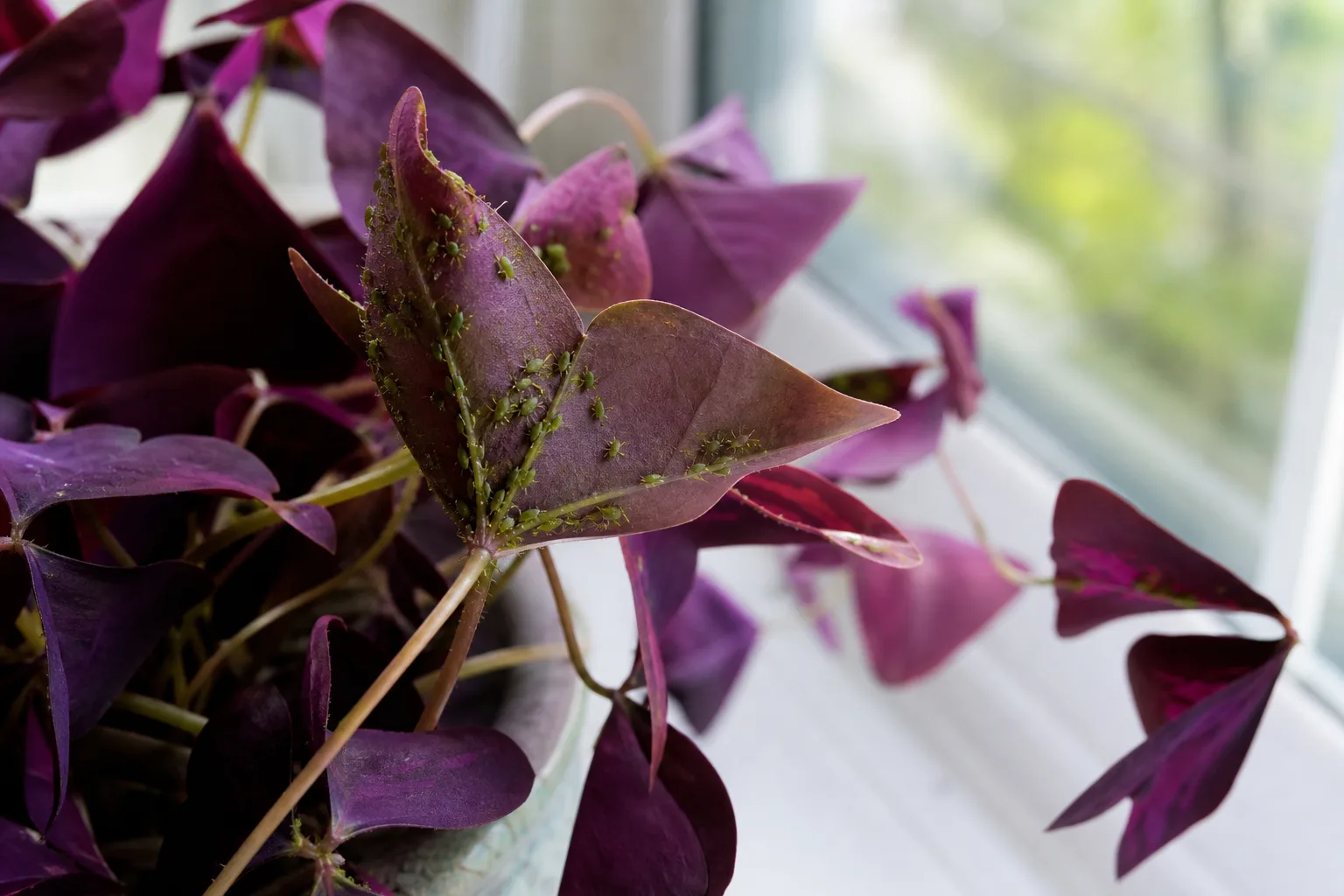
Aphids on Oxalis Triangularis: Causes, Checks & Fixes
This guide covers aphids on Oxalis Triangularis. See also the general Aphids guide, watering, and light pages for this plant.
Aphids on Oxalis Triangularis: Causes, Checks & Fixes
Quick answer
Sticky pink flower stalks and shiny purple leaflets are not normal for Oxalis triangularis. Aphids are small, soft-bodied insects that pierce tender growth and excrete honeydew-on purple shamrock that stickiness usually means aphids have colonized flower scapes, crown new shoots, or the undersides of opening trifoliate leaves.
Unlike the nightly fold of healthy nyctinastic leaves, aphid damage stays concentrated on the softest tissue: the tips of pink flower stalks above the purple canopy, and the newest leaflet clusters at the central crown. NC State Extension describes Oxalis triangularis as a rhizomatous perennial whose leaves close at night-which is why daylight inspection when leaflets are open flat catches colonies that evening watering checks miss.
First step: move the pot away from other plants and rinse flower stalks, leaf undersides, and crown shoots with lukewarm water. That knocks down live aphids and washes fresh honeydew before it attracts ants or grows sooty mold on purple foliage. Confirm insects are still present after the rinse before reaching for soap or oil.
What aphids look like on Oxalis triangularis
The insects. Aphids are pear-shaped, roughly 1/16 to 1/8 inch long, with visible legs and antennae. On Oxalis they are often green, but black, brown, or pink strains appear too. They move slowly when disturbed-unlike thrips that run or jump on a tap test.
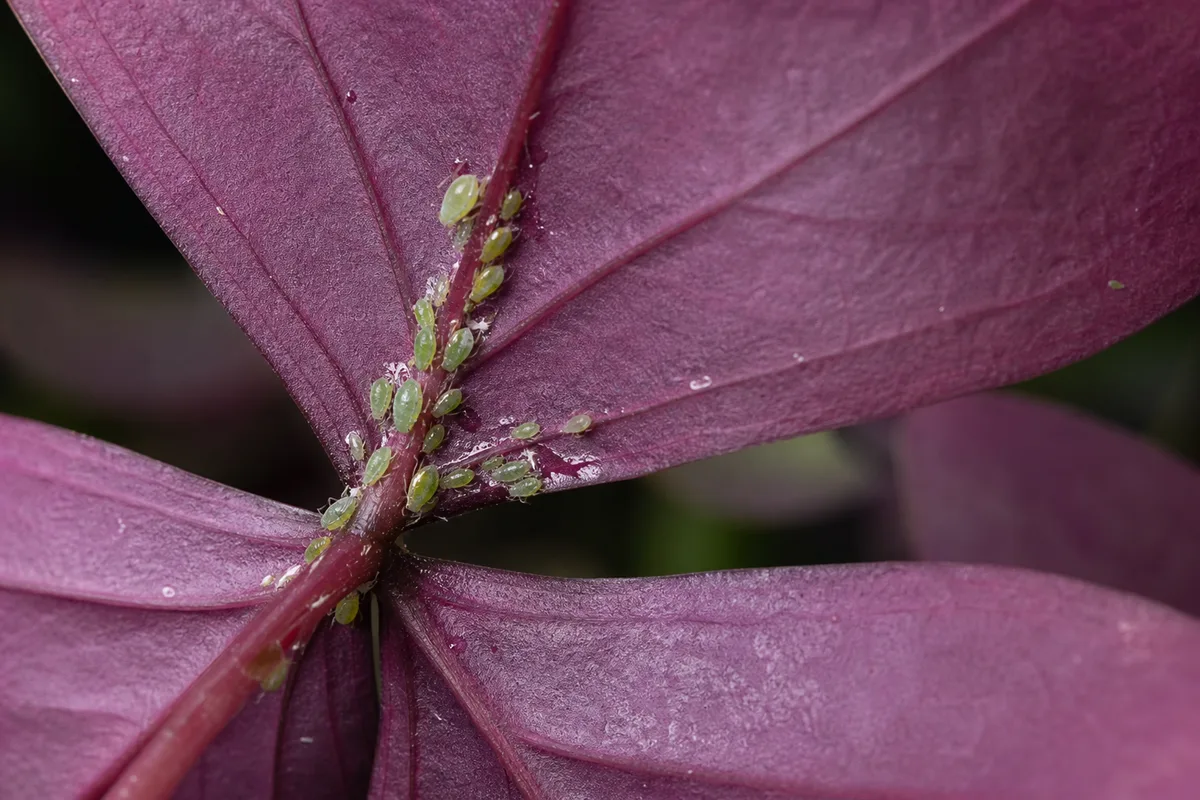
Aphids symptoms on Oxalis Triangularis - compare with healthy tissue on the same plant.
Where they hide on purple shamrock. Check these spots first:
- Pink flower stalks and buds just above the foliage canopy
- Crown new shoots where the next trifoliate leaf is opening
- Undersides of the top two or three leaflets
- Petiole joints where three triangular leaflets meet the stem
- Occasionally along leaf veins on the purple upper surface
Damage pattern. Feeding causes young leaflets to curl, pucker, or twist-symptoms that can overlap with heat stress or underwatering on Oxalis Triangularis wilt. Aphid damage usually stays on the newest growth and flower stalks while older lower leaflets look normal until honeydew drips onto them.
Honeydew on purple leaves. Aphids excrete sticky honeydew that can turn black when sooty mold grows on it. On deep purple trifoliate foliage, the sheen from honeydew looks different from healthy leaf luster-run a finger along a leaflet or flower stalk; aphid residue feels slick and may pick up dark sooty specks. Pot rims, saucers, and shelves below often feel tacky before you spot insects from above.
Cast skins. Whitish shed skins on stalks or leaf undersides mean aphids have been present for several days even if live counts look low.
What to photograph for confirmation. If you are unsure, take a daylight macro photo of a pink flower stalk tip and a second shot of a purple leaflet underside with the sheen visible. Compare those images to the lookalike table below-aphid clusters are soft and pear-shaped; mealybug wax is cottony; spider mite damage shows stippling without loose insects on stalk tips.
Why Oxalis triangularis gets aphids
Oxalis pushes soft new shoots after dormancy wake-up and during spring flush-exactly when aphids feed on soft, new plant growth. Pink flower scapes rise above the foliage on thin stems that stay tender for days, giving aphids easy access without the owner noticing until stickiness appears.
Introduction routes. Aphids most often arrive on new nursery plants, open windows in warm weather, or pots moved outdoors briefly. Skipping quarantine is the fastest way pests enter a collection. Purple shamrock’s upright stems hide flower stalk bases and crown shoots from casual top-down glances.
Outdoor summer windows. Oxalis that spends afternoons on a patio or balcony can pick up winged aphid migrants through open windows when you bring it back indoors. Quarantine that pot for two weeks after any outdoor stint-scout flower stalks and crown shoots daily before it rejoins a grouped display.
Nitrogen-soft shoots. Heavy feeding during active growth produces lush, soft tissue-tender nitrogen-rich growth aphids prefer-without making the plant healthier overall. See the fertilizer guide for a light feeding rhythm that supports purple color without aphid-friendly flushes.
Ant protection. Ants harvest honeydew and defend aphid colonies from predators. Ant trails on pot rims, saucers, or windowsills beneath Oxalis often appear before you spot aphids on flower stalks above.
Year-round foliage. Owners who never let Oxalis enter dormancy keep tender shoots available through winter-allowing natural dormancy and removing dead above-ground material can break aphid cycles that persist on evergreen indoor specimens.
How to confirm the cause
Work through these checks before treating:
- Inspect in daylight. Scout the crown and flower stalks mid-morning when leaflets are open flat in adequate light. Night checks when leaves are folded can miss crown colonies tucked between closed leaflets.
- Flower stalk scan. Follow each pink scape from base to bud with a hand lens. Aphids cluster where the stalk meets foliage and along the upper stem.
- Underside tilt. Angle the pot and inspect leaflet undersides on the newest growth. Aphids often feed on the underside of leaves and along veins on smooth purple tissue.
- Stickiness test. Rub a finger along a flower stalk or leaflet. Honeydew feels slick; normal Oxalis leaves feel dry, not tacky.
- Ant check. Ant activity on the pot, tray, or shelf strongly suggests honeydew producers on stalks or crown shoots above.
- Distribution pattern. Aphid symptoms cluster on new tips and flower stalks. Whole-plant yellowing, crisp brown leaflet edges, or uniform daytime wilt without insects points to watering, light, or dormancy-not aphids.
- Tap test for thrips. Shake a suspect leaflet over white paper. Thrips run quickly; aphids stay clustered or fall as sluggish bumps.
If you find moving soft-bodied insects plus stickiness on flower stalks or crown new growth, aphids are confirmed. If leaves fold at night with dry soil and no residue, address care basics from the Oxalis overview before spraying.
First fix for Oxalis triangularis
Isolate the plant and rinse flower stalks, leaf undersides, and crown shoots with lukewarm water in a sink or shower.
This single step knocks aphids off with a strong water stream and removes fresh honeydew before secondary problems develop. Direct water along each pink flower scape and into the crown where new trifoliate shoots open-where Oxalis aphids hide.
Let foliage dry in bright indirect light the same day. Purple shamrock leaflets can mark if soapy rinse water sits on surfaces overnight, so rinse in morning and avoid crowding wet plants together.
Do not apply soap or oil on day one if you have not confirmed live insects after rinsing. Do not fertilize a pest-hit Oxalis hoping to push replacement growth-that produces more tender tissue aphids prefer.
Step-by-step recovery
After the initial rinse:
- Repeat water rinses every two to three days until live aphids are gone on inspection. Aphid populations can increase rapidly because females reproduce without mating-consistency matters more than a single heroic spray.
- Apply insecticidal soap if colonies persist after several rinses. Use commercial potassium-salt soap products labeled for plants-not homemade dish soap. Coat flower stalks, crown shoots, and leaflet undersides thoroughly; soaps work on contact with no residual effect, so repeat every four to seven days through at least three applications.
- Cut heavily infested flower stalks if aphids shelter in stalk axils where spray cannot reach after two treatment cycles. Snip at the base, bag the cutting, and continue treating the crown.
- Manage ants if they protect colonies. Keep ants off the pot and nearby surfaces so natural enemies like lady beetles and lacewings can reduce aphids.
- Wash sooty mold from purple leaflets with plain water once honeydew production stops. Sooty mold does not infect tissue but can block light on the broad trifoliate surface area Oxalis uses for photosynthesis.
- Re-check grouped plants. Collections sharing a windowsill or shelf need the same inspection even if only one pot had sticky flower stalks.
Keep the plant isolated until you see no live aphids for at least a week after the last treatment.
Insecticidal soap vs. neem oil on smooth purple foliage
Both are contact treatments that must coat aphids directly-neither works once the spray dries. For Oxalis triangularis, start with labeled insecticidal soap after rinses fail; it is easier to rinse off purple leaflets and has no oily film that can trap dust on smooth trifoliate surfaces. Neem oil extract is a reasonable second step if soap cycles leave live colonies on flower stalks, but test one leaflet first and wait 24 hours-neem can leave a slight sheen on purple foliage and may stress drought-stressed plants. Apply either product in morning or evening, not in hot midday sun. Keep pets out of the treatment room until foliage is fully dry; Oxalis is toxic if chewed, and wet spray residue should not reach saucers pets can access.
Recovery example
In a March 2026 observation on a six-inch purple shamrock, green aphids colonized three pink flower stalks above folded nighttime foliage. The owner isolated the pot, rinsed stalks and crown shoots every three days for ten days, then applied labeled insecticidal soap twice at five-day intervals. Live aphids cleared by week three; the next crown flush produced clean trifoliate leaves by week four-before photos were taken, the owner noted the new shoots emerged unsticky while one older distorted stalk was removed when colonies persisted in a leaf axil after rinsing alone.
Recovery timeline
Water knockdown shows results within two to three days when colonies are moderate. A full soap course typically takes one to two weeks with label-interval repeats. Eggs and nymphs hatch within days, so stopping after one application often lets populations rebound.
Expect clean, unsticky new crown shoots and flower stalks within two to four weeks once insects stay gone. Old curled leaflets may not fully flatten-judge success by new growth, not repaired mature foliage.
Sooty mold fades as honeydew dries up; heavily coated purple leaflets may stay dull until replaced by newer leaves.
Lookalike symptoms to rule out
| Symptom pattern | Likely cause | Quick check |
|---|---|---|
| Soft pear-shaped clusters on flower stalks or crown shoots with stickiness | Aphids | Insects move when disturbed; honeydew on stalks or pot rim |
| White cottony masses in leaflet axils at crown | Mealybugs | Waxy fluff, not loose green clusters on stalk tips |
| Fine webbing and yellow stippling on purple leaflets | Spider mites | Dry indoor air; shake test smears red; no heavy stalk colonization |
| Hard tan or brown bumps on stems | Scale insects | Immobile shells, not soft moving groups |
| Daytime leaflet fold with dry soil, no stickiness | Heat or drought stress | No insects; see wilting and watering guides |
| Yellowing lower leaves after flowering, firm corm | Natural dormancy entry | No pest residue; taper water per overview |
What not to do
Do not spray insecticidal soap or neem oil on drought-stressed, sunburned, or heat-stressed Oxalis-some plants are sensitive and can be injured. Test one leaflet and wait 24 hours before whole-plant treatment. Purple shamrock has smooth trifoliate foliage, not fuzzy leaves-so sensitivity shows as bleached or crisp patches on purple leaflets, not trapped moisture in leaf hairs.
Do not soak a dormant corm with repeated foliar drenches when foliage is dying back. NC State notes the plant may go dormant in autumn or if it gets too hot or dry-wet mix around a leafless corm invites rot. Remove dried stalks, keep the corm dry, and resume treatment when new shoots emerge.
Do not leave foliage wet overnight after rinsing or spraying. Dry plants in indirect light the same day.
Do not increase nitrogen feeding during an active infestation. Soft lush shoots attract more aphids.
Do not treat in a room accessible to pets without isolation. The ASPCA lists Oxalis spp. (shamrock plant) as toxic to cats, dogs, and horses due to soluble calcium oxalates-rinse runoff and freshly sprayed leaflets should stay out of pet reach until dry. If a cat or dog chews treated leaves or drinks rinse water from a saucer, contact your veterinarian promptly.
Do not return an isolated plant to a grouped display until you have inspected it clean for a full week. Early detection and isolation limit spread.
How to prevent aphids next time
Quarantine new plants for at least two weeks before placing them beside established purple shamrock. Inspect flower stalks and crown shoots during quarantine-not just the visible purple canopy.
Quarantine after outdoor time. Any shamrock that sat on a patio, balcony, or open window ledge in warm weather should stay separated for two weeks when it comes back inside. Winged aphids can migrate through screens; daily stalk and crown checks beat discovering stickiness on a grouped shelf.
Scout weekly during active growth. Spring flush after dormancy produces the tender shoots and flower scapes aphids prefer. A quick stalk and crown check during daylight watering catches colonies before honeydew coats windowsills.
Avoid excess nitrogen. Feed lightly during active growth only. Do not over-fertilize; soft shoot flushes attract aphids.
Allow natural dormancy when possible. Letting foliage die back and removing dried material breaks year-round aphid habitat on evergreen indoor specimens.
Manage ants early. Ant barriers on shelves beneath grouped pots help predators reach aphid colonies on flower stalks above.
When to worry
Treat as urgent when honeydew and sooty mold spread across most new leaflets within days, ants swarm stems daily, or every flower stalk and crown shoot hides live aphids after two rinse cycles. Once aphids curl young leaflets, sheltered insects escape contact sprays-cutting infested stalks or waiting for dormancy cleanup becomes necessary.
Escalation path on purple shamrock:
| Situation | Same-day action | What to avoid |
|---|---|---|
| One small cluster on a single flower stalk | Isolate, rinse, monitor | Cutting the whole plant or soaking the corm |
| Colonies in stalk axils after two rinse cycles | Snip expendable flower stalks; continue crown treatment | Leaving sticky stalks because blooms are pretty |
| Foliage dying back naturally with a few live aphids | Remove dried stalks; dry rest for the corm | Repeated foliar drenches on a leafless pot |
| New growth still sticky after three weeks of consistent treatment | Consider discarding severely declining plants; start from a clean division if the corm stays firm | Endless chemical cycles on a stressed specimen |
| Soft mushy corm alongside pest decline | Discard the plant and sterilize the pot | Saving a rotted corm hoping pests will clear |
| Aphids plus mealybugs or scale on the same crown | Treat the larger visible colony first; isolate longer | Returning to a grouped display before a full clean week |
A single small cluster on one flower stalk, caught early, is not an emergency-isolate, rinse, and monitor.
Related Oxalis Triangularis problems
Use these guides when symptoms do not match aphid clusters on flower stalks:
- Mealybugs - white cottony wax in crown axils, not loose clusters on flower stalk tips
- Spider mites - fine webbing and stippling in dry indoor air
- Fungus gnats - small flies above wet mix; sometimes follow overwatering on Oxalis Triangularis stress
- Yellow leaves - distinguishing dormancy from pest stress
- Wilting - drought wilt without stickiness or insects
- Leggy growth - low light stretch without honeydew
- Watering · Light · Fertilizer · Overview
FAQs
How can I confirm aphids on Oxalis triangularis?
Inspect flower stalks and crown new growth in daylight when leaflets are open flat. Soft green, black, or pink pear-shaped insects that move when disturbed, plus shiny sticky residue on purple leaves or the pot rim, confirm aphids. Mealybugs leave white cotton in axils; spider mites leave fine webbing and stippling instead of loose soft clusters.
Can I treat aphids on Oxalis during dormancy when leaves are dying back?
Treat only if live aphids remain on the last flower stalks or crown before foliage drops. Once leaves are gone, stop foliar sprays and repeated drenches that keep the corm wet-wipe the pot rim, remove dried stalks, and let the corm rest dry. Resume scouting and light rinses when new shoots emerge in spring.
Should I cut infested flower stalks on purple shamrock?
Yes when colonies hide in stalk axils where rinse and soap cannot reach after two treatment cycles. Snip the stalk at the base with clean scissors, bag the cutting, and continue treating the crown. Flower stalks are expendable; protecting the corm and next flush of trifoliate leaves matters more than saving a single bloom scape.
Are insecticidal soaps safe around cats if Oxalis is toxic?
Oxalis spp. are toxic to cats and dogs per the ASPCA, and soaps are for plant contact-not pet ingestion. Treat in a closed room pets cannot enter, let foliage dry fully before returning the pot, and keep cats away from rinse runoff in saucers. If a pet chews treated leaves, contact your veterinarian.
How do I prevent aphids on Oxalis triangularis next time?
Quarantine new plants two weeks-including any shamrock returning from outdoor summer placement-and scout flower stalks and crown shoots weekly during spring flush. Avoid excess nitrogen that produces soft aphid-friendly shoots. Keep bright indirect light per the light guide so growth stays compact, and inspect in daylight-not only at night when leaflets are folded.
When to use this page vs other Oxalis Triangularis guides
- Oxalis Triangularis watering guide - Use for routine moisture checks before assuming aphids is the main issue.
- Oxalis Triangularis problems hub - Browse all 17 common issues on this species.
- Mealybugs on Oxalis Triangularis - Different entry point when symptoms overlap with aphids.
- Spider Mites on Oxalis Triangularis - Different entry point when symptoms overlap with aphids.
- Yellow Leaves on Oxalis Triangularis - Different entry point when symptoms overlap with aphids.