Coriander Plant Care: Light, Water, Soil & Harvest
Coriandrum sativum
Sow coriander in cool conditions, directly in the final pot. Harvest from 3–4 weeks, sow again every three weeks for continuous supply. Heat triggers bolting - shade afternoon sun and sow in the coolest season available.
Coriander Plant Care: Light, Water, Soil & Harvest
Start with wateringThe most common care mistake for CorianderWatering guide →Coriander care essentials
Light
full sun to partial shade - morning sun with afternoon shade ideal in hot climates
Water
Keep soil consistently moist but never waterlogged; water when top 1–2 cm dries.
Soil
Lightweight, moist, well-draining potting mix with good organic content.
Humidity
Moderate (40–60%)
Temperature
15°C to 25°C (60–77°F); bolts rapidly above 28°C
Fertilizer
Use compost mixed into soil at planting; or very diluted balanced liquid fertilizer once and stop if the plant is stressed, newly repotted, or not actively growing.
About Coriander
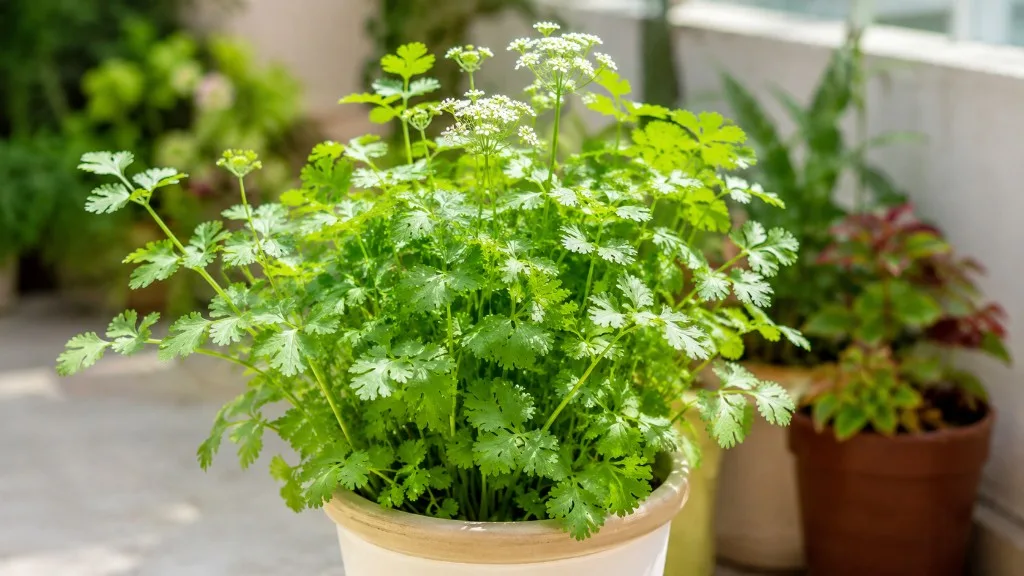
Coriander is native to Southern Europe and Western Asia, typically reaches 20–50 cm tall; 15–30 cm wide indoors, with very fast - harvest-ready in 3–4 weeks from sowing growth. Coriander has a upright growth habit and part of the Apiaceae family. It is also known as Cilantro, Dhania, and Chinese Parsley.
| Detail | Information |
|---|---|
| Also known as | Cilantro, Dhania, Chinese Parsley |
| Native region | Southern Europe and Western Asia |
| Mature size | 20–50 cm tall; 15–30 cm wide |
| Growth rate | Very fast - harvest-ready in 3–4 weeks from sowing |
| Growth habit | Upright |
| Scientific name | Coriandrum sativum |
| Family | Apiaceae |
Coriander Plant Care: Light, Water, Soil & Harvest
What Is Coriander (Cilantro)?
Coriander and cilantro are two common names for the same plant: Coriandrum sativum, an aromatic annual herb in the Apiaceae family alongside carrots, parsley, and dill. In much of the world - including India, the UK, and Australia - coriander refers to the whole plant: leaves, stems, and seeds. In North America, the fresh leaves are usually called cilantro (or Chinese parsley), while the dried seeds are called coriander. If you are searching for care advice under either name, you are looking at the same species and the same growing rules.
Coriander is one of the fastest kitchen herbs you can grow at home. Under good conditions, you can move from seed to usable leaves in roughly three to four weeks, and mature leaf harvest typically falls in the 55–75 day range depending on season and cultivar. Indoors, plants usually reach 20–50 cm (8–20 inches) tall and 15–30 cm (6–12 inches) wide, forming an upright clump of broad, flat lower leaves that later give way to finer, fern-like foliage as the plant shifts toward flowering.
The single most important mental model for coriander care is this: treat it as a cool-season, short-cycle crop - not a long-lived houseplant. In its native range across southern Europe and western Asia, coriander completes its life cycle quickly in the mild months before summer heat arrives. Your job indoors is to recreate enough of that cool, bright, stable rhythm to harvest tender leaves before the plant bolts - shifts abruptly to flower and seed production - which it will do enthusiastically if heat, long days, root disturbance, or drought stress tell it summer has arrived.
Botanical Background and the Cilantro–Coriander Name Split
Coriandrum sativum has been cultivated for thousands of years and is now grown worldwide as a culinary herb and seed spice. Botanically it is a cool-season annual: it germinates in cool soil, grows rapidly in mild temperatures, flowers when warmth and day length increase, sets seed, and dies. It tolerates a light frost once established, which is why outdoor gardeners in mild climates can sow it in early spring or autumn. Indoors, that frost tolerance matters less than avoiding the warm, dry microclimates that accelerate bolting on a kitchen windowsill.
The plant develops a taproot - a single main root that grows downward rather than spreading wide like fibrous houseplant roots. That taproot is why coriander famously resents transplanting. Disturbing the root system after germination is one of the fastest ways to trigger premature flowering, even if light and temperature are otherwise acceptable. For home growers, this means direct sowing into the pot where the plant will live is not a preference; it is the default best practice.
Flavor chemistry is part of the botanical story too. Fresh coriander leaves contain aldehyde compounds that many people experience as bright and citrusy, while a smaller subset of the population perceives a soapy taste linked to specific genetic variants. That divide is not a growing failure - it is human genetics - but it explains why some cooks prize home-grown cilantro intensely while others prefer the seeds or skip the leaves entirely. Either way, the growing requirements are identical.
Why Cultivar Choice Changes Your Harvest Window
Standard coriander varieties bolt quickly once temperatures climb above roughly 75°F (24°C) or when day length stretches past 13–14 hours of light. Slow-bolt or long-standing cultivars - including varieties sold as Santo, Caribe, and Calypso - are bred to hold leaf quality longer in warm weather. They do not eliminate bolting; they buy you extra harvest weeks. In hot kitchens and summer windowsills, cultivar choice can be the difference between a three-week leaf crop and a six-to-eight-week one.
Seed freshness matters as much as cultivar. Coriander seed viability drops sharply after about a year in storage. If you sow old seed and get patchy germination, weak seedlings, or rapid bolting on the few plants that survive, start with a fresh packet from a seed supplier rather than assuming your technique failed. And while whole coriander seeds from a spice jar sometimes sprout, many commercial spice seeds are heat-treated or aged for culinary storage, making germination unreliable. Garden-center or mail-order seed labeled for planting is the safer route.
Best Growing Conditions for Coriander
Coriander rewards growers who think in terms of environmental stability rather than a fixed care calendar. The four variables that decide almost every outcome are light, temperature, water, and soil - with day length acting as a hidden fifth trigger indoors. Align those factors with the plant’s cool-season biology and harvesting becomes routine. Misalign any one of them - especially heat or root disturbance - and the plant bolts before you finish the first salsa.
Light Requirements and Window Placement
Coriander needs at least six hours of bright light daily to produce compact, flavorful foliage. Bonnie Plants and multiple extension-style growing guides recommend Coriander light guide outdoors, with afternoon shade in hot climates to reduce heat stress on the leaves. Indoors, translate that to the brightest spot you can offer without baking the pot in midday summer sun against a south- or west-facing window.
An east-facing window is often the sweet spot for indoor coriander: strong morning light, then bright indirect exposure the rest of the day without the intense heat spike of afternoon sun on glass. A north window can work if the room is otherwise bright, but expect slower growth and thinner leaves unless you supplement with a grow light. If leaves on the window-facing side bleach, curl, or develop crisp brown patches during the brightest hours, pull the pot back 30–60 cm (12–24 inches) from the glass or filter the exposure with a sheer curtain.
Leggy seedlings - tall, thin stems with small pale leaves - are the classic low-light signal. Coriander does tolerate partial shade better than many Mediterranean herbs, but shade tolerance is not the same as shade preference. For cooking-quality leaves, you want firm, bright green foliage on a compact plant, not stretched stems reaching toward the glass.
Grow Lights and Day Length Indoors
When natural light is weak in winter or blocked by neighboring buildings, a full-spectrum LED grow light positioned 15–30 cm (6–12 inches) above the canopy can keep coriander productive. The critical detail most herb guides skip is photoperiod. Coriander is sensitive to long days: extended light exposure signals approaching summer and encourages flowering. For indoor cilantro specifically, aim for roughly 12–13 hours of light per day rather than the 16-hour cycles many growers use for basil or leafy greens. Running lights from early morning through late evening on a kitchen counter can inadvertently bolt a plant that otherwise has acceptable temperatures.
Distance and heat matter as much as duration. If the leaf surface feels warm to the touch after several hours under the fixture, raise the light or reduce intensity. Coriander’s comfort zone overlaps with the temperatures that trigger bolting, so light heat plus room heat compounds quickly. A small fan for air movement can help, but moving the pot away from heat sources - stovetops, ovens, radiators - is the higher-impact fix.
Temperature and Humidity
Coriander is a cool-season annual that performs best between roughly 50 and 75°F (10 and 24°C). The sweet spot for leaf production sits near 60–70°F (15–21°C). Sustained temperatures above 75°F (24°C) are the primary bolting trigger; above 86°F (30°C) even slow-bolt cultivars usually move to flower within days. That temperature sensitivity is why indoor coriander is easiest in spring, autumn, and winter in many homes, and genuinely difficult in summer unless you can keep the pot in a cool, bright room.
Watch microclimates. A south-facing windowsill can exceed ambient room temperature by 5–10°F on a sunny afternoon. A spot above a refrigerator or next to a dishwasher vent may stay warm around the clock. Before assuming your cilantro is “just a bolter,” check the temperature at the pot level at midday and evening for a few days. Consistency matters: wide swings between cool nights and hot afternoons also stress the plant and can accelerate flowering.
Humidity is secondary for coriander compared with tropical houseplants. Average indoor humidity is usually adequate. Very dry winter air - consistently below 30% relative humidity - can encourage spider mites on stressed plants, but coriander is not a humidity-demanding species. Avoid misting leaves as a humidity strategy; wet foliage in a crowded herb tray can invite powdery mildew and fungal spotting without meaningfully changing room humidity.
Soil, Pots, and Drainage
Coriander roots are delicate and relatively short-lived for the plant’s fast growth rate. The soil system needs to stay moist but never waterlogged, with enough air space that roots can breathe between waterings. Heavy, compacted mixes are a common hidden reason coriander bolts early: stressed roots send the plant toward reproduction.
Best Soil Mix for Coriander
Use a lightweight, well-draining potting mix with good organic content. A practical home recipe is roughly 50% quality potting mix, 30% compost, and 20% perlite or cocopeat - adjust toward more perlite if your home runs warm and the pot dries slowly. Bonnie Plants emphasizes that garden soil is too heavy for containers; it compacts in pots, reducing drainage and root oxygen.
Target a slightly acidic to neutral pH around 6.0–7.0 (Clemson HGIC cites 6.2–6.8 as ideal). Hobbyists rarely need to meter pH precisely for coriander; the bigger practical issue is texture and drainage speed. After a full watering, excess water should exit the drainage hole within seconds, not pool on the surface for minutes. If water runs down the sides of the pot and out the bottom without wetting the root ball, the mix has dried out and become hydrophobic - submerge the pot bottom briefly in a tray of water to rehydrate, then adjust your Coriander watering guide.
Because coriander grows quickly, mix fertility at planting matters more than heavy feeding later. Incorporating compost at sowing gives seedlings nitrogen for early leaf growth without the salt buildup that comes from repeated strong fertilizer doses on a fast-maturing crop.
Pot Size and When to Refresh the Mix
Choose a pot only slightly larger than what the root system needs for one harvest cycle. A 15–20 cm (6–8 inch) pot with a drainage hole works well for a small succession planting of two to four plants. Oversized pots hold wet mix around sparse roots and increase damping-off and root-rot risk in cool, dim conditions. Shallow trays can work for microgreens-style harvests, but standard leaf production needs enough depth for the taproot to establish - at least 15 cm (6 inches) of usable mix depth.
Coriander repotting guide mature coriander is usually the wrong move. Instead of upsizing a plant that is nearing bolting, sow the next pot and let the current one finish as seed if you want coriander spice. Refresh soil when you reuse a container: dump the old mix, scrub salt residue, and fill with new medium. Coriander is not a species you keep in the same pot for years.
How to Water Coriander
The general rule for coriander is keep the soil consistently moist but never soggy. Water when the top 1–2 cm (½–1 inch) of mix feels dry and the pot is beginning to lighten. In warm, bright conditions that may mean every one to two days; in cooler, dimmer months every two to three days is a common starting range in many Indian and subtropical homes - but your calendar should be a reminder to check, not a rule to follow blindly.
Coriander is sensitive to both extremes. Dry soil - especially repeated drought - triggers bolting because the plant interprets water stress as a signal to reproduce before it dies. Waterlogged soil smothers roots, encourages fungal issues, and produces yellowing, limp foliage that gardeners often misread as thirst. The fix starts with a finger or skewer test an inch into the mix, not with a reflex extra watering.
Water thoroughly until a small amount runs from the drainage hole, then empty the saucer so the pot is not standing in stale runoff. Shallow daily sips create a wet surface over a dry core - the worst of both worlds for a taprooted herb. One full drink that reaches the root zone, followed by a measured dry-down, matches how coriander roots actually function.
Watering Rhythm in Active Growth
During active leaf production - cool to mild temperatures, bright light, visible new growth - coriander uses water steadily. The goal is a stable moisture band: mix that feels like a wrung-out sponge through the root zone, not mud and not dust. Seedlings are especially unforgiving: the top layer can dry in hours on a sunny sill while you are still treating the pot like a slower houseplant. Check young sowings daily until you learn the rhythm of that specific container.
Group pots with similar light exposure together so they dry at similar rates. A coriander pot in direct afternoon sun and one in filtered light cannot share a watering schedule even if they were sown the same day. If you are running a succession planting with three pots at different ages, each pot gets its own moisture check rather than a single household watering day.
Seasonal Watering Adjustments
In cooler, dimmer months, coriander grows more slowly and the same summer watering rhythm will overwater the roots. Stretch the interval, verify moisture deeper in the pot, and pause fertilizer when growth is visibly slow. In hot summer rooms, the soil surface may dry quickly while ambient heat pushes the plant toward bolting regardless of your watering skill - moving the pot to a cooler bright spot often matters more than adding water.
If you bottom-water to protect delicate seedlings from dislodging, let the pot sit in a tray until the surface darkens, then remove it and allow full drainage before returning to the saucer. Bottom-watering is a technique, not a bypass around drainage holes - stagnant water under a pot still kills roots.
Fertilizing Without Diluting Flavor
Coriander is a light feeder that usually needs modest nutrition at most. Because the crop cycle is measured in weeks, the best approach is to incorporate compost when you prepare the sowing mix and hold off on aggressive supplemental feeding unless leaves show clear deficiency on otherwise correct water and light.
If you do fertilize during active leaf growth, use a balanced water-soluble fertilizer at one-quarter to one-half of the label rate on already-moist soil. Apply every three to four weeks at most. Heavy nitrogen pushes soft, lush growth that can dilute flavor and still will not prevent bolting once heat or day length triggers flowering. Organic compost top-dressing in thin layers is gentler than repeated synthetic doses for a fast-turnover herb.
Pause feeding when plants show bolting signs - upward stem elongation, finer leaf division, white flower buds - or when seedlings are fewer than two weeks old. Salt buildup from over-fertilizing shows as crisp leaf margins and crust on the soil surface; flushing with plain water helps, but for a three-week crop it is usually faster to sow fresh seed in new mix.
Planting and Succession Sowing
The most productive home coriander system is not one heroic plant kept alive for months. It is succession sowing: starting a new pot every two to three weeks so you always have one tray ready to harvest, one in mid-growth, and one just germinated. A single coriander plant typically gives a useful leaf harvest for three to six weeks indoors before bolting; in a warm kitchen that window can shrink toward two to three weeks. Planning for that reality prevents the disappointment of empty cilantro weeks in midsummer.
Outdoors, gardeners sow in early spring and again in early autumn, avoiding peak summer heat. Indoors, mimic those shoulder seasons by prioritizing bright cool rooms in spring and autumn, and accepting that summer production may require a cooler location or a pause until temperatures drop. If you cook with cilantro frequently, maintain at least three pots in rotation - more if your household uses large quantities weekly.
Direct-Sow Seeds in the Final Pot
Direct sowing is the best propagation method for coriander because of the taproot. Skip nursery transplants unless you are buying very young seedlings and can move them without disturbing roots - most store-bought herb pots are already root-bound and bolt soon after purchase anyway.
To sow, lightly crush or split the round seed hulls if you want slightly faster, more even germination - each “seed” is technically a fruit containing two embryos, which is why you often get paired seedlings. Sow 6 mm–12 mm (¼–½ inch) deep, cover with mix, and water gently. Space seeds 5 cm (2 inches) apart in the pot, then thin to the strongest two or three plants per small container once the first true leaves appear. Seeds germinate in 7–14 days at soil temperatures around 13–20°C (55–68°F); colder soil slows emergence, and very warm soil reduces viability.
Keep the sowing mix evenly moist until emergence, then shift to the deeper moisture-check rhythm described above. A clear humidity dome or loose plastic cover can help germination, but remove it once seedlings stand upright to prevent fungal damping-off. Good air movement and not overcrowding are your best defenses against collapse at the seedling stage.
Harvesting for Maximum Flavor
Begin harvesting when stems reach roughly 15–20 cm (6–8 inches) and the plant has enough foliage to recover. The first usable cut can arrive as early as three to four weeks after germination in ideal cool, bright conditions. Full maturity for repeated cutting is often cited at 55–75 days from sowing, but coriander is usually harvested young - waiting for maximum size is less important than harvesting before bolting changes leaf texture.
Use clean scissors or herb shears to cut the top third of selected stems, leaving lower growth points to push new leaves. You can harvest individual outer stems or shear lightly across the top for a uniform flush. Regular harvesting delays bolting modestly by redirecting energy from upward flowering growth back into foliage, but it cannot override heat or long-day triggers indefinitely.
Flavor is best on young, broad, bright green leaves before the plant shifts to feathery upper growth. Once stems elongate and leaves divide finely, taste often dulls even before flowers open. If you want coriander seed for spice, let selected plants bolt completely, dry flower heads on the plant or cut and finish drying indoors, and thresh the round tan seeds. One plant can supply both leaf harvests and seed if you plan separate pots for each purpose.
Store cut cilantro like a bouquet: stems in water, loosely bagged in the refrigerator, and used within a few days. Home-grown leaves typically beat grocery bunches on aroma because they are cut at peak freshness - the reason many cooks bother with a fussy short-cycle herb in the first place.
Common Coriander Problems
Most coriander problems trace back to heat, inconsistent moisture, root disturbance, or aging plants rather than mysterious disease. The diagnostic skill worth building is recognizing bolting early - because once flowering is fully initiated, leaf quality rarely returns.
Bolting shows up as sudden stem elongation, smaller divided leaves, white or pink flower umbels, and loss of the broad leaf texture you want in the kitchen. Triggers include temperatures above 75°F (24°C), day length above 13–14 hours under grow lights, transplant shock, and repeated drought. You can sometimes slow bolting by moving the pot to the coolest bright spot, shortening artificial light hours, harvesting aggressively, and keeping soil evenly moist - but the reliable fix is sow the next pot and adjust the environment rather than fighting a plant that has already committed to seed.
Yellow leaves often mean overwatering on Coriander in cool dim conditions, underwatering on Coriander followed by heat stress, or natural lower-leaf aging on a maturing plant. Check moisture at root depth first, then temperature at the pot, then inspect for pests. Coriander in soggy mix may yellow from the bottom up with soft stems; drought-stressed plants may yellow and bolt simultaneously.
Pests are less common indoors than on outdoor herbs but not impossible. Aphids cluster on tender new growth; a strong rinse and insecticidal soap handle small outbreaks if caught early. Spider mites appear in hot, dry air as fine stippling and webbing; improve airflow, reduce heat on the sill, and rinse foliage. Powdery mildew can strike crowded, humid seedling trays - thin seedlings, improve air movement, and avoid wet leaves overnight.
Leggy, pale seedlings point to insufficient light or excessive warmth pushing fast weak growth. Move to brighter exposure or add a grow light with a 12–13 hour timer, and avoid fertilizing until color improves. Patchy germination usually means old seed, sowing too deep, or uneven moisture during emergence - re-sow with fresh seed rather than compensating with extra water on bare soil.
For pet owners, coriander is one of the easier herbs to keep within reach. The ASPCA lists cilantro (coriander) as non-toxic to dogs, cats, and horses. Nibbling a few leaves should not cause systemic poisoning, though any plant material can produce mild digestive upset if eaten in quantity. That is separate from toxicity - and separate from human foods seasoned with onion or garlic, which are dangerous to pets even when the cilantro garnish itself is safe.
Conclusion
Coriander is a cool-season, fast-cycle herb from Southern Europe and Western Asia that gives you tender leaves quickly when light, temperature, water, and soil align with its biology - and bolts just as quickly when heat, long days, root disturbance, or drought tell it to finish its life cycle. The practical system that works in real kitchens is direct sowing into the final pot, cool bright placement, consistent moisture without waterlogging, and succession planting every two to three weeks so one failed pot or early bolting never leaves you without fresh leaves.
Choose slow-bolt cultivars if your room runs warm, keep grow lights near 12–13 hours rather than marathon summer-length cycles, and harvest young stems regularly while accepting that no variety bolts forever. Coriander is not a permanent windowsill companion like a rosemary or bay tree - it is a repeat sowing crop that rewards planning more than patience. Once that rhythm clicks, a few small pots can supply noticeably brighter, fresher cilantro than most grocery clamshells, with the added reassurance that the plant on your sill is safe for cats and dogs if a curious pet takes a exploratory bite.
When to use this page vs other Coriander guides
- Coriander overview - Canonical hub for this species - care topics and problems branch from here.
- Coriander problems - Symptom-first path when you already know something is wrong.
Related Coriander guides
How to care for Coriander?
How much light does Coriander need?
full sun to partial shade - morning sun with afternoon shade ideal in hot climates
- full sun to partial shade - morning sun with afternoon shade ideal in hot climates - full sun to partial shade - morning sun with afternoon shade ideal in hot climates.
When should you water Coriander?
Keep soil consistently moist but never waterlogged; water when top 1–2 cm dries.
- Water when the top 1–2 cm of soil dries - Keep soil consistently moist but never waterlogged; water when top 1–2 cm dries.
- Drain excess water - Keep soil consistently moist but never waterlogged; water when top 1–2 cm dries.
What soil works best for Coriander?
Lightweight, moist, well-draining potting mix with good organic content.
- 50% potting mix - Lightweight, moist, well-draining potting mix with good organic content.
- 30% compost
- 20% cocopeat or perlite - Lightweight, moist, well-draining potting mix with good organic content.
Grower notes for Coriander
What matters most with Coriander
Coriander is usually grown for harvest, so flavor, fresh shoots, and quick regrowth matter more than keeping old stems forever. Replace or restart tired plants instead of nursing woody, exhausted growth indefinitely. In practice, the care checkpoint is simple: full sun to partial shade - morning sun with afternoon shade ideal in hot climates. Pair that with lightweight, moist, well-draining potting mix with good organic content, and avoid changing water, pot size, and placement all at once.
Best placement in a real home
Coriander belongs where full sun to partial shade - morning sun with afternoon shade ideal in hot climates is realistic for most of the day, not only where the pot looks good. Keep soil consistently moist but never waterlogged; water when top 1–2 cm dries. If the pot stays wet longer than expected, move the plant into better light or reassess the mix before watering again. Humidity target: Moderate (40–60%). Temperature comfort zone: 15°C to 25°C (60–77°F); bolts rapidly above 28°C.
Before you buy this plant
Choose Coriander with firm new growth, clean leaf undersides, and soil that does not smell sour or feel compacted. Be cautious if you see leggy-growth, sticky residue, collapsed crowns, or a pot that is wet in poor light. Cosmetic old-leaf damage is less worrying than weak roots or active pests.
First month after bringing it home
Do not repot Coriander on day one unless the mix is failing or pests are obvious. Quarantine it, learn how fast the pot dries, and keep care boring while it adjusts. Watch especially for leggy-growth, wilting, and slow-growth. If problems appear, correct the condition first rather than stacking fertilizer, repotting, and pruning together.
Pet-aware note for Coriander
Coriander is a better choice for pet-aware homes than toxic ornamentals, but pet safe does not mean the plant should be chewed. Use hanging, shelf, or room placement if pets dig in soil or shred leaves, and choose sturdier plants for high-traffic pet zones.
How to tell Coriander is settling in
Also sold as Cilantro, Dhania, and Chinese Parsley, this plant should be judged by stable new growth rather than label names alone. If you plan to multiply it later, common methods include Seeds (direct sow). Repot only when you see N/A. If wilting shows up early, inspect light, watering, and roots before assuming the plant is permanently weak.
Is it pet safe?
Coriander is non-toxic to cats and dogs.
Watering Coriander
For Coriander, water when the top 1–2 cm of soil dries and water every 1–2 days in Indian summer; every 2–3 days in cooler months. Most productive in cooler months - water regularly throughout.
| Detail | Information |
|---|---|
| How often | Every 1–2 days in Indian summer; every 2–3 days in cooler months |
| How to check | Water when the top 1–2 cm of soil dries |
| Seasonal changes | Most productive in cooler months - water regularly throughout |
Signs of overwatering
- stem rot
- yellowing wilting plants
- mold on soil
Signs of underwatering
- rapid bolting
- leaves becoming small and fernlike
- dry soil
Soil & potting for Coriander
Use a mix of 50% potting mix, 30% compost, 20% cocopeat or perlite for Coriander. Good drainage essential; coriander roots are delicate and sensitive to waterlogging. Target soil pH around 6.0–7.0. Repot n/A - annual herb; grown in final container from sowing, ideally in sow in October–November for best Indian winter crop.
| Detail | Information |
|---|---|
| Recommended mix | 50% potting mix, 30% compost, 20% cocopeat or perlite |
| Drainage | Good drainage essential; coriander roots are delicate and sensitive to waterlogging |
| Soil pH | 6.0–7.0 |
| Repotting frequency | N/A - annual herb; grown in final container from sowing |
| Best season to repot | Sow in October–November for best Indian winter crop |
Signs it needs repotting
- N/A
Humidity & temperature for Coriander
Coriander prefers moderate (40–60%), though normal home humidity is usually fine. Keep temperatures around 15°C to 25°C (60–77°F); bolts rapidly above 28°C.
| Detail | Information |
|---|---|
| Humidity | Moderate (40–60%) - normal home humidity is fine. |
| Ideal temperature | 15°C to 25°C (60–77°F); bolts rapidly above 28°C |
Fertilizer & pruning for Coriander
Use use compost mixed into soil at planting; or very diluted balanced liquid fertilizer once and stop if the plant is stressed, newly repotted, or not actively growing. for Coriander.
| Detail | Information |
|---|---|
| Fertilizer type | Use compost mixed into soil at planting; or very diluted balanced liquid fertilizer once and stop if the plant is stressed, newly repotted, or not actively growing. |
Common problems on Coriander
Leggy Growth
MediumLikely cause: Bolting from heat stress - the plant rushes to flower before conditions worsen
Quick fix: Provide afternoon shade; sow fresh batch in cooler conditions
Full fix guide →Wilting
MediumLikely cause: Drought stress or transplant shock from moving seedlings
Quick fix: Water immediately; always direct-sow rather than transplanting
Full fix guide →Slow Growth
LowLikely cause: Temperatures too cool, insufficient light, or poor germination rate
Quick fix: Move to warmer bright location; ensure temperatures above 15°C; resow fresh seeds
Full fix guide →Yellow Leaves
MediumLikely cause: Common on this plant type; confirm with recent watering, light, and root checks.
Quick fix: Inspect the plant and correct the most likely care stressor before stacking treatments.
Full fix guide →Brown Tips
MediumLikely cause: Common on this plant type; confirm with recent watering, light, and root checks.
Quick fix: Inspect the plant and correct the most likely care stressor before stacking treatments.
Full fix guide →Root Rot
MediumLikely cause: Common on this plant type; confirm with recent watering, light, and root checks.
Quick fix: Inspect the plant and correct the most likely care stressor before stacking treatments.
Full fix guide →Overwatering
MediumLikely cause: Common on this plant type; confirm with recent watering, light, and root checks.
Quick fix: Inspect the plant and correct the most likely care stressor before stacking treatments.
Full fix guide →Underwatering
MediumLikely cause: Common on this plant type; confirm with recent watering, light, and root checks.
Quick fix: Inspect the plant and correct the most likely care stressor before stacking treatments.
Full fix guide →Spider Mites
MediumLikely cause: Common on this plant type; confirm with recent watering, light, and root checks.
Quick fix: Inspect the plant and correct the most likely care stressor before stacking treatments.
Full fix guide →Mealybugs
MediumLikely cause: Common on this plant type; confirm with recent watering, light, and root checks.
Quick fix: Inspect the plant and correct the most likely care stressor before stacking treatments.
Full fix guide →Aphids
MediumLikely cause: Common on this plant type; confirm with recent watering, light, and root checks.
Quick fix: Inspect the plant and correct the most likely care stressor before stacking treatments.
Full fix guide →Drooping Leaves
MediumLikely cause: Common on this plant type; confirm with recent watering, light, and root checks.
Quick fix: Inspect the plant and correct the most likely care stressor before stacking treatments.
Full fix guide →Low Humidity
MediumLikely cause: Common on this plant type; confirm with recent watering, light, and root checks.
Quick fix: Inspect the plant and correct the most likely care stressor before stacking treatments.
Full fix guide →Not Enough Light
MediumLikely cause: Common on this plant type; confirm with recent watering, light, and root checks.
Quick fix: Inspect the plant and correct the most likely care stressor before stacking treatments.
Full fix guide →Fungus Gnats
MediumLikely cause: Common on this plant type; confirm with recent watering, light, and root checks.
Quick fix: Inspect the plant and correct the most likely care stressor before stacking treatments.
Full fix guide →Mold on Soil
MediumLikely cause: Common on this plant type; confirm with recent watering, light, and root checks.
Quick fix: Inspect the plant and correct the most likely care stressor before stacking treatments.
Full fix guide →