Not Enough Light on Coriander: Causes, Checks & Fixes
Quick answer
Coriander in dim spots stretches toward windows, grows thin stems with small pale leaves, and slows after harvest. First step: move the pot to the brightest cool spot you have-within two feet of an east or west window-or add a grow light before changing water or fertilizer.
Not Enough Light on Coriander: Causes, Checks & Fixes
This guide covers not enough light on Coriander. See also the general Not Enough Light guide, watering, and light pages for this plant.
Not Enough Light on Coriander: Causes, Checks & Fixes
Quick answer
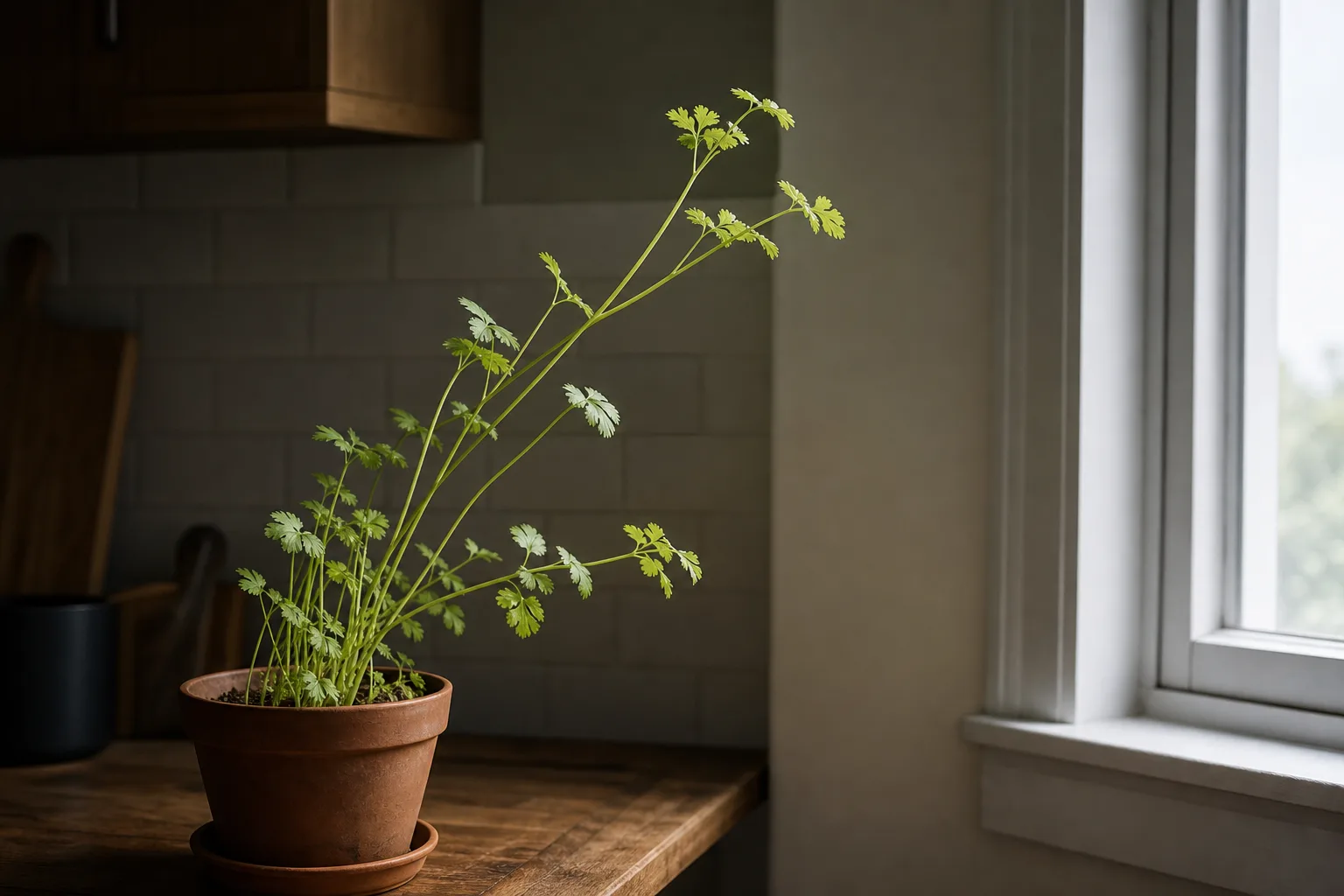
Coriander grown for leaves needs strong light to stay compact. In weak indoor light or deep shade, it stretches toward the brightest direction, produces thin stems with small fernlike leaves, and slows regrowth after you harvest.
First step: move the pot to the brightest cool location available-within about two feet of an east- or west-facing window-or hang a grow light 4–6 inches above the foliage. Do not reach for fertilizer or Coriander repotting guide until you have fixed light. Coriander is a fast annual; if the plant is already woody and bolted, resowing in better light is often faster than nursing old stems.
Why Coriander lacks sufficient light
Coriandrum sativum is a cool-season annual in the carrot family (Apiaceae). NC State Extension lists full sun-six or more hours of direct sunlight daily-as its preferred light level, with partial shade acceptable only part of the day. That requirement is easy to miss indoors.
Several common setups underfeed coriander with light:
- Kitchen counters away from windows - A spot that looks bright to your eyes may deliver only 100–200 footcandles, far below what leafy herbs use for dense growth.
- North-facing windows in winter - Short days and low-angle sun reduce usable light even when the plant never moves.
- Afternoon shade taken too far - Penn State Extension recommends afternoon shade in hot weather to delay bolting, but deep all-day shade produces the same leggy stretch as dim indoor corners.
- Crowded seedling trays - Seedlings shade each other; the outer ones may look fine while inner rows stretch badly.
- Post-harvest decline mistaken for disease - After you cut heavily, weak light slows the next flush, which owners often blame on soil or fertilizer instead of photons.
Coriander also uses light differently than slow-growing houseplants. It grows fast and is harvested young. A few weeks in marginal light shows up as visible stretch long before a snake plant would complain.
What not enough light looks like on Coriander
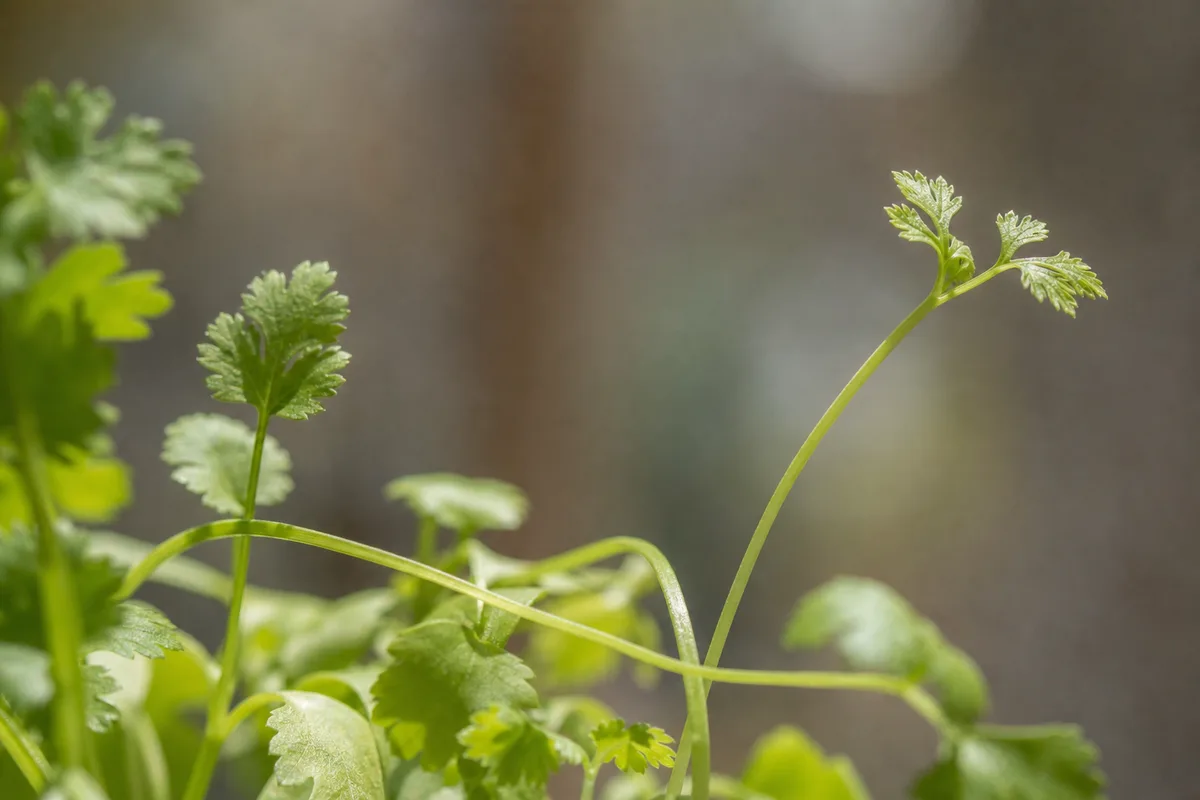
Leggy stretched stems with small pale upper leaves on coriander - classic low-light stretch toward the brightest window direction.
Low light on coriander has a recognizable pattern:
- Leggy, elongated stems between leaf pairs-the plant reaches toward the window or grow lamp
- Small, fernlike upper leaves instead of the broad lobed lower foliage
- Pale or dull green color rather than rich green healthy leaves
- One-sided lean when light comes from a single direction
- Slow regrowth after cutting - harvest stalls because photosynthesis cannot fuel new shoots
- Thin, weak stems that flop when touched or watered
University of Maryland Extension notes that indoor plants in too little light develop light green foliage, stretch, and lean toward the light source. Minnesota Extension adds that insufficient artificial light produces spindly, thin herb growth indoors.
What low light usually does not look like on coriander:
- A thick central flower stalk with white umbel clusters-that is bolting, driven mainly by heat and day length
- Crispy brown leaf edges from direct hot sun-that is sunburn or heat stress, the opposite problem
- Yellow lower leaves on chronically wet soil-that is more often overwatering on Coriander in a dim spot, not light stress alone
How to confirm the cause
Work through these checks before changing multiple care variables:
- Window distance and direction - Stand where the pot sits. If you are more than 4–6 feet from the glass or the only window is north-facing with no supplemental lamp, light is likely too low for compact coriander.
- Hours of direct sun - Outdoors or on a sill, track whether the pot gets morning or late-afternoon sun. Most culinary herbs need at least six hours of direct sunlight; all-day sun is better in cool weather.
- Lean direction - Stems pointing toward one window confirm the plant is actively seeking light.
- New growth after a test move - Shift the pot to the brightest cool spot for two weeks without changing watering or fertilizer. Shorter internodes and fuller new leaves confirm light was limiting.
- Bolting check - Look for a thickening center stem and flower buds. If bolting has started, heat or maturity may be involved even after you improve light.
- Soil moisture pattern - In low light, pots stay wet longer. Confirm the mix is not soggy; wilting on wet soil suggests rot risk, not a need for more water.
If the plant firms up and new leaves come in shorter after the brighter placement, you have confirmed insufficient light.
First fix for Coriander
Move the pot to the brightest location where temperatures stay roughly 15–25°C (60–77°F)-within about two feet of an east- or west-facing window, or under an existing grow light.
Morning sun with protection from hot afternoon rays matches coriander’s cool-season habit in warm climates. Indoors, prioritize intensity over décor: a bright east kitchen sill beats a dim south room far from the glass.
Do not jump straight to blasting the plant with midday summer sun through unshaded south glass-that can scorch leaves and trigger heat bolting. Increase light gradually over a week if moving from a very dark corner.
Step-by-step recovery
After the placement move:
- Add supplemental light if windows are insufficient - Hang fluorescent or LED fixtures 4–6 inches above foliage for 12–16 hours daily. Raise lights as stems grow to prevent heat burn on leaves.
- Rotate the pot a quarter turn every few days - Even light prevents one-sided lean while new growth fills in.
- Trim only for harvest, not rescue - Cut outer stems at the base as usual. Do not strip the plant bare hoping to force bushiness; give improved light time to work.
- Adjust watering downward slightly - Brighter light increases water use, but if the old spot kept soil wet, let the top 1–2 cm dry before watering again.
- Resow if stems are already bolted or woody - Coriander is an annual grown for young leaves. Direct-sow fresh seed in the final pot-it hates transplanting-and place the new sowing in the corrected light from day one.
- Choose slow-bolt cultivars for the next round - Varieties such as ‘Slow Bolt’ or ‘Leisure’ buy time in marginal light but still need adequate intensity.
Recovery timeline
Expect visible change in new growth within one to two weeks after light improves. The next leaf set after a harvest should look fuller and stand without leaning.
Old stretched internodes will not shrink. Missouri Botanical Garden guidance for too little light applies here: judge success on new compact growth, not on reversing stretched tissue.
If seedlings were severely leggy, starting a fresh tray under proper lights is often faster than trying to salvage 10 cm-tall spindly stems.
Lookalike symptoms to rule out
Heat bolting sends up a central flower stalk and bitter leaves when temperatures climb above about 28°C, even in good light. Afternoon shade helps bolting; it does not fix true low light.
Overwatering in a dim corner causes yellowing, mushy stems, and fungus gnats while the plant still leans for light. Dry the top of the mix and improve light together-wet soil in shade is a common double stress on coriander.
Nitrogen deficiency can pale older leaves but rarely causes strong one-sided lean. Fix light first; fertilize only after placement is correct and the plant is actively growing.
Transplant shock wilts seedlings moved from trays. Coriander performs best direct-sown; leggy store-bought seedlings may be light-starved before you bought them.
Mistakes to avoid
Do not fertilize a pale, stretched plant hoping to darken leaves-without adequate light, nitrogen pushes soft, floppy growth.
Do not move a dim-grown pot instantly to harsh midday sun. Acclimate over several days to avoid scorch.
Do not keep watering on the old schedule when you only move the plant brighter-check soil moisture before each drink.
Do not transplant leggy seedlings deeper to hide stretch. Burying stems invites rot on coriander’s delicate crown.
Do not confuse natural lifecycle with fixable low light. Coriander eventually flowers even in perfect conditions; repeated succession sowing beats extending one tired plant indefinitely.
Coriander care cross-check
Light and water interact on this herb. In weak light, evaporation slows, mix stays wet, and delicate coriander roots are sensitive to waterlogging. A plant that looks thirsty but sits in soggy soil needs better light and less water, not more.
Temperature matters alongside photons. Coriander grows best around 15–25°C. Cool bright conditions produce the best leaves; warm dim rooms stretch stems and push bolting.
Harvest rhythm also depends on light. Regular cutting encourages branching only when the plant receives enough energy to replace foliage. In deep shade, harvest once and regrowth may stall.
How to prevent low-light stress next time
Sow directly in the container you will keep, placed immediately in adequate light-do not start seeds in a dark room and plan to move them later.
For indoor winter crops, treat culinary herbs as high-light plants requiring supplemental fixtures when natural sun is short.
Succession-sow every two to three weeks so a stretched batch does not become your only supply.
Outdoors in hot climates, give morning sun and afternoon shade-not full-day deep shade under trees.
Keep windows clean and unobstructed; sheers and overhangs cut intensity more than most growers expect.
When to worry
Treat as urgent when seedlings fall over in a dim tray, when lean is so extreme the pot tips, or when pale stretched plants sit in wet soil with soft stems at the base-that combination suggests rot risk in low light.
Mild stretch on an otherwise firm plant is not an emergency. Move it, add light, and watch the next leaf set.
If the central bolt stalk is already tall, improving light will not restore tender leaf flavor. Harvest what you can, collect seed if desired, and resow in a brighter cool slot.
Conclusion
Not enough light on coriander shows up as lean, stretch, and small leaves-not mysterious wilt. Move the pot to the brightest cool spot or add a timed grow light, confirm with compact new growth, and resow when stems are already bolted. That single diagnostic path beats stacking fertilizer and repots on a plant that simply cannot see the sun.
When to use this page vs other Coriander guides
- Coriander watering guide - Use for routine moisture checks before assuming not enough light is the main issue.
- Coriander problems hub - Browse all 16 common issues on this species.
- Leggy Growth on Coriander - Different entry point when symptoms overlap with not enough light.
- Slow Growth on Coriander - Different entry point when symptoms overlap with not enough light.
- Yellow Leaves on Coriander - Different entry point when symptoms overlap with not enough light.