How to Grow Coriander from Seed: Sowing and Harvest Guide
How to Grow Coriander from Seed: Sowing and Harvest Guide
How to Grow Coriander from Seed: Sowing and Harvest Guide
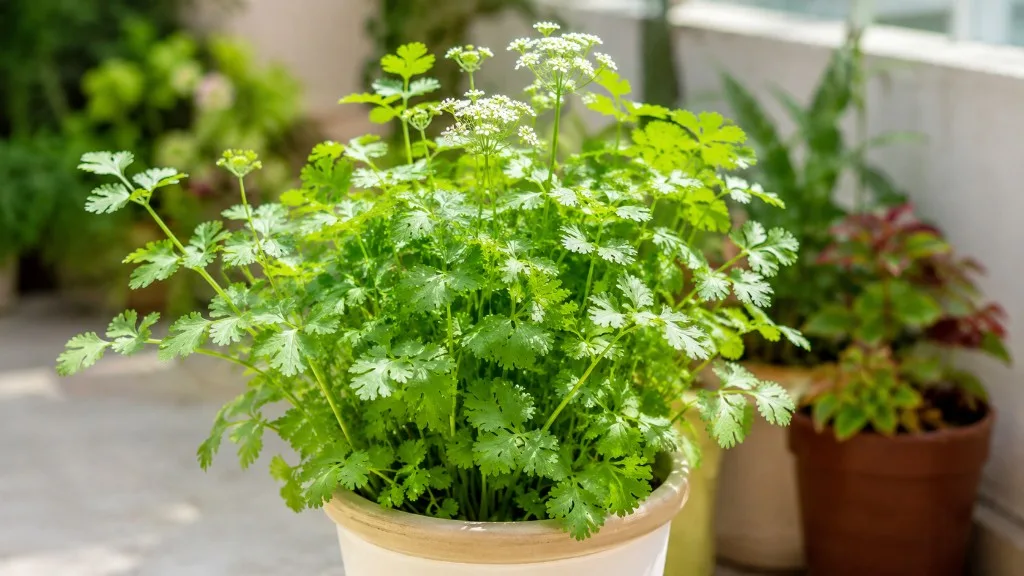
Coriandrum sativum is one of the fastest herbs you can grow from scratch, but only if you start with the method the plant actually supports: seeds sown where the plant will live. Coriander is not a houseplant you propagate from stem cuttings, water-rooted nodes, or divisions. It is a short-lived annual with a sensitive taproot and a biological clock that pushes it toward flowering the moment heat, long days, or root disturbance tell it survival time is running out. Treat coriander like a seed crop and the whole process becomes simpler - sow, succession sow every few weeks, harvest leaves while they are tender, and sow again when the previous batch bolts.
That distinction matters because many generic herb guides lump coriander in with basil, mint, or rosemary and imply that “propagation” means taking cuttings. It does not. Stem pieces of coriander do not reliably root in water or potting mix the way soft-stemmed perennials do, and even when a cutting looks alive briefly, it lacks the root system and energy reserves to produce the fast leaf flush you want in a kitchen herb. If you want fresh coriander leaves - called cilantro in much of the Americas - you grow new plants from seed on a repeating schedule. The rest of this guide walks through seed selection, sowing technique, succession timing, and harvest so you can keep a usable supply going rather than fighting a single exhausted plant.
If symptoms persist, see the Leggy Growth on Coriander guide.
Why Coriander Is a Seed Crop (Not a Cutting Herb)
Coriander completes its entire life cycle from germination to seed set in roughly 90 to 120 days, and the leaf harvest window in warm weather can be as short as two to five weeks before bolting ends leaf production. University of Wisconsin–Madison Extension notes that cilantro bolts readily and that no cultivar holds leaf quality indefinitely in hot weather. Home growers work with that rhythm, not against it, by sowing fresh seed regularly instead of trying to keep one plant alive indefinitely.
Stem cuttings fail for practical reasons tied to plant anatomy. Coriander stems are hollow, soft, and short-lived; they do not carry the dormant buds and carbohydrate reserves that make mint or basil cuttings viable. The taproot is the plant’s engine - it anchors deep, pulls moisture during rapid leaf expansion, and triggers bolting when damaged or when temperatures climb. A cutting without a functional taproot cannot mimic a properly sown seedling. Division is equally impractical because coriander grows as a single upright rosette, not a clumping perennial. The viable home methods are direct sowing, indoor seed-starting followed by careful transplanting only when necessary, and letting bolted plants drop seed for volunteer seedlings - but the starting point is always seed.
What Each “Seed” Actually Contains
What you buy labeled coriander or cilantro seed is botanically a schizocarp - a dried fruit that usually holds two true seeds, each called a mericarp, inside one round husk. Penn State Extension explains that each coriander “seed” is actually a fruit containing two embryos, which is why paired seedlings often emerge from one sowing. Understanding this structure explains two of the most useful sowing tricks: gentle cracking before planting and thinning after double sprouts appear.
The husk is not a flaw; it protects the mericarps in storage and in dry soil until conditions are right. In the kitchen garden, you can speed things up by lightly breaking that shell so moisture reaches the embryos faster. BBC Gardeners’ World notes that coriander seeds can be slow to germinate and that crushing them very gently before sowing can speed the process. (BBC Gardeners’ World) You are not grinding seed meal - you are cracking a fruit coat. Over-crushing damages the embryos and creates overcrowded doubles every time.
Choosing the Right Coriander Seed for Your Goal
Before you sow, decide whether you are growing primarily for fresh leaves or for coriander seed spice. The same species delivers both, but the growing strategy diverges. Leaf production favors slow-bolt cultivars, partial shade in summer heat, frequent harvest, and succession sowing. Seed production favors allowing plants to flower, selecting open-pollinated types, and giving them more space and Coriander light guide so seed heads mature fully.
Seed quality matters as much as variety. Old seed, heat-stored seed, or seed that sat in a damp packet loses viability quickly. Buy from a reputable source, note the pack year when available, and sow generously - coriander is inexpensive enough that skimping on seed density costs more in empty pots and delayed meals than in packet price.
Slow-Bolt Varieties for Leaf Harvests
If your goal is cilantro-style leaves for curries, salsas, chutneys, and salads, choose varieties bred to delay flowering. Santo (often sold as Santo Long Standing) is the widely available standard for home gardens. Calypso is another slow-bolt cultivar selected for longer vegetative growth; trial comparisons report it can remain leafy roughly three weeks longer than Santo under warm conditions, though both will eventually bolt. Leisure, Slow Bolt, and regionally sold types such as Pokey Joe or Slowbolt from specialty seed houses serve the same purpose.
Slow-bolt genetics do not eliminate bolting - heat, drought, root disturbance, and long days still trigger it - but they buy you a wider harvest window, which pairs perfectly with succession sowing. In hot climates, variety choice plus afternoon shade and steady moisture matters more than any single sowing date on the calendar.
When Standard Varieties Make More Sense
Standard or quicker-bolting coriander is preferable when you want seed spice, not leaves. Coriander seeds - the round, tan, citrusy spice used whole or ground - ripen after flowering. Slow-bolt leaf types produce fewer seeds per plant and take longer to reach full seed maturity. For spice, sow a dedicated block in full sun, allow bolting without leaf harvest, and let seed heads dry on the plant or cut them into a paper bag when they begin to turn brown.
If you save seed from your own garden, label whether the parent plants were leaf types or seed types. Over time, saved seed from early-bolted plants selects for faster bolting unless you deliberately rogue out the quickest flowerers.
The Best Time to Sow Coriander Seeds
Coriander is a cool-season annual. It germinates and grows most willingly when soil is moist and air temperatures sit roughly between 15°C and 25°C (60°F and 77°F) - the comfort zone most kitchens and spring gardens already approach. Clemson HGIC notes that cilantro prefers at least six hours of sun daily and bolts as plants mature and temperatures rise.
In temperate climates, the main sowing windows are early spring after soil warms to about 10°C (50°F) and late summer into early autumn for a cooler follow-on crop. In mild-winter regions, autumn and winter sowings can produce excellent leaves where summers are too harsh. In hot-summer regions such as much of India, treat coriander as a shoulder-season crop - sow in cooler months, use morning sun with afternoon shade, and pause succession during peak heat rather than forcing seed into baking soil.
Spring and Autumn Sowing Windows
Spring sowing catches the natural growth surge as days lengthen but nights remain cool. Sow the first batch when you can keep soil consistently moist and expect stable warmth - not during a late cold snap, and not into already-scorching soil. Harvest begins roughly three to four weeks after germination under good light, which matches coriander’s very fast indoor and outdoor growth when conditions cooperate.
Autumn sowing is underrated in climates with mild falls. Soil still holds summer warmth while air cools, and bolting pressure drops. A September or October sowing can outperform a midsummer attempt that flowers before you harvest twice. BBC Gardeners’ World notes that coriander can be sown until late in the season for winter use in suitable climates. (BBC Gardeners’ World)
When to Pause Sowing in Heat
There is no benefit to sowing coriander into soil above about 27–30°C (80–86°F) during the germination phase. High soil temperature at emergence pushes the plant toward reproductive mode before you get a meaningful leaf crop - a pattern documented in herb-growing references that link hot germination conditions to early bolting. During midsummer heat waves, pause succession sowing for two to four weeks, keep existing plants shaded and watered if you still want to use them, and resume every 2–3 weeks when nights cool or when autumn approaches.
If you must sow in summer, choose the coolest microclimate available: a shaded bench, an east-facing spot with morning sun only, or a pot you can move. Pre-water the planting area to reduce soil heat, sow in the evening, and cover lightly with fine compost or grass mulch instead of exposing bare soil to radiated heat.
How to Prepare Coriander Seeds Before Planting
Preparation starts with clean hands and realistic expectations. You do not need to soak seeds overnight, though a brief moistening after cracking can help if sowing immediately. Avoid soaking so long that seeds ferment or stick together in clumps.
Lay seeds on a flat surface or place a small batch in a mortar. Press each schizocarp with a finger or give one gentle turn with a pestle until the husk splits - you may hear a faint crack. Stop at split, not powder. Alternatively, place seeds between two paper towels and press lightly with a rolling pin once, then inspect and discard shattered pieces.
Some growers skip cracking and still succeed with patience and steady moisture. Cracking mainly improves speed and evenness, not absolute possibility. If you crack, sow slightly thicker and plan to thin, because two mericarps can both germinate.
Cracking the Outer Husk Safely
The failure mode with cracking is enthusiasm. Crushed embryos do not recover. Aim for 50–70% of fruits visibly split, not 100% destruction. Work in small batches of twenty to thirty seeds if you are succession sowing in sections - the same batch size recommended by experienced succession growers who treat coriander as a relay crop rather than a one-time planting.
After cracking, sow within a day if possible. Dry cracked mericarps lose moisture faster than intact schizocarps. If you must wait, store them in a labeled envelope in a cool, dry place, not on a sunny windowsill.
Direct Sowing Indoors and Outdoors
Direct sowing where plants will mature is the default best practice for coriander because of the taproot. Oregon State University Extension recommends direct seeding because cilantro’s long taproot makes transplanting difficult. Rake or finger-scratch the surface so seeds make contact with fine particles rather than sitting on a crust.
Indoors, use shallow trays, individual pots at least 10–15 cm (4–6 in) deep, or multi-cell trays you intend to disturb minimally at transplant. Coriander dislikes being moved, but a careful transplant of a young seedling with intact root ball is still less trouble than pretending stem cuttings will work.
Depth, Spacing, and Row Layout
Sow about 1 cm (0.5 in) deep - roughly a fingernail depth. BBC Gardeners’ World and multiple UK growing guides converge on this depth for outdoor rows. Cover lightly, firm gently, and water with a fine rose or spray so seeds do not wash exposed. Outdoors in beds, sow thinly in rows 30 cm (12 in) apart; thin seedlings to 20–25 cm (8–10 in) apart for leaf production. In containers, sow clusters of three to four seeds every 15–20 cm, then thin to the strongest plant per cluster once seedlings reach about 5 cm tall.
Germination typically takes 7 to 20 days, fastest when soil temperature is near 18°C (65°F) and slowest in cold or fluctuating conditions. Below 10°C (50°F), germination is patchy. Mark sowing dates on a tag - coriander seedlings look generic at first, and dates tell you when the next succession is due.
Indoor Windowsill Sowing for an Early Start
Indoor sowing buys time in short springs. Place pots on the brightest windowsill available - coriander wants strong light and will stretch weakly in dim conditions. A south-, east-, or west-facing window within 30 cm (12 in) of the glass outperforms a “bright room” across the room. If seedlings lean, rotate pots daily.
Start indoors three to four weeks before you intend to harvest, not three to four weeks before last frost if your plan is to keep them inside. For outdoor transplant - only when necessary - move seedlings while young, before the taproot hits the pot bottom, and transplant in the evening into pre-moistened soil. Disturb roots as little as possible; sliding the whole plug out beats pulling stems. Expect some bolting risk after transplant; that is one reason direct sowing remains preferred.
Succession Planting for a Constant Supply
A single coriander sowing is a sprint, not a marathon. Even slow-bolt varieties flower, and heat accelerates the finish. Succession planting - sowing small fresh batches on a fixed interval - is the main technique that separates growers who always have leaves from growers who wonder why coriander “only lasts two weeks.”
The principle is relay cropping at kitchen scale. Batch one supplies leaves while batch two germinates; batch two takes over as batch one bolts; batch three follows. You are never dependent on one plant’s mood.
A Simple Every-Two-to-Three-Week Sowing Schedule
Sow every 2–3 weeks from your first viable spring date until heat forces a pause, then resume every 2–3 weeks from late summer through autumn where climate allows. BBC Gardeners’ World recommends sowing every two weeks for a continuous summer supply. (BBC Gardeners’ World) All Seeds and multiple extension-style guides specify every 2–3 weeks through the main growing season - use the shorter interval in cool weather when plants last longer, and the longer interval in marginal heat when batches bolt faster.
A practical pattern for containers: divide a long window box or trough into sections. Sow 20–30 seeds in section A today. Two to three weeks later, sow section B. Two to three weeks later, section C, then loop back to A after harvest or bolt. In ground beds, sow short rows or patches sequentially rather than one long row all at once.
Each summer sowing typically yields roughly two to five weeks of serious leaf harvest before bolting, depending on variety, shade, and watering. With a 2–3 week sowing cadence, at least one batch should always be near peak production. Accept that midsummer gaps may still appear in hot climates - pause, shade, and resume rather than chasing impossible year-round full sun production.
Germination Care: Moisture, Temperature, and Light
Coriander germination is not difficult; inconsistency is. The soil surface must stay evenly moist, not waterlogged, from sowing until seedlings stand 2–3 cm tall. Dry crust kills emerging shoots; soggy anaerobic mix invites damping-off. Water lightly once or twice daily on sunny windowsills if the surface dries quickly; outdoors, a light mulch after emergence reduces evaporation.
Temperature during germination shapes the plant you get. Target 15–25°C (60–77°F) air and soil where possible. Heat mats are usually unnecessary and can push soil past the threshold that encourages bolting right at emergence. If you use a covered propagator, vent daily to prevent overheating - coriander is not a tropical seedling.
Light should be strong from the first day after emergence. Leggy, pale seedlings rarely recover into productive adults. Outdoors, full sun to partial shade in hot afternoons matches coriander’s preferred exposure: morning sun with afternoon shade is ideal in hot climates. Indoors, add a full-spectrum grow light 15–30 cm above the canopy for 12–16 hours if the window is weak - the same logic as other sun-hungry kitchen herbs.
Thinning, Transplanting, and Why Coriander Hates Root Disturbance
Once seedlings have one or two true leaves beyond the cotyledons, thin to the spacing your container or bed requires. Pull or snip extras rather than tugging neighboring roots. Thinnings are edible - young coriander seedlings are mild and good in salads; do not waste them.
If two seedlings emerge from one cracked schizocarp, keep the stronger one unless both have space. Crowded doubles compete for water, bolt sooner, and produce smaller leaves. Air circulation matters in humid indoor setups where dense seedlings encourage fungal issues.
Transplant only when direct sowing is impossible - balcony timing, pest pressure on open soil, or late frost outdoors while you want indoor progress. Rules for safer moves: transplant young, keep root balls intact, water immediately, shade for 48 hours, and do not fertilize until new growth is obvious. Even careful transplants may bolt earlier than direct-sown siblings. BBC Gardeners’ World explicitly advises that coriander’s long tap root makes root damage risky and favors sowing where plants will grow. (BBC Gardeners’ World)
Never treat “Coriander repotting guide to propagate” as a coriander strategy. Moving a mature plant to restart it usually triggers flowering, not a leaf reset. When a plant bolts or exhausts, sow seed in the same pot after refreshing the top few centimeters of mix - do not hunt for stem nodes that do not exist.
Harvesting Coriander Leaves Without Slowing the Next Crop
Leaf harvest can begin when plants reach usable size, typically 3–4 weeks after sowing under good light and moisture - faster in optimal cool conditions, slower in dim winters. Pick outer leaves first or cut stems 2–3 cm above the crown if you want slightly larger harvests, leaving growing points intact for regrowth. Frequent light harvest delays bolting modestly by keeping the plant in vegetative mode, but it cannot override genetics or heat forever.
Stop expecting flavor from bolt-stage foliage. When the main stem thickens, leaves narrow, and taste fades, the batch is finished for leaf use - let it flower for pollinators and seed, or remove it to make room for the next succession sowing. Flowering plants can still be useful: green coriander seeds have a distinct fresh flavor, and fully dry seeds store for kitchen spice or next year’s sowing.
For maximum kitchen utility, harvest in the morning after dew dries, use sharp scissors, and cook or refrigerate promptly. Wilting cut coriander is normal; stand stems in water like cut flowers if you need a few extra hours of crispness.
Conclusion
Growing coriander at home is less about mastering exotic propagation tricks and more about respecting a simple annual rhythm: sow seed directly, sow again every 2–3 weeks, harvest young leaves fast, and restart when plants bolt. Stem cuttings and division are dead ends for this herb; the taproot, the heat response, and the short leaf window all point to seed and succession as the reliable path.
Choose slow-bolt varieties for leaves, crack schizocarps gently if you want faster germination, sow about 1 cm deep in moist well-drained mix, and keep soil temperature in the 15–25°C band whenever you can. Pause sowing during peak heat, pick up the relay in autumn, and use section sowing in pots if space is tight. Do that for one season and coriander stops feeling like a herb that “always goes to seed immediately” and starts behaving like the fast, generous kitchen crop it is - as long as you keep the next batch already on its way.
When to use this page vs other Coriander guides
- Coriander overview - Start here for whole-plant context before deep-diving this topic.
- Coriander problems hub - Jump to symptom-specific fix guides when this care topic does not resolve the issue.
Related Coriander guides
- Coriander overview
- Coriander watering
- Coriander light
- Coriander soil
- Coriander fertilizer
- Coriander repotting
- Coriander problems
Related tool
Try the Propagation Success Calculator with coriander pre-selected to estimate needs for your setup.