Coriander Light Needs: Full Sun, Partial Shade, and Bolting
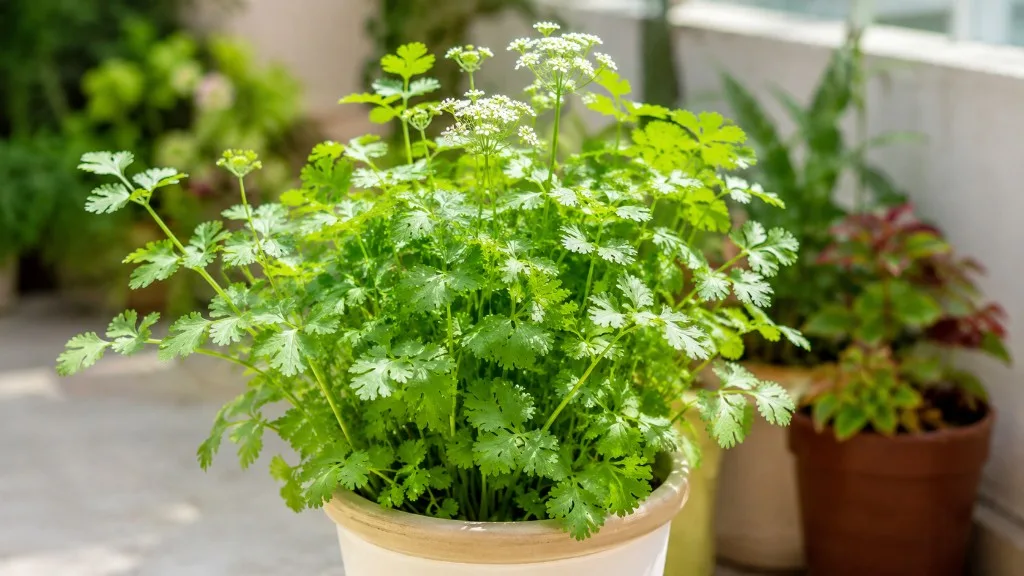
Coriander Light Needs: Full Sun, Partial Shade, and Bolting Prevention
Coriander Light Needs: Full Sun, Partial Shade, and Bolting Prevention
Coriander is one of those herbs that looks simple on the seed packet and complicated in the pot. Coriandrum sativum - the same plant Americans call cilantro and much of the world calls coriander - will germinate quickly, grow fast, and then suddenly send up a flower stalk when you were still planning your next stir-fry. Light is central to that story, but not in the way most houseplant guides describe it. Coriander does not just need brightness for leaf size. Light duration, season, and the heat that often comes with strong sun jointly decide whether you get a leafy harvest or an early bolt.
The practical goal is different from sun-loving basil or rosemary. You are not trying to maximize a single plant for years. You are trying to keep coriander in leaf production mode long enough to harvest before the plant switches to flowering and seed set. That means matching light intensity to the season: full sun when temperatures are cool, partial shade - especially afternoon shade - when heat builds, and careful attention to day length, because coriander behaves like a long-day, cool-season annual that flowers when days stretch past roughly 12 to 13 hours and temperatures climb above about 75°F (24°C).
This guide covers where to place coriander indoors and out, how much daily light it needs, when shade beats sun, and how to read the plant’s own signals before flavor quality collapses into bitter, lacy flowering stems.
Why Light Controls More Than Leaf Size in Coriander
Most herb articles treat light as a growth dial: more light equals faster, bushier plants. That is partly true for coriander, but incomplete. Light also carries a seasonal clock. As days lengthen in spring and early summer, coriander receives a stronger flowering signal even if you are still thinking in terms of “how many hours of sun the window gets.” The plant is reading both intensity and photoperiod - the number of hours of daylight in a 24-hour cycle - because its wild lifecycle is built around finishing leaf growth before summer stress arrives.
In its native range across southern Europe and western Asia, coriander behaves as a cool-season annual. It emerges in favorable cool windows, produces leaves quickly, then flowers and sets seed while conditions still allow pollination and seed maturation. Modern kitchens want to pause that program indefinitely. You cannot fully override biology, but you can choose seasons, placements, and light durations that keep the plant leafy longer.
Light also changes how fast the pot dries, how warm the root zone gets, and how often you need to water. A coriander plant in harsh afternoon sun on a balcony may bolt not only from photoperiod but from root-zone heat and moisture swings. A plant in dim light may stay alive yet grow thin, pale, and vulnerable to rot because it cannot use water efficiently. Good coriander lighting is therefore a seasonal placement strategy, not a single permanent spot.
How Much Light Coriander Actually Needs
Outdoors in cool weather, coriander performs best with strong, direct sun for much of the day - think six or more hours of useful brightness when temperatures sit in the comfortable leaf-production range. University of Wisconsin–Madison Extension notes that cilantro is a cool-season crop that bolts readily in hot weather and performs best with full sun in mild conditions. The coriander-specific twist is that “full sun” is ideal mainly when the air and soil are cool enough to support extended leaf growth.
Indoors, coriander needs a very bright sill or a grow light. A spot that looks acceptable to human eyes may still produce leggy, slow plants. For leaf production, target the brightest location you can provide without baking the pot against hot glass in summer. If you measure roughly in hours, six to eight hours of strong direct or bright indirect light is a workable minimum for active growth, with supplementation when winter windows fall short.
Coriander is fast when conditions align. Many growers see harvest-ready leaf growth within three to four weeks from sowing under strong cool-season light. The same seed in weak winter light may survive yet produce thin foliage you hesitate to cut.
The Short Answer for Busy Growers
If you want the compressed version before fine-tuning: grow coriander in full sun during cool seasons, move to morning sun with afternoon shade when heat arrives, and indoors use the brightest east or south window you have - or a grow light on a 12- to 13-hour timer in a cool room, not a hot kitchen running 16-hour days. Sow fresh seed every two to three weeks instead of fighting one aging plant. That combination solves more bolting problems than chasing a perfect permanent windowsill.
Coriander as a Cool-Season Herb
Treating coriander like a generic sun-loving Mediterranean herb is the most common category error in home growing. It is a cool-season annual, not a heat-loving summer staple. It germinates well in moderate soil temperatures - often cited around 55°F to 68°F (13°C to 20°C) - and produces the best leaf texture when daytime temperatures stay roughly below 75°F (24°C). In many climates, the premium leaf seasons are fall, winter, and early spring, when bright light arrives without punishing heat.
That cool-season identity reframes every light decision. Full sun in October or February is an asset. Full sun on a 90°F July afternoon is often a bolt accelerator. In hot-summer regions - including much of inland India above 30°C (86°F) - summer coriander is frequently a short harvest followed by rapid flowering regardless of your best intentions. The winning strategy is not “find more sun.” It is plant during cool bright windows and use shade to reduce leaf and soil temperature when you must grow into warming weather.
Coriander also dislikes root disturbance. Oregon State University Extension notes that cilantro’s long taproot makes transplanting difficult, so light placement matters most when the plant is already settled and actively growing.
Why Season Changes Your Light Strategy
Season changes two variables at once: day length and temperature. In temperate latitudes, days exceed about 12 hours from mid-spring through late summer, crossing the photoperiod range associated with bolting in coriander. Even a cool, cloudy June can still carry long days that tell the plant to flower. That is why late-spring sowings often bolt quickly “for no reason” - the reason is the calendar, not your watering.
Fall and winter sowings flip the advantage. Shorter days keep many plants in vegetative mode longer, and cool air slows the flowering transition. A bright winter windowsill - south-facing in the Northern Hemisphere from October through February - can produce some of the best-tasting coriander you will grow all year, because leaves stay thick and flavor concentrates when growth is unhurried.
Use this seasonal map as a decision framework rather than a rigid calendar. In cool bright seasons, prioritize maximum light. In warm bright seasons, prioritize temperature moderation through afternoon shade, mulch, and consistent moisture. In dim winters, prioritize supplemental light or accept slower growth without overwatering on Coriander a weak plant.
Full Sun vs Partial Shade for Coriander
Full sun means coriander leaves receive direct sunlight for a substantial portion of the day, not merely a bright room. Outdoors, a open bed or container with unobstructed morning-to-midday sun qualifies. Indoors, it usually means within a foot of a sunny window where direct beams hit foliage for several hours. In cool weather, full sun produces compact plants, shorter internodes, and faster regrowth after cutting.
Partial shade does not mean dim corners. It means filtered or reduced exposure during the hottest, brightest part of the day - typically afternoon shade when solar angle and air temperature peak. For coriander, partial shade is often a bolt-delay tool, not a low-light lifestyle. You are trading peak photosynthesis in heat for a slightly longer leaf harvest window.
The two modes are complementary, not competing absolutes. Coriander can take direct sun when the plant is acclimated and temperatures are moderate. It benefits from shade when sun comes with leaf-scorching heat or when soil in a dark container overheats on a terrace.
Morning Sun and Afternoon Shade in Hot Climates
In hot climates and warm late-spring periods, east-facing placements are coriander’s best friend. Morning sun delivers strong photosynthetic light when temperatures are still moderate. Afternoon shade reduces the thermal load that pushes the plant from leaf growth to flowering. On a balcony, tuck pots where a wall, taller crop, or sheer curtain blocks harsh west or south afternoon rays. In garden beds, the north side of taller summer crops - beans, corn, or trellised vines - can create a useful microclimate.
University of California Cooperative Extension and regional growing guides commonly recommend succession planting and afternoon shade strategies for extending cilantro harvests in mild coastal and warm inland climates where summer heat shortens the leaf window. (University of California IPM cilantro guide) Shade cloth at roughly 30 to 40 percent can lower soil temperature on raised beds when heat waves arrive, buying an extra week or two before flowering.
Do not confuse afternoon shade with deep shade all day. Coriander still needs several hours of real brightness. A north-facing alcove that never sees direct sun is usually too weak except in high-latitude summers.
When Full Sun Is the Better Choice
Full sun wins when temperature is the ally, not the enemy. Fall plantings under open sky, winter containers in mild zones, and early-spring sowings before heat builds all benefit from maximum light. More photons in cool air shorten time to first harvest and improve post-cut regrowth. If your weather report shows daytime highs consistently in the 60s°F / mid-teens°C range, give coriander the sunniest legal spot you have.
Full sun also helps correct etiolation - the stretched, pale growth caused by weak light. If indoor coriander is leaning and spindly, stronger light is the fix, provided you acclimate gradually and avoid placing a low-light-grown plant into blazing afternoon heat in one move.
How Heat and Long Days Trigger Bolting
Bolting is coriander’s shift from leaf production to flowering and seed set. The center stem elongates, leaves become finer and more feathery, flavor turns sharper and less sweet, and the plant allocates energy toward reproduction. Once the transition is well underway, you cannot prune your way back to a bushy cilantro bunch. Prevention has to happen upstream.
Two environmental triggers dominate: heat and long days. They often work together, which is why bolting feels sudden in late spring.
Heat alone sends a strong signal. Many growers and extension sources cite 75°F (24°C) as the range where bolting accelerates, with rapid flowering common as temperatures push toward 85°F (29°C) and above. In very hot climates, 28°C (82°F) is already enough to shorten the harvest window sharply. Heat affects leaf temperature, soil temperature, and plant metabolism. Dry soil in heat makes the signal worse.
Long days act as a separate clock. Coriander is a long-day plant for flowering purposes: when daylight exceeds roughly 12 to 13 hours, hormonal pathways favor reproductive growth even when temperatures are merely warm, not extreme. That is why a cool, wet late-spring week still produces bolting plants - the day-length threshold has been crossed. In the United States, for example, that often occurs from late March through September depending on latitude. In India, long-day pressure overlaps with intense pre-monsoon heat, making summer leaf production especially difficult.
Root disturbance, inconsistent watering, and plant maturity add secondary pressure. Transplanting, letting seedlings become root-bound, or cycling between drought and flood can push a borderline plant into flower. Frequent leaf harvest can slow the transition slightly, but it does not override heat and photoperiod forever.
The Photoperiod Signal Explained
Photoperiodism is the plant’s ability to measure night length and day length. Coriander does not use a wristwatch; it uses light receptors and internal chemistry to track whether days are lengthening toward summer. As nights shorten past a cultivar-specific threshold, the probability of flowering rises. This is why fall-sown coriander often stays leafy for months while late-spring sowings race to flower.
Indoor growers accidentally replicate summer long days by running grow lights 16 to 18 hours daily because “more light equals more growth” sounds intuitive. For coriander, excessive artificial day length can be counterproductive. A 12- to 13-hour photoperiod under strong supplemental light often supports leaf growth better than marathon lighting, especially when room temperatures already sit around 68°F to 72°F (20°C to 22°C).
If you grow under lights, use a timer and treat duration as seriously as intensity. Bright, shorter days mimic useful seasons. Bright, endless days mimic the bolt trigger.
Temperature Thresholds That Shorten the Harvest Window
Think in tiers rather than a single magic number. Below about 65°F (18°C), growth may be slow but leaf quality is often excellent. Between 65°F and 75°F (18°C and 24°C), coriander is in its productive comfort zone when day length is still moderate. Above 75°F (24°C), flowering risk rises quickly. Above 85°F (29°C), many standard varieties treat leaf production as a brief prelude to seed.
Hot glass amplifies the problem indoors. A south-facing windowsill in summer can create leaf temperatures far above room air readings. Moving pots back from glass, adding sheer afternoon filtering, or shifting to an east window during heat waves is often more effective than watering more.
Pair temperature awareness with variety choice. Slow-bolt cultivars such as Santo, Calypso, Leisure, and Slow Bolt extend the leaf window by resisting flowering slightly longer under the same light and heat. They are not immortal. They buy time.
Best Window Placement for Indoor Coriander
Indoor coriander is a light-and-temperature negotiation. The brightest window in your home may also be the hottest in summer. The coolest room may be too dim. Your job is to match season to window rather than leaving the pot in one permanent spot because it looks convenient above the sink.
Place pots close to the glass - usually within 30 cm (12 inches) - because light falls off quickly with distance. Rotate the container every few days if growth leans toward the pane. Avoid letting foliage press against hot summer glass; air circulation matters.
East, South, West, and North Windows Compared
An east window is the best default for year-round indoor coriander in many homes. It delivers direct morning sun and avoids the worst afternoon heat load. In warm kitchens, east light often produces a longer leaf harvest than south light because temperature matters as much as photons.
A south window is excellent in cool seasons - fall through early spring in temperate climates - when you want maximum brightness. In summer, south sills can become bolt ovens unless you filter afternoon sun or move the plant deeper into the room during heat waves. If you only have south exposure, use a sheer curtain from midday onward in warm months.
A west window supplies strong afternoon sun - usually the hardest orientation for coriander in heat. Use west light only in cooler months or with substantial afternoon filtering. If leaves bleach, curl, or wilt specifically in late afternoon, west exposure is the likely culprit.
A north window can work only where outdoor brightness is high and the window is large and unobstructed. For most homes, north light is marginal for coriander except in summer at high latitudes. If new growth is consistently stretched and pale on a north sill, upgrade to a grow light rather than hoping the plant adapts.
Grow Lights When Natural Light Is Not Enough
When windows cannot deliver enough brightness - common in winter, basement kitchens, and apartments with obstructed views - a full-spectrum LED grow light is the most reliable fix. Choose a fixture designed for seedlings and leafy herbs, mount it 15 to 30 cm (6 to 12 inches) above the canopy, and raise it as plants grow to prevent heat stress.
Run the light on a timer. For coriander leaf production, 12 to 13 hours daily is a sensible starting point. Increase brightness before you increase hours. Longer photoperiods do not compensate for a weak fixture, but they can push flowering indoors when paired with warm room temperatures.
Watch leaf color and temperature at the canopy. Dark green, firm leaves with steady regrowth after harvest mean the setup is working. Bleaching under intense LEDs means raise the fixture or shorten exposure. Stretching under a long-running weak light means move the lamp closer or upgrade output.
Indoor coriander often bolts in three to four weeks in warm kitchens even under good lights, or six to eight weeks in cooler, brighter conditions. Plan succession sowings every three weeks rather than treating one pot as a permanent herb factory.
Outdoor Placement and Seasonal Light Planning
Outdoors, match planting time to light-and-temperature reality, not nostalgia from a cool-climate blog post. In Mediterranean and temperate regions, fall through spring is the premier leaf season under open sun. In hot-summer regions, grow coriander in bright winter and monsoon-cooler windows, or provide afternoon shade for shoulder-season attempts.
Direct sow in place whenever possible. Coriander’s taproot makes transplanting stressful, and stressed plants bolt faster in strong sun. If you must use starts, harden them off gradually: expose to morning sun for a few days, extend exposure, and only then leave them in full cool-season sun.
Use succession sowing as a light-adjacent strategy. A two-week sowing rhythm means you always have young plants in their best harvest phase while older pots begin to flower. Let a few plants bolt if you want coriander seed for spice - those plants want long days and warm finish weather anyway.
For containers on paved surfaces, remember that radiant heat from stone or concrete can raise root-zone temperature above air temperature readings. Elevate pots on feet, use lighter-colored containers, and favor morning-sun positions when summer arrives.
Warning Signs Your Coriander Has the Wrong Light
Coriander complains clearly if you know which symptoms map to which mistake. Read new growth, not old damaged leaves. Old scorch does not heal, but the newest leaves tell you whether today’s placement works.
Too Little Light vs Too Much Sun and Heat
Too little light shows up as leggy stems, long internodes, small pale leaves, leaning toward the brightest direction, and slow recovery after harvest. The plant may stay alive for weeks yet produce flavorless wispy tops. Soil stays wet longer than expected, and fungal issues become more likely because the plant is not transpiring strongly. Fix by increasing brightness - closer window, better orientation, or supplemental LED - and reduce watering frequency until new growth firms up.
Too much sun and heat shows up as bleached or silvery patches on sun-facing leaves, crisp browning at margins, midday wilting that recovers in evening, and sudden flowering with a tall central stem. On hot sills, you may see whole shoots collapse after a move from dim store light to blazing glass. Fix by shifting to morning sun, adding afternoon shade, moving back from hot panes, and stabilizing moisture without keeping the mix soggy.
Bolting-specific signals include a rapidly elongating center stem, leaves becoming more lacy and divided, lower leaves yellowing as energy shifts upward, and flavor turning sharp or soapy compared with sweet young foliage. Once the stem nodes are spacing out vertically, harvesting leaves only delays seed set slightly. Start the next sowing and adjust season or shade for the replacement pot.
Every light change alters watering. Brighter, cooler-season placements dry the pot faster. Dimmer or heat-stressed plants use less water. Check moisture with your finger at 2 to 3 cm (1 inch) depth before defaulting to a calendar schedule.
Conclusion
Coriander light needs are seasonal, not static. In cool weather, full sun drives the fast leafy growth this herb is capable of. As heat and long days arrive, partial shade - especially afternoon shade - becomes a harvest-extension tool rather than a compromise. Indoors, prioritize bright east or filtered south windows, cap grow-light photoperiod around 12 to 13 hours, and keep plants as cool as your home allows.
Bolting is not random bad luck. It is coriander doing what a cool-season, long-day annual is built to do when temperatures rise above roughly 75°F (24°C) and day length pushes past about 12 to 13 hours. You manage that biology with timing, placement, succession sowing, slow-bolt varieties, and realistic expectations - not by forcing one pot to live forever on a summer windowsill.
Judge your setup by new growth: compact, fragrant leaves that regrow after cutting mean the current light strategy fits the season. Stretching, bleaching, or a shooting center stem mean something in the light-heat-day-length triangle needs to change. Adjust one variable, wait for fresh leaves to respond, and sow again before the old plant tells you summer won.
When to use this page vs other Coriander guides
- Coriander overview - Start here for whole-plant context before deep-diving this topic.
- Coriander problems hub - Jump to symptom-specific fix guides when this care topic does not resolve the issue.
- Not Enough Light on Coriander - Escalate here when light adjustments are not enough.
- Leggy Growth on Coriander - Escalate here when light adjustments are not enough.
Related Coriander guides
- Coriander overview
- Coriander watering
- Coriander soil
- Coriander propagation
- Coriander fertilizer
- Coriander repotting
- Not Enough Light on Coriander
- Leggy Growth on Coriander
- Coriander problems
Related tool
Try the Plant Problem Diagnosis Tool with coriander pre-selected to estimate needs for your setup.