Overwatering on Coriander (Cilantro): Causes, Checks & Fixes
Quick answer
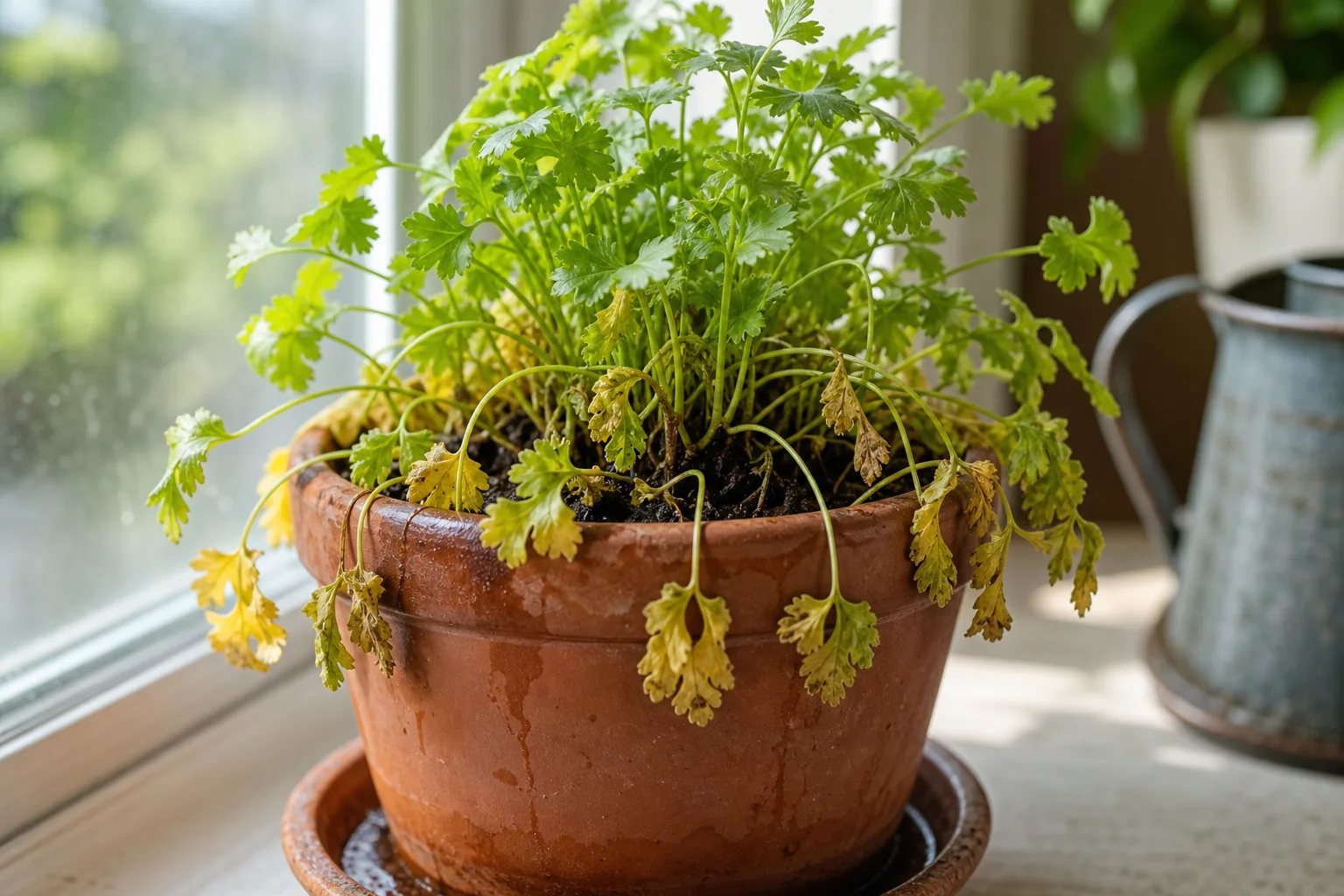
Wilting coriander with wet soil usually means damaged roots, not thirst. First step: stop watering, empty the saucer, and press your finger 1–2 cm into the mix-if it stays damp for days, let the top layer dry before the next drink.
Overwatering on Coriander (Cilantro): Causes, Checks & Fixes
This guide covers overwatering on Coriander. See also the general Overwatering guide, watering, and light pages for this plant.
Overwatering on Coriander (Cilantro): Causes, Checks & Fixes
Quick answer
“My cilantro is wilting but the soil is wet-am I killing it?” That panic is common on kitchen windowsills. On coriander (Coriandrum sativum, called cilantro for the leaves in North America), the ferny compound leaves go limp and the slender stems slump while the mix at 1–2 cm depth still feels cool and damp-not dry and crumbly. That pattern usually means root stress from too much water, not thirst.
Coriandrum sativum wants consistently moist, well-drained soil-a pairing that confuses growers because “moist” does not mean “constantly wet.” When the mix stays saturated, roots lose oxygen, stop absorbing water, and the plant wilts anyway.
First step: stop watering, empty any standing water in the saucer, and wait until the top 1–2 cm of mix feels dry to your finger. That single dry-down breaks the cycle that keeps coriander roots drowning. Only after the surface dries should you inspect drainage, check roots if decline continues, or decide whether to recover or resow this fast three-to-four-week crop.
Visual check: Overwatered cilantro shows limp ferny leaves on a heavy pot with dark, damp surface soil-distinct from afternoon heat droop where leaves firm up by morning on moist but not soggy mix. Photo reference: side-by-side of wilt-with-wet-soil vs. midday droop on a six-inch windowsill pot.
Full watering rhythm: coriander watering guide.
Why coriander gets overwatered
Coriander sits in a moisture paradox. The Royal Horticultural Society advises keeping container compost just moist while taking care not to overwater, as coriander dislikes soggy conditions. Utah State University extension notes cilantro does not do well in damp or humid conditions even though it needs regular moisture during establishment. Growers who water on autopilot-especially in cool, low-light months when evaporation slows-can keep roots wet while believing they are “keeping the herb happy.”
Typical failure patterns on coriander:
Calendar watering through cool seasons. A pot that dried in two days on a July windowsill may take four days in January. Same schedule, different outcome: chronic saturation.
Supermarket herb pots with poor drainage. Grocery-store cilantro often arrives in thin plastic with minimal holes or a decorative sleeve trapping runoff. Daily watering without checking moisture floods delicate roots quickly. If you keep a shop-bought pot, slip it out of the sleeve, confirm holes are open, and treat it like a short-term harvest tray-not a long-term houseplant that tolerates daily sips.
Saucers left full. Standing water wicks back into the mix and deprives roots of oxygen-Wisconsin extension notes plants with root rot are often wilted even though the soil is wet.
Oversized pots after transplant. A small root ball surrounded by a large volume of wet mix cannot dry the profile fast enough. The center stays soggy while the surface looks merely damp.
Dense sowing and harvest debris. Thick cut-and-come-again stands shade the soil surface, slow drying, and pair with fungus gnats when organic matter stays wet-see mold on soil on coriander.
Confusing afternoon wilt with thirst. Coriander leaves can droop in midday heat on a sunny sill even when roots are fine-or wilt because roots are rotting in wet mix. Reaching for the watering can without a soil check makes overwatering worse. Slow-bolt cultivars such as Calypso and Santo hold leaf quality longer in summer heat, but they still wilt from saturated roots the same way-bolting exclusion still requires checking for a rising central flower stalk.
What overwatering looks like on coriander
On coriander’s ferny compound leaves and slender stems, overwatering usually shows as:
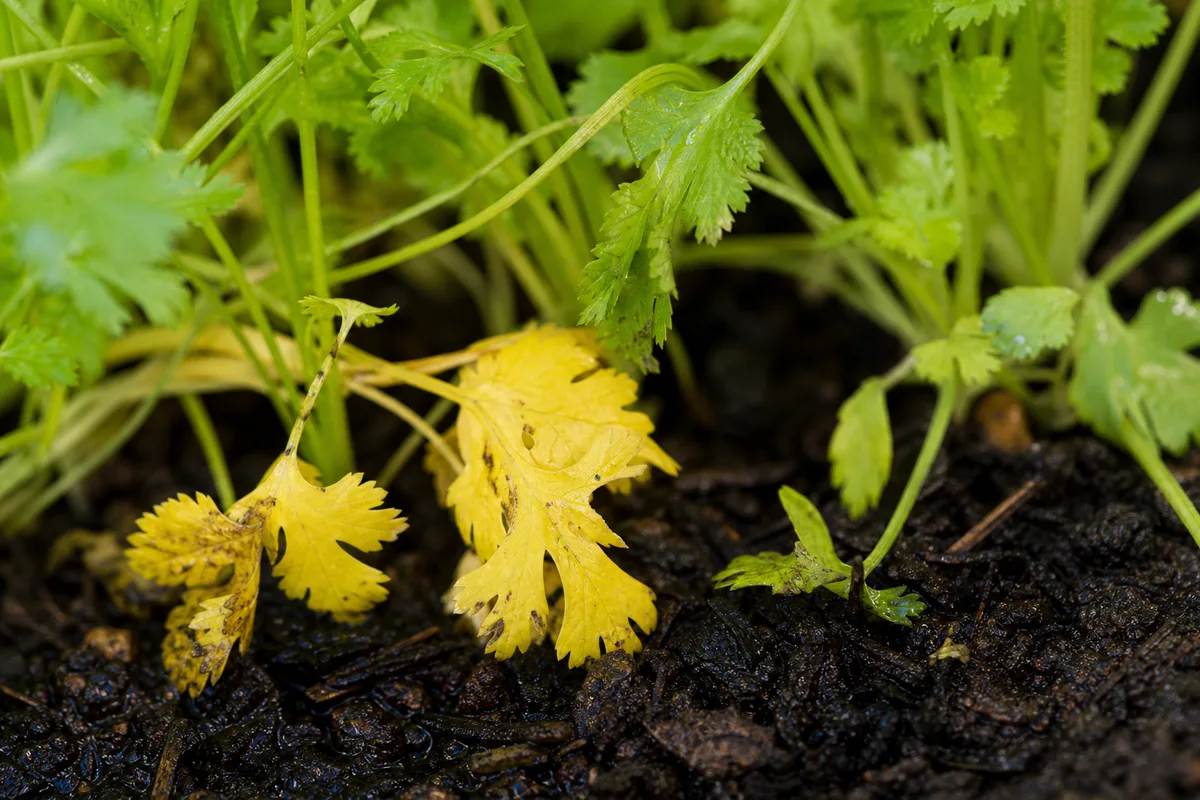
Overwatering symptoms on Coriander - compare with healthy tissue on the same plant.
- Limp, drooping foliage while soil feels wet or cool at 1–2 cm depth-not dry and crumbly
- Yellow lower leaves that may feel soft rather than crispy; center growth slows
- Heavy pot that stays heavy for days after the last watering
- Dark, waterlogged surface that does not lighten in color between sessions
- Sour or musty smell when you lift the pot or disturb the mix
- Fungus gnats hovering at the soil line-larvae thrive in chronically moist organic mix
- White or gray mold on the soil surface before deeper rot appears
- Soft, dark stems at the soil line on seedlings-possible damping-off in wet trays
Established coriander may look merely tired for a week before collapse. Seedlings in overwatered trays can keel over at the soil line within days.
The pattern that confirms overwatering over other causes: wilt plus wet soil plus no rising flower stalk. If a central bolt stem is climbing with pale lacy upper leaves, you are likely facing heat or day-length stress-not a watering fix. See yellow leaves on coriander for bolting patterns.
Yellow lower leaves: Soft yellow foliage at the base on dark, heavy mix often signals chronic wet roots-not nitrogen deficiency. Photo reference: lower leaf yellowing on a supermarket cilantro pot with saturated surface soil.
Confirm overwatering vs. underwatering on Coriander, heat wilt, and bolting
Run these checks in order before Coriander repotting guide or resowing:
Finger, skewer, and pot-weight checks
Press your finger 1–2 cm deep near the pot edge. Wet at that depth after several days without watering points to overwatering or poor drainage-not underwatering.
Lift the pot. A heavy pot with wilted leaves is the classic overwatering signature. A light pot with wilt suggests drought.
Insert a wooden skewer to mid-pot depth, wait sixty seconds, pull it out. A damp skewer on a wilted plant means root failure, not thirst.
Symptom lookalike comparison
| What you see | Soil at 1–2 cm | Likely cause | First response |
|---|---|---|---|
| Limp ferny leaves, yellow lower foliage | Wet for days, heavy pot | Overwatering / root stress | Stop watering; dry top layer; check roots |
| Wilt, thin papery leaves | Dry, crumbly, light pot | Underwatering | Water thoroughly at soil line; empty saucer |
| Afternoon droop, firm leaves by morning | Moist but not soggy | Heat wilt on sunny glass | Move to cooler bright spot; check before evening water |
| Rising central stem, pale lacy upper leaves | Variable | Bolting from heat or long days | Harvest usable leaves; sow fresh pot-water won’t reverse |
| Seedlings collapse at soil line | Constantly wet surface | Damping-off | Discard tray; resow with less frequent misting |
| Mold on surface, firm stems | Wet top layer | Surface moisture issue | Scrape surface; dry top 1–2 cm-mold on soil guide |
If two patterns overlap-wet soil and a rising bolt stalk-address root stress first, but plan a succession sowing because bolted leaf quality will not return.
First fix for coriander
Stop watering, empty the saucer, and do not add another drop until the top 1–2 cm of mix feels dry to your finger.
That is the whole first fix-not fertilizer, not repotting on day one, not pruning half the plant unless you later confirm severe root loss. Coriander roots need a dry-down window so oxygen can return to the mix. Moving the pot to brighter airflow (east or south windowsill with space around the container) helps the surface dry faster without baking the cool-season herb in midday summer sun.
After the dry-down begins:
- Confirm drainage holes are open-not blocked by roots, pebbles, or a decorative outer pot holding water.
- Remove harvest trimmings from the soil surface so decaying leaf bits do not keep the top wet.
- Watch for improvement over three to seven days: firmer stems, new center leaves, soil lightening in color between checks.
Only if wilt continues after the top layer has dried and stayed dry for two to three days should you unpot and inspect roots.
Unpot and root-trim protocol for mushy roots
Slide the root ball out gently. Healthy coriander roots are white or tan and firm. Rotten roots are brown or black and mushy, sometimes with a bad odor.
If you find mushy sections:
- Rinse roots under lukewarm water to see clearly
- Trim soft, discolored roots with clean scissors until you reach firm tissue
- Discard the old wet mix-do not reuse it
- Repot into fresh, well-draining herb mix in a pot only slightly larger than the trimmed root ball, with open drainage
- Water lightly once after repotting, then return to the top 1–2 cm dry rhythm
- Do not fertilize stressed roots
Coriander does not transplant well because of its taproot. Reserve repotting for clear rot-not routine overwatering with mostly firm roots.
When to resow instead of recovering
Coriander is a fast annual herb-leaf harvest often starts within three to four weeks of sowing under good conditions. Nursing a root-rotted supermarket pot for two weeks may cost more time than succession sowing every two to three weeks.
Resow instead of recovering when:
- More than half the root mass is mushy after trimming
- Stems collapse or turn black at the soil line
- The plant is older than four to five weeks with minimal usable leaf
- Damping-off has killed most of a seedling tray
- Sour smell persists after repotting into fresh mix
Try recovery when:
- Roots are mostly firm with only minor brown tips
- Center growth stays green after a one-week dry-down
- You are mid-harvest on a young pot with plenty of leaf left
Direct-sow replacements in the final container rather than transplanting-coriander bolts easily when moved. See coriander overview for sowing basics and succession timing.
Recovery timeline for a short-cycle crop
Once watering pauses and the top layer dries:
- Days 1–3: Soil surface lightens; pot weight drops; wilt may look unchanged-roots have not recovered yet
- Days 3–7: Stems firm slightly; new center leaves may appear if roots were only stressed, not rotted
- Week 2+: Judge success on new cuttable growth, not old yellow lower leaves-those rarely re-green
Leaves that yellowed from chronic wetness may stay pale at the base while the center recovers. That is normal. Harvest outer stems once they feel firm again.
If the plant shows no new center growth after ten days of correct dry-down, or stems soften further, discard and resow. A fresh sowing in cool bright conditions often produces usable leaves faster than extended rescue attempts on a failing root system.
Seedlings lost to damping-off do not recover-clean the tray, adjust watering, and sow again.
What not to do
Do not fertilize waterlogged coriander hoping to push green leaves-nitrogen on stressed wet roots adds damage.
Do not repot into a larger pot “to help drying.” Extra mix volume holds more water around a small root ball.
Do not water on a fixed daily schedule through cool months when the plant uses less moisture.
Do not mist leaves instead of checking soil-surface wetness does not fix root-zone saturation and can worsen fungus gnats on coriander on dense cut-and-come-again stands.
Do not assume wilt always means water more. On coriander, wilt with wet soil means water less and check roots.
Do not harvest slimy, mold-covered, or foul-smelling leaves for kitchen use-even when upper stems still feel firm, mold on the soil surface is a discard-and-resow signal for edible herbs.
Do not fight a bolted plant with extra water-once the central flower stalk rises, leaf quality is done regardless of moisture.
When to worry
Escalate beyond a simple dry-down when:
- Stems turn mushy at the crown while soil stays wet-possible advancing crown or root rot; unpot immediately and see root rot on coriander if trim-and-repot does not stabilize the plant within a week
- Seedlings collapse in clusters after heavy watering-likely damping-off; discard affected trays; do not harvest from collapsed seedlings
- Sour smell intensifies when you lift the plant-organic breakdown and root death are advanced
- Fungus gnats swarm every time you water-larvae may be feeding in wet top layers; extend dry surface period and see fungus gnats on coriander
- Wilt persists after ten days of correct dry-down and firm-root repot-plant is unlikely to recover leaf production in time to justify the effort
Coriander is an inexpensive, fast crop. When in doubt on a windowsill herb pot, resow. A clean six-inch container with fresh mix and correct drainage beats repeated rescue cycles on a rotting root ball.
Mild overwatering caught early-limp leaves, wet soil, firm roots after inspection-is not an emergency. Stop watering, dry the top layer, fix drainage, and adjust rhythm.
How to prevent overwatering next time
Water when the top 1–2 cm dries-not on calendar autopilot. Container coriander dries out more rapidly than in-ground plants in warm weather but slows dramatically in cool, low-light conditions. Check every pot before watering.
Use well-draining mix in pots with open drainage holes. NC State notes coriander prefers medium moist, well-drained soil-not dense garden soil in a small kitchen pot.
Empty saucers within thirty minutes of watering. Never let a pot sit in standing water.
Right-size containers. A six-to-eight-inch pot suits most windowsill sowings better than a deep twelve-inch tub with a tiny root ball.
Choose slow-bolt cultivars for summer windowsills. Calypso and Santo are RHS Award of Garden Merit selections bred to bolt more slowly than standard coriander, which reduces the chance you misread heat stress as thirst and overwater in response-but they still need the same dry-down checks when soil stays wet.
Sow successionally every two to three weeks rather than overwatering one old pot to force late leaves.
Clear harvest debris from the soil surface promptly.
Adjust for season. Cool-season indoor coriander in winter needs less frequent drinks than the same pot in summer-verify with finger and weight checks, not memory.
For the full moisture rhythm, seasonal adjustments, and finger-test routine, use the coriander watering guide.
This week’s decision ladder
Use this escalation path before adding more interventions:
| What you see this week | Soil / roots | Action today |
|---|---|---|
| Limp leaves, wet mix, firm stems when you gently tug | Wet at 1–2 cm | Dry-down only - stop watering until top layer dries |
| Wilt unchanged after surface dried 2–3 days | Damp mid-pot, no new center leaves | Unpot and inspect - trim mushy roots; repot into fresh mix |
| More than half roots mushy, black stems at soil line | Sour smell | Resow - clean six-inch pot; direct-sow; do not transplant |
| Central bolt stalk rising, pale lacy tops | Any moisture | Harvest and succession-sow - water will not restore leaf quality |
| Crown mush after trim-and-repot | Wet mix returns quickly | Escalate to root rot protocol - see root rot |
When only the top stays wet and stems are still firm, dry-down alone is usually enough. When wilt outlasts a correct dry-down, unpot the same week. When roots are mostly gone, resow before you spend another ten days on rescue. That math fits coriander’s brief harvest window better than nursing a failing supermarket pot.
Related coriander problems
- Coriander overview - sowing, succession timing, and baseline care
- Watering - finger-test rhythm and seasonal adjustments
- Root rot - trim, repot, and crown-loss limits when overwatering has advanced
- Wilting - wet-soil vs dry-soil wilt fork on ferny foliage
- Mold on soil - surface fuzz on the same damp mix
- Yellow leaves - bolting and lower-leaf loss patterns
- Fungus gnats - flies that signal chronic surface wetness
FAQs
Why is my coriander wilting when the soil is wet?
Wilt with wet soil means roots cannot move water to the leaves-often from overwatering, blocked drainage, or a saucer holding standing water. The leaves droop from root failure, not drought. Stop watering, confirm drainage holes are clear, and check roots for brown mushy sections before resuming a careful dry-down cycle.
Should I throw away my cilantro and resow or try to save it?
Resow if more than half the roots are mushy, stems collapse at the soil line, or the plant is past four weeks with little usable leaf left. Coriander is harvest-ready in roughly three to four weeks-a fresh sowing in a clean pot often beats weeks of root-trim recovery. Save the pot only when roots are mostly firm white and center growth stays green after a one-week dry-down.
How can I tell overwatering from underwatering on coriander?
Overwatering: soil wet for days, heavy pot, yellow lower leaves, limp ferny foliage, sour smell, fungus gnats. Underwatering: light pot, dry crumbly mix pulling from pot walls, wilt that perks within hours after a thorough drink. Heat wilt on a sunny windowsill can mimic thirst even when roots are fine-check soil moisture before watering.
Can I still eat leaves from an overwatered coriander plant?
Firm green leaves from a plant recovering after a brief wet spell are generally fine for cooked dishes, though flavor may be weaker. Discard slimy, moldy, or foul-smelling foliage. If stems are mushy at the base or mold covers the soil surface, harvest nothing and resow in fresh mix instead.
How do I prevent overwatering coriander next time?
Water when the top 1–2 cm of mix feels dry-not on a fixed calendar. Use pots with open drainage, empty saucers after each watering, and adjust frequency in cool months when evaporation slows. Sow a new pot every two to three weeks so you are not overwatering one tired container to force late leaves.
When to use this page vs other Coriander guides
- Coriander watering guide - Use for routine moisture checks before assuming overwatering is the main issue.
- Coriander problems hub - Browse all 16 common issues on this species.
- Root Rot on Coriander - Different entry point when symptoms overlap with overwatering.
- Yellow Leaves on Coriander - Different entry point when symptoms overlap with overwatering.
- Wilting on Coriander - Different entry point when symptoms overlap with overwatering.