Watering Coriander (Cilantro): Schedule and Soil Checks
Watering Coriander (Cilantro): Schedule and Soil Checks
Watering Coriander (Cilantro): Schedule and Soil Checks
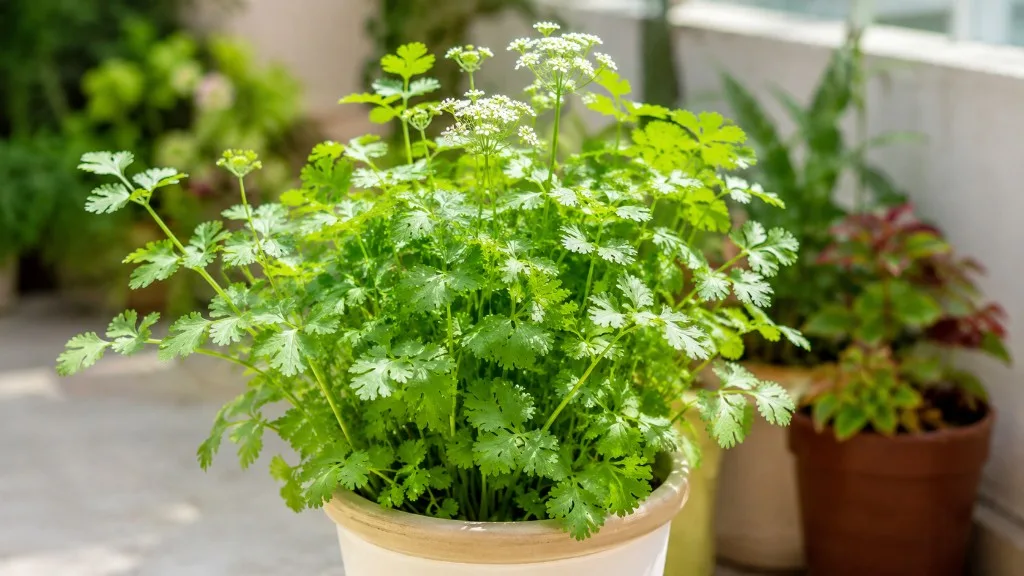
You sowed cilantro seeds three weeks ago, harvested a handful of leaves for chutney, and woke up to ferny foliage and a stiff flower stalk shooting from the center. That is not a watering mystery you can fix with one more soak - bolting is permanent. Coriandrum sativum - called coriander in much of the world and cilantro for the fresh leaves in North America - is a cool-season annual with a three-to-four-week leaf harvest window under good conditions (Penn State Extension lists Leisure ready for leaf harvest in 28 to 40 days). Miss one hot afternoon dry-down in a balcony pot and the plant may decide summer has arrived. Water on autopilot without checking soil and you get yellow lower leaves, root rot, or a tray of collapsed seedlings from damping off.
The rhythm that works is different from basil and nothing like a succulent: check the top 1–2 cm of soil, water deeply at the base when that zone is dry, let the pot drain fully, and adjust for heat, pot size, and whether you are growing leaves or seeds. This guide covers how much water coriander needs, realistic indoor and outdoor schedules, a container vs in-ground comparison table, a bolting decision tree, succession-sow watering, and the mistakes that turn a promising patch into bitter, bolted stems. For full species context, start with the coriander care overview; pair watering with light placement and soil drainage because those two factors change dry-down speed and bolt risk more than any calendar app.
Quick benchmarks: Indoor and outdoor containers in warm, bright conditions - water when the top 1–2 cm feels dry, often every 1–2 days in peak summer, every 2–3 days in cooler months. In-ground beds - supplemental water mainly during long dry spells, targeting roughly one inch per week including rainfall once plants are established. Always confirm with a finger or pot-weight check before pouring. Morning base-level watering beats evening splashes on leaves. If leaves wilt while soil stays wet, suspect root stress - not thirst.
Why Coriander Watering Is Different From Other Herbs
Coriander is not basil with a different name. Basil is a warm-season herb that drinks heavily through soft leaves for months if you pinch flowers. Coriander is a cool-season Apiaceae annual that completes its useful leaf stage in weeks, bolts when heat and drought align, and develops a taproot that resents disturbance. Treat coriander like a short-cycle crop - closer to salad greens than to a long-lived kitchen herb.
The species also serves two culinary goals from one plant. Leaf cilantro harvest wants steady moisture to keep foliage tender before bolting. Seed coriander harvest wants the plant to flower, set seed, and dry down - a different moisture arc entirely. Growers chasing spice may even allow warmer, drier conditions once flowering starts, while leaf growers fight to delay that shift.
Coriander sends contradictory signals faster than most herbs because its lifespan is compressed. Leaves can wilt in afternoon radiant heat even when soil moisture is adequate. They can wilt because roots are drowning. Yellow lower leaves can mean overwatering, natural aging, or nitrogen stress after a drought cycle. That overlap is why beginners either water on autopilot or underwater until stems go crispy and flower buds appear.
Compared with basil on the same windowsill, coriander typically needs more frequent checks in summer (smaller root volume relative to bolt urgency) but less forgiveness after bolting starts. Basil might recover leaf quality after a dry spell if you catch it early. Coriander often will not - once the central stem elongates, leaf flavor shifts bitter and your best move is succession sowing, not more water.
Bolting, Drought, and Why Moisture Timing Matters
Bolting - premature flowering and seed set - is coriander’s default response to “summer is here.” Triggers include sustained heat (often above roughly 24–27°C / 75–80°F), long day length, root disturbance, and drought stress. Penn State Extension notes that cilantro thrives in cool spring and fall weather and bolts quickly when temperatures heat up, producing bitter-tasting leaves. Clemson HGIC links bolting to rising temperatures as plants mature and advises about one inch of water per week unless temperatures become extremely hot - consistent moisture helps, but it cannot override genetics forever in a heat wave.
The Royal Horticultural Society advises that coriander in the ground should not need routine watering apart from long dry spells, when additional water can help prevent bolting and prolong leafy harvests - while container plants dry out rapidly and should be checked daily, with compost kept just moist and never soggy. (Royal Horticultural Society - coriander) Drought does not cause bolting alone - heat and day length matter - but inconsistent moisture removes one stress you can control. Oregon State University Extension explains that in warm weather cilantro completes its life cycle faster, often bolting within four to six weeks in mid-summer, while cooler spring or fall conditions allow leaf growth for much longer before flowering.
Critical limitation: watering cannot reverse bolting after flower clusters form. More water at that stage does not flatten leaves back out. Your actionable window is before the stalk elongates - and for many pots that window is only three to four weeks from sowing.
The Bolting Decision Tree
Use this when coriander looks unhappy and you are unsure whether to water, wait, or sow again:
| What you see | Soil at 1–2 cm depth | Pot weight | Likely cause | Action |
|---|---|---|---|---|
| Afternoon wilt, perked by evening | Moist | Heavy | Radiant heat, not drought | Shade or move pot; check again next morning before watering |
| Morning wilt, crispy leaf edges | Dry | Light | Drought stress - bolt risk high | Water deeply at base; sow backup batch if stalk is rising |
| Wilt any time of day | Wet | Heavy | Root rot / overwatering | Stop watering; empty saucer; inspect roots (overwatering guide) |
| Ferny leaves, central stem stretching | Any | Any | Bolting underway | Harvest what you can; start next succession sowing |
| Seed heads forming, foliage drying | Dry trending | Light | Seed-coriander phase | Reduce watering as seeds mature (Wisconsin Horticulture advises reducing irrigation when seeds near maturity) |
How Much Water Coriander Actually Needs
A useful benchmark for in-ground coriander is steady moisture in the root zone without waterlogging - roughly one inch of water per week including rainfall once established, per Clemson HGIC. In practice that means the bed should not go bone dry between rain events during the leaf-harvest phase, but the surface should not stay shiny-wet for days after each soak.
Container coriander breaks that math deliberately. Pots on sunny balconies expose soil to heat and wind on all sides. The RHS states that plants in containers dry out more rapidly than those in the ground, so check daily and water as needed, keeping compost just moist while avoiding soggy conditions coriander dislikes. (Royal Horticultural Society - coriander)
The amount per session matters less than how thoroughly you rewet the root ball. Half-cup sips keep the surface damp while the taproot zone stays dry - then the plant wilts, you add more sips, and bolting accelerates from drought stress. Water until moisture moves through the full depth and exits drainage holes. Stop until the top 1–2 cm approaches dry again.
In-Ground Beds vs Containers
| Location | Spring / autumn (cool) | Summer (hot) | Winter indoor | Check frequency |
|---|---|---|---|---|
| In-ground bed | Rain + supplemental soak in dry spells | Deep soak in dry spells; mulch 5–7 cm | N/A outdoors | Weekly in dry weather |
| Outdoor container | Every 2–3 days typical | Every 1–2 days; daily in heat waves | N/A | Daily in peak heat |
| Indoor windowsill | Every 2–4 days | Every 1–2 days on hot sill | Every 2–4 days in cool room | Every 1–2 days in active growth |
Slow-bolt cultivars - including varieties sold as Santo, Leisure, and Calypso - tolerate warm spells slightly better than standard coriander but still need the same check-first rhythm. Penn State Extension lists Calypso as the slowest to bolt among common cultivars, roughly three weeks slower than Santo. They buy calendar time, not immunity - daily summer checks still apply.
Coriander’s taproot prefers depth. Shallow four-inch pots dry fast and restrict roots, amplifying moisture swings. A pot at least 25–30 cm (10–12 inches) deep gives more even access to moisture through the profile - still not a substitute for daily checks in Indian summer heat.
How Often to Water Coriander Indoors
Indoor coriander usually needs watering every one to three days during active growth in warm, bright conditions, but the honest answer is always “when the top one to two centimeters feel dry.” A sunny west-facing sill in summer may land at daily checks. A cooler east window in spring may stretch toward three days. Small pots in dry, air-conditioned air can dry overnight.
Check indoor coriander at least every other day during the growing season. Do not water by default. After two weeks in the same spot you will know whether your plant behaves like a daily coriander or a three-day coriander. That personal baseline beats any blog chart because it accounts for your pot, mix, and light level.
Indoor humidity between 40–60% suits coriander well. Heated winter rooms below 30% humidity pull moisture from leaves and soil faster. Grouping pots or using a humidity tray slows drying slightly. Do not compensate by leaving soil constantly wet - high humidity plus soggy mix invites fungus gnats and damping off when airflow is weak.
Finger Test, Skewer Test, and Pot Weight
The finger test is the fastest daily check. Press your finger 1–2 cm deep near the pot edge, not against the stem. Cool, clinging soil means wait. Dry, crumbly soil at depth means water. Surface color lies on peat-based mixes.
The pot weight test is the most reliable repeat-grower signal. Lift the pot right after a thorough watering. Lift daily. A dramatically lighter pot has lost most available moisture. Light pot plus dry top layer equals water; heavy pot plus wilted leaves equals trouble.
A wooden skewer inserted to mid-pot depth works as backup. Damp skewer means wait. Dry skewer with a light pot means water. Moisture meters can misread coarse perlite mixes - use as second opinion only.
How Often to Water Coriander Outdoors
Outdoor coriander in garden beds typically needs supplemental water during long dry spells rather than a fixed weekly drench. When rain is absent and temperatures climb, a deep soak that wets the root zone several inches down helps delay bolting. Mulch 5–7 cm (2–3 inches) with straw or compost slows evaporation. Penn State Extension recommends keeping cilantro watered and mulched with straw to help keep soil temperatures cool, with afternoon shade to extend lifespan when temperatures heat up.
Outdoor container coriander in full summer sun often needs water daily or every one to two days. Wind, reflected heat from walls, and limited soil volume accelerate drying. Morning sun with afternoon shade - ideal in hot climates - slows evaporation but does not eliminate daily checks during heat waves.
After rain, still finger-test before assuming the plant is set. Light misting rain may wet leaves while barely penetrating the pot. Overcast cool weather after rain can keep mix wet longer than expected - the risk shifts from drought-driven bolting to root stagnation.
Seasonal Watering Schedule for Coriander
Coriander grows fastest when temperatures sit roughly 15–25°C (59–77°F). Water use tracks temperature, day length, and growth speed more than the day of the week.
In spring, newly germinated coriander is establishing roots. Keep mix evenly moist - not saturated - for the first 10–14 days. Water when the top centimeter dries, often every two to three days outdoors and every two to four days indoors. Wisconsin Horticulture Extension advises keeping evenly moist throughout the growing season for leaf crops.
In summer, peak sun maximizes both water demand and bolt risk. Outdoor container coriander in hot climates - including much of India - often needs water every one to two days. In-ground beds with mulch may need supplemental soaks only during dry spells, but those soaks matter because drought pushes coriander toward seed production faster than almost any other stress.
In autumn, cooler nights slow growth and extend intervals. This is often the best leaf season in warm regions. Sow successionally every two to three weeks for continuous harvest.
In winter, indoor coriander in cool rooms may need water only every two to four days. Growth slows, but dry heating air can still pull moisture quickly from small pots. Reduce frequency, not thoroughness.
Cool-Season Windows and Summer Bolting Risk
Summer mistakes cluster around two extremes: forgetting the afternoon balcony pot on a 32°C day, and watering every morning out of habit when yesterday’s mix is still wet. Heat increases evaporation; it does not suspend drainage needs. The RHS advises that if growing coriander for leaves in summer, sow in a cooler location out of midday sun and water in dry spells to delay flowering - especially for containers because compost dries rapidly in warm weather. (Royal Horticultural Society - coriander)
Winter and shoulder seasons flip the risk profile. Overwatering becomes the bigger enemy as evaporation drops and light weakens. A pot that dried in one to two days in July may take three days in January. Adjust by check, not by memory of summer frequency.
Watering by Growth Stage (Seedling → Pre-Bolt Harvest)
Seedlings and newly germinated plants need gentle, even moisture. The top should not crust dry while the bottom stays waterlogged. The RHS successional sowing guidance emphasizes keeping seeds and germinated seedlings well watered during dry spells. (Royal Horticultural Society - successional sowing) Use a fine spray or bottom watering for trays until roots strengthen. One heavy flood on tender seedlings invites damping off - the stem pinches and collapses at soil level.
Young plants reward consistency. Let the top 1–2 cm dry slightly, then water thoroughly. Do not punish a new transplant with drought “to toughen it up.” Coriander does not toughen; it bolts or stalls. Oregon State Extension notes the long taproot makes transplanting difficult - disturbed roots bolt faster, so direct sowing into the final pot is the default best practice.
Pre-bolt harvest plants can handle a modest dry window for a few hours, especially with regular leaf harvests. Heavy harvesting removes transpiring leaf area, but strong sun can still dry pots quickly. Once flower buds appear, watering will not reverse the bolt - start your next succession sowing instead of fighting biology.
Seed-coriander phase: when growing for spice, allow soil to trend drier as seed heads mature and foliage yellows. Wisconsin Horticulture Extension recommends reducing irrigation when seeds are nearing maturity. Leaf growers and seed growers should not follow identical moisture targets past flowering.
Microgreens and tray crops need shallow, even moisture - never flood. Bottom-water trays until the surface darkens, then drain. Tray watering differs from deep-pot watering; a tray that stays wet 24/7 breeds algae and gnats.
The Right Way to Water Coriander at the Base
Technique matters because coriander is susceptible to fungal issues when foliage stays wet in humid, crowded conditions. Horticultural guidance steers growers toward base-level watering - a narrow-spout can aimed at soil, not leaves. Overhead sprinkling wets foliage, splashes pathogens upward, and wastes water on pavement.
Water slowly enough for the mix to absorb rather than shed down the inside wall. Dry peat sometimes hydrophobes - water runs around the root ball while the center stays dry. Water in two passes five minutes apart, or bottom-water until the surface darkens, then drain.
Always empty the saucer within thirty minutes. Standing water re-saturates the bottom root zone and causes the classic paradox: wilting plant, wet soil. The RHS recommends watering early morning or evening to minimise moisture loss, ideally using stored rainwater. (Royal Horticultural Society - coriander)
For in-ground beds, irrigate early enough that leaves dry before night. A deep morning soak sets the plant up for the day’s heat. Late evening soak with wet foliage in humid air raises disease risk.
Signs You Are Overwatering Coriander
Overwatering is the silent killer because the plant looks thirsty while roots fail. Watch for these patterns together:
Wilting despite wet soil is the hallmark - roots damaged by low oxygen cannot transport water. Adding more water accelerates decline. See wilting with wet soil for triage.
Yellow lower leaves often appear when the root zone stays wet too long. Older leaves yellow first; new growth may look pale or stunted.
Soft stems, stem rot, and sour smell from the mix suggest advanced trouble - damping off in seedlings or root rot in mature plants. Apiaceae relatives share sensitivity to stagnant moisture.
Mold or algae on the soil surface and fungus gnats hovering indicate chronic surface wetness.
If several signs align, stop watering, improve airflow, confirm drainage holes are open, and inspect roots. Healthy roots are firm and white or pale tan. Mushy brown roots need trim, fresh well-draining mix, and a careful dry-down cycle.
Signs Coriander Is Thirsty or Underwatered
Underwatered coriander is usually more straightforward - and more urgent - because drought pushes bolting. The plant tells you earlier, and recovery is faster if you act before leaves crisp and flower stalks emerge.
Midday wilting that resolves after watering within an hour is classic drought stress. If wilting happens every hot afternoon but the plant recovers by evening without watering, suspect radiant heat - still check soil before assuming.
Dry, crumbly soil pulling away from the pot edge means the root ball went too dry. Rewater in stages if water runs straight through cracks along the wall.
Leaves becoming small and ferny, rapid bolting, and bitter flavor follow repeated drought cycles. Once the central stem elongates and flower clusters form, you cannot water your way back to flat leaf production.
Slowed new growth during active season often tracks inconsistent moisture. Coriander wants steady access, not boom-and-bust cycles.
When rehydrating a dry pot, water until drainage appears, wait ten minutes, water again, then drain completely. See underwatering recovery if the plant crashed hard.
Soil Mix and Drainage
Your watering skill cannot overcome a bad mix. Coriander wants lightweight, moist, well-draining potting mix with good organic content - target pH 6.0–7.0 per Clemson HGIC. Dense, collapsed indoor mix stays wet on top and repels water in the center - the perfect trap for well-meaning daily watering.
The RHS recommends sowing coriander in peat-free multi-purpose compost because it grows particularly well in containers and likes free-draining conditions. (Royal Horticultural Society - coriander) “Free-draining” in a pot means holes, elevation from saucer water, and mix that does not smear when squeezed. Full mix guidance lives in the coriander soil guide.
Drainage holes are non-negotiable. Garden soil in small pots compacts and holds moisture unevenly - use potting mix for containers and reserve garden beds for in-ground sowings.
Water Quality, Temperature, and Timing
Coriander is not finicky about water chemistry, but temperature and timing matter. Room-temperature or tepid water avoids shocking roots on a cool windowsill. Very cold tap water can slow uptake on a heat-sensitive herb.
Most municipal tap water is fine. If water is extremely hard or softened with sodium, occasional flushing - watering until generous drainage - helps leach salts when you fertilize regularly.
Morning or evening watering is the best default, matching RHS guidance to minimise moisture loss. Water at the base so foliage stays dry. Rainwater is excellent if collected cleanly.
Hot and Humid Climates (Including India)
Hot climates - including much of India, the American South, and Mediterranean summer zones - compress the dry-down window. A sunny balcony pot may need water every one to two days in peak summer, with the top 1–2 cm allowed to dry between sessions. Cooler winter indoor growing often stretches to every two to three days, but dry heating air in small pots can still force shorter intervals.
Humidity adds nuance. Moderate humidity 40–60% suits coriander. Very high humidity with poor airflow and wet leaves raises fungal risk. In monsoon seasons, water at the base, space plants for airflow, and resist keeping soil soggy because the air feels wet.
Heat without humidity - common near AC vents, concrete rooftops, and west-facing walls - pulls water from leaves faster. Morning sun with afternoon shade reduces wilting drama without reducing watering discipline.
Worked Example: Hot Balcony Pot in Indian Summer
Setup: 25 cm terracotta pot, peat-free mix with perlite, Santo slow-bolt cilantro, west-facing balcony in Pune, June, afternoon temperatures 34–38°C, no rain.
| Day | Morning check (1–2 cm) | Action | Evening note |
|---|---|---|---|
| Mon | Dry, pot light | Deep base water until drainage; emptied saucer | Perked after 45 min |
| Tue | Slightly moist | No water | Afternoon wilt from radiant heat; recovered by 6 pm |
| Wed | Dry | Deep water | New leaf growth visible |
| Thu | Dry by 10 am | Deep water | Heat wave forecast |
| Fri | Dry by 9 am | Deep water; moved pot 30 cm back from railing | Less afternoon wilt |
| Sat | Moist | No water | Overcast, humidity high |
| Sun | Surface dry, moist at depth | No water | Correct call - watering would have sogged mix |
Takeaway: daily checks in peak heat, not daily watering by default. Radiant wilt without dry soil is not a drink signal. When the top 1–2 cm dries before noon two days running, assume daily watering until monsoon humidity or cooler nights return. Sow the next batch in a shadier spot when this plant shows the first flower bud - not when leaves crisp.
Succession Sowing and the Watering Pipeline
Coriander’s short cycle means your watering routine should serve a pipeline of sows, not one heroic plant you try to keep in leaf for months. Oregon State Extension recommends sowing small batches every few weeks to maintain leafy cilantro, avoiding peak summer heat when plants bolt before producing many leaves.
Pipeline rhythm:
- Pot A - seedling phase: even moisture, bottom-water trays, no drought crashes.
- Pot B - two weeks behind: same checks, different dry-down speed as roots fill the pot.
- Pot C - just sown when Pot A shows first flower bud.
When Pot A bolts, Pot B is entering peak harvest and Pot C is establishing. Water each pot on its own finger test - never assume the new sowing needs the same interval as the mature one.
The RHS successional sowing page emphasizes keeping seeds and seedlings well watered during dry spells. (Royal Horticultural Society - successional sowing) Your calendar trigger for the next sowing is first visible bolting on the current batch, not when leaves turn bitter after the fact.
Common Mistakes and Weekly Routine
Mistake: Watering on a calendar. Fix: Use the calendar as a reminder to check soil, not as a trigger to pour.
Mistake: Daily sips instead of full drinks. Fix: Water until drainage, then let the top 1–2 cm approach dry.
Mistake: Leaving runoff in the saucer. Fix: Empty saucers after every watering.
Mistake: Chasing wilt with water without checking. Fix: Wilting plus heavy wet pot means root stress; wilting plus light dry pot means drought.
Mistake: Fighting bolting with more water after flowers appear. Fix: Harvest what you can; sow the next batch.
Mistake: Treating seed coriander like leaf cilantro. Fix: Allow drier trend as seeds mature.
Mistake: Using shallow pots on hot balconies. Fix: Use 25–30 cm depth; move pots back from radiating walls.
Weekly loop: Daily finger-test in hot outdoor pots; every-other-day checks indoors; once weekly evaluate whether new leaves are full and aromatic or bolting is approaching; adjust interval by one day based on what the plant shows. Pair watering checks with light reality - coriander in full morning sun with afternoon shade uses more water than bright indirect indoor light.
Related Coriander Care Guides
- Coriander overview - species hub, bolting biology, and cultivar choice
- Coriander light - window placement that changes dry-down and bolt risk
- Coriander soil - drainage mix and pH targets
- Coriander propagation - succession sowing rhythm
- Coriander fertilizer - feeding when moisture is steady
- Overwatering - wet-soil wilt triage
- Underwatering - dry pot recovery before bolting
- Root rot - mushy root rescue
- Wilting - when cause is unclear
- Yellow leaves - water vs nutrition vs heat
Conclusion
Watering coriander well is a check-first habit during a short crop cycle: finger or skewer at 1–2 cm, pot weight when unsure, deep base watering only when dry at depth, and a drained saucer every time. Consistent moisture buys leaf harvest days before heat wins - but once flower stalks rise, sow the next batch instead of pouring more water. Pair this guide with light and soil setup, run succession sowings every two to three weeks, and let the pipeline - not a single doomed pot - supply your kitchen.