Underwatering on Coriander: Causes, Checks & Fixes
Quick answer
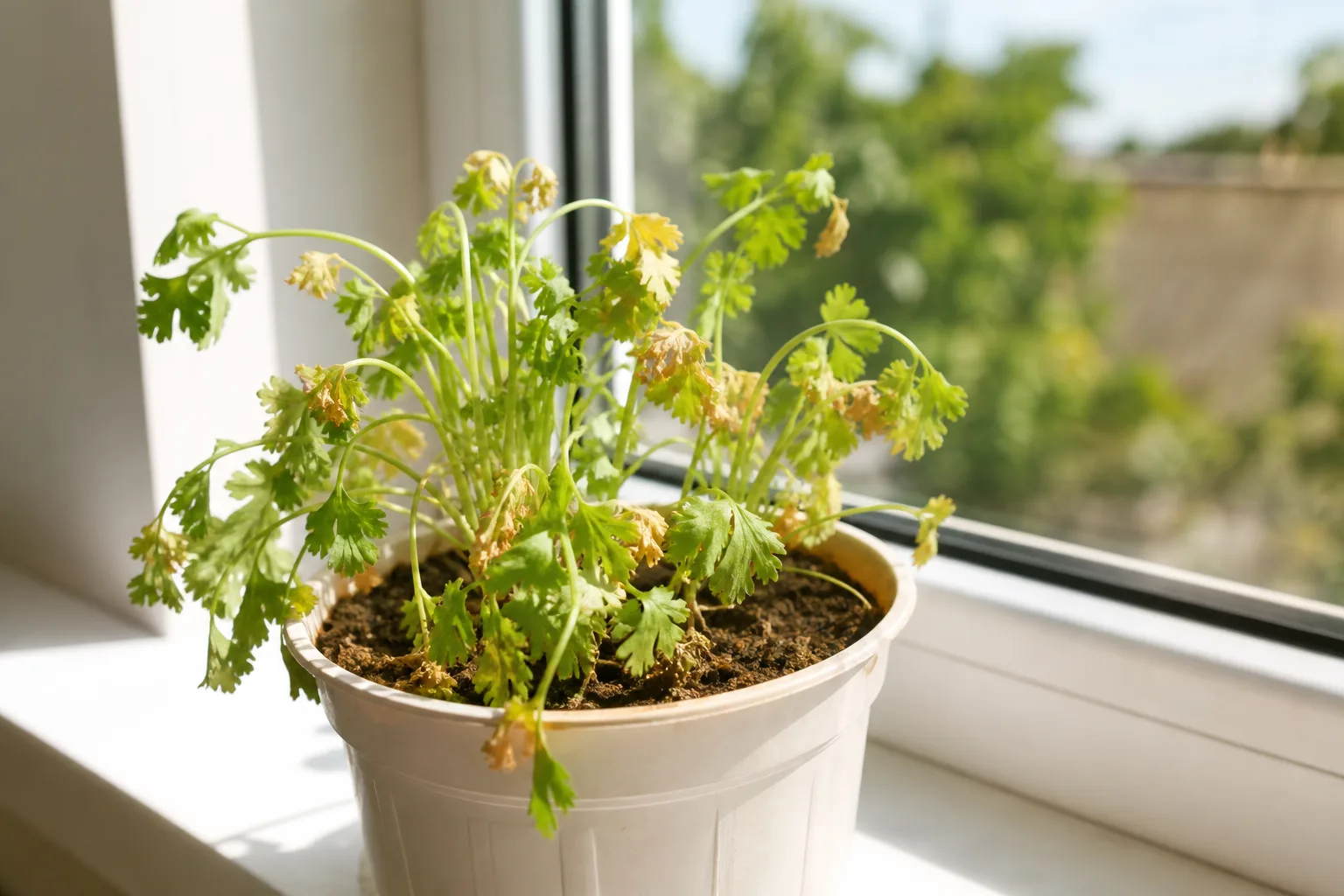
Underwatered coriander shows a light pot, limp or crisp leaves, and dry mix pulled from the edges-often with early bolting in heat. First step: water deeply until drainage runs, then resume checking the top 1–2 cm daily instead of watering on a calendar.
Underwatering on Coriander: Causes, Checks & Fixes
This guide covers underwatering on Coriander. See also the general Underwatering guide, watering, and light pages for this plant.
Underwatering on Coriander: Causes, Checks & Fixes
Quick answer
Underwatered coriander (Coriandrum sativum, cilantro) loses turgor fast. The pot feels light, leaves go limp or crisp at the edges, and dry mix may shrink away from the container wall. In warm weather, drought stress often pushes the plant into premature bolting-tall flower stalks and bitter, ferny leaves instead of the broad shoots you wanted for harvest.
First step: water deeply once until excess drains from the bottom, then let the pot drain completely. Coriander needs consistently moist soil, not occasional sips that wet only the surface. After the soak, check the top 1–2 cm daily rather than relying on a fixed weekly schedule.
Why Coriander gets underwatered
Coriander is a cool-season annual with a shallow, delicate root system that cannot store water like a succulent. It wants steady moisture in well-drained mix-never bone dry for days, never soggy for days. That narrow window makes underwatering common, especially for container growers.
Several factors stack against coriander specifically:
Small pots dry out in hours. Containers hold limited soil volume and dry more quickly than in-ground plantings. Kitchen windowsill containers and shallow herb trays hold limited soil volume. In bright sun or Indian summer heat, a pot that was moist yesterday can be dust-dry by afternoon. Coriander’s fast growth (harvest-ready in three to four weeks) means it is using water actively almost from germination-there is no slow establishment phase where you can forget it.
Heat multiplies water demand. Coriander performs best around 15–25°C and bolts rapidly above 28°C. Hot afternoon sun on a dry root zone is a double stress: the plant loses water through leaves faster while roots cannot replace it. Drought in heat is one of the strongest bolting triggers on Coriander overview.
Fear of overwatering on Coriander swings too far. Coriander roots rot in waterlogged soil, so many growers undercorrect and let the mix go completely dry. The symptoms overlap-both drought and damaged roots can wilt leaves-so underwatering gets missed when the surface looks briefly damp after a light top-water.
Calendar watering ignores season. Every 1–2 days may be right in summer sun but too little in a cool winter windowsill-or the reverse if you keep the same sparse schedule year-round. Coriander needs you to read the pot, not the clock.
Hydrophobic dry mix. Peat-heavy potting soil that has dried hard can repel water. You may think you watered, but the root ball stayed dry inside while the surface darkened for an hour. This pattern is common in coriander grown in cocopeat-heavy mixes that were allowed to dry completely between drinks.
Transplant shock masquerades as drought. Coriander hates root disturbance. Seedlings moved from trays to pots wilt sharply even when soil is moist-the taproot was damaged. Direct-sowing into the final container avoids this, but underwatering and transplant shock can look identical for the first day.
What underwatering looks like on Coriander
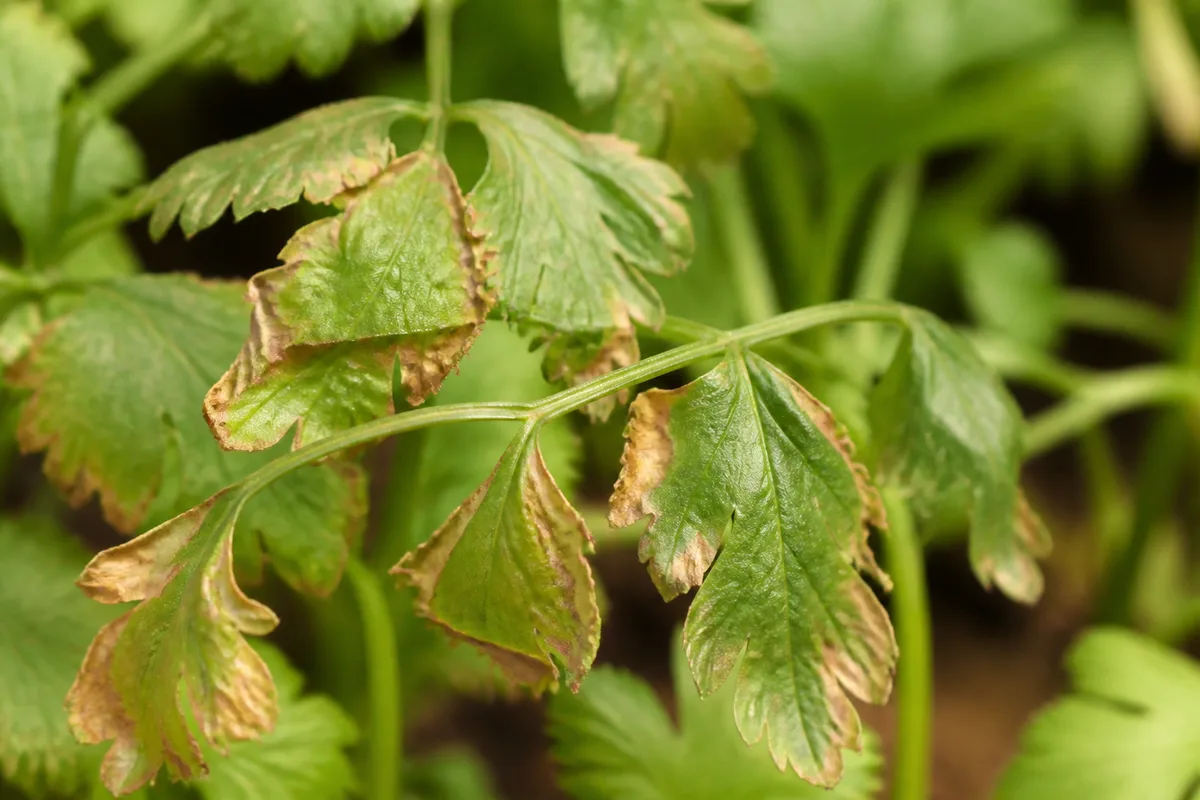
Thin limp coriander leaves with crisp brown edges after repeated dry cycles - compare with a light pot and dusty dry mix 2–3 cm below the surface.
Coriander’s drought signs are distinct from overwatering once you know what to compare.
Underwatering symptoms on Coriander - compare with healthy tissue on the same plant.
Typical underwatering pattern:
- Wilting or drooping on Coriander leaves that feel thin and limp, sometimes recovering overnight after a deep soak
- Dry, light pot that lifts easily; mix pulled away from pot edges
- Crisp brown margins on older leaves, especially after repeated dry cycles
- Smaller, finer, fern-like leaves on new growth as the plant shifts toward survival mode
- Early bolting-a sudden central flower stalk with lacy upper leaves, often after a hot dry spell
- Slowed or stalled harvest-fewer usable leaves per cut, stems turning woody faster
- Dusty dry soil 2–3 cm down; finger meets resistance, not cool dampness
What underwatering is not:
- Limp leaves with wet, heavy soil and a sour smell-likely overwatering or root rot on Coriander
- Uniform afternoon droop in extreme heat that fully recovers after sunset while soil is moist-often temporary heat wilt, not drought
- Yellow lower leaves on wet mix-nutrient or root-oxygen problems, not simple dryness
- White umbel flowers on a mature plant in cool weather-normal life cycle, not necessarily underwatering
Unlike succulents, coriander does not wrinkle visibly before collapse. By the time leaves look obviously crisp, the plant may already be bolting.
How to confirm the cause
Work through these checks in order before changing anything else:
- Pot weight - Lift the container. A well-watered coriander pot has noticeable heft. A light, airy pot with wilting leaves strongly suggests dry roots.
- Moisture at depth - Push your finger 2–3 cm into the mix, or use a moisture meter. Surface dust on top of dry depth confirms underwatering. Cool damp soil at depth with wilt suggests another cause.
- Drainage and smell - Confirm drainage holes are open and saucers empty. Sour odor or dark mushy stems on wet soil rules out simple drought.
- Recent watering history - When did you last soak thoroughly? Did water run through or only dampen the top? Light daily sprinkles often fail on dry coriander.
- Heat and placement - Is the pot in afternoon sun above 28°C, near a heating vent, or on a metal railing that bakes the roots? High evaporation plus missed watering fits coriander’s bolting pattern.
- Bolting check - Look at the center growing point. A thickening stem with tight ferny leaves forming a flower stalk means drought may have already triggered the irreversible bolt-not just reversible wilt.
- Transplant timing - Did you move seedlings within the last 48 hours? If yes, confirm moisture at depth before assuming pure underwatering.
If the pot is light, mix is dry throughout, roots are firm and pale when you slide the plant out, and leaves perk within hours of a deep soak, underwatering is confirmed.
First fix for Coriander
Water deeply until excess runs from the drainage holes, then empty the saucer.
Set the pot in a sink or outdoors. Water slowly in passes until you see drainage-not one quick splash that channels down the dry sides. For severely dry mix, bottom-water: stand the pot in a tray of water for 20–30 minutes until the surface moistens, then drain fully.
Do not fertilize, repot, or prune heavily on the same day. One thorough rehydration tells you whether the plant can recover. If leaves stand up within 24 hours, adjust your checking rhythm. If the center is already bolting, harvest what you can and sow fresh seed-no amount of water reverses bolt once the stalk elongates.
Step-by-step recovery
After the first deep soak, follow this sequence:
- Move out of harsh afternoon sun if temperatures exceed 28°C. Morning sun with afternoon shade reduces further water loss while roots rehydrate.
- Wait for drainage - Never leave coriander standing in a full saucer. Delicate roots rot quickly in stagnant water.
- Recheck in 12–24 hours - Leaves should feel firmer. Persistent limpness on moist soil means inspect roots for rot or disease.
- Resume the top 1–2 cm rule - Water again when the upper layer dries, not on a fixed weekday. In hot weather this may mean daily checks on small pots.
- Trim only dead tissue - Remove fully crisp leaves if they block your view of new growth, but do not strip the plant bare.
- Harvest lightly once turgid - Take outer leaves only after the plant stabilizes. Heavy cutting on a stressed plant slows recovery.
- Plan succession - If bolting started, sow the next batch in a cooler spot or shadier afternoon position rather than fighting a flowering plant for leafy growth.
Recovery timeline
Mild underwatering often shows improvement within hours to one day after a proper soak-leaves regain turgor and stems stiffen. Crisp brown edges on older leaves do not green up; judge success by new center growth.
Moderate drought over several hot days may leave the plant permanently shifted toward bolting within two to four days, even after watering. The harvest window shortens dramatically once flower stalk tissue forms.
Severe seedling collapse from dry soil can kill young coriander outright if the stem pinches at soil line. Seedlings recover faster than mature plants when caught early, but they have less stored resilience-check small pots daily.
If wilting persists beyond 48 hours despite moist soil and firm roots, look for Fusarium wilt, damping off, or root rot rather than continuing to add water.
Lookalike symptoms to rule out
Overwatering and root rot produce limp leaves on wet, heavy soil, sometimes with yellow lower leaves, edema, or fungus gnats. Coriander roots are sensitive to waterlogging-wilt on damp mix is not drought.
Heat wilt on moist soil can make coriander droop in mid-afternoon above 30°C, then recover overnight. If the pot is heavy and soil is cool at depth, shade and airflow help more than another drink.
Transplant shock wilts freshly moved seedlings even when watered. Direct-sown plants in the same pot rarely show this pattern. Wait 24 hours on moist soil before re-diagnosing.
Leggy growth from low light stretches stems but leaves stay soft, not crisp. Soil moisture is usually even; move to brighter morning sun rather than watering more.
Normal bolting in warm long days happens on well-watered plants too. Heat and day length alone trigger flowering-underwatering accelerates it but is not the only cause.
Mistakes to avoid
Do not drench daily in panic after one dry spell-that swings to overwatering and root rot on coriander’s delicate roots.
Do not mist leaves instead of soaking soil. Surface humidity does not rehydrate roots; misting wet foliage in cool evenings can invite fungal problems.
Do not assume wilting always means water more without checking soil depth. Wet wilt needs drying out, not another drink.
Do not fight a bolted plant for leafy harvest indefinitely. Once the central stalk elongates, flavor turns bitter and leaf production stops-sow again.
Do not transplant to “save” a dry seedling. Root disturbance triggers bolting faster than underwatering alone. Start the next round by direct-sowing in the final pot.
Do not fertilize drought-stressed coriander before rehydration. Salts on dry roots burn tender tissue.
How to prevent underwatering next time
Build a routine around how coriander actually grows in your home:
- Check the top 1–2 cm daily on container plants, especially in summer. Small pots on sunny sills may need water every one to two days in heat; cooler months may stretch to every two to three days.
- Water thoroughly each time until drainage runs, then empty saucers within 30 minutes.
- Use enough pot depth for the taproot-shallow trays dry out before roots can reach moisture below.
- Give afternoon shade when temperatures climb above 28°C to slow evaporation and delay bolting.
- Succession-sow every two to three weeks so one missed watering does not wipe out your only crop.
- Refresh hydrophobic mix by rewetting slowly or Coriander repotting guide into fresh moist potting soil if water runs straight through dry root balls.
- Direct-sow in the final container to avoid transplant wilt that mimics drought stress.
Coriander is grown for quick harvest, not years of display. Prevention means matching water to pot size, heat, and growth speed-not nursing one dry plant through a lost bolt cycle.
When to worry
Treat as urgent when seedlings collapse flat with bone-dry soil in direct sun, or when wilting does not improve within 24 hours after a confirmed deep soak.
Worry about irreversible bolting, not leaf death alone: a thickening flower stalk after drought means restart with fresh seed rather than expecting a full leafy recovery.
Seek a different diagnosis if stems stay limp on wet soil, roots are brown and mushy, or vascular browning appears when you cut the stem-Fusarium wilt and root diseases mimic drought wilt but do not respond to watering.
For kitchen herbs, replacing a bolted or exhausted plant with a new sowing is often faster and more useful than prolonging rescue attempts on a stressed annual.
Conclusion
Underwatering on coriander shows up as a light pot, limp or crisp leaves, and dry mix-often with early bolting if heat joined the dry spell. Confirm by checking moisture at depth and pot weight, then rehydrate once deeply before changing anything else. Crisp old leaves may not recover, but firm new growth within a day means you caught it in time. Match watering to how fast your pot dries, shade hot afternoon sun, and succession-sow so drought stress does not end your entire cilantro harvest in one missed check.
When to use this page vs other Coriander guides
- Coriander watering guide - Use for routine moisture checks before assuming underwatering is the main issue.
- Coriander problems hub - Browse all 16 common issues on this species.
- Wilting on Coriander - Different entry point when symptoms overlap with underwatering.
- Brown Tips on Coriander - Different entry point when symptoms overlap with underwatering.
- Yellow Leaves on Coriander - Different entry point when symptoms overlap with underwatering.