Brown Tips on Coriander (Cilantro): Causes, Checks & Fixes
Quick answer
Brown tips on coriander usually trace to drought crispy margins, heat transpiration above 24°C, fertilizer or salt burn, low winter humidity, or early bolting-not a single houseplant diagnosis. First step: press your finger 1–2 cm into the mix and note pot weight, recent feeding, and afternoon sun before changing anything.
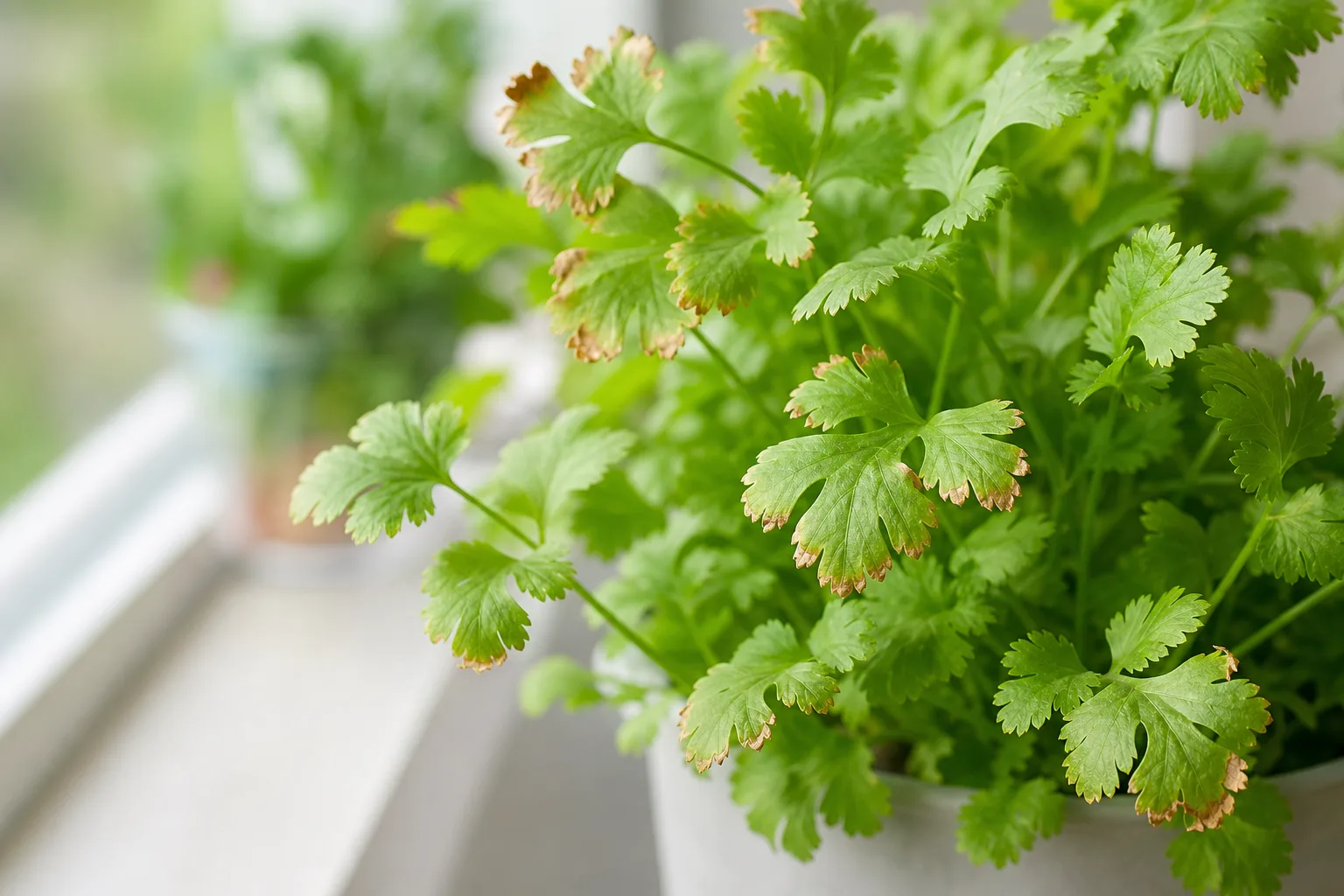
Brown Tips on Coriander (Cilantro): Causes, Checks & Fixes
This guide covers brown tips on Coriander. See also the general Brown Tips guide, watering, and light pages for this plant.
Brown Tips on Coriander (Cilantro): Causes, Checks & Fixes
Quick answer
Brown tips on coriander (Coriandrum sativum-cilantro in North America) are almost always localized margin or tip burn on the ferny compound leaves, not a mystery disease. On a kitchen windowsill or patio pot, the usual triggers are drought crispy edges, heat transpiration above roughly 24°C (75°F), fertilizer or salt burn, low winter humidity, root stress from soggy soil, or early bolting when the plant shifts from leafy growth to flowering.
First step: press your finger 1–2 cm into the mix near the pot edge, lift the pot, and note whether you fed recently or the plant sits in hot afternoon sun. A light pot with dry soil points to underwatering. A heavy moist pot with brown tips after feeding points to salt burn. Moist soil with crisp margins on a south-facing sill in summer often means heat stress-not another drink.
Do not stack Coriander repotting guide, heavy pruning, and fertilizer on the same day. Change one variable, then watch new growth for ten to fourteen days.
What brown tips look like on coriander
Healthy coriander carries bright green, soft, divided leaflets on upright stems. Brown-tip damage stays on the margins and very tips of those leaflets while the center often remains green-at least at first.
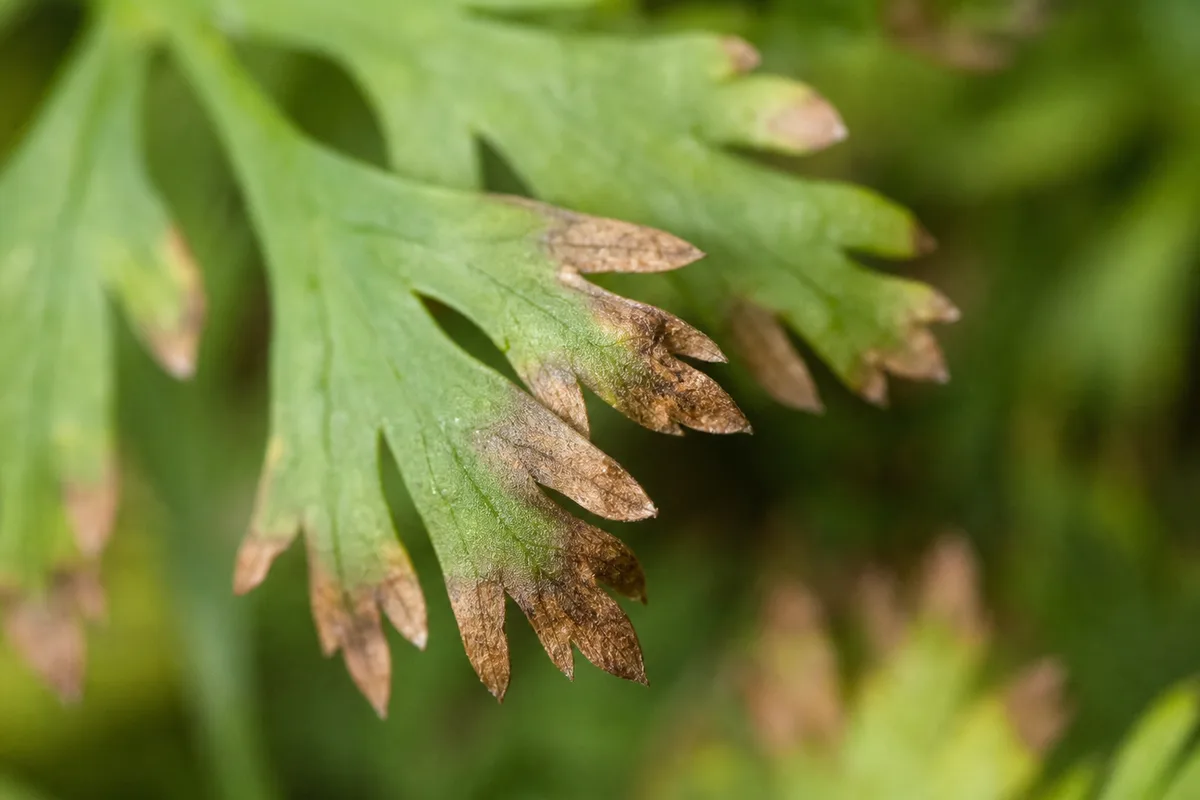
Brown Tips symptoms on Coriander - compare with healthy tissue on the same plant.
Typical patterns by cause:
- Drought crispy tips - Tan-to-brown, papery edges on older outer leaves; pot feels light; mix pulls away from the container wall. May pair with midday wilt that improves after a deep soak.
- Heat transpiration burn - Crispy margins on leaves facing afternoon sun while soil at 1–2 cm depth is still cool and moist. Often repeats daily above 28–30°C on south or west sills.
- Fertilizer or salt burn - Uniform brown scorch along leaf edges on many leaflets at once, sometimes yellowing between veins, often within days of feeding or after months in the same salty mix.
- Low humidity margins - Dry, brittle tips in heated winter rooms; soil moisture adequate; damage worse on the window-facing side. See low humidity on coriander when a hygrometer reads below roughly 35% RH.
- Bolting-related decline - Central stem thickens, upper leaves turn lacy and bitter, tips brown as the plant diverts energy to flower umbels. This is a life-stage shift, not reversible tip burn.
- Spider mite stippling - Fine pale dots progressing to bronze or brown edges with possible webbing on undersides. Cross-check spider mites on coriander before treating for drought.
Unlike yellowing from the bottom up, brown tips usually stay edge-focused until stress becomes severe.
Why coriander gets brown tips
Coriander is a cool-season annual with a shallow root system and a short three-to-four-week leafy harvest window. Small changes in water, heat, or salts show up on the thin leaf margins before the rest of the plant fails. Several causes stack on the same windowsill-especially supermarket herb pots in summer sun.
Drought and underwatering
Coriander cannot store water like a succulent. When the top 1–2 cm of mix goes bone dry in a small pot, transpiration outpaces uptake and older leaflets crisp at the edges first. Heat multiplies the effect: a pot that was moist yesterday can be dust-dry by afternoon on a sunny sill. Drought also accelerates bolting, which brings its own bitter, browning foliage. See underwatering on coriander when dry soil and a light pot are the consistent pattern.
Heat and afternoon transpiration stress
Coriander performs best in cool bright weather and bolts readily in hot, dry conditions. The Royal Horticultural Society advises sowing in a cooler spot out of midday sun and watering during dry spells when growing for leaves in summer. On a warm south-facing windowsill, leaves can lose water faster than roots replace it even when soil is moist-producing crispy tips without underwatering. Our light guide covers full sun in cool seasons versus afternoon shade above roughly 24°C (75°F).
Fertilizer burn and salt buildup
Fast-maturing coriander in small pots is vulnerable to salt accumulation from heavy feeding, undiluted liquid fertilizer, or reusing old mix. Salts draw moisture from leaf margins and produce uniform edge burn on multiple leaves. Edible herbs need conservative feeding; flushing with plain water matters before re-feeding. Review coriander fertilizer for half-strength rates on a crop you harvest weekly.
Overwatering and root stress
Constantly wet soil deprives roots of oxygen. Damaged roots cannot supply leaf tips even when the surface looks damp-tips brown while lower leaves may yellow or wilt. Heavy supermarket potting mix in a tray with poor drainage is a common setup. Wet mix plus sour smell or mold points to overwatering or root rot, not drought.
Low indoor humidity
Heated winter rooms drop relative humidity on sunny sills. Coriander is not a tropical plant, but dry air desiccates leaf margins while soil stays moist-mimicking drought without a light pot. Growers often water more and worsen root stress. The fix is relocation from vents and higher ambient humidity, not constant soggy soil.
Bolting and harvest stress
When coriander reads hot, dry, or long-day conditions, it bolts-sending up flower stalks and producing thinner, lacy, often bitter leaves with browning tips. Removing the stalk rarely restores tender leaf production on a mature bolt; the RHS notes plants stop producing leaves to set seed once flowering takes priority. Aggressive daily harvest without recovery time can also crisp outer leaflets on an already stressed plant.
How to confirm the cause
Work through this seven-step checklist before treating:
- Soil moisture at 1–2 cm - Dry and crumbly supports drought; cool and damp with crisp tips suggests heat or humidity; wet and heavy suggests root stress.
- Pot weight - Light pot plus brown edges fits underwatering. Heavy pot after recent feed fits salt burn.
- Temperature and sun exposure - Afternoon south or west sun above 28°C with moist soil fits heat transpiration burn.
- Recent fertilizer history - Feed within the last week plus uniform edge scorch on many leaves fits fertilizer burn.
- Air humidity near the pot - Below roughly 35% RH in winter with moist soil fits low humidity.
- Center growing point - Thickening stem with tight ferny upper leaves means bolting may be driving browning regardless of tips treatment.
- Leaf undersides - Stippling, webbing, or moving specks rule in spider mites instead of environmental burn.
Symptom lookalike comparison
| Pattern | Soil / pot | Heat / air | Likely cause | First direction |
|---|---|---|---|---|
| Drought crispy tips | Dry 1–2 cm; light pot | Any | Underwatering | Deep soak; see underwatering |
| Heat margin burn | Moist at depth; moderate weight | Hot afternoon sill | Transpiration stress | Afternoon shade; don’t overwater |
| Fertilizer burn | Moist; recent feed | Any | Salt injury | Flush soil; pause feed |
| Low humidity | Moist; moderate weight | Dry winter air; near vent | Desiccation | Relocate; raise RH; low humidity |
| Root stress | Wet, heavy; sour smell | Often cool or dim | Overwatering | Pause water; overwatering |
| Bolting | May be moist | Hot or long days | Life stage | Harvest or resow; propagation |
| Spider mites | Any | Warm, dry | Pest feeding | Rinse; spider mites |
Yellow leaves without prominent tip burn more often signal nitrogen shortage, aging, or wet-root stress. See yellow leaves on coriander when lower foliage yellows uniformly.
Not enough light produces pale, stretched stems-not usually crisp brown margins alone. See not enough light when growth is thin and pale rather than scorched.
First fix by cause
Pick one primary action based on your checklist-not all fixes at once.
Underwatering and drought crispy tips
Water deeply at the base until drainage runs, then empty the saucer. Check the top 1–2 cm daily on small pots in heat rather than waiting for a calendar reminder. Follow the rhythm in our watering guide.
Heat stress and afternoon transpiration burn
Move the pot to morning sun with afternoon shade-or back 30–60 cm from hot glass-before adding water on already-moist soil. Coriander wants bright light in cool weather but suffers when root-zone and leaf temperatures spike together. Increasing water on saturated mix worsens root oxygen loss.
Fertilizer burn and salt buildup
Flush the pot with plain water at several times the pot volume until runoff is clear, then drain fully and pause fertilizer for two to three weeks. Harvest lightly until new growth shows clean margins. For edible leaves, avoid systemic products; half-strength herb feed only after recovery.
Overwatering and root stress
Stop watering, empty standing saucer water, and confirm drainage holes are open. Let the top 2–3 cm dry before the next soak. If tips keep browning on wet mix with yellow lower leaves, inspect roots for mushy sections per root rot guidance.
Low humidity indoors
Move the pot at least 60 cm from heating vents and use a pebble tray or room humidifier-not daily misting as your only fix. Keep the normal moist-but-not-soggy soil rhythm from our watering guide.
Spider mites
Rinse leaf undersides with lukewarm water and isolate from other herbs before any spray on an edible crop. Confirm stippling and webbing match spider mites on coriander.
Recovery timeline for a short-cycle kitchen herb
Mild drought or heat tip burn often stabilizes within one to two care cycles once the correct stressor is removed-watch for firm new center growth with clean margins within seven to fourteen days. Crispy brown edges on older leaflets do not green up; success means the next flush of leaflets arrives without new burn.
Moderate fertilizer burn may need two to three weeks after flushing before you judge new tips. Severe salt injury on a small supermarket pot is sometimes faster to replace with a fresh sowing than to nurse.
If a flower stalk is elongating, the harvest window is closing regardless of tip treatment. Wisconsin Extension notes coriander bolts in hot weather and leaves may develop disagreeable flavor at that stage-plan succession sowing rather than expecting full leafy recovery.
When to resow instead of treating
Coriander’s brief leaf phase changes the calculus:
- Resow when the central bolt stalk is thickening, most leaflets are bitter or lacy, or fertilizer burn has stunted the crown.
- Resow when brown tips spread to every shoot after bolting began in heat-you cannot reverse flowering with tip fixes.
- Treat and keep harvesting when only outer tips are crisp, one clear stressor matches your checklist, and new growth looks clean within two weeks.
- Succession-sow every two to three weeks so one stressed pot does not end your entire cilantro supply. See coriander overview and propagation for timing.
Mistakes to avoid on edible coriander
Do not fertilize a stressed plant before confirming soil moisture and root health-salts on dry or damaged roots burn margins faster.
Do not increase watering for heat-stressed coriander when the top 1–2 cm is already moist. You risk root rot without fixing transpiration burn.
Do not mist leaves as your main humidity fix on a crop you eat; wet foliage in still air can invite fungal problems on dense clumps.
Do not stack repotting, heavy pruning, and pesticide on the same day. Coriander does not transplant well because of its long taproot and bolts after transplant shock.
Do not fight a bolted plant for months of leafy harvest. Remove flower stems only if bolting just started; once stalks elongate, flavor and tip quality decline permanently.
Do not assume brown tips mean more light. Coriander in harsh afternoon summer sun often burns at the margins; dim light causes pale stretch, not scorch.
How to prevent brown tips next time
Build prevention around how coriander actually grows:
- Check soil at 1–2 cm depth daily on container plants in warm weather; water deeply when that layer dries, per our watering guide.
- Match light to season - full sun in cool fall and spring; morning sun with afternoon shade when temperatures climb above roughly 24°C, per our light guide.
- Feed lightly - compost at sowing plus occasional half-strength herb fertilizer beats heavy doses on a fast crop. See coriander fertilizer.
- Use well-drained mix and clear drainage holes; never leave pots standing in saucer water.
- Raise winter humidity near the sill without keeping soil soggy.
- Succession-sow every two to three weeks and consider slow-bolt cultivars such as Calypso or Santo for summer windows.
- Harvest outer leaves in moderation so the plant can replace tissue between cuts.
Conclusion
Brown tips on coriander are a symptom with several common kitchen-garden causes-drought crispy margins, heat transpiration on hot sills, fertilizer salt burn, dry winter air, wet-root stress, bolting, and occasionally spider mites. Confirm with soil depth, pot weight, heat exposure, and feeding history before you change care. Fix one stressor at a time, judge recovery by clean new growth rather than old burnt edges, and resow when bolting or severe burn has already consumed the short leaf window. For deeper dives, see underwatering, overwatering, low humidity, yellow leaves, and the main coriander care hub.
When to use this page vs other Coriander guides
- Coriander watering guide - Use for routine moisture checks before assuming brown tips is the main issue.
- Coriander problems hub - Browse all 16 common issues on this species.
- Low Humidity on Coriander - Different entry point when symptoms overlap with brown tips.
- Underwatering on Coriander - Different entry point when symptoms overlap with brown tips.
- Overwatering on Coriander - Different entry point when symptoms overlap with brown tips.