Coriander (Cilantro) Fertilizer: When, How & Mistakes
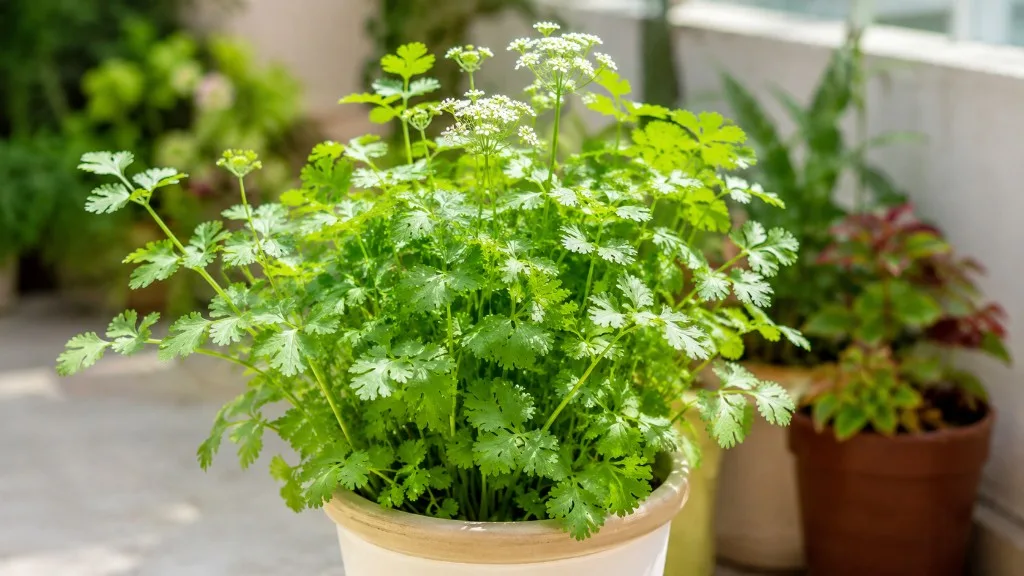
Coriander (Cilantro) Fertilizer: When, How & Mistakes
Coriander (Cilantro) Fertilizer: When, How & Mistakes
Coriander (Coriandrum sativum) - the leafy herb most North American cooks call cilantro - completes its useful leaf stage in weeks, not months. Coriander fertilizer is not about pushing a 4-inch windowsill pot toward maximum size. It is about supplying enough nitrogen, phosphorus, and potassium to build tender, aromatic leaves before heat, long days, or maturity trigger bolting. Overfeed, chase yellow leaves without checking light or water first, or keep feeding after flower buds appear, and you end up with salt-crusted soil, bland or harsh flavor, and a plant that bolts before your next taco night.
Reviewed by LeafyPixels Review Board · Author: sai-ananth
Coriander belongs to Apiaceae, the carrot and parsley family. Like those relatives, it prefers fertile, well-drained soil with steady moisture - not soggy conditions - and it develops a taproot that resents disturbance. Under good light, a container plant often reaches harvestable leaf size in roughly three to four weeks from sowing (Penn State Extension - Cilantro, a Unique Culinary Herb). Seeds typically germinate in one to three weeks depending on soil temperature (Utah State University Extension - Cilantro/Coriander in the Garden). That speed means nutrients matter early - and the stop feeding decision arrives sooner than it does for basil or parsley.
Quick Answer - Product, Strength, and Stop Rule
Product: Complete water-soluble 10-10-10 or 5-5-5, diluted to half label strength - or compost worked into mix at planting.
Strength: Half strength for most pots; quarter strength on aggressive 20-20-20 labels in 4–6 inch containers.
Frequency: Container cilantro in active cool-season growth - every three to four weeks outdoors; every four to six weeks on a bright indoor windowsill. In-ground rows amended with compost often need only one or two light nitrogen side-dresses per season at extension rates.
Stop rule: Pause feeding when flower buds or a bolting stem appear, when salt crust forms, when the plant is wilted or heat-stressed, or when sustained temperatures climb into the 75–80°F (24–27°C) bolting range (Clemson HGIC - The Cilantro-Coriander Connection; Oregon State Extension - Cilantro).
Recovery shortcut: Flush overfed pots, harvest what you can, and succession-sow a fresh batch - do not force a bolting plant with more nitrogen.
Why Cilantro Is a Light Feeder, Not a Heavy One
Coriander is often called a “heavy feeder” online because it grows fast from seed. Speed and appetite are not the same thing. Fast growth in cool, bright conditions means the plant cycles through its soil volume quickly, especially in containers, so nutrients need replacing - but in small, controlled doses, not full-strength weekly dumps.
Well-prepared garden soil amended with compost at planting frequently supplies enough nutrition for the entire leaf harvest window with only one light supplemental feeding. Container coriander, which dries and gets watered more often, usually needs diluted liquid feeding every few weeks during active growth - still at half label strength or less. The plant tolerates lean feeding far better than burned roots from concentrated salts.
Utah State Extension warns that over-fertilization decreases plant flavor, especially when excess nitrogen pushes soft, rapid growth (Utah State University Extension - Cilantro/Coriander in the Garden). Clemson HGIC notes the same pattern: light nitrogen keeps plants lush, but the tendency to over-fertilize works against good kitchen results (Clemson HGIC - The Cilantro-Coriander Connection). Treat fertilizer as a modest supplement for active growth, not a rescue tonic for every pale leaf.
What Coriander Needs From NPK During the Leaf Window
Fertilizer labels display three numbers - N-P-K - for nitrogen, phosphorus, and potassium. Nitrogen drives leafy growth and green color, which matters when you are harvesting cilantro leaves every few days. Phosphorus supports root development and energy transfer; coriander’s taproot benefits from adequate phosphorus at establishment, but extreme bloom-booster ratios are a poor fit for a plant you want to keep vegetative. Potassium helps with water regulation and general stress tolerance during the warm spells that otherwise trigger bolting.
For most home growers, a balanced formula such as 10-10-10 or 5-5-5 provides a sensible baseline. In-ground gardeners sometimes side-dress with a nitrogen-forward product like 21-0-0 at modest rates because garden beds leach less aggressively than pots and coriander uses nitrogen quickly during its short leaf phase. Utah State Extension recommends ¼ cup of nitrogen-based fertilizer per 25 square feet, applied once or twice during the growing season (Utah State University Extension - Cilantro/Coriander in the Garden) - a sparse schedule that reflects how lightly this herb should be fed in beds.
Nitrogen, Flavor, and Bolting Biology
Penn State Extension explains that once temperatures climb, cilantro flowers and sets seed quickly, producing bitter-tasting leaves (Penn State Extension - Cilantro, a Unique Culinary Herb). Fertilizer cannot override that biology. Feeding harder when the plant sends up a flower stalk wastes effort and can worsen flavor. Succession sowing every two to four weeks extends the season more reliably than doubling fertilizer (Penn State Extension - Cilantro, a Unique Culinary Herb).
Pale leaves decision flow: If leaves are yellow-green, confirm six or more hours of direct sun or equivalent grow light first → check whether soil is waterlogged or drought-stressed → only then apply a half-strength balanced feed. More nitrogen on a dim, overheated windowsill softens flavor without fixing the cause.
Best Fertilizers for Container and Garden Cilantro
The best fertilizer for coriander in most home setups is a complete, water-soluble or liquid organic product you can dilute precisely and apply to moist soil. You do not need a cilantro-branded bottle. You need a product with all three macronutrients, clear mixing instructions, and the flexibility to use half strength in small pots.
Avoid two extremes that show up constantly in kitchen-herb forums: high-nitrogen lawn or foliage products at full label rate in a 4-inch pot, and slow-release pellets layered on potting mix that already contains a starter charge without reading the bag. Coriander in containers responds best to measured liquid doses you control rather than a single unpredictable granular release in a tiny root zone.
Balanced liquid fertilizers - 10-10-10, 12-12-12, or 20-20-20 - work well for container coriander because they support leaves, roots, and general vigor without assuming the plant needs one nutrient far more than the others. For in-ground rows, a single side-dress of nitrogen in early summer - following extension rate guidance - may be all the synthetic feeding required if compost was incorporated at planting.
Organic Liquids, Compost, and Fish Emulsion Indoors
Compost mixed into potting soil or garden beds at planting time is the most important organic feeding step for coriander. Clemson HGIC recommends well-drained soil with proportional organic matter for successful cilantro growth (Clemson HGIC - The Cilantro-Coriander Connection). Many successful harvests never need anything beyond good compost and one optional side-dress.
Fish emulsion - commonly around 5-1-1 - supplies readily available nitrogen for leafy growth when diluted to half strength or weaker and applied every three to four weeks during active growth. The smell is strong indoors; mix and apply near an open window or outdoors, then return the pot once the odor clears. Worm castings blended into potting mix at sowing release nutrients slowly and improve organic matter without a sharp salt spike.
Slow-Release vs. Liquid in Small Pots
Both approaches can work; the right choice depends on where you grow and how often you water.
| Fertilizer type | Best for | Typical use | Main risk |
|---|---|---|---|
| Water-soluble liquid | Containers, succession pots | Half strength every 3–4 weeks in active growth | Salt buildup if too strong or too often |
| Slow-release granular | Outdoor pots, low-maintenance beds | Mixed into soil at planting | Double-feeding if mix already contains fertilizer |
| Organic liquid (fish emulsion) | Leafy boost, edible gardens | Half strength every 3–4 weeks | Odor indoors; overuse dulls flavor |
| Compost or worm castings | Garden beds, Coriander repotting guide | At planting + optional side-dress | Hard to dose precisely in tiny pots |
| Nitrogen side-dress (21-0-0) | In-ground rows | Once or twice per season at extension rates | Over-application reduces flavor |
Many commercial potting mixes include slow-release fertilizer. Read the label before adding liquid feed on top. If the bag lists a weeks-long nutrient charge, delay supplemental liquids for two to four weeks after seedlings establish, then begin half-strength applications only if growth is strong and leaves look pale despite good care.
University of Minnesota Extension notes that container plants lose nutrients through leaching faster than in-ground plants (University of Minnesota Extension - Fertilizing container plants) - which is why liquids dominate container herb care, and why salts can accumulate if you overfeed without flushing.
When to Feed - and When to Stop Before Bolting
Timing matters as much as product choice. Coriander should be fed when it is actively producing leaves in cool-to-moderate conditions, not when it is wilted, heat-stressed, freshly transplanted with a damaged taproot, or sending up a flower stalk.
The active leaf window is short by design. Under warm, bright conditions coriander can be harvest-ready within weeks. That speed means the first feeding decision arrives early - and the stop feeding decision arrives sooner than it does for longer-lived herbs.
From First True Leaves to First Harvest
Do not fertilize coriander the moment cotyledons emerge. Wait until seedlings develop two to three sets of true leaves and reach roughly 6 inches in height with steady new growth. Young roots are small and easily burned by undiluted concentrates, and seed-starting mix usually carries enough initial nutrition for the first week or two.
At planting time, mix compost into the potting soil or garden bed rather than pouring strong fertilizer on bare seeds. Once seedlings are established in their final container or row spacing - 6 to 8 inches apart for leaf production per Penn State guidance (Penn State Extension - Cilantro, a Unique Culinary Herb) - begin a light liquid program if the mix lacks a starter charge.
For container seedlings under good light, half-strength balanced liquid every three to four weeks is a conservative starting point during the leaf stage. Harvest early and often by cutting one-third of the plant at a time once stems are long enough; regular harvest stimulates branching if conditions stay cool and bright.
Seasonal Feed-and-Pause Calendar
Use this month-by-month guide as a starting framework for succession sowers in temperate climates - adjust for your local frost dates and indoor conditions.
| Month / season | Container (outdoor) | Bright windowsill | In-ground bed |
|---|---|---|---|
| Early spring sow | Compost at planting; first half-strength feed at 2–3 true-leaf stage if mix is lean | Same; feed every 4–6 weeks if new leaves keep forming | Compost at planting; optional light side-dress at extension rate once |
| Late spring | Feed every 3–4 weeks while cool; reduce as temps approach 75°F | Feed every 4–6 weeks; stop if growth stalls in heat | One side-dress max if leaves pale; watch bolting |
| Summer heat | Stop feeding bolting plants; resow in shade for fall | Usually zero feed - heat and dimmer angles slow growth | Pause; succession sow in fall |
| Early fall sow | Resume half-strength every 3–4 weeks in cool growth | Feed every 4–6 weeks in cool bright window | Compost at planting; one optional side-dress |
| Winter (mild climates) | Light feed only while actively growing | Feed sparingly; flush monthly if feeding | Usually none beyond compost |
Bolting temperature note: Clemson and the coriander overview cite 75°F (24°C) as the point where cilantro shifts toward flowering. Oregon State Extension describes bolting accelerating when temperatures exceed 80°F (27°C) (Oregon State Extension - Cilantro). Treat 75–80°F as the conservative stop-and-watch zone: once sustained warmth arrives, reduce or stop feeding and focus on shade, moisture, and a fresh sowing rather than more nitrogen.
Pause feeding when: flower buds or bolting stems appear; nights turn hot; the plant is wilted or drought-stressed; you just transplanted and broke the taproot; salt crust forms on the soil; or you plan to let the plant set seed for coriander spice.
How to Apply Safely: Dilution Math and Worked Example
Safe application comes down to moist soil, correct dilution, and clean drainage. Coriander roots are functional but not forgiving of concentrate applied to dry media or repeated strong doses in a pot that never gets flushed.
Water before fertilizing if the pot is dry. Moisten the mix with plain water first, wait an hour if the plant was severely dry, then apply the diluted solution.
Half strength means using half the fertilizer volume the label recommends per gallon or liter of water. If the label says 1 teaspoon per gallon for houseplants, use ½ teaspoon per gallon for coriander.
Worked example - 6-inch spring windowsill pot: You have a 20-20-20 water-soluble fertilizer labeled 1 teaspoon per gallon for indoor plants. For coriander, mix ½ teaspoon in 1 gallon of room-temperature water. Water the dry pot with plain water first, wait 30–60 minutes, then pour slowly until a little drains from the bottom. Empty the saucer within 30 minutes. That single dose may be the only feed the plant needs before it bolts or finishes its leaf cycle in three to four weeks. On an aggressive label in a 4-inch pot, start at ¼ teaspoon per gallon (quarter strength) instead.
Apply at the soil surface, not as a routine foliar spray. Coriander leaves are eaten raw; foliar feeding with synthetic products adds unnecessary residue and does not replace root uptake for steady growth.
To flush salts, water the pot thoroughly with plain room-temperature water until excess runs freely from drainage holes, repeat once, and empty the saucer. Do this monthly if you feed regularly in small pots, or any time you see white crust forming.
Hunger, Salt Burn, or Bolting? A Triage Table
Learn to read the plant before reading the calendar. Yellow leaves alone are not a fertilizer diagnosis - overwatering on Coriander, transplant shock, natural aging of lower leaves, and heat stress all cause yellowing. Check moisture, roots, light, and temperature before adding nutrients.
| Symptom | Likely cause | First action |
|---|---|---|
| Pale lower leaves, slow growth | Low nutrients, old mix, or low light | Confirm sun first; then mild feed |
| Brown tips after feeding | Too strong or applied to dry soil | Flush; pause feeding 4–6 weeks |
| White crust on soil | Salt buildup | Flush; reduce strength or frequency |
| Lush but bland or bitter leaves | Excess nitrogen or bolting | Reduce feed; harvest young; resow |
| Yellow leaves, wet soil | Overwatering, not hunger | Fix drainage and watering before feeding |
| Tall flower stalk, thin leaves | Bolting from heat/maturity | Stop feeding; succession sow |
Mistakes That Waste Fertilizer and Wreck Flavor
Feeding on a calendar without looking at the plant is the most common error. Coriander in a cool spring container may use one mild dose and finish its leaf cycle before the next feeding date arrives. Calendar feeding without observation leads to unnecessary salts indoors.
Using full label strength burns roots in small pots faster than in garden soil. If growth is weak, verify light before increasing dose.
Double feeding happens when potting mix already contains slow-release granules and the grower also adds weekly liquid fertilizer. Read the mix bag.
Fertilizing dry or wilted plants after a missed watering session causes immediate root damage. Rehydrate with plain water first.
Chasing yellow leaves with nitrogen while the soil stays soggy worsens root problems. Utah State Extension notes cilantro does not do well in damp or humid conditions (Utah State University Extension - Cilantro/Coriander in the Garden). Fix water management first.
Feeding when bolting has started wastes effort and can worsen leaf quality. Once the central stem elongates and flower clusters form, shift to seed harvest or remove the plant and sow again.
Expecting fertilizer to prevent bolting leads to frustration. Heat in the 75–80°F range, plant maturity, and long days trigger bolting. Partial shade, cool sowing timing, and slow-bolt cultivars like Leisure, Santo, or Calypso help more than extra nitrogen (Penn State Extension - Cilantro, a Unique Culinary Herb).
Feeding Leaf Cilantro vs. Coriander Seed Harvest
Most kitchen growers target leaf cilantro. Keep feeding light and stop at bolting - flavor declines once flowering begins regardless of nitrogen.
If you are growing specifically for coriander seed (the dried spice), shift your mindset after flowering. The plant no longer needs leaf-stage nitrogen pushes. A single compost-rich bed at planting often carries the crop through seed fill. Avoid late heavy nitrogen that promotes soft vegetative growth you will not harvest. Let flower heads mature, dry, and collect seed per Utah State guidance (Utah State University Extension - Cilantro/Coriander in the Garden).
Hydroponic note: Kratky jars and small hydro setups deliver nutrients continuously - use a quarter-strength herb formula and change solution before salt creep yellows leaves. That is a different rhythm from soil pots; treat EC/PPM rises as your stop signal rather than a calendar date.
Fertilizer vs. Bolting: What Actually Extends Harvest
Bolting is coriander’s natural transition from leaf production to seed production. It is not a fertilizer deficiency. Oregon State Extension describes the process: fewer leaves, a flowering stalk, and seeds that become coriander spice (Oregon State Extension - Cilantro).
What does extend the leaf harvest window:
Succession sowing every two to four weeks through the cool season keeps new lightly fed plants coming while older ones bolt (Penn State Extension - Cilantro, a Unique Culinary Herb).
Cool planting timing - early spring or fall - aligns growth with coriander’s preferred climate.
Slow-bolt cultivars like Calypso can bolt several weeks later than standard types under the same heat (Penn State Extension - Cilantro, a Unique Culinary Herb).
Moderate fertility at establishment supports early leaf growth so you reach first harvest quickly in cool weather. After that, cultural timing matters more than the bottle.
How Feeding Fits With Light, Water, Soil, and Taproot Care
Fertilizer only works when light, water, and soil are already in range. Coriander in full sun to partial shade - with afternoon shade in hot climates - uses nutrients efficiently and stays compact. In dim light, the plant stretches, leaves thin, and pale color reflects low photosynthesis more often than empty soil (coriander light guide).
Watering rhythm drives nutrient uptake. Coriander wants consistently moist but never waterlogged soil. Check the top 1–2 cm before watering (coriander watering guide). Overwatering in heavy mix causes yellow leaves and root stress that mimic hunger.
Soil structure matters as much as NPK numbers. Use a lightweight, well-draining potting mix with good organic content and target pH 6.0–7.0 (coriander soil guide). Compost at planting is your most important feed.
Direct sowing often outperforms transplanting because the taproot dislikes disturbance. Oregon State Extension advises taking care with the taproot when transplanting is necessary (Oregon State Extension - Cilantro). Stressed transplants and fertilizer do not mix - wait until new growth is obvious before the first mild feed. For sowing rhythm, see the propagation guide.
Recovery, Flushing, and When to Resow
If you suspect burn - brown tips shortly after feeding, white crust, or sudden wilting with wet mix - stop feeding immediately. Flush the pot thoroughly with plain water two times in succession, allowing full drainage each time, and empty the saucer.
Coriander’s short life cycle means recovery often equals harvest what you can, flush, and sow a fresh succession pot rather than rehabilitating a burned plant deep into summer. If only leaf tips are crisp but new center growth looks green after flushing, you may resume at quarter strength once, then evaluate.
For garden beds where granular nitrogen was over-applied, water deeply to move salts downward and hold off further side-dressing for the rest of the season. UC IPM notes that excessive nitrogen can favor disease development in cilantro and parsley plantings (UC IPM - Cilantro and Parsley Pest Management) - another reason to stay conservative in home containers as well as field settings.
Conclusion
Coriander fertilizer success comes down to three decisions: use a complete balanced product, apply it at half label strength or less, and feed only during the active leaf stage - then stop when bolting begins or temperatures enter the 75–80°F watch zone. Garden beds amended with compost often need one or two light feedings per season. Container cilantro typically needs half-strength liquid every three to four weeks while cool-season growth is strong, with monthly flushing in small pots.
Watch new growth and flavor, not just the bottle label. Brown tips, crusty soil, bitter foliage, or a sudden flower stalk mean pull back, flush if needed, and sow the next batch. Coriander forgives a missed feeding far more easily than it forgives a burned root zone - match food to a cool, bright, well-drained setup, and let succession sowing carry you through the seasons.
When to use this page vs other Coriander guides
- Coriander overview - Start here for whole-plant context before deep-diving this topic.
- Coriander problems hub - Jump to symptom-specific fix guides when this care topic does not resolve the issue.