Coriander Repotting: When, How, and Mistakes to Avoid
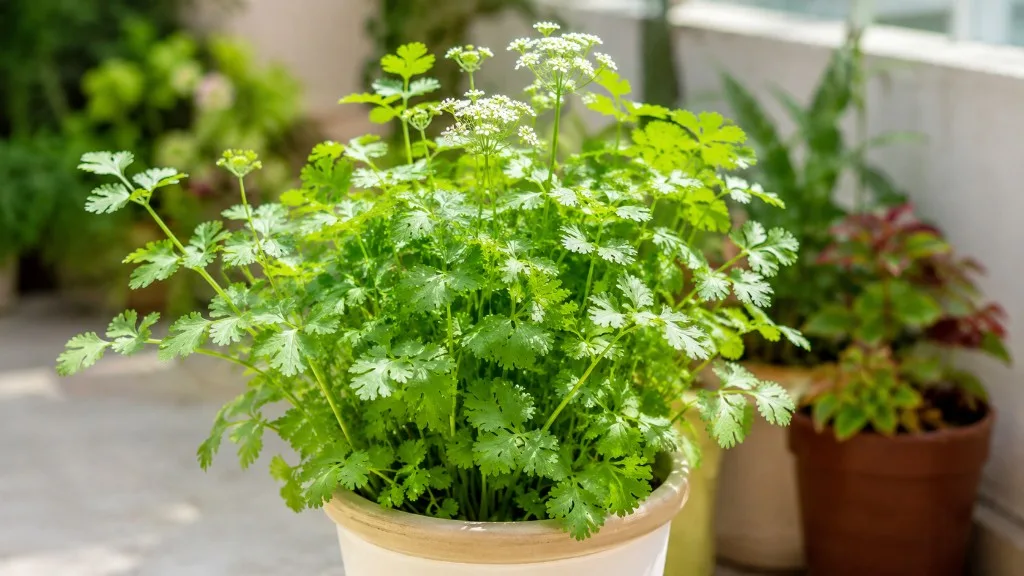
Coriander Repotting: When, How, and Mistakes to Avoid
Coriander Repotting: When, How, and Mistakes to Avoid
Coriander (Coriandrum sativum) - the same plant Americans call cilantro when harvesting leaves and coriander when harvesting seeds - does not repot like basil, mint, or parsley. It belongs to the Apiaceae family alongside carrots, dill, and parsnips, and like those crops it develops a long taproot early in life. That single root structure is why so many gardeners search for repotting advice after a move goes wrong: the plant bolts within days, leaves turn thin and feathery, and the harvest window closes before it really opened. Oregon State University Extension notes that cilantro’s taproot makes transplanting difficult, which is why direct seeding into the final growing spot is the standard recommendation across extension guides and experienced herb growers.
Repotting coriander is not impossible, but it is rarely the best first move. For most home growers, succession sowing - planting a small batch of seeds every two to three weeks into a properly sized container - produces more usable leaves with less stress than trying to upgrade an established plant. The sections below explain when repotting actually helps, when you should skip it and sow fresh seed instead, how to choose a container that respects the taproot, and how to execute a repot with the lowest possible bolting risk if you have no better option.
Why Coriander Is Different From Most Herbs You Repot
Most culinary herbs tolerate root disturbance reasonably well. Basil roots aggressively and recovers within a week or two after potting up. Mint spreads through runners and barely notices a container change. Coriander operates on different biology. Within the first one to two weeks after germination, the seedling sends a primary root straight downward. By the time the plant has four to six true leaves - the stage when many gardeners think about repotting - that taproot may already be several inches long and brittle. Disturbing it sends the same stress signal as heat, drought, or long summer days: finish the life cycle and set seed.
The Royal Horticultural Society states plainly that coriander dislikes being transplanted and can become leggy if kept indoors too long without the right conditions. Utah State University Extension advises minimizing root disturbance when transplanting seedlings, which implicitly acknowledges that some transplants happen but should be handled with extreme care. The practical takeaway is not that coriander is fragile in every sense - it germinates easily, grows fast, and produces harvestable leaves in three to four weeks under good conditions - but that moving the root system is an expensive operation for a short-lived annual. Every repot consumes part of the plant’s finite leaf-producing window.
The Taproot Problem Explained
A taproot is a single dominant root that grows vertically while smaller lateral roots branch off it. In coriander, the taproot anchors the plant and accesses moisture from deeper in the container or soil profile. When you lift a coriander seedling from a nursery tray or shallow starter pot, that taproot often snaps, curls, or gets stripped of the fine root hairs that absorb water and nutrients. The plant interprets this as survival-level stress. Its hormonal response prioritizes reproduction - bolting - over continued leaf production.
Bolting looks like this: the central stem thickens, internodes lengthen, leaves become lacy and narrow, and flower umbels form at the top. Flavor drops sharply once bolting begins. You can still collect coriander seeds from the flowers, but if your goal was fresh cilantro leaves for cooking, the repot effectively ended that harvest. This is why experienced growers treat coriander repotting as a last resort rather than routine maintenance. The taproot is not a minor detail you can work around with better fertilizer or more water; it defines the entire repotting strategy.
When Repotting Coriander Makes Sense - and When It Does Not
Before you gather a new pot and fresh mix, ask a simpler question: would sowing fresh seed be faster and less risky? For coriander, the answer is yes more often than gardeners expect. A new sowing into a 10- to 12-inch deep container takes roughly three to four weeks to reach first harvest in cool, bright conditions. A repotted plant that bolts within a week delivers zero leaves and creates cleanup work. Succession sowing - keeping two or three containers at different growth stages - is the professional approach to continuous cilantro supply, not periodic repotting of a single aging plant.
Repotting does make sense in specific situations. You bought a healthy nursery start in a shallow cell and need to move it to a permanent windowsill pot before the taproot hits the bottom. Your indoor coriander has become root-bound in a container that is too small in diameter, causing water to run straight through and growth to stall despite proper care. The current pot is dangerously shallow - less than 8 inches deep - and the plant is bolting prematurely even in cool conditions because the taproot has nowhere to go. You are refreshing spent, compacted mix in the same appropriately sized pot mid-season without upsizing, which is a soil refresh rather than a true upgrade. Outside those scenarios, default to direct sowing.
Signs You Actually Need a Bigger or Deeper Pot
Coriander shows root stress differently from bushy herbs. Watch for these signals together rather than in isolation, because a single warm day can also trigger early bolting. Water runs through the pot in seconds after you pour, suggesting a dense root mat with little absorbent soil left in the center. The plant wilts quickly between waterings even though the surface looks moist, because roots cannot access water trapped in a tight ball. Growth stalls for more than a week despite bright light, consistent moisture, and temperatures in the 15–25°C (60–77°F) range - the comfort zone where coriander should be actively producing leaves. Roots visible at drainage holes or circling the bottom when you slide the plant out confirm the container is too small in at least one dimension.
Also inspect pot depth specifically. A coriander plant in a 6-inch-wide but 5-inch-deep pot may show no circling roots at the sides yet still bolt because the taproot has hit the floor and compressed. If the stem base looks stressed, leaves are smaller than earlier harvests, and the container is shallow, depth - not diameter - is the problem. Moving to a deeper pot with the same or slightly wider opening is justified even if the plant does not look classically root-bound by herb standards.
Direct Sowing vs Repotting: The Smarter Default
Direct sowing means planting coriander seeds in the container or garden bed where the plant will live until harvest or natural end of cycle. RHS guidance recommends sowing coriander seeds about 5 cm (2 in) apart in a shallow drill or on firmed compost in containers, covering lightly, and watering gently. Germination takes up to three weeks, though many home sowings sprout in 7 to 14 days at soil temperatures between 13 and 20°C (55–68°F). Because the taproot never gets interrupted, direct-sown plants typically produce leaves longer before bolting than transplanted ones of the same age.
If you want coriander on a windowsill, choose your final pot first - at least 20 to 30 cm (8 to 12 in) deep with unobstructed drainage holes - and sow directly into it. Thin seedlings to one plant every 10 to 15 cm (4 to 6 in) once they have two to three true leaves, keeping the strongest specimens. When that container’s harvest declines or the plant bolts, do not repot it; sow the next batch in a second container while the first finishes. This rhythm matches how commercial herb growers maintain supply and avoids the bolt-after-transplant trap entirely.
Choosing Pots, Depth, and Drainage for Coriander
Coriander container selection is where most repotting guides fail the plant. Advice written for basil - “move up one size in width” - misses the critical dimension. Coriander needs room to grow downward more urgently than it needs to spread sideways. A wide, shallow bowl looks attractive on a kitchen counter and kills cilantro harvests by compressing the taproot. Every coriander container needs drainage holes; standing water around Apiaceae roots invites rot and accelerates stress responses. Saucers are fine if you empty them after watering.
Material choice matters less than depth and drainage, but it should match your watering habits. Plastic pots retain moisture longer, useful in hot, dry rooms where coriander dries out quickly. Terracotta breathes through porous walls and dries faster, which protects against overwatering on Coriander but may require more frequent checks on a sunny windowsill. Biodegradable peat or fiber pots can be planted whole into a larger container, leaving the taproot undisturbed through the sidewalls - a technique worth using when you must start seeds in small cells before moving them outdoors or to a deeper windowsill pot.
Why Depth Matters More Than Width
Aim for containers at least 20 cm (8 in) deep, and prefer 30 cm (12 in) if you have shelf or windowsill space. RHS coriander guidance recommends peat-free multi-purpose compost in free-draining pots for container coriander, and several extension sources emphasize that shallow restriction triggers bolting even when temperature and light are acceptable. Width can be modest - a 20 cm (8 in) diameter pot comfortably supports one coriander plant for leaf harvest - but a window box 30 cm (12 in) deep and 60 cm (24 in) long can host three to four plants with correct spacing.
Depth gives the taproot uninterrupted vertical travel. It also buffers soil temperature swings near a hot window or heating vent, which matters because coriander bolts rapidly above 28°C (82°F). If your only available spot is a warm kitchen sill, a deeper pot with more soil volume stays cooler at the root zone for slightly longer than a shallow one. That does not eliminate heat bolting in midsummer, but it removes one unnecessary stress layer. When repotting specifically to address a shallow container, prioritize depth increase even if width stays the same.
The One-Size-Up Rule for the Exceptions
When repotting is warranted and you are increasing container size - not just refreshing mix - follow the one-size-up rule: increase diameter by only 5 to 7.5 cm (2 to 3 in) at a time. A coriander plant in a 15 cm (6 in) pot moves to an 18 or 20 cm (7 to 8 in) pot, not a 30 cm (12 in) bowl. Oversized pots hold excess moisture in soil that small root systems cannot explore quickly, creating the same oxygen-poor conditions that stress coriander roots from a different angle.
If you are repotting primarily for depth, you may use a taller pot with similar or only slightly larger diameter - for example, moving from a 15 cm wide by 12 cm deep pot to a 18 cm wide by 25 cm deep pot. That is not a violation of one-size-up; it is correcting the dimension that actually limited the plant. When refreshing soil without upsizing, clean the pot, trim no more than one-third of circling lateral roots if severely bound, leave the taproot intact unless it is clearly rotted, and replant at the same depth with fresh mix.
The Best Soil Mix for Repotting Coriander
Coriander roots are delicate and sensitive to waterlogging, which makes soil structure more important than rich fertility at repot time. The plant wants lightweight, moist, well-draining mix with good organic content - enough to hold moisture near the surface where feeder roots absorb it, but open enough that the taproot zone does not stay saturated. Target a slightly acidic to neutral pH of 6.0 to 7.0. Heavy garden soil compacted into a pot is a poor choice: it restricts the taproot, drains poorly, and may introduce pathogens.
A reliable repotting blend for coriander:
- 50% quality peat-free or peat-based potting mix
- 30% compost or well-rotted organic matter for slow nutrients
- 20% perlite, cocopeat, or fine bark for aeration
Utah State University Extension notes that cilantro thrives in cool, sunny, well-drained soil enriched with compost - the same principles apply in containers. Avoid mixes loaded with moisture-retention crystals or extremely fine peat alone; both stay wet too long for coriander roots in fresh, oversized pots. The mix should crumble in your hand rather than form a tight ball when squeezed. If water pools on the surface for more than a few seconds during the first post-repot watering, the mix is too dense.
Mix Ratios That Protect Delicate Roots
Commercial peat-free multi-purpose compost labeled for containers works if you amend it. RHS recommends peat-free multi-purpose compost for coriander in pots, with attention to free-draining conditions. In humid climates or air-conditioned rooms where store mixes stay wet, increase perlite to roughly one part perlite per three parts base mix. In very dry, hot windowsills where pots dry twice daily, a slightly higher compost proportion helps - but never at the expense of drainage.
Pre-moisten mix slightly before repotting so it is damp but not soggy. Dry mix straight from the bag leaves air voids roots cannot bridge; soaking wet mix drives out oxygen before the plant is placed. Never reuse spent coriander mix without refreshing it. Old mix loses structure, may harbor fungus gnats, and often carries salt buildup that shows as brown leaf tips after repotting. If the previous crop bolted in the same container, discard or compost the old mix and wash the pot before sowing or repotting again.
How to Repot Coriander With Minimal Bolting Risk
Repot coriander quickly, gently, and in cool conditions - early morning or late afternoon - when temperatures are in the plant’s comfort range. The entire operation should take minutes, not an hour of root fiddling. Every second of exposed taproot is bolt risk. Accept that even perfect technique may not prevent bolting if the plant is older than three to four weeks, already showing stem thickening, or sitting in a warm room above 25°C (77°F). In those cases, harvest what you can and sow the next container instead of expecting a long recovery.
What to Gather and When to Start
Water lightly a few hours before repotting - not the day before as with woody herbs - so the root ball holds together without being saturated. Overwet coriander is fragile to handle and compacts in the pot. Gather a deeper pot with drainage holes, fresh pre-moistened mix, a hand trowel, clean scissors, and a chopstick for settling soil. If transplanting from a biodegradable starter pot, gather a hole deep enough to sink the entire starter without compressing the taproot against the bottom.
Choose a cool, overcast day for outdoor transplants, or repot indoor plants when the windowsill is not receiving peak midday sun. Avoid repotting during heat waves, immediately before a cold night below 5°C (41°F), or when the plant is already sending up a thick central flower stalk. If you see that stalk forming, skip the repot and let the plant set seed or compost it and re-sow.
Removing the Plant Without Breaking the Taproot
Turn the pot on its side and slide the plant out with gentle pressure on the container walls. Never pull coriander by the stem - stems are hollow and snap easily, and stem damage adds stress on top of root damage. If the plant is in a biodegradable pot, place the entire pot into the new container and backfill around it. The taproot grows through the degradable wall without noticing a hard boundary; this is the lowest-risk transplant method for coriander started indoors.
For conventional nursery pots, examine the root ball quickly. Tease only the bottom quarter inch of circling lateral roots if they wrap the base; do not bare-root the plant, rinse soil away, or aggressively comb through the center where the taproot lives. If the taproot is visibly kinked against the pot bottom, you may need to move to a deeper container rather than trimming the taproot - cutting it often triggers immediate bolting. Trim only brown, mushy roots with sterile scissors. Healthy coriander roots are white to pale cream and firm.
Set the plant in the new pot so the soil line matches the previous depth - burying the crown deeper can rot the stem base, and planting too shallow exposes the taproot crown to drying air. Backfill with fresh mix, working soil gently between roots with a chopstick along the sides only. Firm lightly with fingers so the plant stands upright without packing the mix into concrete density.
Watering, Light, and Aftercare After the Move
Water thoroughly once after repotting until excess drains from the bottom, then hold back compared to your normal coriander rhythm for the first three to five days. Check moisture an inch into the mix daily; keep it evenly moist but never waterlogged. Do not fertilize for two to three weeks after repotting. Fresh mix contains enough nutrients for short-term growth, and fertilizer on disturbed roots can burn tender tissue and push bolting hormones.
Place the repotted plant in Coriander light guide for three to five days before returning it to full sun if it previously grew in direct light. Reduce heat exposure: move it away from oven-adjacent counters and hot south-facing glass during midday. Expect mild wilting or a growth pause for several days; that is normal if the crown stays firm and soil moisture is appropriate. If the central stem thickens and leaves narrow within a week, bolting has begun - harvest remaining usable leaves immediately and plan your next direct sowing.
Full recovery - defined as steady new leaf production at normal size and flavor - is not guaranteed after coriander repotting the way it is for basil. When it happens, you may see acceptable new growth within one to two weeks in cool conditions. Many plants never reach that stage. Treat successful aftercare as buying time for a partial harvest, not establishing a long-lived perennial.
Seasonal Timing: India, Cool Climates, and Succession Sowing
Coriander is a cool-season annual. It produces the best leaf harvest when days are mild and nights are cool. Heat, long daylight hours, and root stress all push the same bolting pathway. Seasonal timing therefore matters as much as technique - repotting a healthy plant into a perfect pot during a heat wave still fails.
In cool temperate climates, sow or repot into final containers in early spring and again in late summer as temperatures drop. Oregon State University Extension recommends planting in early spring and again in late summer to maintain leafy cilantro, avoiding peak summer heat when plants bolt before producing many leaves. Mid-summer repotting is high risk unless you can provide afternoon shade and consistent moisture.
In warm regions including much of India, the premium leaf window often comes from October–November sowing for a winter crop, when temperatures sit in coriander’s comfort range of 15–25°C (60–77°F). Sow directly into final containers during this window rather than starting in shallow trays and transplanting later. A second sowing in late January or February can catch a cool tail before summer heat above 30°C (86°F) forces bolting regardless of pot quality.
October–November Winter Crop Windows
Indian kitchen gardeners often treat coriander as a fast winter herb rather than a permanent potted plant. Sowing in October or November aligns with shorter, cooler days that extend the leaf stage. Use deep containers on sunny balconies or windowsills, keep soil consistently moist but never soggy, and harvest outer leaves regularly to delay flowering slightly - though no harvesting schedule overcomes heat or root damage permanently. When plants bolt in March or April as temperatures climb, do not repot the flowering specimens; allow seed collection if desired and start fresh sowings in the next cool window.
Succession sowing every two to three weeks during the winter growing season keeps harvest continuous without any repotting at all. Maintain two pots offset by half a harvest cycle. This approach respects coriander’s biology better than trying to keep one plant alive across seasons in progressively larger pots.
Repotting Nursery Starts, Indoor Pots, and Biodegradable Options
Garden centers and supermarkets sometimes sell coriander in shallow multi-plant trays or small peat pots. These are display configurations, not long-term homes. If you purchased starts rather than seed, repot as early as possible - ideally when plants have only two to three true leaves and before the taproot reaches the tray bottom. Move each plant or small clump into its own deep container with at least 10 cm (4 in) spacing between stems if growing multiple plants in one window box.
Harden off nursery plants before moving outdoor repots to a balcony: expose them to outdoor conditions gradually over five to seven days, starting with an hour of morning sun and increasing exposure while protecting from slugs and cold nights below 5°C (41°F). RHS recommends hardening off shop-bought coriander planted outdoors in spring, especially if the plants were greenhouse-grown.
For indoor-only growing, prioritize depth, a grow light if natural window light falls below six hours, and temperatures below 25°C (77°F). Kitchens with constant oven heat often bolt coriander regardless of repot quality. A dedicated cool windowsill or supplemental LED grow light in a cooler room outperforms repeated repotting in a hot environment.
If you must start seeds indoors before outdoor temperatures are suitable, use biodegradable pots or deep root trainers rather than standard shallow seed trays. Transplant the entire degradable unit into the final outdoor pot when seedlings are still small - under 10 cm (4 in) tall - and the weather has stabilized. Utah State University Extension allows starting cilantro indoors four to six weeks before transplanting but emphasizes minimizing root disturbance; biodegradable pots are the practical way to honor that guidance.
Common Coriander Repotting Mistakes and What to Do Instead
Most coriander repotting failures fall into predictable categories. Each mistake below triggers bolting, rot, or a empty harvest - and each has a clearer alternative.
Repotting when direct sowing would be faster wastes the plant’s short leaf window. If your coriander is already four to five weeks old, leggy, or slowing down, sow fresh seed in a deep pot instead of upgrading the old plant. You will harvest sooner with less frustration.
Using shallow containers - even wide, decorative ones - restricts the taproot and causes bolting that looks like “coriander is just difficult.” Fix depth first: minimum 20 cm (8 in), ideally 30 cm (12 in). Width without depth does not solve the problem.
Bare-rooting or washing roots clean destroys fine root hairs and often breaks the taproot. Keep the original root ball intact except for trimming clearly rotted tissue. Tease circling lateral roots at the bottom edge only.
Jumping to an oversized pot after reading generic herb advice creates waterlogged outer soil the roots never reach. One size up in diameter, or a deeper pot of similar width, is sufficient.
Repotting during heat or when the plant is already bolting guarantees seed production instead of leaves. If the central stem is thickening and leaves are feathery, harvest or compost - do not repot.
Fertilizing immediately after repotting pushes growth hormones on a stressed root system and can burn tender roots. Wait two to three weeks, and only if the plant shows new leaf growth without bolting signs.
Ignoring succession sowing leaves you dependent on one plant that coriander’s annual biology was never designed to support long-term. Two staggered deep pots replace an endless repot cycle.
If you already made one of these mistakes and the plant bolted, the fix is not another repot - it is starting the next sowing in a properly deep container during the next cool window, using slow-bolt varieties such as Santo, Calypso, or Slow Bolt if your seed supplier offers them. Varieties bred for delayed bolting still bolt eventually, especially after root stress, but they buy a few extra days of leaf harvest in marginal conditions.
Conclusion
Coriander repotting is the exception, not the rule. The plant’s taproot makes every move a gamble against bolting, and its fast annual cycle means direct sowing into a deep final container - followed by succession plantings every two to three weeks - usually beats upgrading an existing plant. Repot only when a nursery start needs deeper room urgently, a root-bound container is stalling growth despite good care, or spent mix must be refreshed in the same appropriately sized pot.
When you must repot, choose depth over width, move up one size at a time in diameter, use a light well-draining mix with perlite or cocopeat, handle the root ball gently without bare-rooting, water once to settle, skip fertilizer for two to three weeks, and keep the plant cool and bright without midday heat stress. Biodegradable starter pots are the safest transplant method for indoor-started seedlings. In India, sow directly into final pots during the October–November winter window rather than transplanting later. If bolting starts within days of the move, harvest what remains and sow again - coriander forgives starting over far more readily than it forgives root disturbance.
When to use this page vs other Coriander guides
- Coriander overview - Start here for whole-plant context before deep-diving this topic.
- Coriander problems hub - Jump to symptom-specific fix guides when this care topic does not resolve the issue.
- Root Rot on Coriander - Escalate here when repotting adjustments are not enough.
Related Coriander guides
- Coriander overview
- Coriander watering
- Coriander light
- Coriander soil
- Coriander propagation
- Coriander fertilizer
- Root Rot on Coriander
- Coriander problems
Related tool
Try the Pot Size Calculator with coriander pre-selected to estimate needs for your setup.