Root Rot on Coriander: Causes, Checks & Fixes
Quick answer
Root rot on coriander starts when wet mix suffocates the taproot. Stop watering, unpot to inspect roots, and decide whether to trim and repot or sow a fresh batch-often faster for this short-cycle herb.
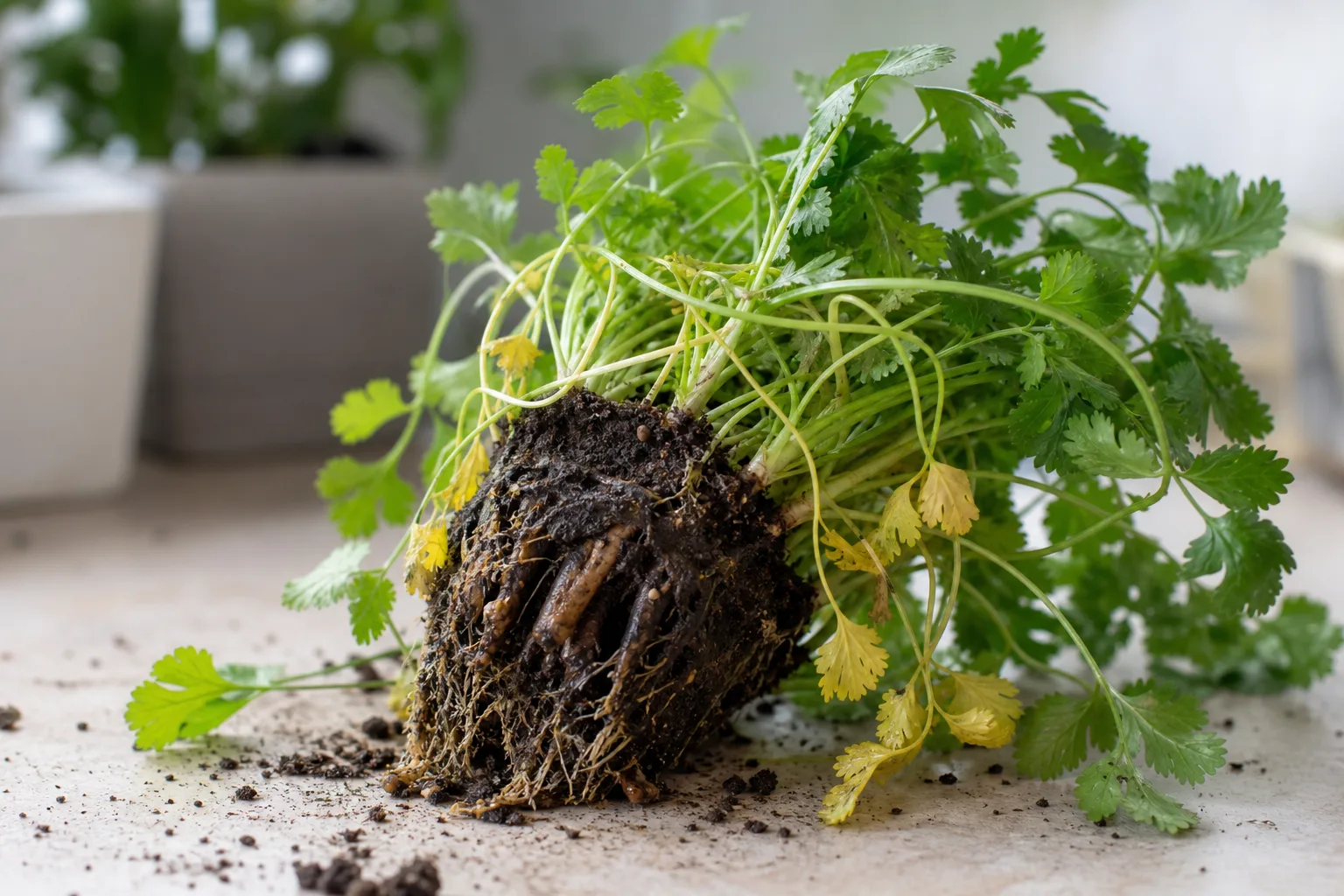
Root Rot on Coriander: Causes, Checks & Fixes
This guide covers root rot on Coriander. See also the general Root Rot guide, watering, and light pages for this plant.
Root Rot on Coriander: Causes, Checks & Fixes
Quick answer
Root rot on coriander (Coriandrum sativum-cilantro for the leaves in North America) is decay in the root zone, not a leaf disease you can spray away. This upright cool-season annual develops a sensitive taproot that resents both waterlogging and disturbance. When mix stays saturated in a cool kitchen or low-light windowsill, roots lose oxygen and tissue decays even though the plant still looks like it needs water.
The signature trap is limp, yellowing ferny leaves on soil that stays wet-many growers water again because the herb looks thirsty, which deepens the damage. Your first move is to stop watering and inspect the taproot, not to add more water or fertilizer. For moisture balance without sogginess, see the coriander watering guide.
What root rot looks like on Coriander
Coriander grows as an upright clump of compound leaves on slender stems-not a low rosette houseplant. Root rot symptoms show on those thin leaflets and the stem base first.
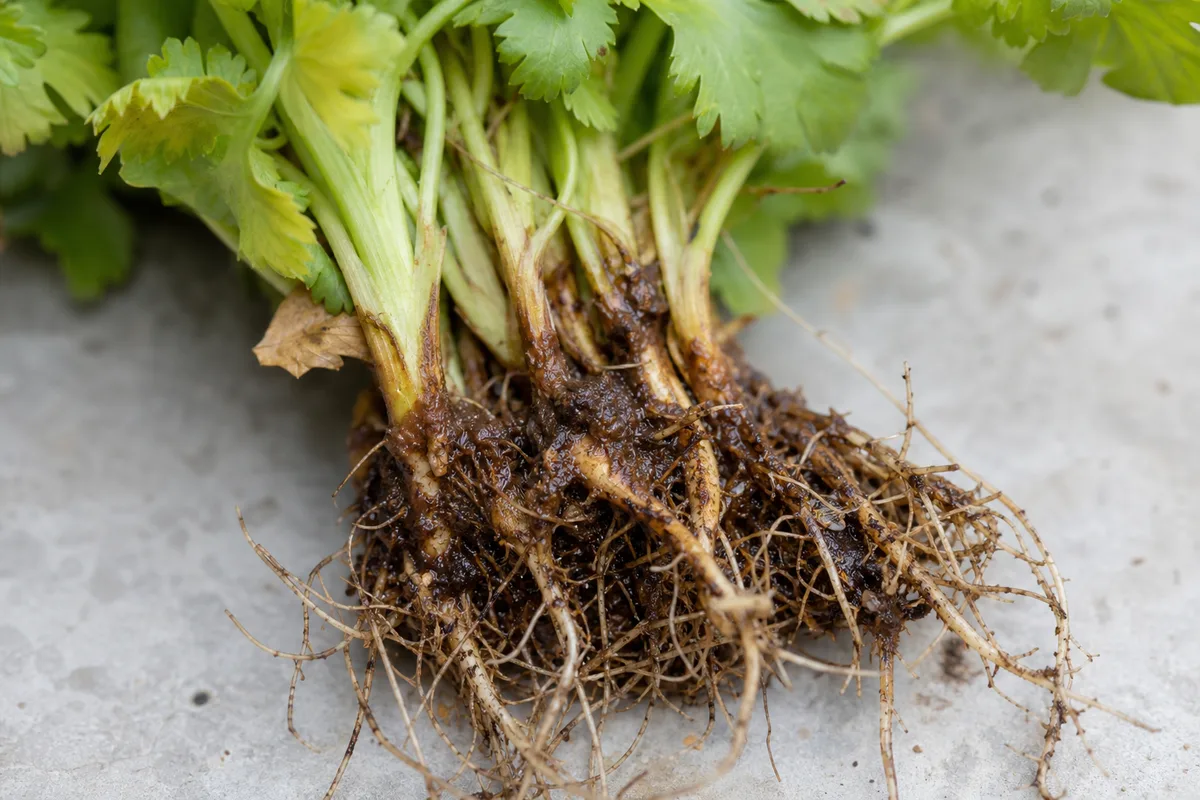
Root Rot symptoms on Coriander - compare with healthy tissue on the same plant.
Typical signs include:
- Yellow lower leaflets that go limp while soil at 1–2 cm depth stays cool and damp-not dry and crumbly
- Wilting despite a heavy pot that has not dried for days after the last watering
- A sour or swampy smell when you lift the plant or probe near the drainage hole
- Soft, dark tissue at the stem base where it meets wet mix; advanced cases show brown, collapsing foliage
- Fungus gnats hovering over chronically wet soil-they do not prove rot alone, but they often appear alongside saturated mix
On inspection, healthy coriander roots are firm and white or pale tan. Rotted roots turn brown, black, translucent, or slimy. Because coriander anchors on a single main taproot with smaller lateral roots, decay often concentrates on that thick downward root first-unlike fibrous houseplants where damage spreads evenly through a mat of fine roots.
Compare with underwatering on coriander: a light, dry pot and wilt that perks within hours after a thorough soak point away from rot. Compare with heat wilt: afternoon droop on a sunny sill with soil that dries normally by evening often needs shade or timing adjustment, not a root rescue.
Root rot vs. overwatering on coriander
These two problems share wet soil, but the salvage path differs. Early overwatering is reversible stress before tissue dies; confirmed root rot means decay you must trim or abandon.
| Stage | Soil | Roots on inspection | Best move |
|---|---|---|---|
| Early overwatering | Wet several days; may smell slightly off | Mostly firm white roots; no widespread mush | Stop water; dry top 1–2 cm; fix drainage-see overwatering on coriander |
| Confirmed root rot | Wet; sour smell common | Brown, slimy, or hollow roots; taproot soft | Trim to firm tissue or resow |
| Underwatering | Dry throughout; light pot | Firm white roots | Deep soak; adjust schedule |
| Heat wilt | May be moist but not saturated | Firm roots | Move to cooler bright spot; check before watering |
If yellow lower leaves appear after one or two heavy waterings but roots stay firm white after a week-long dry-down, treat it as overwatering stress, not full rot. If wilt persists on damp soil and roots are mushy, treat it as root rot and stop hoping the mix will “air out” without inspection.
Why Coriander gets root rot
Coriander wants consistently moist, well-drained soil-a pairing the Royal Horticultural Society repeats because both ideas must stay linked. Moist means the root zone should not swing from dust to mud. Well-drained means excess water leaves the pot instead of pooling around the taproot. Coriander dislikes soggy conditions even though container plants need daily checks in warm weather.
Taproot in wet, cool, slow-drying pots. Coriander develops a long taproot that resents disturbance and cannot tolerate standing water around that central anchor. In a cool room or north-facing winter windowsill, evaporation slows. The same watering rhythm that worked in summer keeps the profile saturated for days.
Calendar watering and blocked drainage. Watering on a fixed schedule instead of checking whether the top 1–2 cm is dry is the most common trigger. Blocked drainage holes, decorative pot sleeves, and saucers left full after watering deprive roots of oxygen-Wisconsin extension notes plants with root rot are often wilted even though the soil is wet.
Oversized pots and heavy mix. A small taproot in a large wet volume cannot dry the center fast enough. Dense garden soil or peat-heavy mix without perlite holds water long after the surface looks merely damp. See the coriander soil guide for a light herb mix.
Supermarket herb pots. Grocery-store cilantro often arrives in thin plastic with minimal drainage. Daily watering without a moisture check floods delicate roots quickly-especially above a radiator where top leaves dry while the root ball stays cold and wet.
Coriander repotting guide and root disturbance. Even successful trim-and-repot work stresses coriander’s taproot and can trigger bolting once temperatures climb. That is one reason succession sowing often beats aggressive surgery on an aging pot.
How to confirm the cause
Work through these checks in order before trimming roots or repotting:
- Weigh the pot. A heavy container with limp leaves suggests wet roots, not drought.
- Press a finger 1–2 cm into the mix near the pot edge. Constant dampness with failing lower leaves supports rot over simple underwatering.
- Smell the drainage hole or root zone. A sour odor means active decay in anaerobic wet mix.
- Unpot gently. Slide the plant out; rinse away wet mix so you can see taproot color and texture without snapping slender stems.
- Inspect the taproot first. Healthy tissue is firm and white or pale tan. Rotted tissue is brown, translucent, slimy, or hollow. Trim mentally to where firm tissue would begin-if that leaves almost nothing, resow instead.
- Check crown firmness. Press the stem base above the soil line. Soft, collapsing tissue at the crown means salvage odds are low.
- Review recent care. Saucer standing water, daily watering in cool months, dense mix, or a decorative pot without holes all support a root-rot diagnosis.
Confirmed diagnosis requires mushy roots plus wet-soil wilt-not yellow leaves alone. If the pot is dry and light and roots are firm, rule out normal aging or yellow leaves on coriander before cutting tissue.
First fix for Coriander
Stop watering immediately. When roots are rotting, adding water because leaves look wilted makes the problem worse. Do not fertilize, mist heavily, or repot until you have seen the taproot.
Once watering stops, unpot the plant in daylight and rinse away old mix so you can tell firm tissue from mush. That inspection-not leaf color alone-decides whether you trim, repot, or sow fresh seed in a clean container.
Step-by-step recovery
Follow this sequence only when inspection shows some firm white root tissue and a firm stem base. If more than half the taproot is mush or the crown is soft, skip to When re-sowing is the better choice.
- Trim all decayed roots with clean scissors until only firm white or tan tissue remains. Disinfect blades between cuts. On coriander, focus on the taproot first-cut back to firm white tissue even if that removes most of the root mass.
- Remove mushy lower leaflets that pull away easily; they will not re-green.
- Let cut root surfaces air-dry ten to thirty minutes on a paper towel if you removed a large mass-reduces reinfection risk in fresh mix.
- Repot into fresh, light, well-drained mix with perlite in a clean pot with open drainage holes-see the soil guide. Match pot size to the remaining root ball; oversized pots hold excess wet soil around a trimmed taproot.
- Water lightly at the base only after the top 1–2 cm of new mix feels dry. Follow the watering guide rhythm for your room-cool months dry slower than summer.
- Hold fertilizer until new center growth looks firm and normal-sized.
- Watch for bolting. Root disturbance plus warm room temperatures can push coriander to flower early. Move the recovery pot to a cool bright spot and accept that leaf harvest may be short even if roots stabilize.
Do not repot into dense garden soil, a decorative pot without drainage, or a much larger container after root loss-the extra wet mix will rot what remains.
When re-sowing is the better choice
Coriander is a short-cycle kitchen crop, not a long-lived houseplant. Under good light, you can move from seed to usable leaves in roughly three to four weeks-often faster than nursing a pot where most of the taproot is gone.
Resow instead of rescuing when:
- More than half the taproot and lateral roots are mush with no firm tissue left after trimming
- The stem base is soft or collapses when you touch it
- The plant is already bolting or past its best leaf window
- Wilt keeps spreading upward after one week of dry corrected care
- You need clean leaves for cooking within two weeks and recovery would mean waiting on rerooting
How to resow quickly:
- Discard the rotted plant and do not reuse its mix for coriander.
- Scrub or replace the pot if you keep the container.
- Sow fresh seed directly in the final pot-coriander’s taproot resents transplanting. See the propagation guide for cracked-seed and depth tips.
- Keep new mix evenly moist until germination, then shift to the finger-test rhythm from the watering guide.
- Start the next batch every two to three weeks so one failed pot does not end your supply-successional sowing is the default coriander strategy on the overview page.
Starting fresh seed is not giving up-it matches how this annual herb is meant to be grown.
Recovery timeline
Mild cases with a firm stem and partial healthy roots may stabilize within one to two weeks after repotting and corrected watering. New white root tips and firm center shoots matter-not whether old yellow lower leaflets green up again.
Severe taproot loss means two to four weeks of slow rerooting before normal harvest resumes, and longer if the plant sits in dim light during recovery. If wilt spreads upward, the crown softens, or no new roots appear after four weeks in corrected conditions, the plant is unlikely to recover-resow.
On a three-to-four-week crop timeline, a marginal recovery often delivers fewer leaves than a clean sowing started on day one of diagnosis. Factor that into your salvage decision.
Lookalike symptoms on coriander
| What you see | Likely cause | How to tell it apart |
|---|---|---|
| Limp ferny leaves, wet heavy pot, sour smell, mushy taproot | Root rot | Unpot inspection confirms decay |
| Wet soil, yellow lowers, firm white roots after dry-down | Early overwatering | See overwatering guide |
| Light pot, dry crumbly mix, wilt perks after soak | Underwatering | Pot weight and finger test |
| Afternoon droop, soil dries normally, firm roots | Heat wilt | Temporary; see wilting guide |
| Fine upper leaves, flower stalk rising | Bolting | Natural lifecycle shift after heat or root stress |
| Fungus gnats only, firm roots | Wet surface, not yet rot | Dry top layer; fix drainage before roots fail |
Food-safe recovery for an edible herb
Coriander is grown for the kitchen, so salvage decisions differ from ornamental houseplants.
- Harvest only from plants with firm stems, healthy smell, and roots trimmed to firm white tissue. Snip upper growth you are confident was not sitting against sour wet mix.
- Discard all foliage from severely rotted plants or any leaves that smell off, look slimy, or sat against decaying stem tissue.
- Do not eat leaves from plants treated with non-food-safe fungicides or unlabeled drenches.
- When in doubt, start a new sowing for culinary use-seed is inexpensive and delivers clean leaves faster than gambling on a marginal recovery.
Coriander is non-toxic to cats and dogs per the ASPCA, but discard moldy or rotted plant material rather than leaving it where pets might nibble spoiled tissue.
What not to do
Do not keep watering because leaves look wilted when soil is already wet. Do not repot into a much larger pot after taproot loss-the extra wet mix will rot what remains. Do not use dense garden soil in containers or a pot without drainage holes. Do not fertilize a rotting plant; salts in saturated mix add stress. Do not assume cinnamon, neem, or a fungicide drench fixes the problem while keeping the same soggy routine and blocked drainage. Do not transplant a rotted supermarket seedling into a bigger pot hoping roots will “spread”-direct sow in the final container instead. Do not compost severely infected plants or reuse their mix for coriander.
How to prevent root rot next time
Water when the top 1–2 cm of mix feels dry-not on a fixed calendar. The RHS advises keeping container compost just moist while taking care not to overwater. In cool months, stretch intervals; in warm bright windows, check daily.
Use a light, well-drained potting mix with perlite for containers-see the soil guide. Keep drainage holes open and empty saucers after watering so the plant never sits in runoff.
Sow directly in the pot where the plant will live. Coriander’s taproot resents transplanting; disturbing roots after germination is a bolt trigger and a rot risk when the plant is already stressed.
Match pot size to root mass. Small herb root systems in oversized wet pots stay saturated in the center while the surface looks merely damp.
Sow succession batches every two to three weeks so you are not overwatering one tired container to force late leaves. Pair prevention habits with the watering and overwatering guides so wet-soil problems are caught before the taproot fails.
When to discard the plant
Dispose of coriander when the crown and stem base are soft, most of the taproot is mush with no firm tissue left after trimming, and wilt keeps spreading despite dry corrected care.
Before giving up entirely, ask whether resowing delivers usable leaves sooner than another week of recovery-on this crop, the answer is often yes. For kitchen use, a fresh pot started the day you diagnose rot is the cleaner choice than harvesting from a marginal salvage.
Related coriander problems
- Overwatering on coriander - early wet-soil stress before roots die
- Wilting on coriander - wet-soil vs. dry-soil vs. heat droop
- Yellow leaves on coriander - lower-leaf yellowing with other causes
- Mold on soil on coriander - surface mold on chronically wet mix
- Coriander overview - cool-season annual model and succession sowing
- Coriander propagation guide - direct sow and resow after rot
- Coriander watering guide - moist without waterlogged roots
Conclusion
Root rot on coriander is a wet taproot problem on a fast-turnover kitchen herb-not a mysterious leaf disease. Confirm it with mushy roots and wilt on damp soil, then stop watering and inspect before you act. Trim and repot only when firm white tissue remains; otherwise sow fresh seed in a clean pot and you can have usable cilantro again within weeks. Old yellow leaflets may not recover, but a new batch-or a successfully trimmed plant with clean center growth-gets you back to harvesting without guessing.
When to use this page vs other Coriander guides
- Coriander watering guide - Use for routine moisture checks before assuming root rot is the main issue.
- Coriander problems hub - Browse all 16 common issues on this species.
- Overwatering on Coriander - Different entry point when symptoms overlap with root rot.
- Yellow Leaves on Coriander - Different entry point when symptoms overlap with root rot.
- Wilting on Coriander - Different entry point when symptoms overlap with root rot.