Wilting on Coriander: Causes, Checks & Fixes
Quick answer
Wilting on coriander means lost leaf turgor-from dry roots, damaged roots on wet soil, heat stress, or transplant shock. First step: press your finger 1–2 cm into the mix and lift the pot-dry and light means soak deeply; wet and heavy means stop watering and inspect roots.
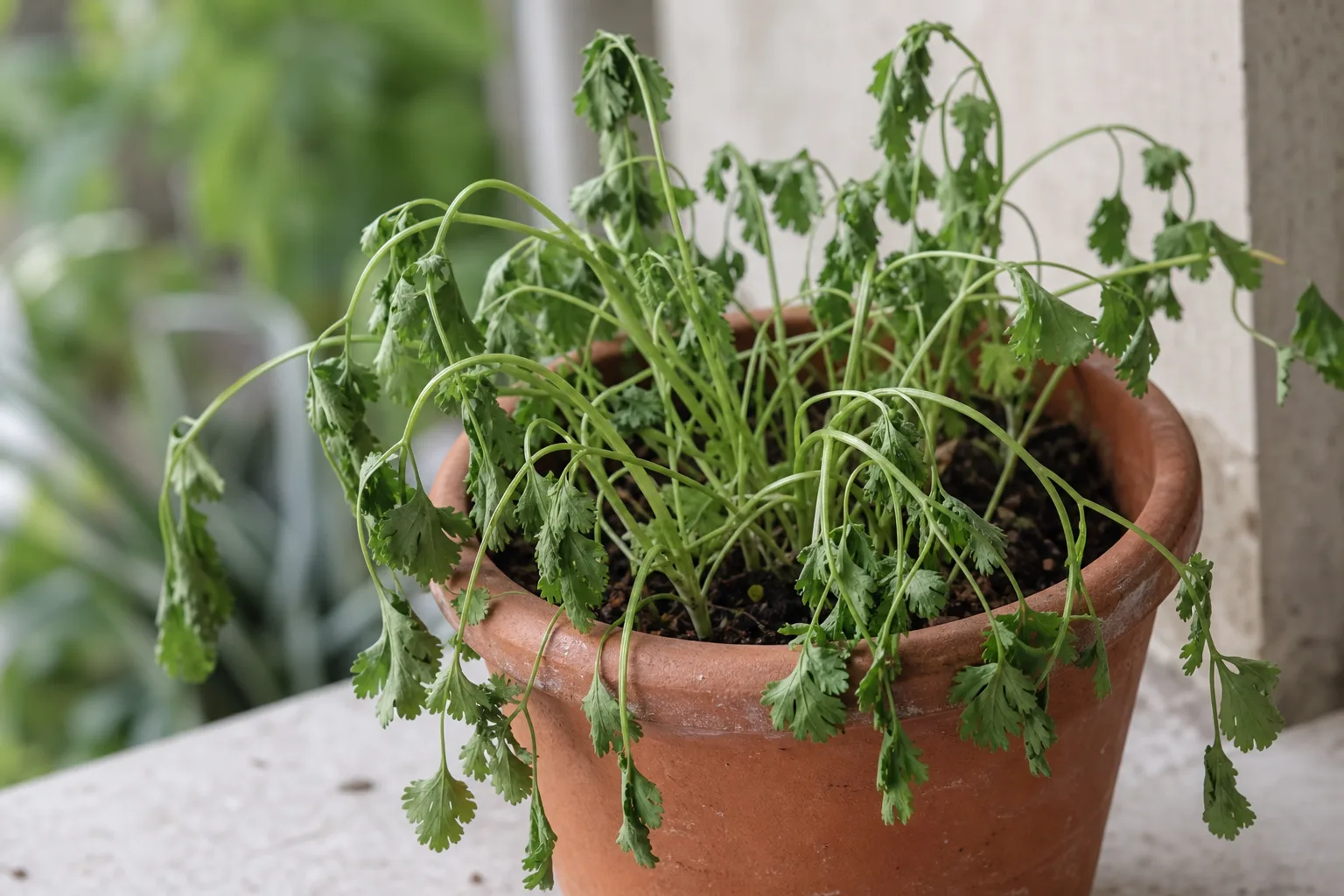
Wilting on Coriander: Causes, Checks & Fixes
This guide covers wilting on Coriander. See also the general Wilting guide, watering, and light pages for this plant.
Wilting on Coriander: Causes, Checks & Fixes
Quick answer
Wilting on coriander (Coriandrum sativum, cilantro) means the leaves lost turgor-the internal water pressure that keeps them upright. Drought, heat, transplant shock, and root failure all produce the same limp look, which is why growers panic and reach for the watering can at the wrong moment.
First step: check soil moisture at 1–2 cm depth and lift the pot. A light pot with dry crumbly mix means drought-water deeply until drainage runs, then empty the saucer. A heavy pot with wet, cool soil means root stress-stop watering and inspect roots before adding more. Do not water on sight alone.
Visual check: Dry-pot wilt shows limp ferny leaves on a light container with crumbly mix at 1–2 cm depth. Wet-soil wilt keeps the pot heavy while leaves stay limp all day. Photo reference: side-by-side of drought wilt vs. persistent wilt on saturated supermarket cilantro mix.
For the full moisture rhythm, see the coriander watering guide.
Wilting vs. drooping vs. bolting on coriander
These three symptoms overlap on kitchen windowsills but need different fixes:
| Pattern | What you see | Soil / pot | Overnight recovery? | First move |
|---|---|---|---|---|
| Wilting (dry) | Full collapse, crisp edges possible | Light pot, dry 1–2 cm | Yes, after deep soak | Soak until drainage runs |
| Wilting (wet / roots) | Limp all day, may yellow at base | Heavy, wet for days | No | Stop watering; inspect roots |
| Drooping (heat) | Afternoon hang, stems still support leaves | Moist, not soggy | Yes, by morning | Afternoon shade above ~28°C |
| Bolting | Rising thick center stalk, lacy tops | Any moisture | N/A-life-stage shift | Harvest or resow |
| Fusarium wilt | Yellowing, one-sided wilt, vascular browning | Often moist | No-permanent | Remove plant; avoid same soil |
Wilting on this page means full turgor loss-the ferny compound leaves and thin stems slump and cannot hold their usual angle. Drooping is milder: foliage hangs lower but often recovers after heat passes; see drooping leaves on coriander for overlap notes. Bolting is not reversible wilt-it is coriander shifting to flower and seed. Watering a bolted center stalk will not restore broad harvest leaves.
What wilting looks like on coriander
Coriander wilting is easy to spot but hard to read without context:
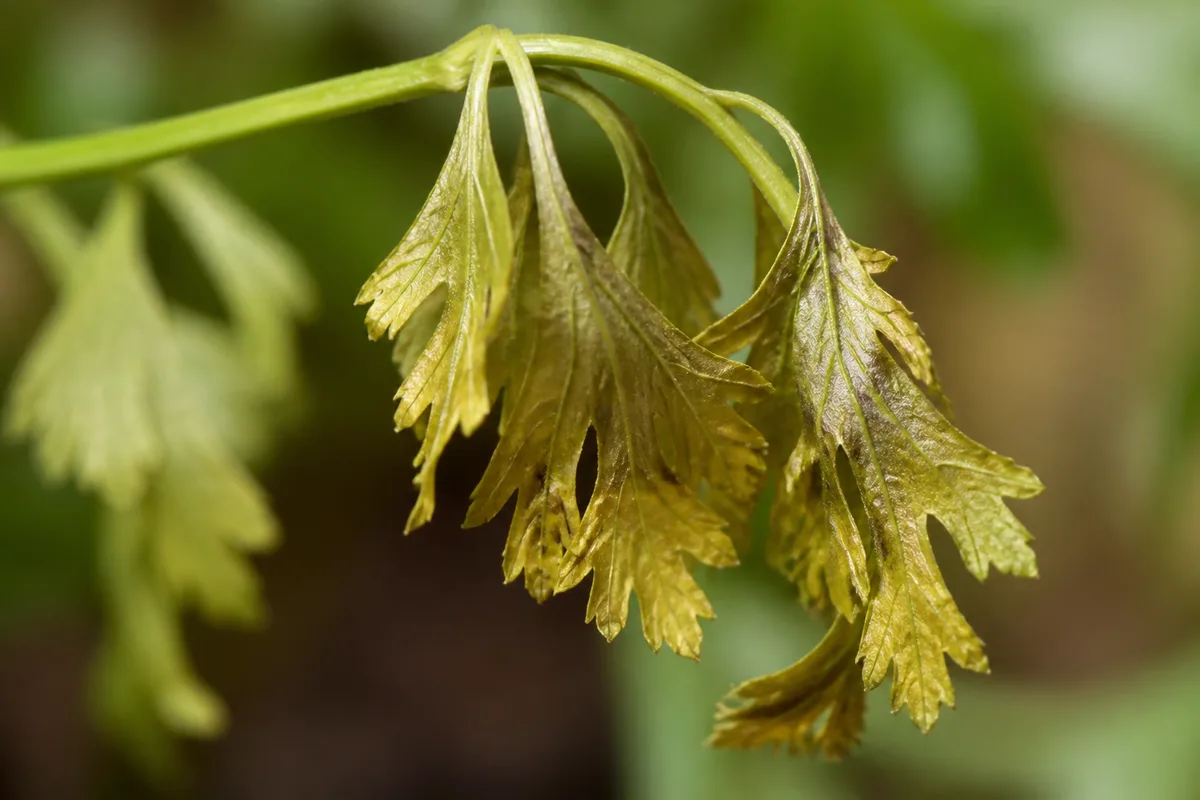
Wilting symptoms on Coriander - compare with healthy tissue on the same plant.
- Limp, drooping leaves that hang from thin stems instead of standing at their usual angle
- Thin, soft leaf texture-leaves feel less crisp than healthy harvest-ready foliage
- Whole-plant collapse in seedlings, sometimes flat against the soil surface
- Afternoon droop that recovers overnight on hot sunny days-temporary heat wilt, not always drought
- Persistent limpness all day on wet soil-root failure, not thirst
- Sudden wilt after transplanting even when mix is moist-taproot disturbance
Unlike succulents, coriander does not wrinkle visibly before collapse. By the time leaves look obviously limp, the plant may already be shifting toward bolting in warm weather.
Pre-bolt center stalk: A thickening growing point with tight lacy upper leaves after a hot dry spell signals bolting-not a watering fix. Photo reference: coriander center stem beginning to rise above surrounding leaf stalks on a windowsill pot.
Why coriander wilts faster than many houseplants
Coriander is a cool-season annual with a shallow root system and a three-to-four-week harvest window. It cannot store water like a succulent or recover from weeks of neglect like a mature pothos.
Several biology facts explain the speed:
Shallow, delicate roots. Coriander wants steady moisture in well-drained mix-not bone dry for days, not soggy for days. Small kitchen containers dry in hours under bright sun, and the limited root mass cannot buffer a missed watering the way a deep-rooted herb like rosemary can.
Heat and day length trigger bolting. Penn State extension notes coriander bolts quickly when temperatures heat up, stopping leafy harvests to set seed. Drought wilt in heat often pushes the plant past useful leaf recovery within days.
Transplant sensitivity. Coriander does not transplant well because of its taproot and can wilt sharply when moved from trays-even on moist soil. Supermarket six-packs are a common trigger: the plant was grown densely, roots were disturbed at purchase, and the thin retail pot dries unevenly. Direct-sowing into the final container avoids this pattern.
Container heat. Pots on sunny sills or metal railings bake roots while leaves lose water through transpiration. A plant that was fine at 9 a.m. can wilt by 3 p.m. without the mix being fully dry.
The wet-soil paradox: drought wilt vs. root-failure wilt
Both underwatering and overwatering wilt coriander. Dry soil causes wilting; so do damaged roots that cannot absorb water from wet mix. The visible symptom is identical-the fix is opposite.
| What you find | Likely cause | Overnight recovery? | First action |
|---|---|---|---|
| Light pot, dry 1–2 cm down, no sour smell | Drought | Yes, after soak | Deep soak until drainage runs |
| Heavy pot, wet mix for days, yellow lower leaves | Overwatering / root stress | No | Stop watering; let top 1–2 cm dry-see overwatering on coriander |
| Afternoon droop only, moist soil, recovery by morning | Heat wilt | Yes | Afternoon shade above ~28°C; do not overwater |
| Wilt day after transplant, moist soil | Transplant shock | Often in 2–3 days | Shade, wait 24 hours; direct-sow next round |
| Rising central stalk, ferny upper leaves | Bolting | N/A | Harvest or resow-watering will not restore leaf quality |
| All-day wilt on moist soil, vascular browning at stem base | Fusarium wilt | No-permanent | Remove plant; do not reuse soil for Apiaceae crops |
This table is the core diagnostic for wilting queries. When in doubt, always check soil depth and pot weight before watering.
Main causes of wilting on coriander
Drought stress. The most common cause in container kitchens. Mix dries between waterings, roots cannot replace lost water, leaves collapse. Often paired with crisp brown edges after repeated dry cycles. Deep dive: underwatering on coriander.
Overwatering and root rot. Wet, oxygen-starved roots stop moving water upward. Wilt persists on damp soil, sometimes with sour odor or fungus gnats. Lower leaves may yellow on chronically wet mix-see yellow leaves on coriander for wet-wilt overlap. See root rot on coriander if stems soften at the crown.
Heat wilt on moist soil. Above roughly 28°C (82°F), coriander may droop in afternoon sun to conserve water, then recover overnight. Penn State extension recommends afternoon shade when temperatures heat up to extend the leafy harvest window.
Transplant shock. Seedlings moved from six-packs or supermarket trays wilt even when watered. Coriander’s taproot does not tolerate disturbance. Direct-sow outdoors or into the final container for the steadiest results.
Hydrophobic dry mix. Peat-heavy soil that dried completely can repel water-the surface darkens briefly while the root ball stays dry inside. Bottom-water in a tray for 20–30 minutes until the pot feels heavy and the surface moistens, then drain fully. Repeat once if the first pass did not penetrate the center.
Pre-bolt stress. Drought and heat accelerate flowering. A thickening center stem with tight lacy leaves means the plant is shifting to seed production-irreversible for leafy harvest.
Fusarium wilt. A soil-borne disease causing permanent wilt, yellowing foliage, and vascular browning when you cut the stem base. Unlike heat wilt, the plant does not recover overnight. The pathogen can survive many years in soil; remove infected plants promptly and rotate out of the Apiaceae family for four to six years in garden beds or large containers where Fusarium has been confirmed.
Lookalike symptoms to rule out
Drooping leaves without full collapse often describe heat stress or mild underwatering-the stems still support foliage but hang lower. See drooping leaves on coriander for overlap notes; wilting here covers the full diagnostic path including wet soil.
Bolting produces a rising flower stalk with ferny upper leaves and bitter flavor-not reversible wilt. Heat and long days trigger bolting even on well-watered plants.
Leggy stretch from low light produces soft, elongated stems but soil moisture is usually even. Move to brighter morning sun rather than watering more.
How to confirm the cause
Work through this checklist before changing anything:
- Finger test at 1–2 cm - Push your finger into the mix. Dusty dry throughout confirms drought. Cool damp soil with wilt points to roots or heat.
- Pot weight - Lift the container. Light and airy with limp leaves suggests dry roots. Heavy and wet suggests root stress.
- Time of day - Afternoon-only droop on a hot windowsill with moist soil often means heat wilt. All-day collapse on dry soil means drought.
- Root sniff and check - Slide the plant out gently. Firm pale roots on dry mix confirm underwatering. Brown mushy roots on wet mix confirm overwatering. Vascular browning in the stem base suggests Fusarium.
- Bolting stem inspection - Look at the center growing point. A thickening stalk with tight ferny leaves means bolting may have started-watering will not restore broad harvest leaves.
If dry soil and light pot match, drought is confirmed. If wet soil and heavy pot match, root stress is confirmed. If moist soil and afternoon-only pattern match, heat wilt is likely.
First fix for coriander (by confirmed cause)
Dry soil, light pot - water deeply once. Soak until excess drains from the bottom, then empty the saucer within 30 minutes. For hydrophobic dry mix, bottom-water in a tray for 20–30 minutes until the surface moistens, then drain fully. Do not fertilize on the same day.
Wet soil, heavy pot - stop watering. Let the top 1–2 cm dry before the next drink. Confirm drainage holes are open and saucers are empty. If wilt persists beyond 48 hours on drying soil, inspect roots-see overwatering on coriander.
Afternoon heat wilt on moist soil - shade, do not drench. Move the pot out of direct afternoon sun above ~28°C. Morning sun with afternoon shade slows evaporation without flooding roots.
Transplant shock on moist soil - shade and wait. Keep soil evenly moist but not saturated. Wait 24 hours before re-diagnosing. Direct-sow the next batch into the final container rather than transplanting again.
Bolting center stalk - harvest or resow. Once the flower stalk elongates, leaf quality will not return. Pick usable leaves, then sow fresh seed in a cooler or shadier spot.
Fusarium confirmed - remove and do not reuse soil. Pull the plant including roots, discard in household waste (not compost), and do not sow coriander, parsley, dill, or other Apiaceae in the same container soil for several years. Sanitize pots before reuse.
Make one care correction at a time so you can read the plant’s response over the next week.
Recovery timeline
Drought wilt often shows improvement within hours to one day after a proper soak-leaves regain turgor and stems stiffen. Crisp brown edges on older leaves do not green up; judge success by new center growth.
Heat wilt recovers overnight once temperatures drop or shade reduces afternoon stress. No treatment beyond placement change is needed if soil was moist throughout.
Transplant shock may take two to three days to stabilize on evenly moist soil. Persistent limpness beyond 48 hours despite moist mix means inspect roots.
Root failure from overwatering can take one to two weeks of careful dry-down if roots are partly firm. Mushy crown tissue usually means resow instead of rescue.
Bolting after wilt is not recoverable for leafy harvest-sow a fresh batch within days rather than nursing a flowering plant.
Fusarium wilt does not recover-remove the plant rather than waiting for overnight perk-up that will not come.
What not to do
Do not water immediately without checking soil depth. Wet wilt worsens when you add more water to already saturated roots.
Do not fertilize a stressed coriander before confirming roots and moisture. Salts on dry or damaged roots burn tender tissue.
Do not transplant to “fix” wilt. Root disturbance triggers bolting faster than the original stress. Direct-sow replacements.
Do not stack Coriander repotting guide, pruning, and pesticide on the same day as a wilt diagnosis. One correction at a time.
Do not fight a bolted plant for leafy harvest indefinitely. Once the central stalk elongates, flavor turns bitter-sow again.
Do not mist leaves instead of addressing roots. Surface humidity does not rehydrate dry root balls and can invite fungal problems on cool evenings.
How to prevent wilting next time
Build a routine around how coriander actually grows:
- Check the top 1–2 cm daily on container plants, especially in summer. Small pots on sunny sills may need water every one to two days in heat.
- Water thoroughly each time until drainage runs, then empty saucers. Light daily sprinkles fail on dry coriander.
- Give bright light with afternoon shade when temperatures climb above ~28°C. Coriander wants sun in cool weather but bolts and wilts faster in baking afternoon heat on a windowsill.
- Direct-sow in the final container to avoid transplant shock-Penn State and Oregon State both recommend direct sowing over moving seedlings when possible.
- Choose slow-bolt cultivars for summer windowsills. Calypso, Leisure, and Santo hold leaf quality longer in heat than standard coriander, which buys time before heat wilt and bolting-but they still need the same moisture checks.
- Succession-sow every two to three weeks so one wilt episode does not end your entire harvest window-RHS successional sowing guidance recommends repeat sowings through the season.
- Use well-drained mix in pots with open drainage holes. Moist does not mean constantly wet.
For seasonal adjustments and the full finger-test routine, see the coriander watering guide and coriander overview.
When wilting means bolting - and what to do instead
Bolting is coriander’s shift from leaf production to flowering and seed set. The RHS advises removing flower stems promptly if you want continued leafy harvests-but once a thick central stalk with ferny upper leaves has formed after drought or heat wilt, that shift is largely irreversible.
Signs bolting-not simple wilt-is the problem:
- Rising center stem thicker than surrounding leaf stalks
- Tight, lacy upper leaves with changed flavor
- Trigger after hot dry spell even following recovery watering
When bolting has started, harvest any usable leaves, then sow fresh seed in a cooler spot or shadier afternoon position. Fall sowings often outperform peak-summer batches because shortening days delay flowering.
This week’s decision ladder
Use this escalation path before stacking more interventions:
| What you see this week | Soil / roots / stem | Action today |
|---|---|---|
| Limp leaves, light pot, dry 1–2 cm | Dry crumbly mix | Deep soak - drain saucer within 30 minutes |
| Limp all day, heavy wet pot | Damp for days, firm stems when tugged | Dry-down - stop watering until top layer dries |
| Afternoon limp only, moist soil, perk by morning | Roots likely fine | Shade - move out of hot afternoon sun |
| Wilt 24 h after supermarket pot move | Moist mix, disturbed taproot | Shade and wait - direct-sow next batch |
| Rising center stalk, lacy tops | Any moisture | Harvest and resow - water will not restore leaves |
| All-day wilt, vascular browning at stem base | Moist or dry | Remove plant - do not reuse soil for cilantro |
| Wilt persists after correct dry-down 48+ h | Mushy roots | Unpot same week - see overwatering or resow |
When dry and light, soak once and reassess tomorrow. When wet and heavy, dry down before any new water. When vascular browning confirms Fusarium, remove the plant the same day rather than waiting for recovery. When bolting has started, resow within the week. That sequence fits coriander’s short harvest window better than nursing a failing pot through multiple wrong fixes.
Related coriander problems
- Coriander watering guide - wet-vs-dry diagnosis and finger-test routine
- Underwatering on coriander - drought deep-dive when dry soil confirms thirst
- Overwatering on coriander - wet-soil wilt and root stress
- Root rot on coriander - mushy roots and crown collapse
- Yellow leaves on coriander - lower-leaf yellowing on wet wilt
- Drooping leaves on coriander - milder afternoon hang vs full collapse
- Coriander overview - cool-season model, direct-sow, and succession timing
FAQs
Why is my coriander wilting even though the soil is wet?
Wilt with wet soil means roots cannot move water to the leaves-usually overwatering, blocked drainage, or root rot. The plant droops from root failure, not thirst. Stop watering, empty standing water from the saucer, and check for brown mushy roots. See the overwatering guide if the pot stays heavy for days.
Is afternoon wilting normal on coriander in a sunny window?
Yes, when soil is moist and temperatures climb above roughly 28°C. Coriander may droop in mid-afternoon heat to conserve water, then perk overnight. If the pot is heavy, soil is cool at depth, and leaves recover by morning, shade the afternoon sun rather than adding more water.
Does wilting cilantro mean it is about to bolt?
Not always, but drought and heat wilt often trigger bolting-a thickening central stem with tight ferny upper leaves. Once that flower stalk elongates, leaf harvest quality will not return no matter how much you water. Check the center growing point; if bolting has started, harvest what you can and sow a fresh batch.
Should I water wilting coriander immediately?
Only when the top 1–2 cm of mix is dry and the pot feels light. Watering wet wilt makes root rot worse. For dry wilt, soak until drainage runs, then empty the saucer. For transplant shock on moist soil, shade the plant and wait 24 hours before re-diagnosing.
Is coriander wilt the same as drooping leaves?
Not quite. Wilting here means full collapse-limp ferny leaves and stems that cannot hold themselves up. Drooping on coriander is often milder afternoon hang on moist soil that firms up overnight. Bolting adds a rising central stalk with lacy upper leaves. Check soil moisture and the center growing point before you water.
When to use this page vs other Coriander guides
- Coriander watering guide - Use for routine moisture checks before assuming wilting is the main issue.
- Coriander problems hub - Browse all 16 common issues on this species.
- Underwatering on Coriander - Different entry point when symptoms overlap with wilting.
- Overwatering on Coriander - Different entry point when symptoms overlap with wilting.
- Root Rot on Coriander - Different entry point when symptoms overlap with wilting.