Drooping Leaves on Coriander: Causes, Checks & Fixes
Quick answer
Coriander leaves droop when turgor drops-usually from dry soil in shallow pots, damaged roots in wet mix, transplant shock, or afternoon heat before bolting. First step: finger-test the top 1–2 cm of soil and lift the pot; water deeply only if dry, or pause watering and check drainage if wet.
Drooping Leaves on Coriander: Causes, Checks & Fixes
This guide covers drooping leaves on Coriander. See also the general Drooping Leaves guide, watering, and light pages for this plant.
Drooping Leaves on Coriander: Causes, Checks & Fixes
Quick answer
Drooping leaves on coriander (Coriandrum sativum) mean the leaf cells have lost turgor-internal water pressure that keeps ferny foliage upright. On this fast, cool-season herb, that usually traces to one of four causes: dry soil in a shallow container, root failure in wet mix, transplant shock from moved seedlings, or afternoon heat on a sunny sill before the plant bolts.
Coriander shows stress quickly because its harvest window is only three to four weeks and container compost dries out rapidly in warm weather. The same plant can droop from thirst at noon and from drowning roots if you respond by watering without checking.
First step: press your finger 1–2 cm into the mix near the pot edge and lift the pot. Light pot plus dry soil means drought-water deeply at the base until drainage runs, then drain the saucer. Heavy wet pot plus limp leaves means root stress-do not add water; see our overwatering guide and check drainage first.
What drooping leaves look like on coriander
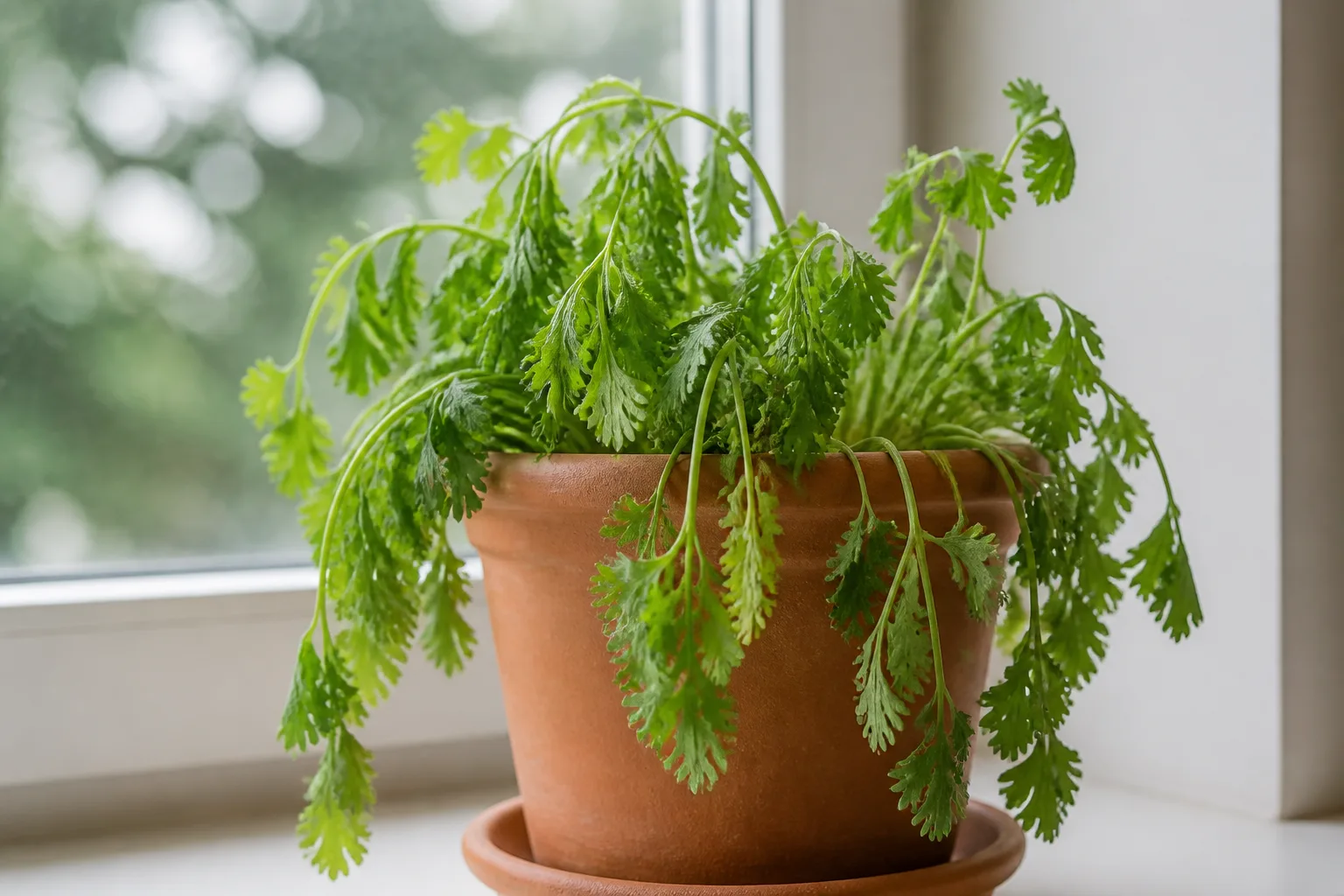
On healthy coriander, leaves stand at a slight angle from the stem with a soft, ferny texture. When turgor drops, leaflets hang downward while the stem may still look green and upright-especially in early drought. The whole plant can look tired and flattened, like a bouquet left out of water.
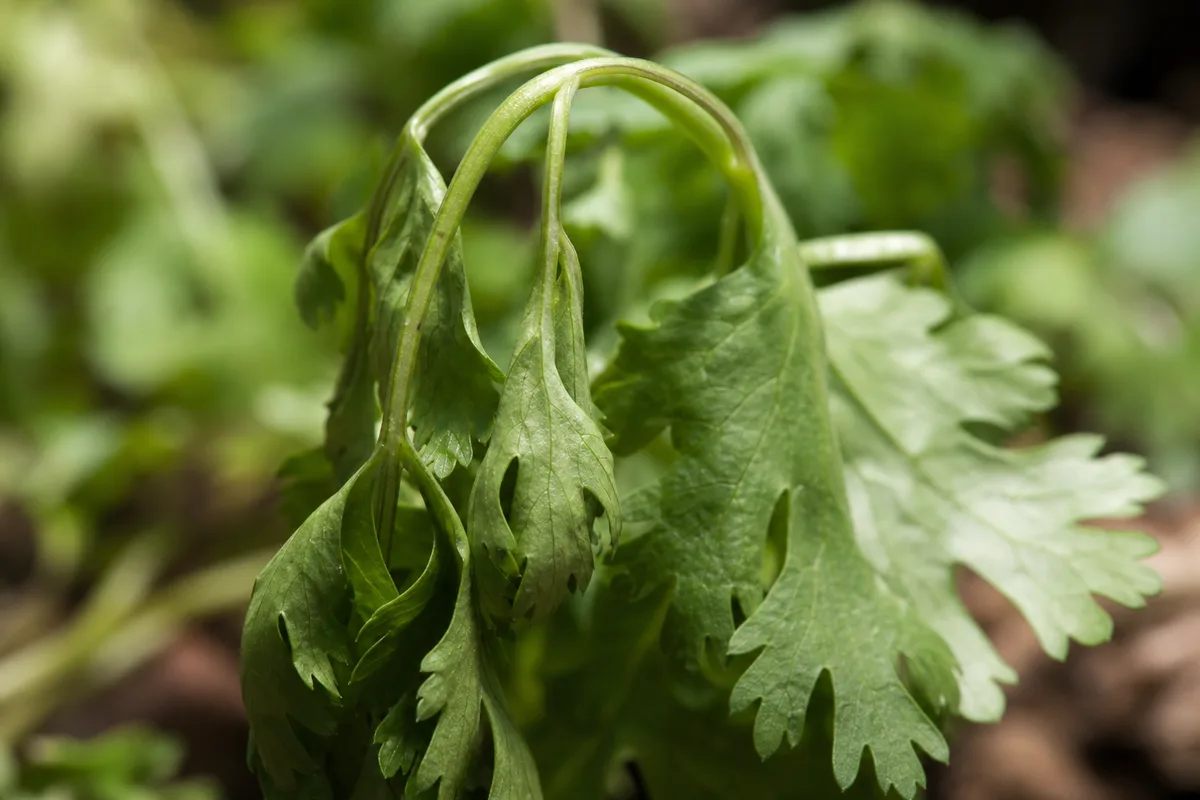
Drooping Leaves symptoms on Coriander - compare with healthy tissue on the same plant.
Thirst droop pairs with dry, crumbly soil pulling slightly from the pot wall, a noticeably lighter pot, and leaves that feel thin and flexible rather than crisp. After a thorough drink, foliage often regains firmness within a few hours.
Wet-root droop looks similar above soil but the mix stays dark and heavy. Lower leaves may yellow. Stems can feel soft at the base. A sour smell from the pot surface suggests advanced root damage. This pattern is the opposite fix from drought-adding water makes it worse.
Heat droop hits in mid-afternoon on west-facing windowsills or sunny balcony rails. Soil may be adequately moist; leaves sag while air temperature peaks, then partially recover by evening without any watering. If this repeats daily in warm weather, bolting-a tall flower stalk and lacy upper leaves-often follows within days.
Transplant droop appears within hours of moving supermarket six-packs or thinning seedlings into a new pot. Wisconsin extension notes coriander does not transplant well because of its long taproot-damaged roots cannot keep pace with leaf water loss until new root tips form.
Drooping vs wilting vs bolting on coriander
These three problems overlap in search results but need different fixes on coriander:
| Symptom | What you see | Soil / context | First direction |
|---|---|---|---|
| Drooping leaves | Gradual limpness; stems often stay green | Dry pot, wet pot, or afternoon heat | Finger-test + pot weight |
| Wilting | Sharper collapse; may not recover overnight | Often dry after neglect, or wet with root rot on Coriander | See wilting on coriander |
| Bolting | Central stem elongates; leaves turn lacy; flavor shifts | Often follows heat + drought cycles | Sow next batch; cannot revert |
Drooping is recoverable when the root zone is corrected quickly. Wilting is the more dramatic end of the same water-balance failure. Bolting is a separate life-stage shift-watering will not restore flat leaf production once flower stems develop. The RHS advises removing flower stems if you want to prolong leafy harvests, but prevention through shade, moisture, and successional sowing works better than chasing a bolted plant.
Why coriander gets drooping leaves
Shallow pots and fast dry-down
Coriander is commonly grown in small kitchen pots and supermarket trays. Limited soil volume loses moisture to sun and wind on all sides. The RHS states container coriander should be checked daily and watered to keep compost just moist-because rapid dry-down in warm weather is normal, not a sign your plant is unusually thirsty.
A pot that went from evenly moist at breakfast to dry by late afternoon will show drooping leaves long before stems wilt completely. Shallow four-inch pots amplify this swing; deeper ten-to-twelve-inch containers buffer better but still need daily checks in summer.
Drought between waterings
Coriander wants consistently moist, well-drained soil-not bone-dry cycles. Dry soil encourages bolting in many leafy crops, and coriander is especially sensitive to heat combined with drought. Drooping from thirst is the early warning; repeated dry crashes push the plant toward flowering and seed.
Indoor coriander on a hot windowsill can lose usable moisture in a single warm afternoon. Our watering guide documents the finger-test depth and pot-weight check that prevent calendar-based guessing.
Overwatered roots and oxygen loss
Coriander dislikes soggy conditions. When mix stays wet for days-blocked drainage, saucers left full, heavy compacted soil, or cool dim rooms where evaporation slows-roots lose function. Leaves droop because uptake fails even though water is present.
This is the classic paradox covered in our watering FAQ: wilting with wet soil means root failure, not thirst. Yellow lower leaves and mold on the soil surface often accompany the droop. Cross-check overwatering on coriander before pouring another round.
Transplant shock from nursery packs
Supermarket coriander pots cram dozens of thin seedlings into one container. Dividing or moving them disturbs the taproot. After transplanting, more water leaves the foliage than damaged roots can replace, collapsing turgor until roots re-establish.
Coriander responds best to direct sowing rather than transplanting. If you must move seedlings, do it young, keep the root ball intact, and expect temporary droop for several days. For the next round, sow seeds where the plants will finish-Wisconsin extension recommends successive sowings every 2–3 weeks for continuous leaf harvest.
Afternoon heat and pre-bolt stress
Coriander is a cool-season annual. On hot afternoons, transpiration can exceed root supply even when soil moisture is adequate-leaves droop as a temporary water-conservation response. The RHS recommends sowing in a cooler spot out of midday sun in summer and watering during dry spells to delay flowering.
Heat droop that repeats daily is a bolt warning. Once the central stem stretches and upper leaves turn feathery, leaf quality declines regardless of evening recovery. Plan a successional sowing rather than trying to reverse biology on a bolt-bound plant.
How to confirm the cause
Work through these checks in order-each step narrows the fix before you change anything:
- Finger test at 1–2 cm depth - Dry and crumbly near the pot edge supports drought. Damp or cold mix at depth with drooping leaves supports root stress or heat, not thirst.
- Pot weight - Lift after your last good watering to learn the heavy baseline. A dramatically lighter pot with droop means water. A heavy pot with droop means pause.
- Time of day - Afternoon-only sag with evening partial recovery on moist soil points to heat. All-day droop points to water balance.
- Recent transplant or repot - Drooping within 24–48 hours of moving seedlings fits shock. Direct-sown plants in undisturbed soil rarely show this pattern without a water issue.
- Lower leaf color - Yellowing lower leaves with wet mix overlap yellow leaves on coriander and root failure. Uniform green limp leaves on dry mix fit thirst.
- Bolt signs - Tall central stem, lacy upper foliage, or flower buds mean droop is secondary to life-stage shift; fix the next sowing, not this plant’s posture.
- Drainage audit - Confirm holes are open and saucers empty. Standing water re-saturates roots and mimics overwatering droop.
First fix for coriander
Match one action to what the checks confirmed-do not stack Coriander repotting guide, fertilizer, and heavy pruning on the same day.
If soil is dry and the pot is light: Water slowly at the base until moisture exits the drainage holes. Wait ten minutes and water once more if the mix absorbed the first pass unevenly. Empty the saucer within thirty minutes. Expect firmness to return within 6–24 hours if roots are healthy.
If soil is wet and the pot is heavy: Stop watering immediately. Empty the saucer, confirm drainage holes are clear, and move the pot to brighter airflow if it sits in a cool dim corner where mix stays wet too long. If droop persists beyond 48 hours with sour smell or soft stems, unpot and inspect roots-trim mushy tissue, repot into fresh well-draining mix only if roots are salvageable.
If droop is afternoon-only on moist soil: Move the pot to morning sun with afternoon shade, or pull it back from the glass during peak heat. Water during dry spells to delay bolting, but do not flood an already-wet pot.
If droop followed transplant within the last two days: Shade lightly, keep soil evenly moist but not soggy, and do not fertilize. Trim the largest outer leaves only if collapse is severe-reducing leaf surface lowers water demand while roots heal. Direct-sow the next batch instead of relying on stressed transplants.
Recovery timeline
Simple drought droop on healthy roots often improves within 6–24 hours after a thorough watering. Heat-related afternoon droop may stabilize the same evening once shade reduces transpiration.
Transplant shock can leave coriander limp for three to seven days while new root tips form. Judge progress by whether the center produces new green growth, not whether every old leaflet re-stiffens.
Root-failure droop from chronic overwatering recovers slowly-one to three weeks if damage is partial, or not at all if most roots are mushy. On a three-to-four-week crop cycle, starting a fresh sowing is often more practical than nursing a failing root ball.
Bolt-bound plants do not recover leaf quality after flowering begins. Harvest what remains usable and sow again within the week.
Lookalike symptoms and causes to rule out
Drooping overlaps with several other coriander problems:
- Wilting - Sharper collapse, often from severe drought or transplant shock. Drooping is milder limpness; both need the same soil check first.
- Underwatering - Chronic dry cycles with small ferny leaves and rapid bolting. Acute droop from one missed watering recovers faster.
- Overwatering - Wet soil, yellow lower leaves, soft stems. Drooping leaves are often the first visible sign before full wilt.
- Yellow leaves - Can pair with wet-root droop; yellow alone on old bottom leaves may be harmless aging.
- Leggy growth from low light - Thin pale stems lean toward glass but may not droop uniformly; improve light rather than watering.
- Pests - Aphids or mites cause distorted, sticky, or stippled foliage; droop without pest signs still points to water or heat first.
What not to do
Do not water automatically when leaves look tired-wet-soil droop worsens with more water. Do not fertilize stressed coriander; salts stress damaged roots further. Do not mist leaves as a substitute for fixing root-zone moisture; surface moisture does not restore turgor.
Do not transplant repeatedly hoping droop will resolve-each move damages the taproot again. Do not chase a bolted plant with extra water after flower stems appear; sow successionally instead.
Do not stack repotting, pruning, and feeding on the day you diagnose droop. One correction, then wait 48 hours to read the plant’s response.
How to prevent drooping leaves next time
Direct-sow coriander where it will grow. If you buy potted seedlings, treat them as a short harvest rather than long-term transplants. Sow every 2–3 weeks in warm months so one droopy pot does not end your supply.
Use a deep enough container-at least ten to twelve inches for mature plants-and free-draining peat-free mix. Check daily in summer; keep compost just moist per RHS container guidance. Water at the base in morning or evening to reduce evaporation loss.
Place outdoor and balcony pots in morning sun with afternoon shade during hot weather. Indoors, avoid radiators and west-facing glass that spikes afternoon temperature.
Pair watering discipline with our coriander overview for placement, and review the watering guide for finger-test depth, pot-weight checks, and the wet-soil FAQ before each season.
When drooping means bolting is near
Escalate when droop repeats daily on moist soil despite shade, the central stem begins to elongate, or upper leaves turn lacy and feathery. Heat plus inconsistent moisture is the classic bolt trigger-the RHS lists dry spells as a bolting factor across leafy crops, and coriander bolts quickly in warm, dry containers.
Once flower buds form, leaf flavor and texture change within days. Remove flower stems only if you want to stretch harvest slightly; better strategy is a fresh sowing in a cooler, shadier spot. Drooping at this stage is a harvest-timing signal, not a watering puzzle.
Conclusion
Drooping coriander leaves are a water-balance signal, not a mystery disease. Dry light pot-water deeply once. Wet heavy pot-stop watering and check roots. Afternoon-only sag on moist soil-add shade and consistent moisture. Post-transplant limpness-wait, keep evenly moist, and direct-sow next time.
Because coriander’s useful leaf window is short, confirm the cause in minutes with a finger test and pot lift rather than guessing. Link overlapping symptoms to wilting, overwatering, and yellow leaves when patterns mix-and sow again when heat and drought have already pushed the plant toward seed.
When to use this page vs other Coriander guides
- Coriander watering guide - Use for routine moisture checks before assuming drooping leaves is the main issue.
- Coriander problems hub - Browse all 16 common issues on this species.
- Underwatering on Coriander - Different entry point when symptoms overlap with drooping leaves.
- Overwatering on Coriander - Different entry point when symptoms overlap with drooping leaves.
- Root Rot on Coriander - Different entry point when symptoms overlap with drooping leaves.