Mold on Soil on Coriander: Causes, Checks & Fixes
Quick answer
Fluffy white or gray mold on coriander's soil surface is usually harmless saprophytic fungus feeding on organic matter in a wet top layer-not a leaf disease. First step: scrape off the mold, then let the top 1–2 cm of mix dry before you water again.
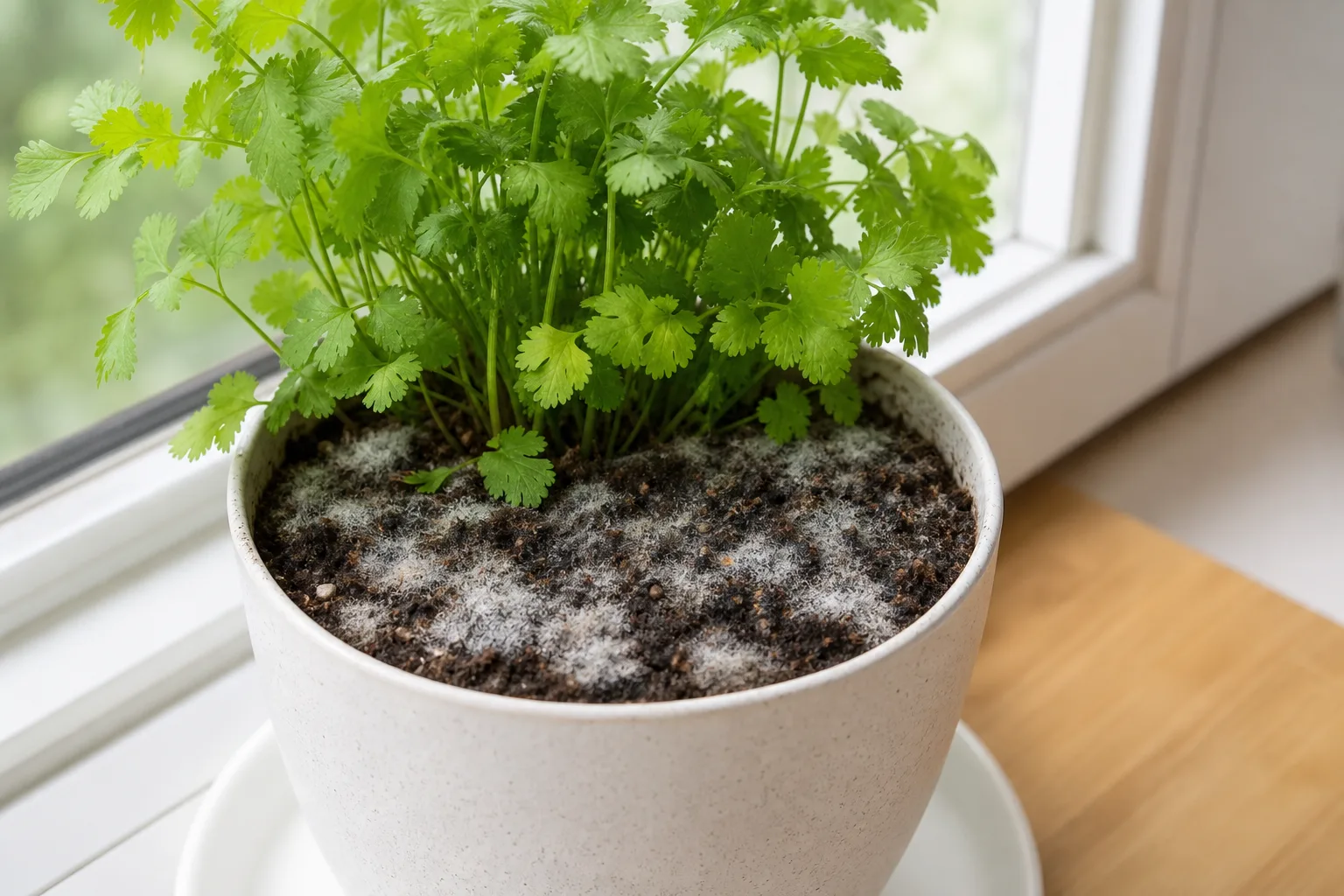
Mold on Soil on Coriander: Causes, Checks & Fixes
This guide covers mold on soil on Coriander. See also the general Mold on Soil guide, watering, and light pages for this plant.
Mold on Soil on Coriander: Causes, Checks & Fixes
Quick answer
White or gray fuzz on coriander potting mix is usually saprophytic mold-a fungus feeding on decaying organic matter in a persistently wet surface layer. It is alarming on a kitchen windowsill, but it is not the same as mold on leaves and rarely attacks healthy coriander tissue directly.
Coriander sits in an awkward middle ground: the plant wants consistently moist, well-drained soil, yet its [delicate roots rot quickly when the mix stays saturated](https://www.missouribotanicalgarden.org/gardens-gardening/your-garden/help-for-the-home-gardener/advice-tips-resources/insects-pests-and-problems/environmental/[overwatering on Coriander](/plants/coriander/overwatering/)). Surface mold is often the first visible sign that Coriander watering guide, drainage, or airflow has drifted too wet-before yellow wilting or stem rot shows up.
First step: scrape off the visible mold and let the top 1–2 cm of soil dry before the next watering. That matches coriander’s normal moisture check and breaks the wet surface fungi need. Only after the surface dries should you adjust anything else.
What mold on soil looks like on Coriander
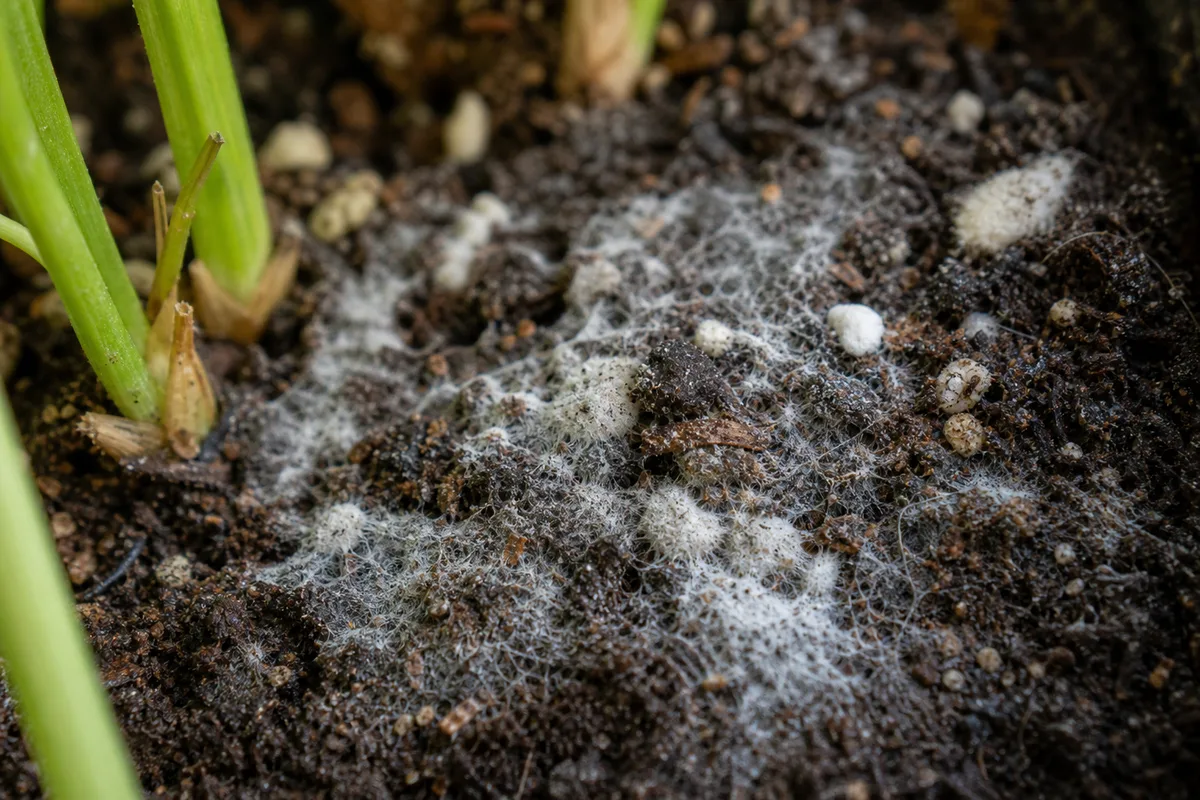
Saprophytic white or gray fuzz on the soil surface of a coriander pot - usually harmless on established plants when leaves stay firm and green.
On coriander containers, mold usually appears as:
- White or gray fuzzy patches on the soil surface, sometimes spreading in threads across the top layer
- Greenish film in the same spots when algae grow alongside fungi in very wet, low-light conditions
- Damp surface that stays wet for two or more days after you watered, even when lower mix might still feel usable
- Musty smell when you lift a crowded windowsill pot or peel back dense seedling leaves
- Small dark flies hovering near the pot when fungus gnats share the same wet, organic-rich habitat
Coriander leaves may look completely normal at this stage. That is typical for surface saprophytic growth-the fungus is breaking down potting mix and fallen debris, not chewing living foliage.
The picture changes on recently sown trays. Coriander is often direct-sown thickly for cut-and-come-again harvest. In cool indoor conditions with heavy watering, white fuzz on the surface can precede damping-off, where thread-thin seedlings collapse at the soil line. On established plants, mold more often signals chronic surface wetness than an immediate kill.
Why Coriander gets mold on soil
Coriander’s normal care setup makes surface mold more likely than on drought-tolerant houseplants-but the underlying cause is still moisture balance, not a mysterious herb disease.
Compost-rich, organic potting mix. Coriander grows best in lightweight mix with good organic content-often including compost for steady nutrition. Saprophytic fungi naturally colonize organic growing media and feed on decomposing matter. More organic material means more fungal food when the surface stays wet.
Moist-soil requirement versus waterlogging risk. Coriander needs regular moisture while leaves are actively harvested, yet does not tolerate damp, humid, waterlogged conditions. Growers who water on a calendar-especially in cool months when evaporation slows-can keep the top layer wet while believing they are “keeping coriander happy.”
Delicate roots in small kitchen pots. Coriander roots are sensitive to saturation. Rhizoctonia and similar crown diseases on cilantro are most severe in heavy, poorly drained soils where water collects. A windowsill pot with limited drainage or a saucer holding runoff creates the same risk at home scale, with mold appearing before roots fail.
Harvest debris on the soil surface. Cut-and-come-again harvesting drops leaf bits between stems. Those fragments decay on the surface and give mold an easy food source if moisture lingers.
Dense sowing and seedling trays. Many growers sow coriander thickly in one container for continuous leaves. Crowded stems shade the soil, slow drying, and raise humidity at the crown-ideal for both surface mold and seedling damping-off in poorly ventilated rooms.
Cool-season indoor growing. Coriander performs best in cool bright conditions-often October through March on Indian windowsills or year-round at higher elevations. Cooler air and shorter days mean the plant uses less water, but habitual summer watering schedules can leave mix wet for days.
How to confirm the cause
Work through these checks before Coriander repotting guide or spraying fungicide:
- Plant vigor - Are stems firm and leaves green? Healthy upright growth with only fuzzy soil points to cosmetic surface mold.
- Surface moisture - Insert a finger to the first knuckle (about 1–2 cm). If it feels wet days after watering, overwatering or poor evaporation is confirmed.
- Seedling status - On new sowings, look for pin-thin stems turning dark and seedlings falling over. That pattern suggests damping-off, not harmless surface growth alone.
- Root smell and texture - If you slip the plant partly out of the pot, roots should be white or tan and firm. Sour smell or mushy brown roots mean rot-not a problem scraping alone will fix.
- Drainage path - Confirm drainage holes are open, saucers are emptied within an hour, and decorative outer pots are not holding a water bath.
- Pest pairing - Fungus gnats hovering at the soil line strongly suggest a chronically moist organic surface-the same conditions mold favors.
- Light and airflow - Pots tucked in dim corners or crowded herb groupings dry slowly even when watering volume seems modest.
If the plant looks strong, roots are firm, and only the surface is fuzzy, you are dealing with saprophytic mold tied to wet top layer conditions. Proceed with drying and surface cleanup-not emergency repotting on day one.
First fix for Coriander
Scrape off the moldy top layer, discard it, and stop watering until the top 1–2 cm of mix feels dry to your finger.
Use a spoon or fork to remove roughly the top 0.5–1 cm of affected soil and any visible leaf debris with it. Bag and discard that material rather than composting it indoors. Do not water again until the surface passes coriander’s normal check: dry at 1–2 cm depth.
This single step does three things at once: removes active fungal growth, eliminates decaying food on the surface, and forces the wetness correction coriander needs. It is more useful than cinnamon, hydrogen peroxide, or fungicide on a first pass when the real issue is a wet top layer.
Step-by-step recovery
After the initial scrape and dry-down:
- Replace the scraped layer with a thin topping of dry, well-draining potting mix once the surface is no longer soggy-enough to cover exposed roots on shallow sowings, not a full repot.
- Water at the soil line, not over the foliage crown, when the top 1–2 cm is dry. Pour slowly until a little drains from the bottom, then empty the saucer.
- Thin overcrowded seedlings so air reaches the soil. Leave 5–8 cm between plants if you started a dense tray, or harvest outer stems to open the canopy.
- Move the pot to brighter airflow-a east or south windowsill with space around the container dries mix faster than a crowded herb cluster.
- Address fungus gnats if present by extending the dry surface period; larvae feed in the top layers of moist organic mix. Yellow sticky traps catch adults but do not replace drying the soil.
- Inspect roots only if stems wilt while soil feels wet, or mold returns within three to four days despite a dry surface. Slide the root ball out, trim clearly mushy roots, and repot into fresh, chunkier mix with open drainage-coriander hates transplanting, so reserve this for clear rot, not cosmetic mold alone.
Do not fertilize stressed, waterlogged coriander hoping to push new growth. Nitrogen on wet roots adds stress and can weaken flavor on an already struggling plant.
Recovery timeline
Surface mold should stop reappearing within one to two weeks once the top layer dries reliably between waterings and debris is cleared. You may see a brief return after a heavy drink-normal if the surface dries again within a day or two.
Judge recovery on new center leaves and firm stems, not old yellow foliage. Coriander grows fast; a healthy pot produces fresh cuttable growth within a week in cool bright conditions. Seedlings lost to damping-off will not resurrect-sow a fresh batch in cleaner, less saturated mix instead.
If mold returns every few days while you wait for the surface to dry, the pot may be oversized, mix too water-retentive, or drainage blocked. That is the point to repot rather than scrape indefinitely.
Lookalike symptoms to rule out
Powdery mildew on leaves shows as dry white powder on foliage, not fuzzy growth confined to soil. It appears on leaves in humid, stagnant air-not as a mat on the potting surface.
Downy or leaf-spot diseases create discolored lesions on coriander foliage. They need living leaf tissue; a healthy leaf with only soil-surface fuzz is a different problem.
Green algae alone can coat wet soil in bright, constantly moist trays. It signals the same excess surface moisture as mold and responds to the same drying and airflow fixes.
Salt crust looks like hard white mineral deposits when fertilizer or hard water builds up-not soft fuzzy threads. Flush sparingly and adjust feeding rather than scraping as mold.
Mistakes to avoid
Do not drench coriander with fungicide for harmless surface mold. Fix moisture first.
Do not keep watering on a summer schedule through cool months when the plant uses less water.
Do not leave harvest trimmings on the soil-they are mold food in a moist herb pot.
Do not assume mold means the whole crop is lost. Established coriander with firm roots usually outgrows a surface fungus once conditions dry.
Do not transplant young coriander lightly. It bolts and wilts easily when moved; direct-sow replacements instead unless root rot on Coriander forces a repot.
Do not cover pots with decorative sleeves that trap evaporation and hide standing water in saucers.
Coriander care cross-check
Surface mold is a moisture signal within coriander’s wider care pattern:
- Watering - Moist but never waterlogged; top 1–2 cm dry between drinks.
- Mix - Lightweight, well-draining, with organic content-not dense garden soil in a small pot.
- Light - Bright cool-season sun helps the surface dry; dim winter corners stay wet longer.
- Sowing - Direct-sow in the final pot; thick stands need thinning or faster harvest to open airflow.
- Season - In hot weather coriander bolts and needs different rhythm; mold on a bolting, barely watered summer pot is less common than on cool-season windowsill crops.
When mold appears, the cross-check usually points to surface staying wet too long rather than wrong fertilizer or pest spray.
How to prevent mold next time
Remove fallen leaves and stem stubs promptly after harvest. Water at soil level when the top 1–2 cm dries-not on a fixed daily alarm. Use pots with open drainage and empty saucers after each watering.
Space coriander containers so air moves between them on the windowsill. In dense sowings, harvest outer stems early to keep the soil surface exposed to light and airflow.
If mold and gnats recur every cool season, top-dress with a slightly chunkier layer of perlite-heavy mix at sowing, or reduce compost proportion in the wettest months while keeping enough organic matter for flavor.
For continuous harvest, sow a new small pot every two to three weeks rather than overwatering one tired container to force late leaves.
When to worry
Escalate beyond scraping and drying when:
- Seedlings collapse in clusters after white fuzz-likely damping-off; discard affected trays and resow with less frequent misting.
- Stems turn mushy at the soil line while leaves yellow and wilt-possible crown or root rot.
- Mold returns within 48 hours repeatedly after surface drying-check blocked drainage, oversized pot, or water-retentive degraded mix.
- Sour smell rises when you lift the plant-organic breakdown and root stress have advanced.
- Fungus gnats persist on Coriander in large numbers-larvae may be feeding on roots in the wet top layer.
Coriander is a fast annual herb. If a pot is mostly rotted stems with no usable leaves, restarting from seed in a clean, better-drained container is often faster than nursing a failing plant through repeated fungal cycles.
Cosmetic white fuzz on firm, harvest-ready coriander with a fixable watering habit is not an emergency. Confirm root health, dry the surface, and adjust rhythm.
Conclusion
Mold on coriander soil looks dramatic on a kitchen sill but usually tells a simple story: the top layer has stayed wet too long in an organic-rich herb mix. Scrape the surface, let the top 1–2 cm dry, clear harvest debris, and improve airflow before reaching for sprays or repotting. On healthy established plants, that path clears the fuzz within days and keeps delicate coriander roots out of the deeper rot that overwatering can trigger next.
When to use this page vs other Coriander guides
- Coriander watering guide - Use for routine moisture checks before assuming mold on soil is the main issue.
- Coriander problems hub - Browse all 16 common issues on this species.
- Fungus Gnats on Coriander - Different entry point when symptoms overlap with mold on soil.
- Overwatering on Coriander - Different entry point when symptoms overlap with mold on soil.
- Root Rot on Coriander - Different entry point when symptoms overlap with mold on soil.