Fungus Gnats on Coriander: Causes, Checks & Fixes
Quick answer
Fungus gnats on coriander mean the potting mix surface is staying wet too long-common on cool windowsills and seed trays. First step: stop watering and let the top 1–2 cm dry completely before traps or drenches.
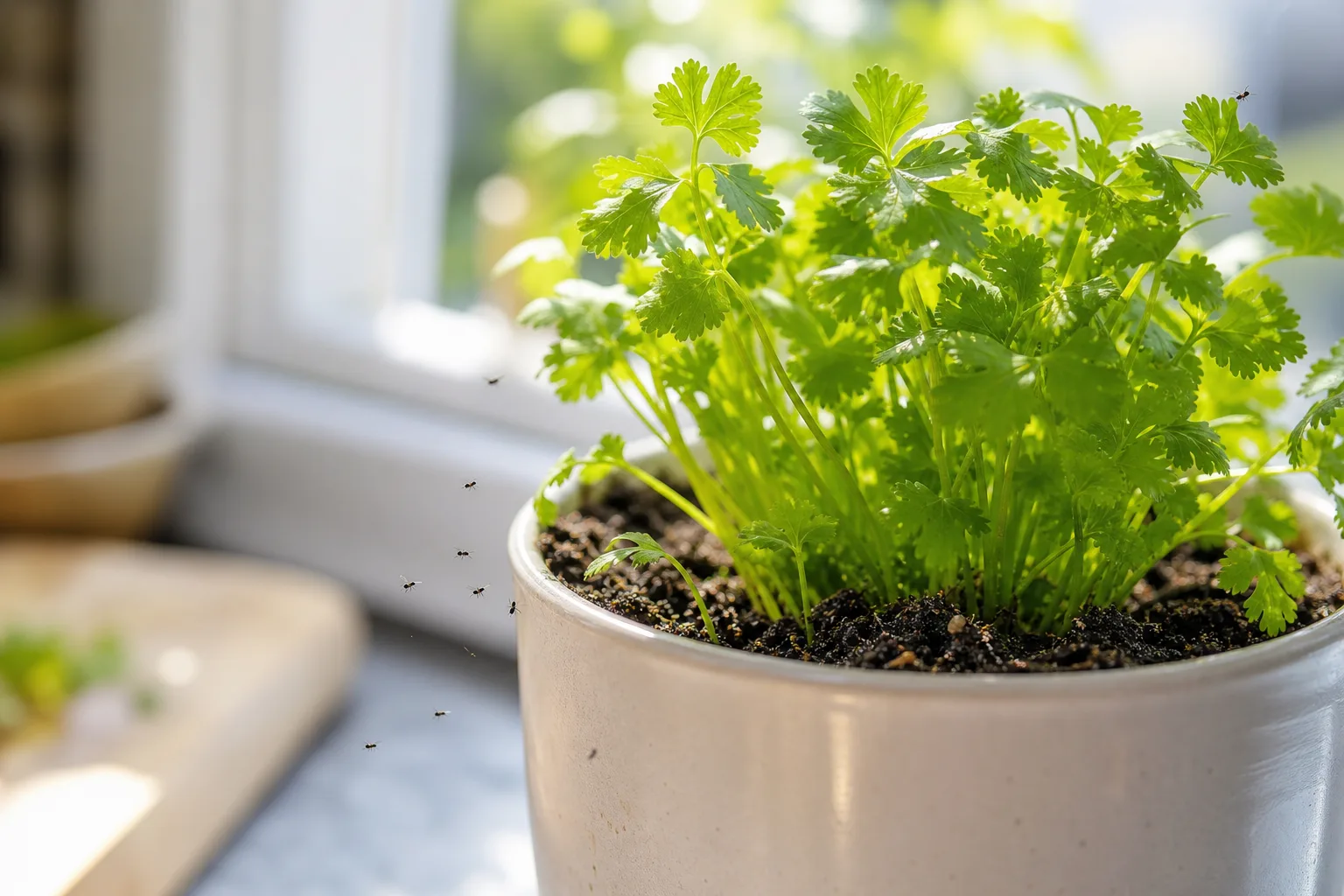
Fungus Gnats on Coriander: Causes, Checks & Fixes
This guide covers fungus gnats on Coriander. See also the general Fungus Gnats guide, watering, and light pages for this plant.
Fungus Gnats on Coriander: Causes, Checks & Fixes
Quick answer
Tiny black flies rising from a 10 cm coriander pot on a cool east-facing windowsill almost always mean the top centimeter of mix stayed wet too long-not that your kitchen herb picked up a random pest. Coriander (Coriandrum sativum, called cilantro for the leaves in North America) evaporates slowly in dim indoor light, so frequent light sips from a kitchen pitcher can keep the surface soggy for a week while lower mix still holds moisture. That wet top layer is where fungus gnat larvae feed on fungi, decaying organic matter, and fine roots.
First step: stop watering and let the top 1–2 cm of mix dry completely. Do not reach for traps, drenches, or sprays while the surface is still wet. Once that layer stays dry for several days, use yellow sticky traps for adults and a Bacillus thuringiensis israelensis (BTI) soil drench only if larvae persist.
Coriander wants consistently moist, well-drained soil during its brief leafy phase-a pairing that conflicts with gnat prevention when frequent light sips keep only the surface soggy. Our watering guide explains the finger-test rhythm; gnats mean that rhythm has drifted too wet for your windowsill setup.
Visual check: Adults are about 1/8 inch long, dark, and mosquito-like-they run across damp soil and fly up when you tap a coriander seed tray. Photo reference: macro shot of adults rising from a shallow coriander sowing tray after watering.
What fungus gnats look like on Coriander
Adults - About 1/8 inch long, dark, mosquito-like flies. They run across the soil surface, fly up when you water or tap the pot, and collect on nearby windows because they are attracted to light. They do not bite people or pets.
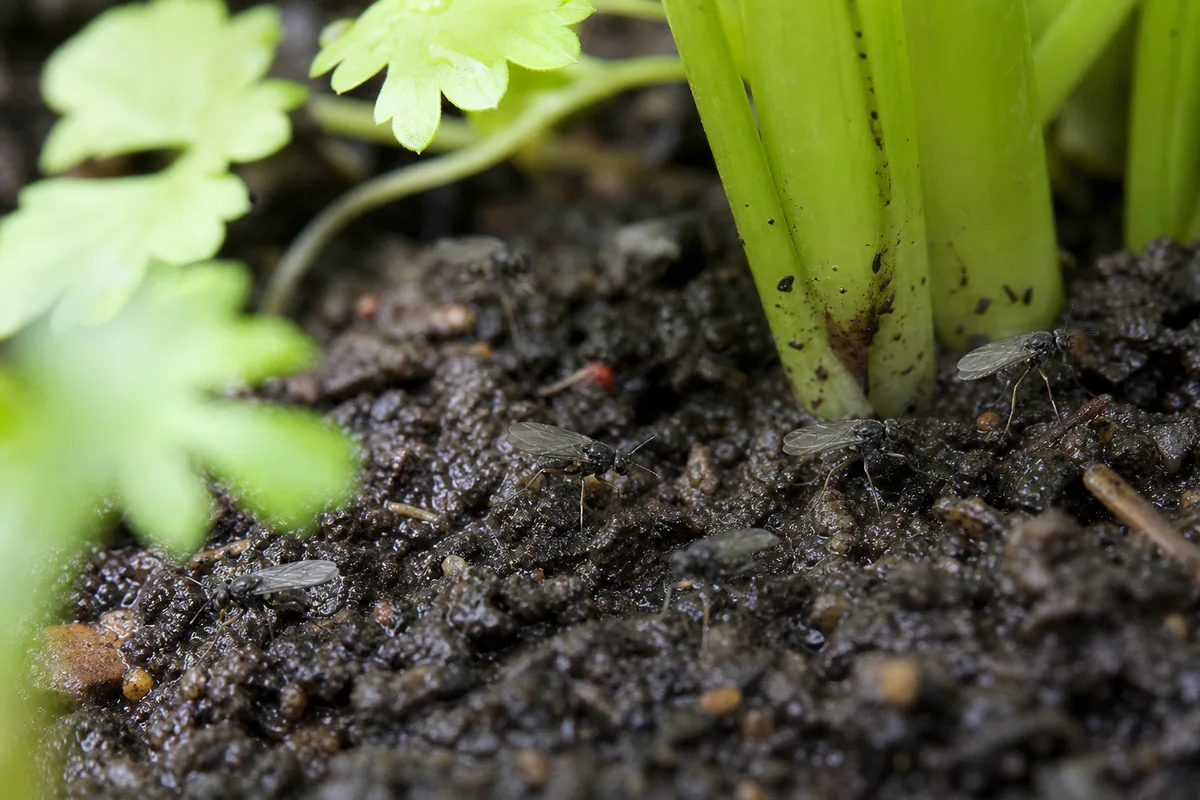
Fungus Gnats symptoms on Coriander - compare with healthy tissue on the same plant.
On the plant itself - Healthy coriander may show no leaf damage while larvae work in the mix. Watch the pot surface and harvest tray, not only the ferny foliage:
- Tiny black flies rise when you disturb a kitchen windowsill pot or seed tray.
- Soil surface stays dark and damp for many days after one watering.
- Fine translucent larvae with dark heads in the top 2–3 cm of mix-a magnifying glass helps on dense seedling trays.
- Potato test: a raw slice pressed on the surface for 48 hours may show chewed tissue, confirming larvae in that container.
- Yellow sticky traps catch adults at soil level; rising counts week after week mean active breeding.
Larva confirmation: Press a raw potato slice cut-side down on the soil surface of a 10 cm coriander pot for 48 hours-chewed tissue on the underside confirms larvae in that container, not a stray fruit fly from the kitchen.
Coriander-specific clues - Gnats often appear alongside white mold on the soil surface or algae in the same wet top layer. That overlap is common on compost-rich herb mix in small 10–12 cm pots. See mold on soil on coriander when fuzz and flies share the same container.
Why Coriander gets fungus gnats
Fungus gnat larvae need consistently moist, organic-rich surface mix to complete their life cycle. Coriander pots become perfect habitat when:
The moisture paradox. Coriander needs regular moisture while leaves are actively harvested, yet dislikes soggy roots. Growers who water on instinct-especially with small sips from a kitchen pitcher-often keep the top wet while lower mix holds water, exactly where larvae feed. Cool east or north windowsills slow evaporation further, so a pot that felt fine in summer stays damp for a week in winter.
Small kitchen pots and seed trays. Coriander is often grown in 10–12 cm pots or shallow sowing trays for cut-and-come-again harvest. Shallow soil volume dries unevenly: the surface lingers wet in dense seedling clusters even when you believe you are watering lightly. Overcrowded trays trap humidity between seedlings and extend the moist window at the soil line.
Peat-heavy or compost-rich mix. Organic potting media holds moisture at the surface where most larvae live. Coriander benefits from lightweight, well-drained mix-but kitchen setups often reuse standard houseplant soil that stays damp in dim light.
Harvest debris and algae. Fallen leaf trimmings decay on the soil surface and feed fungi-and larvae-when moisture lingers between harvests.
Introduction from nursery pots. New herb six-packs with wet organic media can carry eggs. Gnats spread across a windowsill collection sharing the same bench.
Top-watering vs. bottom-watering on seed trays. Top-watering dense coriander seedlings wets the entire surface every session. Bottom-watering from a tray lets roots drink from below while the top centimeter dries faster-useful for breaking the gnat cycle on trays, provided you remove standing water from the saucer within 30 minutes so the mix is not re-saturated from below.
The gnats are telling you the root-zone environment is too wet for coriander’s current light and temperature-not that you need more humidity or gentler care. Chronic wet soil also drives overwatering on coriander and can escalate to root rot.
Lookalike pests to rule out
Kitchen herb setups attract several small flies. A quick comparison saves wrong treatment:
| Pest | Where it breeds | Key difference on coriander pots |
|---|---|---|
| Fungus gnats | Moist potting mix surface | Flies rise from soil when pot is tapped; larvae in top layer |
| Fruit flies | Ripening produce, compost bins, dirty dishes | Hover near food waste; ignore dry herb pots |
| Drain flies | Sink and drain biofilm | Emerge from plumbing; soil traps stay empty |
If flies ignore your coriander but swarm the fruit bowl, improve kitchen hygiene first. If adults emerge from the sink after watering, clean the drain-not the herb mix.
How to confirm the cause
Work through checks in order so you separate gnats from rot, drought, and other pests:
- Disturbance test - Tap the pot rim or seed tray edge. Gnats flying from the soil surface confirm breeding in that container.
- Moisture at depth - Press your finger 1–2 cm deep near the pot edge. Cool, clinging mix that stays wet for many days with gnats confirms chronic surface moisture-the same check from our watering guide.
- Larva check - Scrape the top centimeter of mix or use the potato slice method. No larvae after two weeks of dry surface suggests adults are strays or dying out.
- Trap count - Rising adults on yellow traps week after week means active breeding, not a one-time hitchhiker.
- Root and stem check - Firm green stems and healthy center growth suggest larvae have not yet stacked onto serious root damage. Mushy stems, sour smell, or wilt on wet mix-prioritize root rot protocol.
- Season and placement - Cool indoor months with reduced evaporation match most windowsill coriander gnat outbreaks.
Confirmed diagnosis - Gnats plus wet surface mix plus larvae (or repeated adult emergence from the same pot). Suspected - A few adults on dry mix in bright summer conditions may be incidental; still audit watering before dismissing.
First fix for Coriander
Stop watering immediately and let the top 1–2 cm of mix dry completely-the same depth you use before a normal coriander drink. This single step kills many eggs and larvae by removing the moisture they require and is safer than stacking chemicals on wet herb roots.
After the surface stays dry for several days:
- Set yellow sticky traps at soil level to catch egg-laying adults and track whether numbers fall over two weeks.
- If adults persist and you confirmed larvae, apply a BTI (H-14 strain) drench labeled for fungus gnats-soak the top of the mix where larvae feed. Repeat on a five-day schedule because BTI targets feeding larvae, not eggs or adults.
- Empty saucers and move the pot off any standing water.
Do not repot, heavily prune, or fertilize the same week you change watering-that stacks stress on a fast-cycling herb already fighting wet soil.
Step-by-step recovery
Light infestation (few flies, firm stems, surface briefly wet)
- Hold water until the top 1–2 cm is dry throughout (light pot, dry finger test at depth).
- Set one yellow sticky trap at soil level.
- Resume watering only when the finger test says the top layer has dried-deep drink at the base until drainage runs, then empty the saucer.
- Monitor traps for two weeks-counts should fall without Bti.
Moderate infestation (daily flies, damp surface 5+ days, firm stems)
- Isolate the affected pot from other windowsill herbs for two to three weeks.
- Hold water until the top 1–2 cm is dry throughout.
- Trap adults with yellow sticky cards at soil level; replace when coated.
- BTI drench after the surface has dried-follow product dilution for soil soak, not foliar spray on edible leaves.
- Repeat BTI every five to seven days for three to four weeks to catch overlapping larval hatches.
- Thin seedling trays if overcrowding kept the surface wet; improve airflow between pots.
Heavy infestation (swarms, soggy mix, yellowing leaves)
- Complete steps 1–5 above.
- Inspect roots by sliding the plant partway from its pot. Firm white roots support continued dry-down plus BTI. Mushy brown tissue means shift to root rot rescue-gnat spray will not save a rotting taproot.
- Resow if the plant has bolted, stems are failing, or the three-to-four-week leaf window has passed-succession sowing is often faster than rescuing a spent coriander pot.
Recovery timeline
Expect two to four weeks of consistent dry surface conditions and larval control before adult counts crash, because overlapping life stages hatch in waves. Improvement signs: fewer flies on traps, surface mix staying dry for a week between drinks, firm stems, and continued harvestable center growth. Worsening signs: yellow lower leaves, wilt on wet mix, sour soil odor, or collapsing seedlings-shift focus to overwatering and root rot rescue, not more gnat spray.
Observed recovery pattern: On a 10 cm kitchen coriander pot in a cool north window, stopping top watering until the surface stayed dry for 10 days dropped yellow-trap counts from roughly 30 adults per week to 4 over two weeks-without BTI, once larvae in the top layer were starved of moisture. Heavier infestations with confirmed larvae in dense seed trays usually need BTI on the five-day schedule alongside dry-down.
Old lower leaves that yellowed from chronic wetness may not fully green up; judge success by new center growth and falling trap counts.
Causes to rule out
- Fruit flies - Drawn to kitchen waste, not pot soil; improve food hygiene if flies ignore plants.
- Drain flies - Breed in sink drains, not coriander mix.
- Overwatering without gnats - Wet soil stress can occur even when gnat populations are low.
- underwatering on Coriander - Light pot, dry depth, slightly wilted but firm stems; no persistent larvae in dry mix.
- Damping-off in seed trays - Seedlings collapse at the soil line; may share wet conditions with gnats but needs different urgency-discard affected seedlings and resow with better surface drying.
What not to do
Do not spray adults with generic houseplant aerosols while ignoring wet soil-the larvae remain. Do not keep soil constantly moist to “help” a stressed coriander plant. Do not use caterpillar Bt (kurstaki); fungus gnat control requires BTI israelensis (H-14)-a different subspecies that targets fly larvae, not caterpillars. Do not apply insecticidal oils, neem, or pyrethrin sprays on edible cilantro leaves you plan to harvest within a few days-BTI drenches and sticky traps are the safer kitchen-herb options; check the product label for any harvest interval after soil treatment. Do not assume gnats mean the plant needs fertilizer.
How to prevent fungus gnats on Coriander
Match watering to coriander physiology, not gnat treatment alone:
- Finger-test rhythm - Water when the top 1–2 cm dries, per our watering guide; never on a fixed calendar in cool months.
- Drainage - Holes open, saucers emptied within minutes after each drink.
- Bright airflow - Coriander in dim corners evaporates slowly; more light speeds the dry-down cycle between waterings.
- Remove harvest debris from the soil surface so decaying leaf bits do not feed larvae.
- Succession sow every two to three weeks so one chronically wet pot does not end your kitchen supply.
- Quarantine new herb pots two to three weeks with a trap at soil level.
- Yellow traps on windowsill herbs as an early monitor.
Healthy prevention is moist well-drained soil with a dry surface between drinks-the same habit that keeps mold on soil and root rot away.
When to worry
Gnats alone on firm, harvestable coriander are manageable. Worry when:
- Soil stays wet for a week despite reduced watering
- Trap counts climb weekly
- Leaves yellow or wilt while mix is damp
- Seedlings keel over at the soil line (damping-off urgency-discard and resow, do not wait for BTI alone)
- Mix smells sour from the drain hole
Those patterns mean wet soil is stressing roots-not just decorating the surface. Same-day escalation: if mix smells sour and stems wilt on wet soil, inspect roots immediately and follow root rot protocol rather than adding another Bti round.
Treat vs. resow decision guide
Coriander’s three-to-four-week leaf window changes the economics of rescue. Use this table before investing weeks in a pot that may bolt before you finish treating it:
| Plant status | Root / stem check | Trap trend | Best path |
|---|---|---|---|
| Young leafy plant, harvestable center | Firm stems, white roots | Falling after dry-down | Treat - dry surface, traps, BTI if needed |
| Mid-harvest, still producing ferny leaves | Firm, no sour smell | Moderate, larvae confirmed | Treat - isolate, dry-down + Bti |
| Plant bolted (flower stalk forming) | Any | Any | Resow - leaf quality is already declining |
| Yellowing, wilting on wet mix | Mushy roots or soft stems | Rising | Escalate to root rot - treat only if roots are salvageable |
| Seedlings collapsed at soil line | N/A | Any | Discard tray, resow - damping-off, not gnat-only |
| Three-to-four-week window passed, sparse leaves | Firm but spent | Any | Resow - faster than extended gnat protocol |
Most healthy kitchen coriander pots resolve with dry surface soil plus one sticky trap. Bti is the middle step when larvae persist on firm roots. Resowing is the right call when the crop has bolted, collapsed, or outlived its brief harvest window-not because you saw a few flies.
Related coriander problems
- Coriander overview - baseline light, water, and succession sowing
- Watering - finger-test rhythm gnats flag when it drifts too wet
- Overwatering - the culture mistake gnats usually signal
- Root rot - when wet soil has already damaged the taproot
- Mold on soil - white surface fuzz on the same damp mix
FAQs
Are fungus gnats safe near cilantro I am about to harvest?
Adult gnats are harmless to people and do not contaminate leaves. Yellow sticky traps and Bacillus thuringiensis israelensis (BTI) soil drenches are the safest controls for edible herbs-BTI targets larvae in the mix, not foliage. Do not spray insecticidal oils or aerosols on leaves you plan to eat within a few days; follow the product label for any reapplication interval before harvest.
Why do gnats appear in my coriander seed tray?
Dense seedling trays keep the top layer damp for days, especially in cool indoor light where coriander evaporates slowly. Larvae feed on fungi and organic matter in that wet surface layer. Thin overcrowded seedlings, improve airflow, and let the top centimeter dry between light waterings-or bottom-water from below so the surface stays drier.
Should I throw out a gnat-infested coriander pot or can I treat it?
Treat young leafy plants with dry-down, traps, and BTI if roots are still firm and leaves are harvestable. Discard and resow when the plant has bolted, stems are collapsing, or roots are mushy-coriander’s useful leaf window is only three to four weeks, so a failing pot is often faster to replace than to rescue.
When are fungus gnats urgent on coriander?
Act fast when dozens of adults swarm every watering, soil stays dark and wet for a week, and leaves yellow or wilt despite moisture. That pattern often overlaps chronic overwatering and root stress-not a fly-only problem. Cross-check root firmness before assuming larvae damage is minor.
How do I prevent fungus gnats on coriander next time?
Water when the top 1–2 cm dries, empty saucers after each drink, and keep pots in bright airflow so coriander uses moisture quickly. Succession-sow every two to three weeks so one wet pot does not end your harvest. Yellow traps on windowsill herbs catch reinfestation early.
When to use this page vs other Coriander guides
- Coriander watering guide - Use for routine moisture checks before assuming fungus gnats is the main issue.
- Coriander problems hub - Browse all 16 common issues on this species.
- Overwatering on Coriander - Different entry point when symptoms overlap with fungus gnats.
- Mold on Soil on Coriander - Different entry point when symptoms overlap with fungus gnats.
- Root Rot on Coriander - Different entry point when symptoms overlap with fungus gnats.