Leggy Growth on Coriander: Causes, Checks & Fixes
Quick answer
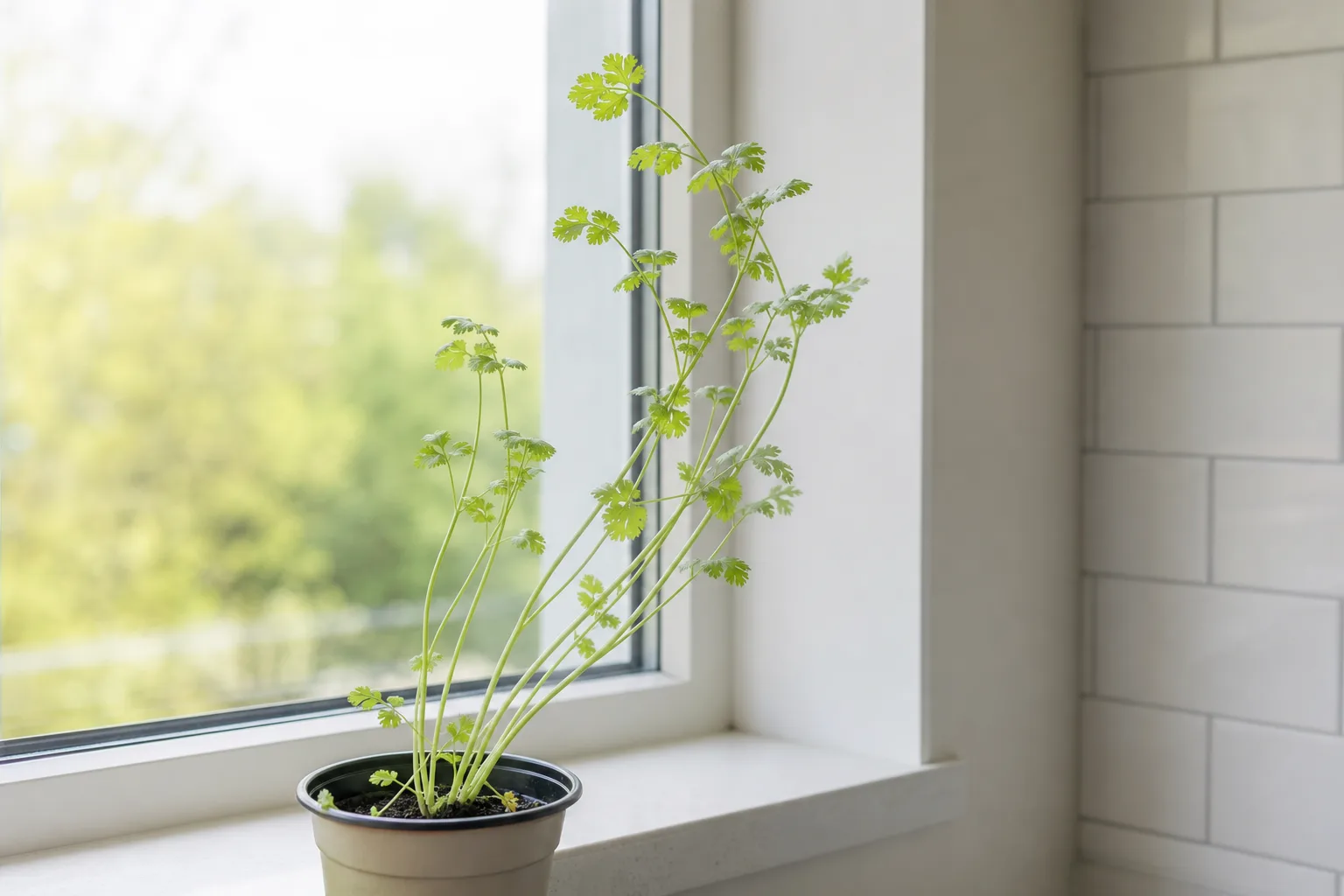
Leggy coriander usually means insufficient light indoors-thin stems reaching toward a window-or pre-bolt stretch when heat climbs. First step: check for a rising flower stalk. No stalk? Move the pot to the brightest cool spot within two feet of an east or west window, or add a grow light. Rising stalk with heat? Harvest what you can and sow fresh seed in a cooler bright location.
Leggy Growth on Coriander: Causes, Checks & Fixes
This guide covers leggy growth on Coriander. See also the general Leggy Growth guide, watering, and light pages for this plant.
Leggy Growth on Coriander: Causes, Checks & Fixes
Quick answer
Leggy growth on coriander (Coriandrum sativum, cilantro) means stretched stems with long gaps between leaf pairs-the plant is reaching for light or racing toward flowering before conditions turn hostile. Indoors, insufficient light is the most common cause: thin stems lean toward a window, upper leaves stay small and fernlike, and the plant flops when touched.
Heat-driven bolting is a separate pattern. A thick central stalk rises, flower buds form, and leaves turn bitter-even when light was adequate. Afternoon shade and cooler sowing times fix bolting; they will not help a plant that is simply light-starved in a dim kitchen corner.
First step: look at the crown for a flower stalk. No stalk? Move the pot to the brightest cool location-within about two feet of an east- or west-facing window-or hang a grow light 4–6 inches above the foliage. Rising stalk with heat above roughly 75°F (24°C)? Harvest usable leaves and direct-sow fresh seed in a cooler bright spot rather than shading a light-starved plant.
For full light placement by season, see the coriander light guide. For stretch caused purely by dim conditions, the not enough light on coriander page walks through the same etiolation pattern in more depth.
What leggy growth looks like on Coriander
Leggy coriander has a recognizable stretch pattern that differs from slow growth or simple underwatering:
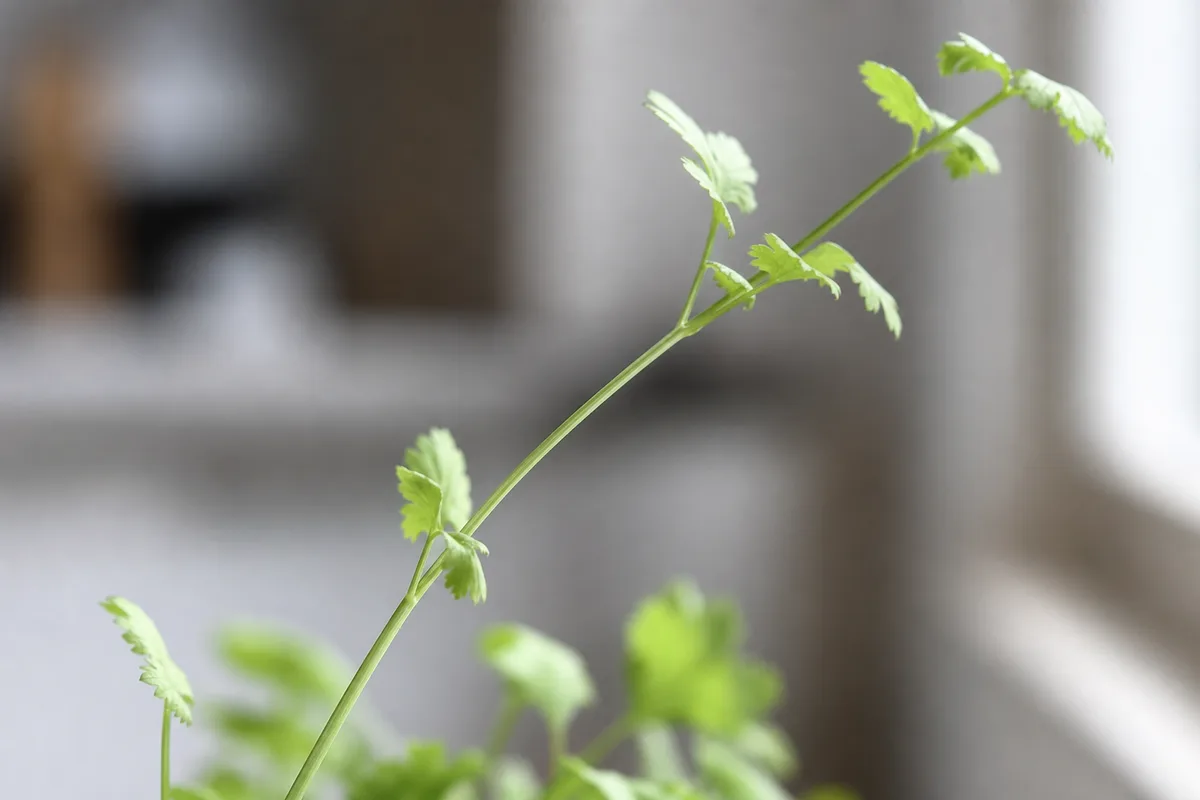
Visible gaps between small fernlike leaf pairs on a thin coriander stem leaning toward light - no flower stalk means etiolation, not bolting.
- Elongated internodes - visible gaps between leaf pairs along thin stems
- Small, fernlike upper leaves instead of broad lower lobes
- Pale or dull green color when light is the limiter
- One-sided lean toward the brightest window or grow lamp
- Thin, floppy stems that bend when watered or brushed
- Crowded-tray stretch - inner seedlings reach above neighbors in dense sowings
University of Maryland Extension notes that indoor plants in too little light develop light green foliage, stretch, and lean toward the light source. Minnesota Extension adds that insufficient artificial light produces spindly, thin herb growth indoors.
What leggy growth usually does not look like:
- A thick central flower stalk with white umbel clusters - that is bolting from heat or day length, not etiolation alone
- Crispy brown leaf edges on otherwise compact plants - that is sunburn or heat scorch, the opposite problem
- Yellow lower leaves on chronically wet soil - more often overwatering in a dim corner, not stretch by itself
Why Coriander gets leggy growth
Coriander is a cool-season annual in the carrot family that prefers full sun - six or more hours of direct sunlight daily when temperatures stay in the leaf-production range. It grows fast and is harvested young, so a few weeks in marginal light shows visible stretch long before a slow houseplant would complain.
Insufficient light (primary indoor cause)
Kitchen counters away from windows, north-facing sills in winter, and dim grow rooms deliver far less light than coriander needs for compact growth. The plant stretches toward the brightest direction because etiolation is the standard response to low light intensity.
This is the pattern most searchers mean when they say “leggy coriander.” It is also the case where more light - not afternoon shade - is the correct fix.
Heat and day-length bolting
When temperatures climb above about 75°F (24°C), coriander shifts from leaf production to flowering. Penn State Extension recommends afternoon shade in hot weather to extend the leaf harvest, but bolting stretch comes with a rising central stalk and bitter flavor - not the lean-toward-window pattern of pure low light.
Long day length above roughly 12–13 hours also encourages flowering. A plant on a 16-hour grow-light timer in a warm kitchen may bolt while still looking “bright enough” on paper.
Overcrowding in seedling trays
Dense sowings shade each other. Outer rows may look fine while inner seedlings stretch 5–10 cm tall with weak stems before true leaves fully expand. Starting seeds indoors without adequate light produces elongated stems - overcrowding multiplies the problem.
Lookalikes to rule out
Slow growth from cool soil or nutrient limits produces small but not dramatically stretched stems - see slow growth on coriander if height is stunted without strong lean.
Overwatering in shade causes yellowing and mushy bases while the plant still reaches for light. Fix light and drying together.
Store-bought seedlings may arrive already light-starved. Coriander does not transplant well; leggy nursery starts often fail to recover even after you move them.
How to confirm the cause
Work through these checks before changing multiple care variables:
- Window distance and direction - If the pot sits more than 4–6 feet from glass or only receives north-window light without a grow lamp, insufficient light is likely.
- Lean direction - Stems pointing toward one window confirm active light-seeking. Bolting stems grow upright from the center regardless of lean.
- Flower stalk check - Look for a thickening center stem and tiny flower buds. Present? Heat or maturity is driving stretch, not light alone.
- Temperature at the pot - Hot south-facing summer glass, stove proximity, or rooms above 75°F favor bolting even in good light.
- Tray density - Crowded seedlings with uniform height stretch suggest competition for light, not individual pot stress.
- Two-week light test - Move to the brightest cool spot without changing water or fertilizer. Shorter internodes on new leaves confirm etiolation. Continued central stalk rise confirms bolting.
Make one care correction at a time so you can read the plant’s response.
First fix for Coriander
The first fix depends on which pattern you confirmed:
More light for etiolation (no flower stalk)
Move the pot to the brightest location where temperatures stay roughly 15–25°C (60–77°F) - within about two feet of an east- or west-facing window, or under a grow light.
Hang fluorescent or LED fixtures 4–6 inches above foliage for 12–16 hours daily when natural sun is short. Rotate the pot a quarter turn every few days to prevent one-sided lean.
Do not shade a light-starved plant hoping to prevent bolting - afternoon shade is for heat bolting, not etiolation.
Afternoon shade and resow for heat bolting
When a central flower stalk is rising and temperatures are warm, improving light will not restore tender leaf flavor. Harvest what remains usable, provide afternoon shade if you are still growing into hot weather, and direct-sow fresh seed in a cooler bright slot.
Choose slow-bolt cultivars such as ‘Slow Bolt’, ‘Leisure’, or ‘Santo’ for the next round - they buy time but still need adequate light intensity.
Thin or restart crowded seedlings
For mildly stretched tray seedlings, improve overhead light and thin to 6–8 inches apart. For seedlings taller than about 3 inches with thin floppy stems, start a fresh sowing under proper lights - salvaging spindly starts rarely produces compact kitchen coriander.
Step-by-step recovery
After you match the fix to the cause:
- Place or light correctly - East-window morning sun in cool months; supplemental LED in winter; afternoon shade only when heat - not dimness - is the stressor.
- Adjust watering slightly - Brighter light increases water use, but if the old dim spot kept soil wet, let the top 1–2 cm dry before watering again. Coriander roots are sensitive to waterlogging.
- Harvest outer stems at the base as usual - do not strip the plant bare hoping to force bushiness.
- Resow when stems are bolted or woody - Direct-sow in the final container you will keep; do not transplant leggy seedlings deeper to hide stretch.
- Succession-sow every two to three weeks - A fast annual rewards fresh batches over nursing one stretched pot through a dark corner. See coriander propagation for sowing depth and timing.
Recovery timeline
Expect visible change in new growth within one to two weeks after light improves for etiolation. The next leaf set after a harvest should look fuller and stand without leaning.
Old stretched internodes will not shrink. Judge success on new compact growth, not on reversing stretched tissue.
If the central bolt stalk is already tall, recovery of leaf quality is unlikely - harvest, collect seed if desired, and resow. Severely leggy seedlings are often faster to replace than to salvage.
What not to do
Do not apply afternoon shade to a dim-grown plant that is leaning for light - you will make etiolation worse.
Do not fertilize pale, stretched coriander before fixing light. Without adequate photons, nitrogen pushes soft, floppy growth.
Do not move a dim-grown pot instantly to harsh midday summer sun through unshaded south glass - acclimate over several days to avoid scorch and heat bolting.
Do not stack repotting, heavy pruning, and pesticide on the same day as a light move.
Do not bury leggy stems deeper at transplant - coriander’s delicate crown rots easily.
How to prevent leggy growth next time
Sow directly in the container you will keep, placed immediately in adequate light - do not start seeds in a dark room and plan to move them later.
Outdoors in cool weather, give full sun for the fastest compact leaf growth. When heat arrives, switch to morning sun with afternoon shade - not full-day deep shade under trees.
Indoors in winter, treat culinary herbs as high-light plants requiring supplemental fixtures when natural sun is short. Run grow lights about 12–13 hours in a cool room rather than 16-hour schedules that mimic summer day length.
Succession-sow every two to three weeks so a stretched batch does not become your only supply. Keep windows clean and unobstructed - sheers and overhangs cut intensity more than most growers expect.
Related coriander guides
- Not enough light on coriander - deep dive on etiolation, lean, and grow-light placement
- Coriander light needs - full sun in cool weather, afternoon shade in heat, bolting prevention
- Coriander propagation - direct-sow timing and succession sowing
- Slow growth on coriander - when stems stay short without dramatic stretch
Conclusion
Leggy coriander is not one problem with one fix. Dim light stretch needs brighter cool placement or supplemental lighting. Heat bolting needs harvest, cooler resowing, and afternoon shade - not less light. Stretched internodes do not reverse; watch the next flush of leaves, and when stems are already bolted, succession sowing beats nursing an annual through a dark corner.