Coriander Pruning Guide: Outer Leaves, Bolting, and Seed
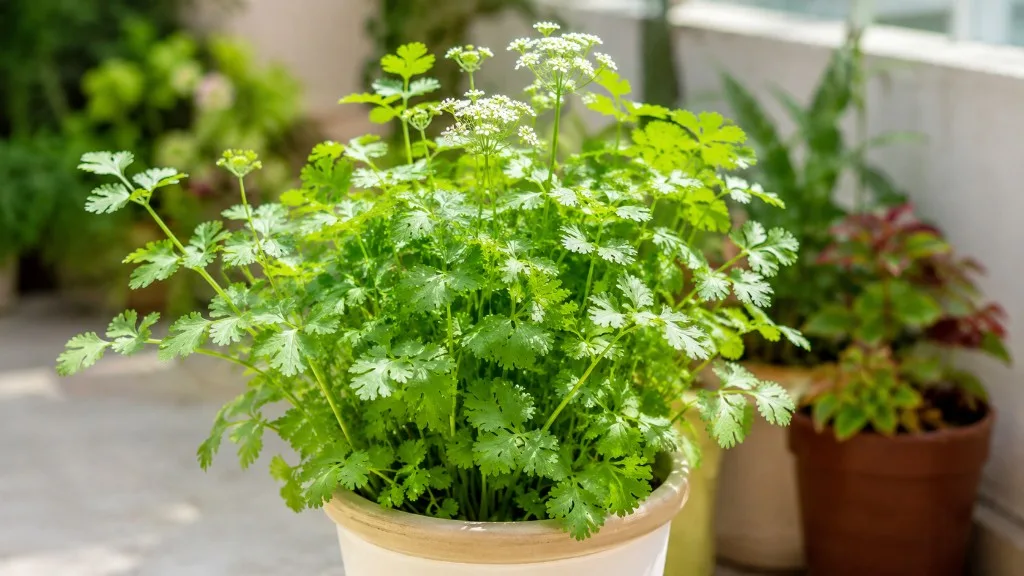
Coriander Pruning Guide: Outer Leaves, Bolting, and Seed Harvest
Coriander Pruning Guide: Outer Leaves, Bolting, and Seed Harvest
Quick Answer - Your First Outer Stem Cut
First action: When your coriander plant is about six inches (15 cm) tall with usable outer stems, identify one mature stem on the outside of the plant-not the tender leaves in the center. Cut that stem one to two inches (2.5–5 cm) above the crown, using clean scissors or snips. Leave the center cluster of young leaves completely untouched.
That single low outer cut is the correct opening move for coriander. It removes expendable mature tissue and tells the plant to push new foliage from the middle. Do not start by shearing the top flat, pinching the heart, or stripping every green leaf you see.
What Coriander Pruning Actually Means
Coriandrum sativum is one species with two kitchen names: fresh leaves are cilantro in much of the Americas; dried fruits are coriander spice. “Pruning coriander” almost always means harvesting outer leaf stems while the plant is still vegetative-not cutting back a woody framework the way you would a houseplant shrub.
Coriander is a cool-season annual in the Apiaceae family-the carrot and parsley group. It grows a soft rosette of hollow stems, elongates quickly under heat, flowers, sets seed, and finishes its life cycle within a few months. There are no permanent woody branches to rejuvenate. Heavy cutting temporarily redirects energy inside a plant that is already counting down to flowering.
The useful model is cut-and-come-again leaf harvest: sow, pick outer stems for several weeks, then either pull the plant or let it bolt for seed. Generic houseplant pruning advice about nodes, dormant-season hard cutbacks, or shaping leggy wood does not apply here.
Leaves (cilantro) vs seeds (coriander)
Leaf harvest happens while stems are still short and leaves are full-sized. Flavor is brightest on young to moderately mature foliage before reproduction takes over. Seed harvest happens after the plant sends up flower stalks with small white or pale pink umbels. Green fruits ripen to light brown schizocarps-the round, ridged coriander seeds you toast and grind.
University of Wisconsin Horticulture notes that leaves can be picked once plants are large enough, while seeds should be harvested when fruits turn light brown and the plant has largely dried-typically two to three weeks after flowering. Treat leaf cuts and seed collection as two phases of one life cycle, not competing goals you must pick blindly.
When Coriander Is Ready to Cut
Do not harvest a coriander seedling that only has cotyledons. Wait until the plant has height and stem length, not just the first two seed leaves. Cutting a two-inch seedling removes photosynthetic area the plant cannot replace quickly and slows the regrowth you want.
Most guides begin leaf harvest when plants reach roughly six inches (15 cm) tall and individual leafy stems are four to six inches (10–15 cm) long. At that size, the center still shows obvious young growth, outer stems contribute a usable pinch, and the plant can replace what you remove within days in cool, bright conditions.
Timing tracks temperature and day length more than calendar month. Oregon State University Extension explains that in warm weather cilantro may bolt and set seed within four to six weeks, while in cooler spring or fall conditions plants may produce leaves for weeks or months before flowering. Readiness is relative to your season-not a fixed “day 40” on the seed packet alone.
First harvest size and timing
For the first harvest, take a conservative pass: one or two outer stems per plant, cut low, then wait three to five days. If new leaves unfurl from the center and outer gaps refill, your timing and cut height were right. If the plant stalls or yellows, you cut too deep, took too much, or the root zone was already stressed by dry soil or heat.
Packet days-to-maturity figures-often 28 to 40 days for leaf-focused sowings-mark approximate first-harvest eligibility, not a guarantee of long leaf production. Slow-bolt lines may buy extra weeks in marginal warmth, but no cultivar eliminates flowering forever. Plan the first cut as the opening move in a short series of light harvests, not a one-time strip of everything green.
What to Check Before You Cut
Run a quick inspection so your cut matches plant condition:
- Soil moisture - heat-stressed dry soil slows recovery; water if the top inch is parched before harvesting.
- Flower buds - dome-shaped buds at stem tips mean leaf quality is ending; skip those stems for garnish-quality harvest or assign the plant to seed duty.
- Center growth - young inner leaves must remain obvious after your cut; if you cannot see a central tuft, you are about to cut the wrong tissue.
- Yellow or damaged leaves - remove only clearly damaged outer leaves with clean snips; do not confuse cleanup with a full harvest pass.
- Pot and root stress - root-bound containers on hot sills heat faster; reduce take per session if the plant looks cramped or wilt cycles are frequent.
If several stress signals stack-dry soil, visible buds, and a heat wave-treat the next cut as diagnostic: one outer stem only, then reassess in a few days.
The Outer-Leaf Cut Method Step by Step
Coriander regrows from its center, not from random points along permanent branches. Removing outer mature stems at their base signals the plant to push fresh leaves from the middle. That is fundamentally different from topping basil above a node to force side shoots, and nothing like cutting woody shrubs above latent buds.
Step 1 - Select outer stems only. Choose the oldest, widest stems on the outside of the plant. Skip any stem showing flower buds at the tip.
Step 2 - Trace down to the crown. Follow each chosen stem to one to two inches (2.5–5 cm) above the soil line or crown.
Step 3 - Cut clean with snips. Use scissors or herb snips-do not yank stems, which tears tissue and disturbs the taproot-prone crown.
Step 4 - Pause and check the center. After two or three outer stems, the inner tuft of young leaves should still dominate the middle of the plant.
Step 5 - Rinse and use quickly. Cilantro loses aroma fast; refrigerate cut stems in water for a few days or use the same day for peak flavor.
University of Minnesota Extension recommends that for carrot-family herbs-including cilantro-you cut each leaf stalk at the base of the plant, harvesting outer material while leaving interior growth to continue.
Work around the plant like peeling outer layers, not shearing the top flat like a hedge. Cutting the center heart-the factory for the next round-is the most common way cooks accidentally end harvest early.
Where exactly to cut
Cut low on the stem, not mid-leaf. A stub of one to two inches (2.5–5 cm) above the crown is standard. Mid-stem cuts leave bare sticks that do not regrow useful foliage and waste the plant’s energy on stem tissue you cannot eat.
What not to cut
Never remove the center cluster of young leaves and their supporting stems. Do not harvest more than one-third of leafy mass in a single session. Do not cut every stem to the soil line unless you are intentionally taking a whole-plant harvest for a large recipe-and even then, expect limited second growth compared with repeated outer picks.
How Much You Can Safely Remove
The safe upper limit per harvest pass is about one-third of the plant’s leafy mass. Coriander needs remaining foliage to photosynthesize and fund regrowth. Strip more than that-especially in heat or dim indoor light-and the plant stalls, yellows, or jumps into flowering as a survival exit.
For a windowsill pot with six to eight stems, that often means two outer stems per plant per session. For a garden row with plants thinned to eight inches (20 cm) apart, you can take more outer stems per plant because each individual carries more total leaf area.
If you need a large bunch for cooking, harvest one-third from several plants rather than denuding one pot. When regrowth slows between cuts-longer gaps, smaller replacement leaves-read that as an environmental signal, not a cue to cut harder. Reduce take per session, check water and heat, and start the next succession sowing.
Tools and Clean Cuts
Sharp kitchen scissors, herb snips, or small bypass pruners are sufficient. Dull blades crush hollow Apiaceae stems and leaves wilt faster in the kitchen. Wipe blades with rubbing alcohol when moving between crowded pots. Skip wound sealants-coriander stems are soft tissue that heal open to air. Harvest in morning cool when possible; flavor and turgor peak before midday heat.
Recovery and Regrowth Timeline
In cool, bright conditions with even moisture, coriander often shows new center leaves within three to five days after a light outer harvest. Outer stems may be ready again within three to seven days during active vegetative growth. Full “another usable bunch” timing depends on light, temperature, and how much you took.
Signs pruning worked:
- Fresh leaves unfurl from the center within a week.
- Outer gaps begin filling with new stems at harvestable length.
- Stems stay green and upright without widespread yellowing.
Signs the cut was too aggressive or badly timed:
- Center growth stalls for more than a week after a heavy take.
- Widespread yellowing or wilting that does not recover after watering.
- Flower buds appear within days of a large harvest during warm weather.
- Bare crown with no visible young leaves-often follows center cuts or scalping.
Coriander does not “grow back” into a months-long leafy bush the way perennial herbs can after a hard trim. Recovery is short-cycle regrowth inside a brief vegetative window, not permanent rejuvenation.
Bolting - When Pruning Stops Working
Bolting is coriander’s shift from leaf production to flowering and seed set. Stems elongate, internodes stretch, leaf blades shrink, and flower umbels appear at the tips. Once the reproductive program is fully engaged, you cannot prune the plant back into a leafy cilantro bush.
Bolting is driven primarily by warm soil, long day length, and secondary stress-drought, root disturbance, overcrowding, and overharvesting. Clemson HGIC notes that cilantro tends to bolt as plants mature and temperatures rise. In mid-summer, genetics that leafed happily in cool spring may flower within weeks.
After bolting begins, kitchen priorities change. Leaves on the flowering stalk are lower quality for fresh salsa; many cooks switch to other herbs for garnish while letting selected plants finish for seeds. Pollinators benefit from the flowers. If your goal is strictly leaves, bolted plants are near the end of leaf utility-but at the beginning of spice utility.
Temperature, day length, and stress triggers
Soil temperature near or above 75°F (24°C) reliably accelerates bolting for many plantings. Mulched soil under partial shade often reads cooler, which may delay flowering by days or weeks-not months. Day length beyond roughly twelve hours adds photoperiod pressure as spring advances toward summer.
Stacking stress accelerators-irregular watering, transplant shock, overharvesting, and root-bound pots-makes flowering feel sudden when it was overdetermined. Your sow-date and weather logs teach more for next season than any single online trick.
How to Delay Bolting (Without Fighting Biology)
You can delay bolting. You cannot cancel it indefinitely on one individual plant. The honest toolkit combines genetics, timing, microclimate, and harvest discipline.
- Plant in cool windows - spring and fall are coriander’s leaf seasons in most continental climates; very hot regions may treat winter as the primary leaf window.
- Choose slow-bolt cultivars when catalogs offer them-lines such as Santo, Calypso, and Slo-Bolt selections hold leaf stage longer under marginal warmth, though none resist high heat forever.
- Cool the root zone - two to three inches of organic mulch and afternoon shade for containers on blazing surfaces buffer soil temperature swings.
- Harvest lightly and regularly from outer stems so the plant stays in vegetative replacement mode-but do not interpret harvest as a bolt cure once flower buds are visible.
- Avoid root disturbance - coriander’s taproot resents transplanting; Wisconsin Horticulture notes it does not transplant well because of its long taproot. Direct sow where plants will live.
What to Do When Flowers Appear
When domed flower buds show at stem tips, decide intentionally: leaf salvage, seed crop, or replace.
For immediate kitchen use, pick remaining usable leaves from lower stem portions before flavors turn harsh. Do not expect tender center growth to return after buds open.
For seed production, let selected plants stand. Flowers open, pollinators visit, and green seed heads form along lengthening stalks. Label pots assigned to spice duty so household members do not strip them for garnish.
For replacement, sow the next batch now if your season allows. Pulling bolted plants frees space for succession lines. Pinching the first flower stalk may buy a few days but rarely works once soil is warm and days are long.
Harvesting Coriander Seeds
When leaf stage ends, coriander seed harvest begins. Seeds form as round, ridged fruits that split into two halves when crushed for cooking. Flavor develops fully only when fruits dry; green seeds store poorly.
Ripeness cues:
- Seed heads transition from green to light brown with raised ridges.
- Roughly 70 percent of seeds on a head look brown, with some green still acceptable if you finish drying indoors.
- A rubbed seed releases warm, citrusy coriander aroma distinct from leaf cilantro scent.
Timing is typically two to three weeks after flowers appear. Wisconsin Horticulture recommends cutting stems before heavy shattering, then drying in a warm, airy place with a cloth or bag beneath to catch falling fruits.
Harvest method:
- On a dry morning, cut whole seed heads or upper stalks with clean snips.
- Place cut stalks upside down inside a brown paper bag; tie loosely closed.
- Hang or set the bag in a cool, dry, ventilated space out of direct sun.
- After one to two weeks, rub dried heads over the bag to release seeds.
- Winnow chaff or pick debris manually for small home batches.
Store fully dry seeds in an airtight jar in a cool, dark cupboard. Whole seeds keep aroma longer than pre-ground powder.
Drying and storing homegrown coriander
Seeds must feel hard and brittle before jar storage-any flex or mold smell means more drying time. Toast whole seeds in a dry pan, then grind fresh; ground coriander loses potency within months. Label harvest year on jars.
Succession Sowing for Continuous Leaf Supply
One sowing rarely supplies leaves all summer in warm climates. The realistic goal is a rolling pipeline of young pots or bed sections entering leaf stage as older ones bolt. Oregon State University Extension recommends succession sowing and avoiding peak summer heat plantings when leafy harvest is the goal, because those batches bolt before producing much foliage.
Practical rhythm in temperate climates:
- First spring sowing two to three weeks before last frost or as soon as soil is workable.
- Repeat every two to three weeks through late spring while soil stays cool-Wisconsin Horticulture suggests two-to-three-week intervals for leaf crops.
- Pause heavy summer sowings for leaves when soil temperatures consistently exceed roughly 75°F (24°C) unless shade, mulch, and slow-bolt genetics help.
- Resume in late summer or early fall as temperatures drop.
At any moment, aim for three life stages in parallel: seedlings establishing, plants in active leaf harvest, and one batch transitioning to seed if you want coriander spice. When a row bolts, you pull or reassign it-you do not fight it with shrub-style hard cuts.
Direct sowing beats transplanting for succession success. Drop seeds where they will live, thin to about eight inches (20 cm) apart, and harvest outer leaves from in-place plants.
Common Harvest and Pruning Mistakes
Mistake 1 - Treating coriander like a woody shrub. Hard cutbacks and “rejuvenation pruning” language do not apply. They remove the wrong tissue at the wrong life stage.
Mistake 2 - Cutting the center instead of outer stems. The heart leaves are the regrowth engine. Strip the middle once and the plant often bolts or stalls.
Mistake 3 - Taking more than one-third at once. Spread large recipe demands across plants or succession batches instead of scalping one pot.
Mistake 4 - Ignoring bolting signals and keep stripping leaves. Once flower stalks elongate, shift to seed collection or replacement sowing.
Mistake 5 - Relying on one sowing through hot summer. Without succession, bolting feels like failure; with succession, it is scheduled turnover.
Mistake 6 - Transplanting starts repeatedly or collecting seeds too early. Root disturbance accelerates flowering; green seeds mold in jars. Direct sow where possible and wait for brown, fully dry fruits.
Conclusion
Coriander pruning is leaf-stage crop management, not shrub sculpting. Cut outer mature stems low, protect center growth, take no more than one-third per pass, and repeat on a rhythm that matches your season. Bolting arrives on each plant sooner or later; delay it modestly with timing, mulch, shade, slow-bolt seed, and steady moisture, then pivot cleanly to coriander seed harvest or the next sowing instead of pretending one pot can leaf forever.
Stock the kitchen with succession batches, assign a few bolters to the spice jar, and keep scissors dedicated to clean outer cuts. That combination-not heavy pruning-is what turns a fast annual into weeks of fresh cilantro and a jar of homegrown coriander worth opening in winter.
When to use this page vs other Coriander guides
- Coriander overview - Start here for whole-plant context before deep-diving this topic.
- Coriander problems hub - Jump to symptom-specific fix guides when this care topic does not resolve the issue.
- Leggy Growth on Coriander - Escalate here when pruning adjustments are not enough.
- Slow Growth on Coriander - Escalate here when pruning adjustments are not enough.
- Brown Tips on Coriander - Escalate here when pruning adjustments are not enough.