Mealybugs on Coriander: Causes, Checks & Fixes
Quick answer
Mealybugs on Coriander hide in feathery leaf axils and crowded crown centers where new shoots emerge. First step: move the pot away from other herbs and dab every visible cottony cluster with 70% isopropyl alcohol on a cotton swab.
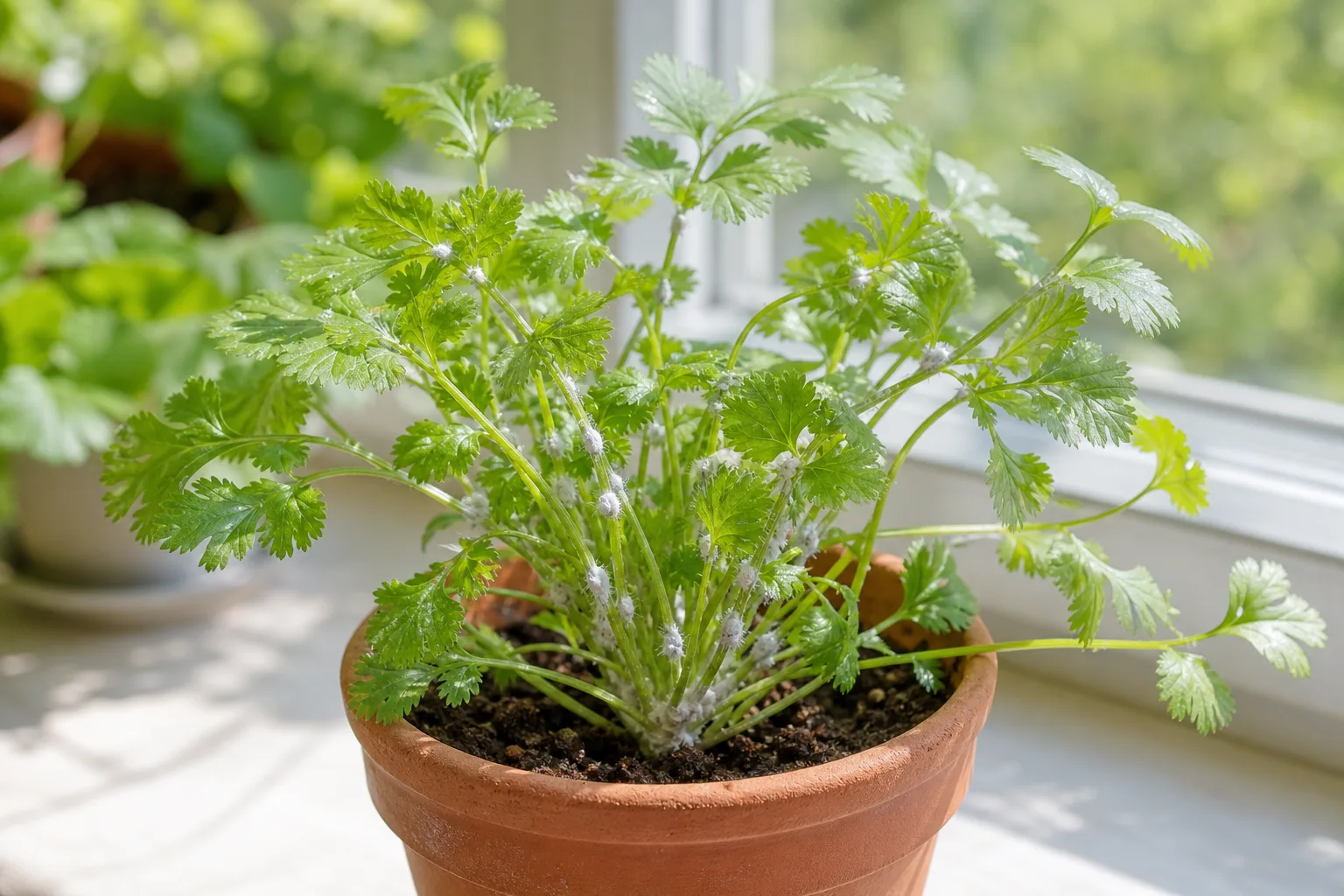
Mealybugs on Coriander: Causes, Checks & Fixes
This guide covers mealybugs on Coriander. See also the general Mealybugs guide, watering, and light pages for this plant.
Mealybugs on Coriander: Causes, Checks & Fixes
Quick answer
Mealybugs on Coriander (Coriandrum sativum, cilantro) show up as white, cottony clumps tucked into the feathery leaf axils, stem joints, and the base of new harvest shoots. They drain sap and excrete sticky honeydew, and multiply quickly on the tender growth coriander produces in its short three-to-four-week harvest window.
First step: isolate the pot and dab every visible cluster with 70% isopropyl alcohol on a cotton swab. Mealybugs spread by slow-moving crawlers and hitchhiking on hands, tools, and touching leaves-moving the plant away from neighbors buys time while you confirm the pest. Do not start with a whole-plant spray until you have touched each colony you can see; alcohol contact kills adults on the spot, but hidden egg sacs will hatch if you treat once and stop.
What mealybugs look like on Coriander
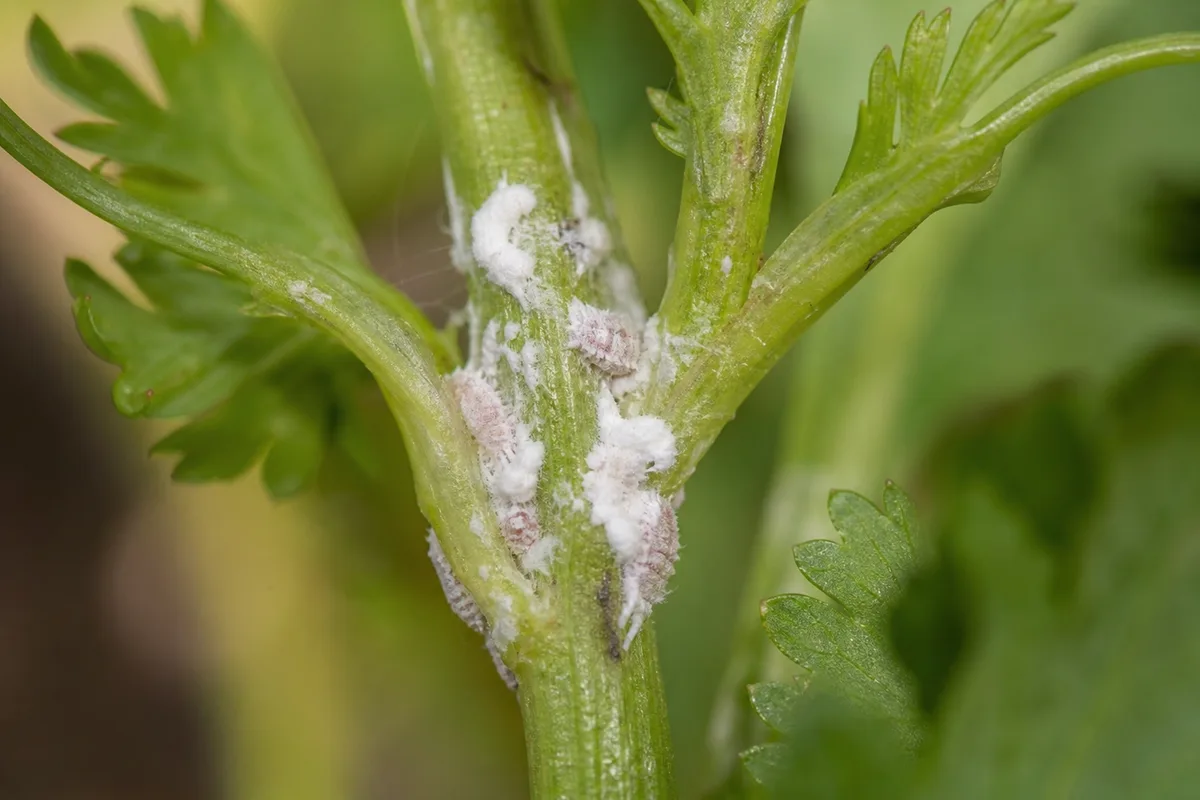
White cottony mealybug clusters tucked into coriander leaf axils and crown centers - part the wax to confirm pink-gray bodies, not dust on the foliage.
On coriander, mealybugs rarely cover the flat feathery leaflets first. They settle where the compound leaves branch from the main stem-exactly where you cut for garnish. Typical signs include:
- White, woolly masses at leaf nodes, crown centers, and the base of flower-spike shoots
- Pink or grayish bodies visible if you part the wax with a toothpick or swab
- Shiny, sticky leaves or pot rims from honeydew
- Black sooty mold on lower foliage when honeydew sits for days
- Ants climbing stems to harvest honeydew (ants protect mealybugs from predators)
Coriander leaves may yellow, curl, or stay small when feeding is heavy, but the insect itself is the diagnosis-not generic yellowing from overwatering on Coriander. Stunted new tips after a harvest cut, with wax in the cut site, point to mealybugs rather than nutrient lack or bolting.
Heavy infestations can make stems look coated in cotton, especially on soft, fast-fed plants in warm windows. Indoor coriander grown year-round never gets a cold break, so all life stages can persist through winter if you skip inspection during the cool-season sowing cycle.
Why Coriander gets mealybugs
Mealybugs are not a coriander disease-they are introduced pests that exploit soft tissue. The most common entry route is a new plant from a nursery, grocery display, or shared seedling tray that was never quarantined. Crawlers walk short distances and can reach the next pot when feathery leaves touch on a crowded sill.
Coriander’s growth habit makes it a comfortable host:
- Constant tip growth from harvesting outer leaves creates fresh, nitrogen-rich shoots mealybugs prefer for egg laying
- Feathery compound leaves create dense, shaded axils where wax-covered insects hide from casual glances
- Indoor or balcony culture lacks the lady beetles, lacewings, and parasitic wasps that keep outdoor populations in check
- Leggy, weak coriander in low light stress-feeds more slowly but stays soft; mealybugs thrive on stressed plants that cannot outgrow damage
- Consistently moist soil at the root zone does not cause mealybugs directly, but coriander kept too wet with poor airflow produces soft stems that recover slowly after pruning
Overfeeding with high-nitrogen fertilizer pushes succulent new leaves that attract mealybugs the same way they attract aphids. That does not mean mealybugs are caused by fertilizer alone-you still need an initial colonizer-but lush, tender coriander after heavy feeding can support a faster population boom.
Warm, stable indoor temperatures let mealybugs breed continuously, unlike outdoor coriander that dies back after bolting in summer heat. A single egg sac can hold a hundred or more eggs, and crawlers hatch wax-free before building new cottony coats within days.
Because coriander is an annual herb with a fast turnover, many growers treat a heavily infested pot as disposable and resow rather than fighting egg sacs for a month-but that only works if you isolate first so crawlers do not spread to the replacement crop.
How to confirm the cause
Work through these checks before treating:
- Axil inspection - Peel back the newest pairs of feathery leaves at the stem tip. Mealybugs cluster in the V-shaped joint; aphids sit on exposed tissue and move when disturbed.
- Crush test - Swab a white patch firmly. Mealybugs smear pink or reddish fluid; powdery mildew wipes off as dry white dust without color; mineral deposits feel gritty and do not move.
- Movement check - Use a 10× lens. Slow oval bodies under wax confirm insects; static fluff may be shed skin or debris.
- Honeydew feel - Sticky residue on the pot edge or lower leaves supports sap-feeding pests. Dry crusts without stickiness suggest hard water splashes, not mealybugs.
- Stem and soil line - Some species hide at the soil surface or on roots. Coriander hates transplanting, so inspect the crown gently without uprooting unless foliar treatment fails twice.
- Neighbor scan - Check every pot within arm’s reach. Shared mealybugs on a second herb confirm spread, not a one-off speck of lint.
Confirmed: cottony colonies plus pink smear or visible bodies in axils. Suspected only: isolated white dots without stickiness-recheck in three days before spraying the whole plant.
Rule out powdery mildew (flat white dust on leaf tops, no joints), aphids (green or black soft bodies without wax coats), and whitefly (tiny white flies that flutter when you brush the plant).
First fix for Coriander
Move the coriander away from other plants and dab every visible mealybug with 70% isopropyl alcohol on a cotton swab.
Work stem by stem, coating each cottony mass until alcohol reaches the body beneath the wax. Check both sides of every leaf axil and the main crown. Kill adults on contact; the swab also removes wax that blocks later sprays.
Because coriander is edible, avoid systemic insecticides (imidacloprid spikes and similar products are not labeled for indoor food herbs). Physical removal plus contact treatments fit harvest plants better than soil drenches you cannot wash away.
After dabbing, set the pot in a sink and rinse foliage with lukewarm water to wash off honeydew and dislodge crawlers you missed. Let leaves dry before returning the plant to sun-wet coriander in hot direct light can scorch the delicate feathery foliage.
Do not harvest leaves for kitchen use the same day you treat with alcohol or soap; wait until sprays have dried and you have rinsed edible parts, typically 24–48 hours after treatment.
Step-by-step recovery
If colonies remain after the first alcohol pass, continue in this order:
- Repeat alcohol dabs every five to seven days for at least three weeks to catch newly hatched crawlers before they lay eggs.
- Prune out heavily coated stems into a sealed bag if more than half a branch is wax-covered. Coriander replaces cut stems from lower nodes if the crown is still firm.
- Apply insecticidal soap or horticultural oil to stems and leaf undersides, covering insects thoroughly. Test one leaf first and wait 24 hours-coriander can burn if product sits on leaves in strong afternoon sun.
- Blast with water between chemical passes on sturdy potted plants; avoid jet sprays on tiny seedlings that collapse.
- Check the soil line after two failed weekly rounds. Root-feeding mealybugs may need Coriander repotting guide into fresh mix after washing roots gently-only if aboveground treatment fails, and only because coriander roots are delicate.
- Reduce nitrogen feeds until the infestation clears. Coriander needs minimal feeding during the harvest window anyway; resume compost or diluted fertilizer after two weeks with no new wax.
For severely infested supermarket coriander that costs less than a packet of seed, discarding the plant and direct-sowing a fresh batch in a clean pot is often faster than a month of hunting egg sacs in a dense rosette.
Recovery timeline
Within one week: sticky honeydew should stop spreading and visible cottony masses should shrink if you dabbed thoroughly.
Weeks two to four: plan on three to four alcohol or soap passes minimum. Mealybug eggs hatch on staggered schedules; one treatment rarely clears a pot.
New growth signal: the best sign of success is clean leaf axils on fresh feathery tips after your regular harvest cut. Old yellow leaves will not fully green-trim them for airflow.
Worsening signs: new white clusters on stems you already treated, ants increasing on the pot, or wilt despite moist soil (heavy sap loss). If wax returns on every node after four consistent weekly treatments, resow or discard rather than cycling pesticides on an annual herb nearing bolting age.
Coriander is a fast annual; saving a three-week-old pot matters less than protecting the rest of your herb collection.
Lookalike symptoms
- Powdery mildew - White dust on leaf surfaces, not clustered in stem joints; wipes off dry without pink smear.
- Aphids - Soft green, black, or pink bodies on new tips without thick wax; also produce honeydew but lack cottony egg sacs.
- Whitefly - Adults fly when disturbed; nymphs are flat and immobile on undersides, not woolly in axils.
- Mineral or hard-water deposits - Crisp white crust on pot rim or old leaves; does not grow over days or cluster at nodes.
- Natural leaf texture - Coriander’s feathery leaflets look delicate and divided; fuzz is even on the blade, not lumpy wax balls in forks only.
- Bolting stress - Tall flower stalks with fernlike upper leaves are normal heat response, not pest wax; check axils on the main rosette, not the bolted spike alone.
What not to do
Do not spray the whole plant once and assume mealybugs are gone-egg sacs survive contact misses. Avoid systemic insecticides on edible indoor coriander; residues are hard to justify on leaves you eat raw in chutneys and salads.
Do not return an isolated plant to the herb shelf after a single clean-looking day; hold it two weeks with weekly checks.
Skip homemade dish-soap mixes; they burn coriander leaves more often than labeled insecticidal soap.
Do not compost infested prunings on an indoor worm bin or open kitchen pile where crawlers survive.
Avoid alcohol on wilted, sun-stressed leaves in midday heat-test a leaf first and dab in morning or evening.
Do not transplant coriander to escape soil mealybugs unless absolutely necessary-coriandrum sativum hates root disturbance and often bolts or stalls after repotting. Prefer discard-and-resow when roots are involved.
Do not ignore ants; they farm mealybugs for honeydew. Wipe ant trails and consider sticky barriers on pot feet while you treat the source colony.
Coriander is non-toxic to cats and dogs, but treatment chemicals and heavy pest residue are another reason to keep infested pots on a counter pets cannot reach until sprays dry and leaves are rinsed.
Coriander care cross-check
Mealybugs exploit weak culture but rarely appear on vigorous, sun-fed coriander without a hitchhiker. While treating, confirm:
- Light: Coriander light guide to partial shade-morning sun with afternoon shade in hot climates. Leggy pale stems in a dim kitchen invite pests and slow recovery.
- Watering: keep soil consistently moist but never waterlogged; coriander wilts when dry but rots when soggy. Empty saucers within 15 minutes.
- Temperature: coriander bolts above 28°C; heat-stressed plants stop producing tender leaves and shift energy to flowers, leaving fewer clean harvest shoots to judge recovery by.
- Airflow: crowded pots touching feathery leaves spread crawlers; space herbs so foliage does not interlace.
- Harvest rhythm: regular outer-leaf cuts open axils for inspection; letting flower spikes form creates extra hidden joints-remove buds during active infestations.
Fixing light and drainage alone will not kill existing mealybugs, but strong new tips recover faster once insects are gone.
How to prevent mealybugs next time
Quarantine every new coriander pot for two weeks before it joins other herbs. Inspect axils on day one, seven, and fourteen.
During weekly harvest, part feathery leaf pairs at the top node and glance for white wax-early colonies are a single speck, easy to alcohol-dab before they spread.
Buy from sources with visible pest checks; grocery-store coriander in sealed sleeves often harbors greenhouse pests.
Use moderate feeding during active growth-coriander needs little beyond compost at sowing. Avoid high-nitrogen flushes that push soft foliage mealybugs prefer.
Keep ant-free saucers and wipe honeydew promptly so sooty mold does not mask the next infestation.
If you grow coriander outdoors in cool months, inspect before bringing pots in from balcony beds-mealybugs ride inside on stems that looked clean from a distance.
Direct-sow in the final pot rather than transplanting seedlings from shared trays; moving young coriander spreads pests and stresses plants that bolt easily anyway.
When to worry
Treat as urgent if multiple plants show cottony clusters, sooty mold covers more than a few leaves, or stem tips collapse despite good watering. Isolate the whole herb group and treat every pot, not just the worst one.
A single small cluster on one axil of an otherwise healthy plant can wait for a careful swab session-no need to panic-discard.
Consider replacing the plant when wax covers most stems after four weekly treatments, roots show cotton at the crown, or you need harvest-safe leaves within days and cannot wait out the life cycle. Resowing fresh seed in a clean container is often the practical choice for an annual herb.
Conclusion
Mealybugs on coriander are sap-feeding insects hiding in the same feathery stem forks you use for harvest. Confirm them with cottony axil clusters and a pink smear test, then isolate and alcohol-dab before layering soap or oil. Repeat weekly for several weeks because eggs keep hatching. Prevention is quarantine, axil checks at every cut, and vigorous cool-season growth-coriander recovers quickly once the wax is gone, but only if you stop crawlers from reaching the rest of your kitchen garden.
When to use this page vs other Coriander guides
- Coriander watering guide - Use for routine moisture checks before assuming mealybugs is the main issue.
- Coriander problems hub - Browse all 16 common issues on this species.
- Yellow Leaves on Coriander - Different entry point when symptoms overlap with mealybugs.
- Slow Growth on Coriander - Different entry point when symptoms overlap with mealybugs.
- Spider Mites on Coriander - Different entry point when symptoms overlap with mealybugs.