Aphids on Coriander (Cilantro): Causes, Checks & Fixes
Quick answer
Aphids on coriander (cilantro) are soft-bodied insects on the newest feathery leaves and flower stalks, often with sticky honeydew. First step: move the pot away from other herbs and rinse colonies off with lukewarm water, targeting leaf undersides. If the top third stays infested and you need leaves within days, resow a fresh pot rather than chasing a fourth spray cycle.
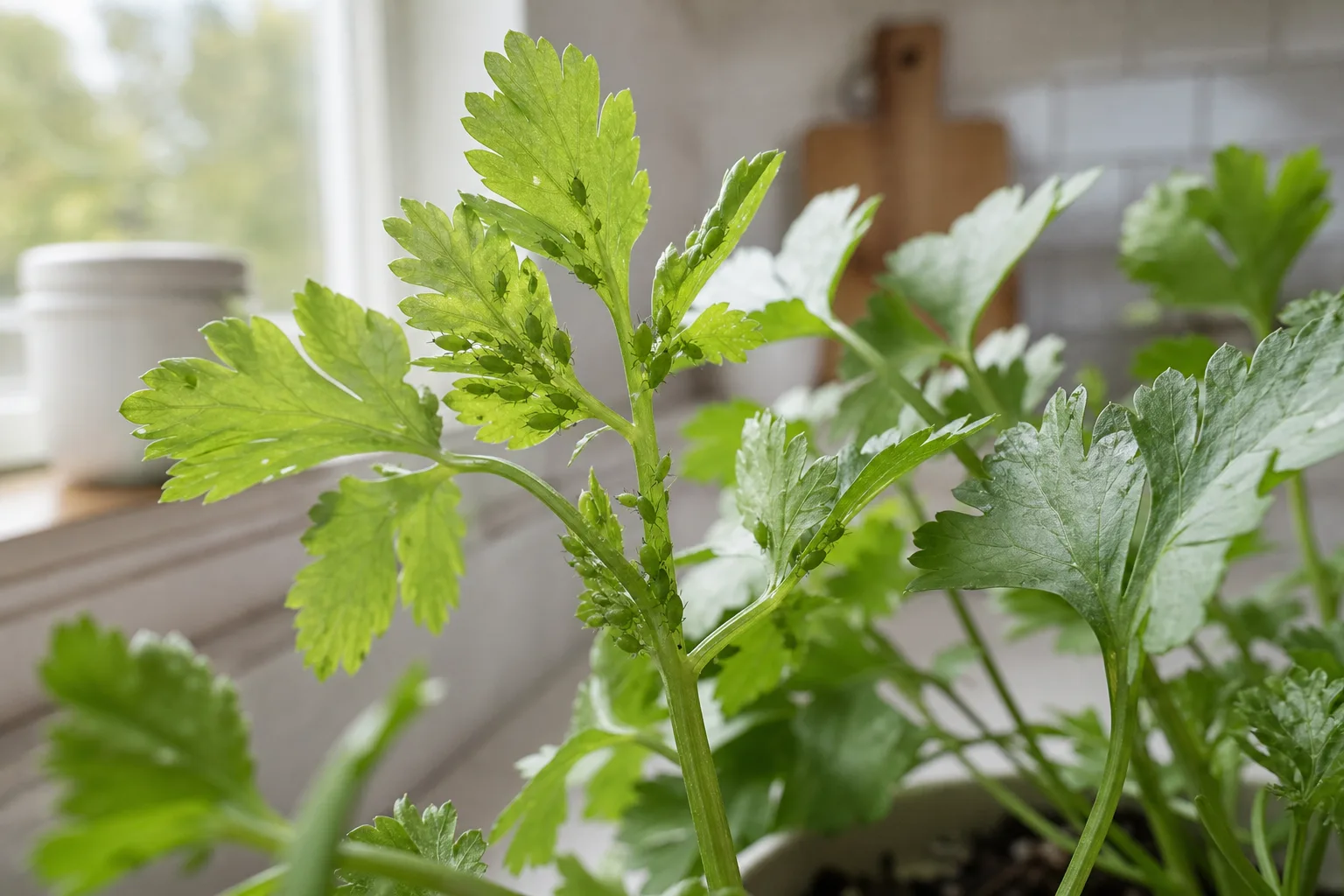
Aphids on Coriander (Cilantro): Causes, Checks & Fixes
This guide covers aphids on Coriander. See also the general Aphids guide, watering, and light pages for this plant.
Aphids on Coriander (Cilantro): Causes, Checks & Fixes
Quick answer
Aphids on coriander (Coriandrum sativum-the leafy herb most North American cooks call cilantro) show up as tiny soft-bodied insects on the newest feathery shoots, leaf undersides, and bolted flower stems. They pierce tender tissue, stunt young leaflets, and leave shiny honeydew that can turn black with sooty mold or draw ants to your windowsill.
First step: move the pot away from other kitchen herbs and rinse visible colonies off with lukewarm water, aiming at leaf undersides and stem tips. Coriander’s compound leaves are thin and divided-use a gentle but steady stream, not a blast that shreds foliage. On cilantro, each leaflet sits at a shallow angle off the main stalk, so rinse from below with your hand cupping the shoot so water reaches the hidden undersides flat basil leaves do not have.
If the top third stays heavily infested and you need clean leaves within a few days, sow a fresh pot (succession sowing) rather than stacking a fourth chemical cycle on a three-week crop. Once you confirm live aphids remain after two or three rinse sessions, insecticidal soap is the next food-safe option for edible herbs. Do not reach for systemic pesticides on a crop you plan to eat.
What aphids look like on coriander
Coriander produces compound, fernlike leaves on upright stems. Aphids prefer the soft tissue at those growing tips, not the older lower leaves you may already have harvested.
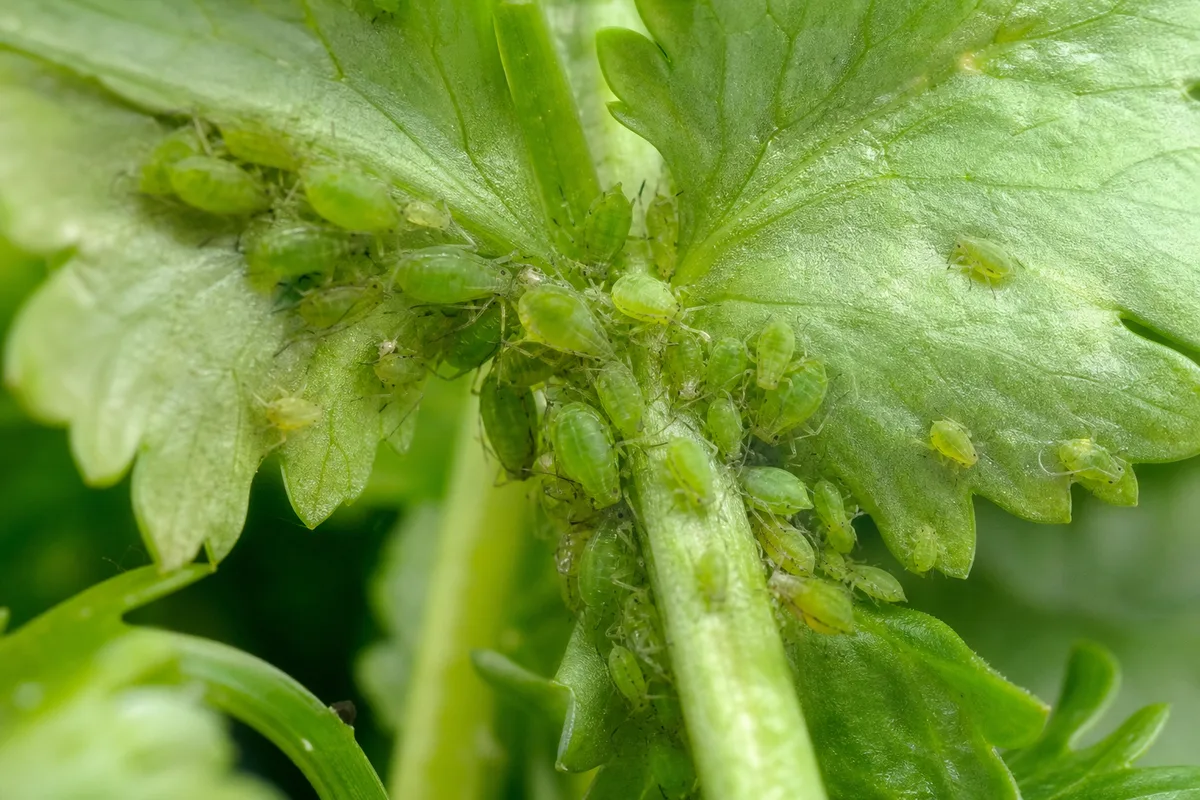
Aphids symptoms on Coriander - compare with healthy tissue on the same plant.
Typical signs:
- Clusters of pear-shaped insects, usually green but sometimes black, yellow, or pink, packed along the main stem and newest leaflets
- Curled or twisted young leaflets when feeding is heavy
- Shiny, sticky honeydew on upper leaf surfaces or the windowsill below the pot
- Black sooty mold that wipes off with a damp cloth
- Ant trails on the pot rim or saucer
- Whitish shed skins left behind as nymphs molt
On coriander that is bolting-common once temperatures climb above about 75–80°F (24–27°C)-the flower umbels and upper stalk become prime real estate. Aphids packed around tiny white or pinkish flowers are easy to miss because the umbel structure hides them in the crevices where side branches meet the main stalk.
Visual check: Peel back one umbel branch on a bolted cilantro stem and look at the junction where side spokes meet the center-aphids often cluster there while the feathery leaves below still look clean. Photo reference: macro shot of green aphids inside a bolted coriander umbel.
Winged adult aphids may appear when a colony outgrows its spot. That matters on a crowded herb shelf: one supermarket cilantro pot can seed basil, mint, and parsley neighbors within days.
Why coriander gets aphids
Aphids are not a sign that you failed as a grower. They are common on fast-growing herbs and vegetables, and coriander’s quick turnover makes it a frequent target.
Introduction routes. Aphids hitchhike on nursery herbs, cuttings from friends, or pots moved indoors after summer outside. Open windows in warm weather let winged forms drift in. Because coriander is often grouped with basil, mint, and parsley on one windowsill, an infestation on one pot spreads by crawling within days. See mealybugs on coriander and spider mites on coriander when sticky residue appears without pear-shaped clusters.
Tender new growth. Coriander can be harvest-ready in three to four weeks from sowing, constantly pushing soft shoots. That rapid flush of nitrogen-rich tissue is exactly what aphids seek. Over-fertilizing-or compost-heavy mix that releases nitrogen quickly-produces even softer foliage. Our fertilizer guide explains when to stop feeding so you are not pushing aphid-friendly nitrogen mid-cycle.
Bolting and heat stress. When coriander bolts in heat, the plant shifts energy to flower stems. Those stems stay tender longer than mature leaves and sit at the top of the plant where aphids congregate. Stressed, heat-bolted plants are easier targets than compact cool-season rosettes. Afternoon shade and steady watering help-but once umbels form, removing bolted tops often clears the worst feeding zone faster than spraying the whole rosette.
Sheltered feeding sites. The divided leaf structure creates small crevices where aphids hide from a casual glance during watering. Indoor airflow is often weaker than outdoor garden beds, so colonies build before you notice stickiness on the sill.
Ant protection. Ants harvest honeydew and may defend aphid colonies from lady beetles and lacewings. Ant activity on a coriander pot is a strong hint to look upward for aphids, not down at the soil.
How to confirm the cause
Work through these checks in order before spraying anything:
- Location on the plant - Aphids cluster on new shoots and undersides. Uniform yellowing from the bottom up without insects suggests overwatering or nitrogen shortage, not aphids.
- Movement test - Touch a cluster with a cotton swab. Aphids move slowly. If tiny white insects fly up in a cloud, you may have whiteflies instead.
- Honeydew check - Rub a sticky upper leaf. Honeydew feels tacky and may smell slightly sweet. Sooty mold smears dark on your finger.
- Ant trails - Ants marching up the pot exterior strongly suggest aphids or other honeydew producers on stems above.
- Cast skins - Whitish empty skins on leaves confirm aphids even when live numbers look low.
- Neighbor scan - Inspect every herb on the same sill. Aphids rarely stay on coriander alone.
- Bolting stage - If flower stalks are present, peel back umbel branches and check the junctions where they meet the main stem.
If you find insects matching the description and honeydew or curling tied to new growth, aphids are confirmed. You do not need to identify the exact species to start treatment.
Lookalike symptoms on coriander
Kitchen herb setups produce several sticky-leaf mimics. A quick comparison saves wrong treatment:
| Symptom pattern | Likely cause | Key difference on coriander |
|---|---|---|
| Pear-shaped clusters on new shoots + sticky leaves | Aphids | Slow movement; cast skins on stems; honeydew on upper leaflets |
| Silvery streaks, black specks, fast runners | Thrips | Scraped tissue, not rounded clusters on stems |
| Fine stippling + webbing in dry warm air | Spider mites | Nearly invisible without magnification; little honeydew |
| White dust on leaf surfaces, not sticky | Powdery mildew | Does not move when touched |
| Sticky leaves, no live insects | Old honeydew or ant residue | Wipe stems; recheck in three days |
| Bottom-up yellowing, wet soil, no insects | Watering or nutrition stress | See watering guide before spraying |
Thrips scrape leaf tissue and leave silvery streaks or black specks of excrement-not rounded clusters on stems. They run quickly when disturbed.
Spider mites cause fine stippling and webbing, usually in dry warm conditions. They are nearly invisible without magnification and do not produce heavy honeydew.
Powdery mildew looks like white dust on leaf surfaces and does not move when touched. It is not sticky.
Sticky leaves without insects can mean old honeydew from a cleared infestation or ants farming residue. Wipe stems and re-check in three days.
First fix for coriander
Move the pot to an isolated spot and rinse aphids off with lukewarm water, covering leaf undersides and stem tips thoroughly.
Set the pot in a sink or shower. Cup the foliage with your hand and rinse from below so water hits the undersides of compound leaves. Wrap the pot in a plastic bag if you need to keep soil from washing down the drain. Let foliage dry in Coriander light guide the same day-coriander leaves are thin and can scorch if wet in hot direct sun.
Repeat every two to three days until you see no live aphids for a full week. Aphids drop when knocked off but can climb back, so one rinse is rarely enough.
Because coriander is an edible herb, mechanical removal is your safest first treatment. Hold off on insecticidal soap or oil until rinsing alone fails-and never combine multiple sprays on the same day.
Why gentle rinse beats blast on coriander
Flat-leaf herbs like basil tolerate a firm shower. Coriander’s feathery leaflets tear when hit with a strong jet from above. Aim the stream upward into the crown, rotate the pot, and let water run down each compound leaf from underneath. That coverage pattern is why supermarket cilantro pots often look clean on top while aphids remain along the central stalk-you need to target the axis where leaflets attach, not just the tips you harvest.
Insecticidal soap and neem for edible herbs
After isolation and two rinse cycles, if live aphids remain:
- Prune heavily infested shoots - Snip bolted flower stems or coated top growth into a sealed bag and discard outdoors. Do not compost infested material on a kitchen counter pile.
- Apply insecticidal soap - Use a product labeled for edible plants. Spray in early morning or evening, coat undersides until drip-off, and follow label pre-harvest intervals before eating leaves.
- Repeat on schedule - Reapply every five to seven days for two to three cycles to catch nymphs that escaped the first pass. Soap has no residual effect; it only kills on contact.
- Neem oil only if needed - For persistent colonies, a labeled neem product can supplement soap. Apply in evening, avoid open flowers if bees visit nearby, and observe the label waiting period before harvest.
- Wash before eating - Rinse harvested leaves even after the waiting period. Discard the most heavily coated outer leaves if flavor seems off.
Pre-harvest waiting periods
Because you eat coriander leaves raw, timing matters as much as pest kill rate:
| Product type | Typical label guidance | Practical kitchen note |
|---|---|---|
| Insecticidal soap (e.g., potassium salts of fatty acids) | UC IPM lists 0-day PHI for M-Pede on cilantro; many soap labels allow harvest once spray has dried | Wash leaves under running water before chopping; read your bottle-formulations differ |
| Neem oil / azadirachtin | PHI varies by product; often 1–7 days on edible crops | Neem can leave a bitter note on delicate herbs even after waiting-taste one leaf before garnishing a whole dish |
| Water rinse only | No waiting period | Safe for same-day harvest; repeat rinses until colonies stay gone |
Always read the specific product label you are holding. Indoor kitchen herbs are not commercial cilantro fields, but the label is still the legal safety document for re-entry and harvest timing.
If several pots are infested and two full soap cycles fail, discard the worst pots and restart from seed in clean containers. Coriander is cheap to resow; protecting the rest of your herb collection matters more than saving one tired plant.
Recovery timeline
Days 1–3: First rinse knocks down visible adults and honeydew. Ant activity may drop quickly once the food source is disrupted.
Week 1–2: With rinsing every two to three days or one soap cycle, live colonies should shrink sharply. New leaflets emerging from the center should open flat without fresh curling.
Week 2–3: After two to three soap applications, call the plant clear when no live aphids appear on two weekly checks. Sooty mold stops spreading once honeydew dries up; wipe remaining black film with a damp cloth.
Beyond three weeks: If populations rebound repeatedly, the colony may include hidden eggs on bolted stems or reinfestation from neighboring pots. Succession sowing in a fresh pot is often faster than a fourth chemical cycle-especially for a three-week crop.
Judge success by clean new shoots, not by old damaged leaflets. Lower leaves you already cut for cooking do not need to look perfect.
Coriander care cross-check
Aphid treatment works better when growing conditions are stable:
- Moisture - Keep soil evenly moist but not waterlogged. Coriander wilts quickly in dry pots, and drought-stressed herbs attract pests faster than evenly watered ones. See the watering guide.
- Nitrogen - Compost at planting is usually enough. Extra high-nitrogen fertilizer mid-cycle pushes soft shoots aphids prefer.
- Heat and bolting - Move pots to afternoon shade when temperatures spike. Bolted coriander concentrates aphids on flower stalks; harvesting or removing those stems removes a major hiding zone.
- Spacing - Crowded herb trays limit airflow. Give each pot room so you can inspect undersides without disturbing neighbors.
- Succession sowing - A fresh batch every three weeks means one infested pot does not end your supply while you treat it.
Mistakes to avoid
- Spraying systemic insecticides on edible indoor herbs - Systemic products move through tissue you plan to eat and can harm pollinators if plants go outdoors. Stick to rinse, prune, and labeled soap on kitchen crops.
- Using homemade dish soap - Detergent burns coriander’s thin leaves. Use products sold as insecticidal soap.
- Treating once and stopping - Aphids reproduce quickly in warm conditions. One application rarely clears a colony.
- Ignoring ants - Until ants are disrupted, predators have a harder time reaching aphids.
- Harvesting immediately after spraying - Respect label intervals even on “natural” products.
- Composting infested prunings indoors - Crawlers can spread from a counter compost bowl.
- Stacking rinse, soap, neem, and fertilizer on the same day - Change one variable at a time so you can see what worked.
When to resow instead of treating
Escalate quickly if:
- Winged aphids appear on multiple herb species the same week
- Sooty mold coats most of the plant and blocks light to new growth
- Flower umbels abort or stems collapse despite watering
- Ants fully cover stems and defend colonies from manual removal
- You need clean leaves for harvest within days and the top third of the plant is infested
Coriander is an annual herb with a short useful window. A pot that remains heavily infested after two rinse cycles plus two soap applications is a candidate for disposal-not prolonged chemical treatment in your kitchen. Sow the next batch in a clean container while you isolate and treat any salvageable lower growth.
For chronic indoor infestations that keep jumping between pots, contact your local cooperative extension office for integrated pest management options suited to edible herbs in your climate.
How to prevent aphids next time
- Quarantine new herbs for two weeks before placing them beside coriander.
- Scout new growth weekly during active cool-season growing. Flip compound leaves and check bolted tips.
- Control ants on windowsills and pot saucers so predators can work if aphids arrive.
- Avoid excess nitrogen after the first true leaves appear.
- Sow succession batches so treatment on one pot does not leave you without cilantro-see propagation.
- Encourage predators outdoors by letting some coriander flower. Open coriander umbels are among the most attractive Apiaceae flowers for hoverflies, and syrphid larvae consume large numbers of aphids when adults have nectar and pollen nearby. That biocontrol works on patio pots and garden rows-not on a closed windowsill where predators rarely visit.
- Wash leaves before storage even when no pests are visible; early hitchhikers are easier to catch at harvest than mid-cycle.
Coriander is listed as non-toxic to dogs and cats by the ASPCA, which is one reason it sits on kitchen sills-but that does not make pesticide-treated foliage safe for pets or children to nibble. Keep sprayed pots out of reach until label intervals pass, and wash harvested leaves before use.
Resow reminder: When harvest is urgent and the top growth stays coated after two rinses and two soap passes, a fresh sowing beats another spray. Coriander forgives a discarded pot far more easily than a dinner plate of bitter, sooty leaves.
When to use this page vs other Coriander guides
- Coriander watering guide - Use for routine moisture checks before assuming aphids is the main issue.
- Coriander problems hub - Browse all 16 common issues on this species.
- Mealybugs on Coriander - Different entry point when symptoms overlap with aphids.
- Spider Mites on Coriander - Different entry point when symptoms overlap with aphids.
- Yellow Leaves on Coriander - Different entry point when symptoms overlap with aphids.