Indoor Succulent Care Guide: Light, Water, Soil and Mistakes
Grow succulents indoors with the right sunlight, sparse watering, gritty soil, drainage and rot-prevention tips.
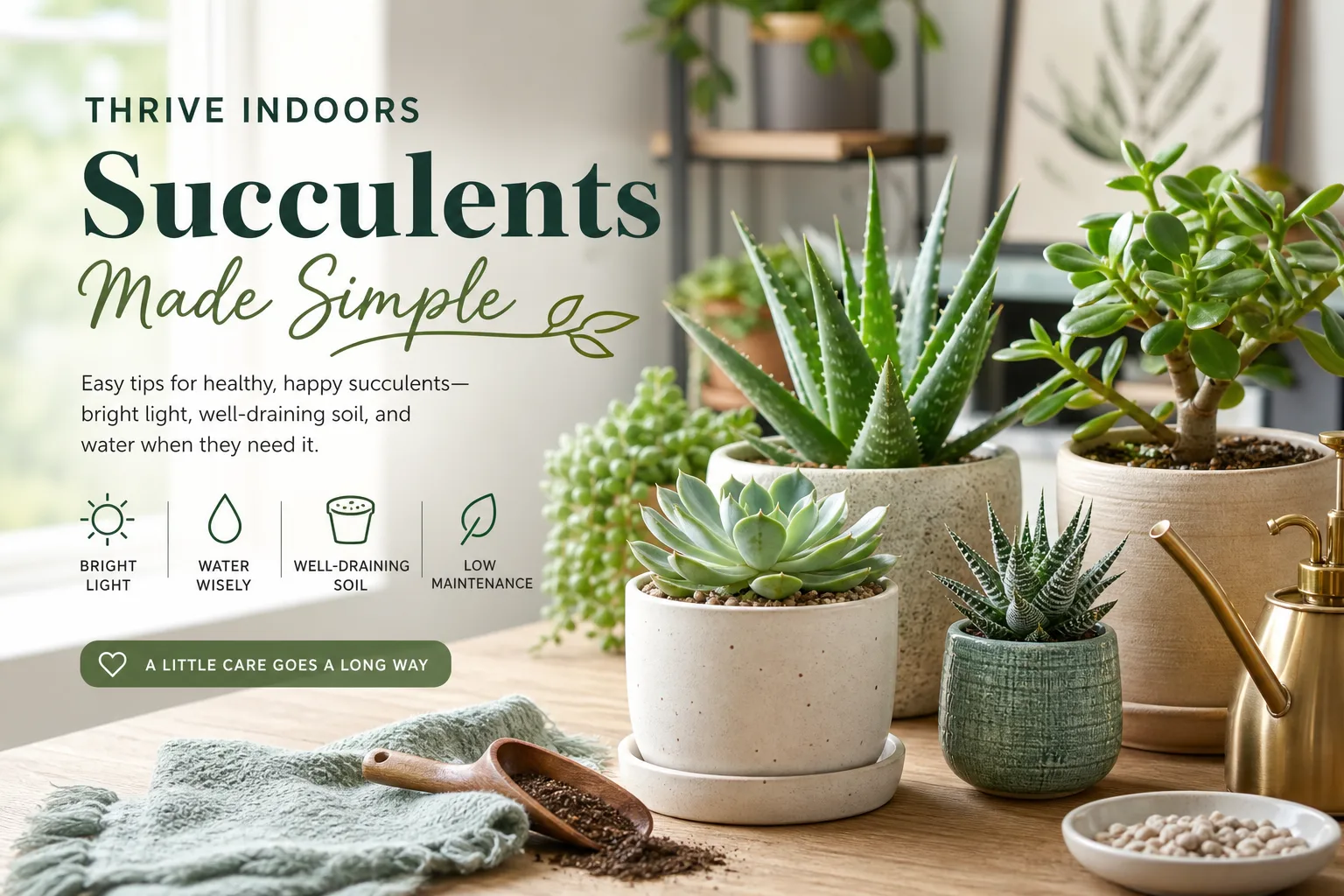
Indoor Succulent Care at a Glance
Indoor succulent care works when you stop treating water-storing plants like thirsty tropical foliage. Most succulents hold moisture in thick leaves, stems, or roots, which helps them survive dry spells but makes them vulnerable to rot when roots sit wet too long. A healthy indoor setup starts with bright light, a pot with drainage, a gritty fast-draining mix, and watering only after the soil has dried appropriately. Iowa State University Extension recommends watering thoroughly, letting excess water drain away, and never leaving water sitting in saucers or outer sleeves. (Yard and Garden)
The most useful beginner rule is water deeply, then wait long enough for the plant and potting mix to dry before watering again. That does not mean neglecting the plant for months, and it does not mean adding a tiny splash every few days. Succulents prefer a strong drink followed by air around the roots. South Dakota State University Extension also recommends checking the soil first, watering the soil directly when dry, and making sure water drains from the bottom of the pot. (SDSU Extension)
| Care factor | What works indoors |
|---|---|
| Light | Bright indirect minimum; many rosette types need direct sun hours |
| Water | Soak-and-dry: wet entire root ball, then let mix dry |
| Soil | Gritty cactus/succulent mix with perlite or pumice |
| Pot | Drainage hole; cachepot only after full drain |
| Pets | Not all succulents are safe-verify before buying |
How This Guide Relates to Our Succulent Species Hubs
LeafyPixels publishes deep care clusters for individual succulent genera and species. This guide is the category entry point: light bands, soak-and-dry culture, soil performance, and symptom-first troubleshooting that apply across the group. When you know which plant you own-or which symptom you see-use the matching hub for seasonal calendars, grow-light specs, and problem-specific recovery steps.
Start with Echeveria for rosette succulents that need strong light, Haworthia for bright-indirect windowsill types, Jade Plant for tree-like Crassula, Aloe Vera for medicinal rosettes, Snake Plant and ZZ Plant for low-light-tolerant succulents, Burro’s Tail for trailing sedums, and String of Pearls for delicate cascades. For mushy leaves, see overwatering on Echeveria. For stretch, see leggy growth and not enough light. For white cottony pests, see mealybugs on Echeveria.
What Makes Succulents Different from Other Houseplants
Succulents are not one plant family. The word describes plants with fleshy, water-storing parts, which is why aloe, echeveria, jade plants, sedums, haworthias, gasterias, and cacti can all be called succulents. Their shared feature is water storage, not identical care. Some come from dry, sunny habitats; others grow under shrubs or rocks where light is bright but filtered. That is why one succulent may want several hours of direct sun while another may scorch on the same windowsill.
This matters because generic advice can kill plants. “Succulents like sun” is partly true, but sudden intense afternoon sun through glass can burn soft nursery-grown leaves. “Succulents hate water” is also wrong; they need water, but they need oxygen at the roots just as much. “Low maintenance” does not mean “no maintenance.” It means they forgive dry periods better than soggy soil, provided the light and pot setup are right.
The Simple Care Formula That Prevents Most Problems
A reliable indoor succulent routine has four parts: place the plant where it gets enough light, use a container that releases extra water, plant it in a mix that does not stay dense and wet, and water based on dryness rather than the calendar. The Royal Horticultural Society advises watering most indoor cacti and succulents thoroughly once the compost surface feels dry during spring and summer, while also letting excess water drain so plants are not left standing in water. (RHS)
The order matters. If the plant is in a dark corner, it uses water slowly, so even a careful watering routine can lead to wet soil. If the pot has no drainage hole, excess water has nowhere to go. If the soil is mostly peat or dense compost, it may hold moisture around the roots for too long. When beginners say, “I only watered once and it still died,” the real cause is often the full system: low light, dense soil, no drainage, and roots that stayed wet for days.
Light Requirements for Indoor Succulents
Light is the quiet driver behind almost every indoor succulent problem. A succulent in strong light grows compactly, uses water efficiently, and keeps better color. A succulent in weak light stretches, leans, drops lower leaves, and stays damp longer after watering. Indoors, “bright” usually means close to a window, not across the room from one. The human eye adjusts to dim interiors better than plants do, so a room that feels bright to you may still be weak for a sun-loving Echeveria.
Most indoor succulents do best near an east, south, or west-facing window, depending on climate and heat. In very hot regions, harsh afternoon sun through glass can scorch leaves, especially if the plant was recently bought from a shaded nursery shelf. In cooler or cloudier regions, a south-facing window may be ideal. The best placement depends on glass, curtains, nearby buildings, season, and how the plant responds-not compass direction alone.
Bright Indirect Light, Direct Sun, and Low-Light Reality
Bright indirect light means strong ambient light without harsh rays beating directly on leaves for long periods. Haworthias, gasterias, many aloes, and some smaller indoor succulents can do well in this kind of light-see the Haworthia light guide for placement detail. Direct sun means sunlight lands directly on the plant. Many echeverias, sedums, cacti, and crassulas appreciate some direct sun indoors, but they should be acclimated gradually if they were grown in softer conditions. For rosette light needs, use the Echeveria light guide.
Low light is where expectations need to be honest. Snake plants and ZZ plants tolerate lower indoor light better than compact rosette succulents like echeveria. They may survive, but survival is not the same as strong growth. In low light, true sun-loving succulents often become pale, stretched, and weak. A north-facing room or a desk far from a window is usually better suited to a tolerant foliage succulent or a grow-light setup than to a compact rosette.
How to Use Grow Lights Without Stretching or Scorching Plants
Grow lights are useful when your home does not provide enough natural light, but they need to be close enough and consistent enough to matter. A weak lamp across the room will not fix leggy growth. Place the light above the plant rather than to one side, because side lighting encourages leaning. Iowa State Extension recommends high-output full-spectrum fluorescent or LED grow lights within about 12 inches of the plant, on a timer for 12 to 16 hours daily when window light is insufficient. (Yard and Garden)
The signs are usually clear. If new growth is compact and centered, the light is helping. If the plant stretches toward the bulb, the light is too weak, too far away, or on for too short a period. If leaves bleach, crisp, or develop dry tan patches, the light may be too intense or too close. Adjust slowly. Succulents adapt better to gradual changes than sudden jumps from shade to intense light.
Watering Indoor Succulents the Right Way
Watering is where most indoor succulent care goes wrong because people look for a schedule instead of reading the plant and pot. A small succulent in terracotta beside a sunny window may dry quickly. The same plant in a glazed pot inside a humid, low-light apartment may stay damp for much longer. Iowa State Extension notes that watering every two or three weeks often works for succulents, but frequency depends on soil type, light level, humidity, and container type. (Yard and Garden)
The goal is not to keep succulent soil constantly moist. The goal is to give the roots water, then restore air. Roots need oxygen, and saturated potting mix blocks that exchange. This is why frequent tiny watering is risky: it can keep the upper mix damp while never properly flushing the pot.
Why Fixed Watering Schedules Fail
A fixed watering schedule fails because the plant’s water use changes with light, temperature, season, pot size, and growth stage. In bright spring conditions, a succulent may actively grow and need more water. In cool winter conditions, the same plant may barely grow and need far less. A schedule also ignores pot material. Terracotta breathes and dries faster; plastic and glazed ceramic hold moisture longer. Large pots dry slowly because they contain more soil around the root ball.
A better habit is to check the soil and the plant. Insert a finger, wooden skewer, or moisture probe into the mix. If the lower mix is still damp, wait. If the pot feels heavy, wait. If the leaves are firm and the soil is not dry through the root zone, wait. If the soil is dry and the lower leaves are slightly less plump, it may be time to water. Missouri Botanical Garden notes that succulents may look shriveled when they need water, and pot weight can help indicate dryness. (Missouri Botanical Garden)
If you want a structured starting point without treating the calendar as law, try the succulent watering calculator after you know your light level and pot type-it estimates intervals, but the soil check still wins.
The Soak-and-Dry Method
The soak-and-dry method means watering the potting mix thoroughly until water drains from the bottom, then allowing the mix to dry before watering again. This method works because it reaches the full root ball instead of wetting only the surface. It also helps flush accumulated minerals through the drainage hole. SDSU Extension specifically recommends watering the soil directly and ensuring water drains out the bottom so the plant is thoroughly watered and salts do not build up. (SDSU Extension)
Do not mist succulents as a main watering method. Misting wets leaves and the soil surface without giving roots a useful drink. In crowded rosettes, trapped moisture can increase the risk of cosmetic spotting or rot, especially in cool rooms with poor airflow. For the broader houseplant framework behind dry-down checks, see how to water indoor plants the right way.
Seasonal Watering Changes
Indoor succulents usually need more attention during active growth and less during slow periods, but the timing depends on the plant. Many succulents grow more in spring and early summer. Some slow down during extreme heat. Many need less water in winter when indoor light drops and temperatures cool. The RHS separates active-season watering from reduced winter watering for cacti and succulents, which is a useful reminder that plant care changes through the year. (RHS)
In winter, the mistake is watering as if it were spring. Shorter days mean slower growth and slower drying. If the plant sits near a cold window, wet roots are even riskier-the glass can chill the root zone while the room feels comfortable. In hot summers, air conditioning can dry rooms, but low indoor light may still keep soil damp. The safest approach is always condition-based: check the pot, check the soil, check the leaves, then water only when the plant is ready.
Best Soil and Pots for Indoor Succulents
Soil and pots decide whether your watering habits are forgiving or dangerous. A succulent in gritty soil with a drainage hole can handle a thorough watering. A succulent in dense potting soil inside a sealed decorative pot can rot even when watered rarely. This is why “how often should I water?” is incomplete without “what is the plant growing in?”
Most nursery succulents are sold in lightweight peat-heavy mixes because those mixes are convenient for commercial production and shipping. They are not always ideal for long-term indoor care. Peat can become hydrophobic when dry, meaning water runs around the root ball instead of soaking in. It can also stay wet too long when used in a cachepot or dim room. A better indoor succulent mix creates air pockets and drains quickly while holding enough moisture for roots to absorb.
What Fast-Draining Soil Should Actually Do
A good succulent mix should wet evenly, drain freely, and avoid collapsing into a dense mass. It often includes ingredients such as cactus mix, pumice, perlite, coarse sand, fine bark, or mineral grit. The exact recipe matters less than performance. After watering, the pot should drain quickly, and the mix should not remain soggy for many days. Missouri Botanical Garden describes cacti and succulents as plants selected for direct-light houseplant conditions because their fleshy leaves or stems store water, which is exactly why heavy wet soil is a poor match. (Missouri Botanical Garden)
Editorial check: When testing a new mix indoors, water until it runs from the drainage hole and watch the saucer. If water still drips more than a minute or two after you stop pouring, the mix may be too organic for your light level-add pumice or perlite and retest before repotting the whole collection. For species-specific mix depth, see Echeveria soil and Haworthia soil.
Avoid using garden soil indoors. It can compact in containers, drain poorly, and bring pests or pathogens into the home. Standard potting mix can work only if amended heavily with mineral material and used in a bright location with a draining pot. If you are a beginner, start with a commercial cactus or succulent mix and improve it with extra pumice or perlite if it still feels too moisture-retentive.
Drainage Holes, Terracotta, and Decorative Pots
A drainage hole is not optional for beginners. It is the escape route for excess water and the easiest way to confirm that you watered thoroughly. Pots without drainage can work only for very experienced growers who understand exact water volume, root size, evaporation, and soil behavior. For most people, they create avoidable risk. Iowa State Extension warns against allowing water to sit in saucers or outer sleeves after watering succulents. (Yard and Garden)
Terracotta is useful because it breathes and helps the mix dry faster. Plastic nursery pots are also fine if the mix drains well and the plant gets enough light. Glazed ceramic can work, but it holds moisture longer than terracotta. Decorative outer pots are safest when used as cachepots: keep the succulent in a draining nursery pot, remove it for watering, let it drain fully, then return it. This gives you the look you want without trapping water around the roots.
Feeding, Repotting, and Long-Term Maintenance
Succulents do not need heavy feeding indoors. In fact, too much fertilizer can create weak, stretched growth that looks large but is not strong. Indoor succulents already face lower light than outdoor plants, so pushing fast growth without enough light can make the plant softer and more vulnerable to pests. Feed lightly during active growth, and skip fertilizer when the plant is resting, newly repotted, stressed, or recovering from rot.
Long-term care is mostly observation. Rotate pots so growth stays even. Remove dead leaves that collect around the base because they can hide pests and hold moisture. Dust leaves gently when needed, but avoid rubbing powdery farina from echeveria-type plants because it does not grow back evenly. Check new plants before placing them near your collection. Many pest problems start with one attractive new plant brought home from a nursery shelf.
Fertilizer Without Weak, Overgrown Plants
Use a diluted balanced fertilizer or a cactus/succulent fertilizer during the growing season, usually spring into early summer for many indoor plants. Dilute more than the label’s maximum rate if your plant is small, slow-growing, or in modest light. Fertilizer is not medicine; it will not fix low light, rot, pests, or bad soil. Feeding a stressed succulent can make things worse because damaged roots cannot use nutrients properly.
A good feeding routine is conservative. Water normally first if the soil is dry, then fertilize lightly according to the product’s directions during active growth. Avoid fertilizing bone-dry roots with a strong solution. Do not fertilize in winter unless the plant is clearly growing under strong artificial light and warm indoor conditions. The safest beginner mindset is “support growth,” not “force growth.”
When and How to Repot Succulents
Repot a succulent when the soil is staying wet too long, the plant has outgrown the pot, roots are circling densely, pests are hiding in the mix, or the nursery soil is poor. Repotting is also useful after buying a plant if it arrives in a water-retentive medium. Choose a pot only slightly larger than the root ball. Oversized pots hold extra soil, and extra soil holds extra water. For step-by-step rosette repotting, see Echeveria repotting.
To repot, remove the plant gently, shake away loose old mix, inspect roots, trim black or mushy roots with clean tools, and let damaged areas dry briefly before potting into fresh gritty mix. Do not bury rosettes too deeply. Keep leaves above the soil surface so moisture does not collect in the crown. After repotting, wait a short period before watering if roots were damaged or trimmed. This reduces the chance of water entering fresh wounds.
Troubleshooting Common Indoor Succulent Problems
Succulent problems are easier to solve when you read symptoms in context. Yellow leaves can mean overwatering, but they can also be old lower leaves naturally aging. Wrinkled leaves can mean thirst, but they can also appear when roots have rotted and can no longer absorb water. Leaf drop can happen from shock, rot, low light, cold, pests, or physical damage. The symptom matters, but the care history matters more.
Start every diagnosis with four questions. How much light does the plant receive? Does the pot have drainage? How long does the soil stay wet after watering? Are roots firm and pale, or dark and mushy? These questions reveal more than guessing based on one leaf. Most indoor succulent failures come from a mismatch between watering, light, and drainage.
Overwatering, Underwatering, and Root Rot
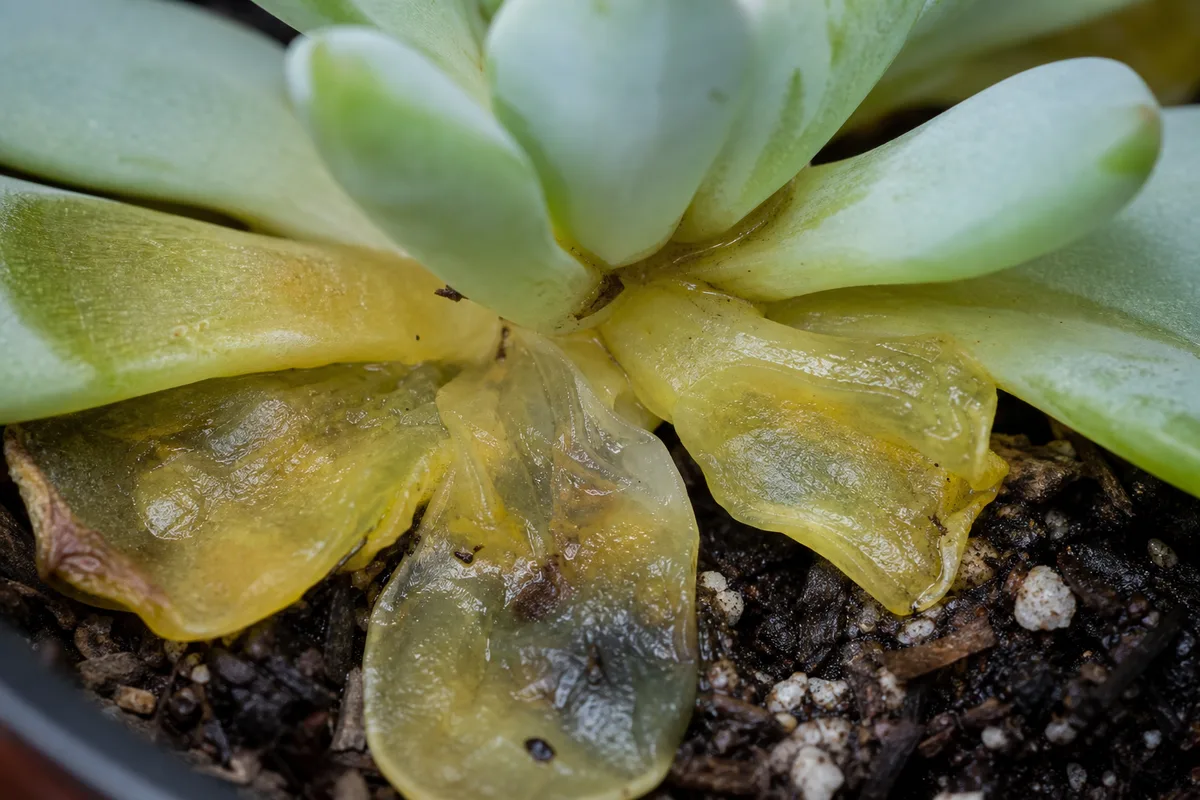
An overwatered succulent often has yellow, translucent, swollen, or mushy leaves. The stem may soften near the soil line. Leaves may drop with little pressure. The soil may smell sour or stay damp for too long. Root rot usually shows up as black, brown, slimy, or hollow roots. Once rot reaches the stem, fast action matters.
An underwatered succulent usually looks wrinkled, puckered, or slightly deflated, especially on older lower leaves. The leaves are often dry rather than mushy. The soil is dry and the pot feels light. If watered thoroughly, the plant often firms up over the next few days. Missouri Botanical Garden notes that succulents can look shriveled when they need water, which is different from the mushy collapse often associated with excess moisture. (Missouri Botanical Garden)
| Problem | Common signs | Soil condition | Best first response |
|---|---|---|---|
| Overwatering | Yellow, translucent, mushy leaves; soft stem | Damp for too long | Stop watering, check roots, improve drainage |
| Underwatering | Wrinkled, dry, thinner leaves | Dry and light pot | Water thoroughly, then monitor recovery |
| Root rot | Black or mushy roots; unstable stem | Often wet or sour-smelling | Remove rot, take cuttings if needed |
| Low light | Stretching, leaning, pale growth | May dry slowly | Increase light gradually |
To save an overwatered succulent, remove it from the pot and inspect the roots. Cut away rotten roots with clean scissors. If the stem is still firm, repot into dry, gritty mix and wait before watering. If the stem is rotting, cut above the rot into healthy tissue, let the cutting callus, then reroot it. Full recovery workflow: overwatering on Echeveria.
Leggy Growth, Sunburn, and Leaf Drop
Leggy growth, also called etiolation, happens when a succulent stretches toward inadequate light. The stem lengthens, gaps widen between leaves, and rosettes lose their tight shape. Once a plant stretches, the old stretched section will not shrink back. You can move the plant to better light to improve new growth, then prune and propagate the compact top if needed. See leggy growth on Echeveria for the full comparison workflow.
Sunburn looks different. It appears as dry tan, brown, or pale bleached patches on leaves exposed to intense light. Burned tissue does not heal back to green, though the plant can outgrow the damage over time. Sunburn often happens when a plant moves suddenly from a shaded shelf to a hot window. Acclimate succulents gradually by increasing direct sun exposure over days or weeks.
Leaf drop needs context. Lower leaves drying slowly can be normal aging. Sudden mushy leaf drop suggests too much water. Crispy leaf drop can suggest severe dryness, heat, or sun stress. Leaves dropping after purchase may reflect shipping or environmental shock. The answer is not always to water; sometimes the correct fix is better light, airflow, soil, or patience.
Mealybugs, Fungus Gnats, and Pest Prevention
Mealybugs are one of the most common indoor succulent pests. They look like tiny white cottony clusters in leaf joints, rosette centers, roots, or stem crevices. They feed on plant sap and can spread through a collection if ignored. University of Maryland Extension recommends using a cotton swab dipped in household alcohol to dab individual mealybugs for light infestations, while warning that alcohol can damage leaves if applied carelessly. (University of Maryland Extension)
UC Integrated Pest Management gives similar guidance for small houseplant infestations, recommending 70% or weaker isopropyl alcohol dabbed directly on mealybugs with a cotton swab, with a test on a small plant area first to check for leaf burn. (UC IPM) Treat pests directly, avoid soaking the whole plant unnecessarily, and repeat inspections because eggs and hidden insects can survive the first treatment. Species-specific protocol: mealybugs on Echeveria.
Fungus gnats usually point to soil staying too moist. Adult gnats are annoying, but the bigger message is cultural: the mix is wet enough to support them. Let the soil dry more thoroughly, improve drainage, increase light if appropriate, and avoid organic debris sitting on the soil. Quarantine new plants for at least a couple of weeks before placing them near established succulents. Prevention is far easier than treating a whole shelf.
Propagation and Plant Safety
Propagation is one of the best parts of growing succulents indoors, but it works best when the parent plant is healthy and actively growing. Succulents can often be propagated from leaf cuttings, stem cuttings, or offsets, depending on the species. Not every leaf will root, and not every succulent propagates well from leaves. Echeveria and many sedums are good candidates for leaf propagation, while haworthias and aloes are usually easier through offsets.
Safety matters too. Succulents are often marketed as friendly little desk plants, but not all are safe around pets or children. Some have irritating sap, sharp spines, or toxic compounds if eaten. If a cat, dog, or toddler may chew plants, plant choice and placement are not cosmetic details; they are part of responsible care.
Leaf Cuttings, Stem Cuttings, and Offsets
For leaf propagation, remove a healthy leaf cleanly from the stem, keeping the base intact. Let it dry and callus for a few days, then place it on dry or barely moist gritty mix in bright indirect light. Do not bury the leaf deeply. Roots and a tiny new plant may form from the base. The original leaf will slowly shrivel as it feeds the new growth. Water lightly only once roots appear, and avoid keeping the setup soggy. Step-by-step depth: Echeveria propagation and Haworthia propagation.
Stem cuttings are useful for leggy plants or succulents with rot below healthy growth. Cut a healthy stem section with clean tools, remove a few lower leaves, and let the cut end callus. Then place it into gritty mix and keep it in bright indirect light while roots develop. Offsets are the easiest method. Many aloes, haworthias, sempervivums, and some echeverias produce baby plants around the base. Separate offsets once they have some roots of their own, then pot them individually.
Succulents Around Pets and Children
Do not assume every succulent is pet-safe. ASPCA warns that jade plant, also known as Crassula ovata, is toxic and may cause vomiting, diarrhea, lethargy, and loss of appetite if ingested by pets. (ASPCA) Kalanchoe and some euphorbias are also commonly treated with caution around animals because ingestion or sap exposure can be harmful. When pets chew plants, use the ASPCA plant database or ask a veterinarian before bringing a plant home.
Placement helps, but it is not foolproof. Cats climb, dogs knock pots over, and children explore with their hands. Spiny cacti can cause physical injury even when they are not chemically toxic. If you want a pet-conscious collection, choose plants with verified safety information, keep questionable plants out of reach, and label plants by botanical name. Common names can be confusing because different plants may share the same nickname. If a pet ingests an unknown succulent or shows distress, contact your veterinarian or the ASPCA Animal Poison Control Center at (888) 426-4435 (consultation fee may apply).
Choosing the Right Indoor Succulents
The best succulent for your home is not always the prettiest one on the nursery shelf. It is the one that matches your light, habits, and risk tolerance. If your home has a sunny windowsill, you can grow compact rosette succulents more successfully. If your home is dim, choose more tolerant species or use a grow light. If you travel often, choose plants in breathable pots and gritty soil, not tiny novelty arrangements in sealed containers.
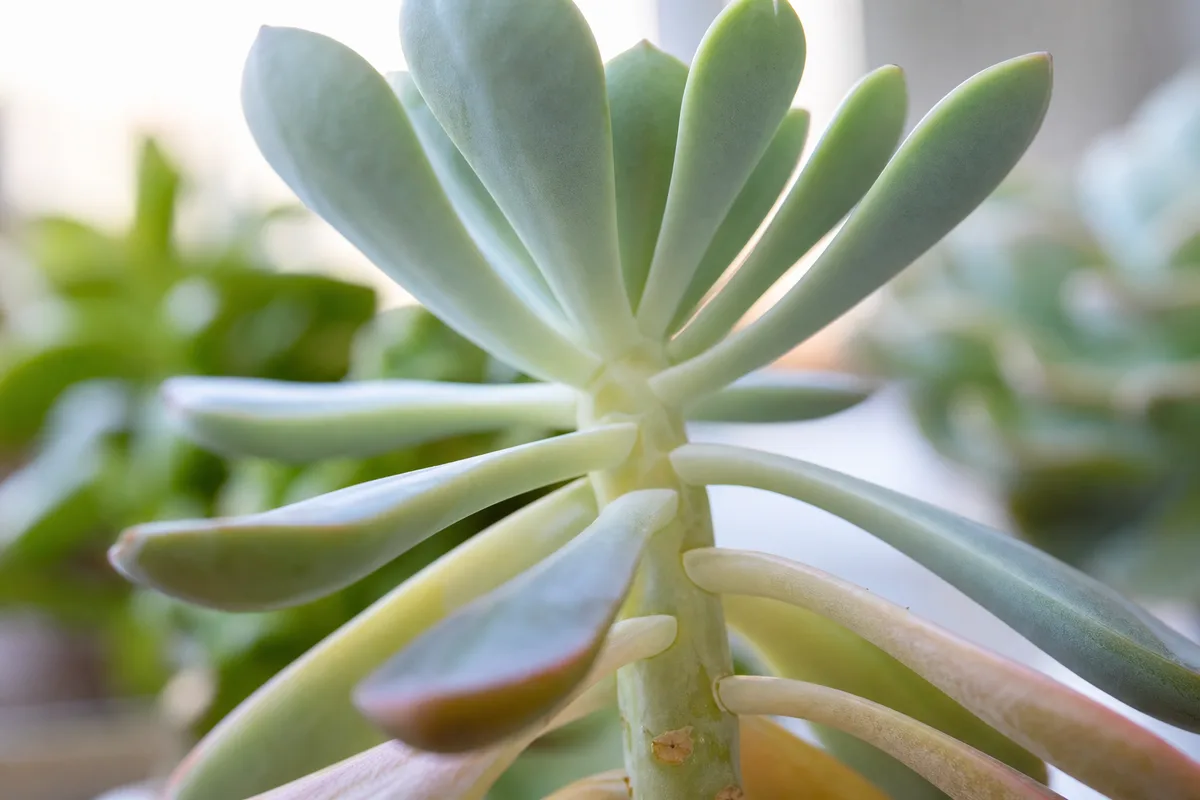
Avoid buying succulents that are already stretched, mushy, pest-infested, or planted in wet decorative bowls. A healthy succulent should feel firm, sit securely in the pot, and show compact growth. Check leaf joints for white cottony pests. Look under the leaves and around the soil line. If the plant is painted, glittered, glued into moss, or sealed into a container without drainage, it may be more decoration than long-term houseplant.
Best Beginner-Friendly Succulents
Haworthias are excellent for beginners because they tolerate bright indirect light better than many sun-hungry rosette succulents. Gasterias are similarly forgiving and often handle indoor conditions well. Snake plants and ZZ plants are practical choices for lower-light rooms. Jade plants can be durable in good light, though they require pet-safety caution.
Aloe vera can also be beginner-friendly if given strong light and a draining mix, but it should not sit cold and wet. Echeverias are beautiful but more demanding indoors because they need high light to stay compact. Burro’s tail and trailing sedums often stretch indoors unless light is strong. Cacti can do well in sunny windows, but many need more direct light than a typical desk provides. Match the plant to the room, not the room to a fantasy version of the plant.
Succulents to Avoid in Low-Light Homes
Avoid compact echeveria rosettes if your only available spot is far from a window. They usually stretch quickly in low light-see not enough light on Echeveria. Avoid colorful stress-toned succulents if you cannot provide enough light, because those pink, red, purple, or blue tones often fade indoors. Avoid mixed succulent bowls if the plants have different needs or the container lacks drainage. These arrangements look good at purchase but often decline because the setup is designed for display, not plant health.
Also be cautious with tiny pots. Mini succulents dry fast in strong light but can also decline quickly because their root systems are small. They leave less room for error. For beginners, a modestly sized plant in a draining pot is often easier than a tiny novelty plant in a teaspoon of soil. A plant with enough root space, good light, and a sensible pot gives you more time to notice and correct problems.
Explore Species Guides
Ready for plant-specific depth? Start with these LeafyPixels hubs:
- Echeveria - rosette light, soil, propagation, and 20+ problem pages
- Haworthia - bright-indirect windowsill care
- Jade Plant - tree-like Crassula culture and pet toxicity
- Aloe Vera - medicinal rosette watering and pup propagation
- Snake Plant - low-light tolerant succulent-like foliage
- ZZ Plant - rhizome storage and dry-down rhythm
- Burro’s Tail - trailing sedum light and leaf propagation
- String of Pearls - delicate cascade watering
Symptom shortcuts: overwatering · leggy growth · not enough light · mealybugs
Related Guides
- How to water indoor plants the right way - dry-down checks for all houseplants
- Aloe vera care mistakes - species-specific error checklist
- Can you use a pebble tray for succulents and cacti? - humidity myths for dry-climate plants
- Grow lights complete guide - when window light is not enough
Conclusion
Indoor succulent care comes down to three habits:
- Match light to species - rosette sun-lovers near bright windows; haworthias and snake plants in softer light; grow lights within 12 inches when windows fail.
- Water on dryness, not guilt - soak the root ball, drain fully, and use the succulent watering calculator only as a starting estimate.
- Delegate depth to species hubs - when you know the plant or the symptom, open the matching
/plants/cluster instead of guessing from generic advice.
That is the difference between merely owning succulents and actually growing them well indoors.