8 Best Herbs to Grow Indoors Year-Round
Grow fresh herbs indoors with this beginner guide to the best herbs, light needs, watering tips and container setup.
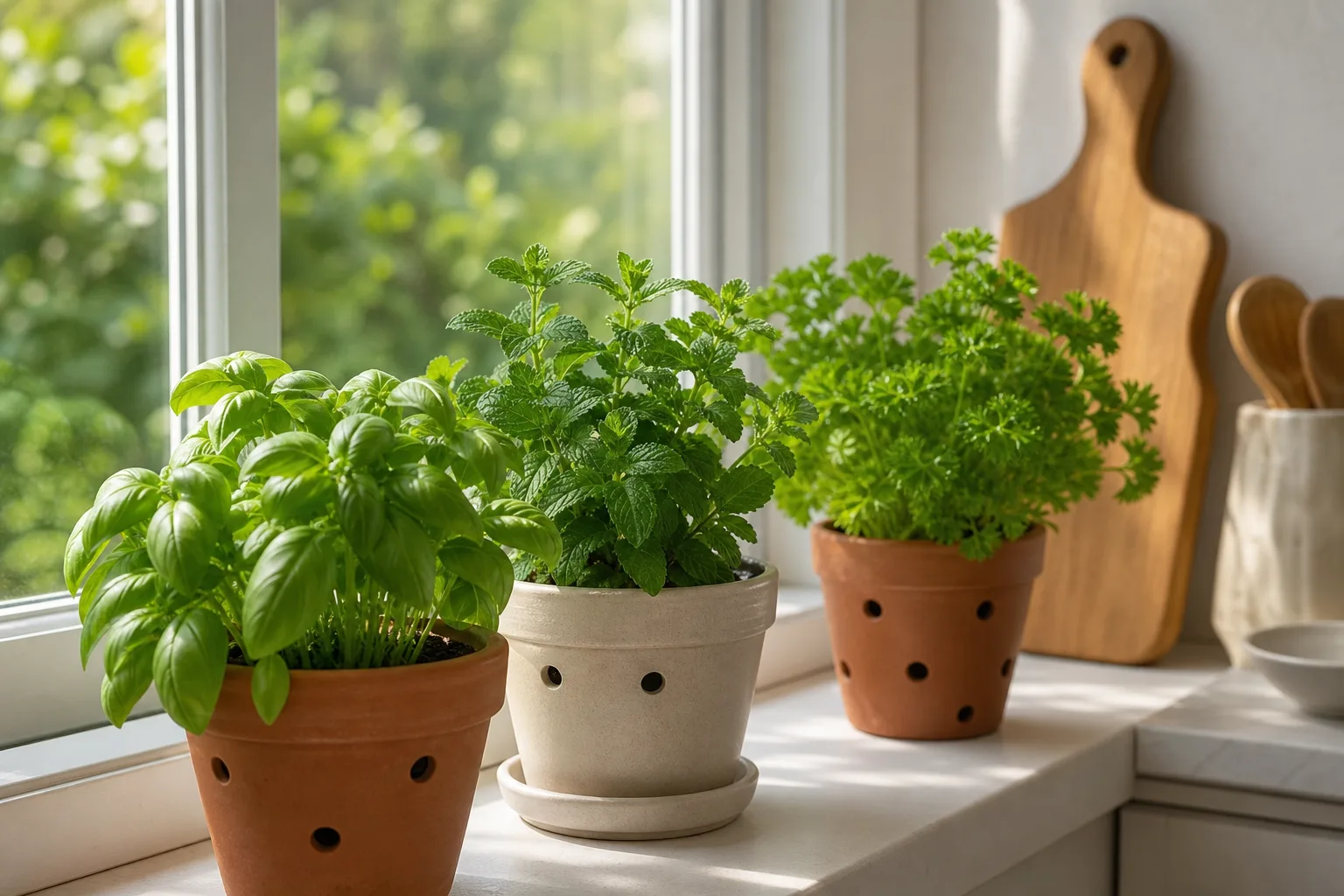
Fresh herbs are one of the few indoor gardening projects that pay you back quickly. You do not need a backyard or greenhouse. You need the right herbs for your light, pots with drainage, and a care routine that respects how each plant actually grows.
The 8 best herbs to grow indoors are basil, mint, parsley, chives, cilantro, thyme, oregano, and rosemary. They are useful in everyday cooking, widely available, suitable for containers, and realistic for a kitchen windowsill or bright indoor corner. Some are almost forgiving enough for beginners. Others, especially rosemary, need stricter light and watering control but are still worth growing when conditions fit.
Most south- or west-facing kitchen windows deliver roughly 4 to 6 hours of usable direct sun on the sill itself—enough for mint, parsley, and chives, but often marginal for basil, thyme, oregano, and rosemary without a grow light. Brooklyn Botanic Garden notes that many windowsills behave like part shade, which is why leafy herbs often outperform sun-demanding Mediterranean types indoors. (Brooklyn Botanic Garden) (Penn State Extension)
This guide is the selection layer: which herbs match your cooking and light. For species-deep care on basil, mint, and rosemary, follow the LeafyPixels hubs linked in each profile below.
The Best Indoor Herbs at a Glance
The best indoor herb depends on what you cook, how much light you have, and how much maintenance you want. Mint and chives are the easiest for most beginners. Parsley and cilantro suit slightly cooler rooms or moderate light. Basil is productive but wants warmth and strong light. Thyme, oregano, and rosemary prefer brighter, drier conditions.
A practical indoor herb garden is usually a group of separate pots, not one crowded planter. Separate pots let you water basil more often, keep rosemary drier, move cilantro away from heat, and stop mint from taking over. Penn State Extension recommends chives, basil, and cilantro for indoor containers and advises against large-rooted herbs such as horseradish and fennel indoors. (Penn State Extension)
Grow basil for pasta, pizza, pesto, and tomato dishes. Grow mint for tea, drinks, chutneys, and desserts. Grow parsley as an everyday garnish. Grow chives for onion-like flavor without chopping onions. Grow cilantro for Mexican, Indian, Thai, and Middle Eastern cooking. Grow thyme for soups, roasted vegetables, and eggs. Grow oregano for Mediterranean sauces. Grow rosemary when you have strong light and want a woody herb for potatoes, bread, and roasts.
Indoor Herb Comparison Table
| Herb | Light need | Water group | Difficulty | Typical indoor lifespan | Best for cuisine |
|---|---|---|---|---|---|
| Basil | Bright; warm | Moist, even | Easy–medium | 2–4 months (succession sow) | Italian, Thai, pesto |
| Mint | Bright to moderate | Moist, even | Easy | 6+ months | Tea, drinks, desserts |
| Parsley | Bright to moderate | Moist, even | Easy | 6–12 months | Universal garnish |
| Chives | Bright to moderate | Moist, even | Easy | 12+ months | Eggs, potatoes, dips |
| Cilantro | Bright; cool | Moist, even | Medium | 4–8 weeks per sowing | Mexican, Indian, Thai |
| Thyme | Bright; dry | Mediterranean dry | Medium | 12+ months | Soups, roasts, eggs |
| Oregano | Bright; dry | Mediterranean dry | Medium | 12+ months | Pizza, pasta, Mediterranean |
| Rosemary | Very bright; dry | Mediterranean dry | Hard | 12+ months if conditions fit | Roasts, potatoes, bread |
Water groups: Moist, even herbs (basil, parsley, cilantro, mint, chives) want water when the top inch of soil feels dry. Mediterranean dry herbs (rosemary, thyme, oregano) should dry more between waterings.
How to Choose the Right Herbs for Your Home
Most indoor herb failures come from choosing herbs for taste alone and ignoring the room they will live in. A basil plant on a dim counter may look fine for a week, then stretch, yellow, and collapse. A rosemary plant in a pot without drainage may decline slowly from wet roots.
Start with your brightest location, not your prettiest shelf. A south- or west-facing window is usually better than a decorative kitchen corner. If your kitchen is dim, use another room and cut herbs when needed—or add supplemental light. See Grow lights complete guide for indoor plants for LED placement, distance, and daily hours.
Also consider temperature. Basil dislikes cold windows and chilly drafts. Cilantro bolts faster in heat. Rosemary likes bright light and excellent drainage but suffers in soggy soil. Mint grows vigorously but can become messy if ignored. Parsley is steady but slower than basil.
Light Is the Main Limiting Factor
Light decides whether your indoor herbs grow, survive, or slowly fade. University of Minnesota Extension advises 14 to 16 hours of supplemental light daily when starting herb seeds indoors and keeping fixtures close enough to prevent weak, stretched seedlings. Mature herbs on dim windowsills benefit from similar daily hours with a full-spectrum LED placed 6–12 inches above the canopy. (University of Minnesota Extension)
A bright windowsill works well for mint, parsley, chives, and cilantro when the window receives direct morning or afternoon sun. Basil, thyme, oregano, and rosemary usually need more intensity to stay compact and flavorful. When herbs do not get enough light, they become pale, long-stemmed, and less aromatic.
What Low Light Really Means for Herbs
“Low light” does not mean no light. For herbs, it usually means a bright room without long direct sun, or a windowsill blocked by buildings, trees, or curtains. In that setting, choose parsley, cilantro, mint, and chives before rosemary or thyme.
If your only spot is a dim kitchen counter, treat herbs as short-term plants or add a grow light. You can buy a healthy basil or cilantro plant, harvest for a few weeks, and replace it when it declines. That is more honest than expecting year-round abundance without enough light.
Pots, Soil, and Drainage Matter More Than Pot Size
Indoor herbs need containers with drainage holes. A pot without drainage holds water at the bottom even when the surface looks dry. Use a light, well-draining potting mix—not dense garden soil.
Mediterranean herbs (rosemary, thyme, oregano) perform better in sharper-draining mix, often in terra-cotta, which dries faster than plastic. Soft leafy herbs appreciate moisture but still need oxygen around their roots. Cilantro needs at least 6–8 inches of pot depth for its taproot. Mint is aggressive and belongs in its own pot; UF/IFAS recommends confining mint to containers because it spreads strongly. (Gardening Solutions)
Individual pots beat one mixed herb bowl. Rosemary, thyme, and oregano can share drier conditions; basil, parsley, cilantro, mint, and chives do not.
Seeds, Starter Plants, Cuttings, or Divisions?
Basil, parsley, and cilantro are often good from seed indoors. Chicago Botanic Garden notes basil, parsley, and cilantro perform best from seed and can be harvested within a couple of weeks even as young plants. (Chicago Botanic Garden)
Mint, oregano, thyme, rosemary, and chives are usually easier from starter plants, divisions, or cuttings. Rosemary from seed is slow. Mint roots readily in water. Chives divide easily from outdoor clumps.
Inspect nursery plants before bringing them indoors: yellow lower leaves, fungus gnats, sticky residue, webbing, or circling roots are warning signs. Quarantine new plants for a few days when possible.
The 8 Best Herbs to Grow Indoors
1. Basil
Best for: pasta, pizza, pesto, fresh tomato dishes
Difficulty: Easy–medium
Light: Bright; warm
Water: Moist, even—top inch dry
Best placement: Sunny windowsill or under grow light
Indoor cultivar tip: Genovese for pesto; smaller ‘Spicy Globe’ or ‘Bush’ types for tight sills
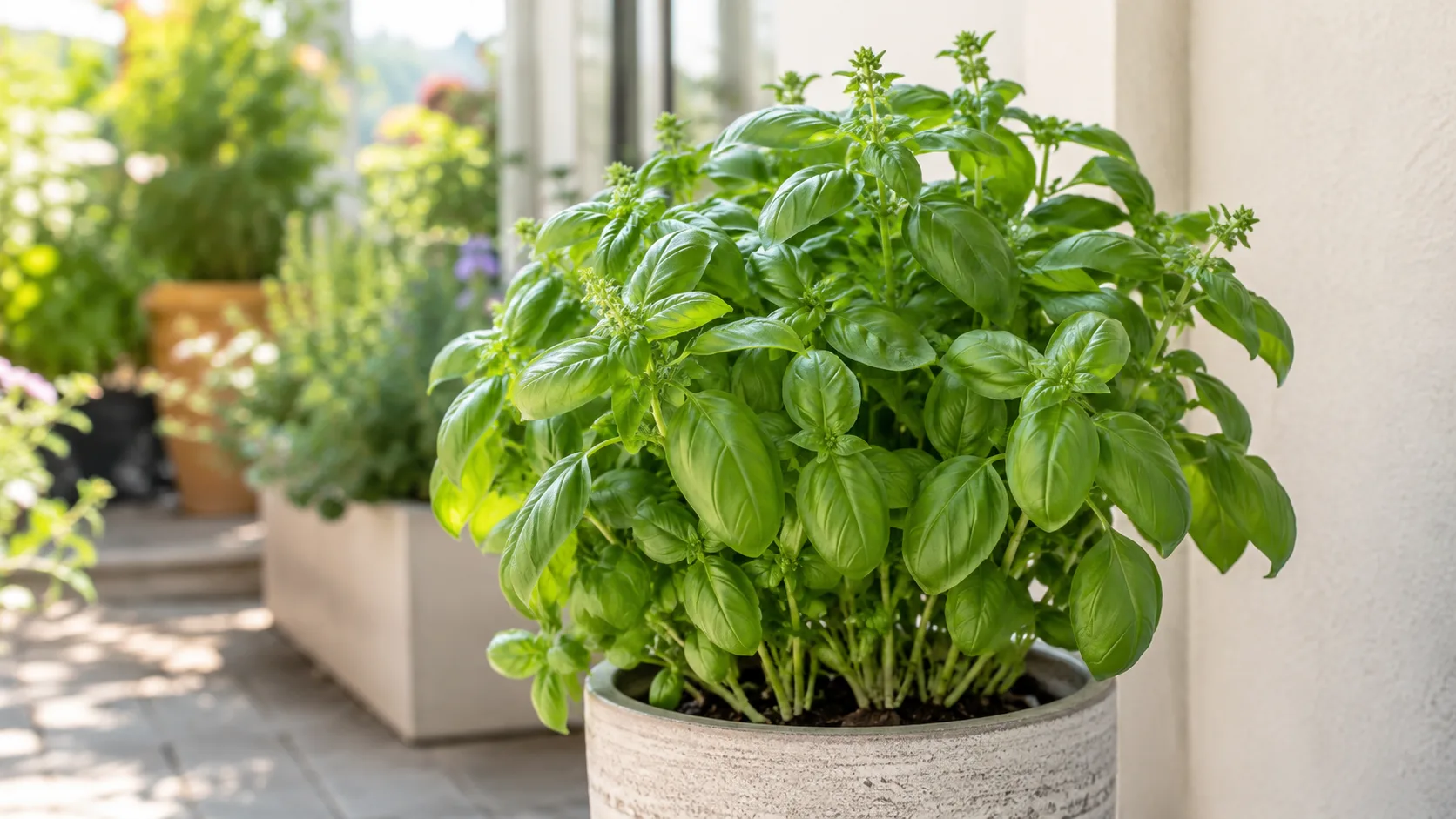
Basil is the classic indoor herb because the payoff is immediate. Fresh basil changes pasta, pizza, pesto, and salads in a way dried basil cannot. It grows quickly under the right conditions.
The catch: basil is not a low-light herb. It wants warmth, bright light, steady moisture, and regular harvesting. Harvest from the top above a leaf node, removing no more than about one-third of the plant at a time. (Better Homes & Gardens)
Treat basil as a productive short-term herb indoors. Even with good care, it may flower, toughen, or decline. Pinch flower buds for continued leaf production, then succession-sow or root cuttings in water.
Why it works: Fast harvests and unmatched fresh flavor in strong light.
Care tip: Keep away from cold glass in winter and air-conditioner drafts.
Common mistake: Leaving it on a dim counter—it stretches and yellows.
Avoid this plant if: You cannot provide bright light or warmth.
Useful care guides:
- Basil care guide
- Basil watering guide
- Basil light guide
- Basil propagation guide
- Basil problems guide
2. Mint
Best for: tea, lemonade, chutneys, desserts, salads
Difficulty: Easy
Light: Bright to moderate
Water: Moist, even
Best placement: Own pot on windowsill or shelf
Indoor cultivar tip: Spearmint for cooking; peppermint for tea; chocolate mint for desserts
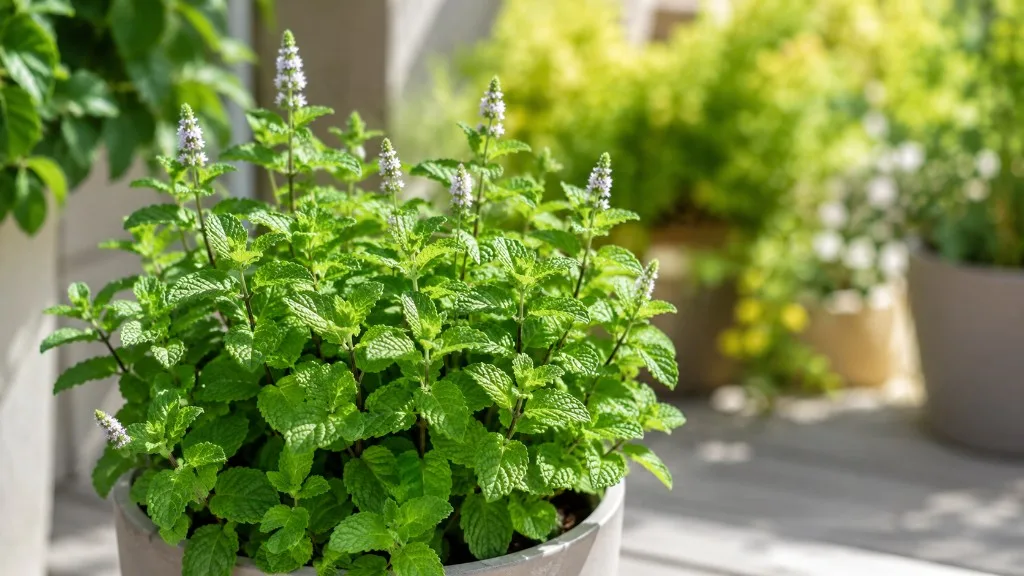
Mint is one of the easiest herbs indoors—vigorous, forgiving, and useful beyond cooking. It prefers bright light but tolerates moderate light better than rosemary. It appreciates evenly moist soil, though not waterlogged.
The main problem is not keeping mint alive; it is keeping mint controlled. Grow it in its own pot. Indoors it can still crowd a mixed container. Cut back floppy stems; mint responds well to pruning.
Mint propagates easily: place a stem in water, remove submerged leaves, wait for roots, then pot up.
Why it works: Fast recovery from cutting and tolerance of container life.
Care tip: Harvest regularly to keep growth bushy.
Common mistake: Planting mint with other herbs—it dominates.
Avoid this plant if: You want a single mixed herb bowl (mint needs isolation).
Useful care guides:
3. Parsley
Best for: everyday garnish, soups, eggs, beans, roasted vegetables
Difficulty: Easy
Light: Bright to moderate
Water: Moist, even
Best placement: Cooler bright windowsill
Indoor cultivar tip: Flat-leaf (Italian) for cooking; curly for garnish
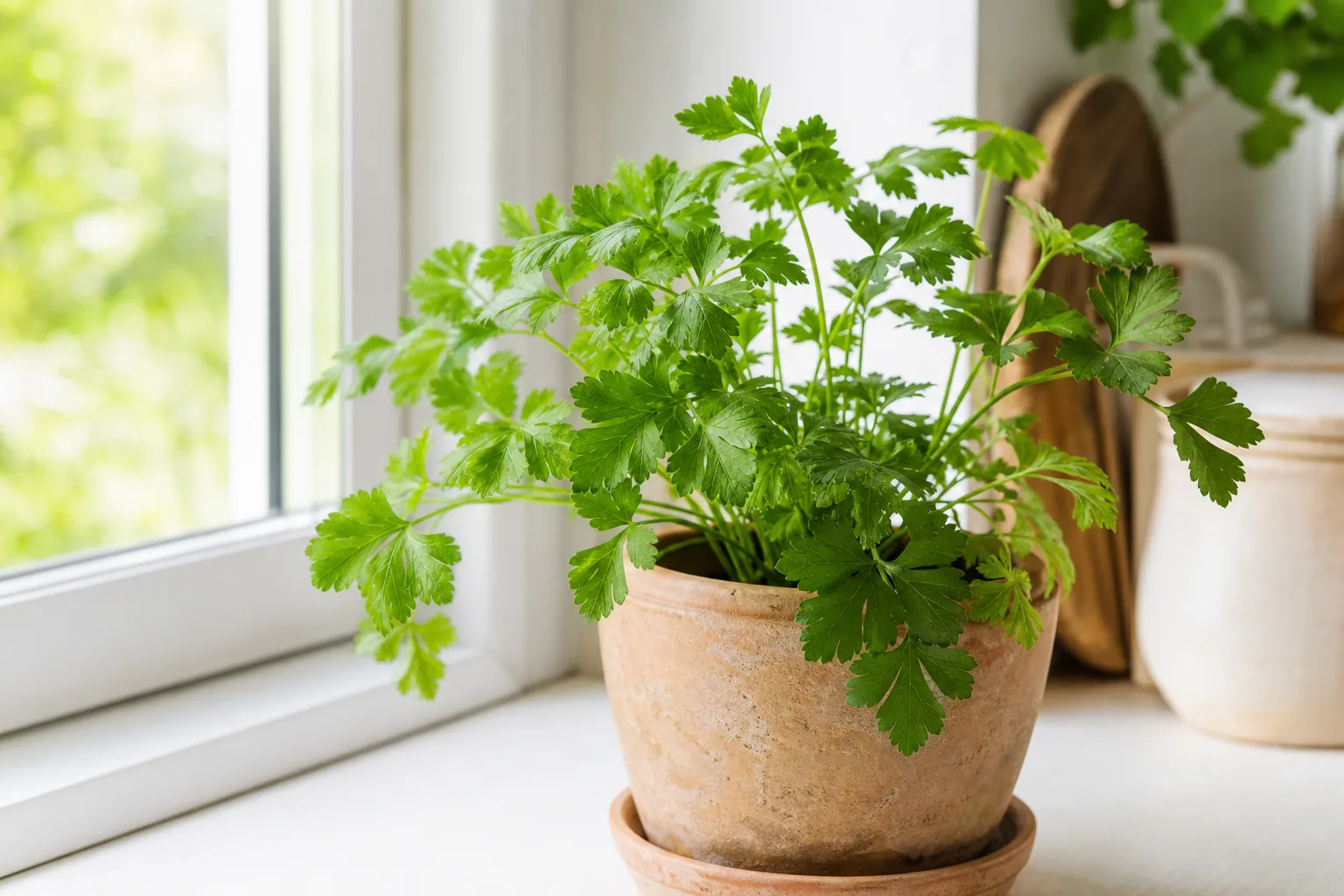
Parsley is underrated indoors. Flat-leaf parsley has stronger flavor and chops easily; curly parsley works as garnish. It handles indoor conditions better than many sun-loving herbs—bright light helps, but it tolerates slightly cooler rooms.
Parsley is a biennial; indoors treat it as long-lasting but not permanent. University of Vermont Extension notes annual herbs like basil and biennials like parsley need replacement, while thyme and oregano can live for years. (University of Vermont)
Germination is slower than basil. A starter plant is easier for quick kitchen use. Harvest outer stems near the base; leave inner growth to develop.
Why it works: Steady cut-and-come-again harvest across many cuisines.
Care tip: Keep soil consistently moist during slow early growth.
Common mistake: Expecting basil-speed growth from seed.
Avoid this plant if: You need instant huge harvests from one small pot.
4. Chives
Best for: eggs, potatoes, soups, salads, dips
Difficulty: Easy
Light: Bright to moderate
Water: Moist, even
Best placement: Compact windowsill pot
Indoor cultivar tip: Common chives for onion flavor; garlic chives for mild garlic notes
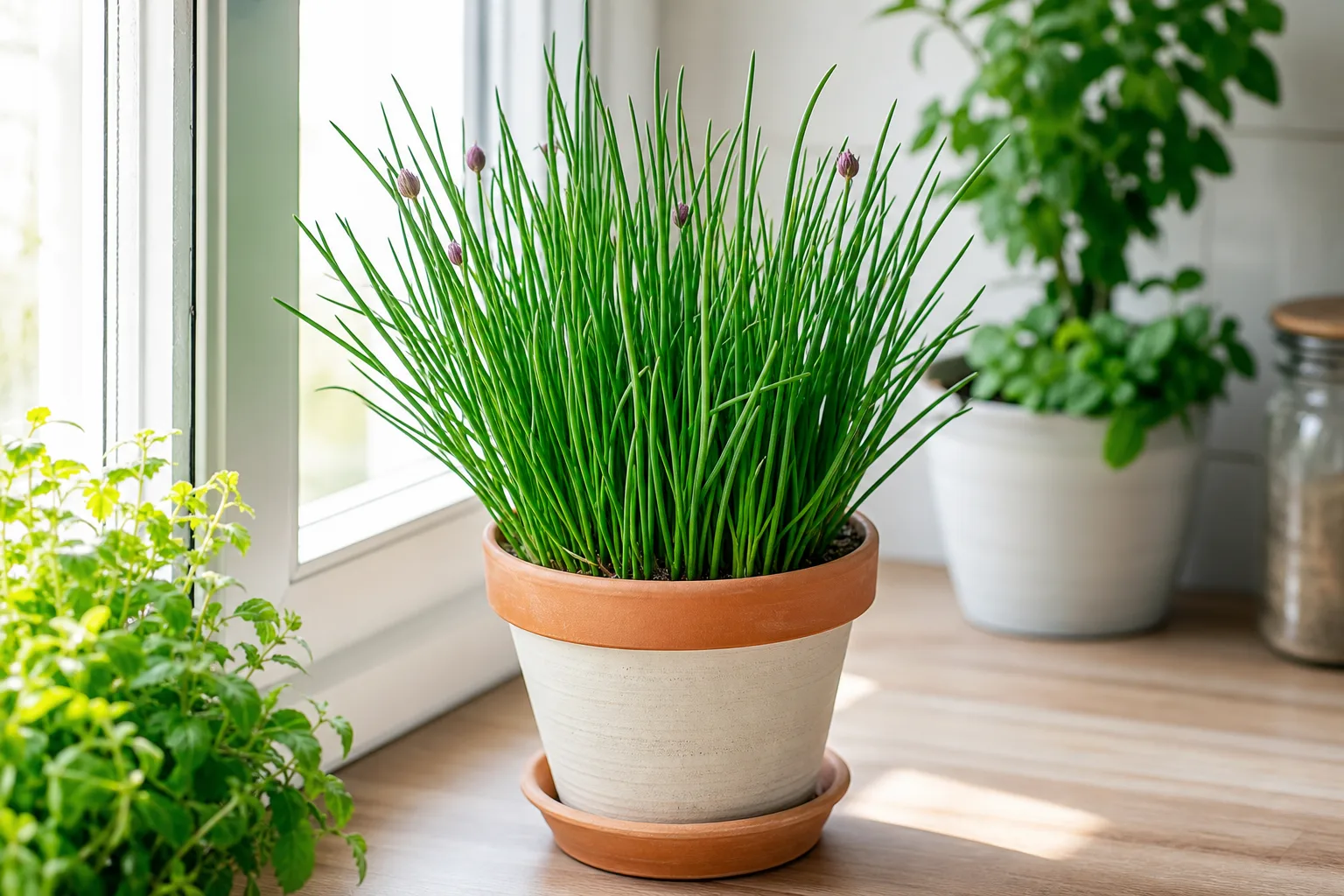
Chives offer fresh onion flavor without much space. Snip leaves near the base with clean scissors; new leaves emerge from the crown. They prefer bright light and evenly moist soil but forgive more than basil.
Division is faster than seed. A small outdoor clump division becomes an indoor pot quickly. Compact growth fits small shelves with grow lights.
Why it works: Repeat harvests from a tiny footprint.
Care tip: Do not bury the crown too deeply when repotting.
Common mistake: Letting the pot dry out completely for days.
Avoid this plant if: You dislike onion-family flavors.
5. Cilantro
Best for: Mexican, Indian, Thai, Vietnamese, Middle Eastern cooking
Difficulty: Medium
Light: Bright; prefers cooler temps
Water: Moist, even
Best placement: Bright spot away from hot afternoon glass
Indoor cultivar tip: ‘Santo’ or slow-bolt types extend leaf harvest slightly
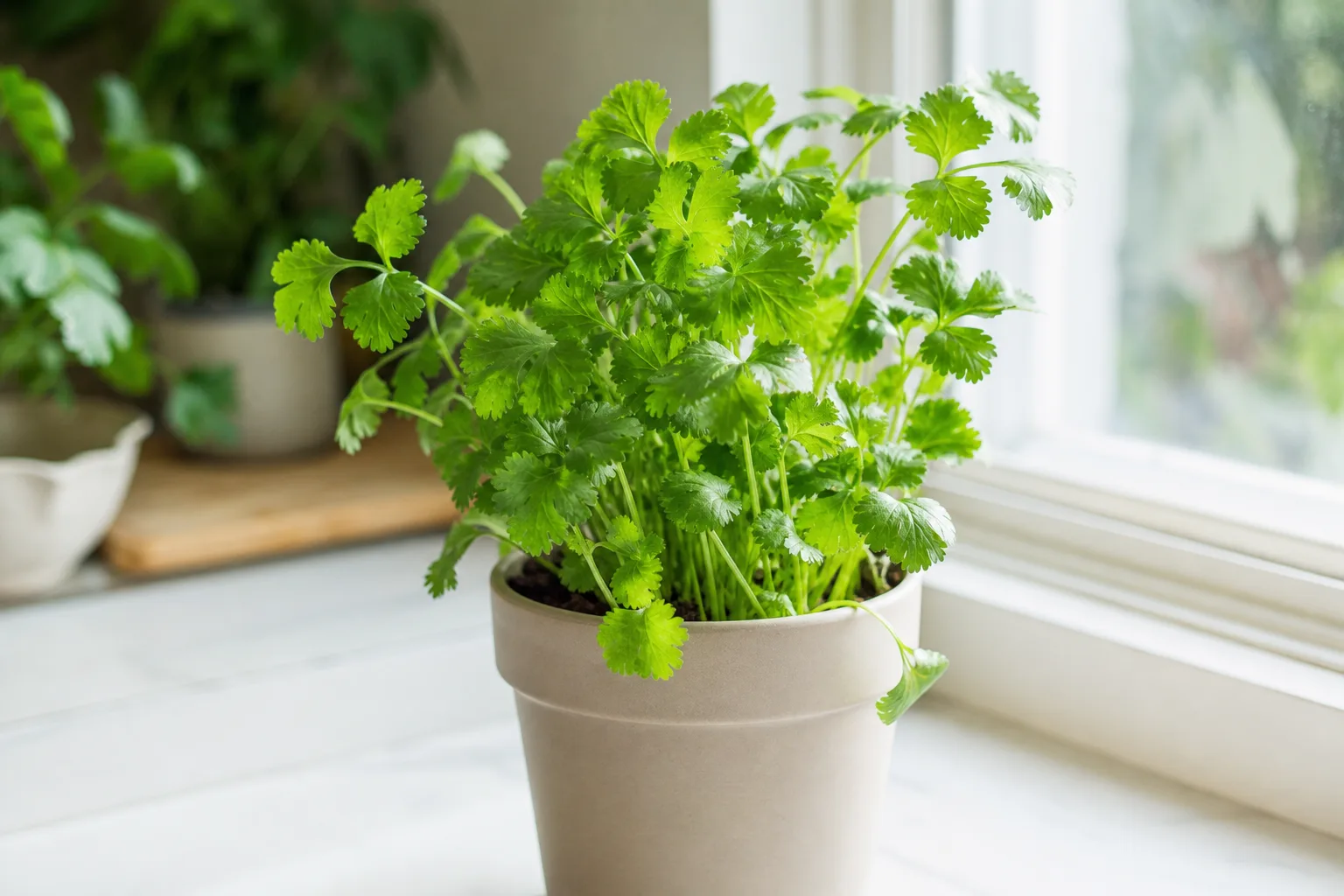
Cilantro is highly useful but misunderstood. It grows fast yet bolts—flowers and sets seed—especially in heat, crowding, or drought. Indoors, sow small batches every few weeks instead of expecting one plant to last forever.
Use a pot at least 6–8 inches deep for the taproot. Sow directly in the final pot when possible; cilantro dislikes rough transplanting. Harvest outer stems; leave center growth. If it bolts, collect coriander seeds or restart.
Why it works: Flavor you cannot replicate from dried spice jars.
Care tip: Keep away from radiator heat and hot south glass in summer.
Common mistake: One plant expected to produce leaves for months.
Avoid this plant if: Your only spot is hot and you will not re-sow.
6. Thyme
Best for: soups, beans, roasted vegetables, eggs, chicken
Difficulty: Medium
Light: Bright; dry
Water: Mediterranean dry
Best placement: Sunniest sill or grow light
Indoor cultivar tip: Common thyme for general cooking; lemon thyme for fish and vegetables
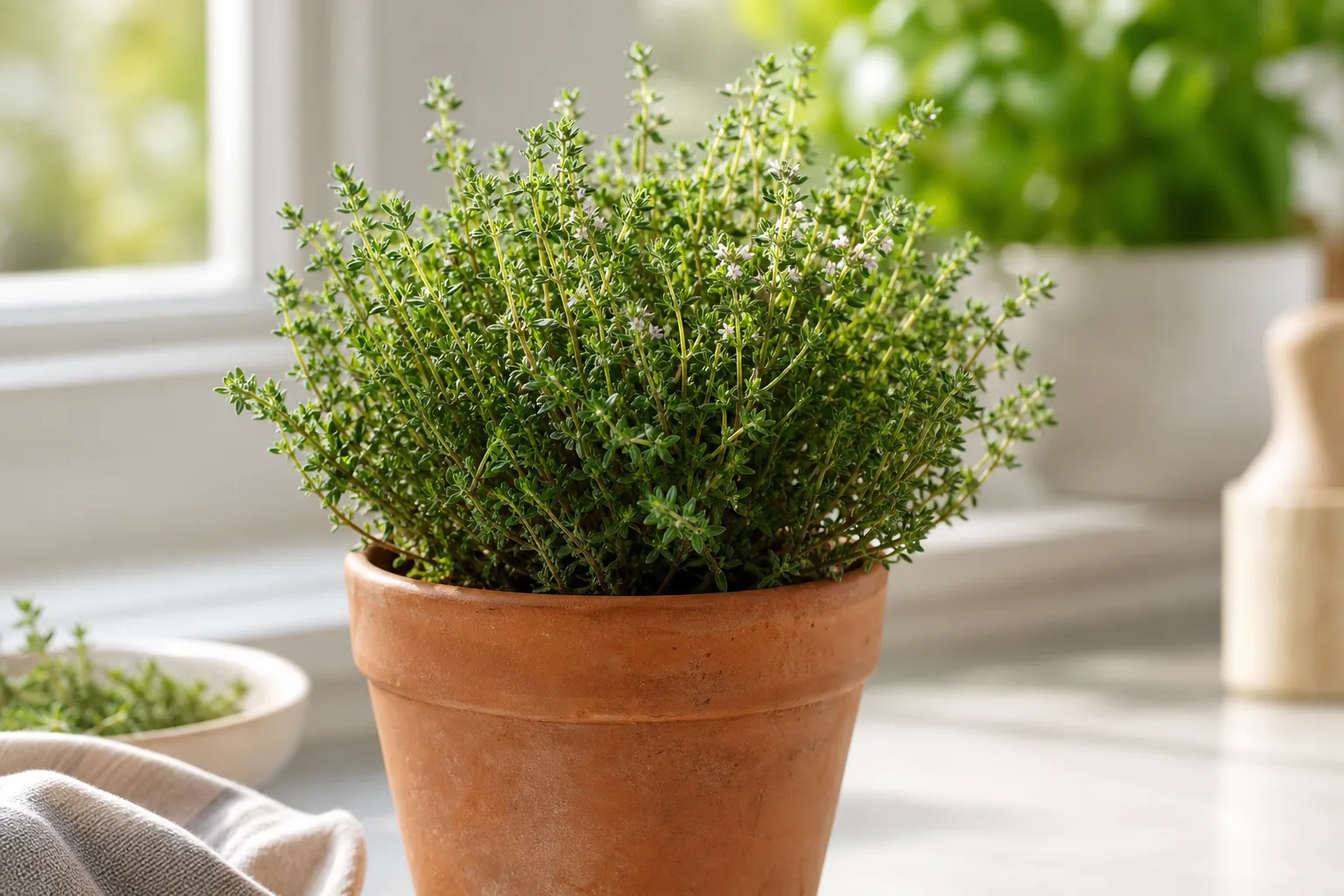
Thyme is Mediterranean: bright light, excellent drainage, lighter watering. It suffers from overwatering in heavy mix or pots without drainage. Lemon thyme adds citrus notes for vegetables and fish.
Woody stems develop over time; gentle frequent trimming keeps plants compact. Do not cut harshly into old wood without active growth below.
Why it works: Intense flavor from a small plant in good light.
Care tip: Let top soil dry more than basil before watering.
Common mistake: Watering on the same schedule as parsley.
Avoid this plant if: Your room is dim and you will not use a grow light.
7. Oregano
Best for: pasta sauces, pizza, roasted vegetables, grilled foods
Difficulty: Medium
Light: Bright; dry
Water: Mediterranean dry
Best placement: Sunny window with rosemary or thyme
Indoor cultivar tip: Greek oregano for strong savory flavor; Italian oregano for milder sauces
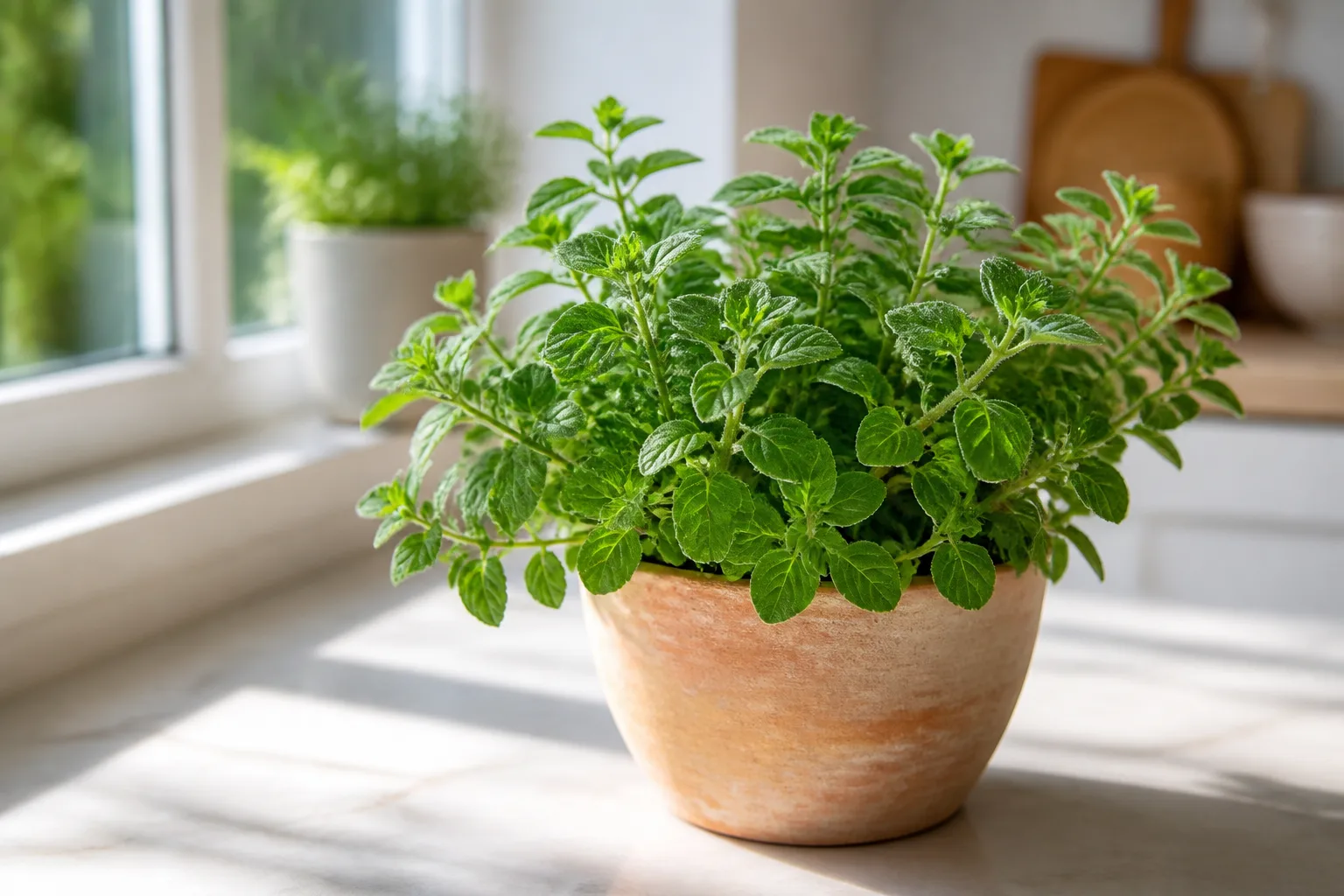
Oregano is tougher than basil in many indoor conditions when light is adequate. Greek oregano delivers the bold flavor most cooks expect. Let the top of soil dry before watering thoroughly.
Starter plants or cuttings beat seed for predictable flavor. Harvest stem tips to encourage bushiness. Woody bare bases mean time for cuttings or replacement.
Why it works: Bold Mediterranean flavor in a container-friendly form.
Care tip: Pair with thyme and rosemary in separate pots on the same bright tray.
Common mistake: Leggy growth from insufficient light.
Avoid this plant if: You rarely cook tomato-based or Mediterranean dishes.
8. Rosemary
Best for: potatoes, focaccia, roasted vegetables, poultry, infused oils
Difficulty: Hard
Light: Very bright; dry
Water: Mediterranean dry
Best placement: Brightest window or dedicated grow light
Indoor cultivar tip: Upright ‘Tuscan Blue’ or ‘Arp’ for containers; trailing types for hanging if light is strong
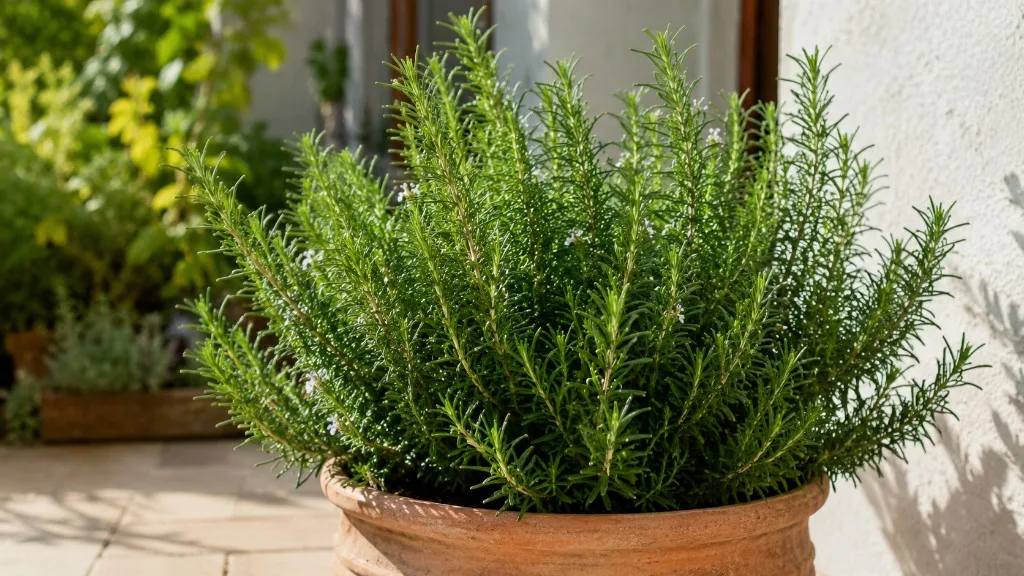
Rosemary is not the easiest herb indoors, but it earns its place when conditions fit. Fresh rosemary holds flavor well. Beginners struggle because it wants bright light, sharp drainage, and careful watering—not constant dampness, not severe drought.
Rosemary does best near a very bright window or under a grow light. Terra-cotta helps moisture evaporate faster than plastic. Water deeply when the mix has dried, then drain completely.
University of Vermont Extension describes rosemary as a tender perennial grown indoors year-round or moved outside in warm weather. Transition indoors gradually when light drops. (University of Vermont)
Why it works: Long-lived woody herb with unmatched roast-and-bread flavor.
Care tip: Ensure airflow; avoid saucers holding standing water.
Common mistake: Small daily sips instead of deep then dry cycles.
Avoid this plant if: Your brightest spot is still dim most of the day.
Useful care guides:
- Rosemary care guide
- Rosemary watering guide
- Rosemary light guide
- Rosemary propagation guide
- Rosemary problems guide
Indoor Herb Care Routine That Actually Works
Check light first, soil second, leaves third. Stretching or pale leaves mean improve light before changing fertilizer. Yellow bottom leaves with wet soil mean reduce watering. Crisp edges with bone-dry soil mean water more deeply.
Rotate pots if they lean toward the window. Keep leaves off cold glass. Remove dead foliage before it molds on soil. For watering fundamentals beyond herbs, see How to Water Indoor Plants the Right Way.
Watering and Feeding
Water by soil condition, not calendar. Top inch dry for basil, parsley, cilantro, mint, chives—water thoroughly and drain. Wait longer for thyme, oregano, rosemary. Empty saucers after watering.
Fertilizer supports growth without forcing it. During active growth, use a balanced liquid fertilizer at one-quarter strength every 2–3 weeks in spring and summer for frequently harvested herbs. Reduce feeding when growth slows in cooler or darker months. Overfeeding produces weak, soft growth. (University of Minnesota Extension)
Harvesting and Pruning
Harvesting keeps many herbs compact. Basil, mint, oregano, and thyme respond to tip pruning above nodes. Chives: snip near base. Parsley and cilantro: outer stems first.
Never strip a small indoor plant bare. Leave enough leaves for photosynthesis. Use clean scissors. Soft herbs are best fresh; woody herbs can be dried if you have surplus.
Common Indoor Herb Growing Mistakes
One crowded planter combines conflicting water needs—basil wants more moisture than rosemary; mint dominates everything.
Underestimating light is the second mistake. Decorative counters are not grow stations. Fix with a brighter window or grow light.
Overwatering kills more herbs than neglect. Yellow leaves, fungus gnats, and sour soil point to wet roots. Pots need drainage holes.
Expecting annual herbs to live forever sets you up for disappointment. Succession-sow basil and cilantro.
Ignoring pests brings aphids, spider mites, and fungus gnats indoors. Inspect leaf undersides; use food-safe methods on edibles. For broader pest ID and control, see How to tackle indoor plant pests at home.
Related Guides
Species deep care
Related guides
- Grow lights complete guide for indoor plants
- How to Water Indoor Plants the Right Way
- How to tackle indoor plant pests at home
- Best herbs for kitchen — filterable quick list with overlapping picks
Conclusion
Use the comparison table above to shortlist herbs for your light and cooking style. Strong sun or a grow light: basil, thyme, oregano, rosemary. Moderate light: mint, parsley, chives, cilantro. Separate pots, drainage holes, soil-feel watering, and succession sowing for short-lived herbs beat any single “perfect” planter photo. Replace declining plants without treating it as failure—fresh herbs within reach is the goal.