How to Tackle Indoor Plant Pests at Home
Identify common indoor plant pests like gnats, mites and mealybugs, then treat infestations before they spread.
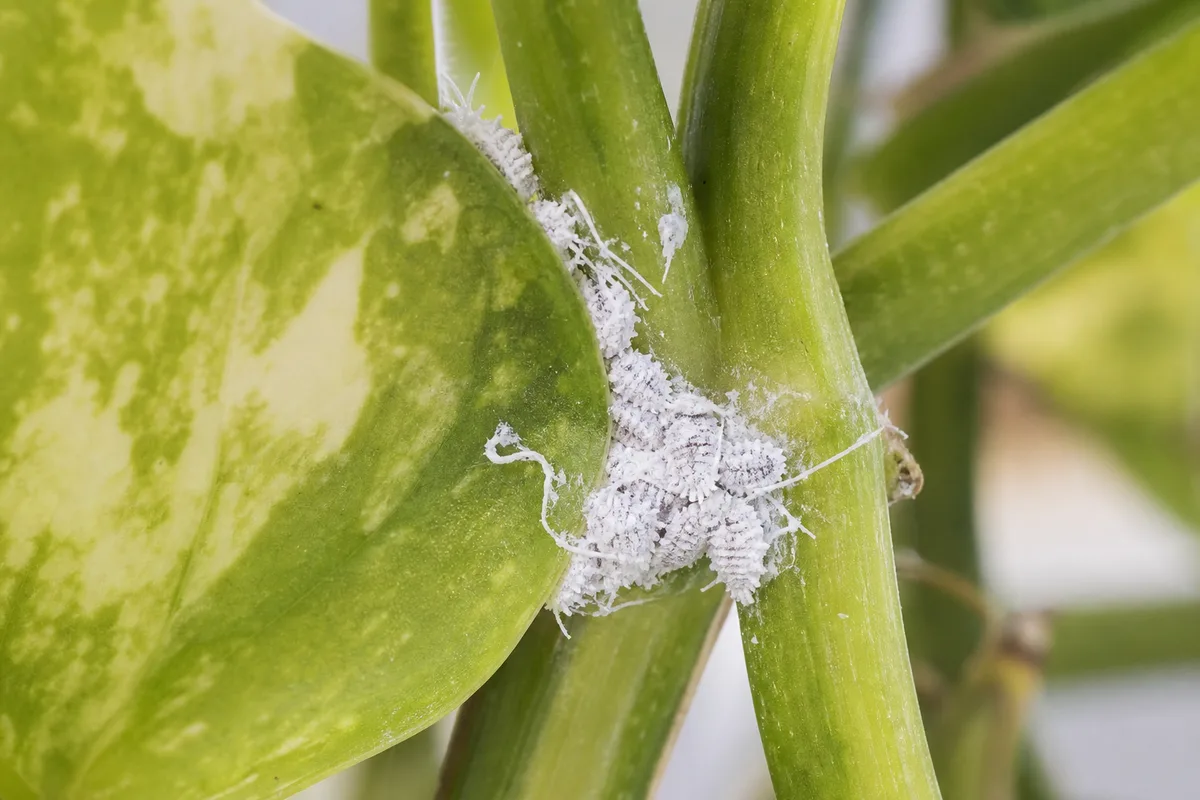
Indoor plant pests are easier to control when you stop treating every bug the same way. A cottony white clump on a pothos stem, tiny flying gnats around wet soil, fine webbing on a palm, and brown bumps on a ficus are not one problem. They are different pests with different weak points. The fastest path is not “spray something and hope.” It is to identify the pest, isolate the plant, remove the visible population, treat the right part of the plant, then repeat long enough to catch the next life stage.
This guide is the identification and treatment depth page. For a step-by-step weekly IPM schedule, treatment log template, and three-week case walkthrough, use our companion integrated pest management indoors guide. When sticky leaves, wilting, or spots might be fungal or bacterial instead of insect damage, start with houseplant diseases identification and treatment before you spray.
The most common houseplant pests include spider mites, mealybugs, scale insects, aphids, thrips, whiteflies, and fungus gnats, according to Colorado State University’s houseplant pest guidance. Springtails sometimes appear in very moist potting mix but are generally harmless scavengers—not sap feeders—so they are not treated like gnats or mealybugs. Some pests are hard to see directly, so damage patterns often reveal the problem before the insect does. University of Minnesota Extension also notes that indoor pest problems can build quickly because homes lack the natural predators, rain, and outdoor environmental checks that help suppress pests outside.
Start With the Right Diagnosis
Separate Pest Damage From Care Problems
A struggling plant does not automatically have pests. Yellow leaves can come from overwatering, underwatering, low light, nutrient stress, root rot, cold drafts, transplant shock, or pests. UC IPM points out that houseplant decline is often linked to improper watering, fertilization, root disease, sanitation, low light, or low humidity, though insects and mites can also be the cause. That distinction matters because spraying a plant with root rot will not fix the root rot. It may add more stress to an already weakened plant.
Start by reading the pattern. Pest damage usually has a location and a texture. Spider mites often create stippling, bronze-gray discoloration, leaf drop, and fine webbing, especially on leaf undersides. Mealybugs cluster as white cottony patches in leaf joints and stem crevices. Scale looks like stuck-on brown, tan, or gray bumps. Fungus gnats are seen as small flies near moist potting mix, while the larvae live in the soil. Thrips often leave silvery streaking, distorted new growth, and black specks of waste.
Also look for honeydew, a sticky, shiny residue left by sap-feeding pests such as aphids, whiteflies, mealybugs, and scale. Penn State Extension notes that honeydew can support sooty mold, which interferes with photosynthesis by coating leaf surfaces. If the floor, pot rim, or nearby furniture feels sticky, you are probably dealing with a sap-sucking pest even if you cannot yet see it clearly. Our sticky leaves symptom hub walks through that honeydew chain when you need a quick sign-based router.
Inspect the Whole Plant, Not Just the Leaves
Most indoor pest checks fail because people look only at the top of the leaves. Pests hide where casual inspection does not go: leaf undersides, new growth, stem joints, leaf axils, petiole bases, drainage holes, pot rims, moss poles, saucers, and the top layer of potting mix. A clean-looking plant can still have mealybugs tucked inside a tight rosette or scale insects lined along woody stems.
Use bright light and take your time. Turn the pot slowly. Check the newest growth first because soft new tissue attracts many sap feeders. Then check leaf undersides, because spider mites, aphids, whiteflies, and thrips often feed there. Tap a suspect leaf over white paper; moving dots may indicate mites or thrips. Run a fingernail gently over suspicious brown bumps; if they lift off, scale is likely. Disturb the soil surface; if tiny flies rise, fungus gnats are active.
A magnifying lens helps, but you do not need lab equipment. What you need is a repeatable inspection routine. Indoor pests are usually controlled by catching them early and acting consistently, not by discovering a miracle spray after the infestation has spread across twenty plants. When symptoms still do not match anything in the table below, try the plant problem diagnosis tool or contact your local cooperative extension office with clear photos.
Common Indoor Plant Pests — Photo Field Guide
The table below gives a quick field guide for matching symptoms to likely pests. Each row links to a deeper LeafyPixels pest hub when you need species-specific damage pages. It is not a substitute for close inspection, but it prevents the most common mistake: treating soil pests like leaf pests, or treating mites like insects.
| What you notice | Likely pest | Where to check first | Hub |
|---|---|---|---|
| Fine webbing, pale speckles, bronzed leaves | Spider mites | Undersides of leaves, leaf joints | Spider mites |
| White cottony clumps | Mealybugs | Leaf axils, stems, undersides | Mealybugs |
| Brown or tan bumps stuck to stems/leaves | Scale insects | Stems, midribs, woody growth | Scale insects |
| Small flies around soil | Fungus gnats | Soil surface, saucers, wet mix | Fungus gnats |
| Clusters of soft green, black, gray, or yellow insects | Aphids | New growth, buds, undersides | Aphids |
| Tiny white insects fly up when disturbed | Whiteflies | Leaf undersides | Whiteflies |
| Silvery streaks, distorted leaves, black specks | Thrips | New growth, flowers, leaf undersides | Thrips |
Spider Mites
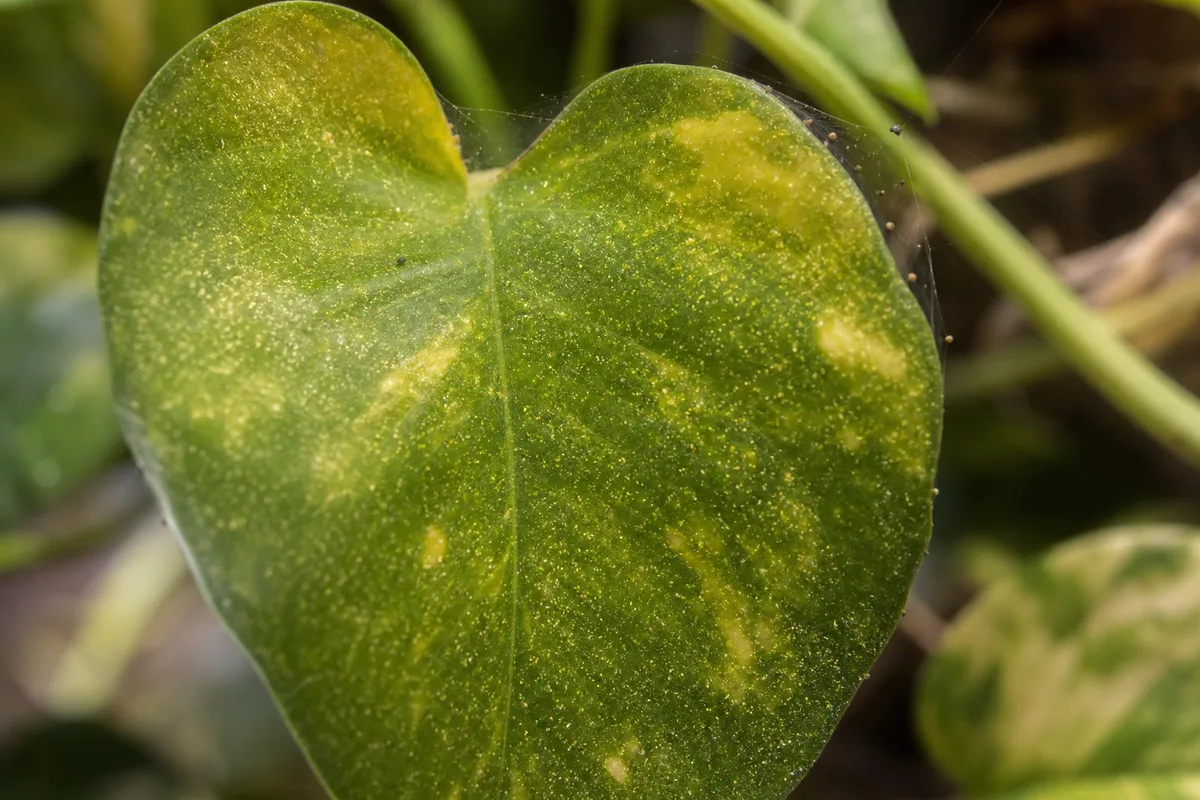
Spider mites are not insects; they are tiny arachnids related to spiders and ticks. That matters because some insecticides are not effective on mites, and misuse can make the problem worse by stressing the plant or reducing natural controls. Penn State Extension describes spider mites as thriving in hot, dry conditions and causing stippling, bronze or gray discoloration, premature leaf drop, and fine webbing. University of Minnesota Extension also identifies spider mites as a major houseplant offender, especially in warm, dry indoor winter conditions.
The first sign is usually not a visible mite. It is a dusty, speckled look on leaves that used to be glossy. Palms, ivy, dracaena, ficus, schefflera, and many thin-leaved tropicals can decline quickly when mites multiply. A light infestation can often be reduced by rinsing the plant thoroughly, especially the undersides of leaves. A heavy infestation with webbing over multiple stems needs repeated treatment and may require pruning the worst growth. See the full spider mites hub for sign-by-sign matching.
Mealybugs
Mealybugs look like tiny bits of white lint or cotton, but they are living sap feeders. They hide in joints, under leaves, inside curled growth, around nodes, and sometimes in the roots. The Royal Horticultural Society describes glasshouse mealybugs as common sap-feeding insects that weaken plants and excrete honeydew, which can lead to sooty mould. This is why mealybug problems often come with sticky leaves, distorted growth, yellowing, and a general loss of vigor.
Mealybugs are frustrating because wiping off the visible adults is not always enough. Small individuals and egg masses can remain hidden. A cotton swab dipped in alcohol can remove visible clusters, but the plant still needs monitoring every few days. University of Minnesota Extension recommends removing mealybugs with tweezers or a cotton swab dipped in alcohol as one physical control option. For pothos-specific damage patterns, see mealybugs on pothos.
Scale Insects
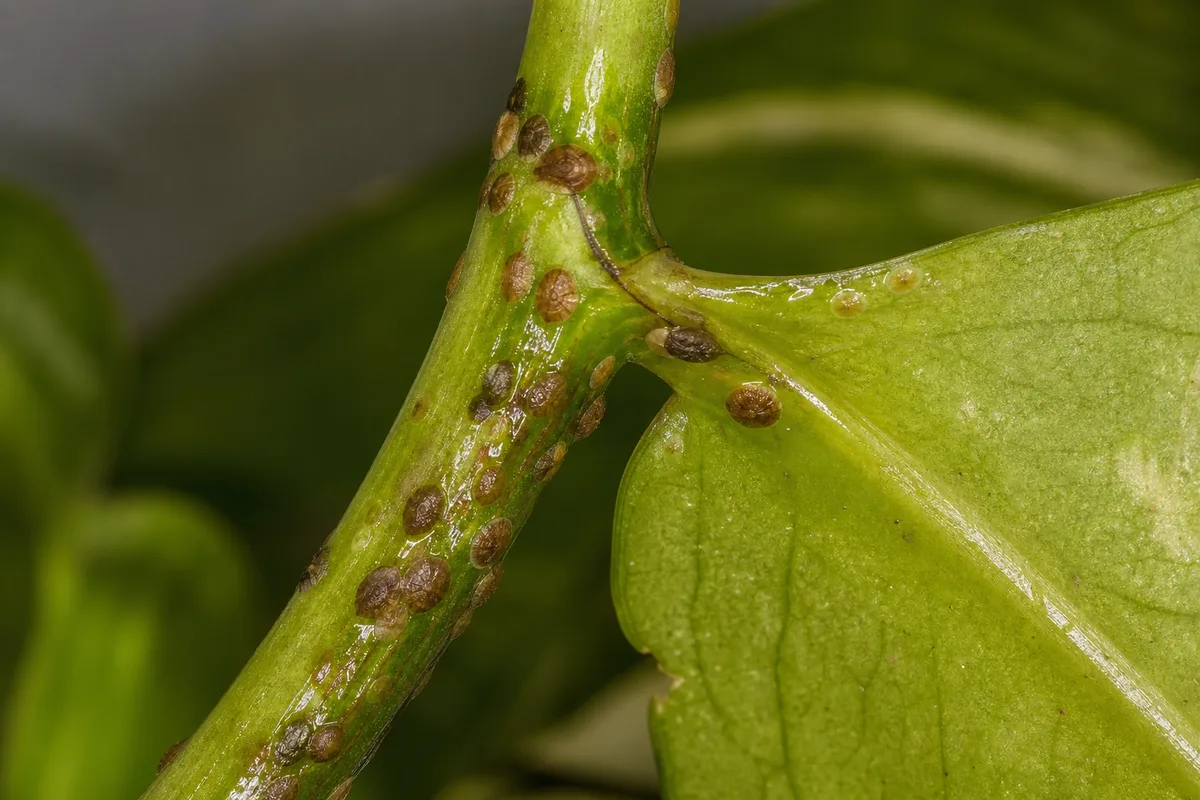
Scale insects are easy to miss because they do not look like normal bugs. Many appear as small brown, tan, gray, or shell-like bumps attached to stems, leaf veins, and woody areas. Some scales are soft and produce honeydew; others are armored and more protected. Either way, they feed by drawing sap from the plant, slowly reducing vigor.
The difficult part is timing. Adult scale can be shielded by waxy or shell-like coverings, so sprays may not reach them well. The young “crawler” stage is more vulnerable, but crawlers are tiny and easy to miss. For small infestations, physical removal is often the most reliable first step. University of Minnesota Extension notes that small numbers of scale insects can be removed manually with a fingernail file or similar tool. Deeper coverage lives on the scale insects hub.
Fungus Gnats
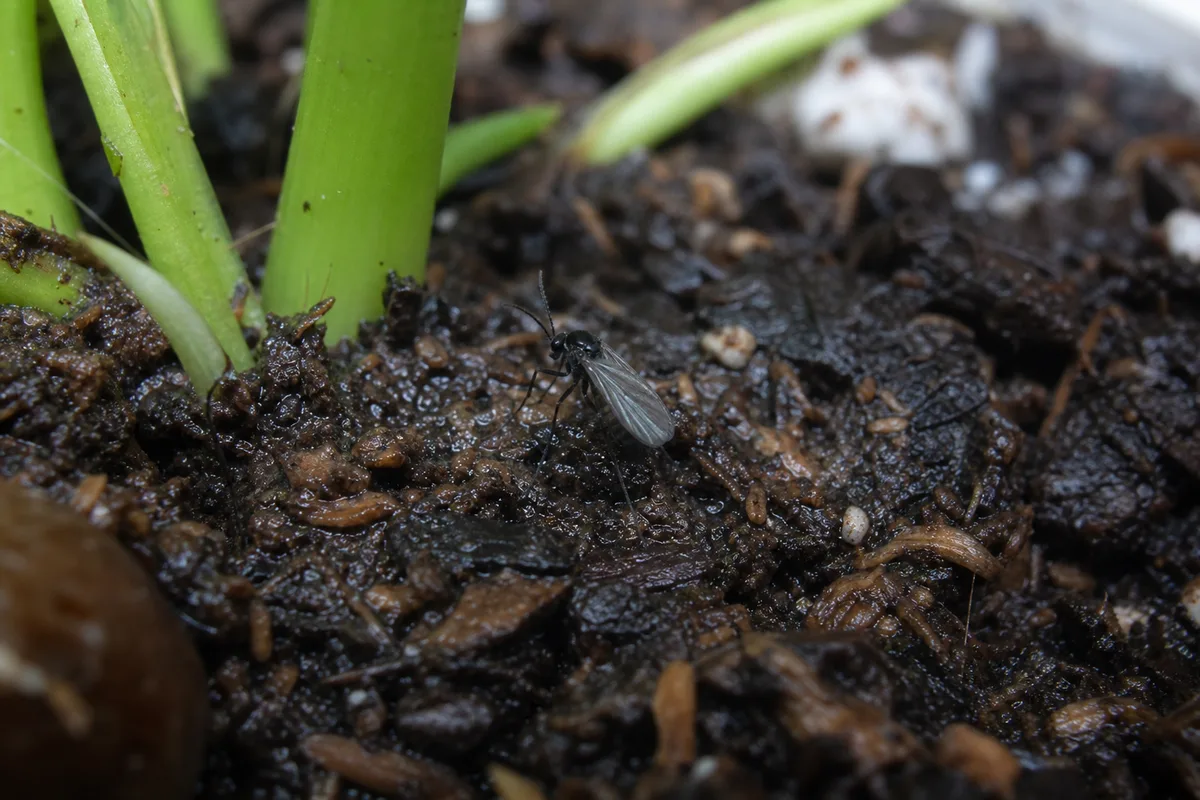
Fungus gnats are the small, mosquito-like flies that hover around potting mix, windows, and plant shelves. The adults are annoying, but the bigger clue is environmental: the soil is staying wet enough for larvae to survive. Penn State Extension notes that adult fungus gnats are mostly a nuisance, while larvae feed on organic matter and roots and can reduce plant vigor.
Fungus gnats are common in dense organic mixes, pots without good drainage, decorative cachepots that hold water, and plants watered on a fixed schedule rather than by soil need. Seedlings, cuttings, and weakened plants are more vulnerable because their roots are tender. A mature, healthy plant may tolerate a few gnats, but a persistent cloud of adults usually means the potting mix needs a moisture reset. Pair this section with fungus gnats and our indoor plant watering basics when soggy soil is part of the story.
Aphids, Thrips, and Whiteflies
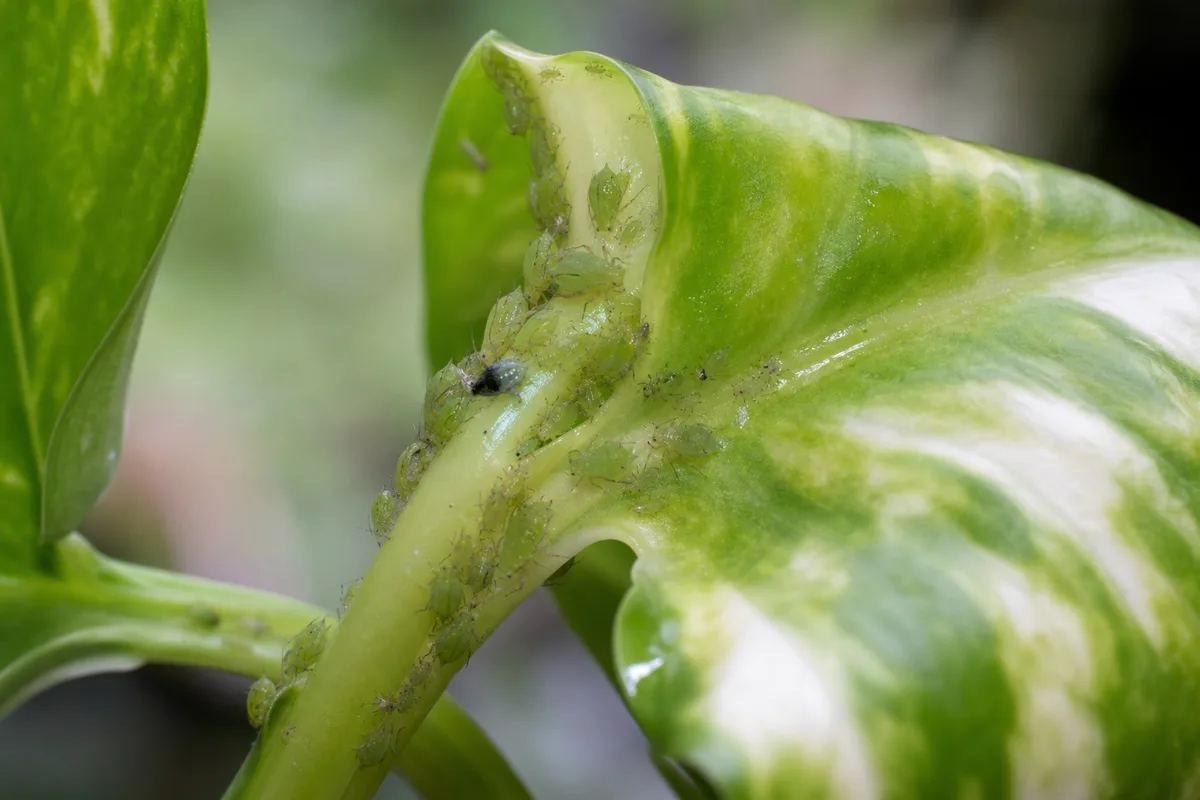
Aphids are soft-bodied insects that cluster on tender growth, flower buds, and leaf undersides. University of Minnesota Extension describes aphids as small, pear-shaped insects that can be green, black, red, yellow, brown, or gray. Indoors, they often appear after plants spend time outside or when new plants enter the collection. They reproduce quickly, so a few aphids on new growth can become a visible colony fast. Hub: aphids.
Thrips are trickier. They are slender, fast, and often noticed by damage rather than by the insect itself. Silvery scars, distorted new leaves, black specks, and damaged flowers are common warning signs. Hub: thrips. Whiteflies are easier to spot because adults flutter up when leaves are disturbed, but their immature stages sit on leaf undersides and can be overlooked. Hub: whiteflies. All three can spread between plants, so isolation and repeated treatment matter.
What to Do the Moment You Find Pests
Isolate the Plant
The first move is not spraying. The first move is isolation. Move the affected plant away from the rest of your collection, ideally into a separate room with enough light to keep it from declining further. If you cannot use another room, create distance and avoid placing it above or beside other plants. Pests spread through direct contact, drifting adults, shared tools, reused saucers, hands, sleeves, and even water splashing from one pot to another.
Isolation is especially important for spider mites, mealybugs, thrips, and scale because a plant can look mildly affected while nearby plants are already hosting early stages. University of Minnesota Extension recommends isolating plants when pests are detected and quarantining new additions until you are sure they are not carrying unwanted visitors. Keep the plant isolated until you have completed treatment and observed clean new growth. One clean-looking day is not enough. Many pests have eggs or juvenile stages that survive the first cleaning. A practical minimum is two to four weeks of monitoring after the last visible pest, depending on the pest and severity.
Remove What You Can Physically See
Physical removal is underrated because it feels too simple. It works because it instantly lowers the pest population before you apply any treatment. Colorado State University Extension notes that many household plant pests can be controlled at least partly by washing plants with a vigorous jet of water, especially spider mites and aphids.
For sturdy foliage, rinse the plant in a sink, shower, or outdoors in shade. Focus on the undersides of leaves and stem joints. For delicate plants such as calatheas or African violets, wipe leaves with a damp cloth instead of blasting them. Prune heavily infested leaves or stems if the plant can tolerate it. Remove dead leaves from the pot surface because decaying material can support fungus gnats and disease problems. Clean the pot exterior, saucer, and shelf too; pests and eggs are not always confined to leaves.
Manual removal is not a one-time cure for serious infestations. Think of it as population control. You are making the next treatment more effective by reducing the number of pests it must hit.
Choose the Least-Toxic Treatment That Fits the Pest
The safest effective treatment is the one that matches the pest’s biology. Fungus gnat larvae live in the soil, so leaf sprays will not solve the root cause. Scale insects sit under protective coverings, so a quick misting may do little. Spider mites hide on leaf undersides, so spraying only the top of the plant is mostly wasted effort.
Integrated pest management, or IPM, is the right mindset for indoor plants. The National Pesticide Information Center explains that houseplant IPM aims to keep both pests and pesticide use to a minimum, which is especially relevant indoors because pesticide exposure risks differ inside a home. In practice, that means you start with inspection, isolation, physical removal, care correction, and targeted low-toxicity treatments before reaching for stronger products. For calendar timing and repeat intervals, follow the IPM workflow guide.
Always read the product label before using any pesticide indoors. “Natural” does not automatically mean harmless. University of Maine Extension cautions that neem oil and pyrethrins are lower-risk pesticides but can still cause irritation or other harm. Clemson’s insecticidal soap guidance also emphasizes following label directions and not increasing concentration, because stronger mixtures can injure plants.
Pest-by-Pest Treatment Guide
Treat Sap-Sucking Pests on Leaves and Stems
For spider mites, begin with a thorough rinse. Mites are small and easily dislodged, but they hide on leaf undersides, so coverage matters. After rinsing, wipe accessible leaves and remove badly damaged foliage. If mites remain, use a product labeled for mites and indoor plants, such as insecticidal soap or horticultural oil, following the label exactly. Repeat as directed, because eggs and newly hatched mites can survive a single treatment.
For mealybugs, remove visible clusters with a cotton swab dipped in alcohol, tweezers, or a damp cloth. Do not just dab the obvious white clumps and stop. Check leaf axils, stem nodes, pot rims, and the underside of leaves. Follow with insecticidal soap or horticultural oil if the infestation is more than a few isolated insects. Succulents and fuzzy-leaved plants can be sensitive to sprays, so test a small area first and keep treated plants out of direct sun until dry.
Worked example — pothos with mealybugs in leaf axils, weeks 1–3: Week 1: isolate the pothos, alcohol-swab every visible cluster, rinse gently, log four clusters found. Week 2: two pinhead crawlers appear in a missed axil—swab again, apply labeled insecticidal soap to runoff in the evening. Week 3: zero live mealybugs; neighbor plants show no new signs. This mirrors the three-week rhythm in our IPM case study—physical removal first, then repeats on a calendar.
For scale, scrape or wipe off adults manually where possible. A cotton swab, soft toothbrush, or fingernail can help on sturdy stems, but avoid gouging tender tissue. After removal, treat the plant with a labeled oil or soap product to target crawlers and exposed stages. Scale often requires patience because adults are protected and new crawlers may appear later. Keep inspecting stems every few days.
For aphids and whiteflies, rinse the plant thoroughly, prune crowded or badly infested growth, and use yellow sticky traps near the plant to monitor flying adults. Insecticidal soap can work on soft-bodied insects when it contacts them directly, but it has little residual effect. That is a strength and a limitation: it can be lower impact, but you must repeat treatment and cover the pest.
For thrips, act early. Remove damaged flowers and tender growth if the plant can spare them, because thrips often hide there. Sticky traps can help monitor adults, but they do not eliminate larvae hidden in plant tissue or potting media. Repeated labeled treatments are usually needed, and nearby plants should be inspected carefully because thrips can spread before damage is obvious.
Treat Soil Pests Without Drowning the Plant
Fungus gnats require a different plan because the adult flies are only part of the problem. Sticky traps catch adults and help you measure progress, but larvae remain in the potting mix. The root cause is usually moisture. Let the top layer of soil dry appropriately for the plant species, empty saucers after watering, improve drainage, and stop watering by calendar.
For plants that tolerate drying between waterings, letting the top inch or two of mix dry can sharply reduce fungus gnat reproduction. For moisture-loving plants, the goal is not neglect; it is better air exchange and less stagnant wetness. Use a well-draining mix, avoid oversized pots, and remove decaying leaves from the soil surface. If larvae persist, consider a product labeled for fungus gnat larvae, such as Bacillus thuringiensis israelensis. Missouri Botanical Garden lists Bti as a biological option used as a soil drench for fungus gnat larvae, while noting it does not control adults.
Repotting can help when potting mix is sour, compacted, decomposed, or heavily infested, but it is not always the first move. Repotting a stressed plant can create more stress. Use it when the mix is clearly staying wet too long, roots are unhealthy, larvae are persistent, or the plant is already due for fresh soil. If you repot, clean the pot, remove old decaying mix where practical, trim dead roots, and avoid moving contaminated soil to other plants.
Repeat Treatments Until the Life Cycle Breaks
Most indoor pest treatments fail because the first visible improvement tricks people into stopping too soon. Adult insects may die or wash away while eggs, crawlers, larvae, or hidden individuals remain. A week later, the plant looks “reinfested,” but often the infestation was never fully interrupted.
A practical treatment rhythm is to inspect every two to three days at first, remove visible pests immediately, and repeat any labeled spray or soil treatment according to the product instructions—usually every five to seven days for three full cycles indoors, as outlined in the IPM schedule guide. Do not apply more often or at higher concentration than the label allows. More is not better when leaves are already stressed. Oils and soaps can damage sensitive plants, especially in heat, direct sun, drought stress, or poor airflow.
Track results. A small note in your phone can save plants: date found, pest suspected, treatment used, next check date, and whether pests are still visible. This sounds excessive until you have multiple plants and cannot remember which one was treated last Tuesday. Pest control rewards consistency more than intensity.
Why Indoor Plant Pests Keep Coming Back
Hidden Eggs, Crawlers, and Untreated Neighbor Plants
Recurring pests usually have a reason. The most common reason is hidden life stages. Scale crawlers, mealybug eggs, thrips larvae, and spider mite eggs can remain after visible adults are gone. Another common reason is untreated neighbor plants. If one plant has pests, the closest plants should be inspected even if they look fine. A single untreated plant can quietly restart the whole problem.
New plants are another source. A plant from a nursery, grocery store, friend, plant swap, or outdoor patio can carry pests without obvious symptoms. The plant may look healthy because the population is still small. Once it enters a warm indoor environment without rain or predators, the pest population can climb. That is why quarantine is not paranoia; it is basic plant hygiene.
Shared tools can also move pests. Wipe pruners, stakes, clips, watering can spouts, and shelves when dealing with infestations. Do not reuse old potting mix from a pest problem. Do not let infested leaves sit in a plant corner. These small habits matter when you keep several houseplants close together.
Stress, Overwatering, and Too Much Fertilizer
Pests do better on stressed plants. A plant weakened by poor light, soggy roots, dust-covered leaves, dry air, or erratic watering has less resilience. Some pests also benefit from soft, lush growth pushed by heavy nitrogen feeding. University of Missouri Extension advises avoiding overfertilization and notes that mealybugs, scale, and aphids thrive on overly succulent growth often associated with high nitrogen.
Overwatering deserves special attention because it fuels both pest and disease problems. Fungus gnats love consistently moist organic potting mix, but overwatering also weakens roots, and weak roots reduce the plant’s ability to recover from leaf-feeding pests. A plant can end up with both gnats and root stress, making the owner think the gnats alone are killing it. Sometimes the better fix is a watering correction plus larval control, not repeated sprays.
Low humidity can also affect pest pressure, especially with spider mites. Many indoor spaces become dry during heating season, and mites tend to thrive in warm, dry conditions. Raising humidity to a plant-appropriate level, rinsing foliage periodically, and avoiding heat vents can reduce mite-friendly conditions. This is not a standalone cure for an active infestation, but it helps prevent the environment from favoring another outbreak. See the houseplant humidity guide for room-level fixes that do not require overwatering.
Safe Prevention, Pesticide Safety, and Long-Term Control
The best way to tackle indoor plant pests is to make them boring. That means catching them while the population is still small. Quarantine new plants for at least two to three weeks when possible. Keep them away from your main collection, inspect them under bright light, check soil and leaf undersides, and avoid repotting them directly beside healthy plants. If the plant came from a clearance rack, outdoor market, dense greenhouse, or friend’s infested collection, extend the quarantine.
A weekly inspection routine is enough for most home collections. Look at new growth, undersides of leaves, stems, soil surface, saucers, and sticky residue. Clean dust from broad leaves so you can see changes early. Rotate plants when watering so hidden sides are not ignored. Check more often in winter for spider mites and after bringing outdoor plants inside.
Using pesticides safely indoors — pets, children, and aquariums
Indoor pesticide use is a YMYL topic because homes are less ventilated than gardens and because curious pets, children, and aquarium setups add exposure paths that outdoor labels rarely address. NPIC’s houseplant IPM guidance emphasizes reading the entire label, using only products labeled for the pest and site, and keeping pesticide use to the minimum that solves the problem.
Use this checklist before any indoor spray or drench:
- Read the label first — confirm the product is labeled for the pest, the plant type, and indoor use if required. NPIC’s label-reading guide walks through signal words, precautionary statements, and re-entry intervals.
- Ventilate the room — open a window or run exhaust for the duration of application and until sprays dry unless the label says otherwise.
- Move pets and children out — keep dogs, cats, birds, and small children away from the treatment area until foliage is fully dry and any label re-entry interval has passed. Pets that chew leaves need extra distance; isolate treated plants behind a closed door when possible.
- Protect aquariums and terrariums — turn off air pumps and close tank lids before spraying nearby. Fine droplets and aerosolized oils can harm fish and invertebrates even at low concentrations. Treat in another room when you keep open-top tanks or paludariums.
- Patch-test sensitive plants — ferns, calatheas, begonias, and plants with fuzzy leaves can burn from soaps and oils. Test one leaf, wait 48 hours, then treat broadly.
- Never exceed label rates — stronger mixes do not work faster; they injure leaves and increase indoor exposure.
- Store products locked away — keep concentrates where children and pets cannot reach them, separate from food and drink.
- Know who to call — for label questions or exposure concerns, contact NPIC at 800-858-7378 or use their houseplant IPM page.
Use pesticides with restraint. Neem oil, insecticidal soap, horticultural oils, pyrethrins, and biological controls all have limits. Some work only on contact. Some can burn sensitive foliage. Some are not appropriate around pets, children, aquariums, or poorly ventilated spaces. When in doubt, choose physical removal, isolation, and care correction first, then use the least-toxic labeled product that fits the pest.
There is also a point where saving a plant is not worth the risk to the rest of the collection. Discard a plant when the infestation is severe, the plant is inexpensive or easily replaced, pests are spreading despite treatment, or the plant has too little healthy growth left to recover. This is not failure. It is containment. One badly infested plant can cost you ten healthy ones.
Related guides
- Integrated pest management indoors — weekly IPM schedule, treatment log, and three-week mealybug case study
- Houseplant diseases identification and treatment — when symptoms point to fungal or bacterial problems, not insects
- Indoor plant watering basics — dry-soil vs soggy-soil context for gnats and root stress
- Houseplant humidity guide — room-level humidity for mite-prone plants without overwatering
- Winter houseplant care — seasonal inspection cadence when dry heating air spikes mite pressure
Conclusion
Tackling indoor plant pests works when you match the pest to the treatment, isolate before you spray, and repeat long enough to break the life cycle. Use the photo field guide and hub links above for identification, then follow the IPM workflow for calendar discipline. Two clean inspections beat one perfect spray every time.