Houseplant Humidity Guide: Ideal Levels, Meters and Easy Fixes
Learn ideal humidity levels for indoor plants, how to measure RH, and which fixes actually help dry houseplant leaves.
Humidity is the invisible variable behind brown tips, crispy fern fronds, and winter spider mite flare-ups. The EPA recommends keeping indoor relative humidity around 30% to 50% for comfort and indoor air quality, while many tropical houseplants perform better around 40% to 60% or higher. (US EPA) The useful question is not “Should I raise humidity?” It is “Which plants actually need help, how dry is this shelf at leaf height, and what is the lightest fix that closes the gap without creating mold risk?” This guide answers that question and points to deeper method-specific pages when you need them.
Why Home Humidity Matters for Houseplants
Dry air does not just feel uncomfortable. It changes how fast water leaves plant tissue through transpiration. When relative humidity (RH) drops, moisture moves from plant tissue into the air faster. Thin-leaved tropicals like ferns and calatheas show stress first; tougher plants like pothos and snake plant tolerate average room air longer. Penn State Extension notes that low humidity is a common winter problem for houseplants and that grouping plants or using a humidifier can help. (Penn State Extension)
The People-vs-Plant RH Gap
Homes are built for people, not cloud-forest calatheas. The EPA and mold-prevention guidance recommend keeping indoor RH below 60%, ideally 30% to 50%, to reduce condensation and mold risk. (US EPA) Extension sources place many houseplants in a 40% to 60% band, with demanding tropicals often wanting 70% to 80% in ideal conditions. (Extension | University of New Hampshire) The practical answer is not to humidify the whole house to rainforest levels. It is to measure your room, classify your plants, and create a localized microclimate around the shelf or collection that needs it.
That distinction matters because the same apartment can hold a dry office corner at 25% RH, a bathroom shelf at 45%, and a cabinet above 60% on the same day. One room-level rule will miss those differences. Measure before you buy gadgets, and re-measure after each fix instead of assuming every symptom is a humidity problem.
Target Humidity by Plant Type
Use this table as a starting map, then check species-specific pages when you grow finicky plants. The RHS advises checking individual plant needs rather than assuming one humidity level fits every pot on the shelf. (RHS)
| Group | Ideal RH | Examples | Tolerates average home? |
|---|---|---|---|
| Desert / succulent | 30–40% | Snake plant, cactus, haworthia | Yes |
| Average tropical | 40–50% | Pothos, Monstera deliciosa, philodendron | Usually yes |
| High humidity | 50–60%+ | Calathea, fern, anthurium, peace lily | Winter often no |
| Terrarium / cabinet | 60–80% | Moss, fittonia, small ferns | Needs enclosure |
UNH Extension places most houseplants (excluding cacti and succulents) in a 40% to 60% range, with tropical species thriving at 70% to 80% when you can provide it safely. (Extension | University of New Hampshire) If your hygrometer already reads above 40% and you only grow easy tropicals, you may not need major changes. If you grow calatheas or ferns and winter RH sits in the low 20s, plan a targeted fix.
Measure First With a Hygrometer
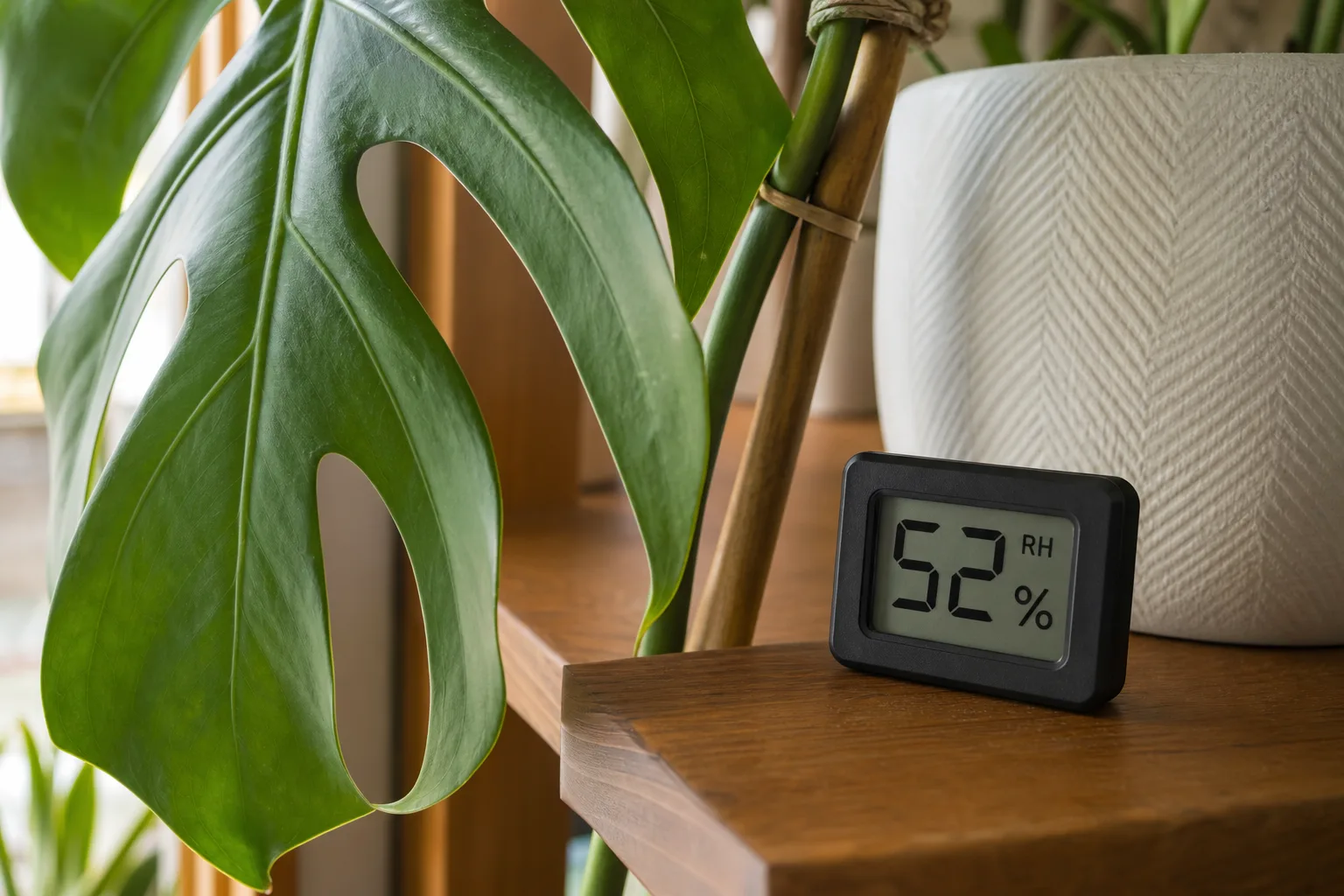
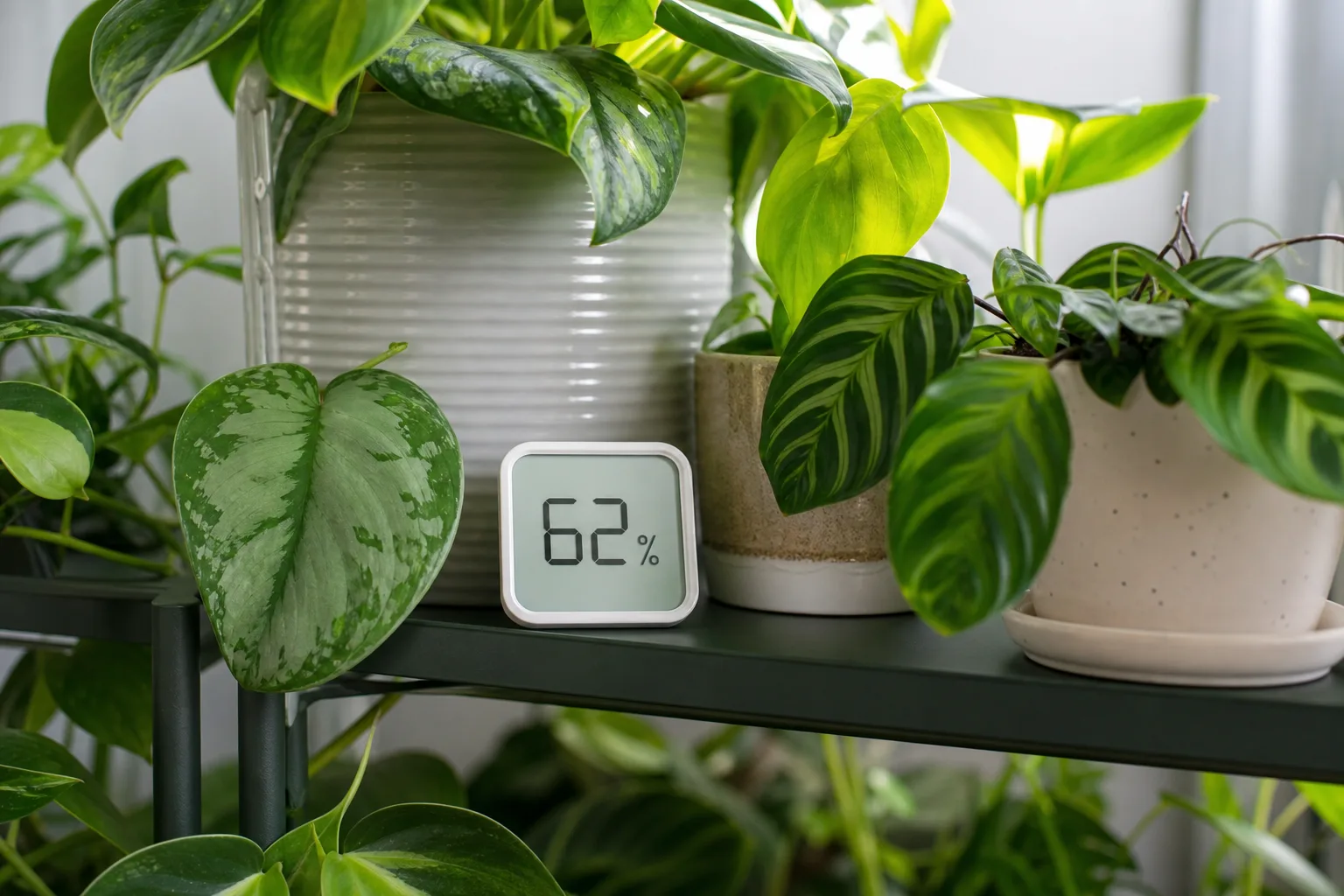
A $10 to $15 digital hygrometer at plant height tells you more than guessing from how dry your skin feels. Phone weather apps report outdoor conditions, not the microclimate beside a heater vent. University of Maryland Extension recommends monitoring temperature and humidity because both affect how quickly potting mix dries and how plants respond indoors. (University of Maryland Extension)
Where to Place Your Hygrometer
Place the sensor at leaf height, near the plants you are trying to help, and away from vents, radiators, and cold window glass. Do not rely on a reading from the floor or ceiling. Check at the same time of day for a few days before deciding your baseline. Expect 20% to 35% RH in many heated winter rooms; air conditioning also lowers humidity and can blast cold dry air onto nearby foliage. Kitchens and bathrooms may read higher locally, but fans and open windows still create swings.
If RH is consistently above 40% and your plants look healthy, celebrate and skip the shopping cart. Measurement prevents both under- and over-humidifying.
Pick a Fix: A Simple Decision Tree
Work through these steps in order:
- Measure RH at plant height for three to seven days.
- Classify plants using the table above (easy tropical vs high-humidity vs succulent).
- If RH is below plant target and symptoms match dry air, choose the lightest fix that closes the gap:
- Gap of 5–15 points, moderate plants: grouping + pebble trays (see cluster guides for setup).
- Gap of 15+ points or finicky plants: humidifier near the collection.
- Single ultra-fussy species or propagation: closed cabinet or terrarium with ventilation.
- Re-measure after 24–48 hours and adjust. Focus on the daily low reading, not just the temporary peak right after the humidifier starts.
- Stop if home-risk signals appear: window condensation, musty smell, persistently wet walls, or soil that now stays wet too long.
This hub keeps method summaries short. For pebble-tray math, styling, and humidifier comparisons, use the Go deeper links at the end rather than duplicating full tutorials here.
Match the Fix to the Size of the Problem
| Situation | Best first move | Why |
|---|---|---|
| Easy tropicals, RH 35–45%, no major symptoms | Do nothing yet | Many common houseplants are already within a workable range |
| Shelf of ferns or calatheas, RH low 30s | Group plants and add a small nearby humidifier | You need a measurable bump, not a cosmetic one |
| Single plant with brown tips but room RH is already 45–50% | Check watering, salts, and light before adding moisture | Dry tips are not always a humidity issue |
| One small tray or sill garden, RH just 5–10 points low | Grouping or a pebble tray may be enough | Small local boosts can help in stable rooms |
| Cabinet plants or propagation boxes | Enclosure plus airflow | High humidity is easier to control in a small enclosed volume |
| Whole room chronically below 30% in winter | Room humidifier plus hygrometer | Local tweaks rarely close a large gap consistently |
Humidifiers: Types, Sizing, and Cleaning
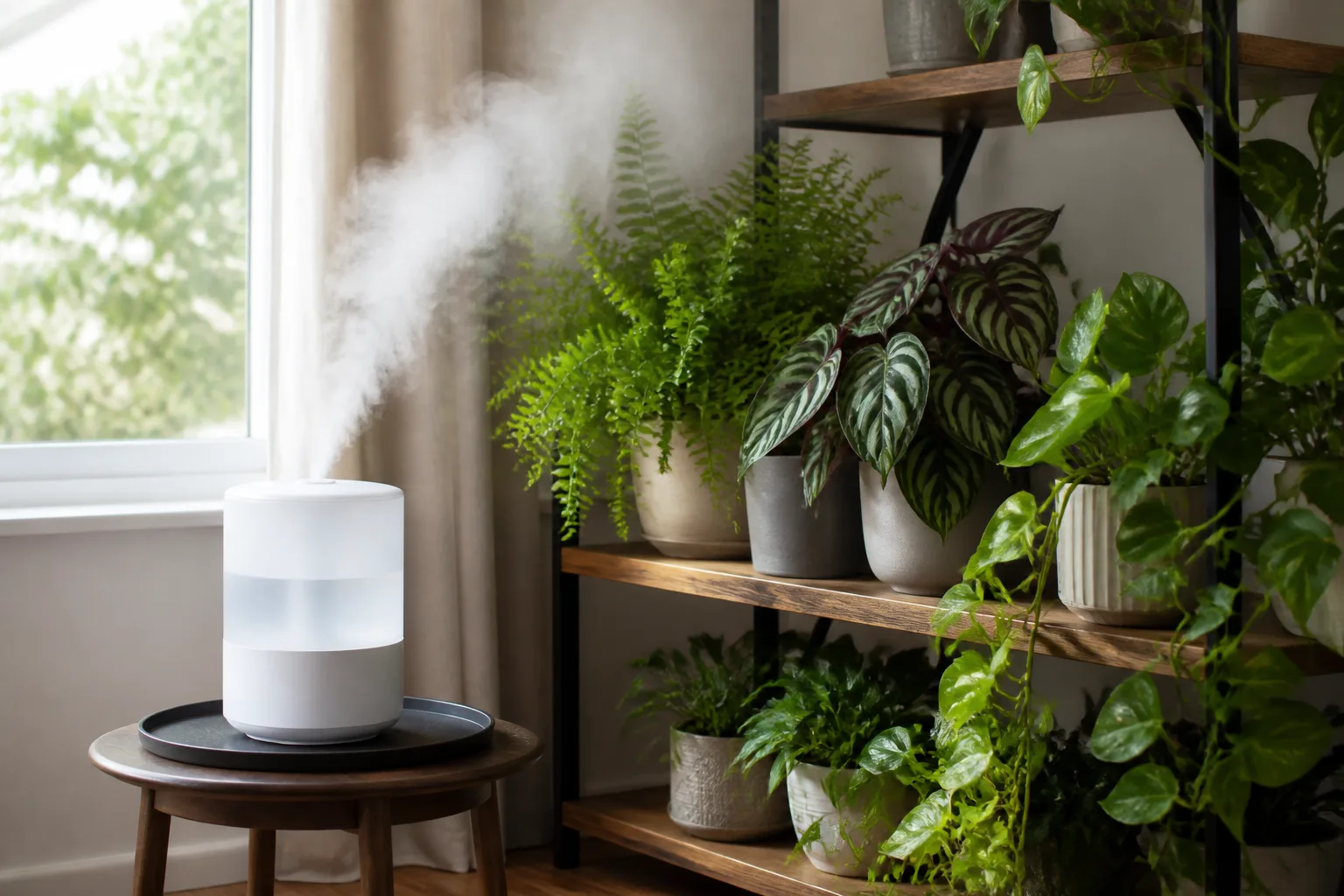
A portable humidifier is the most reliable way to raise RH in a dry room. UNH Extension recommends placing it close to plants in larger rooms and running it for multiple hours daily, paired with a hygrometer to track results. (Extension | University of New Hampshire)
Size by room, not plant count - editorial rule-of-thumb based on common consumer humidifier ratings:
| Room size | Approx. output needed |
|---|---|
| Small bedroom (~100 sq ft) | 1–2 L/day unit |
| Living room (~300+ sq ft) | 3–4 L/day or console |
Ultrasonic units are quiet and common; they can leave white mineral dust if you use hard tap water - distilled or filtered water reduces that. Evaporative units are louder but self-limiting as RH rises and may need less frequent mineral cleanup on surfaces. Warm-mist models boil water; clean them regularly to prevent bacterial buildup. The EPA notes that humidifiers must be cleaned often and that RH should stay below 60% to avoid condensation and mold. (US EPA)
Point airflow away from walls and 3 to 4 feet from foliage so leaves are not wet 24/7 - wet foliage plus stagnant air invites fungal leaf spots. Empty and scrub the tank weekly during heating season. If hard water leaves visible mineral dust, switch to distilled or filtered water before assuming the machine itself is failing.
Grouping, Pebble Trays, and Misting
Grouping lets combined transpiration raise RH slightly in a small zone - useful on open shelves, weak in drafty rooms. Pebble trays add a few percentage points locally through evaporation; they supplement humidifiers but rarely rescue high-humidity plants in a very dry heated room. Full setup and honest limits: indoor humidity and pebble trays and pebble tray vs humidifier.
Misting cools leaf surfaces briefly and does not sustainably raise room RH. University of Minnesota Extension notes misting is not very effective for meaningfully increasing humidity, especially for ferns and other demanding plants. (University of Minnesota Extension) Skip night misting on crowded plants - wet leaves in stagnant air spread foliar disease.
Closed Cabinets and Terrariums
Enclosed displays hold 60% to 80% RH well for moss, fittonia, and propagation. Monitor with a hygrometer inside and vent briefly every few days to prevent mold. A small fan on low helps exchange air without crashing humidity instantly. If musty smell or soft brown patches appear, increase airflow before adding more moisture.
Humidity Is Not Watering
Low humidity causes tip burn while soil can still be moist. Overwatering “to compensate” worsens root rot. Fix air moisture and watering separately using our watering basics. When tips still burn after RH hits 50%, check salt build-up and tap water quality before assuming the air is still too dry.
Seasonal Humidity Playbook
| Season | Typical issue | Fix |
|---|---|---|
| Winter | Dry heat, mites | Humidifier + inspection; see winter houseplant care |
| Summer AC | Cold dry blast | Move plants off vents; see summer humidity tips |
| Spring / fall | RH often adequate | Reduce humidifier use; remeasure |
Pair winter fixes with our guide on signs your houseplants need more humidity when symptoms appear across multiple plants.
Signs Humidity Is Too Low
- Brown leaf edges on new growth
- Leaf curl on thin-leaved tropicals
- Spider mites on multiple plants in the same dry zone
- Flower buds drop on hoya or orchids
- Fern fronds crisping from the tips inward
These signs overlap with underwatering and light stress - confirm with a hygrometer and soil check before changing only one variable.
Signs Humidity Is Too High
- Mold on soil surface (mold on soil)
- Soft brown patches on leaves in stagnant air
- Musty smell in closed cabinets
- Condensation on windows or walls (home health red flag above 60% RH per EPA mold guidance) (US EPA)
Improve airflow - fans on low - before adding more moisture. Persistent mold on walls or HVAC concerns may need professional assessment beyond plant-care tweaks.
Quick Setup for a Humidity-Loving Shelf
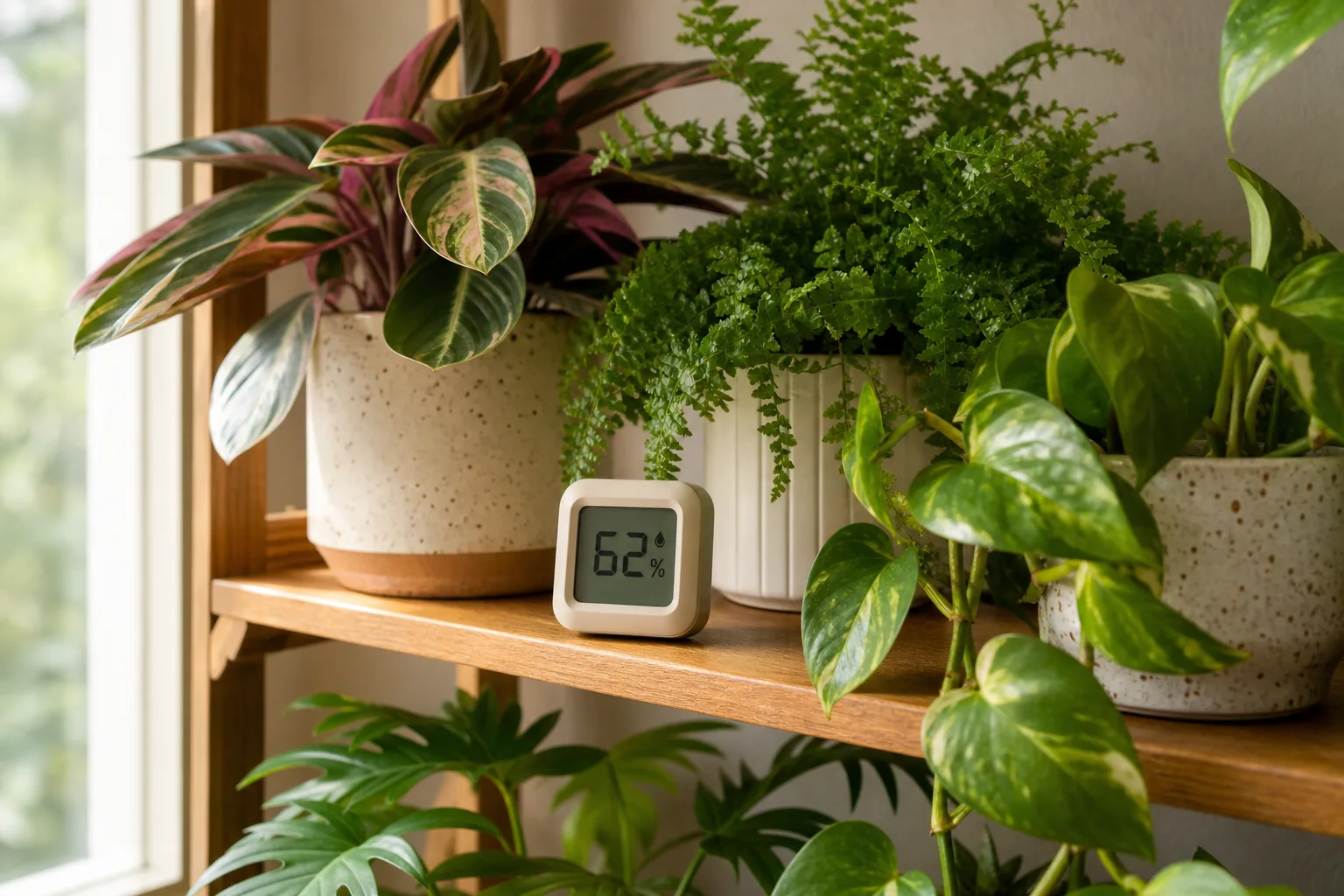
- Mount a hygrometer on the shelf at leaf height.
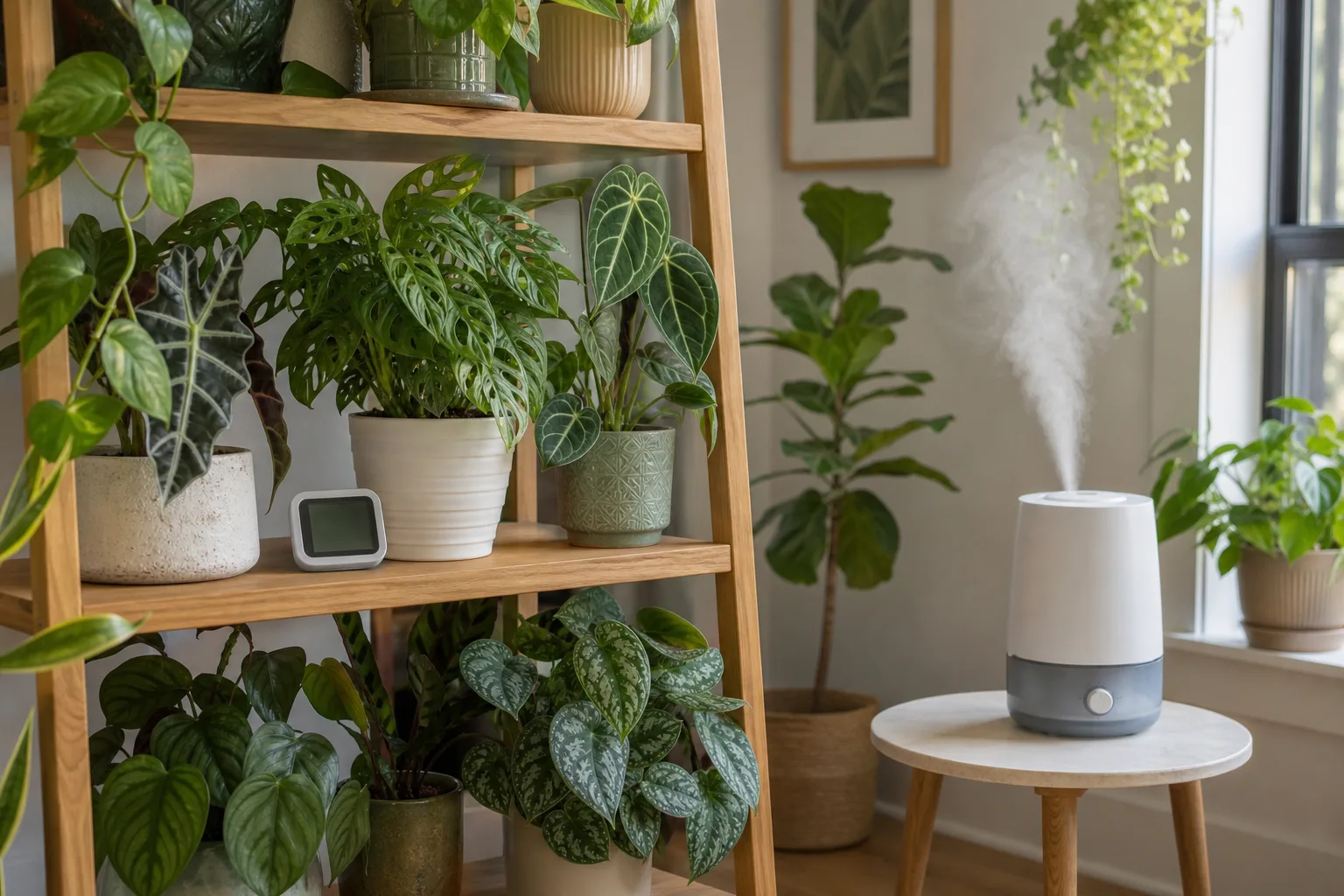
- Place a small humidifier 3 to 4 feet away, pointed away from walls.
- Group humidity-loving plants; keep pots off cold window glass.
- Water based on soil moisture, not leaf crispness alone.
Hygrometer at leaf height, grouped tropicals, humidifier offset - remeasure RH after 24 hours.
When tips still burn after RH reaches 50%, troubleshoot salts and watering before chasing 70% room-wide.
Go Deeper: Related Humidity Guides
- Best low-cost plant humidity solutions at home - budget fixes ranked with extension context
- Signs your houseplants need more humidity - winter symptom deep dive
- Indoor humidity and pebble trays - tray setup, limits, and disease caveats
- Pebble tray vs humidifier - when each method wins
- Monstera humidity needs - species-specific range for a common tropical
- Calathea care: light, water, soil, humidity - high-humidity species playbook
Conclusion
Houseplant humidity starts with an honest measurement at plant height, not a guess from how your throat feels in January. Classify your plants, compare room RH to their band, and pick the lightest fix that closes the gap - grouping and trays for small boosts, a cleaned humidifier for serious dry air, enclosures for collections that need stable high RH. Keep home health in view: the EPA’s 30% to 50% comfort band and 60% mold ceiling matter as much as your calathea’s preferences. Fix humidity and watering separately, and use the tables here as your map - not your only stop - when a sibling guide covers the method you choose in full detail.