Monstera Humidity Needs: Ideal Range and Easy Indoor Fixes
Learn the best humidity range for Monstera, signs of dry air, and simple fixes that help without overwatering.
Start here: is humidity actually your problem?
Forced-air heat kicks on, your Monstera deliciosa pushes out a new leaf, and the margins go crispy before it finishes unfurling. That pattern is one of the clearest humidity signals on this plant — but dry air is not the only explanation for brown edges. Before you buy equipment or water more, confirm whether the air around the foliage is actually dry.
This page is the Monstera-specific humidity deep dive: relative-humidity targets by species, a five-tier range table, and a humidity-versus-watering differential so you do not treat dry air with more water. For the full culture framework — light, watering, soil, propagation, and problem pages — start with the Monstera deliciosa care hub. For humidifier sizing, pebble-tray builds, and room-level strategy, use the houseplant humidity guide and how to set up a pebble tray instead of expecting this article to repeat them.
Place a digital hygrometer beside the leaves, not on the other side of the room. Penn State Extension recommends humidity above 50% for Monstera as a houseplant. NC State’s Plant Toolbox describes split-leaf philodendron as preferring high humidity, with a humidifier or wet pebble tray in dry interiors. Wisconsin Horticulture adds that Monsteras prefer medium to high humidity but are fairly tolerant once acclimated, and that leaf edges turn brown when humidity is too low. Those sources overlap rather than contradict: most established Monstera deliciosa plants tolerate average homes, but they look and grow better when dry-air stress is removed.
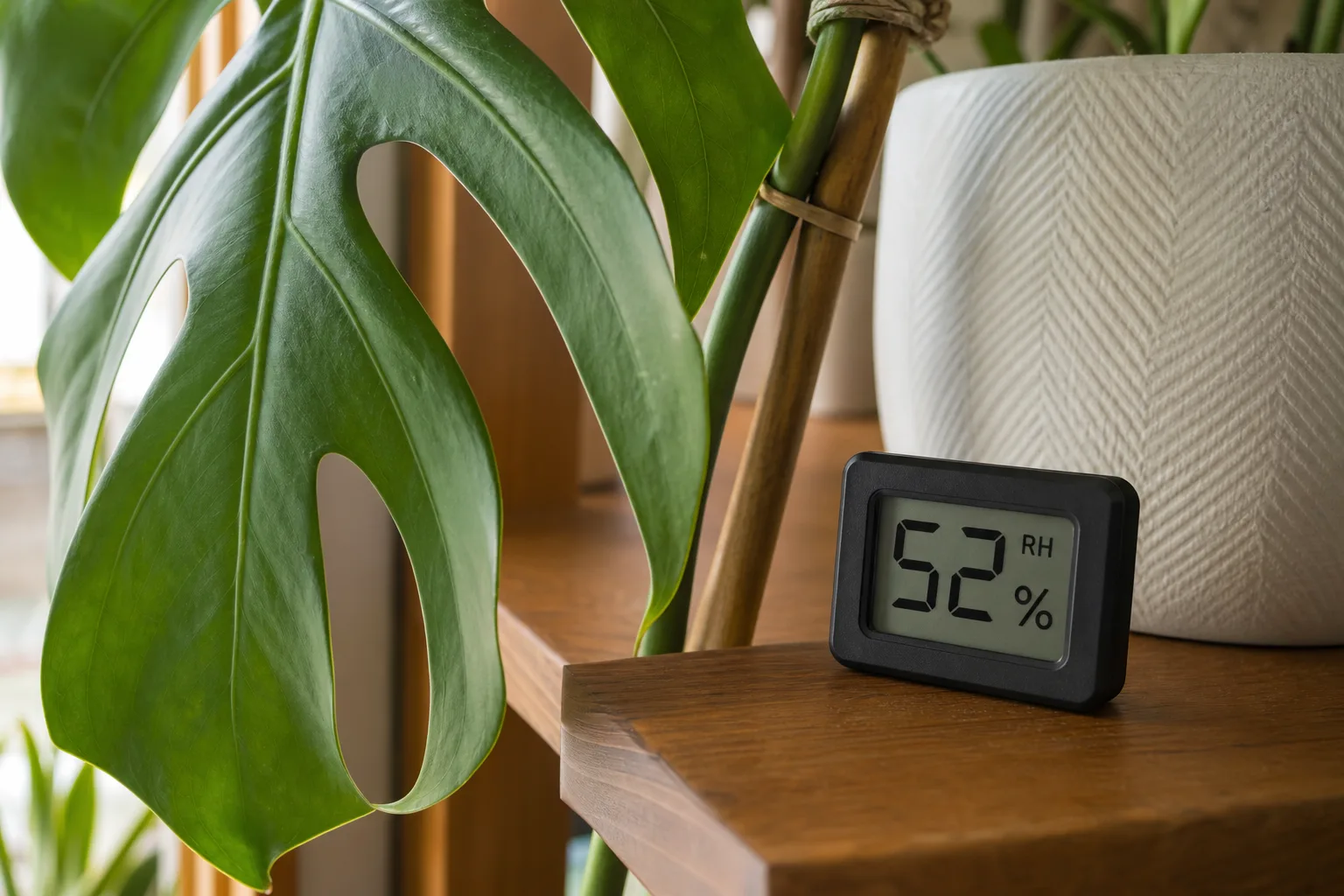
LeafyPixels editorial check, January 2026: hygrometer at foliage height after a cool-mist humidifier ran on low for three days in a forced-air heated room. Your readings will differ — measure your own pot, not this photo.
Why humidity matters for Monstera foliage
Monsteras evolved as tropical vines from rainforests stretching from southern Mexico into Panama. Indoor air — especially heated winter air — holds far less moisture than the canopy they came from. Humidity affects how quickly water leaves the leaf surface through transpiration. In dry air, large Monstera blades lose moisture faster, edges crisp sooner, and soft new growth can stick while unfurling.
Transpiration and large-leaf moisture loss
Humidity slows the rate at which leaves dry out. A Monstera’s split foliage looks tough, but each mature blade is a large moisture-exchange surface. When the air is dry, the plant can look “thirsty” even when the soil is appropriately moist — because the issue is moisture leaving the leaves, not moisture missing from the roots. Higher ambient humidity does not create fenestrations on its own, but it reduces stress that contributes to ragged unfurling, stalled growth, and brown margins. Good humidity is background support that helps the plant use light, water, and nutrients more efficiently.
What humidity do Monsteras actually need?
The practical indoor target for most Monstera deliciosa plants is 40% to 60% relative humidity, with 50% to 60% as the strongest all-around performance band when light, airflow, and watering are also reasonable. NC State lists high humidity among cultural requirements for dry interiors. Wisconsin Horticulture places Monsteras in medium to high humidity with brown edges as the low-humidity signal. Penn State prefers above 50%. RHS Swiss cheese plant guidance describes moderate humidity and notes that centrally heated dry air can brown leaf edges.
Plants do not read hygrometers with legal precision. What matters is the pattern: how dry the room gets, how long it stays there, and whether leaves sit in heater or AC streams. A Monstera holding steady at 45% in bright indirect light with sensible watering often looks better than one swinging between 35% and 70% every few days. Stability beats drama.
The five-tier RH range table
Use this Monstera-specific table as a decision framework. The 55% row is an editorial synthesis — a practical midpoint many growers hit with one humidifier in a medium room — not a mandate from any single extension bulletin.
| Humidity range | What it usually means for Monstera |
|---|---|
| Below 35% | High risk of brown edges, curling, stuck unfurling, spider mite stress in winter |
| 40% to 50% | Usually acceptable for established Monstera deliciosa with stable care |
| 50% to 60% | Best all-around target for strong indoor performance |
| 60% to 70% | Can improve unfurling and leaf size when light and watering stay balanced |
| 70%+ in stagnant air | Higher fungal, mildew, and home mold risk — needs active airflow |
If you want one number to aim for after measuring, 55% is a reasonable editorial sweet spot between plant performance and EPA guidance to keep indoor humidity between 30% and 50% for human health.
Is 40% humidity enough?
Yes — 40% is often enough for an established Monstera deliciosa to live and grow, especially when light, watering, and temperature are stable. RHS notes that Swiss cheese plants can grow in typical home conditions with moderate humidity; brown edges appear when air is too dry, not automatically at 40%. The better question is whether your plant shows dry-air stress at your humidity in your room.
Where 40% fails is when it pairs with other stressors: winter heat pulling night readings into the high 20s, direct sun, chronic underwatering, or a thinner-leaved type like Monstera adansonii. A stable 40% in a calm room is different from a room that crashes to 28% every night when the furnace runs.
When 60% or higher makes a visible difference
You are most likely to see upside from 60% or slightly higher when the plant is actively growing, unfurling new leaves during a dry season, or recovering from transplant stress. Thinner-leaved Monsteras and variegated forms with less chlorophyll margin often respond more visibly. Extra humidity is not a shortcut around weak light or soggy soil — it is a multiplier when the rest of the setup is already decent.
Editorial note: In a LeafyPixels winter check, a living-room Monstera beside a south-facing window measured 28% RH in January with forced-air heat running. A cool-mist humidifier on a low setting, placed several feet from the plant rather than blasting the foliage, brought the reading beside the leaves to 52% over three days — documented in the hygrometer photo above. The next leaf unfurled without the usual crisp margin. That is one data point, not a universal rule, but enough to show that a measured bump can change unfurling quality when winter air was the limiting factor.
How to tell when humidity is too low
Classic low-humidity signs on Monstera include brown crispy leaf edges, browning tips, curling, drooping that does not match soil moisture, and new leaves that struggle to unfurl cleanly. Wisconsin Horticulture specifically ties brown leaf edges to low humidity. University of Minnesota Extension notes that spider mites thrive in dry, warm conditions — so mite flare-ups in an otherwise well-watered plant deserve a humidity check.
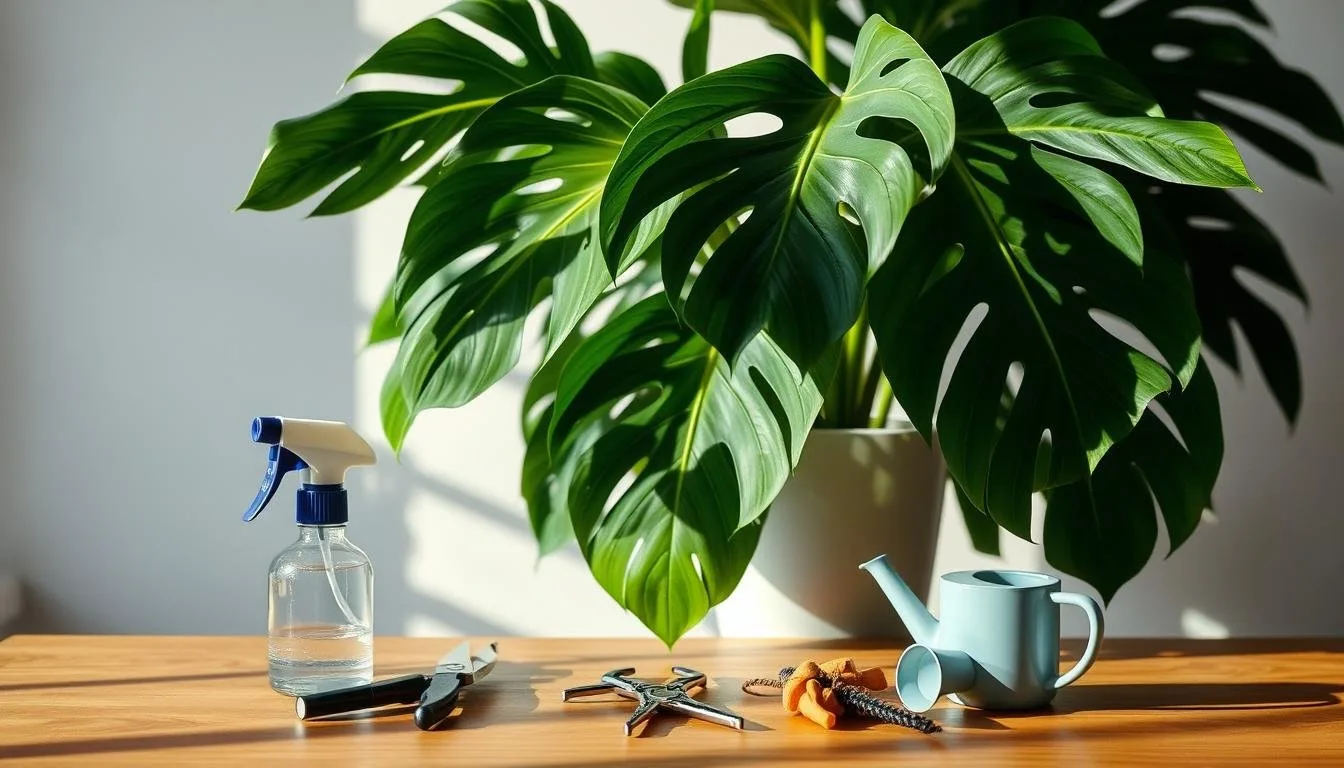
Measure with a hygrometer near the plant during the hours your HVAC runs hardest. EPA recommends using a moisture or humidity gauge to see whether home humidity sits in a healthy range.
Leaf symptoms that point to dry air
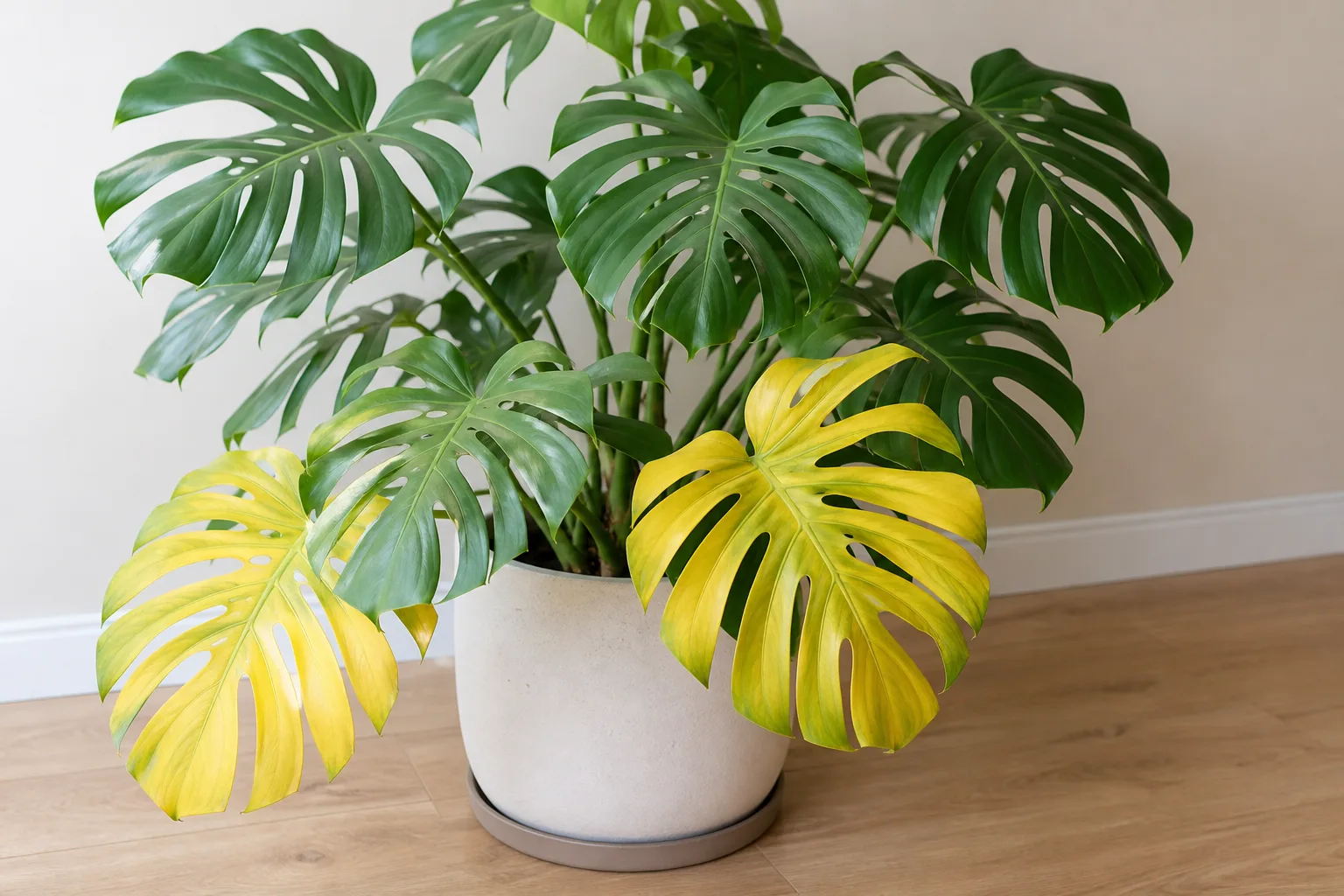
Low humidity usually appears first on margins and newest growth. The outer edges of a large leaf are exposed, and fresh tissue is softer and easier to stress. Crisp, papery brown margins on otherwise green tissue often fit dry air, especially when a hygrometer beside the foliage reads below 45%. For a full brown-tip workbook with more photos and cause buckets, see the Monstera brown tips guide and the low-humidity problem page for Monstera deliciosa.
Use the pattern, not one old leaf:
- Brown, crispy edges or tips on several leaves
- Leaf curling without an obvious pest
- New leaves sticking while unfurling
- Slower growth than expected during the active season
- Spider mite flare-ups in very dry air
One yellow lower leaf is not a humidity diagnosis. Repeated edge burn in a 30% room probably is.
Problems people blame on humidity that are something else
Plant care goes sideways when every brown patch triggers a humidifier purchase. Sometimes the real problem is overwatering, root stress, direct sun, fertilizer salts, or pests. Brooklyn Botanic Garden makes the key distinction: humidity is not the same as watering. If the entire leaf is yellowing, the soil stays wet, or the pot has poor drainage, humidity is probably not the main issue. If damage looks bleached on the sun-facing side, inspect light on the Monstera light requirements guide. Humidity problems usually look dry and crispy; waterlogging and root issues usually look soft, yellow, and collapsed.
Can humidity be too high for Monstera?
Yes. A Monstera can get too much humidity when high moisture pairs with poor airflow, wet leaves, and consistently damp conditions. High humidity alone is not automatically bad for a tropical plant; the risk appears when air stagnates, leaves stay wet, or the room never dries out. EPA guidance warns that high indoor humidity increases mold likelihood, which is why home humidity is generally recommended in the 30% to 50% band. The goal is enough humidity to reduce plant stress without creating fungal or mold stress for your home.
If you see persistent window condensation, musty corners, or mold on walls, consult an HVAC professional rather than pushing RH higher for the plant alone.
EPA home-health crossover and mold risk
Chasing 70%+ in a sealed bedroom may help one leaf unfurl but hurt indoor air quality. Plant targets and human comfort targets overlap in the 45% to 55% zone for many homes — high enough for Monstera performance, low enough to stay inside sensible EPA framing when airflow is decent.
Airflow plus humidity: the winning combo
The reliable pairing is moderate humidity plus moving air. Keep the plant out of dead corners, avoid crowding it against cold glass, and do not trap it in a sealed cabinet unless you understand ventilation. If you run a humidifier, disperse moisture through the room rather than blasting vapor directly onto leaves or the soil surface. UNH Extension recommends placing a humidifier close to plants in larger rooms while monitoring with a hygrometer — and keeping plants away from heat vents and radiators.
Separate humid air from wet leaves and wet soil. Roots do not need constantly damp mix because the air is dry.
How to raise humidity around your Monstera
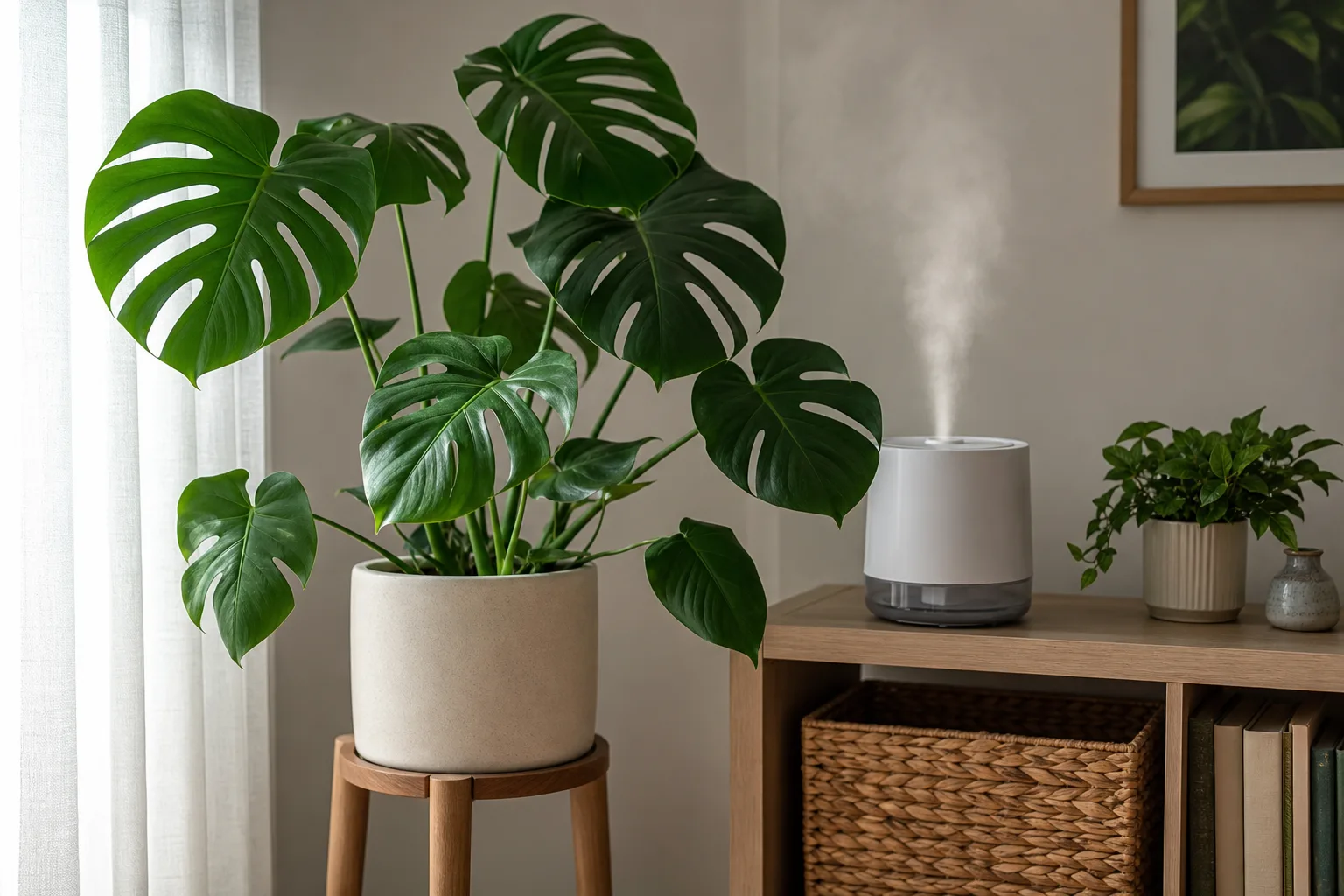
If your hygrometer confirms dry air, choose the smallest fix that solves the measured problem. This section stays brief on purpose — method depth lives in cluster guides so this URL stays a Monstera RH target page, not a ninth general humidity how-to. For humidifier output sizing by room size, see the output table on the houseplant humidity guide.
| Method | Monstera-specific note | Full setup |
|---|---|---|
| Humidifier | Most reliable when winter RH sits in the 20s–30s; place several feet from foliage | Houseplant humidity guide |
| Pebble tray | Modest local bump; pot must sit above waterline | How to set up a pebble tray |
| Plant grouping | Transpiration microclimate; best with several plants in a smaller room | Signs your houseplants need more humidity |
| Room choice / placement | Bathrooms and kitchens can run higher RH if light is adequate; pull away from vents | Monstera light requirements |
| Misting | Temporary surface bump only; not a stable RH strategy | Indoor humidity and pebble trays |
Measure at plant height — a reading across the room or on the humidifier outlet does not describe what the foliage experiences.
NC State lists humidifiers and wet pebble trays as options for dry interiors. UNH Extension ranks a portable humidifier plus hygrometer as the most consistent winter fix, with grouping and pebble trays as smaller supplements.
Humidity, watering, light, and temperature work together
Monstera problems are rarely single-variable. Higher humidity means soil may dry more slowly. Lower humidity means leaves lose moisture faster even when roots are fine. Better light supports stronger growth, which increases water use. Cooler rooms slow the whole system. Read conditions as a group — the same species drinks on different schedules in different rooms.
For watering depth, use the Monstera deliciosa watering guide and the watering Monstera deliciosa guide rather than guessing from humidity alone. Seasonal shifts are covered on winter Monstera care.
Why humidity does not replace proper watering
Humidity does not water your Monstera. It reduces moisture loss from leaves; it does not hydrate a dry root ball. Brooklyn Botanic Garden states plainly that tropical does not mean impervious to root rot, and that humidity is not the same as watering. Owners who see brown edges, assume “dry plant,” and water more can push a humidity problem into root rot.
Proper watering still means letting the upper portion of the mix dry between drinks, then watering thoroughly with drainage. NC State recommends allowing the top quarter to one-third of the medium to dry before watering again. Penn State advises watering thoroughly and letting the top 1 to 2 inches dry out. That framework holds whether humidity is high or low; what changes is how fast the plant moves through the cycle.
Winter is when most indoor Monsteras hit dry-air trouble: heated air drops RH, lower light slows growth, and crispy edges show up on the newest leaf. Summer AC can dry air too, but faster growth sometimes masks edge burn until damage accumulates. Seasonal care is less about reinventing your routine and more about noticing when the room stops behaving like it did last month.
Do different Monstera types need the same humidity?
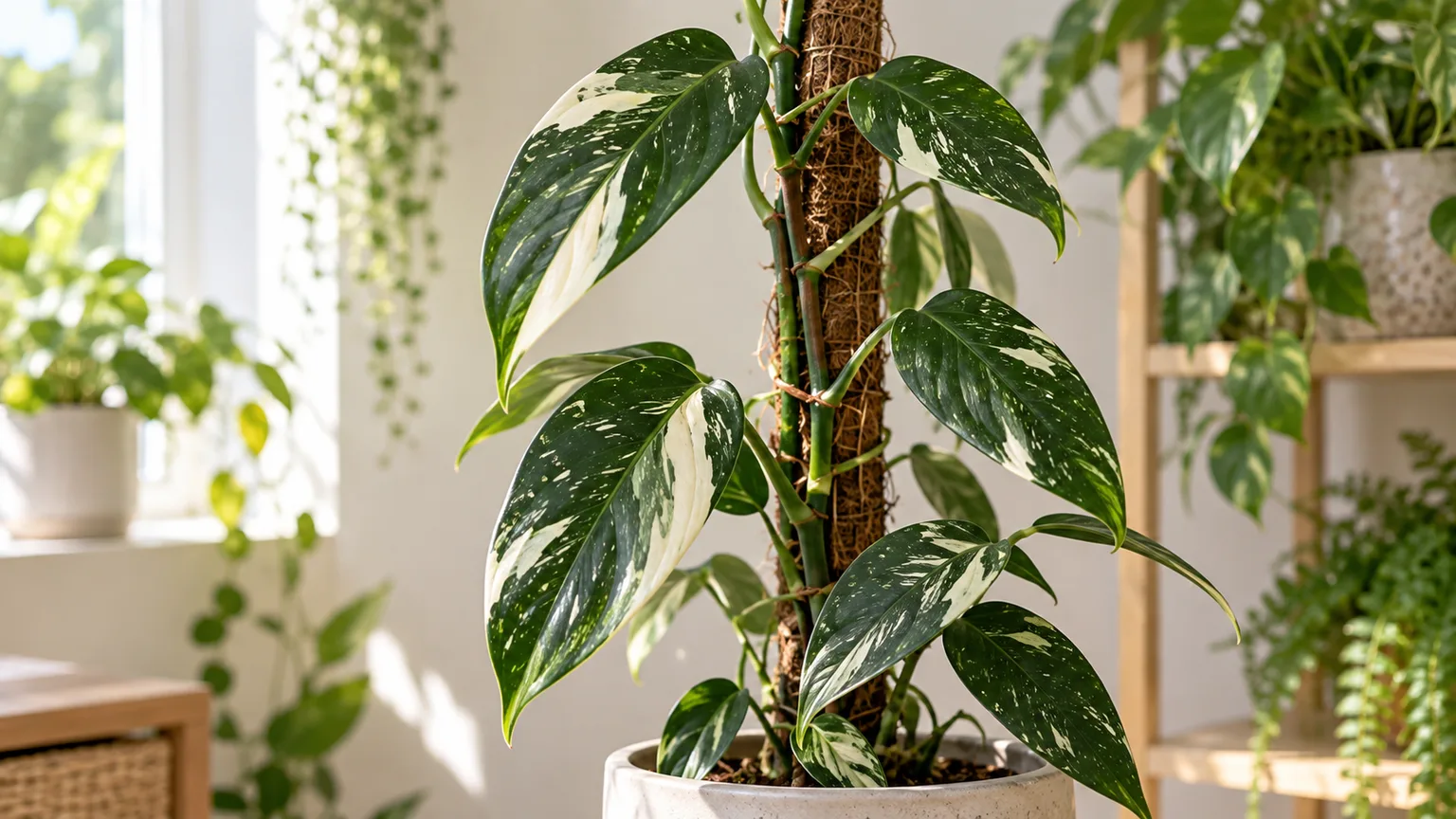
Not exactly. Monstera deliciosa is generally the most forgiving of common houseplant Monsteras. Monstera adansonii tends to show dry-air stress faster because its leaves are thinner. Variegated forms often have less margin for error — not because humidity alone transforms them, but because they carry less chlorophyll and recover more slowly from stress.
Monstera deliciosa vs adansonii vs variegated forms
| Type | Humidity tolerance | Practical target |
|---|---|---|
| Monstera deliciosa | Most adaptable | 40% to 60%; ideally above 50% |
| Monstera adansonii | More likely to show dry-air stress | 50% to 65% is usually safer |
| Variegated Monstera forms | Often less forgiving overall | Keep stable, usually 50%+ with good airflow |
RHS describes Monstera adansonii as a smaller-growing Swiss cheese species with similar warm, humid preferences. NC State notes variegated cultivars need more sunlight — which increases transpiration and makes stable humidity more important when you chase brighter light for variegation.
The “average room humidity is fine” advice is truest for an established green Monstera deliciosa in decent light. It becomes less reliable for adansonii, stressed cuttings, or variegated plants you want cosmetically clean.
Conclusion
Monstera humidity needs are simpler than the internet makes them sound. Measure beside the leaves, use the five-tier table, and match targets to your species. Most Monstera deliciosa plants tolerate 40% to 60% RH; 50% to 60% is the strongest everyday target when you want cleaner unfurling and fewer crisp edges.
Three-step action checklist:
- Measure — hygrometer at foliage height for at least one full day when HVAC runs.
- Confirm symptoms — compare crisp margins on the Monstera brown tips guide before watering more.
- Fix the room — humidifier or placement first for sustained dry winter air; pebble trays and grouping only as supplements per the houseplant humidity guide.
Return to the Monstera deliciosa care hub for watering, light, and problem pages when humidity is only one piece of the puzzle.
Related Guides
- Monstera deliciosa care hub — full species overview, watering, light, and problem index
- Monstera brown tips — symptom photos and cause buckets beyond humidity alone
- Houseplant humidity guide — humidifier types, room strategy, and year-round RH targets
- How to set up a pebble tray — materials, sizing, and assembly
- Monstera light requirements — pairing light with humidity and watering
- Winter Monstera care — seasonal light, water, and humidity shifts