Monstera Growth Stages: From Young Plant to Mature Split Leaves
Understand the Monstera lifecycle, from juvenile leaves to mature fenestration, climbing growth and long-term care.
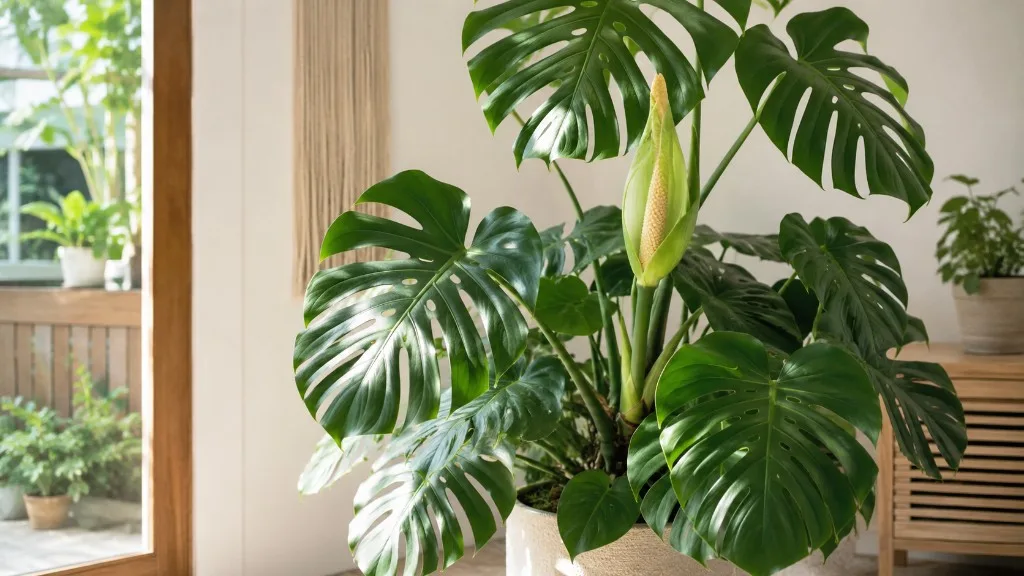
What the Monstera lifecycle means indoors vs. in the wild
The Monstera lifecycle is the full arc from seed through seedling, juvenile growth, climbing transition, mature vegetative foliage, and—only in rare indoor cases—flowering and fruiting. That sequence sounds linear. In a living room, it rarely plays out cleanly. Light drops in winter, pots get oversized, moss poles arrive late, and a plant that should be climbing stays sprawled on a shelf. If you treat Monstera like a static décor object, every unsplit leaf feels like failure. If you treat it like a developmental ladder, the same plant starts making sense.
In tropical Central America, Monstera deliciosa is a woody climbing vine that can reach roughly 70 feet on tree trunks, with leaves far larger than anything most homes will ever see. Missouri Botanical Garden and NC State Extension both describe it as a climbing evergreen that becomes epiphytic once it scales upward—drawing support and moisture from bark while sending long aerial roots into the air. Indoors, the same species usually tops out around 6 to 8 feet, but the developmental logic remains: bigger, perforated leaves are tied to age, climbing behavior, and usable light, not to wishful thinking. (Missouri Botanical Garden)
Monstera follows a hemiepiphytic path in the wild. Seedlings germinate on the forest floor as terrestrial plants, then shift toward epiphytic climbing as stems reach trunks and aerial roots attach to bark. NC State Extension describes the species as a climbing evergreen whose large perforated leaves appear on mature plants; Missouri Botanical Garden notes the transition from ground-level growth to bark-climbing habit. That terrestrial-to-epiphyte shift explains why indoor plants stall visually when denied both root oxygen in dense mix and a vertical surface to climb. (NC State Extension)
That wild-to-indoor compression is the heart of this guide. Flowering and ripe fruit are biological possibilities; in typical apartments they are side notes. What most owners actually track is vegetative maturity—when heart-shaped juvenile leaves give way to larger, fenestrated foliage on a supported vine. Wisconsin Horticulture describes an early “shingle plant” phase in nature, where small entire leaves overlap up a trunk before the mature perforated form appears. Your nursery Monstera is often stuck visually near that juvenile end of the spectrum until conditions align. (Wisconsin Horticulture)
How to use this guide
This page explains what each lifecycle stage looks like, how long it often lasts indoors, and how to tell which stage your plant is in. It is not a replacement for day-to-day care. For watering cadence, soil mixes, repotting steps, and pest fixes, use the Monstera deliciosa care hub and its topic pages on light, propagation, and pruning.
If your only question is “why are my leaves not splitting,” start with the narrower Monstera not splitting leaves diagnostic. If you need pole setup detail, see Monstera aerial roots or DIY moss pole. This lifecycle guide sits above those pages: it tells you where your plant is on the ladder so you know which specialist guide to open next.
Approximate indoor timelines by stage
No two Monsteras share the same calendar indoors. Cultivar, starting size, light, and support all shift the pace. Monstera borsigiana, often sold as a compact form of M. deliciosa, can mature on a faster stem but with smaller overall scale than a true deliciosa specimen. Tissue-culture nursery stock may look uniform yet still need years of strong growth before dramatic fenestrations. Treat the ranges below as orientation, not deadlines.
| Stage | What you usually see | Rough indoor duration* |
|---|---|---|
| Seed / germination | First root and tiny cotyledon-style leaf | Weeks to a few months (seed only) |
| Seedling establishment | Small entire leaves, root expansion | Months 1–12 from sprout or cutting root |
| Juvenile growth | Heart-shaped leaves, few or no holes | Often year 1–3 in a typical home |
| Climbing transition | Longer internodes, aerial roots, pole response | Often year 2–4 when support is added |
| Mature vegetative | Larger leaves, splits and interior holes | Often year 3+; holey leaves after a few years |
| Reproductive | Spathe/spadix, rare fruit | Uncommon indoors |
*Varies widely with light, pot size, genetics, and winter slowdown.

Caption: Stage progression strip—juvenile (~6-inch entire leaves) through climbing (~12-inch leaves with first splits) to mature pole-trained foliage (~16-inch blades with multiple fenestrations). Moss pole ~48 inches in final frame.
Stage 1: Seed and germination
Most indoor Monsteras never pass through this stage because owners buy cuttings or nursery plants. Still, germination matters for understanding why juvenile traits persist: the species does not begin life with perforated monster leaves. It begins as a small understory seedling built for warmth, humidity, and filtered light.
What happens during germination
During germination the seed imbibes water, sends out a primary root, and produces its first simple foliage. The plant is allocating energy to root contact, oxygen, and stable moisture—not to spectacle. Monstera seeds need warmth and a well-aerated medium; soggy cold compost kills the attempt quickly. University of Minnesota Extension discusses propagation conditions for the species generally; for seed-specific rarity, most extension houseplant guides focus on stem cuttings because that is how the plant enters homes. (University of Minnesota Extension)
The takeaway for lifecycle thinking: dramatic fenestrations are downstream. A seed-grown Monstera may take longer to look “Instagram mature” than a large cutting from an established vine, even though both are the same species.
Why most indoor growers skip this stage
Most buyers start with stem cuttings or potted juvenile plants because they are faster, more predictable, and widely available. Seed-grown Monsteras are slower, more variable, and less forgiving of inconsistent humidity. That is a practical reason, not a moral one. If you did not germinate your plant, you still need to respect the early establishment work—healthy roots and simple leaves—before expecting mature splits.
For step-by-step propagation—including the non-negotiable node rule—use the Monstera propagation guide rather than repeating those instructions here.
Stage 2: Seedling establishment
Once past germination—or immediately after a cutting roots—the plant enters establishment: building roots, petioles, and the first simple leaves. It still will not resemble the mature photos that sell the plant. That is normal. This phase is about capacity, not charisma.

Caption: Establishment-stage plant—~4-inch entire leaves, 4-inch nursery pot, no aerial roots visible, two nodes above soil line.
A seedling Monstera is laying infrastructure. It expands its root system, adapts to its medium, and begins steady photosynthesis. Even when the plant looks compact, its biology already favors upward climbing once support appears. Penn State Extension describes juvenile leaves as small, green, and mostly entire, becoming larger and perforated as they mature on a climbing vine. (Penn State Extension)
The classic establishment mistake is overpotting: placing a tiny plant in a huge wet pot. RHS warns that oversized containers stay wet too long and raise root-rot risk. Seedlings need a root zone they can manage, not an ocean of soggy mix. For repot timing and pot sizing detail, see the hub repotting topic.
Early roots, petioles, and simple leaves
Establishment leaves are entire and relatively small. UConn notes fenestrations increase as individual leaf size progresses—which means the Swiss-cheese look arrives on later leaves, not by retrofitting old ones. Roots matter equally: airy, well-drained mix lets the plant absorb water without suffocating. Dense, waterlogged soil stalls the lifecycle before the plant ever reaches juvenile vigor. (Home & Garden Education Center)
Reward restraint in this stage. Chase stability—consistent moisture without sogginess, bright filtered light, sane pot size—and the plant earns its way into juvenile growth.
Stage 3: Juvenile growth
Juvenile stage is where most indoor Monsteras spend years. The plant is clearly alive, pushing leaves, maybe even looking glossy and green—yet the fenestrations everyone expects are absent or minimal. Impatience peaks here. So do misconceptions.
Caption: Juvenile heart-shaped leaves ~5–7 inches long, no fenestrations, sprawling habit without support, three visible nodes on main stem.
What extension sources agree on about maturity timing
Rather than repeating the same authority in every stage section, here is the consolidated picture extension sources give for when fenestrations and mature leaf form appear:
RHS notes Swiss cheese plants usually begin producing holey leaves once they are a few years old, and often produce larger, more mature leaves with more holes once they feel they are climbing. UConn links fenestrations to leaf size progression—later leaves show more perforations as blades enlarge. Wisconsin Horticulture ties perforation development to sufficient light. Penn State adds that juvenile leaves are mostly entire, becoming larger and perforated as the plant matures on a climbing vine. (RHS) (Home & Garden Education Center) (Wisconsin Horticulture) (Penn State Extension)
That single framework reframes “no holes yet” from crisis to calendar. A young plant with entire leaves can be perfectly healthy. Age is not the only variable—a juvenile plant can stay juvenile longer when light is weak, support is missing, or roots struggle in dense soil. If your plant has been static for years in a dim corner, the issue is environmental delay—not mysterious biology. For a focused fix sequence, see Monstera light requirements and Monstera not splitting leaves.
Why juvenile leaves have no holes yet
Juvenile Monstera leaves usually have no holes because the plant has not reached sufficient size, maturity, and climbing context to produce fenestrations. The leaf that unfurls is the leaf you keep. Future leaves may show more splits once the plant gains energy and support; existing leaves do not sprout new holes later. Feeding a climber while denying it a ladder is a common indoor mismatch. The plant survives horizontal sprawl; it just may not mature elegantly.
Stage 4: Climbing transition
The climbing transition is the inflection point. The vine lengthens, aerial roots emerge, and the plant responds more strongly when given a moss pole, plank, or trellis. In nature Monstera uses those roots to anchor to bark; indoors they signal that the lifecycle is shifting from generic houseplant toward true vine behavior.
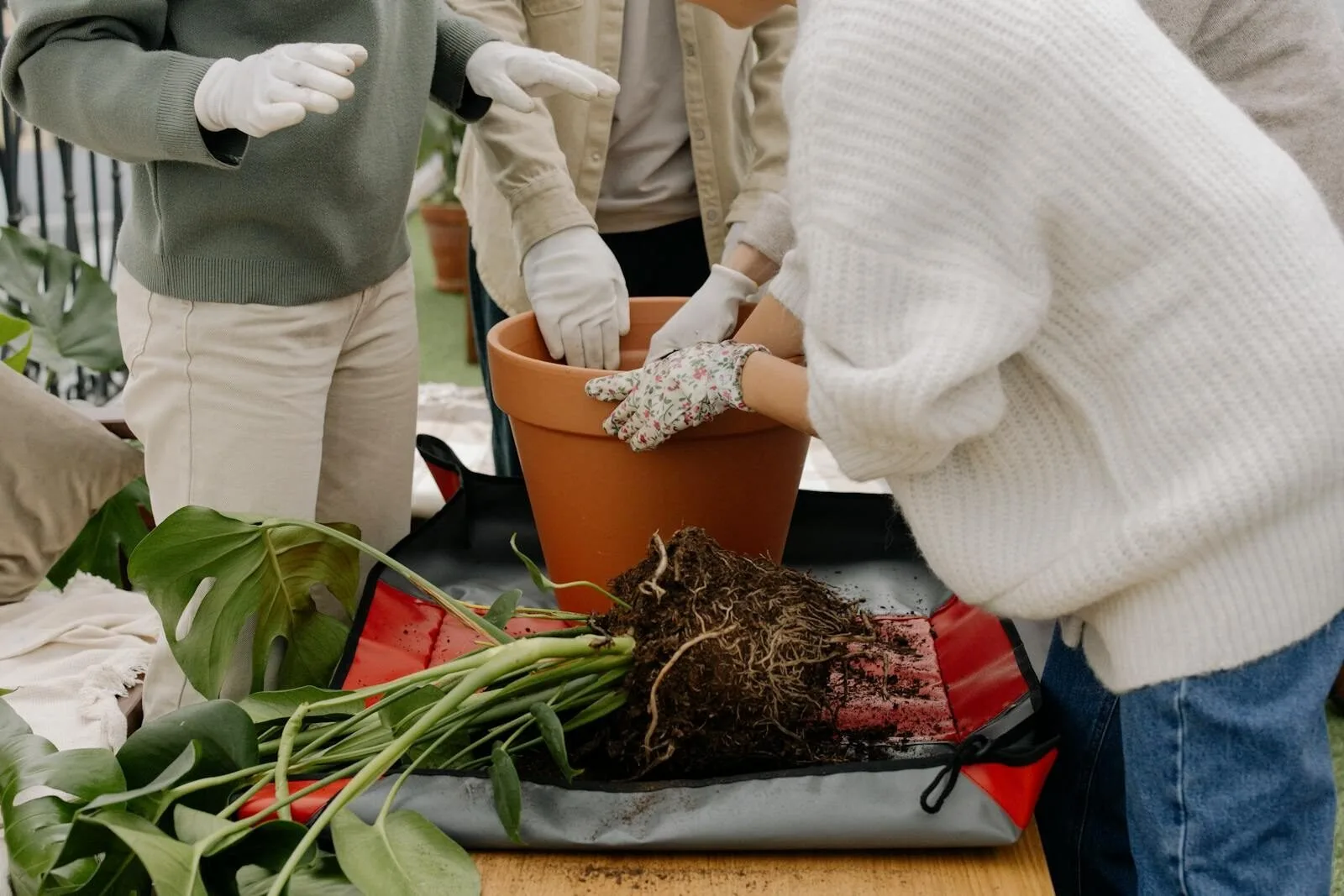
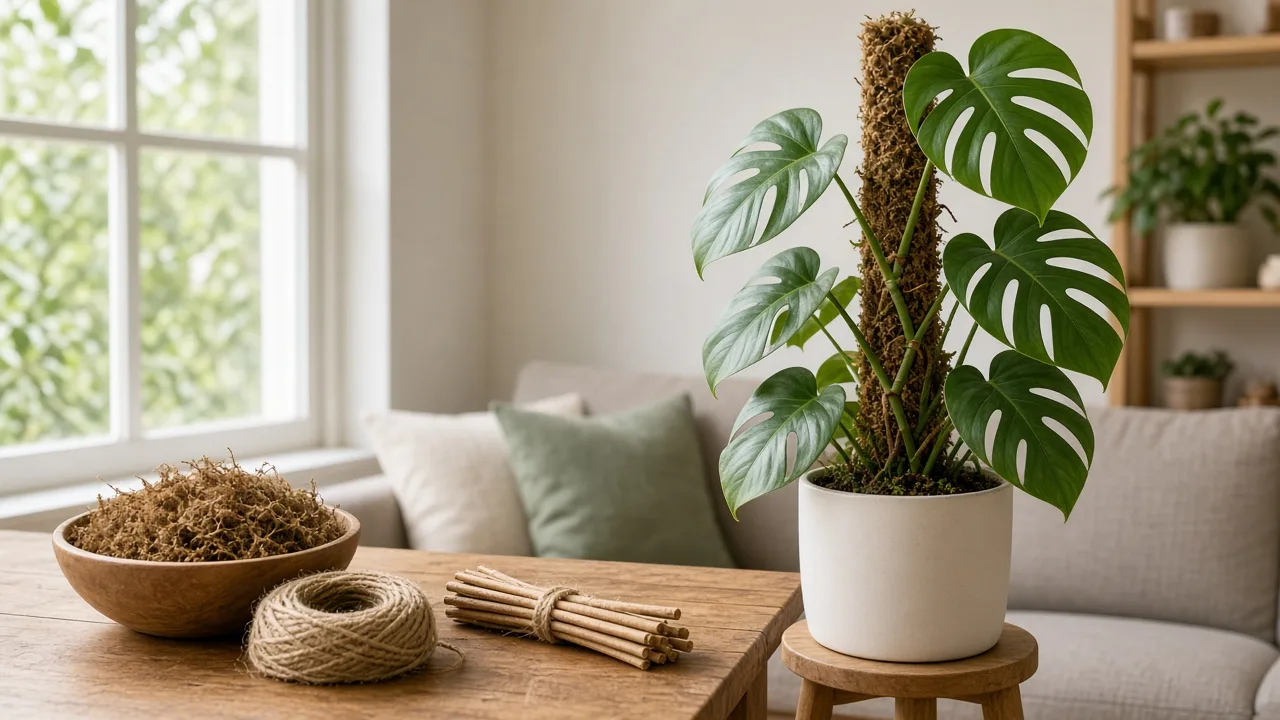
Caption: Climbing transition—~42-inch moss pole, aerial roots visible at nodes 4–6, newest unfurled leaf ~11 inches with first marginal split, stem loosely tied at node 5.
Penn State Extension notes Monstera becomes epiphytic as it climbs and uses aerial roots at the leaf bases to attach in nature; indoors it needs gentle tying to sturdy support. NC State Extension describes the species as a climbing evergreen whose large perforated leaves appear on mature plants as leaves grow. (Penn State Extension) (NC State Extension)
Support changes energy allocation. A pole is not magic—it aligns indoor conditions with wild developmental programming. Without support, Monsteras go top-heavy and sprawl. For root guidance and attachment technique, read Monstera aerial roots guide.
What we measured after adding a moss pole
LeafyPixels grow log, spring 2026. A three-year-old Monstera deliciosa in a 10-inch terracotta pot sat in an east-facing room at roughly 900–1,100 foot-candles at the newest leaf (measured mid-morning with a PAR meter). On 12 March 2026 we installed a 48-inch moss pole and loosely tied the main stem at nodes 3 and 5. New leaves unfurled on 2 April, 28 April, and 24 May 2026. Blade length measured from petiole base to tip went 8 inches → 11 inches → 14 inches; fenestrations went from zero interior holes to one small interior hole to three interior holes plus marginal splits. Aerial roots at nodes 4–6 contacted damp sphagnum within six weeks. Same genetics, same pot—the only structural change was support plus maintaining bright indirect light. That is the climbing transition in measurable form, not theory.
Nodes, aerial roots, and support
The node is the stem joint where leaves, roots, and future growth emerge. University of Minnesota Extension is explicit: Monstera deliciosa can only be propagated when the cutting includes a node. That same anatomy explains mature expansion: nodes are the plant’s growth hubs. (University of Minnesota Extension)
Aerial roots are functional, not decorative. They help the plant climb and stabilize. Keep support slightly moist where appropriate, tie stems loosely, and treat the setup as a ladder the plant wants to climb—not a photo prop.
Stage 5: Mature vegetative growth
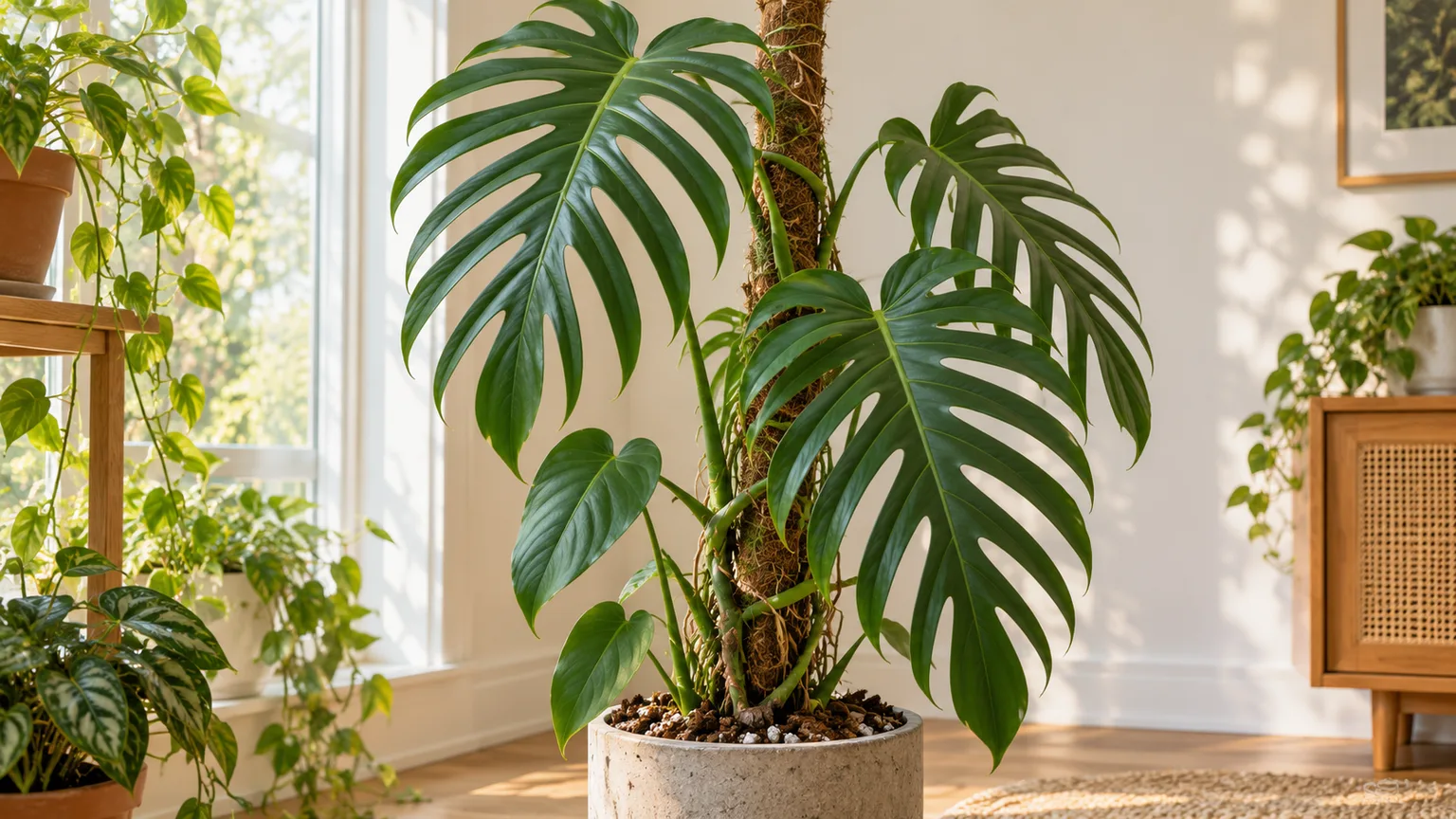
Mature vegetative growth is what most owners chase: broad, glossy leaves with marginal splits and interior holes, thicker stems, and a commanding upright habit on a pole. The shift is gradual. It shows up leaf by leaf.
Caption: Mature vegetative foliage on support—blade ~14–16 inches, deep fenestrations and marginal splits, thickened stem, pole height ~48 inches.
Missouri Botanical Garden cites indoor heights around 6 to 8 feet; UConn notes individual leaves can reach impressive width under strong conditions. Maturity is accumulated wins—light, roots, warmth, support, sane pot size—not a single purchase decision. (Missouri Botanical Garden) (Home & Garden Education Center)
| Trait | Juvenile Monstera | Mature Monstera |
|---|---|---|
| Leaf size | Smaller, entire or lightly split | Much larger, deeply fenestrated |
| Fenestrations | Few or none | More holes and edge splits |
| Growth habit | Compact or sprawling | Strongly climbing on support |
| Support response | Subtle | Often dramatic once attached |
| Visual read | ”Healthy houseplant” | Architectural statement vine |
When fenestrations and splits increase
Fenestrations and splits increase as leaves get larger and the plant behaves like a supported climber in adequate light—the pattern consolidated in the maturity-timing section above. Judge progress on the next two to four leaves, not the oldest ones still on the vine.
If newer leaves shrink or lose splits after pruning, that is feedback—not permanent failure. New stems after pruning often carry smaller, less mature leaves until the plant settles again.
Rare reproductive stage: flowering and fruiting
Monstera deliciosa can flower and fruit, but University of Minnesota Extension states flowers and fruit rarely form outside natural habitat or controlled greenhouses. RHS adds houseplants are extremely unlikely to fruit indoors even when botanically mature. (University of Minnesota Extension)
Indoors, judge success by healthy mature vegetative growth, not by blooms. The fruit carries a safety caveat: RHS notes fruit can be toxic if eaten unripe. ASPCA lists the plant as toxic to dogs and cats due to insoluble calcium oxalates, causing oral irritation, drooling, vomiting, and difficulty swallowing. If a pet chews any part of the plant, contact ASPCA Animal Poison Control at (888) 426-4435 and your veterinarian. (ASPCA)
Lifecycle levers: what moves the plant forward
Strip away noise and a short list controls progression: usable light, root health, warmth, support, sane watering, and time. This section names the levers without re-explaining every care tutorial already on the hub.
- Light - The biggest maturity driver. Weak light yields smaller leaves with fewer fenestrations; brighter indirect light supports larger foliage. Details: Monstera light hub page and Monstera light requirements guide.
- Support - Climbing cues mature leaf form. Install a stable pole during the transition stage, not after the vine is already floppy.
- Roots and pot size - Airy mix, drainage holes, and modest repots protect the base system every stage depends on. See watering guide and hub repotting page.
- Humidity - Helpful but secondary; it reduces edge browning more than it replaces light. See Monstera humidity needs.
- Nutrition - Feed during active growth only when fundamentals are sound; fertilizer cannot fix soggy soil or dim corners.
The slowest killer is consistent mediocrity: slightly too little light, slightly too much water, slightly too large a pot—none fatal alone, all enough to stall the ladder.
Propagation and lifecycle reset
Propagation continues the plant’s genetics while partially resetting development. The rule does not bend: include a node. University of Minnesota Extension states propagation requires a node; new leaves from cuttings may take two to three months to appear after rooting. (University of Minnesota Extension)
A cutting from a mature mother is genetically mature yet its next leaves may look smaller while it re-establishes—mirroring post-pruning regression. Expect root formation first, then leaf production, then renewed climbing. Full methods: Monstera propagation guide.
Common lifecycle problems by stage
Lifecycle problems are usually stage mismatches: overpotting a seedling, underlighting a juvenile, denying support during the climbing transition, or expecting instant mature leaves after hard pruning.
- Seedling / establishment - Rot from oversized pots or waterlogged mix; slow growth from heavy soil.
- Juvenile stall - Entire leaves for years in dim rooms; fix light and support before fertilizer.
- Climbing transition flop - Top-heavy vine without pole; internodes lengthen, leaves stay small.
- Mature regression - New leaves shrink after prune, repot shock, or root damage; allow several leaf cycles to recover.
- Pet safety - Toxicity risk in all stages; keep vines off chew height.
For yellowing tied to watering mistakes, cross-check why Monstera leaves turn yellow. For seasonal slowdown, see winter Monstera care.
Why growth stalls, leaves shrink, or roots rot
Growth stalls when the plant lacks usable energy, root oxygen, or structural cues. Low light cuts photosynthesis; waterlogged compost chokes roots; missing support keeps growth juvenile; cold slows metabolism below roughly 50°F, where Wisconsin Horticulture notes growth can halt. (Wisconsin Horticulture)
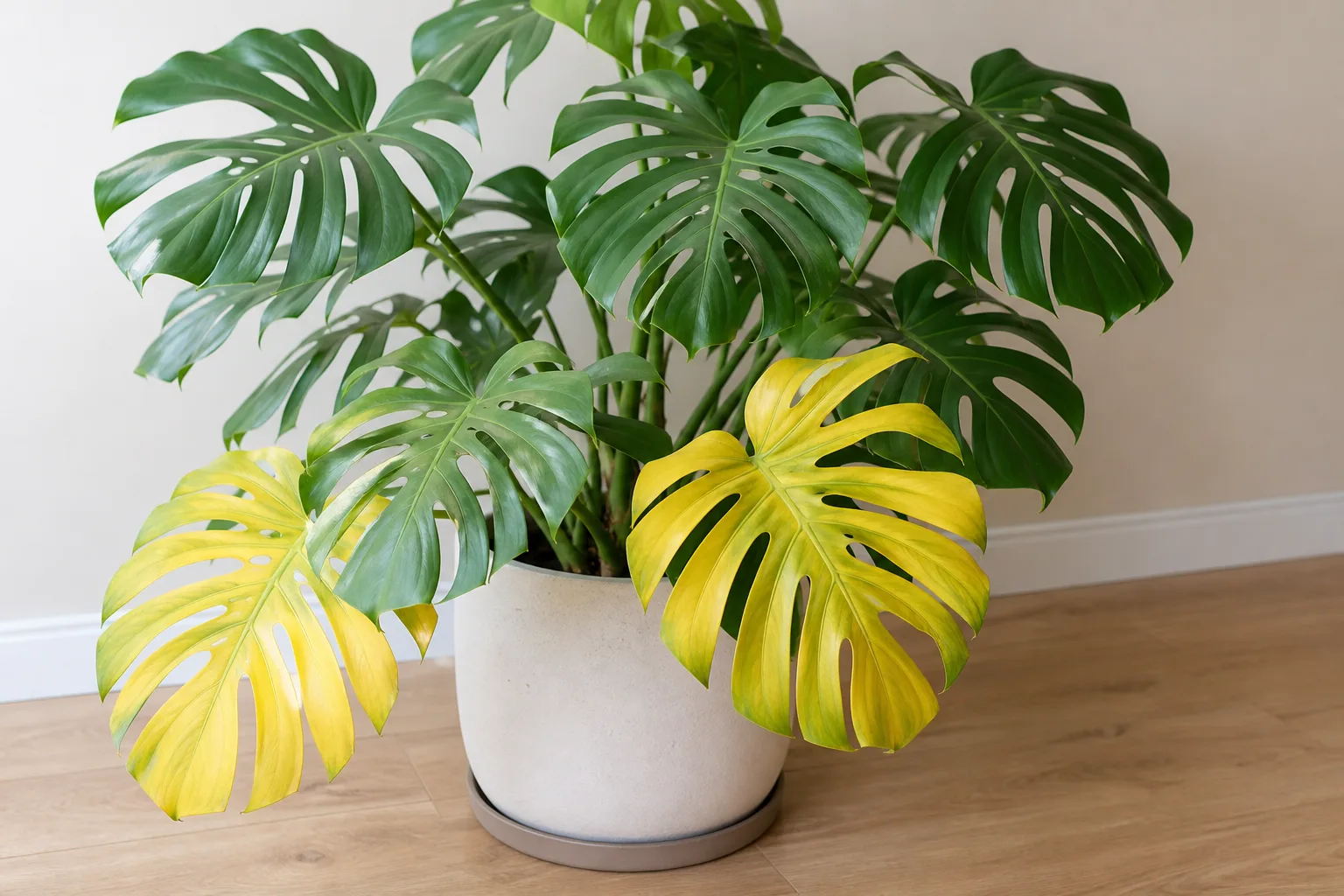
Smaller new leaves are feedback—recent pruning, rootbound stress, or recovery from rot—not always catastrophe. Roots rot when water sits in dense mix; protecting the root zone protects every stage above it.
Conclusion
The Monstera lifecycle becomes readable once you stop expecting a juvenile pot plant to look like a pole-trained mature vine overnight. Use this checklist to locate your plant:
You are likely in establishment if leaves are small and entire, the plant is newly rooted, and roots are still filling the pot.
You are likely in juvenile growth if leaves are heart-shaped with few or no holes, the plant is healthy but compact, and age is under roughly three years in average home light.
You are likely in climbing transition if internodes lengthen, aerial roots appear, and the vine seeks support—even if fenestrations are still inconsistent.
You are likely in mature vegetative growth if new leaves are progressively larger and more perforated on a supported vine in bright indirect light.
Reproductive stage indoors is uncommon; do not use flowering as your success metric.
Alignment moves the plant up the ladder: brighter indirect light, healthy roots in airy mix, warm stable rooms, a moss pole during transition, and patience measured in leaf cycles, not weeks. Everything else—watering schedules, soil recipes, pest fixes—lives on the Monstera deliciosa hub. This page tells you which stage you are in so those guides become actionable instead of generic.
Related guides
- Monstera deliciosa care hub - canonical watering, light, soil, and problem guides
- Monstera not splitting leaves - 5-minute diagnostic when fenestrations are missing
- Monstera propagation guide - node rule, water vs soil, and lifecycle reset timing
- Monstera aerial roots guide - attachment during the climbing transition
- Grow a giant Monstera deliciosa - pushing mature leaf size once stages align
- Winter Monstera care - seasonal slowdown and how it affects lifecycle pace