How to Grow a Giant Monstera Indoors: Light, Support and Care
Help your Monstera grow larger leaves indoors with better light, watering, soil, fertilizer, support and repotting.
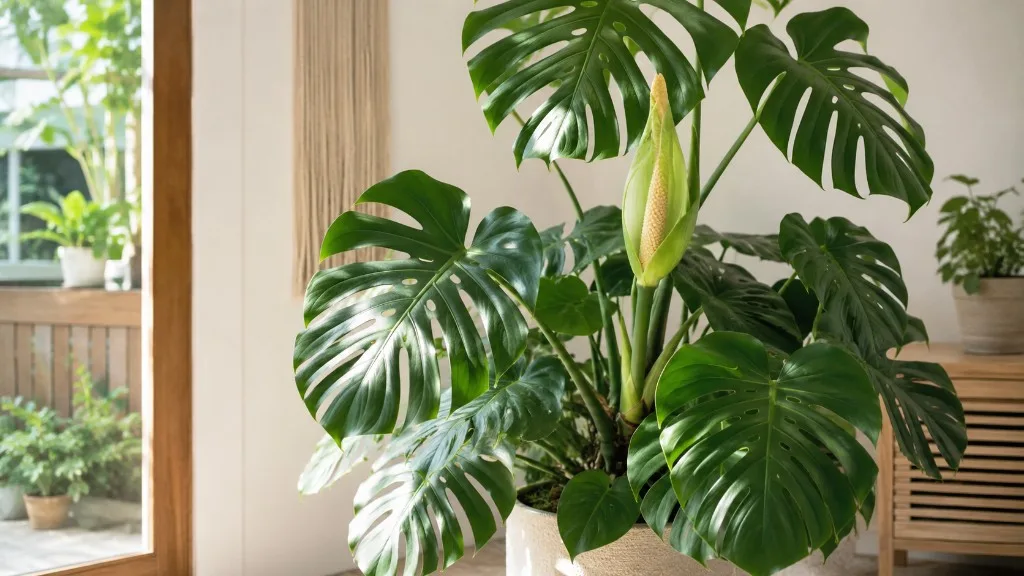
If your Monstera deliciosa has been in the same corner for two years and the leaves are still palm-sized, you are not alone. Most indoor Monsteras survive without ever becoming the architectural statement plant you imagined. The vine gets longer, maybe even tall, but the leaves stay small, splits stay weak, and the whole plant reads as juvenile instead of giant.
That frustration usually comes from a mismatch between what you want—mature, fenestrated, dinner-plate foliage—and what the plant is actually getting: dim light, no climbing structure, dense soggy soil, or care that keeps it alive without funding real growth. In the wild, this Central American climber can reach roughly 70 feet with leaves 1 to 3 feet wide. Indoors, botanical references commonly cite 6 to 8 feet as a realistic ceiling, which is still enormous by houseplant standards. (Missouri Botanical Garden)
The goal of this guide is not to repeat every Monstera care topic on the site. It is to explain the giant-growth system: what maturity actually means indoors, which five levers control leaf size, and how to diagnose a plant that is stretching instead of maturing. For baseline watering, soil recipes, repotting steps, and light placement detail, use the Monstera deliciosa care hub and the cluster guides linked throughout.
What “Giant” Means Indoors (Maturity, Not Just Height)
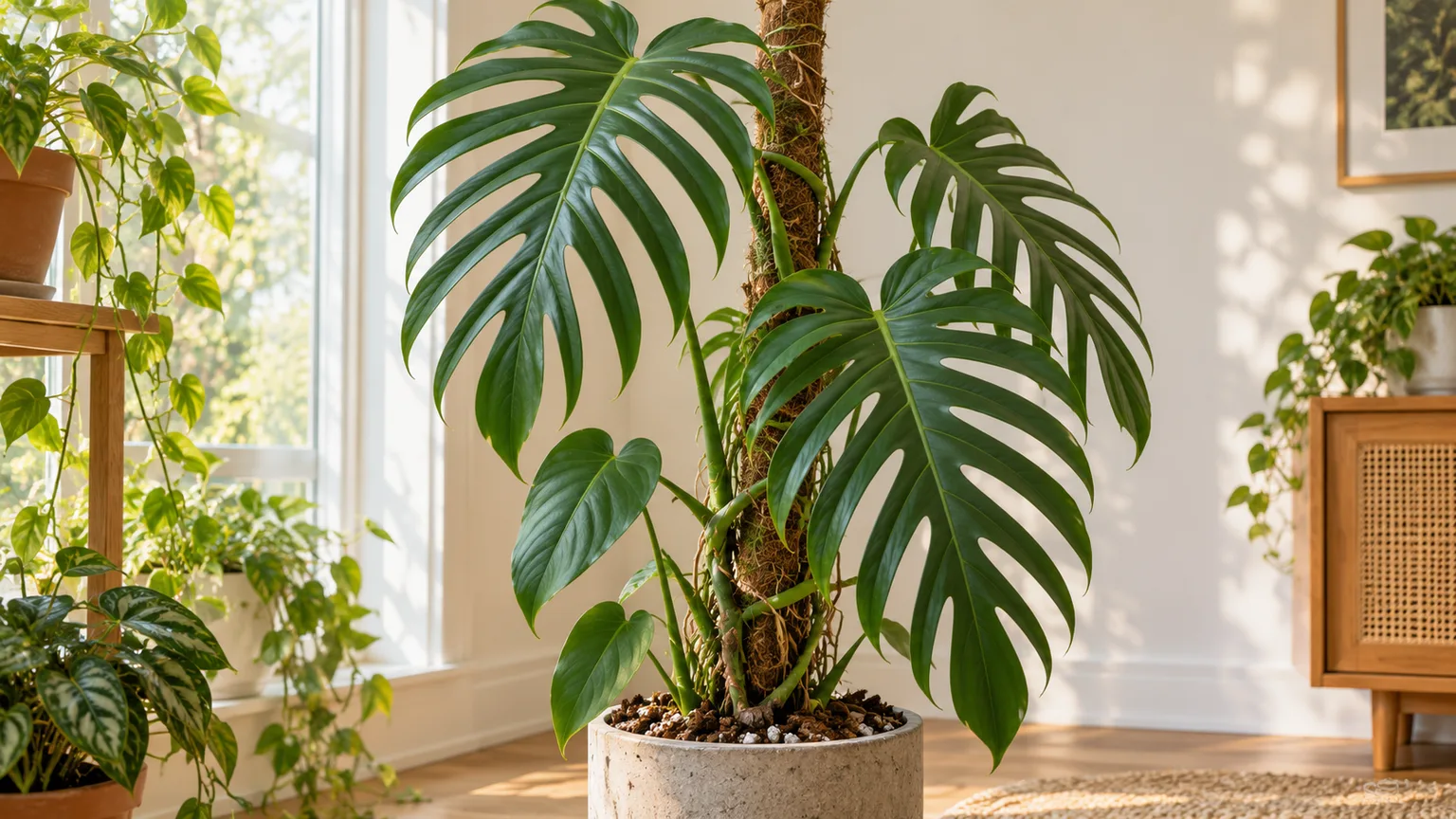
For indoor growers, giant does not mean chasing greenhouse numbers. It means larger mature leaves, stronger fenestration with both edge splits and interior holes, thicker stems, tighter upward growth, and a plant that behaves like a climber rather than a floppy juvenile sprawled across the floor.
That distinction matters because height and leaf maturity are not the same thing. A Monstera can produce long stems with small leaves—a pattern called stretching—when light is weak or support is missing. True giant growth is maturity: each new leaf is a report card on the conditions you gave the plant before that leaf formed. If newer leaves are gradually getting wider and more fenestrated, you are moving in the right direction even if the plant is not yet dramatic. (Wisconsin Horticulture)
| Sign | Juvenile / stretched plant | Maturing giant-form plant |
|---|---|---|
| Leaf size | Small, often under 6 in. wide for years | New leaves noticeably wider than older ones |
| Fenestration | Solid or minimal splits | Edge splits plus interior holes on newer leaves |
| Stem habit | Long gaps between leaves, weak stems | Shorter internodes, thicker stems |
| Growth direction | Sprawling sideways | Climbing upward on support |
| Indoor height | May be tall but visually thin | Fills vertical space with mass |
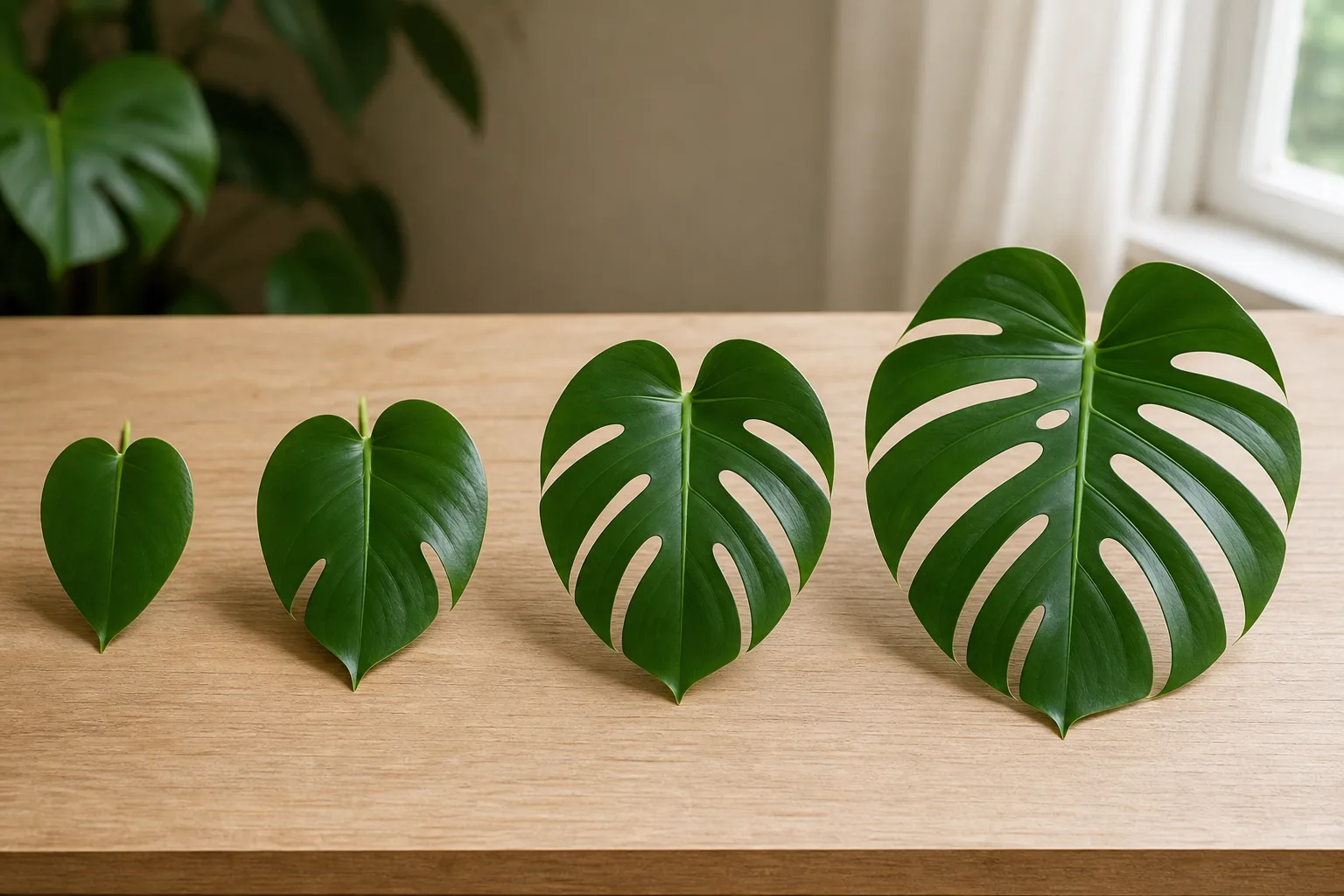
Caption: Fenestration progression on the same specimen over successive growth cycles—solid juvenile leaves (left) to mature splits and interior holes (right). Compare your newest leaf to leaves three nodes back; widening and splitting on new growth is the maturity signal this guide targets.
Why Most Indoor Monsteras Stay Small
Most small Monsteras are not genetically doomed. They are grown in conditions that keep them juvenile. The biggest limiters are weak light, no vertical support, dense or chronically wet soil, inconsistent watering, and long stretches without feeding during active growth. None of these always kill the plant, but together they cap leaf size and delay fenestration. (NC State Extension)
This is why a Monstera can live for years without becoming impressive. It sits several feet from a window, gets watered on a calendar instead of by soil dryness, and sprawls without a real climbing structure. The plant adapts to survive; adaptation is not the same as thriving.
If your plant is tall with tiny leaves, suspect stretching first—not a mysterious variety problem. Long stems with small foliage usually mean the plant is reaching for light or growing without the support that triggers mature climbing behavior. Fix the system before chasing fertilizer or a bigger pot.
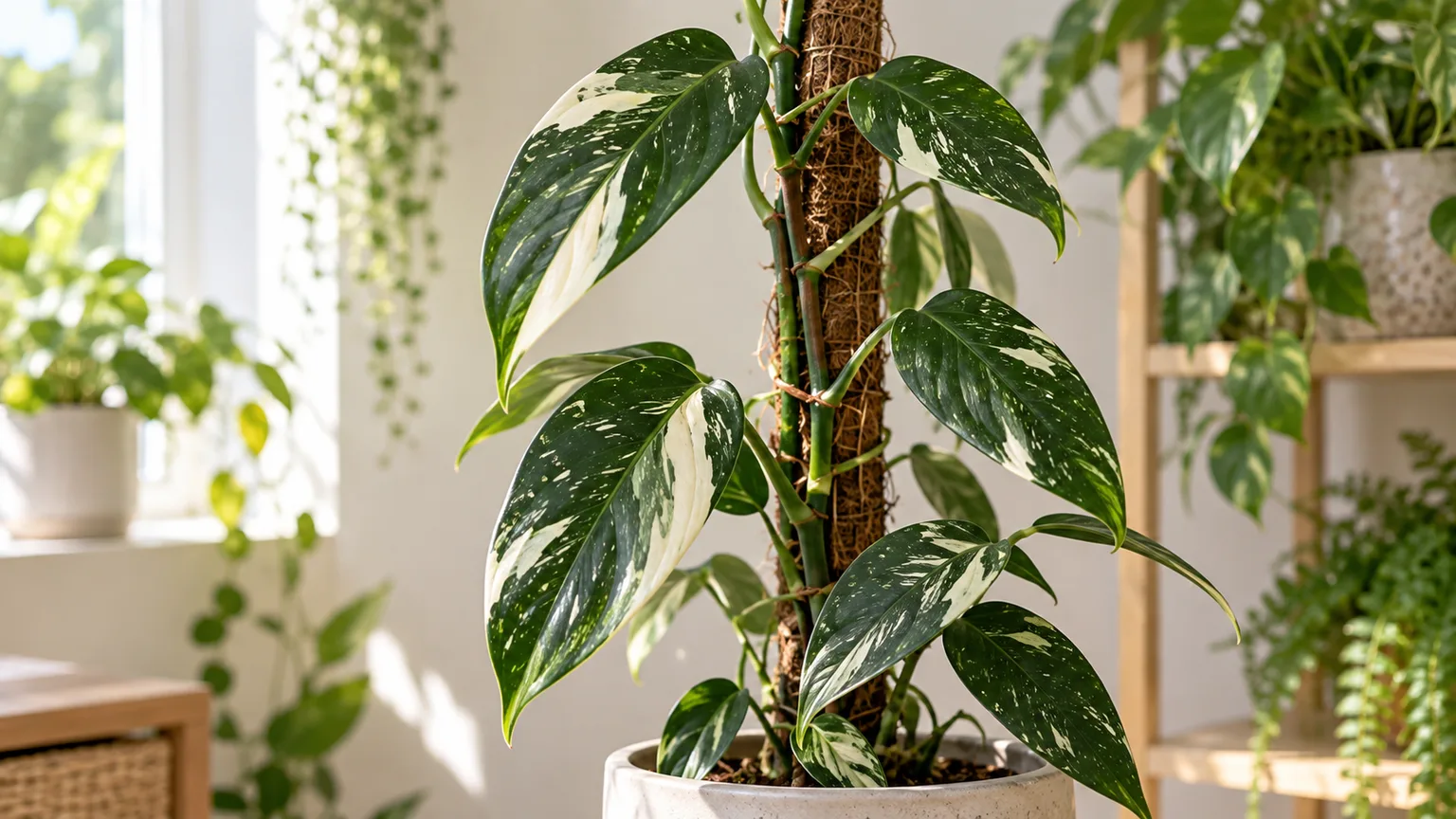
Cultivar check: Giant dinner-plate leaves are a Monstera deliciosa goal, not something to expect from M. adansonii, Rhaphidophora tetrasperma (“mini monstera”), or compact trade forms. If you bought a small-leaved variety, no care tweak will turn it into a wild-scale deliciosa. See types of Monstera plants before investing in poles and repots for the wrong species.
The Five-Lever Growth System
If you want the shortest path to a bigger Monstera, focus on five levers working together: light, support, root-zone structure, moisture management, and nutrition. Get them aligned and the plant has what it needs to produce larger leaves over repeated growth cycles. Miss one badly and you usually get slow growth, smaller leaves, or recurring stress.
The important phrase is over time. Giant Monsteras are built through many healthy growth cycles, not one fertilizer bottle or one dramatic repot. Each new leaf reflects prior conditions. The table routes generic care depth to hub pages; the subsections below keep giant-only nuance only.
| Lever | Giant-growth role | Go deeper |
|---|---|---|
| Light | Funds bigger leaves and fenestration | Monstera light guide |
| Support | Triggers climbing habit and stem strength | Aerial roots guide |
| Root zone | Airy mix and right pot size prevent rot stress | Monstera soil guide |
| Moisture | Steady hydration without chronic sogginess | Monstera watering guide |
| Nutrition | Accelerates active growth when other levers are solid | Monstera fertilizer guide |
Lever 1: Light for Leaf Size
Giant growth needs light income, not survival light. If your newest leaf is smaller or less fenestrated than the one three nodes back, light is the first lever to fix—not fertilizer or a bigger pot. A Monstera that merely tolerates a dim corner will stay visually juvenile for years. (RHS)
When the read test fails (see placement below), add a grow light rather than hoping the plant will shrink its ambitions—aim for roughly 12–14 hours of bright indirect-equivalent exposure. Placement baselines: grow lights complete guide and Monstera light requirements. Full light detail: Monstera light page.
Lever 2: Vertical Support
For giant leaves, vertical support is practically required. Without it, indoor Monsteras sprawl and read juvenile even when light is decent. Support changes stem alignment and gives aerial roots a climbing target—the behavior wild plants use to reach mature foliage. (Penn State Extension)
Size the pole for your next growth phase, not today’s height. A pole only slightly taller than the vine forces a floppy top within one season. Build or buy guidance: moss pole DIY. Aerial root behavior: Monstera aerial roots guide.
Lever 3: Root Zone and Soil
Overpotting is a common giant-growth sabotage move—a pot too large stays wet too long and raises rot risk while the top looks stalled. Giant foliage needs roots that breathe; dense, chronically soggy mix caps leaf size even when light is good. (NC State Extension)
Repot into airy mix when roots genuinely need room, not because you want faster size. Mix recipes and ratios: Monstera soil page and how to do Monstera soil mix.
Lever 4: Moisture and Humidity
Giant leaves lose more water per surface area—a maturing Monstera in dry winter air may stall fenestration even when watering rhythm is correct. Stable moisture without chronic sogginess matters more than a rigid calendar schedule. (Penn State Extension)
Water when the top 1 to 2 inches of soil feel dry for established specimens (University of Minnesota Extension); let excess drain fully. Full troubleshooting: Monstera watering page and humidity needs guide.
Lever 5: Nutrition
Fertilizer is an accelerator on a healthy system, not a rescue plan. Heavy feeding on a poorly lit, unsupported plant produces weak floppy growth—not giant leaves. Match feeding to actual growth pace during the active season only. (Penn State Extension)
If light, support, and roots are solid and new leaves still stall, then review feeding. NPK detail: Monstera fertilizer guide and fertilizing Monstera deliciosa.
Start With the Right Plant If Speed Matters
If speed matters, start with a plant that already shows some maturity. A specimen with thicker stems, larger existing leaves, and visible aerial roots is usually a better launch point than a tiny juvenile you hope to transform quickly. Small plants can become giant—it just takes longer, and juvenile leaves often stay juvenile for many growth cycles even under excellent care. (Wisconsin Horticulture)
When shopping, look for strong color, firm stems, a clear growth point, and no obvious pest damage. A plant already leaning toward climbing behavior is a good sign. Avoid stressed bargain plants if your goal is fast impressive size; rehabilitation is rewarding but not the fastest road to a giant specimen.
Buying benchmarks for speed: a stem thicker than a pencil, at least one leaf over 4–6 inches wide, and roots visible at drainage holes suggest the plant has moved past early juvenile stage. A 6-inch nursery pot with one thin stem and coin-sized leaves is a long-game project, not a shortcut. Confirm the label says Monstera deliciosa, not a smaller-form species—see types of Monstera plants.
Best Spot in Your Home
The best indoor spot is usually close to a bright window with filtered light. East-facing exposure is often gentle. South- or west-facing windows work if direct sun is softened with distance or a sheer curtain. Do not bury a giant-growth goal in a low-light corner—that is one of the fastest routes to small leaves and delayed fenestration. (RHS)
The read test: if you can comfortably read near the plant without turning on lights during the day, the space may be workable for moderate growth. If it feels gloomy most of the day, it is probably insufficient for giant ambitions. This is not a lab measurement, but it filters bad placements before you invest in poles and repots.
When the read test fails, add a grow light—do not wait for stretching to self-correct. A full-spectrum fixture roughly 12–18 inches above the canopy for 12–14 hours daily is a common starting point for large aroids; dial distance by leaf response (bleaching means too close). Detail: grow lights complete guide. For winter dimming: winter Monstera care.
Train Upward: Moss Pole Sizing and Technique
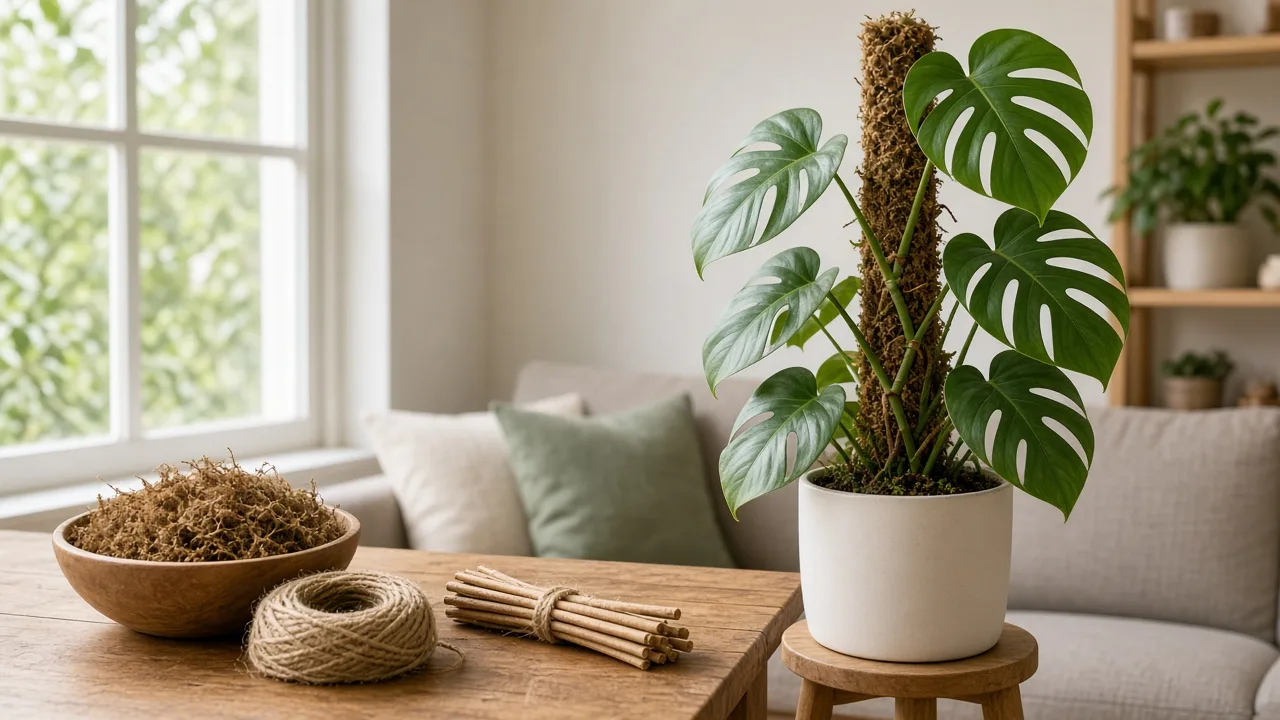
If you change one thing for leaf size, change the support. A moss pole, plank, or solid trellis gives the plant a vertical target and encourages the climbing habit that supports mature foliage. A pole that is too short forces the vine to flop within a year; plan for the plant’s next phase, not just today’s height.
Pole height rule of thumb for an 8-foot ceiling: choose a support 6 to 7 feet tall installed in the pot, leaving headroom for the pot and leaf spread. The pole should extend at least 12–18 inches above the current tallest stem so you are not replacing it every six months. Anchor it firmly in the pot when repotting if possible.
Tie the stem, not the leaf petioles. Guide the main vine upward and leave leaves free to orient toward light. Petioles position leaves; tying them down limits movement and makes the plant look cramped. Support the skeleton; let the leaves work.
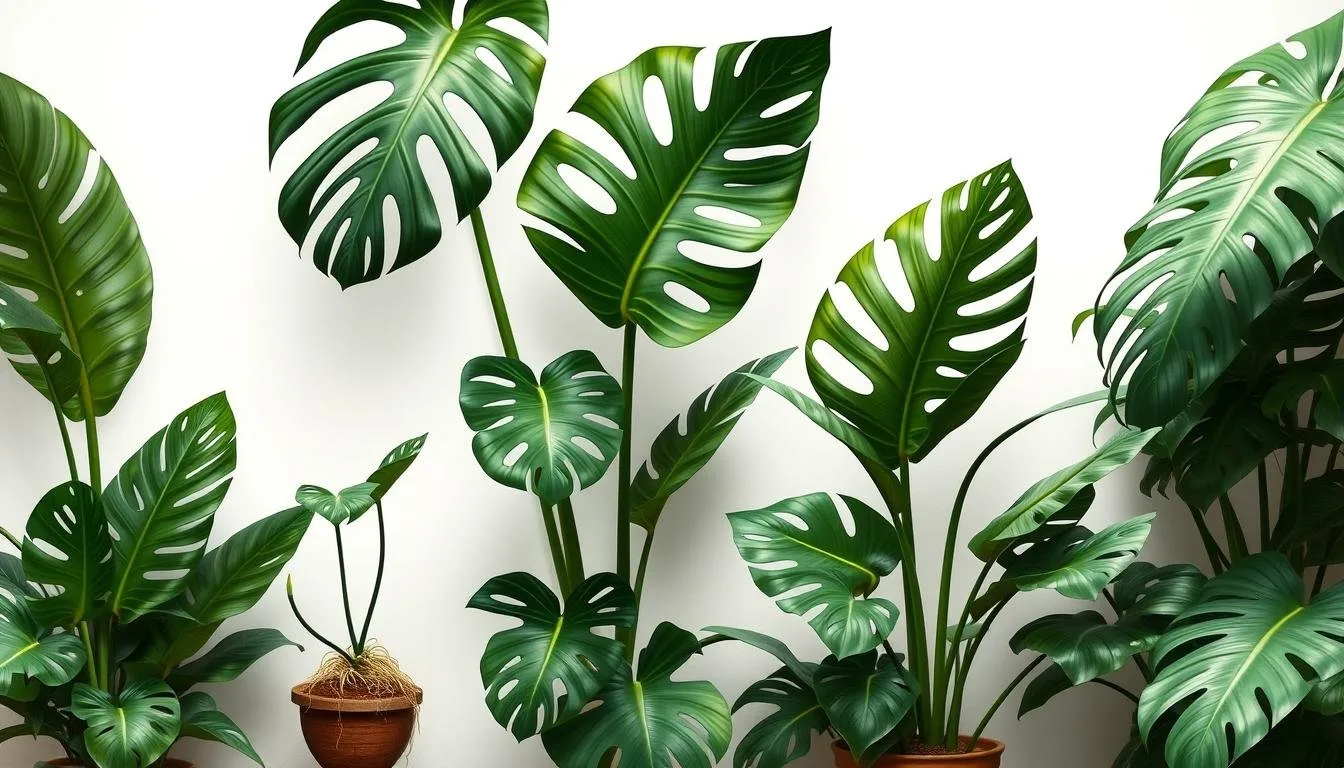
Caption: Correct training setup for giant indoor growth—a sturdy moss pole anchored in the pot, main stem tied with soft ties (not leaf petioles), and aerial roots guided toward the moss. Room has roughly 8-foot ceilings; pole height leaves headroom for leaf spread.
For aerial roots, do not routinely cut them. Guide roots into the pole or potting mix if manageable. Removing every aerial root is cosmetic, not a growth advantage. (Missouri Botanical Garden) Step-by-step pole build: moss pole DIY.
When Repotting Helps Size
Repot when the root system genuinely needs more room—not on a calendar. RHS guidance points to repotting in spring, often every 2 to 3 years or when root-bound, moving one pot size up with an airy mix. Signs include roots circling heavily, water racing through a root-packed pot, or growth stalling despite good light and feeding. (RHS)
Repotting is also the easiest moment to upgrade support. Install a taller, better-anchored pole while the plant is out of the pot. Step-by-step repotting: Monstera repotting guide and when and how to repot Monstera.
Prune Without Resetting Maturity
Pruning is useful but not free. RHS notes that if you cut a Monstera back hard, new stems often restart with smaller, less mature leaves until the plant settles again. Aggressive cutting can reset visual maturity—critical if you are trying to grow a giant specimen. (RHS)
Prune with purpose: remove yellow or damaged leaves, trim clearly unruly growth if space is limited, and make clean cuts above a node when shaping is necessary. Do not keep chopping a plant you also want to mature fast. If you must reduce size, do it in spring during active growth and accept the trade-off. Full technique: Monstera pruning guide.
Troubleshooting Stalled Giant Growth
When a Monstera stops sizing up, diagnose the growth system, not random symptoms. The bottleneck is usually in one of four places: light too weak, support inadequate, roots stressed, or nutrition mismatched to actual growth.
No fenestrations or tiny leaves: top suspects are immaturity, insufficient light, and lack of climbing support. Wisconsin Horticulture notes inadequate light prevents perforations. Fix: move brighter, train upward, keep conditions steady, wait through several growth cycles. Fenestration is a maturity response, not a switch. See Monstera not splitting leaves.
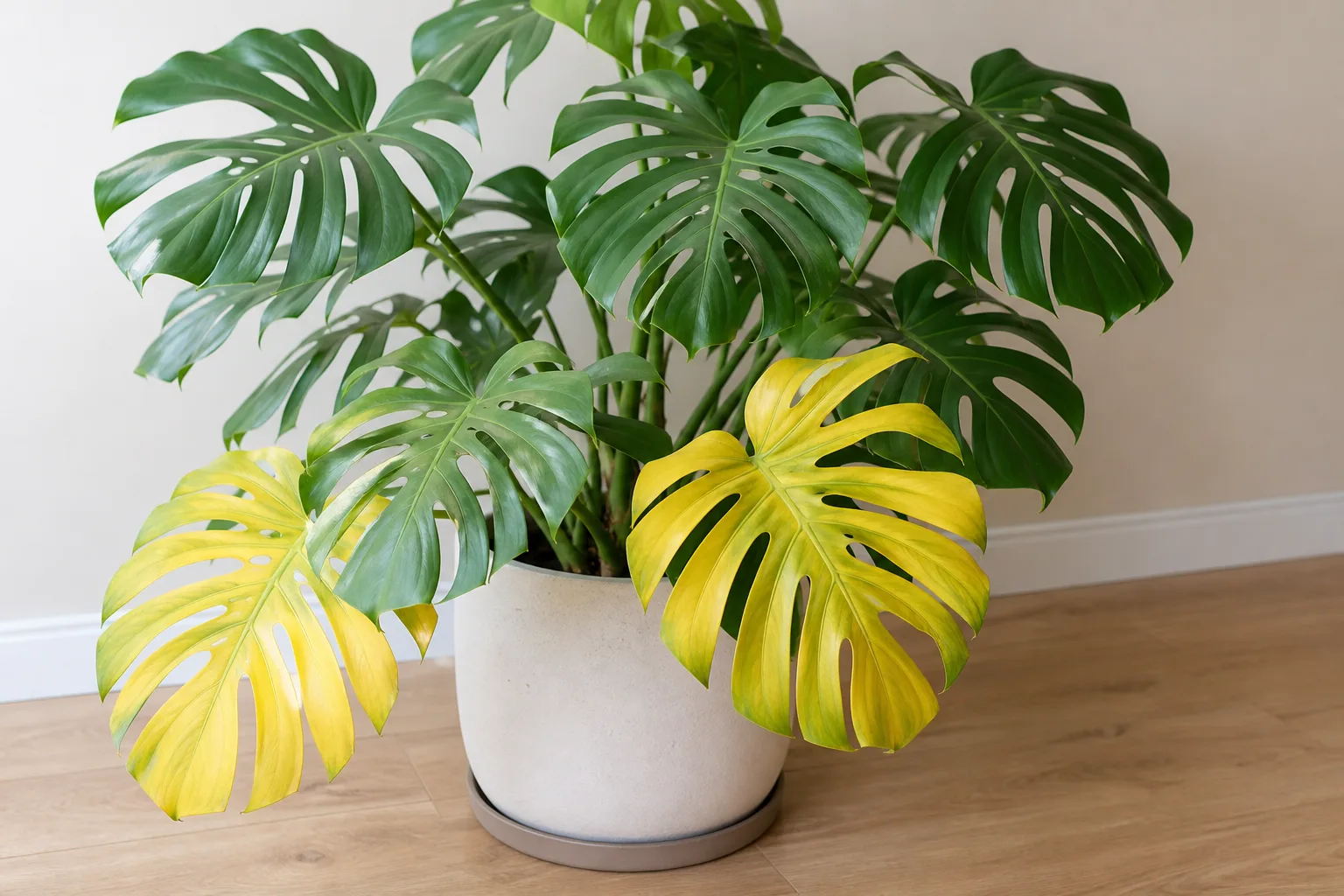
Yellow leaves or stalled growth: often watering or root stress—especially chronic sogginess. Check drainage, soil structure, and whether the pot is oversized. Overwatering problem page and root rot page cover diagnosis.
Pests on a large specimen: scale, spider mites, mealybugs, and aphids are common indoor pests. A giant plant is harder to restore after a major outbreak, so inspect early. Monstera pest and disease guide.
What Indoor “Huge” Looks Like: Timeline and Grow Log
The table below synthesizes typical indoor growth patterns from extension and botanical references—it is a benchmark checklist, not a guarantee. Individual plants vary with light, genetics, and starting size.
| Phase | Timing (good conditions) | What to expect indoors |
|---|---|---|
| Establishment | Months 0–6 | Root settling; leaves may stay small; focus on light and support setup |
| First maturity signals | Months 6–18 | New leaves slightly wider than older ones; first edge splits on some plants |
| Visible fenestration | Year 2–3 | Interior holes appear on newer leaves; stem thickens; plant reaches 3–5 ft |
| Architectural scale | Year 3–5+ | Leaves commonly 10–18 in. wide in strong light; plant approaches 5–8 ft |
| Indoor ceiling | Ongoing | Most indoor specimens plateau around 6–8 ft unless greenhouse conditions |
Progress metric: compare the newest leaf to the one three nodes back. If each new leaf is slightly larger or more fenestrated, your five-lever system is aligned even when progress feels slow. If new leaves are smaller or less split than older ones, something slipped—usually light or support.
Documented indoor grow log (contributor observation)
The notes below come from a documented indoor grower observation shared with LeafyPixels for this guide—a single Monstera deliciosa in a bright east-facing living room with 8-foot ceilings, moss-pole support installed at acquisition, and no greenhouse. Measurements are leaf width at widest point on the largest new leaf each season.
| Date | Event | Largest new leaf | Notes |
|---|---|---|---|
| March 2023 | Acquired (6-in. nursery pot) | 4.2 in. | Installed 5-ft moss pole; stem tied at two points |
| October 2023 | First repot (8-in. pot) | 6.1 in. | Pole extended to 6 ft during repot; first edge splits |
| May 2024 | Active summer growth | 9.5 in. | First interior fenestration holes on newest leaf |
| February 2025 | Year 2 winter slowdown | 11.8 in. | Plant height ~4.5 ft; read test passes without grow light |
| June 2025 | Peak season measurement | 14.2 in. | Height ~5.5 ft; stem pencil-thick; 8-ft ceiling still has headroom |
This log illustrates the newest-leaf-vs-three-nodes-back pattern in practice: each season’s largest leaf exceeded the prior season’s by roughly 1.5–3 inches once light and support were stable. Your plant may move faster or slower; genetics and starting size matter.

Caption: Same specimen progression over roughly 24 months—juvenile solid leaves low on the stem, mature fenestrated foliage on newer growth above the moss pole. Architectural indoor scale is built leaf-by-leaf, not in a single repot.
For lifecycle stage identification beyond size benchmarks, see Monstera lifecycle.
Pet Safety for Large Floor Specimens
Monstera deliciosa is toxic to cats and dogs because of insoluble calcium oxalates. ASPCA lists oral irritation, excessive drooling, vomiting, and difficulty swallowing among possible signs after ingestion. (ASPCA)
A floor-sized specimen raises stakes: pets can reach more foliage. Place large plants where curious animals cannot chew leaves. If you suspect ingestion, contact your veterinarian and the ASPCA Animal Poison Control Center at (888) 426-4435 (fee may apply). Giant growth is not the only goal—safe placement matters too.
Conclusion
Growing a giant Monstera indoors is a systems project, not a hack. Before your next repot or fertilizer purchase, run this milestone checklist:
- Newest leaves are wider or more fenestrated than leaves from three nodes back
- Plant receives bright indirect light—or supplemental grow light for 12–14 hours—most of the day
- A support at least 12–18 inches above the current stem top is installed and stem-tied correctly
- Potting mix drains fast; pot is only one size up from root mass
- Top 1–2 inches of soil dry between waterings; humidity stays reasonably above dry winter air
- Feeding matches active growth, not calendar habit
- Hard pruning is avoided unless you accept a maturity reset
- Species confirmed as Monstera deliciosa if giant leaves are the goal
When a lever is weak, fix it using the Monstera deliciosa hub rather than stacking more generic advice on this page. Indoors, giant is possible—it is earned through repeated healthy growth cycles, not overnight tricks.
Related Monstera Guides
This page focuses on giant-growth systems. For full care depth, use these cluster guides:
- Monstera deliciosa hub — canonical species home with watering, light, soil, fertilizer, repotting, and problem pages
- Monstera care guide for beginners — onboarding checklist if you are starting fresh
- Monstera not splitting leaves — fenestration troubleshooting when splits stall
- Secrets to thriving Monstera plants — year-round stability for an established specimen
- Types of Monstera plants — confirm you have deliciosa before chasing giant-leaf goals
- How to make your Monstera bushier — when fullness, not height, is the goal