Monstera Pest and Disease Guide: Identify, Treat and Prevent
Spot Monstera pests, leaf spots, root rot and common diseases, then treat problems before they damage new growth.
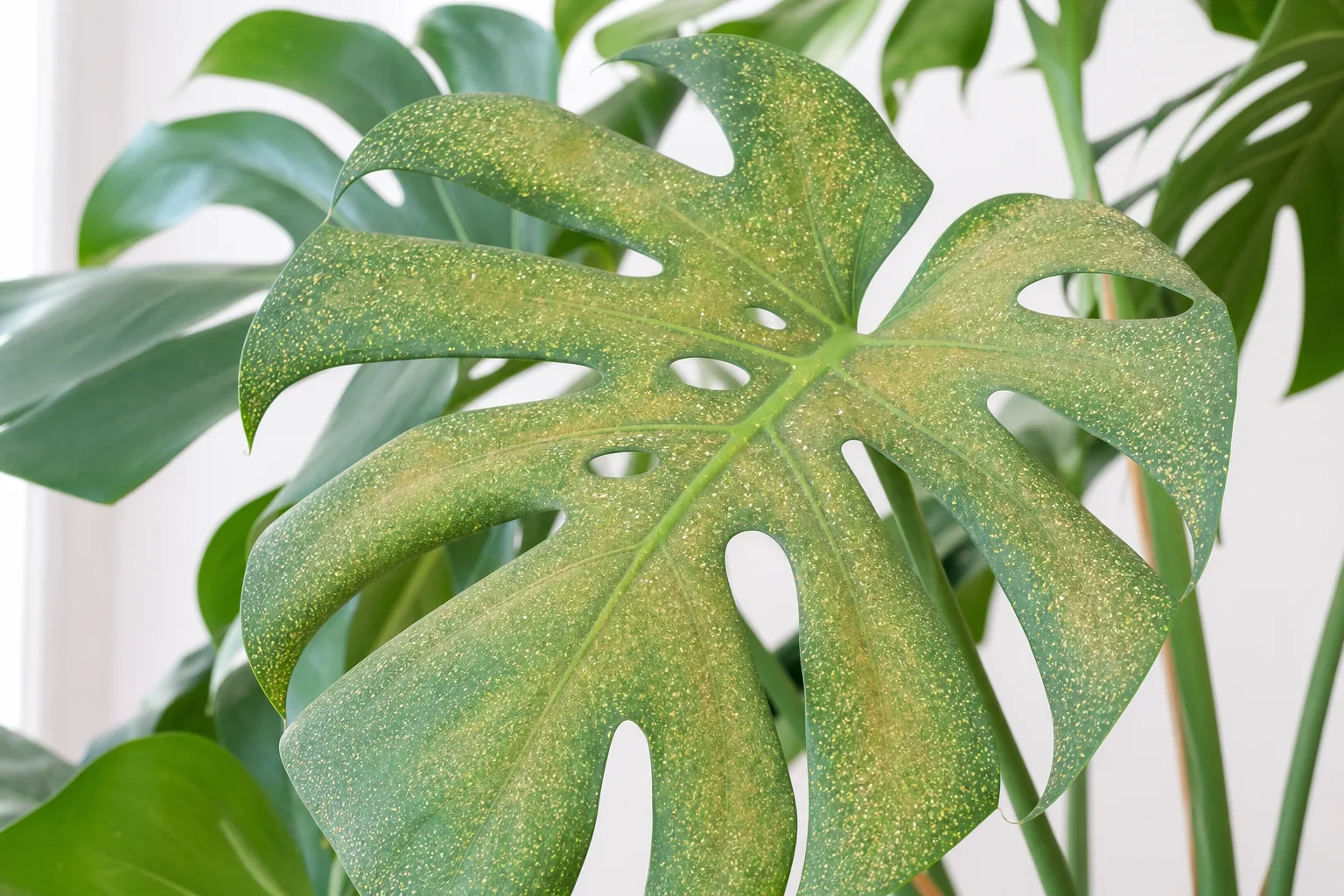
A damaged Monstera leaf is evidence, not a diagnosis. Silver streaks and black specks suggest thrips; pale stippling and fine webbing suggest spider mites; a heavy pot with limp foliage points toward root trouble. Dark spots can come from bacteria, fungi, sun, cold, fertilizer, or physical damage, so treating every brown mark with the same spray wastes time and can injure the plant.
Use this guide as a triage hub. First place the problem in the right category, then follow the linked Monstera problem page for a deeper recovery plan. If several kinds of houseplants are affected, the broader indoor plant pest guide explains collection-wide control.
Quick diagnosis: pest, disease, or care stress?
Start with pattern, texture, location, and speed of change-not color alone. UC IPM’s houseplant diagnostic guidance notes that yellowing, spots, and wilt can have environmental, pest, or disease causes, and recommends checking roots when wilt occurs. That is why a root check is often more useful than another photo comparison.
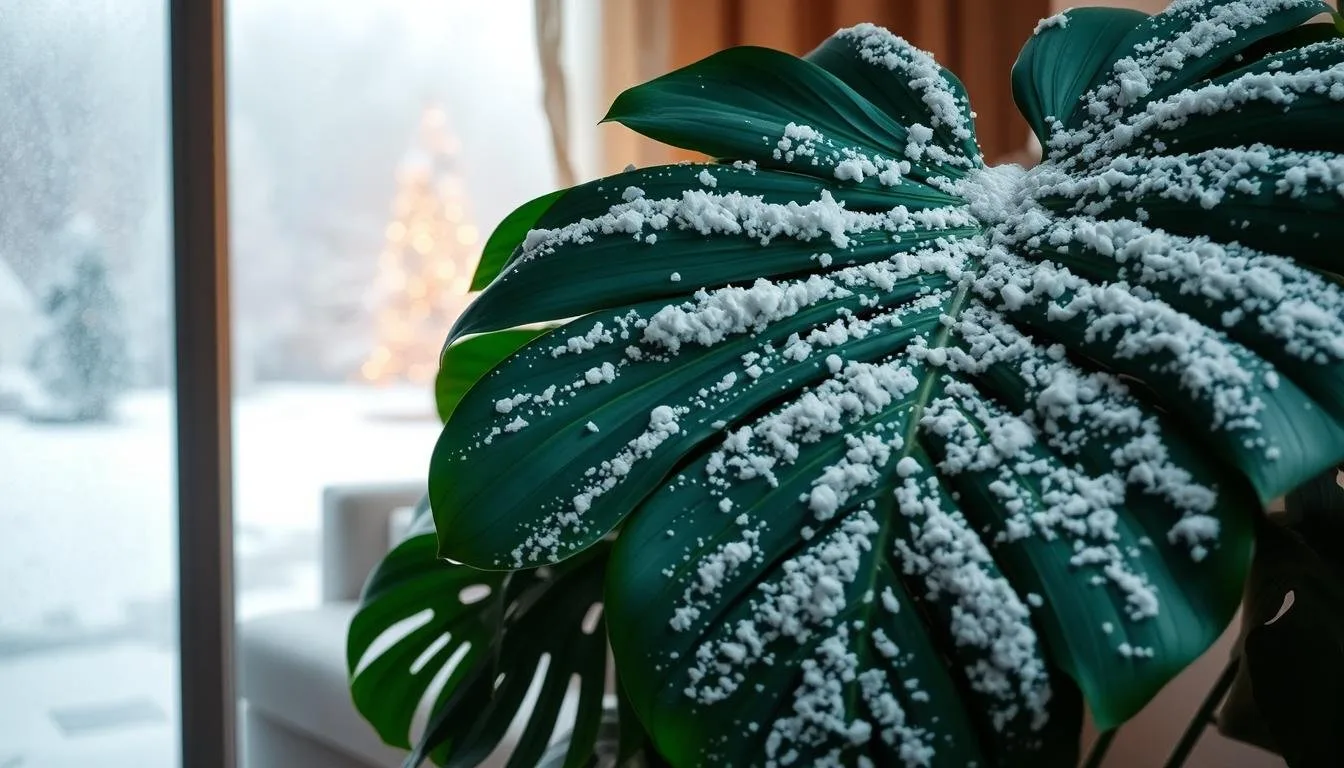
Pests usually leave feeding evidence: insects, cast skins, webbing, sticky honeydew, stippling, silvering, or distorted young tissue. Root disorders affect water uptake and often produce wilt even while the pot is wet. Leaf disease is more likely when lesions look water-soaked, expand after foliage stays wet, or move from leaf to leaf in crowded conditions.
A 30-second symptom table
| What you see | Most likely category | Confirm it by checking | First move |
|---|---|---|---|
| Pale pinprick stippling, dull leaves, fine webbing | Spider mites | Leaf undersides and petiole junctions with a magnifier | Isolate and wash foliage |
| Silvery scars, distorted new leaves, tiny black specks | Thrips | Unfurling leaves, undersides, and a blue or yellow sticky card | Isolate and monitor adults |
| Cottony tufts or fixed brown bumps; sticky residue | Mealybugs or scale | Nodes, petiole bases, aerial roots, pot rim | Remove visible pests and clean |
| Small dark flies over damp mix | Fungus gnats | Sticky card plus persistently moist top layer | Correct moisture; target larvae if needed |
| Limp canopy while pot remains heavy; brown, soft roots | Root rot or oxygen-starved roots | Root ball, drainage holes, cachepot, stem base | Stop watering and inspect roots |
| Dark, water-soaked spots with yellow borders | Bacterial leaf spot | New lesions after splashing, crowding, or wet foliage | Isolate; keep leaves dry |
| Dry tan-to-brown spots with possible fungal growth | Fungal leaf spot | Pattern, leaf-wetness history, and expert diagnosis if spreading | Remove affected tissue; improve airflow |
| Bleached dry patch only on the window-facing side | Sun scorch or heat stress | Recent move or direct afternoon sun | Move back from direct exposure |
The table narrows the field; it does not replace a laboratory diagnosis. Bacterial and fungal spots can look alike, and NC State Extension warns that visual separation can be difficult. If lesions spread despite dry foliage and sanitation, send clear photos or a sample to a local extension plant clinic rather than rotating through products.
Inspect before you treat
Move the plant away from the collection, put it in bright neutral light, and work in a fixed order. A 10× hand lens helps because mites and thrips are easy to miss. University of Minnesota Extension recommends checking leaf tops and undersides, containers, rims, crevices, and saucers, and it treats sticky cards as monitoring tools for flying pests rather than a complete cure. (University of Minnesota Extension)
- Examine the newest unfurling leaf for scarring, distortion, insects, and black specks.
- Turn over every leaf, starting with the dullest or most stippled one.
- Check nodes, petiole bases, aerial roots, support ties, and the back of the moss pole.
- Look for sticky honeydew on leaves, shelves, and the floor below the plant.
- Check the pot rim, drainage holes, saucer, and cachepot for insects or standing water.
- If the plant is limp while the mix is wet, slide out the root ball and inspect root texture and smell.
Do not spray first and identify later. A treatment that must contact mites will not repair rotting roots, and a fungicide will not solve scorch. Photograph the symptoms before cleaning so you can compare new damage with old scars during follow-up.
Common Monstera pests
The pests most often encountered on indoor Monsteras are spider mites, thrips, mealybugs, scale, aphids, and fungus gnats. Their biology differs, but the control logic is consistent: prevent introduction, detect early, physically reduce the population, and use a labeled treatment only when nonchemical steps are insufficient.
Damage already present will not turn green again. Judge success by finding fewer live pests, seeing no fresh lesions, and getting clean new growth. A scarred leaf can still photosynthesize, so remove it only when it is heavily infested, collapsing, or obstructing treatment.
Spider mites: stippling and fine webbing
Spider mites feed mostly on leaf undersides and cause fine pale stippling, mottling, bronzing, and eventually leaf drop. Fine webbing is strong evidence, but its absence does not rule mites out. The UConn Monstera guide specifically notes that not all spider mite species produce webbing and recommends close attention to the undersides during control.
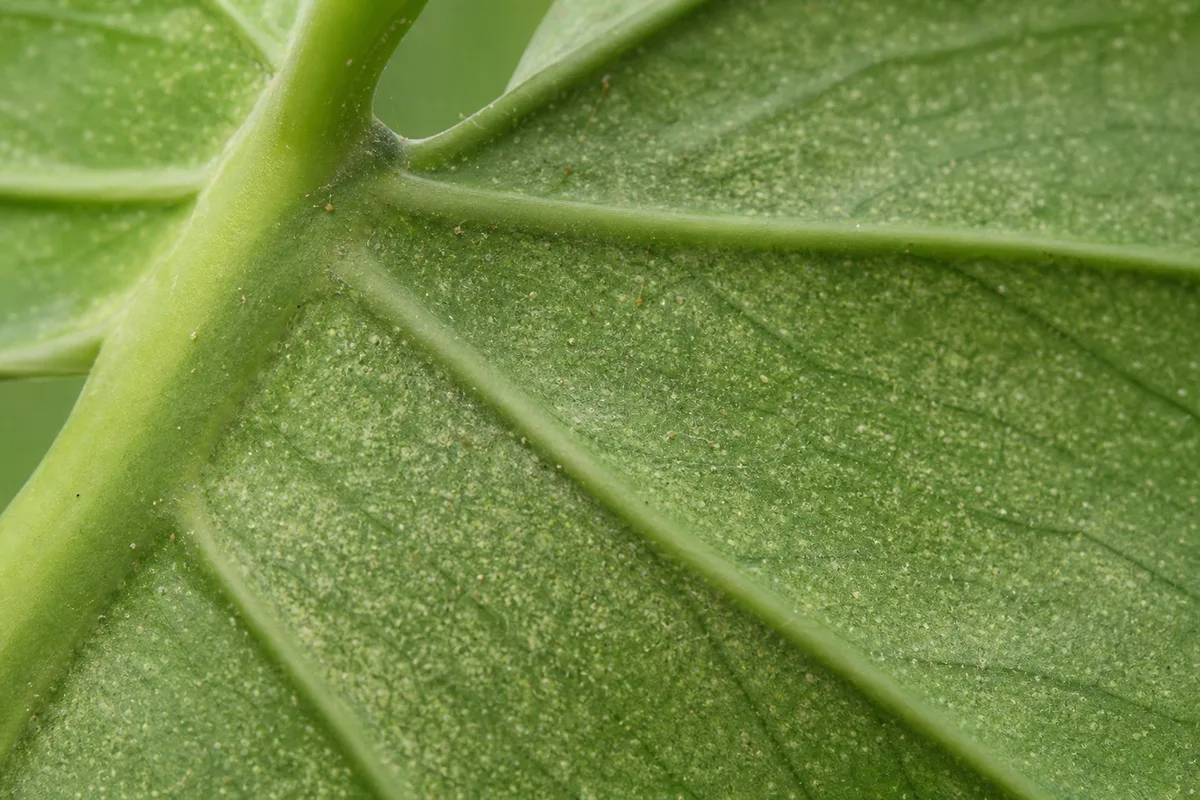
Wash both leaf surfaces and petioles, wipe broad leaves, and repeat inspection. For a detailed sequence, use the Monstera spider mite recovery guide. If mites persist, a horticultural oil or insecticidal soap labeled for the plant and indoor use may help, but coverage and repeat timing must follow the product label; Colorado State Extension notes that oils are generally more effective than soaps against two-spotted spider mites and that webbing can reduce spray penetration.
Thrips: silver scars and distorted new growth
Thrips scrape and feed on plant tissue, leaving irregular silvery-white areas, tiny dark fecal spots, and distorted growth when they feed on developing leaves. The RHS thrips guide identifies silvering plus black excrement spots as a characteristic pattern and lists Monstera among hosts of banded palm thrips.
Inspect rolled and newly opening leaves, where damage can begin before the blade unfurls. Rinse the plant, remove only severely affected foliage, clean nearby surfaces, and place a blue or yellow sticky card nearby to track flying adults. Because eggs or immature stages may escape a single contact treatment, recheck at the label interval and continue until several inspections show no live insects or fresh injury.
Sticky cards do not control larvae feeding on the plant, and a single “strong” application is not a substitute for complete coverage. When choosing a product, the label must list the site, plant type, and target pest; if thrips are absent from the label, choose another method.
Mealybugs, scale, and aphids: clusters and sticky leaves
Mealybugs resemble cottony or waxy tufts, often in nodes and petiole bases. Scale look like fixed tan or brown bumps. Aphids are soft-bodied insects that cluster on tender new growth. Mealybugs, soft scale, and aphids can excrete honeydew, creating sticky leaves and supporting black sooty mold; University of Minnesota Extension lists this residue as a key inspection clue. (University of Minnesota Extension)
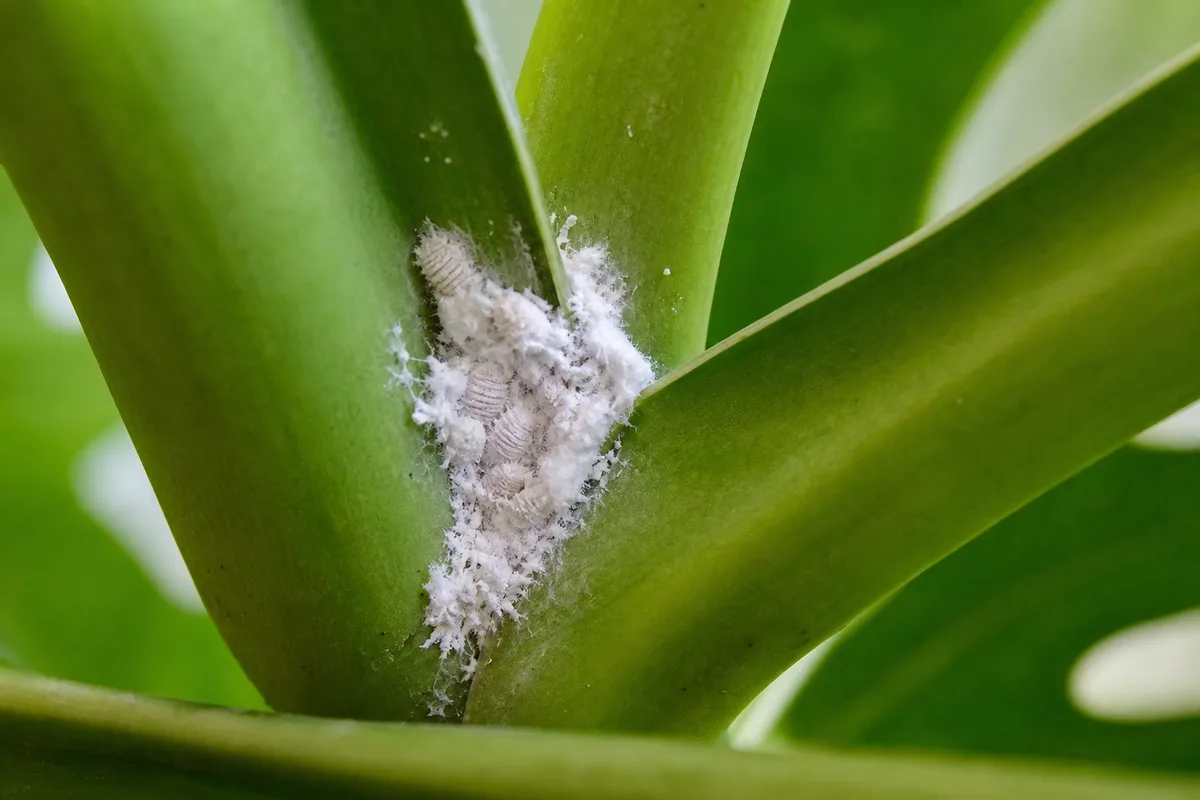
For a small infestation, remove pests with tweezers or a cotton swab used carefully on the insect, then wipe the area and recheck every node. The Monstera mealybug guide covers hidden colonies and repeat monitoring. Sticky leaves without obvious insects warrant the sticky-leaves diagnostic; honeydew can fall from pests feeding above the leaf you are examining.
Do not assume every bump is scale. Test one gently: established scale may lift or crush, while normal corking and scars are part of the plant. Aphids and leaf miners are less common Monstera complaints but possible; compare visible colonies with the aphid guide and serpentine tunnels with the leaf-miner guide.
Fungus gnats and root mealybugs: problems in the pot
Adult fungus gnats are primarily a nuisance, but larvae live in moist organic media and can damage roots when populations are high, especially on young plants. UC IPM emphasizes that poor drainage, waterlogging, and root decay are more common causes of wilt than fungus gnat larvae. (UC IPM fungus gnat guidance)
Use sticky cards to monitor adults, but correct the wet root zone that supports breeding. Empty the cachepot, improve drainage, remove decaying material, and allow appropriate dry-down without deliberately dehydrating the plant. The Monstera fungus gnat guide explains moisture correction and larval controls.
Root mealybugs are different: white waxy residue appears on roots, inside the pot, or around drainage holes, while foliage may decline without a visible canopy pest. Confirm them by unpotting. Keep the root ball contained, discard infested mix, clean the pot, and seek local extension advice for a product registered for root-zone use; do not pour a foliar spray into the mix unless its label explicitly permits that application.
Common Monstera diseases
Disease is not the default explanation for a damaged houseplant. UC IPM reports that improper watering, low light, poor sanitation, and other environmental conditions account for many indoor plant problems. Still, Monstera can develop root and stem rots, bacterial leaf spot, anthracnose, and other leaf spots, particularly when roots stay saturated or foliage remains wet and crowded.
Treat the conditions as well as the tissue. Removing one spotted leaf changes little if overhead watering continues, and repotting changes little if the nursery pot still sits in runoff.
Root rot: wilt while the mix is wet
Suspect root rot when leaves droop while the pot is heavy, lower foliage yellows, the mix smells sour, or the stem base softens. Confirm it by looking at roots: healthy roots are firm, while affected roots may be brown or black, soft, and easy to pull apart. UConn describes these same Monstera root-and-stem-rot signs and recommends well-drained media and no standing water. (UConn Home Garden Education Office)
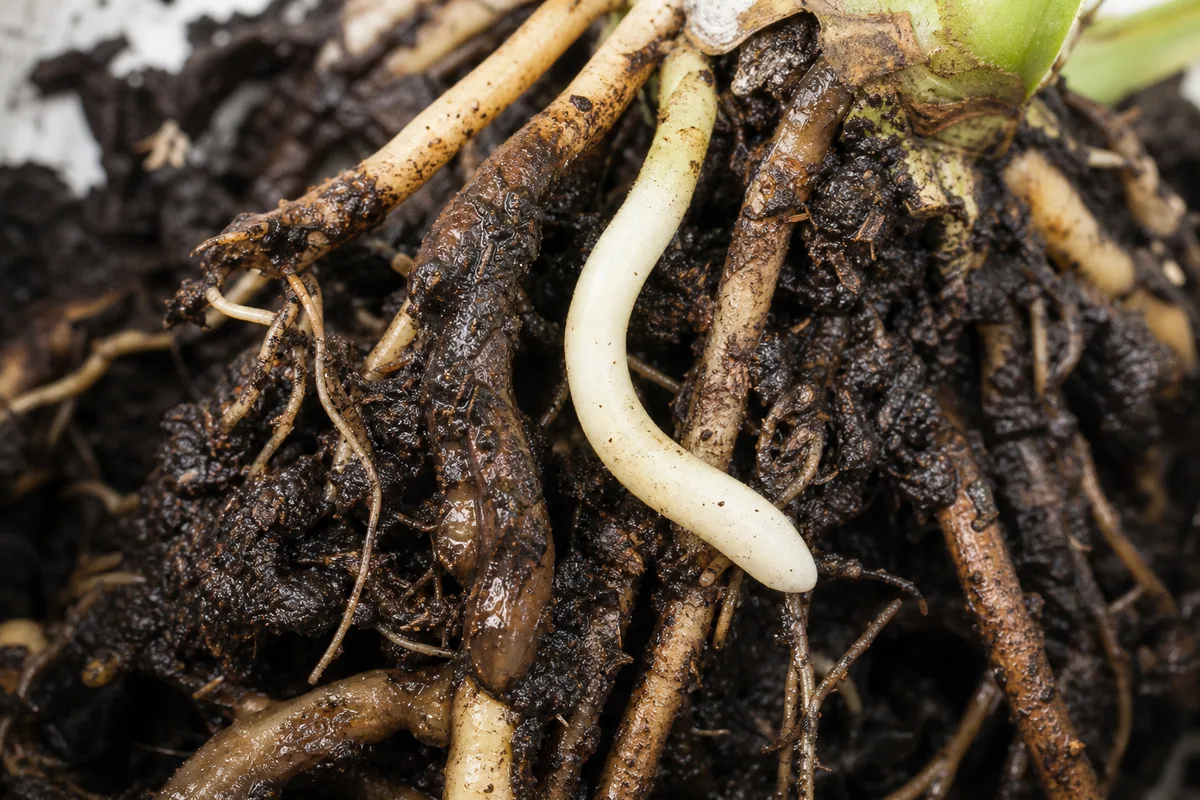
Stop watering, empty standing runoff, and inspect the root system before pruning foliage. The Monstera root rot guide gives the full rescue workflow, while the overwatering diagnostic is the better starting point when roots remain firm. Do not fertilize a plant with failing roots, and do not move it into a much larger pot “for recovery.”
Bacterial leaf spot: water-soaked lesions and yellow halos
On Monstera, bacterial leaf spot can produce dark brown spots with yellow borders, water-soaked tissue, and sometimes sticky ooze. UConn advises increasing airflow, avoiding crowding, and reducing moisture on foliage; it does not recommend routine chemical control for this Monstera problem. (UConn Monstera diseases)
The disease is real, but visual certainty has limits. A 2024 peer-reviewed report confirmed Pseudomonas cichorii leaf spot on Monstera adansonii in a Hawai‘i nursery, where lesions progressed from chlorotic areas to dark necrosis; the authors recommended spacing, less watering, no mist irrigation, and careful removal of diseased leaves. (Plant Disease) That report does not prove that a spot on a home-grown M. deliciosa has the same pathogen.
Isolate the plant, remove clearly affected leaves with sanitized tools, keep foliage dry, and avoid handling healthy plants after touching lesions. Use the Monstera leaf spot guide for close-up comparisons. If spots continue to appear after environmental correction, ask an extension plant clinic for diagnosis before applying a bactericide or fungicide.
Fungal leaf spots and powdery growth
Fungal spots may be tan, brown, or black and can merge into larger dead areas. Powdery mildew produces a white-to-gray surface growth, but it is not among the most typical Monstera problems. UC IPM explains that many fungal leaf-spot spores move in splashing water and require sustained leaf wetness, so prevention centers on dry foliage, early-day watering, airflow, and prompt removal of infected tissue. (UC IPM)
Do not diagnose “fungus” from a dry brown edge alone. Sun scorch, salts, low humidity, cold injury, and root failure can all create necrotic tissue. A fungicide cannot reverse dead leaf tissue and should not be used speculatively; if the problem is spreading, diagnosis is more valuable than product rotation.
A treatment framework that prevents repeat failures
The reliable sequence is isolate → inspect → physically reduce → clean → treat the confirmed cause → correct the environment → monitor. This is integrated pest management at houseplant scale: begin with low-risk controls, use monitoring to decide whether they worked, and escalate only when evidence supports it.
Keep notes for two to four weeks: date, live pests found, new lesions, treatment used, and environmental changes. Old scars can make a successful treatment look like failure unless you distinguish existing damage from fresh damage.
Isolate, clean, prune, and monitor
Create distance immediately and prevent leaves from touching other plants. Use separate tools and clean the shelf, saucer, cachepot, support pole, and nearby window area. University of Minnesota Extension recommends isolating newly acquired plants for one to two weeks and checking them during routine watering and cleaning. (University of Minnesota Extension) For an active infestation, keep isolation in place until repeated inspections show no live pest or new damage.
Wash mobile foliar pests from both leaf surfaces. Prune leaves only if they are heavily infested, actively infected, or mostly dead; do not strip a weak plant of all functional foliage. Bag removed pest- or disease-affected material before carrying it through the collection, and sanitize cutting tools between affected and healthy tissue.
Choose the least-disruptive effective treatment
Physical removal and washing can control small infestations. Insecticidal soaps and horticultural oils act mainly by contact, so missed leaf undersides and nodes remain untreated. Colorado State Extension’s houseplant pest guidance also cautions that household detergents can injure plants; use a formulated, labeled product instead of a homemade dish-soap recipe.
Match method to cause. Sticky cards monitor flying thrips and fungus gnat adults but do not reach immature stages on leaves or in mix. Foliar products do not correct root rot. Bacterial leaf spot management begins with sanitation and moisture control, not an automatic fungicide. Test any contact spray on a small leaf area when the label advises it, and never exceed the concentration or repeat interval.
Escalate when live pests persist through correctly timed treatment, lesions continue on dry separated foliage, the stem base softens, or the problem threatens a valuable collection. A severely infested or systemically rotting plant may be safer to discard or reduce to clean, firm cuttings than to keep as a long-term source of contamination.
Indoor pesticide safety for people, pets, and aquariums
“Natural” and “houseplant” do not mean risk-free. The EPA pesticide safety guidance says to read and follow the label, use only the directed amount, remove children and pets from the area, and keep them away until the spray has dried or for the label’s stated period. A pesticide may be used only on the sites and pests listed on its label.
Before spraying indoors:
- Confirm the product label allows indoor use on ornamental plants and names the target pest.
- Follow required protective equipment, dilution, application, ventilation, and re-entry instructions exactly.
- Move children, pets, toys, food, water bowls, and bedding away from the treatment area.
- Protect aquariums. NPIC advises covering fish tanks and preventing airborne pesticide from entering tank pumps; move the plant to a separate ventilated area when possible.
- Do not mix products or add extra concentrate. More is not a more effective label rate.
- Store leftovers in the original labeled container and follow local disposal rules.
If a person or pet may have been exposed, use the first-aid and emergency contact instructions on the product label. In the United States, EPA lists Poison Control at 1-800-222-1222; for pets, contact a veterinarian or animal poison-control service.
Prevention and quarantine
Inspect a Monstera before purchase and again before it joins the collection. Keep new plants separate for at least one to two weeks, as University of Minnesota Extension recommends, and inspect the newest growth, undersides, pot rim, and media more than once. Longer separation is sensible after finding suspicious damage because eggs and immature insects may not be obvious on day one.
Build prevention into normal care. Give the plant bright indirect light, use a well-drained root zone, empty runoff, clean leaves with plain water, and space foliage so it dries after accidental splashes. Follow the species-specific Monstera watering guide and Monstera soil guide instead of watering by calendar. Check the plant whenever you water; weekly observation catches a small colony before it becomes a room-wide problem.
Season changes matter because the pot dries more slowly in low winter light while heated air can favor mites. Adjust water to actual root-zone moisture, not the month. If a plant spends summer outdoors, inspect and isolate it before bringing it back inside.
Related Monstera problem guides and review notes
Use the Monstera plant-problems hub when you have a visible symptom but the category is still uncertain. The most relevant deep dives are spider mites, mealybugs, fungus gnats, root rot, and leaf spot disease. For care-stress lookalikes, compare yellow leaves and brown tips.
This guide was written by Sai Ananth and reviewed by the LeafyPixels Review Board. Recommendations were checked against current university extension, government pesticide-safety, horticultural society, and peer-reviewed plant-pathology sources. Visual diagnosis has limits; a local extension plant clinic is the appropriate next step for fast-spreading or treatment-resistant lesions.
Conclusion
Diagnose before treating. Find feeding evidence for pests, inspect roots when a wet plant wilts, and treat spreading water-soaked lesions as a sanitation problem until an expert confirms the cause. Then use the least-disruptive effective control and monitor for fresh damage rather than expecting old scars to disappear.
The most useful first action is usually simple: isolate the Monstera, inspect new growth and leaf undersides, check the pot and roots, and document what you find. That evidence tells you whether to wash leaves, correct the root zone, remove diseased tissue, or use a pesticide whose label actually matches the problem.