Snake Plant Care Guide: Light, Water, Soil and Common Fixes
Grow a low-maintenance snake plant indoors with advice on light, watering, soil, propagation and common problems.
Snake Plant Care at a Glance
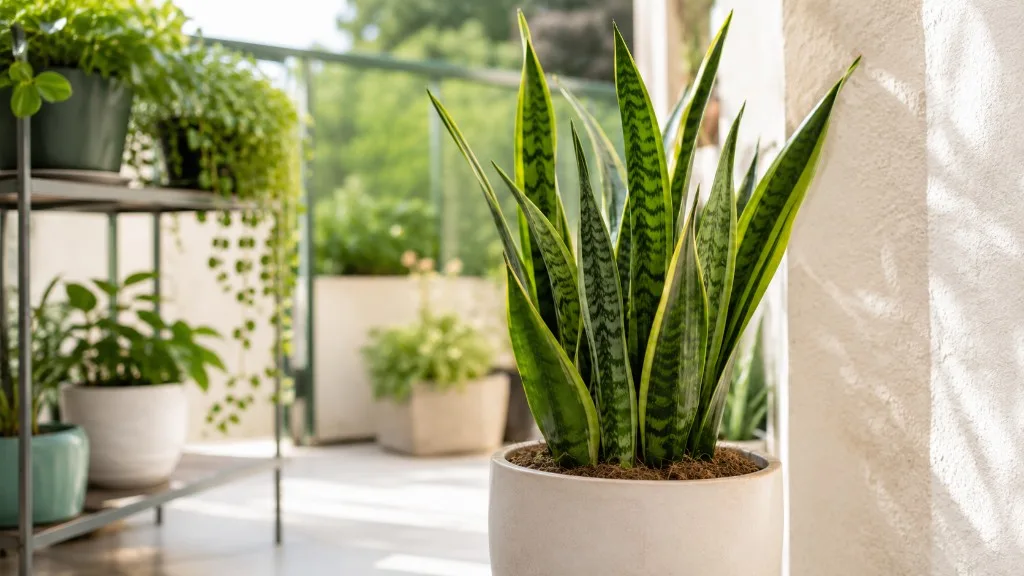
A snake plant rewards restraint more than enthusiasm. Give it bright indirect light when you can, let the soil dry thoroughly between waterings, use a fast-draining mix in a pot with a drainage hole, and protect it from cold wet soil. In most homes that rhythm works out to watering every 2 to 4 weeks in warmer months and 4 to 8 weeks in winter - but the pot, not the calendar, should decide.
| Care factor | What works indoors |
|---|---|
| Light | Bright indirect for growth; tolerates low light but grows slowly |
| Water | Soil dry throughout the pot before the next drink |
| Soil | Cactus/succulent mix plus perlite or pumice |
| Temperature | Roughly 60–85 °F (16–29 °C); damage near 50 °F (10 °C) |
| Pets | Toxic to cats and dogs if eaten (saponins) |
For the full species reference - cultivars, grow-light specs, pest protocols, and sixteen problem-specific guides - see our Snake Plant care hub.
How This Guide Relates to Our Snake Plant Hub
LeafyPixels publishes two snake plant resources on purpose. The Snake Plant hub is the deep reference: seasonal calendars, cultivar comparisons, CAM photosynthesis context, grow-light distances, and symptom-first links to problem pages. This guide is the consolidated beginner path - one readable care system with the decisions that prevent most failures.
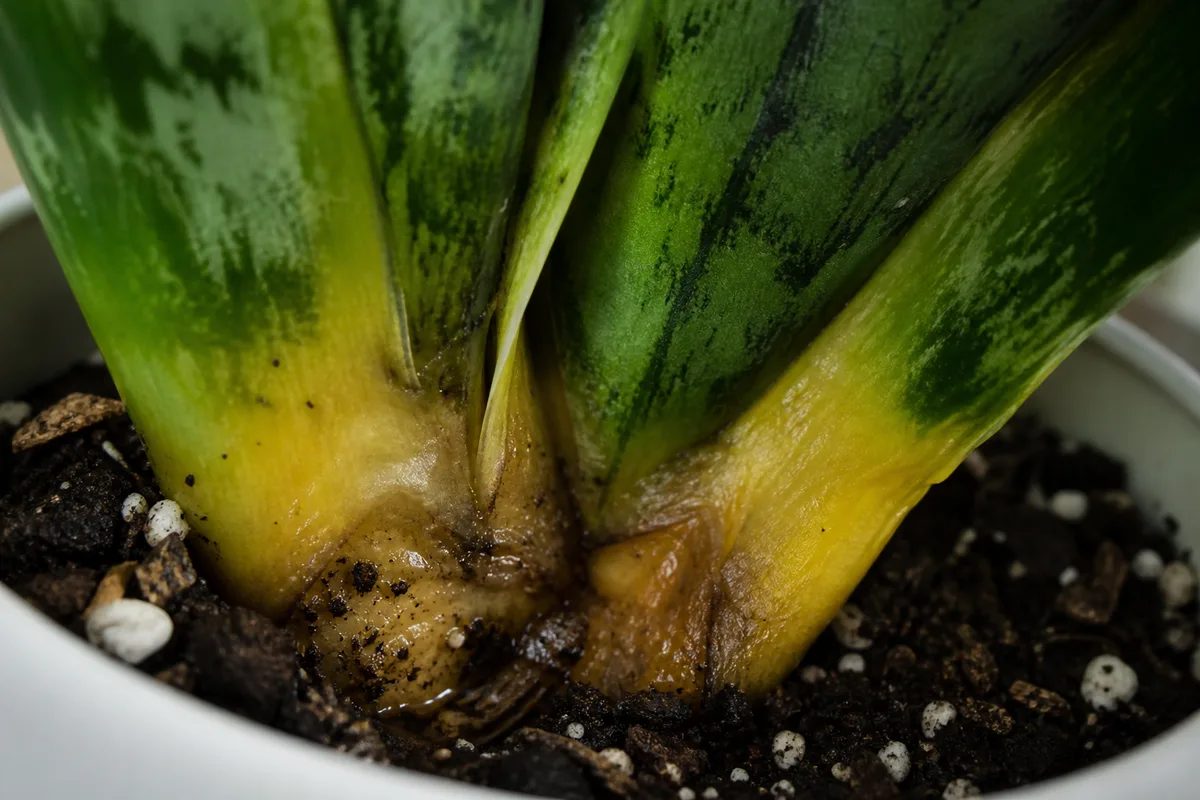
If you already know you have overwatering on Snake Plant, yellow leaves, or root rot, jump straight to those pages. If you are setting up a new plant or resetting care after a rough season, start here, then use the hub when you need more depth.
What a Snake Plant Is
The plant most people call snake plant is Dracaena trifasciata (formerly Sansevieria trifasciata). Botanists moved Sansevieria into Dracaena in 2017 based on DNA evidence; nursery tags and older articles still use both names for the same species. Royal Botanic Gardens, Kew describes it as native to rocky, dry areas in West and Central Africa - which explains the thick leaves, underground rhizomes, and night-opening stomata (CAM photosynthesis) that let it survive long dry spells.
Common names include mother-in-law’s tongue, viper’s bowstring hemp, and golden bird’s nest on compact forms. Standard types grow upright sword-like leaves with horizontal banding; bird’s-nest cultivars stay in tight rosettes under a foot tall. NC State Extension lists the species as durable and easy to grow but emphasizes well-drained soil and careful watering because rot is the main indoor failure mode. (Plant Toolbox)
Why “Hard to Kill” Still Needs Rules
Snake plants survive neglect because they store water in stiff leaves and rhizomes. That is not the same as thriving in a dark corner with constantly damp soil. The reputation causes owners to water on a tropical-houseplant schedule, pour into tight rosettes, or keep plants in cachepots without drainage - then wonder why leaves go soft at the base weeks later.
The useful mindset: survive is not grow well. A dim hallway plant may look unchanged for a year while roots sit in soil that never fully dries. Bright indirect light, gritty mix, and a dry-down watering rhythm produce firm upright leaves, steady pups, and sharper variegation on types like ‘Laurentii’. For the full watering logic, see our Snake Plant watering guide.
On air purification: snake plants appear in the 1989 NASA chamber study, but normal homes ventilate too fast for a single pot to matter. We keep the full debunk and modeling detail on the Snake Plant hub - enjoy the plant for looks and drought tolerance, not as an air filter.
Best Light for Snake Plants
Light and watering are linked. More light means faster photosynthesis and faster soil drying; less light means the same pot stays wet longer and rot risk rises. That feedback loop is one of the most important snake plant care rules.
Low Light vs Bright Indirect Light
Snake plants tolerate low light because CAM metabolism and leaf water reserves let them idle. They prefer bright indirect light for active growth. In dim rooms, expect slow or no new leaves, faded variegation, and thinner leaning foliage. Clemson Cooperative Extension notes that bright indirect light is ideal and that growth slows in low light, which also means less frequent watering. (Home & Garden Information Center)
A practical placement test: if your hand casts a soft but visible shadow near the plant during the day, light is usually workable. Barely any shadow means survival mode. For windowless offices, a full-spectrum grow light on a 12–14 hour timer, 12–18 in (30–45 cm) above the foliage, keeps growth going - details in our Snake Plant light guide.
Popular cultivars and light needs:
- Standard green: Most forgiving in moderate light
- ‘Laurentii’: Yellow margins stay crisp with brighter indirect light
- ‘Moonshine’: Silvery leaves need good light; wash out in deep shade
- ‘Black Gold’ / bird’s-nest types: Moderate to bright indirect; small pots dry slowly - easy to overwater
Direct Sun and Window Placement
Morning sun from an east window is usually fine. Harsh afternoon sun through untreated glass can scorch leaves, especially after a plant lived in low light. Move closer to brighter windows over one to two weeks rather than in one jump. Bleached or papery patches do not revert green; trim only if unsightly.
Avoid winter placement with leaves pressed against cold glass and summer placement in the direct path of AC vents. Both create localized stress that shows up as water-soaked patches or stalled growth. See cold damage on Snake Plant if dark soft spots appear after a cold night.
Watering Snake Plants Correctly
Overwatering - or watering again before the pot has dried - kills more snake plants than underwatering. The plant’s roots need oxygen between drinks.
How Often to Water
Water only when the soil is dry throughout the pot, not when the surface alone feels dry. Push a finger 2–3 in (5–7 cm) deep, use a dry chopstick to the bottom, or lift the pot and notice weight. RHS guidance for Sansevieria is to water once the compost is starting to dry out, in free-draining mix and warm indoor conditions. (RHS)
In typical homes, many plants need water every 2 to 4 weeks in spring and summer and every 4 to 8 weeks in fall and winter. NC State suggests watering as rarely as every one to two months in winter for some setups. (Plant Toolbox) A small terracotta pot in a bright room dries faster than a large plastic pot in a dim corner - never water two different plants on the same calendar because they share a species name.
| Season | Approximate interval | Check before watering |
|---|---|---|
| Spring | Every 2–3 weeks | Soil dry 2–3 in down; pot feels light |
| Summer | Every 2–4 weeks | Same; small pots may need sooner |
| Fall | Every 3–5 weeks | Soil fully dry; stretch as light drops |
| Winter | Every 4–8 weeks | Dry throughout; skip fertilizer |
For month-by-month nuance, see the Snake Plant watering guide and our general how to water indoor plants reference.
How to Water Without Causing Rot
When the mix is dry, soak until a little water runs from the drainage hole, let the pot drain 10–15 minutes, and empty the saucer. Shallow sips leave dry pockets and encourage weak surface roots. Avoid pouring into the center of tight rosettes where water can sit between leaves - aim at the soil line instead.
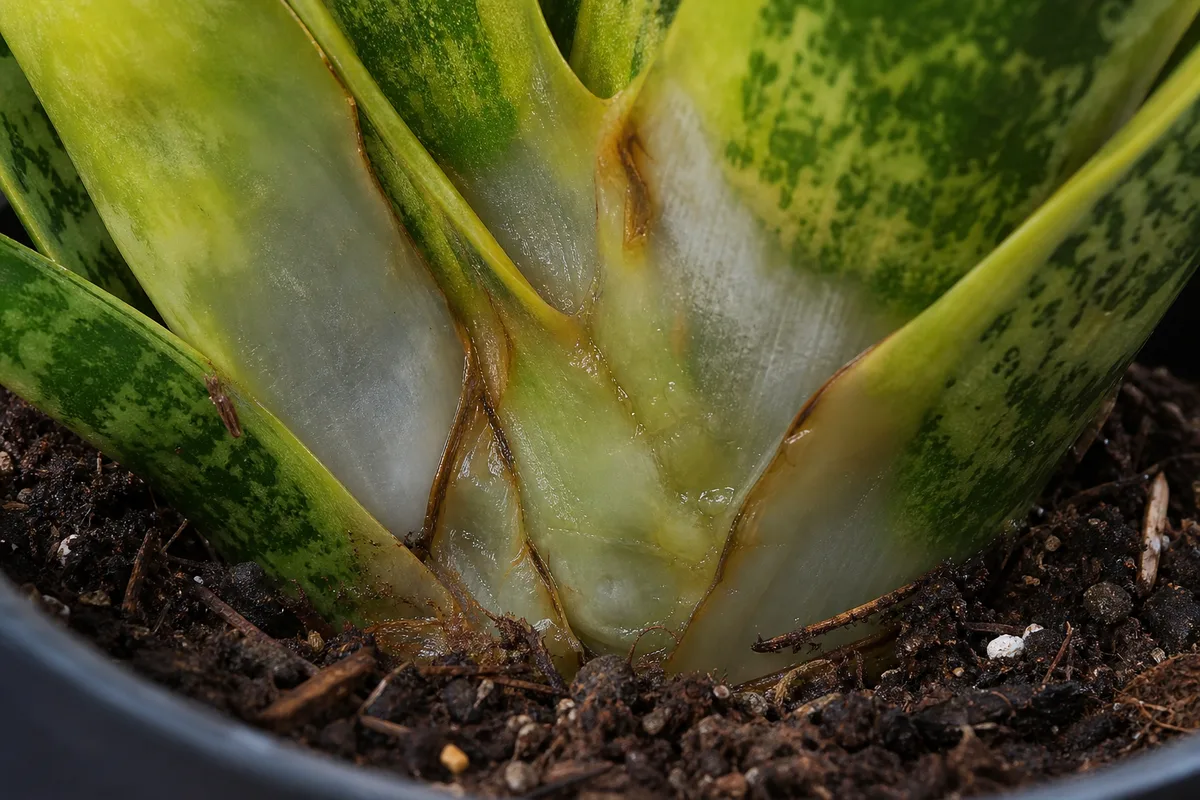
Rot develops when roots stay wet too long: dense soil, no drainage hole, oversized pots, cool rooms, and low light all slow drying. Fixing watering often means fixing the whole setup, not just watering less once. Wrinkled but firm leaves suggest drought soon; mushy translucent bases mean stop watering and inspect the rhizome - see overwatering and root rot.
Soil, Pot, and Drainage
Snake plant roots evolved in fast-draining African substrates. A peat-heavy indoor mix that stays damp for a week is the wrong environment.
A reliable home blend is two parts cactus or indoor potting mix plus one part perlite or pumice. Commercial cactus mix alone works for many growers; lean grittier in humid or low-light rooms. Never use garden soil in containers - it compacts and drains poorly. Do not add a gravel “drainage layer” instead of a drainage hole; Washington State University container research shows that raises the perched water table where roots sit. (WSU Extension)
Choose a pot with at least one drainage hole. Terracotta wicks moisture through walls and forgives heavy hands; plastic and glazed ceramic hold water longer. Size up only 1–2 in (2.5–5 cm) when repotting - an oversized pot holds extra wet soil around a small root ball. Full mix recipes and refresh timing live in our Snake Plant soil guide.
Feeding, Temperature, and Humidity
Snake plants are light feeders. A balanced houseplant fertilizer at half strength, once or twice during spring and summer, is enough for most indoor plants. Do not fertilize dry soil, stressed plants, or during winter dormancy. Salt buildup can brown leaf tips - same symptom as drought - so flush the pot with plain water occasionally if you feed regularly. See fertilizer guidance and salt build-up if tips stay crispy on firm leaves.
Indoor temperatures of 60–85 °F (16–29 °C) suit the plant. Growth slows below about 60 °F (16 °C); cold damage appears near 50 °F (10 °C), often as dark water-soaked patches on leaves touching cold glass. Humidity of 30–50% is fine - misting is unnecessary and can leave moisture on leaves without helping roots.
Repotting and Propagation
Repot every two to three years, or when roots circle, pups crowd the surface, water runs straight through, or mix has broken down. Spring is the safest window. Water lightly a few days before if soil is bone dry, unpot gently, trim black mushy roots with sterilized tools, and wait five to seven days after repotting before the first thorough soak if roots were disturbed. Step-by-step timing is in our Snake Plant repotting guide.
Division vs Leaf Cuttings
Division - separating a pup with roots and rhizome - is fastest and preserves variegation on ‘Laurentii’. Leaf cuttings work but are slow; mark which end was bottom, callus cuttings 2–3 days, and bury the lower third in moist gritty mix. Variegated leaf cuttings often revert to plain green because edge tissue does not regenerate reliably. Rhizome cuttings with a leaf attached are a middle path when you unpot a crowded cluster. Full methods: Snake Plant propagation guide and water vs soil propagation comparison.
Common Snake Plant Problems
Read texture before you change anything. The wrong fix - watering a rotting plant, fertilizing yellow leaves - makes recovery slower.
Soft yellow mush from the base upward: Overwatering or rhizome rot. Stop watering, unpot, trim mushy tissue, repot dry mix, wait before watering again. (overwatering, root rot)
Wrinkled firm leaves: Underwatering or root loss. A thorough soak usually rehydrates within 48 hours. (underwatering)
Single old leaf yellow at bottom: Often normal aging - remove when dry.
Crispy brown tips on firm leaves: Underwatering, salts, or tap-water minerals. Adjust watering; flush salts. (brown tips)
Leaning thin growth: Low light over months. Move to brighter indirect light gradually. (not enough light, drooping leaves)
Pests: Mealybugs in leaf bases - dab with 70% isopropyl alcohol on a cotton swab; spider mites in dry air - rinse and treat with insecticidal soap. (mealybugs, spider mites)
Pet Safety
Snake plants are toxic to cats and dogs if eaten. The ASPCA lists mother-in-law’s tongue (Sansevieria / Dracaena trifasciata) with saponins as the toxic principle; signs can include nausea, vomiting, and diarrhea. (ASPCA) The plant is hazardous when chewed, not from casual room sharing.
Keep pots on elevated stands or in closed rooms if you have chewing pets. If ingestion is suspected, contact your veterinarian or the ASPCA Animal Poison Control Center at (888) 426-4435 (consultation fee may apply). Do not induce vomiting unless a professional directs you.
Pet-safe upright alternatives with similar visual presence include Calathea, parlor palm (Chamaedorea elegans), and Peperomia - though any plant can cause mild upset if enough is consumed.
Next Steps: Deeper Snake Plant Guides
Use this page as your setup checklist, then drill into the hub by topic:
- Snake Plant hub - full reference, cultivars, seasonal calendar
- Light · Watering · Soil · Fertilizer · Propagation · Repotting · Pruning
- How to water indoor plants - soil-check skills that apply across species
- Snake plant propagation: water vs soil - when each method wins
Conclusion
Good snake plant care is mostly about restraint and setup: bright indirect light when possible, soil dry before watering, gritty well-draining mix, a pot with drainage, and protection from cold wet soil. Check the plant weekly but water only when the mix is truly dry. When something looks wrong, diagnose by leaf texture, soil moisture, and root health before changing everything at once. For symptom-specific fixes, start at the Snake Plant hub - the plant forgives missed waterings far more willingly than it forgives soggy soil.