Cold Damage on Snake Plant: Causes, Checks & Fixes
Quick answer
Cold damage on Snake Plant happens when temperatures drop below 50°F (10°C) or frost chills the leaves and rhizomes, bursting succulent cells into mushy translucent patches and brown margins. First step: move the plant to a stable 65–80°F spot away from cold glass; withhold water until tissue stops softening; trim only fully mushy leaves once conditions are warm.
Cold Damage on Snake Plant: Causes, Checks & Fixes
This guide covers cold damage on Snake Plant. See also the general Cold Damage guide, watering, and light pages for this plant.
Cold Damage on Snake Plant: Causes, Checks & Fixes
Quick answer
Cold damage on Snake Plant happens when temperatures drop below 50°F (10°C) or frost chills the leaves and rhizomes, bursting succulent cells into mushy translucent patches and brown margins. First step: move the plant to a stable 65–80°F spot away from cold glass; withhold water until tissue stops softening; trim only fully mushy leaves once conditions are warm.
Snake Plant (Dracaena trifasciata) is drought-hardy but not frost-hardy. Its thick, water-storing leaves tolerate brief cool spells better than tropical ferns, yet sustained chill or frost ruptures cells in ways that look like overwatering on Snake Plant from above. The difference is timing: cold damage follows a temperature event, not a watering mistake.
Why Snake Plant gets cold damage
Snake Plant evolved in warm, dry West and West Central Africa and stores water in fleshy leaves and rhizomes. It tolerates cool indoor corners around 50°F for short periods, but prolonged exposure below that threshold-or any frost-damages succulent tissue. RHS guidance is clear: sansevierias should always be kept above 10°C (50°F).
Winter windowsills are the most common indoor trigger. Glass gets cold at night, chilling the pot and slowing soil evaporation. A Snake Plant pressed against the pane can show localized scorch on the leaf side touching cold glass even when the room thermostat reads 68°F. Outdoor plants left on a porch after an early frost show the same pattern across entire leaves.
Cold damage often overlaps with overwatering because chilled roots take up water slowly while wet soil stays cold longer. Mississippi State Extension notes that snake plants do best between 60 and 85°F and should be kept away from cold drafts or chilly windows during winter. A plant that was fine in summer can fail in the same spot once outdoor temperatures drop.
Shipping stress in winter is another cause. A Snake Plant packed in an unheated truck may arrive with soft, translucent leaf patches even if the seller watered correctly. Allow warmth and dry soil before assuming rot.
What cold damage looks like on Snake Plant
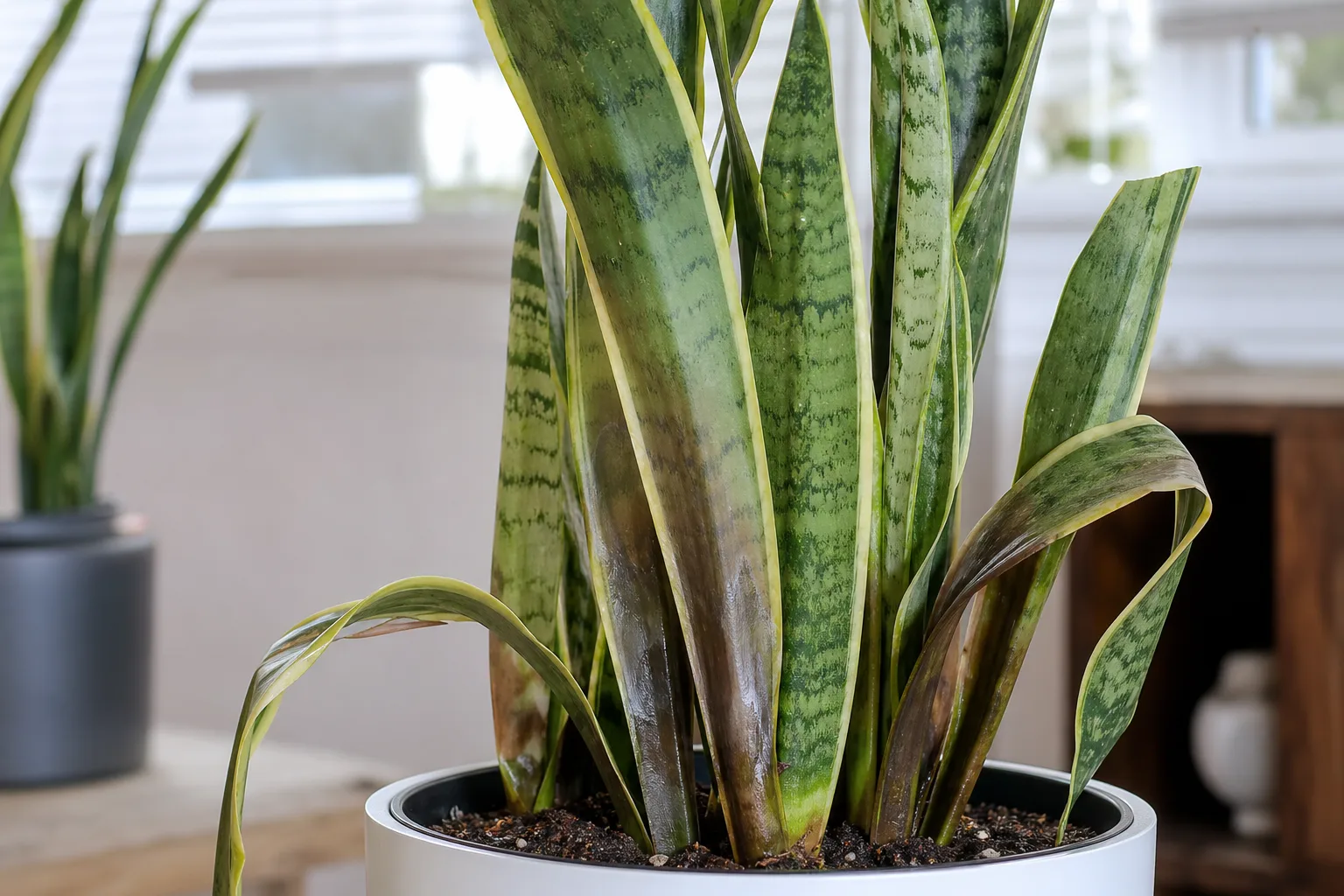
Cold injury on Snake Plant overview has a distinct look compared to sunburn or root rot on Snake Plant:
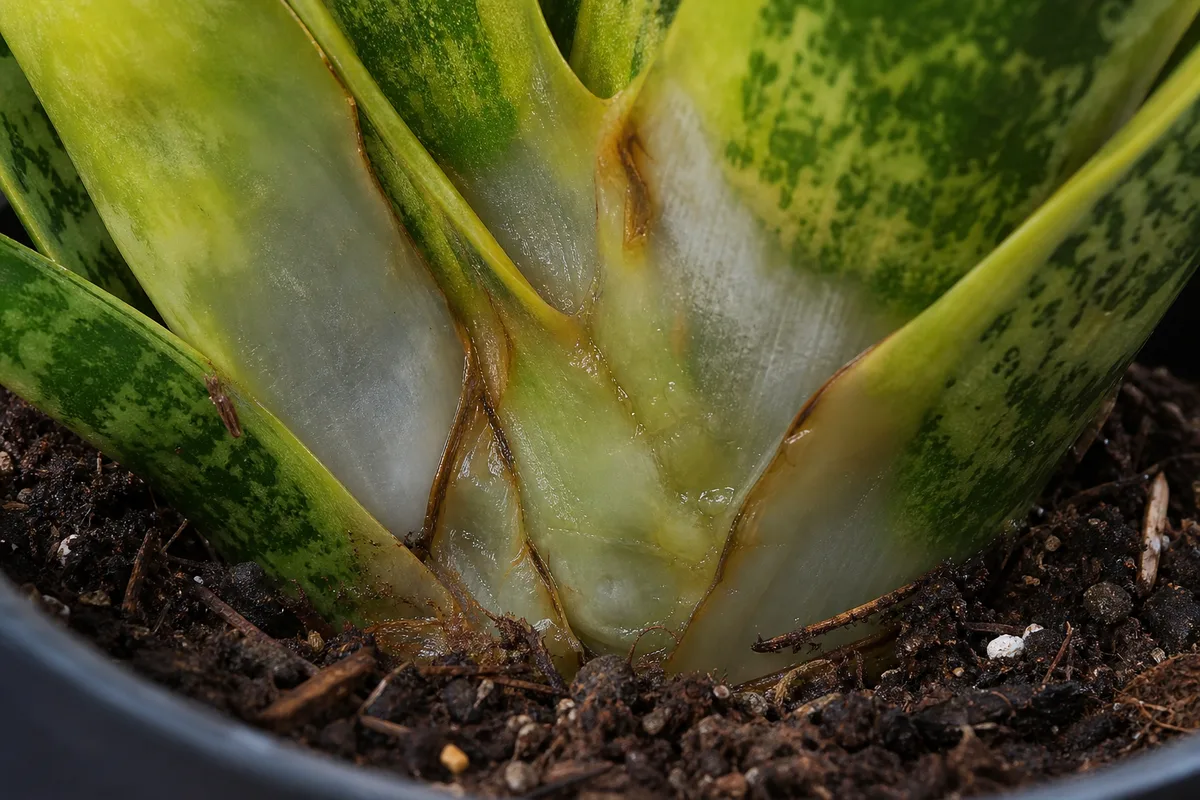
Cold Damage symptoms on Snake Plant - compare with healthy tissue on the same plant.
- Water-soaked, translucent patches on leaves-often on the side nearest cold glass or an open door
- Brown, papery margins or tips that appear within days of a cold night
- Soft, limp leaf sections that feel wet but without the sour soil smell of rot
- Collapsed outer leaves while the rhizome and inner leaves still feel firm
- Blackened tissue after severe frost, sometimes limited to leaf tips rather than the whole crown
On upright cultivars like ‘Laurentii’, damage often starts at the outermost leaf edge. Compact ‘Hahnii’ rosettes show softening across the center when the whole pot chills. Unlike root rot, you may see firm soil and neutral smell while leaves alone look damaged.
How to confirm the cause
Work through this order before Snake Plant repotting guide or pruning heavily:
- Recent temperature history - Was the plant near a window, on a porch, or in a car below 50°F in the last week?
- Leaf pattern - Is damage localized to one side or outer leaves? Cold scorch is often asymmetric; rot usually starts at soil-level leaf bases.
- Rhizome firmness - Unpot only if bases feel soft. Press the rhizome: firm and tan is reassuring; black mush points to rot, not cold alone.
- Soil smell and moisture - Neutral-smelling, appropriately dry soil supports cold damage. Sour, swampy odor suggests rot that cold may have triggered.
- Spread rate - Cold-scorched tissue browns and stops. Active rot keeps spreading upward from the crown in warm rooms.
Lookalike symptoms to rule out
Overwatering and root rot cause yellow mushy bases and sour soil even without cold exposure. Sunburn produces bleached or crispy brown patches on the sun-facing side after a move to direct afternoon glass-not after a cold night. underwatering on Snake Plant wrinkling comes with light, dusty dry soil. Mealybugs leave white cottony clusters, not translucent cell burst.
First fix for Snake Plant
Move the plant immediately to a stable location between 65–80°F (18–27°C), at least 30–90 cm back from cold windows and exterior doors. Do not water until you have confirmed the rhizome is firm and no new soft spots appear for several days. Cold-stressed Snake Plants use little water, and adding moisture to chilled soil invites rot.
If only leaf tips or sections are damaged, leave mostly green tissue in place. Trim fully mushy or black leaves at soil level with clean scissors once the plant has been warm for 48–72 hours and damage has stopped spreading. Make one environmental correction first-warmth and dry soil-before repotting or fertilizing.
Step-by-step recovery
After stabilizing temperature:
- Wipe dust from leaves so the plant can use available light efficiently in recovery.
- Place in Snake Plant light guide-not hot direct sun, which adds stress to already injured tissue.
- Wait until soil is bone dry throughout before the first post-incident watering.
- Water thoroughly once, empty the saucer, and return to a dry-down rhythm matched to winter growth slowdown.
- Watch for new firm leaves or pups over the next four to twelve weeks.
If leaf bases softened at soil level, unpot and inspect the rhizome. Trim any black mushy sections with sterile tools, air-dry cuts for several hours, and repot in dry gritty mix only if rot tissue was present-not for cosmetic leaf scorch alone.
Recovery timeline
Minor tip browning from a single cold night often stabilizes within one to two weeks once warmth returns. Translucent patches turn brown and dry; they will not revert to green. Moderate damage across several leaves may take one to three months before new growth appears. Severe frost with firm rhizome remaining can still produce pups, but expect six months or longer before the plant looks full again.
Judge recovery by firm rhizomes, no spreading softness, and new upright leaves-not by old scarred foliage returning to perfect form.
What not to do
- Do not water heavily because leaves look limp; chilled wet soil worsens rot risk.
- Do not place the plant directly on a radiator to “warm it fast”-heat shock damages leaves further.
- Do not fertilize until new growth resumes in spring.
- Do not repot into a larger pot while the plant is stressed unless rot is confirmed.
- Do not assume all soft leaves mean rot; confirm temperature history first.
- Do not return outdoor plants to a porch until nighttime lows stay consistently above 55°F.
How to prevent cold damage next time
Keep Snake Plant above 50°F year-round. In winter, keep houseplants away from cold drafts and heating vents that cause rapid temperature swings. Pull pots inward from glass or use a thick curtain at night. For plants summered outdoors, bring them inside before nights drop below 55°F and acclimate over a week rather than one cold move.
Match winter watering to slower growth: NC State Extension recommends watering only every one to two months in winter when soil dries between drinks in the growing season. Dry, warm-ish soil plus stable placement prevents the cold-plus-wet combination that kills snake plants silently.
When to worry
Escalate immediately if:
- Leaf bases turn soft and black at soil level after cold exposure
- A sour smell develops from the pot in a warm room
- The rhizome feels hollow or mushy on inspection
- Multiple leaves collapse within seven to ten days despite stable warmth
- Black tissue climbs from the crown upward
Cosmetic cold scorch on firm plants is manageable. Crown mush with odor is rot-switch to root-rescue steps rather than waiting for leaves to recover on their own.
Conclusion
Cold damage on Snake Plant follows temperature below 50°F, cold glass, or frost-not random leaf failure. Confirm with recent chill exposure, asymmetric scorch, and a firm rhizome. First fix: warm stable placement, dry soil, and patience. Trim only fully dead tissue. Prevent by keeping pots off winter glass, reducing winter watering, and bringing outdoor plants in before cold nights. Success means firm roots and new growth, not perfect old leaves.
When to use this page vs other Snake Plant guides
- Snake Plant watering guide - Use for routine moisture checks before assuming cold damage is the main issue.
- Snake Plant problems hub - Browse all 36 common issues on this species.
- Drooping Leaves on Snake Plant - Different entry point when symptoms overlap with cold damage.