How to Prune a Snake Plant: When, Where, and What to Cut
How to Prune a Snake Plant: When, Where, and What to Cut
How to Prune a Snake Plant: When, Where, and What to Cut
Quick Answer - Remove Dead Leaves at the Soil Line First
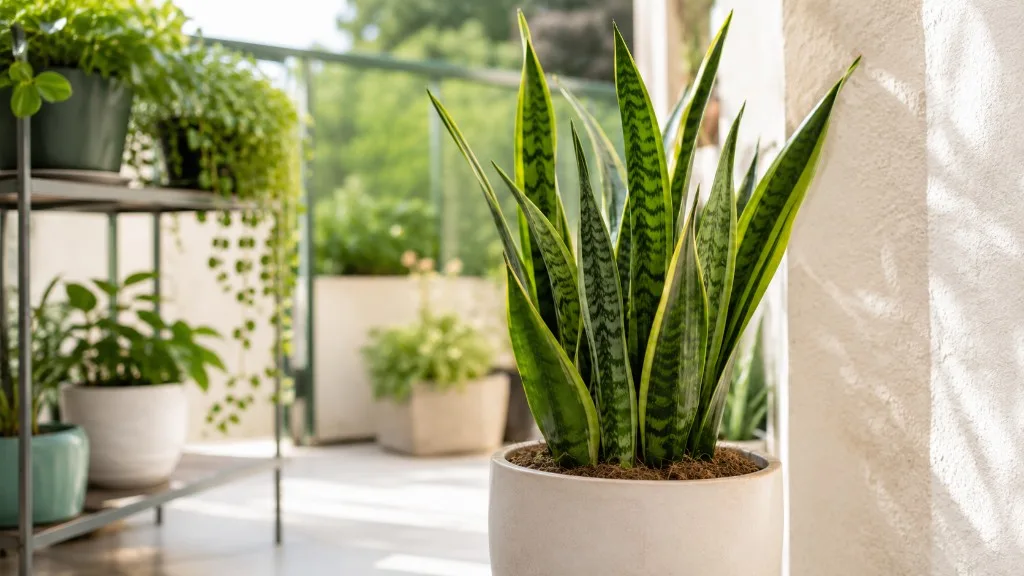
First action: in good light, find any leaf that is fully yellow, mushy at the base, broken, or more than superficially damaged - then cut that leaf at the soil line with a clean, alcohol-wiped blade. Snake plant (Dracaena trifasciata, still widely sold as Sansevieria trifasciata) is a rhizomatous succulent from West Africa that does not branch from mid-leaf cuts the way pothos or philodendron vines do. New growth comes from underground rhizomes as pups near the crown, not from nodes halfway up a blade. Full leaves come out at the base; minor brown tips can be snipped, but trimmed edges stay brown forever.
What Snake Plant Pruning Can and Cannot Fix
Indoors, most owners prune for sanitation (yellow, mushy, or pest-damaged leaves), cosmetics (brown tips, one towering leaf), or size (a plant outgrowing its spot). The Missouri Botanical Garden describes snake plant as a durable, slow-growing houseplant that rarely needs trimming under normal care - you are responding to specific problems, not following an annual schedule.
Pruning can remove failing tissue before rot spreads toward the rhizome, improve silhouette by taking out overlong leaves, reveal hidden pests at leaf bases, and supply propagation material from healthy removed blades. It cannot fix chronic overwatering on Snake Plant, root rot on Snake Plant, or dim light. Widespread yellowing with soft bases means inspect roots and Snake Plant watering guide before cosmetic shaping. Leggy, pale leaves need brighter indirect light - scissors will not make existing blades thicker or shorter without removing them entirely.
Rhizomes, Pups, and Why Cut Placement Matters
Each upright leaf connects to a thick rhizome beneath the soil. The rhizome stores water and carbohydrates and produces pups - small new leaves or rosettes - from lateral growing points. When you remove a leaf at the soil line, the rhizome stays intact and can push fresh growth from nearby tissue within weeks to months during active growth.
Individual leaves do not sprout new tips from a cut made halfway up the blade. The lower stub remains as a shortened, often browning segment until you remove it at the base. This is why Penn State Extension recommends cutting damaged leaves off at soil level rather than leaving partial stubs. Brown tip trimming is the one exception: you may angle-cut the damaged few centimetres on an otherwise firm leaf, accepting that the margin will not revert to green.
What to Inspect Before You Cut
Walk the plant in good light from every side before touching healthy tissue:
- Leaf bases: soft, translucent, or foul-smelling tissue at the crown signals rot - remove those leaves immediately and check the rhizome.
- Tip damage: note whether browning is a few millimetres or creeping down the blade - that decides tip trim vs. full removal.
- Height outliers: identify one or two leaves much taller than neighbors if you plan height reduction.
- Pests: mealybugs and spider mites in leaf axils and along bases.
- Recent stress: shipping, Snake Plant repotting guide, or a watering crisis within the last two weeks - postpone cosmetic reshaping until the plant stabilizes.
If more than one-third of leaves look yellow or mushy, the issue is likely cultural. Fix drainage and watering before removing half the canopy.
When to Prune Snake Plant
Timing splits into urgent cleanup and planned shaping. Dead, yellow, mushy, broken, or clearly pest-ridden leaves can come out whenever you see them - decaying tissue holds moisture against the crown. Structural work - removing multiple healthy leaves for height, balance, or propagation harvest - belongs in late spring through early summer, when warmth supports rhizome activity and pup emergence.
Avoid heavy reshaping in fall and winter unless you accept that wounds may sit unchanged for months with no visible new growth until spring returns. A monthly check for failed leaves plus one major shaping session every one to three years suits most indoor specimens.
Year-Round Cleanup vs. Spring Shaping
Year-round cleanup is low risk: one yellow senescent leaf, a blade snapped by traffic, a sun-scorched tip that covers more than a fifth of the leaf. Spring shaping covers multiple overlong leaves, top-heavy pots, and up to one-third of healthy foliage for reshaping. Schedule that work when you see pup activity at the soil surface and the plant is not recovering from repotting or root treatment.
Tools and Safety
Snake plant leaves are fibrous and semi-succulent. Sharp bypass shears, a clean utility knife, or sturdy scissors handle indoor pruning. Bypass blades slice more cleanly than anvil pruners on fleshy tissue. Keep 70% isopropyl alcohol nearby to wipe blades before you start and between cuts on diseased tissue.
The ASPCA lists snake plant as toxic to dogs and cats due to saponins in all plant parts. Sap can irritate sensitive skin. Wear nitrile gloves, bag trimmings out of pet reach, and wash hands after the session. You do not need wound sealants - clean cuts callus within a day or two in normal indoor air.
The First Cut to Make
After inspection, your first cut targets the worst dead or declining leaf - not the tallest healthy blade and not a cosmetic shorten on firm green tissue. Trace yellow or mushy damage down to the rhizome crown. Grip the leaf near the base with one gloved hand, part neighboring foliage gently, and make one clean horizontal or slightly angled slice at the soil line. Place diseased material in a separate bag from healthy propagation candidates.
If every leaf looks firm and you are pruning purely for shape, still remove any minor failed tissue first. That confirms the rhizome is sound before you commit to height reduction.
The Soil-Line Cut Technique
The critical rule: cut at the soil line, as close to the rhizome crown as you can reach, not halfway up the blade. Sawing back and forth crushes fibers and leaves a ragged wound that dries slowly. After removal, the exposed crown tissue should look pale green or white - not brown and mushy. Brown streaking into the rhizome when you cut means stop shaping and investigate root health.
Step back after each major removal and assess silhouette from a few feet away. Snake plants look best with varied leaf heights creating natural depth, not a blunt line where every blade ends at the same height. Asymmetry is normal; perfect uniformity often means you removed too much at once.
Brown Tips vs. Removing the Whole Leaf
Brown tips are common on thick succulent leaves and force a real decision. Minor tip browning - a few millimetres to about a centimetre on a firm, otherwise healthy leaf - can be trimmed with clean scissors at a slight angle mimicking the natural taper. The cut edge stays brown; it will not turn green again.
Extensive tip damage - brown covering more than roughly one-fifth of the leaf, or dieback that keeps advancing after you trim - usually signals stress from tap water salts, inconsistent watering, heating vents, cold drafts, or direct sun scorch. Repeated tip trims on a shortening blade produce a staircase of cut marks. Removing the entire leaf at the soil line gives a cleaner result and eliminates a failing photosynthetic unit. If many leaves brown at once, pause trimming and audit watering, light, and draft exposure before removing more tissue.
Never cut a healthy leaf in half for height control - the bottom stub will not produce a new tip.
Height and Spread Control
Height reduction on upright cultivars like standard green trifasciata or ‘Laurentii’ means removing the tallest leaves at the base, not shortening them mid-blade. Select disproportionately tall blades, cut at the soil line, reassess from a distance, then continue if needed within your one-third limit. New growth emerges as pups rather than by elongating remaining leaves.
Spread control on crowded rhizomes may call for division at repotting rather than repeated leaf shearing. Dwarf ‘Hahnii’ bird’s-nest rosettes rarely need height pruning. Cylindrical snake plant (Dracaena angolensis) follows the same soil-line rule, though each removed spear has high visual impact - remove one at a time and wait for pups to fill gaps.
How Much You Can Safely Remove
Apply the one-third rule to healthy green foliage removed for cosmetic reasons: no more than one-third of living leaves in a single session. On a twelve-leaf plant, that is roughly three to four blades, and three is safer if the plant was recently stressed. Fully dead or mushy leaves do not count toward that ceiling - remove them whenever found.
For major reshaping, spread work across two or three spring sessions spaced six to eight weeks apart. Stripping half the canopy from a slow grower can stall pup production for months because each leaf is a substantial water and energy reservoir.
Using Pruned Leaves for Propagation
Healthy base-cut leaves need not go to compost. NC State Extension lists leaf cuttings and division as standard propagation methods. Choose firm leaves without rot or pest damage. Whole leaves root in gritty mix; longer blades can be sectioned into 5–10 cm (2–4 inch) segments for multiple attempts.
Let cuts callus one to three days in dry shade until surfaces feel hardened. Plant callused segments upright in well-draining cactus or succulent mix, burying the bottom third. Keep mix barely moist and provide Snake Plant light guide. Rooting often takes four to twelve weeks in warm conditions; pup emergence takes additional months. Orientation matters: plant segments with the same vertical direction they grew - the end nearest the rhizome goes down. Upside-down segments may root but often fail to produce shoots. Mark the bottom before sectioning long leaves.
Note: variegated cultivars propagated from leaf cuttings may revert to solid green because leaf tissue lacks the full chimeric structure needed to preserve variegation; division of pups preserves variegation.
Aftercare and Recovery Timeline
After pruning, prioritize stability over stimulation. Hold fertilizer two to three weeks after removing multiple leaves. Keep light in the bright indirect range the plant already tolerates - do not move to harsh direct sun or a dark corner because the pot looks smaller.
If you made several soil-line cuts, wait two to three days before the next watering so crown wounds can dry. Thereafter, water only when mix is dry at depth - a reduced leaf canopy transpires less, so the pot may stay wet longer than before. Overwatering after pruning is a common path to crown rot.
On a healthy spring-pruned plant, first pup activity often appears within four to eight weeks, with meaningful fill-in over three to six months after removing one to three leaves. Heavy reshaping near the one-third limit may leave a sparse pot for six to twelve months. Fall or winter cuts can delay visible growth until spring - apparent stasis for four to six months is normal, not failure.
Common Pruning Mistakes
The errors that cause the most frustration follow directly from rhizome growth:
- Mid-leaf height cuts leave permanent brown stubs that never sprout new tips.
- Incomplete soil-line cuts leave ragged partial bases that die back slowly and invite crown rot.
- Dull or dirty tools crush tissue and spread pathogens between collection plants.
- Over-pruning in one session strips too much stored energy from a slow grower.
- Watering immediately after heavy pruning saturates fresh crown wounds.
- Upside-down propagation segments waste months of waiting.
- Pruning without fixing underlying stress - removing ten brown tips while overwatering continues.
When Not to Prune
Delay cosmetic reshaping when the plant arrived from shipping within two to three weeks, when you suspect active root rot (unpot and treat before shaping), or when cold damage is still spreading - remove mushy sanitation leaves, but wait for spring before major cuts. Do not stack repotting and heavy pruning in the same week unless crown rot forces immediate action. If widespread yellowing persists after careful removal of failed leaves, the problem lives in roots, light, or watering - not in the absence of more scissors.
Conclusion
Snake plant pruning is straightforward once you accept rhizome biology: remove failing leaves at the soil line first, tip-trim minor brown damage only when the leaf is worth keeping, save structural reshaping for spring, and cap healthy removal at one-third per session. The plant will not branch from mid-blade cuts, does not need annual haircuts, and fills back through pups rather than overnight regrowth - but a healthy rhizome in good light and fast-draining mix will produce fresh leaves when conditions support it.
Start with sanitation, use sharp sterilized tools, wear gloves for saponin sap, and keep trimmings away from pets. Turn healthy removed blades into propagation stock if you want more plants, marking orientation before you section them. Match the routine to this slow grower’s pace and you will keep a cleaner architectural specimen without testing the limits of its famous forgiveness.
When to use this page vs other Snake Plant guides
- Snake Plant overview - Start here for whole-plant context before deep-diving this topic.
- Snake Plant problems hub - Jump to symptom-specific fix guides when this care topic does not resolve the issue.
- Leggy Growth on Snake Plant - Escalate here when pruning adjustments are not enough.
- Slow Growth on Snake Plant - Escalate here when pruning adjustments are not enough.
- Brown Tips on Snake Plant - Escalate here when pruning adjustments are not enough.