How to Water Indoor Plants the Right Way: Beginner Guide
Stop overwatering and underwatering with a simple guide to soil checks, watering methods, drainage and plant needs.
Quick Answer: The Best Way to Water Indoor Plants
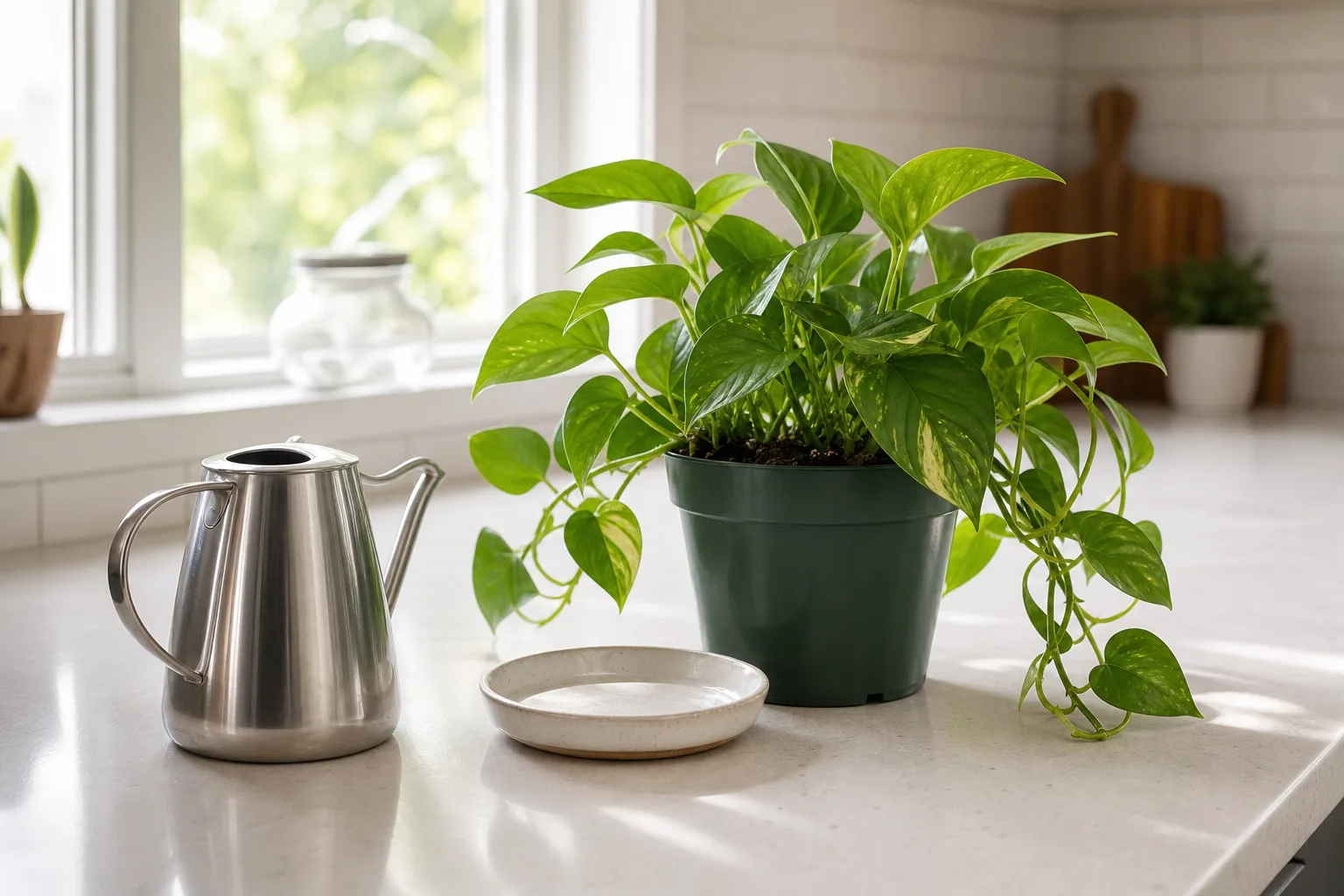
The best way to water most indoor plants is to check the soil first, water thoroughly until excess water drains from the bottom, then empty the saucer or outer pot. Do not water only because it is Sunday, because an app says so, or because the top of the soil looks dry for a few hours. Indoor plants need water when the root zone has dried to the right level for that plant, not when a calendar says the week is complete. University of Maryland Extension gives the same core advice: houseplants should be watered when they need it, not on a fixed schedule, because potting mix, humidity, and temperature all change how quickly a plant dries. (University of Maryland Extension)
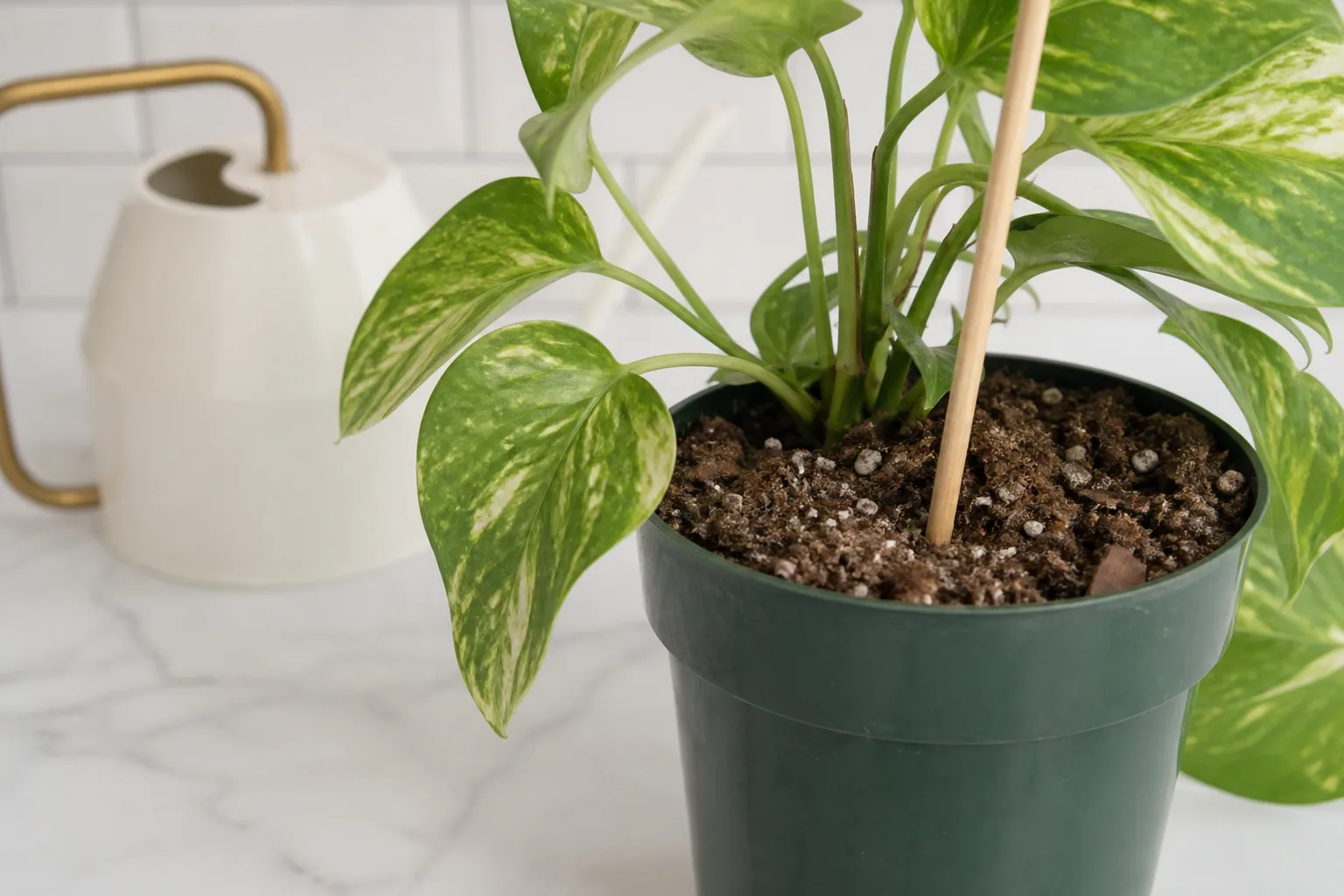
For many common tropical houseplants, a good beginner rule is to water when the top 1 to 2 inches of potting mix feel dry. For drought-tolerant plants such as snake plants, ZZ plants, succulents, and cacti, wait until the mix is dry much deeper, often nearly all the way through the pot. For thirstier plants such as ferns, calatheas, peace lilies, and some small-leaved tropical plants, the mix may need to stay lightly moist, but still not soggy. The goal is not “wet soil.” The goal is a healthy cycle of moisture, air, and drainage.
The right watering routine has four parts: check, water, drain, adjust. Check the soil and pot weight before watering. Water enough to moisten the root ball evenly. Let extra water drain away. Then adjust the next watering based on how fast that specific plant dries in that specific room. That last part matters because the same pothos may need water every five days near a bright warm window and every two weeks in a dim corner.
If you want a one-screen cheat sheet while you build the habit, bookmark Indoor Plant Watering Basics for moisture-check tables and triage rules. This page is the full walkthrough: methods, plant types, recovery, and seasonal rhythm.
Why Indoor Plant Watering Is More About Timing Than Amount
Most indoor plant watering problems come from misunderstanding the word overwatering. Many people think overwatering means pouring too much water at one time. In most cases, it means watering too often, using a pot or soil mix that stays wet too long, or letting the roots sit in standing water. A thorough watering can be healthy. A constantly wet root zone is the real danger.
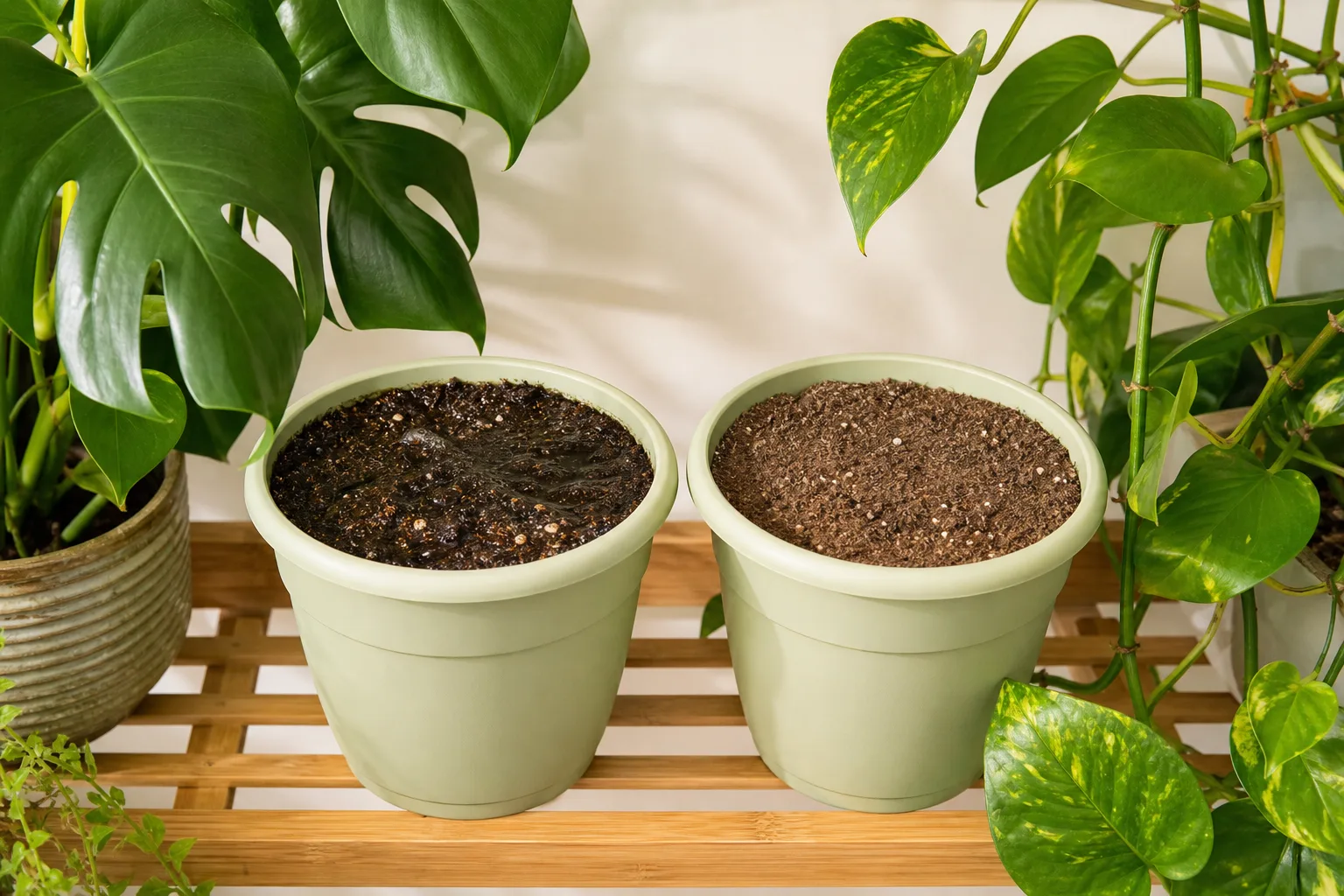
Indoor plants live in containers, so their roots have less room to escape poor conditions than plants growing outdoors. In a pot, the balance between water and oxygen is controlled by the potting mix, drainage holes, pot size, room temperature, light, and your watering habits. When those conditions are right, water moves through the mix, roots absorb what they need, and excess water drains away. When those conditions are wrong, the lower part of the pot can stay wet for days, even while the top inch looks dry.
That is why small “sips” of water are usually not the answer. If you pour only a little water onto the surface, the top layer may get wet while the deeper roots remain dry. Over time, roots may concentrate near the surface, dry pockets can form in the potting mix, and salts from fertilizer or tap water may build up instead of being flushed through. For most plants in pots with drainage holes, a deeper watering followed by full drainage is safer than frequent shallow watering.
The practical question is not “How many cups of water does my plant need?” A small plant in a big pot, a large plant in a small pot, a peat-heavy mix, a chunky bark mix, and a terracotta pot will all behave differently. The better question is: Has the root zone dried enough, and can excess water escape after I water?
Root Oxygen Matters as Much as Moisture
Roots do not only drink water. They also need oxygen. When potting mix stays saturated, the air spaces between particles fill with water, and roots can begin to suffocate. University of Maryland Extension explains that overwatering fills pore spaces normally occupied by oxygen, which is why constantly wet mix is more dangerous than a single thorough drink. (University of Maryland Extension)
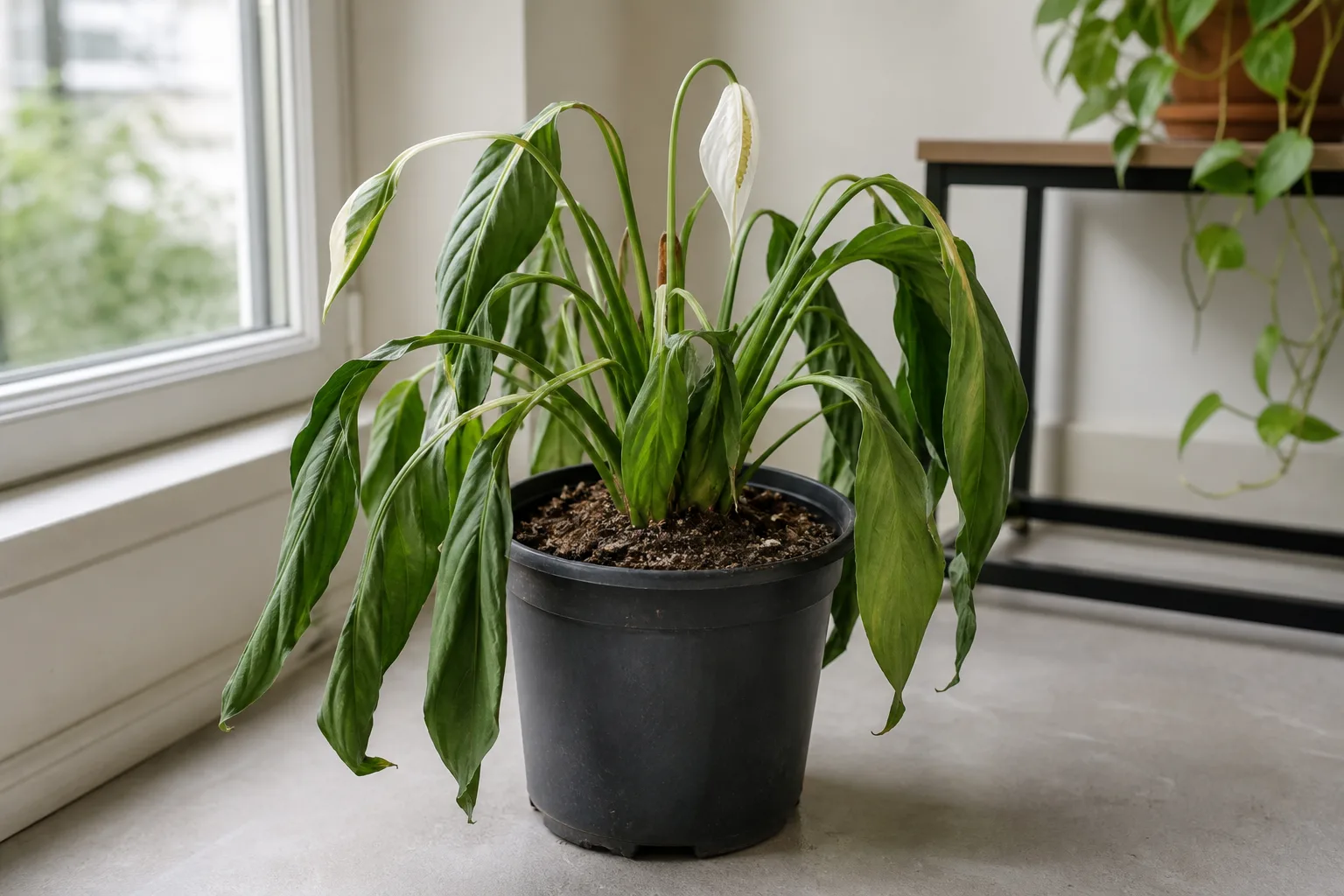
Wet, poorly drained conditions also create a better environment for root diseases. NC State Extension notes that root rot pathogens such as Pythium, Phytophthora, Rhizoctonia, and Fusarium favor wet, poorly drained soils and potting mixes, especially when plants are stressed or weakened. (Lee County Center) This is why a plant can look thirsty even when the soil is wet. Damaged roots cannot take up water properly, so leaves may wilt while the pot remains heavy and soggy.
This is also why drainage holes are not a small detail. A pot without drainage turns every watering into a guessing game because extra water has nowhere reliable to go. If you love decorative pots, use them as cachepots: keep the plant in a plastic nursery pot with drainage, place that inside the decorative outer pot, then remove it or empty the outer pot after watering.
Quick Reference: Moisture Checks and Triage at a Glance
Use this section at the sink when you need rules without scrolling. For step-by-step top and bottom watering, plant-type depth, and recovery after chronic overwatering, read the sections below.
| Method | Best for | How |
|---|---|---|
| Finger test | Most tropicals | Dry 1–2 in. down → water |
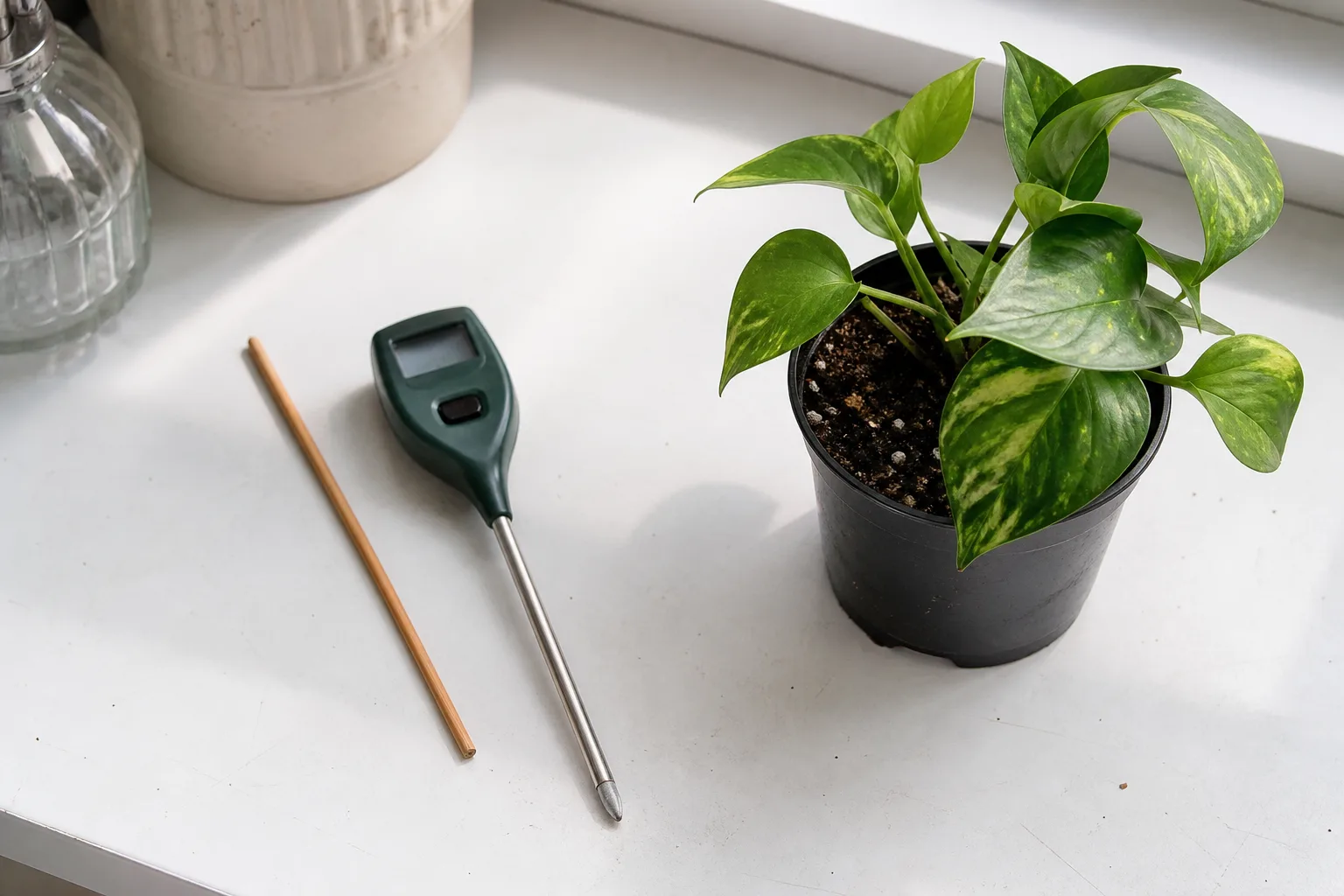
| Skewer / chopstick | Deep pots | Insert, pull out — damp stick = wait |
| Pot weight | Experienced growers | Light pot = thirsty |
| Moisture meter | Large collections | Calibrate per mix — not gospel |
| Sign | Overwatering | Underwatering |
|---|---|---|
| Soil | Wet for days | Pulls away from pot edge |
| Leaves | Yellow, soft, dropping | Crispy, drooping, dull |
| Roots | Brown, mushy smell | Dry, brittle |
| Pests | Fungus gnats common | Spider mites in dry setups |
Wet soil + wilt = stop watering. If leaves are yellow or limp but the mix stays heavy and damp for days, suspect root rot or poor drainage — not thirst. Empty saucers, improve airflow, and inspect roots before the next drink. University of Maryland Extension notes that yellow leaves on chronically wet plants often signal root-zone stress rather than a need for more water. (University of Maryland Extension)
Signs Your Indoor Plant Needs Water
The most reliable sign that an indoor plant needs water is not a dramatic leaf symptom. It is the condition of the potting mix. Leaves can droop from thirst, but they can also droop from root rot, cold stress, heat stress, transplant shock, or pests. Soil moisture gives you better evidence. A plant is usually ready for water when the part of the root zone appropriate for that plant has dried, while the plant still looks mostly healthy.
For many common houseplants, the top layer of potting mix should feel dry before watering. The RHS advises checking whether the pot needs water first rather than watering routinely, and notes that dry pots feel lighter than wet ones. (RHS) University of Minnesota Extension gives similar spring houseplant care advice: check the soil more often as light increases and water when it feels dry about an inch below the surface. (University of Minnesota Extension)
Visible signs of thirst often include slight drooping, curling leaves, crisp edges, dull foliage, and potting mix pulling away from the pot wall. If the plant perks up after a thorough watering within several hours or by the next day, underwatering was likely part of the problem. But do not wait for wilting as your normal watering signal. Wilting is a stress response, not an ideal target.
The Finger Test
The finger test is the easiest moisture check for beginners. Push your finger into the potting mix, usually 1 to 2 inches deep for average tropical houseplants. If the mix feels cool, damp, and sticks to your finger, wait. If it feels dry and loose at that depth, the plant may be ready for water. For larger pots, check deeper because the top can dry quickly while the lower root zone stays wet.
The limitation is that the finger test only reaches so far. In a deep pot, the bottom third may still be wet even if the top two inches are dry. This matters for plants in oversized pots, dense potting mix, low light, or cool rooms. If you keep losing plants to yellow leaves and soggy soil, do not trust the surface layer alone. Use the pot weight test as a second signal.
The finger test also needs plant-specific judgment. A fern may need water when the top is just beginning to dry. A monstera may prefer the top inch or two to dry. A snake plant should dry much more thoroughly before you water again. The same test works, but the interpretation changes by plant type.
The Pot Weight Test
The pot weight test is one of the most underrated indoor plant skills. Pick up the pot after a full watering and notice how heavy it feels. Then pick it up again a few days later. A wet pot feels noticeably heavier than a dry one, especially in plastic nursery pots. After a few cycles, your hands can often detect watering readiness faster than your eyes.
This method helps because moisture is not evenly visible. The surface can look dry even when the root ball is still damp. A heavy pot tells you to wait. A much lighter pot tells you the plant has used or lost a lot of water. The RHS specifically notes that drier pots feel lighter than wet pots, which makes this a practical check rather than just a plant-owner trick. (RHS)
Use pot weight carefully with very large planters, fragile ceramic pots, or hanging plants. You do not need to lift them high. A slight tilt, a hand under the nursery pot, or even comparing resistance when you nudge the container can tell you something. Over time, you learn the plant’s rhythm: not a universal schedule, but the rhythm of that pot in that room.
How to Water Indoor Plants From the Top
Top watering is the standard method for most indoor plants because it is simple, thorough, and helps flush excess mineral salts through the potting mix. The method is straightforward: pour water slowly over the surface of the soil, move around the pot so the root ball is evenly moistened, and stop when water begins to drain from the bottom. Then let the pot drain fully and remove any standing water from the saucer or decorative outer pot.
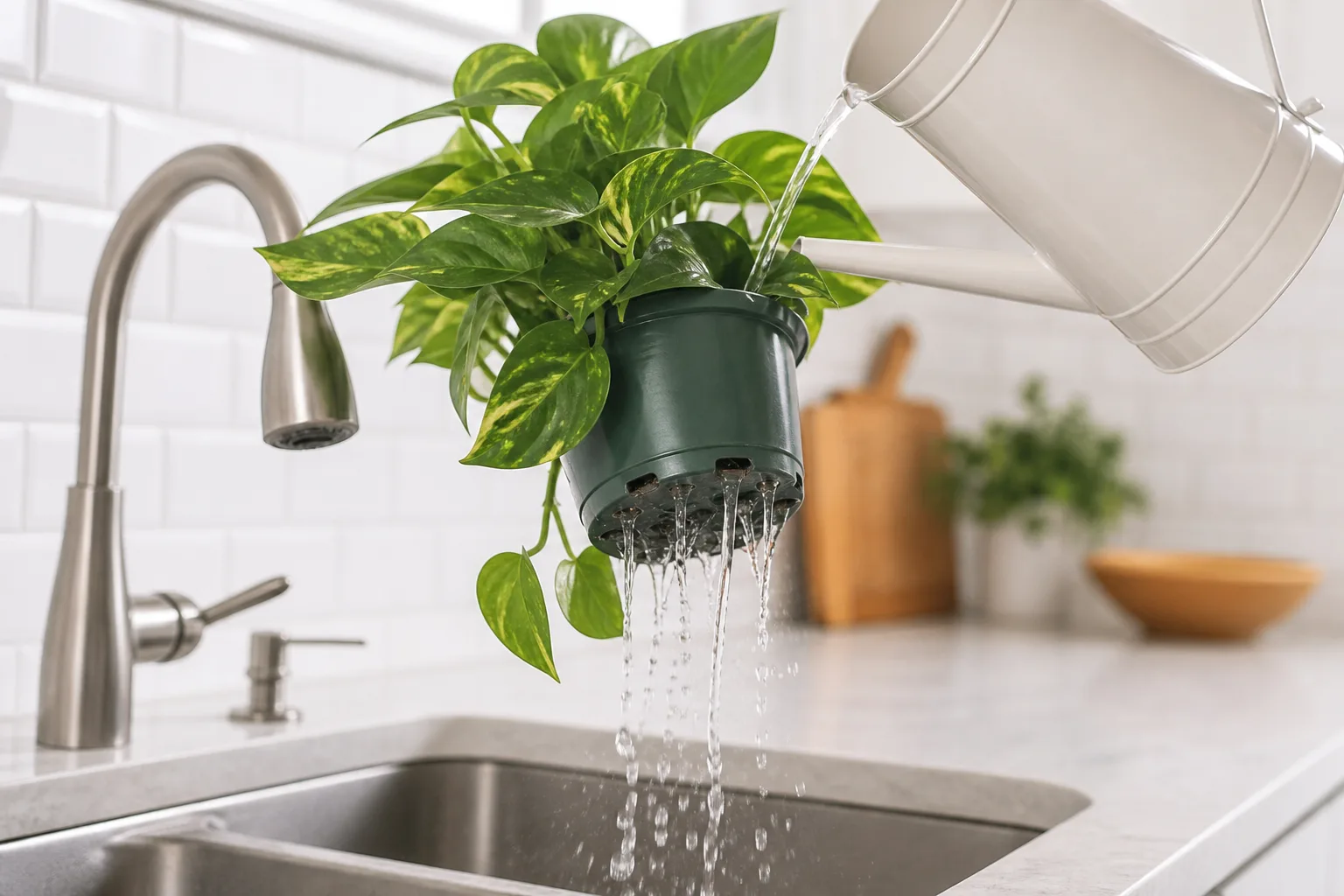
Watering slowly matters. If you dump water quickly into a very dry or compacted mix, it may run down the sides and out the drainage holes without properly moistening the center. This creates the illusion that the plant was watered well when the root ball is still dry inside. If the water rushes through immediately, pause, water again slowly, or consider bottom watering for that session so the dry mix can rehydrate more evenly.
Room-temperature water is usually best. Very cold water can shock sensitive tropical roots, while hot water can damage them. Most common houseplants tolerate normal tap water, but some sensitive plants may react to high mineral content, chlorine, fluoride, or salts depending on local water quality and species. Calatheas, some ferns, and certain carnivorous plants are more sensitive than pothos or snake plants.
Do not aim water at the leaves as your main method. A brief splash is usually not catastrophic, but repeatedly wet foliage in poor airflow can increase disease risk for some plants. University of Minnesota Extension advises watering indoor plants at the base and avoiding standing water, noting that overwatering and poor drainage can encourage root rot and fungus gnats. (University of Minnesota Extension)
Step-by-Step Top Watering Method
Use this method for most pothos, philodendrons, monsteras, rubber plants, peace lilies, dracaenas, fiddle leaf figs, and many common foliage plants:
- Check moisture first. Use your finger, a wooden chopstick, pot weight, or a moisture meter as a supporting tool.
- Move the plant if needed. If the pot is on furniture, take it to a sink, shower, balcony, or tray where drainage will not cause damage.
- Water slowly and evenly. Pour around the soil surface rather than in one spot.
- Watch for drainage. Stop when water flows from the drainage holes.
- Let it drain. Give the pot time to release extra water.
- Empty the saucer or cachepot. Do not let the plant sit in collected water.
This method gives the roots a full drink without trapping them in a swamp. Penn State Extension gives similar advice for houseplants: apply water until some drains from the bottom of the pot, then discard the water that drains through. (Penn State Extension) That final step is not optional. A saucer full of water can undo an otherwise good watering.
If the potting mix has become hydrophobic, meaning it repels water after getting extremely dry, top watering may fail at first. Water may bead on the surface or run straight down the sides. In that case, water in several slow rounds, gently poke the surface to break tension, or use bottom watering for a short soak. See dry hydrophobic soil for the full recovery pattern. After it rehydrates, return to normal watering and avoid letting the mix become bone-dry unless the plant specifically prefers it.
When Bottom Watering Makes Sense
Bottom watering means placing the pot in a tray, sink, or bowl of water so the potting mix absorbs moisture upward through the drainage holes. It can be useful for plants with dense foliage that makes top watering messy, small pots that dry quickly, African violets that dislike wet crowns, or potting mix that has become very dry and resistant to water. It can also help create a more evenly moist root ball when top watering keeps running through too fast.
The method is simple: place the pot in a few inches of water and let it soak until the top of the mix feels slightly moist or the pot feels heavier. For many small to medium pots, this may take 15 to 30 minutes, but the exact time depends on pot size and mix. Then remove the pot and let it drain fully. Bottom watering is not permission to leave a plant sitting in water all day.
Bottom watering has one downside: it does not flush salts downward through the mix as effectively as top watering. If you fertilize regularly or have hard water, occasional top watering is still useful. A balanced approach works well: bottom water when it solves a specific problem, but top water periodically to flush the potting mix and check drainage.
For succulents, bottom watering can work when the mix is very dry and gritty, but the plant still needs to drain completely afterward. Missouri Botanical Garden notes that the most frequent cause of problems with cacti and succulents is overwatering, and that it is best to allow the soil to dry out thoroughly between waterings. (Missouri Botanical Garden)
How Often Should You Water Indoor Plants?
There is no single indoor plant watering schedule that works for every home. A weekly routine is useful for checking plants, but not for automatically watering all of them. The same plant can need water twice a week in bright summer light and once every two or three weeks in winter. Cornell Cooperative Extension notes that actively growing houseplants need more water than plants resting during winter, and that plants should not be watered if the soil is still wet. (Cornell Cooperative Extension)
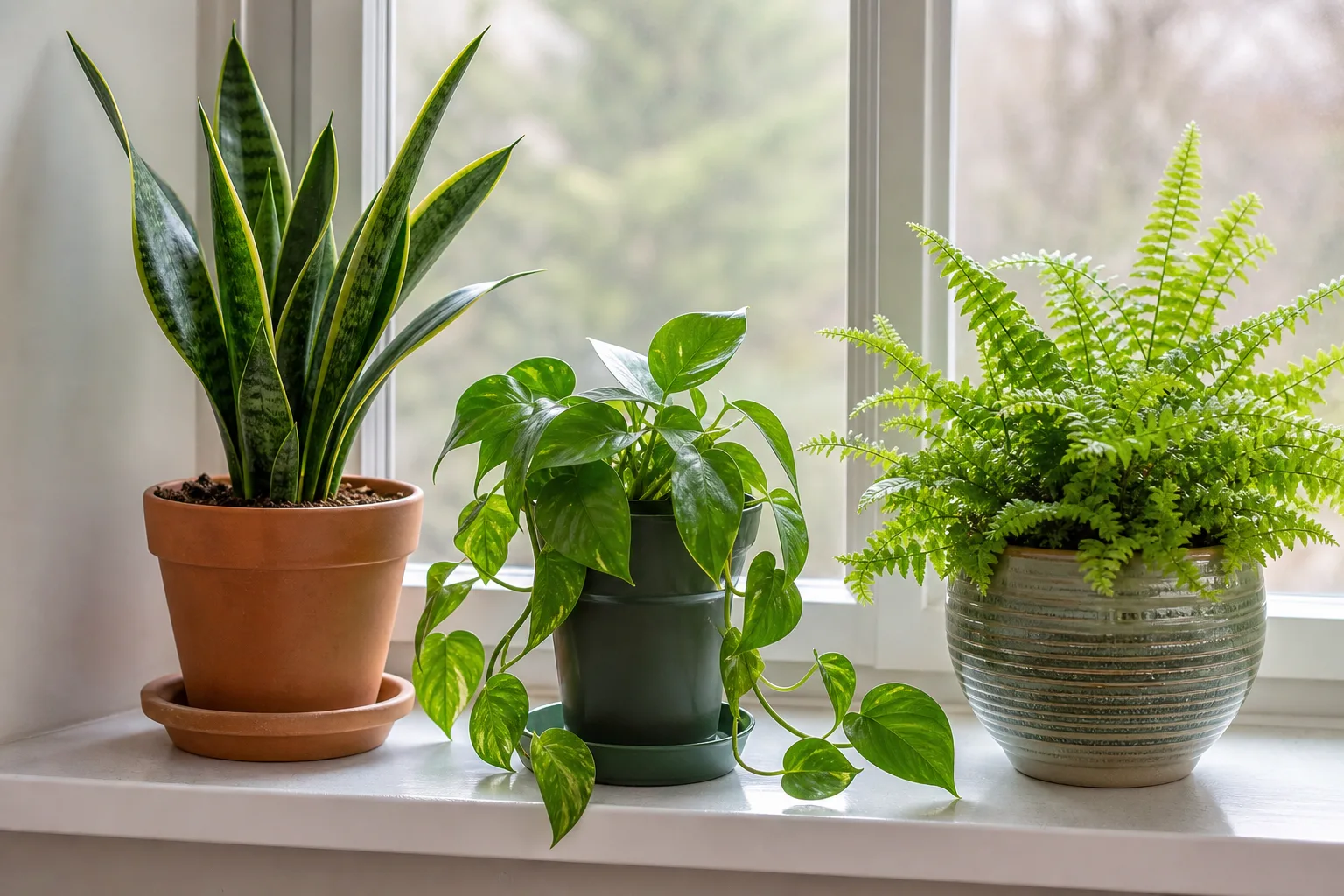
As a rough starting point, many common tropical houseplants may need checking every 5 to 10 days during active growth. Drought-tolerant plants may go two to six weeks depending on conditions. Thirstier plants in small pots may need water sooner. But these are only starting ranges, not rules. The plant’s environment decides the actual timing.
Indoor plants dry faster in bright light, warm rooms, low humidity, small pots, porous terracotta pots, chunky mixes, and active growth. They dry more slowly in low light, cool rooms, high humidity, oversized pots, dense mixes, glazed ceramic pots, plastic pots, and winter rest. Once you understand those factors, watering becomes less mysterious.
The most useful habit is to group plants by water need. Put drought-tolerant plants on one mental track, average tropical plants on another, and moisture-loving plants on a third. Checking everything on the same day is fine. Watering everything on the same day is where problems begin.
The Factors That Change Watering Frequency
Light is one of the biggest drivers. Plants in brighter light photosynthesize more and usually use more water. Plants in low light grow more slowly and need less water. University of Minnesota Extension specifically warns that plants in lower light use less water, so overwatering becomes easier if you do not adjust. (University of Minnesota Extension) For placement and supplemental light, see our grow lights guide.
Pot size also matters. A small pot dries quickly because there is less soil volume. A large pot can stay wet for too long, especially if the root system is small. This is why moving a small plant into a huge decorative pot can cause problems. The extra potting mix holds moisture the roots cannot use quickly.
Pot material changes drying speed. Terracotta breathes and dries faster. Plastic and glazed ceramic hold moisture longer. Neither is automatically better. Terracotta helps people who tend to overwater. Plastic helps plants that prefer more consistent moisture or homes that are very dry.
Potting mix may matter more than the pot itself. Dense peat-heavy mixes can hold water for a long time, especially after they compact. Chunky mixes with bark, perlite, pumice, or coco chips drain faster and hold more air. See best potting mix for indoor plants when texture is the missing piece.
Humidity and temperature shape water loss. Air-conditioned rooms, heaters, and dry climates can increase evaporation. Cool rooms slow drying. A plant near a sunny window, fan, radiator, or appliance may behave differently from one across the room. Our houseplant humidity guide helps when crispy tips are an air-moisture problem, not thirst.
Plant-Specific Watering Adjustments
Different indoor plants do not want the same moisture pattern. Clemson Cooperative Extension explains that plants with large or very thin leaves and fine surface roots usually need more frequent watering than succulents with fleshy leaves and stems that store water. (Home & Garden Information Center) This is the simplest way to understand plant-specific watering: look at the leaves, stems, roots, and native growth habit.
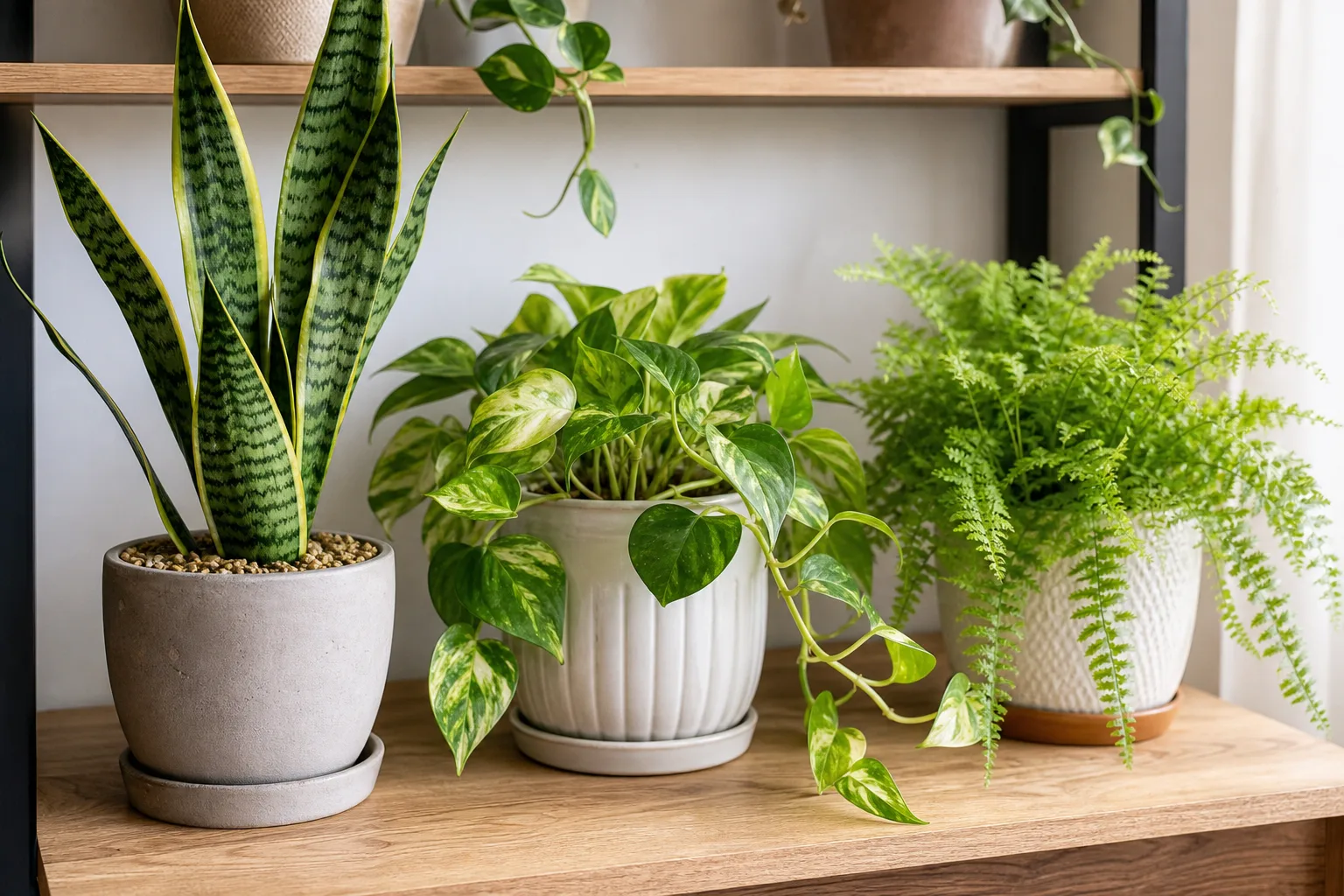
Thin leaves lose moisture faster. Thick leaves store water. Fine roots near the surface dry faster. Thick succulent roots rot faster in wet soil. Plants from humid forest understories usually prefer more consistent moisture than plants adapted to dry, exposed, or seasonally arid conditions.
Plant labels and care apps can help, but they are not enough. A “water weekly” label on a plant sold in a store cannot know your pot size, soil mix, window direction, city climate, air conditioning, or winter temperature. Use labels as broad guidance. Use soil moisture as the decision-maker.
Tropical Foliage Plants
Common tropical foliage plants include pothos, philodendron, monstera, rubber plant, dracaena, aglaonema, syngonium, and many peperomias. Most prefer a cycle where the top part of the mix dries before the next watering, but the entire root ball does not stay bone-dry for long. For many of these plants, watering when the top 1 to 2 inches are dry is a sensible starting point.
These plants often forgive occasional underwatering better than chronic overwatering. If a pothos droops slightly and the soil is dry, it usually recovers after a proper watering. If the soil is wet and the plant is yellowing, limp, or dropping leaves, adding more water will make things worse. Always check the soil before reacting to leaves. For species depth, see pothos watering and monstera watering.
Large tropical plants in big pots need deeper checking. A fiddle leaf fig or monstera in a large decorative planter may look dry on top while the lower half of the pot remains damp. Use a wooden dowel, moisture meter, or pot weight to check deeper. Water thoroughly when ready, but make sure the pot drains freely.
Succulents, Cacti, Snake Plants, and ZZ Plants
Succulents, cacti, snake plants, and ZZ plants are built to handle dryness. They usually fail indoors because people water them like tropical foliage plants. Their thick leaves, stems, rhizomes, or roots store moisture, so they do not need constant watering. Clemson’s beginner houseplant guidance notes that snake plants can be watered every 2 to 4 weeks during the growing season and less often in fall and winter, depending on light and conditions. (Home & Garden Information Center)
For these plants, wait until the potting mix is dry much deeper than you would for a pothos. In many homes, a snake plant or ZZ plant in low light may need water only every few weeks. In bright light and a small terracotta pot, it may need water more often. The rule is not “ignore it forever.” The rule is “let it dry properly, then water thoroughly.” Species pages: snake plant watering, ZZ plant watering, jade plant watering.
The worst combination for these plants is low light, dense soil, oversized pot, and frequent watering. That setup keeps the root zone wet while the plant is not growing fast enough to use the moisture. If your succulent has mushy leaves, blackened stems, translucent tissue, or a sour smell from the soil, suspect rot rather than thirst.
Ferns, Calatheas, Peace Lilies, and Other Thirstier Plants
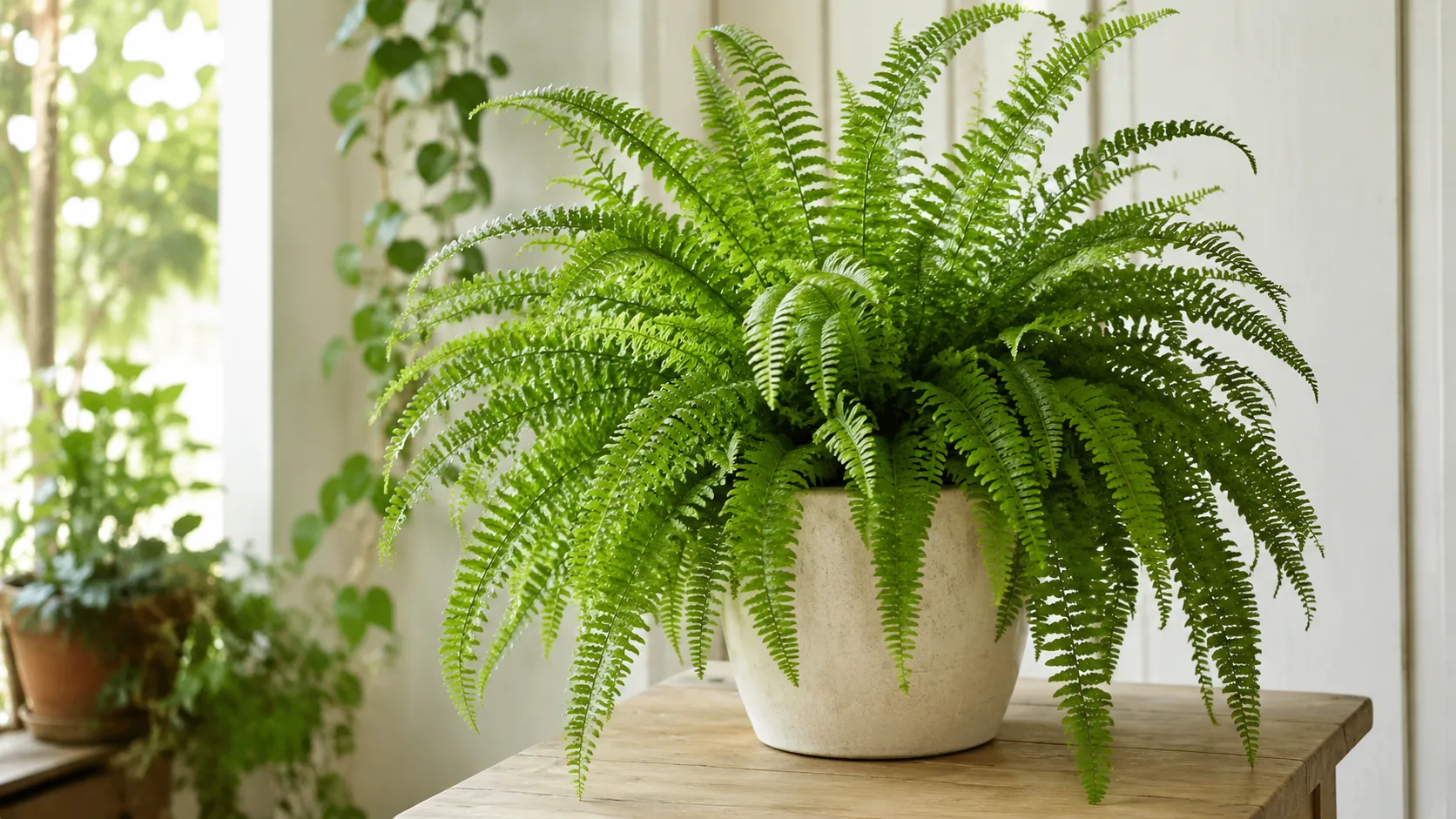
Ferns, calatheas, marantas, fittonias, and peace lilies often prefer more consistent moisture than drought-tolerant plants. They may wilt or crisp if allowed to dry too far. But “more moisture” does not mean “standing water.” These plants still need air around the roots and a potting mix that drains well.
For these plants, check more frequently and water when the surface is just dry or the top inch has dried, depending on species and pot size. Peace lilies are famous for dramatic wilting, but using wilt as the routine signal can weaken the plant over time. Calatheas may develop crispy edges from inconsistent watering, low humidity, mineral-heavy water, or a combination of stress factors, so do not assume every brown edge means “add more water.” See calathea watering and peace lily watering.
If you struggle with thirstier plants, improve consistency before increasing volume. A slightly more moisture-retentive mix, a properly sized pot, higher humidity, and stable light can help more than dumping water more often. For ferns and calatheas, the aim is evenly moist and airy, not wet and stagnant.
Pot, Soil, and Drainage Choices That Affect Watering
Watering technique cannot fully compensate for the wrong pot and soil. If a pot has no drainage, the margin for error shrinks. If the potting mix is dense and compacted, roots may stay wet too long even when you water carefully. If the pot is far too large, excess soil acts like a wet sponge around a small root system. These setup issues often look like “bad watering” when the real problem is the plant’s container environment.
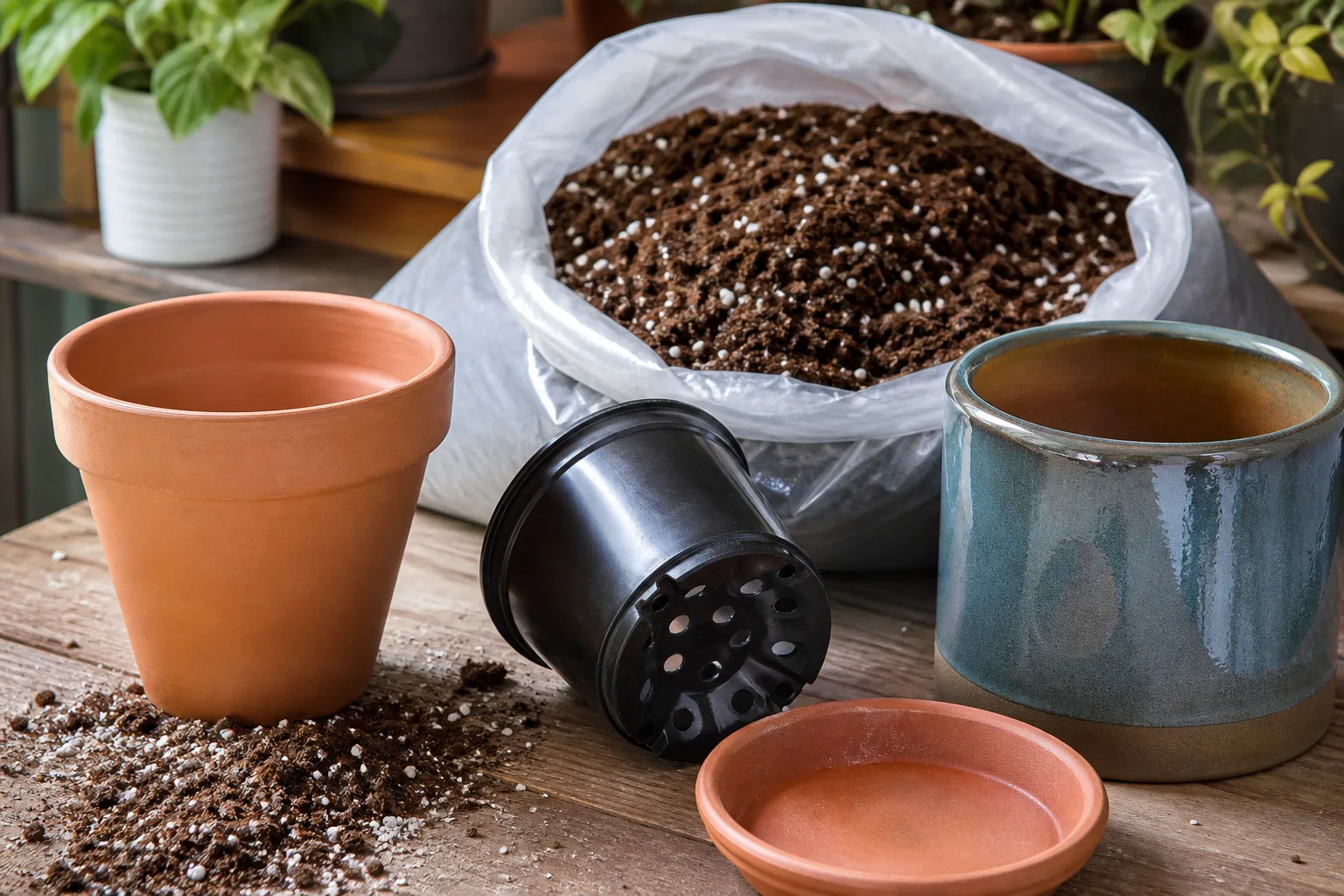
A good indoor potting setup has three traits: drainage, aeration, and appropriate size. Drainage holes let excess water leave. Aerated potting mix holds both moisture and air. Appropriate pot size keeps the soil volume in proportion to the roots. When those three are right, watering becomes easier because the pot behaves predictably.
Decorative pots without holes are common, but they are best used as outer covers. Keep the plant in a nursery pot with drainage, water it outside the decorative pot, let it drain, then return it. If you must plant directly into a no-hole container, water very cautiously and use a moisture meter or wooden skewer to check depth. Even then, it is riskier than using drainage.
Saucers need attention too. After watering, a saucer catches runoff, but it should not become a permanent reservoir unless you are intentionally bottom watering for a short period. Penn State Extension advises discarding drained water after watering houseplants. (Penn State Extension) Leaving roots in standing water removes the benefit of having drainage holes in the first place.
Soil texture should match the plant. Aroids such as monstera and philodendron often like a chunkier mix with bark or perlite. Succulents and cacti need faster drainage and more mineral structure. Ferns may need a mix that holds moisture but does not collapse into sludge. When repotting fixes the root environment, see repotting houseplants.
Seasonal Watering Adjustments
Indoor plants usually need more water during active growth and less during slower growth. For many homes, that means more frequent watering in spring and summer, and less frequent watering in late autumn and winter. Cornell Cooperative Extension notes that houseplants generally need less frequent watering in winter than in spring and summer because actively growing plants use more water than resting plants. (Cornell Cooperative Extension)
The change is not only about temperature. Day length and light intensity matter. A plant near a bright window in June may be growing actively and pulling water from the mix quickly. The same plant in December may grow slowly, even if the indoor temperature feels comfortable to you. If you keep watering at the summer rate, the soil may stay wet too long.
Heating and air conditioning complicate the pattern. Winter heating can dry indoor air, which may make some small pots dry faster at the surface. But lower light can still mean the plant uses less water overall. This is why checking the root zone is better than assuming winter always means “dry” or always means “wet.” Our winter houseplant care guide covers the first seasonal adjustments beyond watering alone.
After repotting, watering also changes. Fresh potting mix may hold water differently from the old mix. A recently repotted plant may have fewer active roots if roots were disturbed, so it may not use water quickly at first. Water thoroughly after repotting if the mix is dry, then monitor carefully. Do not keep watering heavily just because the plant looks stressed; transplant stress and thirst are not the same thing.
Plants moved outdoors for summer or brought indoors for winter need adjustment too. Outdoors, brighter light, wind, and heat can increase water demand. Indoors, lower light and reduced airflow can slow drying. University of Minnesota Extension notes that fungus gnats live in moist soil and advises avoiding overwatering and watering only when necessary. (University of Minnesota Extension) That becomes especially relevant when plants come back indoors and the soil stays damp longer — see integrated pest management indoors when gnats persist.
How to Fix Overwatered and Underwatered Indoor Plants
Overwatered and underwatered plants can look confusingly similar because both can wilt. The difference is in the soil and root condition. An underwatered plant usually has dry, light potting mix, crisp leaves, curling, browning edges, or soil pulling away from the pot. An overwatered plant often has wet or sour-smelling soil, yellowing lower leaves, soft stems, leaf drop, fungus gnats, or wilting despite damp soil. University of Maryland Extension notes that excess moisture can produce symptoms similar to root rot or drought stress, including wilting, yellowing, scorch, leaf drop, and even plant death if it continues. (University of Maryland Extension)
Decision shortcut: Dry, light soil + crisp leaves → water thoroughly and drain. Wet, heavy soil + yellow or limp leaves → stop watering and inspect overwatering and root rot before the next drink.
To fix an underwatered plant, water thoroughly and patiently. If the mix has pulled away from the sides or repels water, soak the pot from the bottom for a short period, then let it drain fully. Trim fully dead leaves, but give partially damaged leaves time if they still help the plant photosynthesize. Most mildly underwatered plants recover faster than overwatered ones because their roots are often still functional.
To fix an overwatered plant, stop watering and assess severity. If the soil is only a bit too wet, move the plant to brighter indirect light, improve airflow, empty any saucer, and let the mix dry to an appropriate level. Do not fertilize a stressed, overwatered plant. Fertilizer does not repair damaged roots and can add more stress.
If the plant smells rotten, the stem is mushy, or leaves are collapsing rapidly, inspect the roots. Healthy roots are usually firm and light-colored or appropriately tan depending on species. Rotten roots are often brown or black, mushy, hollow, or foul-smelling. Trim rotten roots with clean tools, remove soggy mix, and repot into fresh, well-draining potting mix in a pot with drainage. If very few roots remain, reduce leaf load if needed and keep conditions stable while the plant recovers.
Fungus gnats are another sign that soil may be staying too moist. The adults are annoying, but the bigger message is that the potting environment is inviting them. Letting the top layer dry more appropriately, improving drainage, using sticky traps, and avoiding constant moisture can help break the cycle.
Common Indoor Plant Watering Mistakes
The first common mistake is watering every plant on the same schedule. This feels organized, but it ignores plant type, pot size, light, season, and soil. A calathea, cactus, pothos, and snake plant should not receive identical watering just because they live in the same room. Use a weekly check-in if you like structure, but water only the plants that are ready.
The second mistake is giving tiny sips. Small amounts of water may wet the surface without reaching the deeper roots. This can lead to uneven root growth, dry pockets, and repeated stress. For most plants in drainage pots, water thoroughly enough that the full root zone gets moisture, then let the excess drain away.
The third mistake is leaving plants in standing water. This often happens when a saucer, decorative pot, or self-watering reservoir is forgotten. Temporary bottom watering is fine when intentional. Permanent soggy roots are not. If you water and walk away, come back later to empty the runoff.
The fourth mistake is assuming yellow leaves always mean thirst. Yellow leaves can come from overwatering, underwatering, low light, nutrient issues, old age, pests, cold damage, or root stress. Before reacting, check the soil. Wet soil plus yellow leaves often points toward overwatering or poor drainage, not a need for more water.
The fifth mistake is trusting moisture meters without understanding them. A moisture meter can help, especially in deep pots, but cheap meters can be inconsistent in chunky mixes or salty soil. Use them as one clue, not as the only authority. Combine the reading with pot weight, finger checks, drainage behavior, and plant symptoms.
The sixth mistake is using pots that are too large. Bigger pots do not automatically mean better care. If the root system is small, the extra mix stays wet longer and increases the risk of root problems. Move up gradually when repotting, usually by one pot size, unless the plant has a specific reason to need more room.
The seventh mistake is ignoring the room. A plant in a bright bathroom, a dry air-conditioned office, a warm kitchen, and a dim bedroom will not dry at the same speed. Indoor plant care is local. The plant’s label gives you a starting point; the room writes the real watering plan.
Related Guides
- Indoor Plant Watering Basics — one-screen cheat sheet with moisture-check tables and triage rules.
- Winter Houseplant Care — seasonal slowdown and dry-air adjustments.
- Repotting Houseplants — when pot size or mix is the real problem.
- Houseplant Humidity Guide — when crispy tips are an air-moisture problem, not thirst.
- DIY Self-Watering System: What Actually Works? — vacation buffers after you master check-drain-adjust.
- Integrated Pest Management Indoors — fungus gnats and other pests tied to wet surface soil.
Conclusion
Watering indoor plants well comes down to one repeatable loop: check the soil, water thoroughly when the root zone is ready, drain completely, and adjust as light, season, and pot change. Restraint keeps you from watering on habit; completeness keeps you from weak surface sips. Within a few cycles, you stop guessing and start reading each pot in each room.