Indoor Plant Watering Basics: Quick Reference Cheat Sheet
Use this indoor plant watering cheat sheet to check soil, pick top or bottom watering, spot overwatering, and adjust by season.
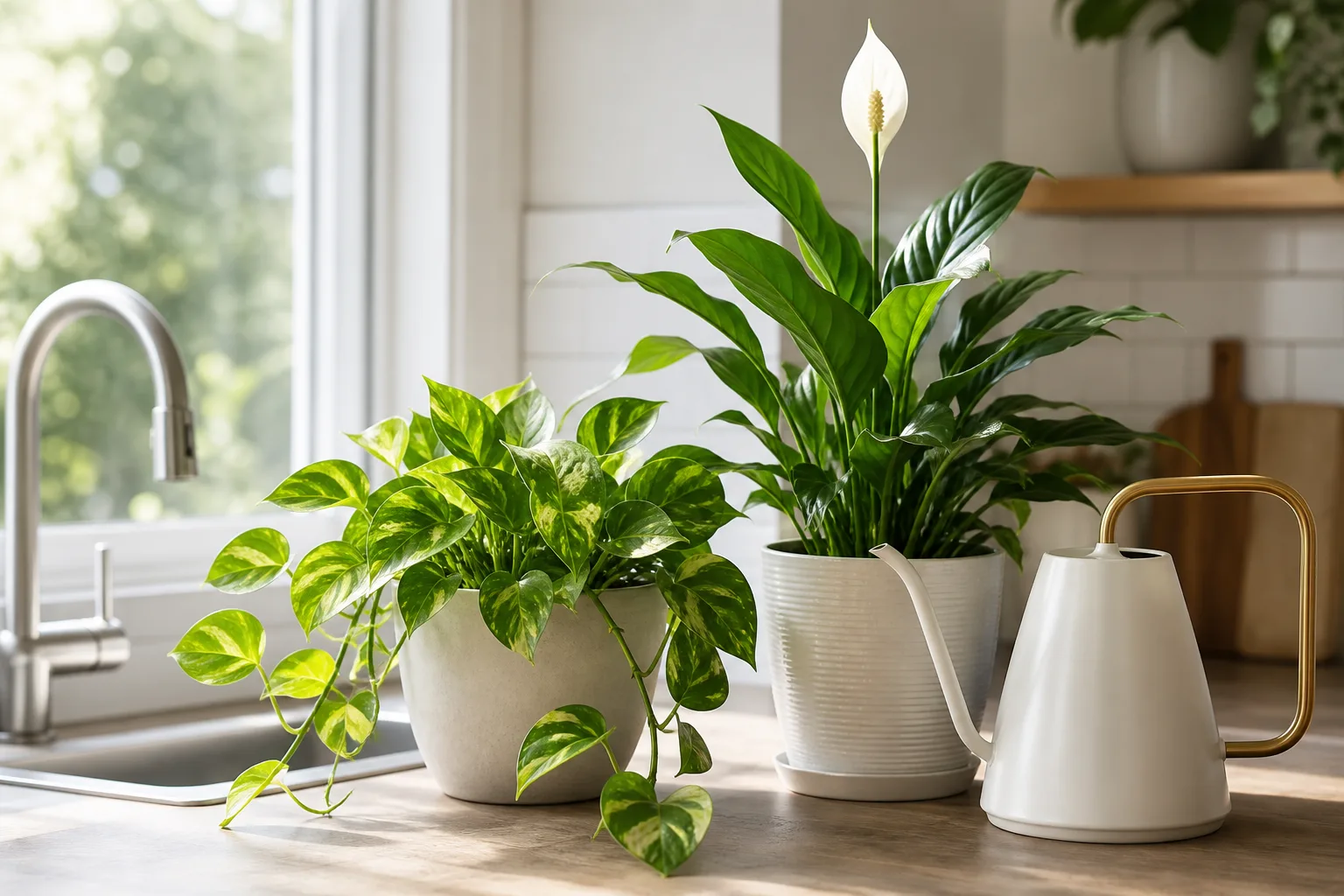
Most houseplant deaths are not caused by forgetting to water once. They come from watering on autopilot—same day every week, same splash every time, same saucer left full overnight. Roots need both water and air. When mix stays wet too long, oxygen leaves the root zone and rot starts long before you notice yellow leaves.
This cheat sheet gives you the checks, rules, and symptom shortcuts experienced growers use before they pick up a watering can. For the full beginner walkthrough, see how to water indoor plants the right way; this page is the fast reference you keep open while you work through a shelf of pots. Bookmark the tables, run the finger test on every pot that looks unhappy, and treat “I watered last week” as irrelevant data.
The One Rule That Beats Every Watering Schedule
Water when the plant needs it, not when the calendar says. The Royal Horticultural Society is clear that there is no simple rule of thumb for frequency because species, pot size, mix, light, temperature, humidity, and season all change how fast a root zone dries. A pothos in a bright kitchen may need water twice as often as the same plant in a dim hallway, even in the same apartment.
That does not mean you ignore timing completely. A weekly check day is smart. Walk the collection, test soil, lift pots, note which plants dried faster since last time, and water only the ones that pass your test. What fails is treating “Tuesday” as automatic watering day for every pot regardless of moisture.
Indoor climate is unstable in small ways that matter. Heating vents, air conditioning, grow lights, a plant moved closer to a window, fresh potting mix after repotting, or a root-bound plant with little soil volume all change drying speed. Better Homes & Gardens notes that seasonal growth shifts also matter: many houseplants drink more in spring and summer and less when growth slows in cooler months.
The practical sequence is check → water → drain → adjust. Check moisture at root depth. Water thoroughly enough to rewet the root ball. Let excess drain out. Adjust the next interval based on how that specific plant dried in that specific spot. That loop is the whole job.
How to Check If Your Houseplant Needs Water
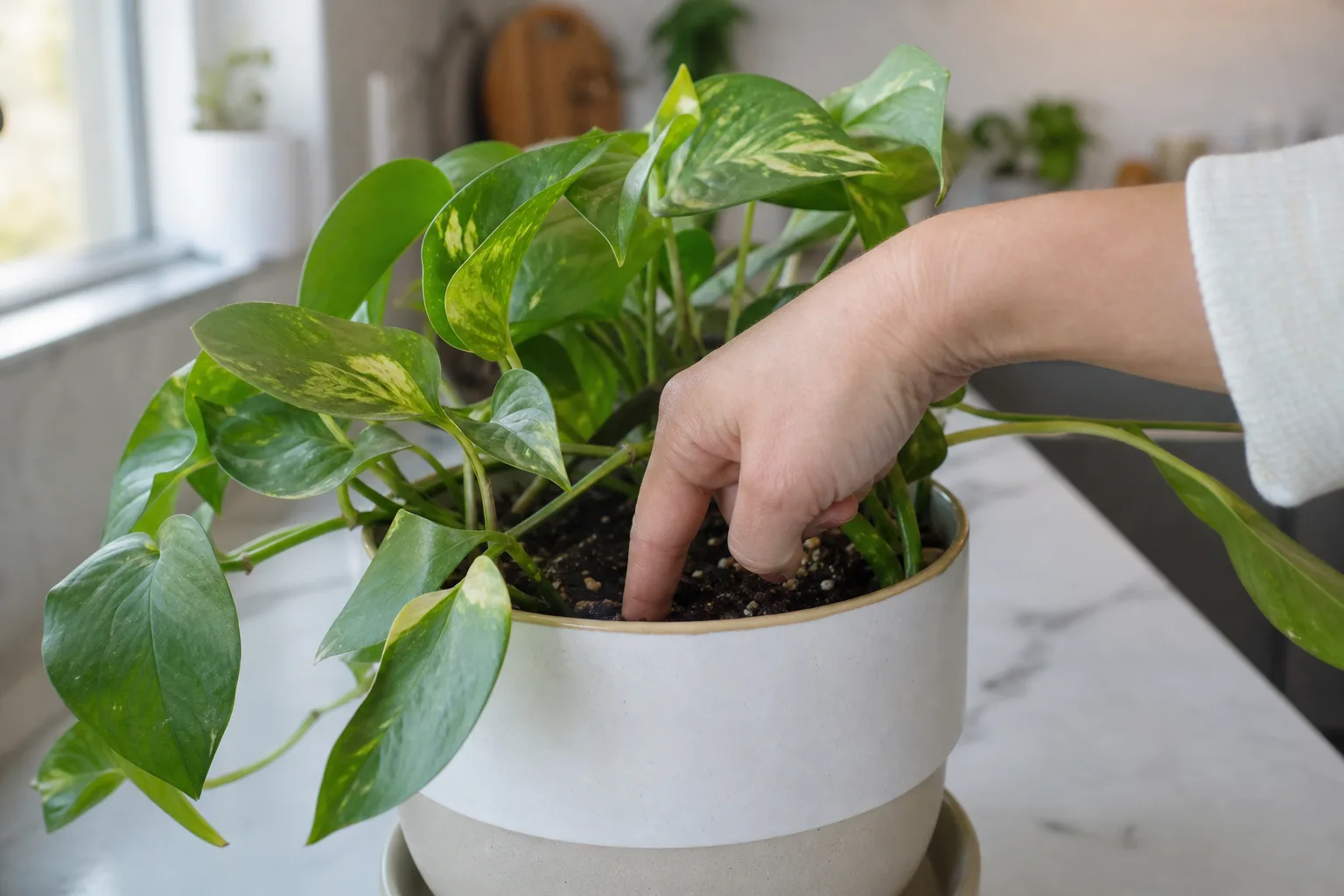
Surface soil lies. The top half inch dries first because it touches air, while deeper mix may still hold moisture for days. Watering because the surface looks pale is one of the fastest routes to overwatering. The RHS advises pushing below the surface to at least knuckle depth rather than judging dryness by touch alone on top.
Use more than one signal. Combine a depth test, pot weight, and—only after soil confirms—leaf appearance.
Finger, Skewer, and Knuckle Tests
For most medium tropical houseplants in 6- to 8-inch pots, push a finger, bamboo skewer, or chopstick 1 to 2 inches into the mix. If it comes out clean and dry, water. If soil clings and feels cool and damp, wait. For small pots under 4 inches, check about 1 inch deep. For large floor plants, test 2 to 3 inches or use a skewer pulled from multiple spots near the root ball, not only at the rim.
A wooden skewer left inserted for ten minutes and pulled out works like a cheap core sample. Dark damp wood means wait. Dry, clean wood means the tested zone is ready for water. This beats guessing on dense or bark-heavy mixes where finger tests feel ambiguous.
Moisture meters can help, but they are not verdicts. Read moisture meter vs finger test before you trust a single reading in peat-heavy, rocky, or very small pots where probes miss dry pockets. Insert the probe halfway between the stem and the pot wall, at mid-pot depth, not against the drainage hole where water collects. Take two readings in different spots on large pots and compare the number with finger-test results over a few weeks until you learn what “ready to water” looks like on the dial for your mix.
Pot Weight and Lift Checks
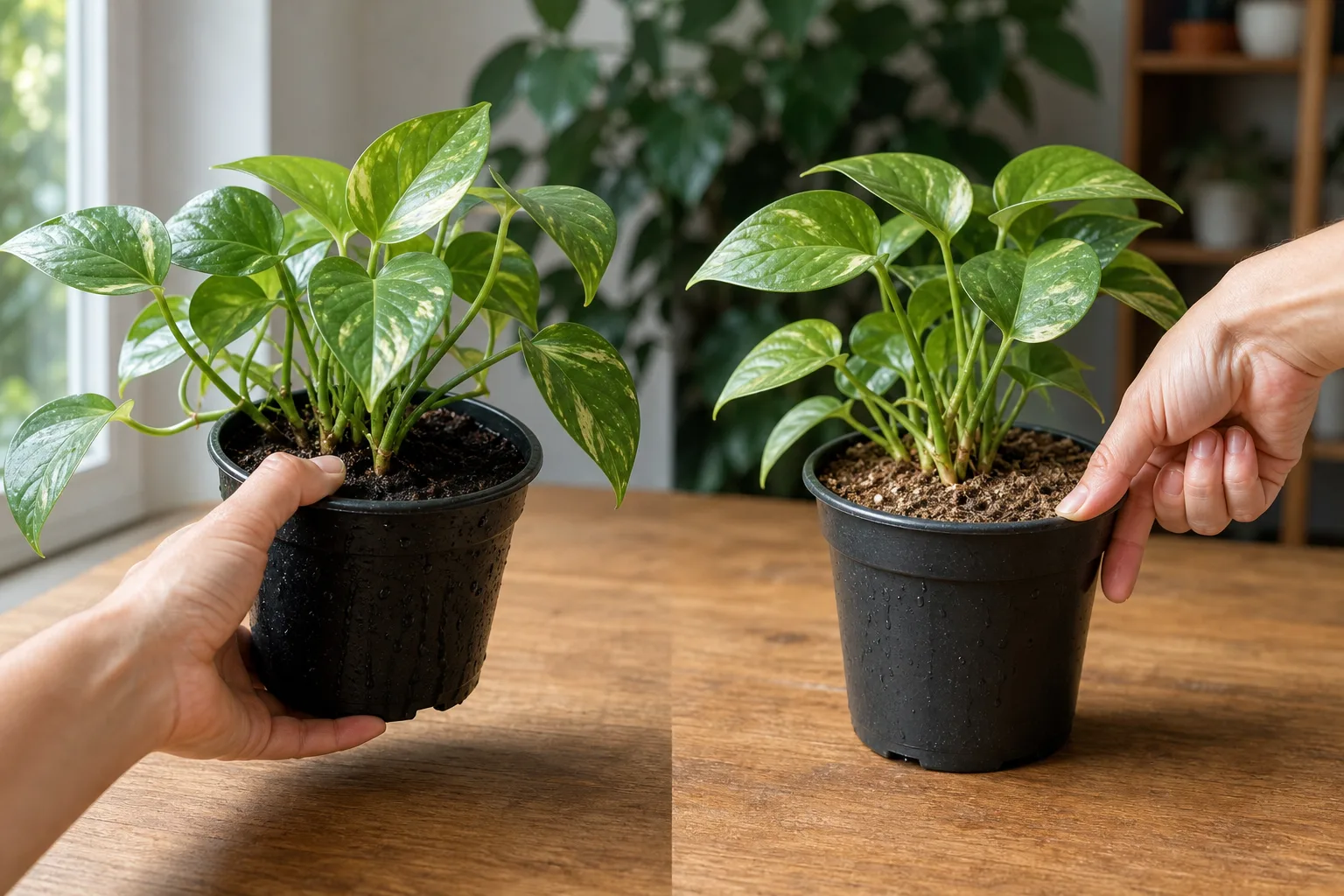
Lift the nursery pot after a thorough watering and notice the heft. Lift it again before the next drink. A pot that feels dramatically lighter usually means the root zone has dried enough for drought-tolerant plants like snake plants, ZZ plants, and many succulents that do not show thirst on leaves until they are quite dry.
Weight works especially well for plants in plastic nursery pots and for growers who tend to overwater by reflex. It is less reliable right after repotting, when fresh mix behaves differently, or when a decorative outer pot traps hidden runoff you cannot feel from the inner pot alone.
When Leaves Help—and When They Lie
Drooping, curling, dull color, or crispy edges can mean thirst—but wilt also appears when roots sit in wet, airless mix. Always confirm with soil before you pour. Older leaves yellowing at the base alone may be normal aging; widespread yellowing with persistently wet soil points toward excess moisture or root rot.
If leaves look stressed and soil is dry deep down, water. If leaves look stressed and soil is wet, do not add water; improve drainage, airflow, and drying time instead. For a broader symptom map, use the houseplant symptom checker. If a moisture meter says wet but the plant is wilting with lightweight soil, suspect root damage, not thirst. If it says dry but leaves are yellow and mix smells sour, trust the smell and drainage check over the dial.
Quick Reference by Plant Type
Schedules are starting points only. Your room wins. Still, plant families share moisture habits, and naming the family removes a lot of guesswork.
| Plant group | Dry-down target before watering | Typical indoor interval* | Notes |
|---|---|---|---|
| Tropical foliage (pothos, philodendron, monstera) | Top 1–2 in dry | ~5–10 days | More in bright heat; less in winter |
| Flowering / drama plants (peace lily, anthurium) | Top 1 in dry; some prefer slight surface moisture | ~5–7 days | Peace lily wilt can mean thirst—confirm with soil |
| Ferns (Boston fern, maidenhair) | Never fully bone dry | ~4–7 days | Dry air + dry soil = crisp fronds fast |
| Succulents (jade, echeveria, haworthia) | Most of mix dry | ~10–21 days | Leaves should feel firm; mushy = too wet |
| Cacti | Nearly full dry cycle | ~14–30 days | Most deaths are overwatering, not drought |
| African violet, cyclamen | Light dry surface; avoid splash on leaves | ~5–7 days | Bottom watering often helps |
*Intervals assume drainage holes, bright indirect light, and average room humidity. Adjust aggressively for your conditions.
Tropical Foliage and Flowering Houseplants
Most popular indoor foliage plants evolved in environments with regular rain and steady humidity. They want a cycle of even moisture with air, not constant sogginess. Water when the upper layer dries, then soak until a little runs from the drainage holes and empty the saucer within about thirty minutes, as Better Homes & Gardens recommends for drain-through watering.
Peace lilies are the famous exception to “never trust wilt alone.” They can droop dramatically when dry and perk after water. Even then, check soil first so you do not water a wilted plant sitting in wet mix after a recent overwater.
Succulents, Cacti, and Drought-Tolerant Plants
Thick-leaved succulents and cacti store water internally. Their roots expect dry spells. Wait until the mix is dry well below the surface—often most of the pot for small specimens—then water deeply and let the pot drain fully. A shallow sip every few days keeps roots near the surface wet and invites rot.
If succulent leaves wrinkle or feel soft while soil is dry, you waited too long for that plant’s taste—but recovery is usually easier than saving a rotted root system. See indoor succulent care for species-specific dry-down habits.
Ferns and High-Humidity Plants
Ferns punish both extremes. They hate bone-dry root balls and hate stagnant wet mix. Aim for consistent light moisture without waterlogged soil. High humidity from a pebble tray or grouped plants reduces how fast fronds crisp, but humidity is not a substitute for root-zone water. Misting leaves does not hydrate roots; it only briefly changes leaf surface moisture.
Calatheas and other sensitive tropicals sit between fern and pothos needs: evenly moist mix, excellent drainage, and careful water quality. The calathea care guide covers humidity and watering together.
Top Watering vs Bottom Watering
Both methods move water into the root zone. Neither fixes bad drainage, wrong light, or a schedule that ignores soil.
Default to Top Watering Most of the Time
Top watering—pouring room-temperature water evenly on the soil surface until it drains—is the default for most houseplants. It rewets the full root ball quickly, flushes soluble salts that build up from fertilizer and tap water, and matches how most growers inspect soil in the first place. Use a watering can with a rose or a slow stream so water infiltrates instead of racing down the sides.
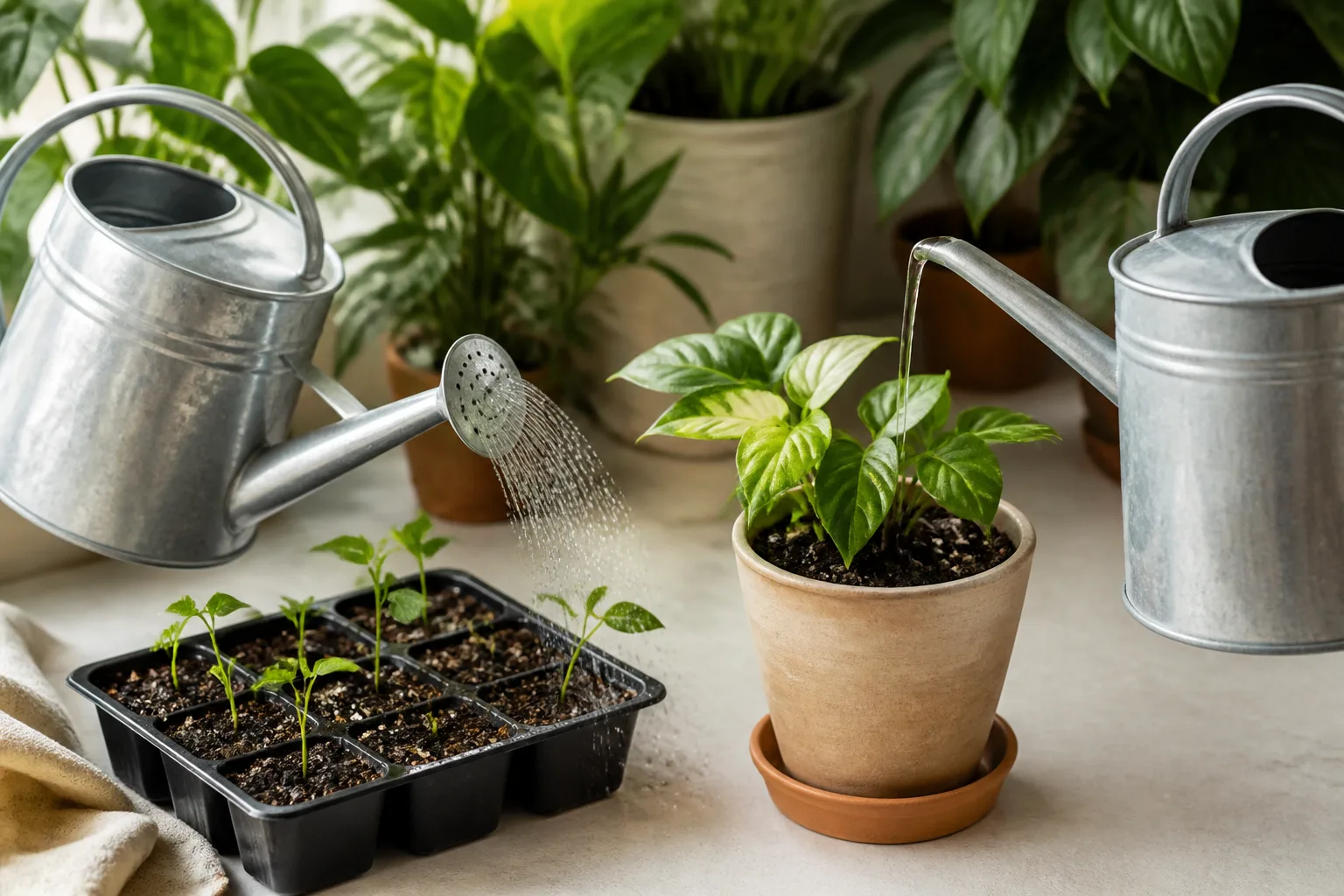
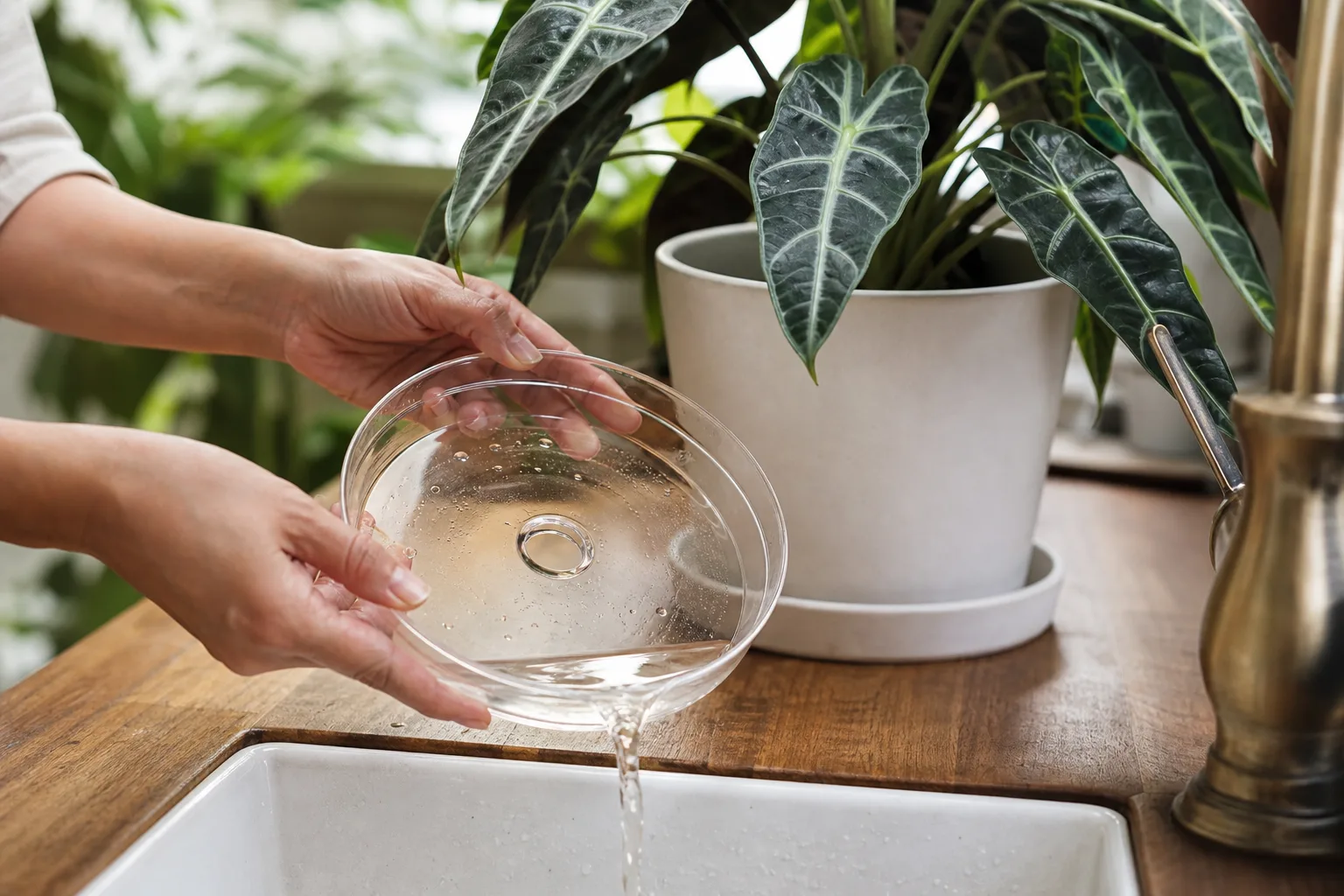
Water until a little exits the drainage holes, then stop. Empty the saucer or cachepot so the plant is not sitting in runoff. Leaving a pot in standing water for hours re-saturates the bottom of the mix and mimics overwatering even if you “only watered once.”
Morning is a practical default indoors because the plant has hours of light and airflow ahead to use the water you added. Night watering is not forbidden if soil is genuinely dry and excess drains away, but avoid soaking foliage in a cold, stagnant corner where droplets sit for hours.
Use room-temperature water and pour slowly in two passes if the mix is very dry: a first pass to break surface tension, a short wait, then a second pass until drain-through. That beats flooding once and watching water race out the bottom while the center stays dry.
Use Bottom Watering for Specific Problems
Bottom watering means setting the nursery pot in a shallow basin so dry mix pulls water up through the holes. It shines when mix has become hydrophobic, when leaves should stay dry (African violets, some begonias), or when overhead water keeps running down the pot sides without wetting the center. Soak until the surface darkens—often 15 to 30 minutes for small and medium pots—then lift the pot out and let it drain.
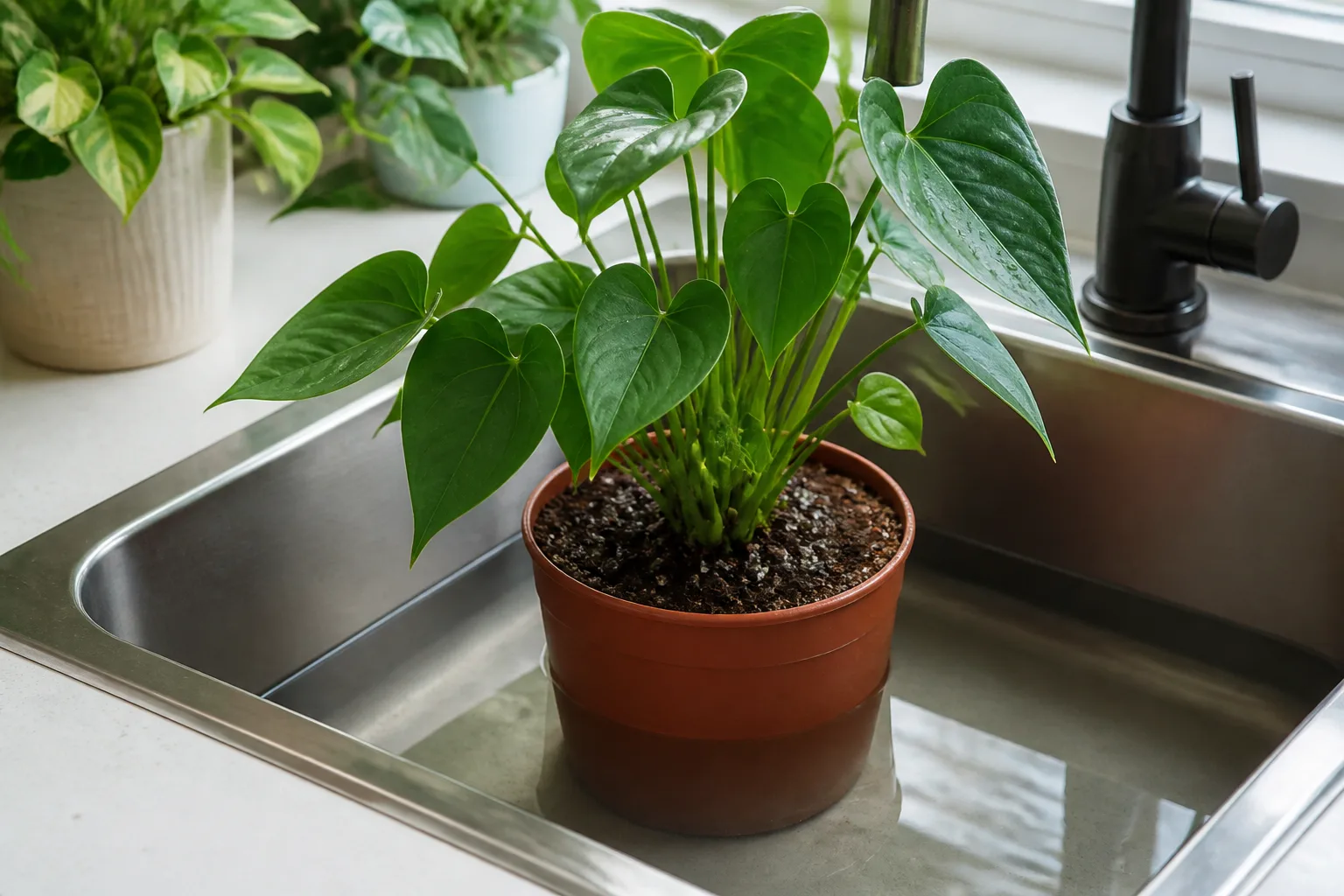
Bottom watering is a tool, not a religion. If you use it every time, salts can accumulate because you are not flushing the mix. Periodic top watering—or an occasional heavy flush with drain-through—keeps that in balance. Read top watering vs bottom watering for the full comparison.
Best Water for Indoor Plants
For most common houseplants—pothos, philodendrons, monsteras, snake plants, ZZ plants—room-temperature tap water is fine. Let cold tap water sit briefly if your pipes run icy; sudden cold can shock roots in small pots.
Exceptions matter. Softened water adds sodium that can harm plants over time. High-fluoride or heavily chlorinated local water can brown tips on sensitive plants such as calatheas, some ferns, and dracaenas. Rainwater and filtered water are excellent alternatives when tip burn persists despite good watering habits. The dedicated guide on the best water for houseplants and hard water and houseplants goes deeper on local water types.
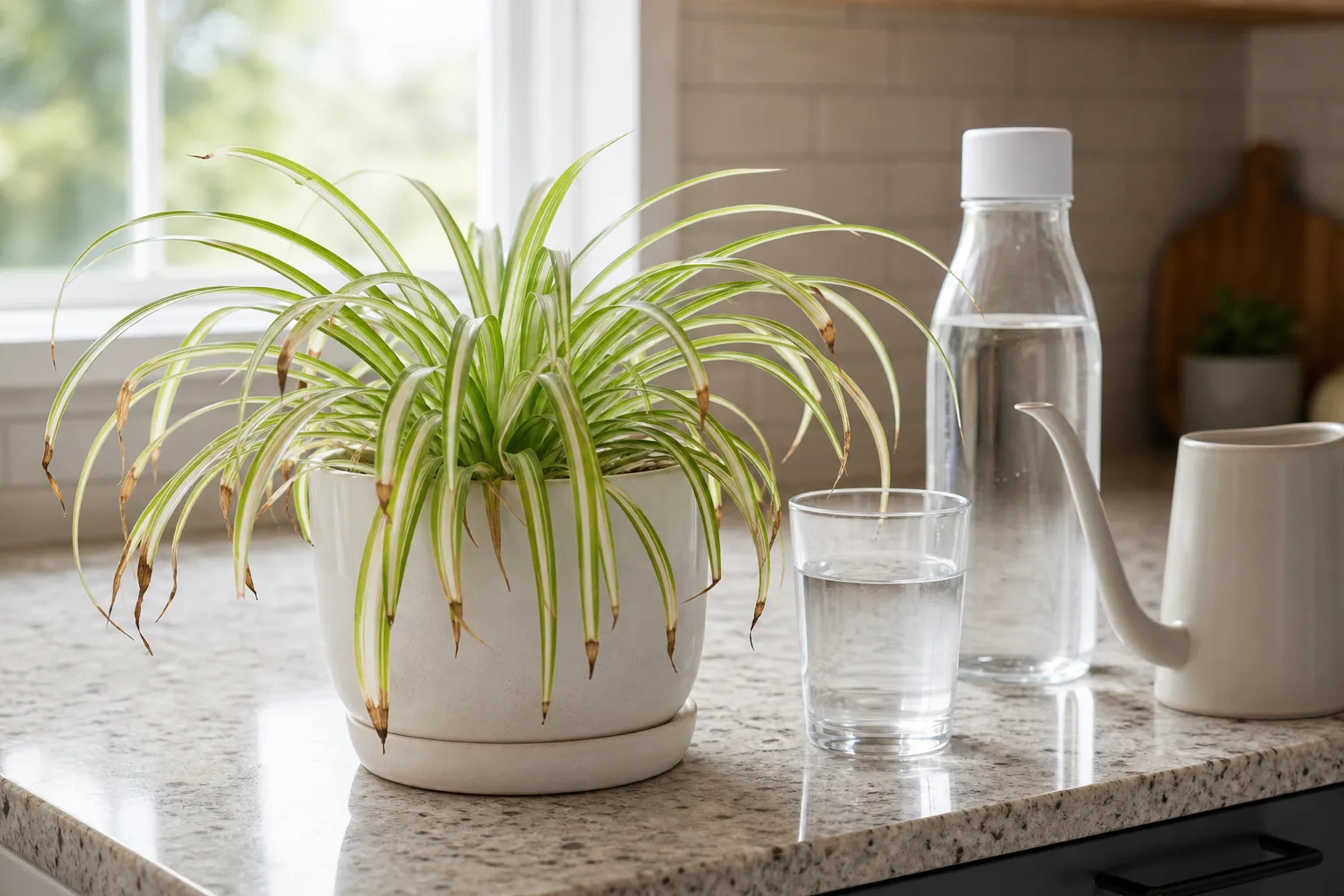
Never use water from a water softener on houseplants unless you have a bypass tap for irrigation. Never water with hot water or ice cubes as a routine hack—melting ice delivers unpredictable volume and cold root shock.
Let chlorinated tap water stand in an open container for several hours if you are watering sensitive collections and have the space; degassing helps some growers though many common plants tolerate fresh tap without drama. Compare tap vs filtered vs rainwater for houseplants if tip burn persists after watering technique is sound.
Seasonal Watering Adjustments
Indoor plants still respond to daylight length, temperature, and growth rate even inside. Your watering should breathe with the year, not stay frozen on a summer schedule through winter.
Spring and Summer
Longer days and warmer rooms increase photosynthesis and transpiration. Soil dries faster. Check more often—sometimes twice a week for fast growers in bright light. New leaves and active growth mean roots are pulling more water. This is when underwatered plants show stress quickly, but it is also when overeager daily watering causes the first root issues of the season.
If air conditioning dries the room, foliage may crisp at the edges while mix timing stays similar; address humidity separately rather than compensating with extra soil water alone.
Fall and Winter
Growth slows for many houseplants. Roots absorb less. Mix stays wet longer. This is the season that kills collections through kindness. A plant that needed water every seven days in July may need fourteen to twenty-one days in January—especially in cool, dim rooms. The RHS houseplant holiday care guidance notes that most houseplants tolerate short absences, but long wet soil during low growth is risky.
Heat sources complicate winter. A plant above a radiator or near a forced-air vent dries faster even while overall growth is slow. Treat location as part of the season, not just the calendar. See winter houseplant care mistakes and why houseplants struggle in winter for the full cold-season loop.
Overwatering vs Underwatering Symptom Cheat Sheet
Misread wilt and you double the damage. Use soil moisture as the tiebreaker every time.
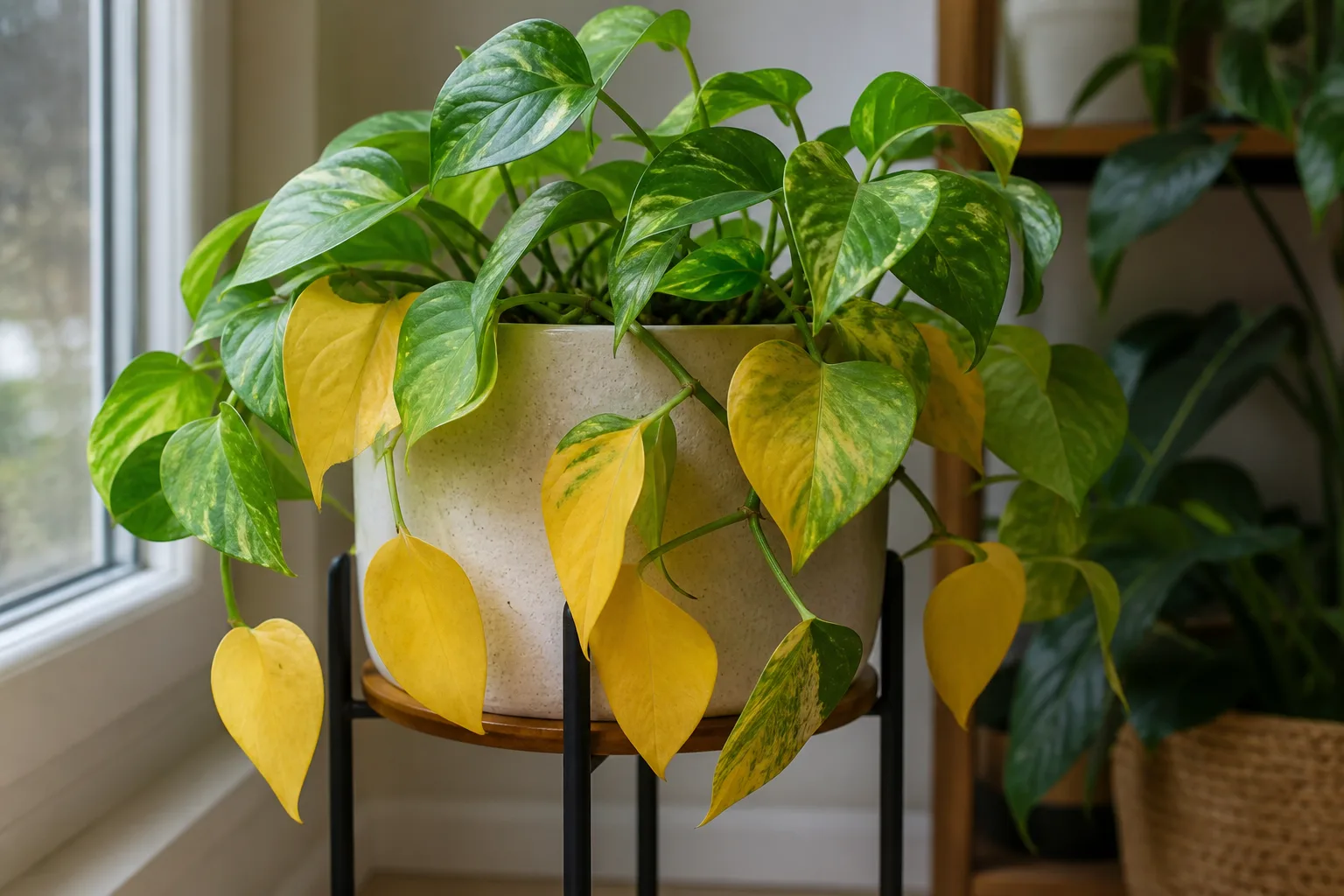
Likely overwatering: yellow leaves (old and new), soft stems, no new growth, sour or musty smell, fungus gnats, soil wet for days, algae on mix surface, brown mushy roots when inspected. First fix: stop watering, confirm drainage, let mix dry to the appropriate level for that plant, improve airflow. If rot is advanced, repot with trimmed roots and fresh mix.
Likely underwatering: dry soil deep in the pot, light pot weight, drooping with dry mix, crispy leaf edges, soil pulling away from pot walls, water running straight through without soaking. First fix: water thoroughly in rounds or bottom soak until the root ball rewets, then resume a sane dry-down cycle.
The dangerous middle ground is chronic uneven watering—alternating flood and drought in the same pot. That pattern browns tips, shrinks roots, and makes every future check harder because mix becomes hydrophobic. Pick a consistent method, rewet the full root ball when you do water, and let the plant reach the correct dry point before the next session.
Recovery from mild overwatering starts with dry-down, not repotting theater. Move the pot to brighter indirect light with good airflow, confirm holes are open, and skip fertilizer until new growth looks normal. Recovery from advanced rot requires unpotting, trimming mush, and fresh mix—see overwatered plant and underwatered plant for step-by-step rescue paths.
Some symptoms overlap—brown tips can be low humidity, salt buildup, or inconsistent watering. Brown tips on houseplants and water stress in houseplants help split those causes. When in doubt, inspect the root zone before you pour again.
Pots, Drainage, and Self-Watering Systems
Drainage holes are non-negotiable for conventional watering. Without them, water has nowhere to go, air pockets fill, and roots suffocate. Decorative cachepots are fine only if the inner nursery pot lifts out and you never let the outer vessel become a swamp.
Pot material changes drying speed. Unglazed terracotta breathes and dries faster. Glazed ceramic and plastic retain moisture longer. An oversized pot holds excess mix that stays wet around a small root ball—one of the most common hidden overwatering setups. Match pot volume to roots, not wishful future size.
Self-watering pots and wick reservoirs can work when you understand the reservoir—not when you treat them as permission to ignore the plant forever. Fill reservoirs as designed, still check soil, and do not let stagnant water turn anaerobic. For vacations, a timed soak plus grouping plants away from hot windows often beats gimmicks; the RHS holiday care page covers sensible absence strategies.
Common Watering Mistakes to Stop Making
Watering on schedule without checking tops the list. Leaving saucers full is second. Using pots with no holes because the planter is pretty is third. Watering a new plant or freshly repotted plant on autopilot is fourth—nursery mix may already be wet, and disturbed roots absorb less until they settle. Check depth and weight before the first drink after purchase or repotting, observe for one to two weeks, and reset your interval when fresh mix dries differently.
Other frequent errors: misting instead of watering roots; repotting into wet mix on top of damaged roots; trusting a moisture meter in isolation; watering at night in a cold dim room and leaving leaves wet with poor airflow; using softened water; giving succulents frequent shallow sips; and assuming a drooping plant is always thirsty.
When water runs through the pot in seconds, the mix may be hydrophobic or shrunken away from the sides. Bottom soak or water in slow rounds until the root ball accepts moisture, then reassess whether the plant needs fresh mix. If problems persist after you fix watering, look at light and pests—not just the can.
Ice cubes, wine watering, and “just a splash” are poor substitutes for checking soil. Ice delivers cold, uneven volume; splashes wet the surface without rewetting roots; wine belongs elsewhere. Misting is not watering—see humidity guides if fronds crisp in dry air, but still water the pot. Apps and reminders are fine for check days, not automatic pour commands.
Group plants with similar thirst together when you can. A fern beside a cactus guarantees one of them loses. Elevating pots on feet inside cachepots lets you see standing water instead of hiding it. A few minutes of checking beats an hour of rescue later.
Conclusion
Indoor plant watering is not a mystery formula hidden in a weekly reminder app. It is a repeatable habit: test the root zone, water thoroughly, drain completely, and shorten or lengthen the next interval based on how that plant dried in your room. Keep this cheat sheet nearby, link out to deeper guides when one plant type demands more nuance, and let the soil—not guilt—decide when the can comes out.