How to Make a DIY Pebble Tray for Indoor Plants
Build a DIY pebble tray for indoor plants with the right tray size, pebble depth, and waterline—plus budget options, placement tips, and common mistakes to avoid.
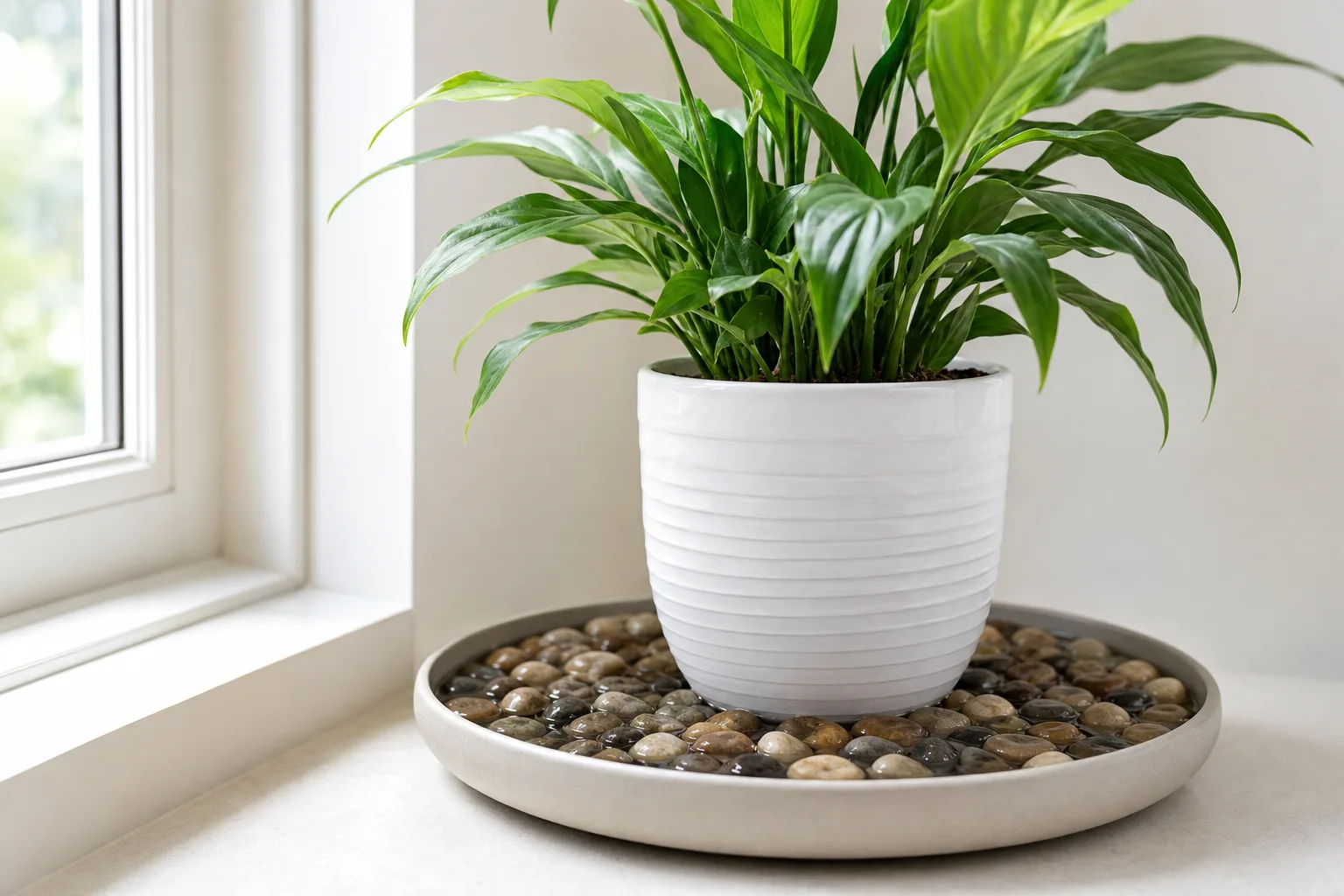
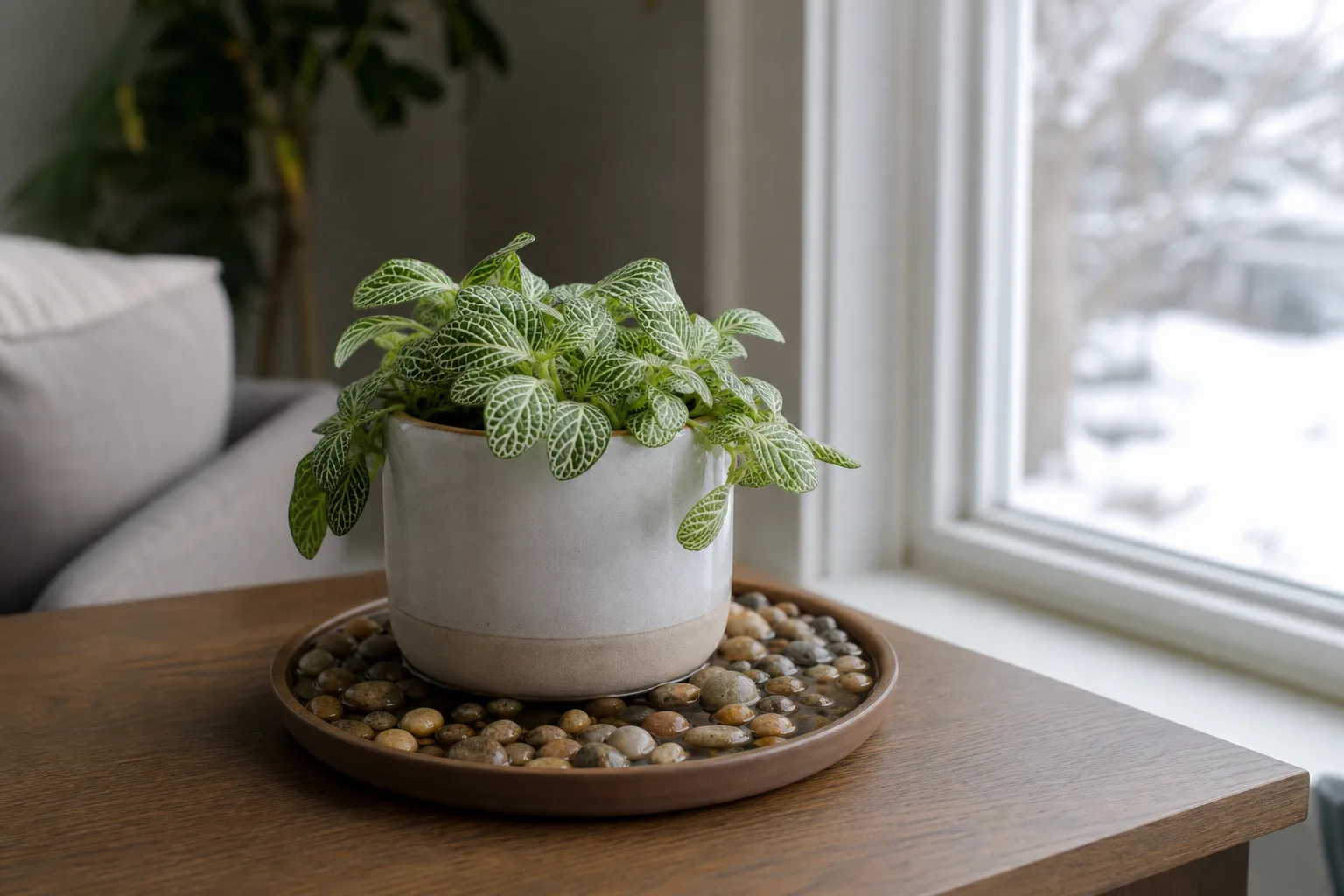
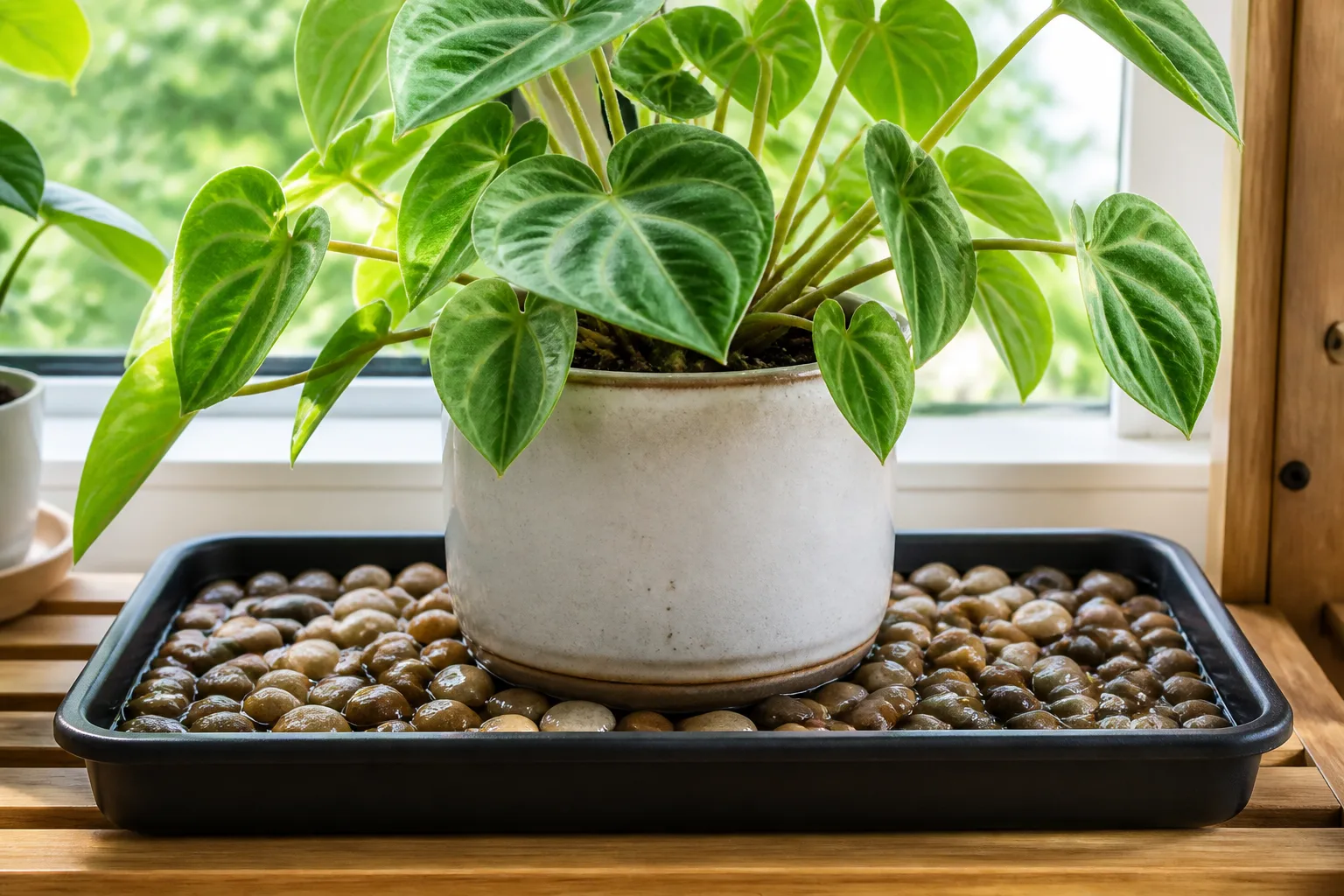
You do not need a branded humidity kit, a trip to a specialty nursery, or a weekend woodworking project to give a humidity-sensitive houseplant a better microclimate. A DIY pebble tray is a shallow waterproof dish, a bag of clean stones, and water filled below the stone tops so the pot rests above the reservoir. Water evaporates from the exposed surface; air immediately around the plant can read slightly less dry. The build takes twenty minutes if you have the materials on hand—and most of the skill is geometry, not craft.
This page is the build guide in the LeafyPixels pebble-tray cluster. If you want the concept first, read what is a pebble tray. If you want measured humidity numbers and skepticism at room scale, read do pebble trays really increase humidity for houseplants. Here you get a shopping list, tray-sizing math, upcycling options, the five-step assembly, a post-build safety check, and maintenance habits that keep the tray helpful instead of turning it into a wet-root trap.
What You’ll Build—and What This Guide Owns in the Cluster
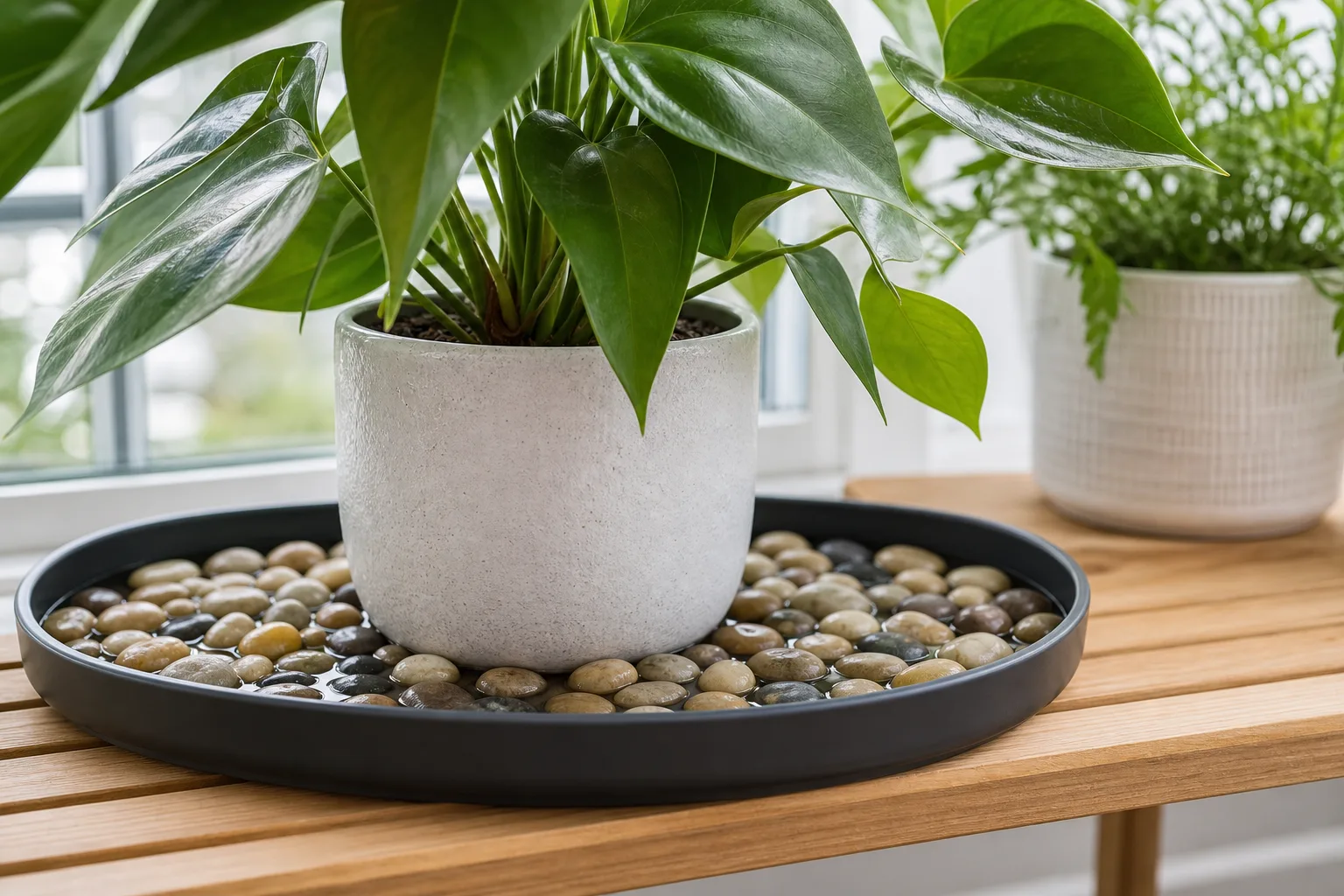
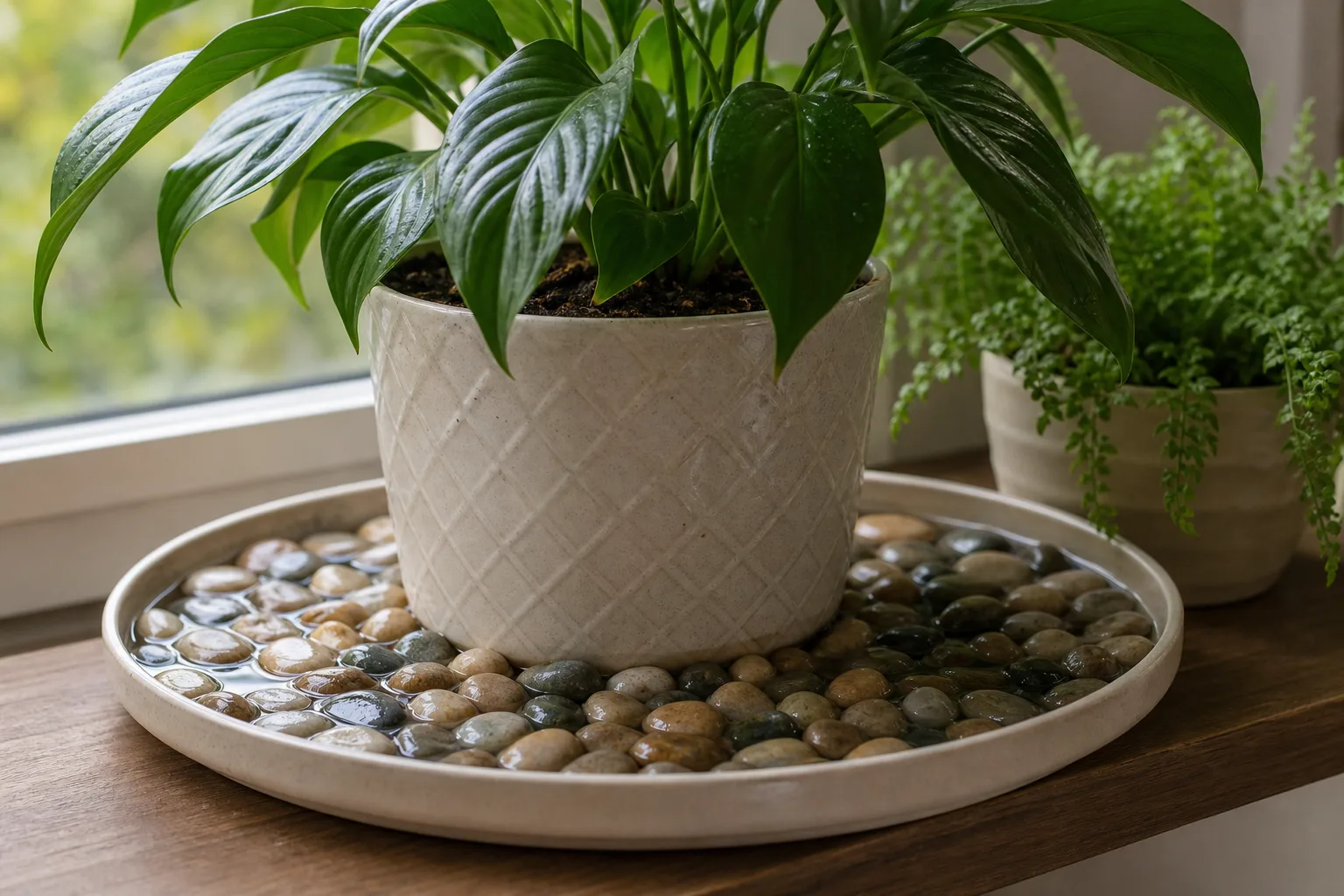
A finished DIY humidity tray has four visible parts: a watertight base wider than the pot, a 1- to 2-inch bed of inert pebbles, a thin water reservoir visible in gaps between stones, and your potted plant resting on top with drainage holes dry. Nothing plugs in. Nothing mists leaves. Nothing soaks the root zone if you follow the waterline rule below.
How This Differs From Store Kits and Definition Pages
Pre-made pebble tray kits are fine when the tray is wide enough and stones are washed. They are not magic—geometry still wins. Store kits sometimes ship trays barely wider than a standard nursery pot, which minimizes evaporation surface. Building your own lets you size up the dish, choose stable stone sizes, and reuse materials you already own. The trade-off is you must verify the waterline yourself. No kit label replaces a side-view check.
Sibling guide how to set up a pebble tray owns the universal setup rules for any tray, kit or DIY. This guide owns material sourcing, budget tiers, upcycling, and the full build sequence for readers who want to assemble one tonight from hardware-store parts.
The One Build Rule That Protects Your Roots
The pot base and every drainage hole stay above the waterline.
Missouri Botanical Garden describes gravel in a tray, water below the gravel, and the container set on top to increase humidity. University of Illinois Extension and Nebraska Extension repeat the same picture: stones lift the pot while water evaporates from the exposed surface. Oklahoma State Extension is blunt that houseplants should not stand in water. A DIY tray that violates this rule is not a humidity hack—it is slow bottom watering with extra steps.
Why the Waterline Matters More Than Stone Brand
Capillary wicking pulls moisture upward through potting mix when drainage holes touch water. Mix that stays wet at the bottom invites root stress, slowed oxygen exchange, and fungus gnat larvae in many indoor setups. Fancy river rock does not fix submerged holes. Cheap aquarium gravel does not cause rot if the pot sits high. Elevation is the product; pebble type is packaging.
When in doubt, pour off excess until a side-view check shows a clear air gap between pot bottom and water—not contact, not meniscus creep up the pot wall.
DIY Shopping List: Tray, Stones, and Optional Tools
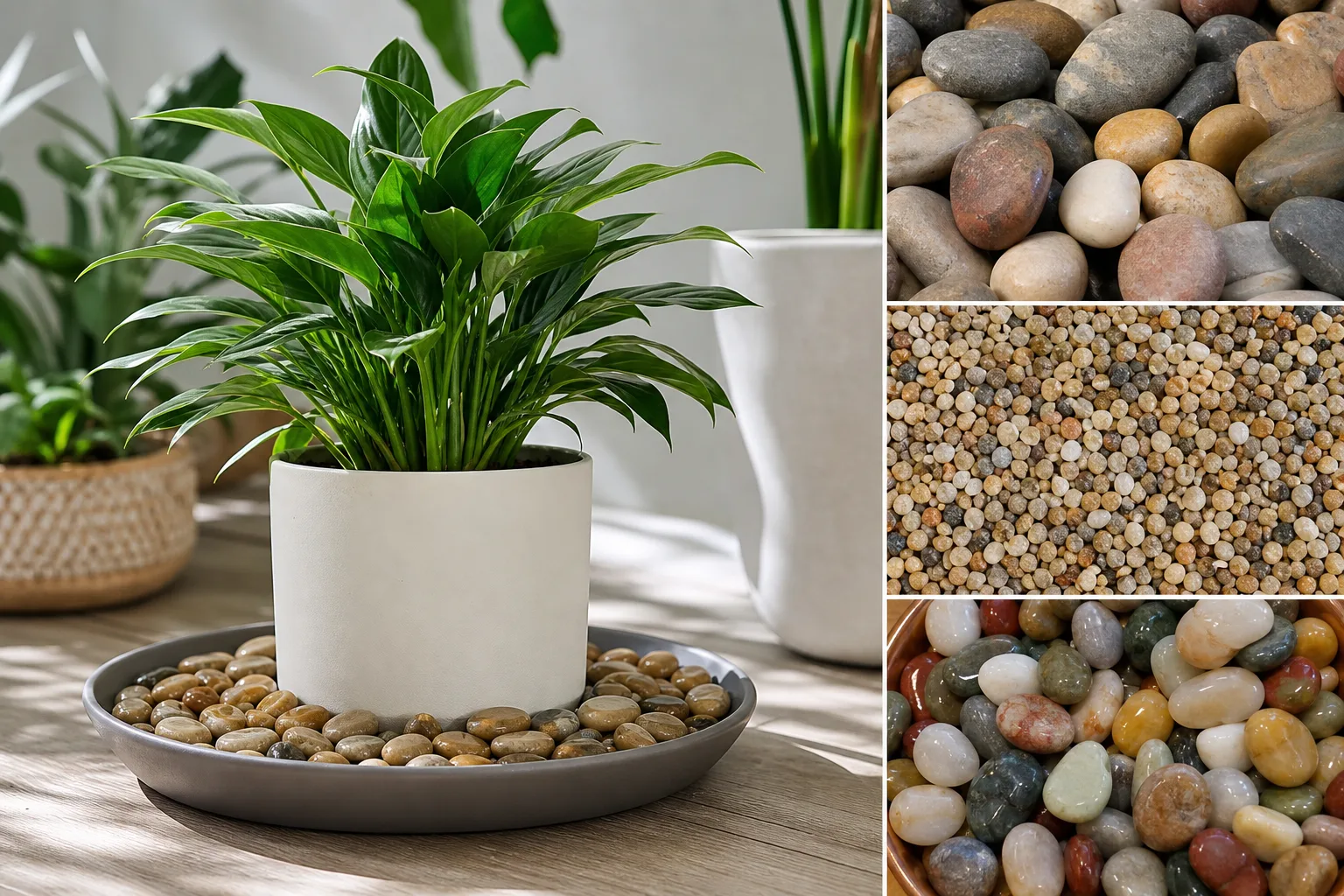
You need three consumables and two optional helpers. Everything should be inert (no fertilizer-coated decorative mulch) and easy to rinse.
| Item | Purpose | Typical source |
|---|---|---|
| Shallow waterproof tray | Reservoir + stability | Plant saucer, glazed dish, shallow storage tray |
| Washed pebbles or gravel | Lift pot above water | Aquarium shop, hardware garden aisle, bagged river rock |
| Water | Evaporation source | Tap is fine for most trays; distilled reduces mineral crust on glazed dishes |
| Soft brush or old toothbrush | Algae and crust removal | Already in most homes |
| Digital hygrometer (optional) | Verify local RH bump at leaf height | Hardware or garden center |
Budget Build Under $15
The cheapest working build is a rigid plastic plant saucer one size larger than the pot’s drip tray, plus a small bag of washed pea gravel from a hardware store. A 10- to 12-inch saucer under a 6-inch pot is a common starting point. Skip dyed craft stones that bleed color in water. Skip unwashed quarry dust that clouds the tray in a day.
Thrift-store glazed dishes work when the glaze is intact—run a water test on a towel first. A shallow glass baking dish can work temporarily for an experiment; confirm it sits level and does not flex when you lift a filled pot.
Mid-Tier Materials Worth the Upgrade
Spending a few dollars more usually buys width and stability, not better evaporation chemistry. A wide rigid tray (14 inches or more for an 8-inch pot) exposes more water surface than a pot-matched saucer. Polished river pebbles in the half-inch to one-inch range create a flatter platform than mixed quarry tailings. A small hygrometer placed at lower leaf height for a week tells you whether the build matters in your room—guesswork is how trays get blamed for problems they never caused.
What You Can Skip on Day One
You do not need activated charcoal in the tray, essential oils, humidity-booster drops, or a second decorative outer pot. You do not need LECA unless you already own it—see best pebbles to use in a DIY pebble tray before you overthink fill material. You do not need to buy a humidifier to build a tray; decide that after you measure.
Choose Your Tray: Size, Depth, and Upcycling Options
The tray must be waterproof, wider than the pot on all sides, shallow enough to manage safely on a shelf, and stable when the plant is set down. Depth of 1 to 2 inches is plenty. Extra depth without extra surface area does not humidify better—it just holds more stagnant water you will forget to refresh.
Tray Width Math for Better Evaporation
Evaporation scales with exposed water surface area, not reservoir volume. A tray that matches pot diameter exactly holds water but does little else. Aim for a tray at least 1.5 times the pot diameter, with more width helping when air is dry and still.
| Pot diameter | Practical tray width target |
|---|---|
| 4 to 6 inches | 10 to 12 inches |
| 6 to 8 inches | 12 to 14 inches |
| 8 to 10 inches | 14 to 18 inches |
| 10+ inches (floor plants) | Consider grouping on a wide boot tray or skip tray-only strategy |
These are home-growing targets, not laws. A 12-inch tray under an 8-inch pot on a calm windowsill is a reasonable DIY experiment. A six-foot Monstera deliciosa with a 6-inch saucer is a geometry mismatch—see Monstera humidity needs for species-scale thinking.
Multi-plant DIY variant: One wide shallow storage tray can host three small humidity lovers—fittonia, a compact fern, and a maranta—sharing one evaporation pool. Keep each pot on stones above water; do not let pots wick from each other’s runoff. University of New Hampshire Extension mentions grouping plants with trays as a local humidity tactic.
Upcycled Trays That Work—and Ones to Avoid
Works: rigid plastic saucers, glazed ceramic serving dishes (water tested), shallow boot trays, wide cafeteria trays with a lip, repurposed aquarium drip trays.
Risky: metal sheet pans that rust, cardboard lined with plastic that sags, chipped unglazed terracotta that wicks to furniture, anything so shallow that one refill floods the shelf.
Not a humidity tray: entryway catch-alls for keys, jewelry dishes, soap-only vanity trays with no plant. If there is no potted houseplant on stones above water, it is a different object.
Pick Stones and Fill Material for Stability
The fill material must elevate, stay stable when wet, and rinse clean. Common DIY choices:
- Pea gravel — cheap, angular, good stability; rinse thoroughly
- River pebbles — smooth, easy to wipe; mix sizes for a flat platform
- Aquarium gravel — uniform, sold washed; avoid dyed batches
- LECA / expanded clay — lightweight; can float if tray is overfilled; fine if you already use it for plants
Avoid limestone-heavy rock for sensitive orchids if your water is already alkaline. Avoid marble chips that shed dust. Avoid “moss top dressing” as tray fill—it holds too much moisture against pot bases.
Pebble Size, Depth, and When to Read the Pebble Comparison Guide
Target half-inch to 1.5-inch stones for most houseplant pots. Bed depth of 1 to 2 inches after settling. Stones too small let the pot sink until holes kiss water. Stones too large leave the pot teetering on three points.
Spread stones evenly—a crown in the center is how pots tilt and holes dip. The full comparison table—pea gravel vs river rock vs clay pebbles, fillers to avoid, and layout for odd-shaped pots—lives in best pebbles to use in a DIY pebble tray. Come back here for assembly once you have stones in hand.
Step-by-Step: Build Your DIY Pebble Tray
Bloomscape summarizes the method cleanly: pebbles in a waterproof tray, water until stones are not quite covered, plant on top so roots are not constantly wet. Below is the same geometry with the safety checks DIY builders skip.
Step 1: Wash the Tray and Stones
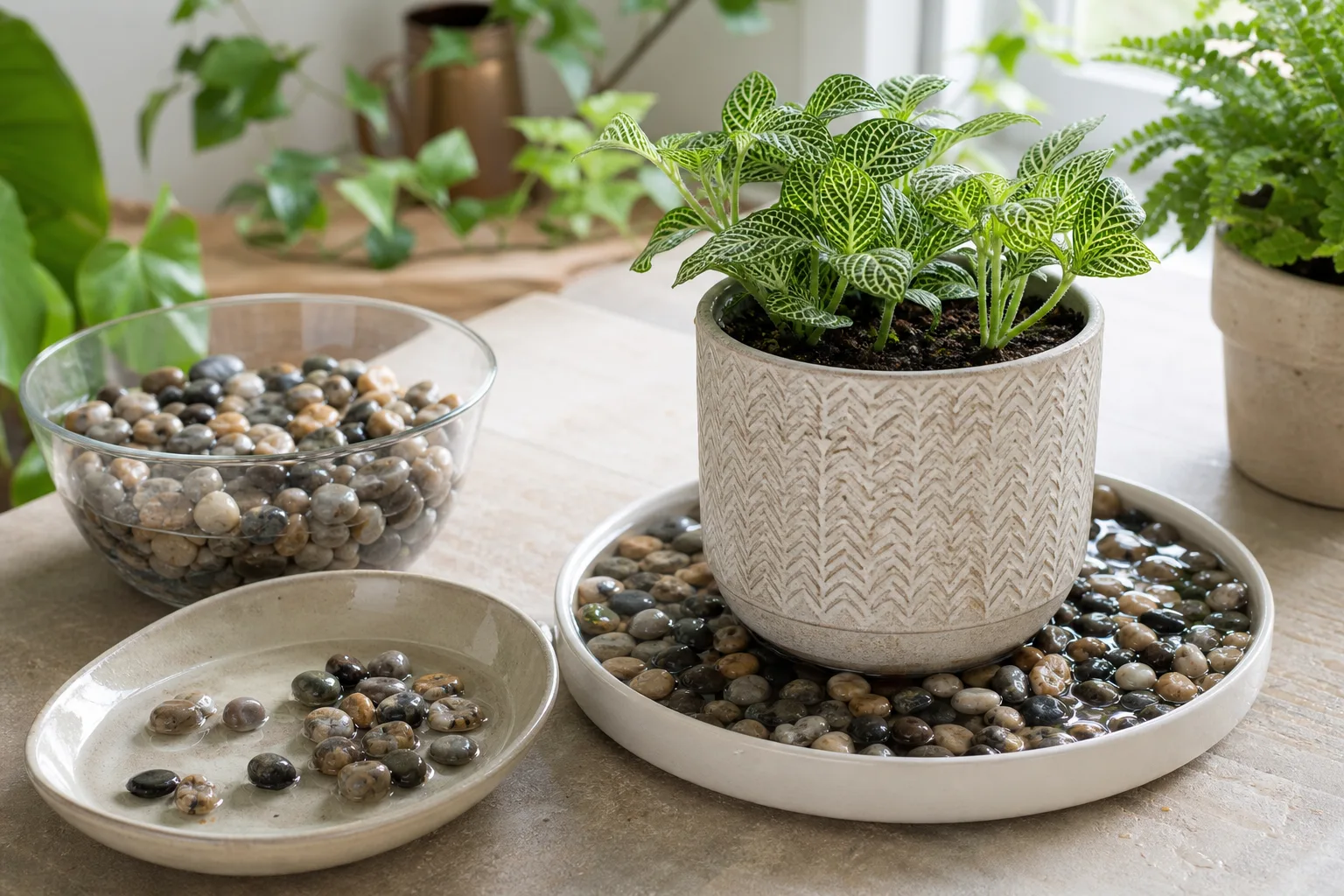
Rinse the tray with mild dish soap if it is dusty or greasy, then rinse again. Pour stones into a colander and run water until runoff is clear. Starting dirty guarantees algae film within a week on a heated-home windowsill. Dry the tray exterior before you set it on wood furniture.
Step 2: Spread an Even Pebble Layer
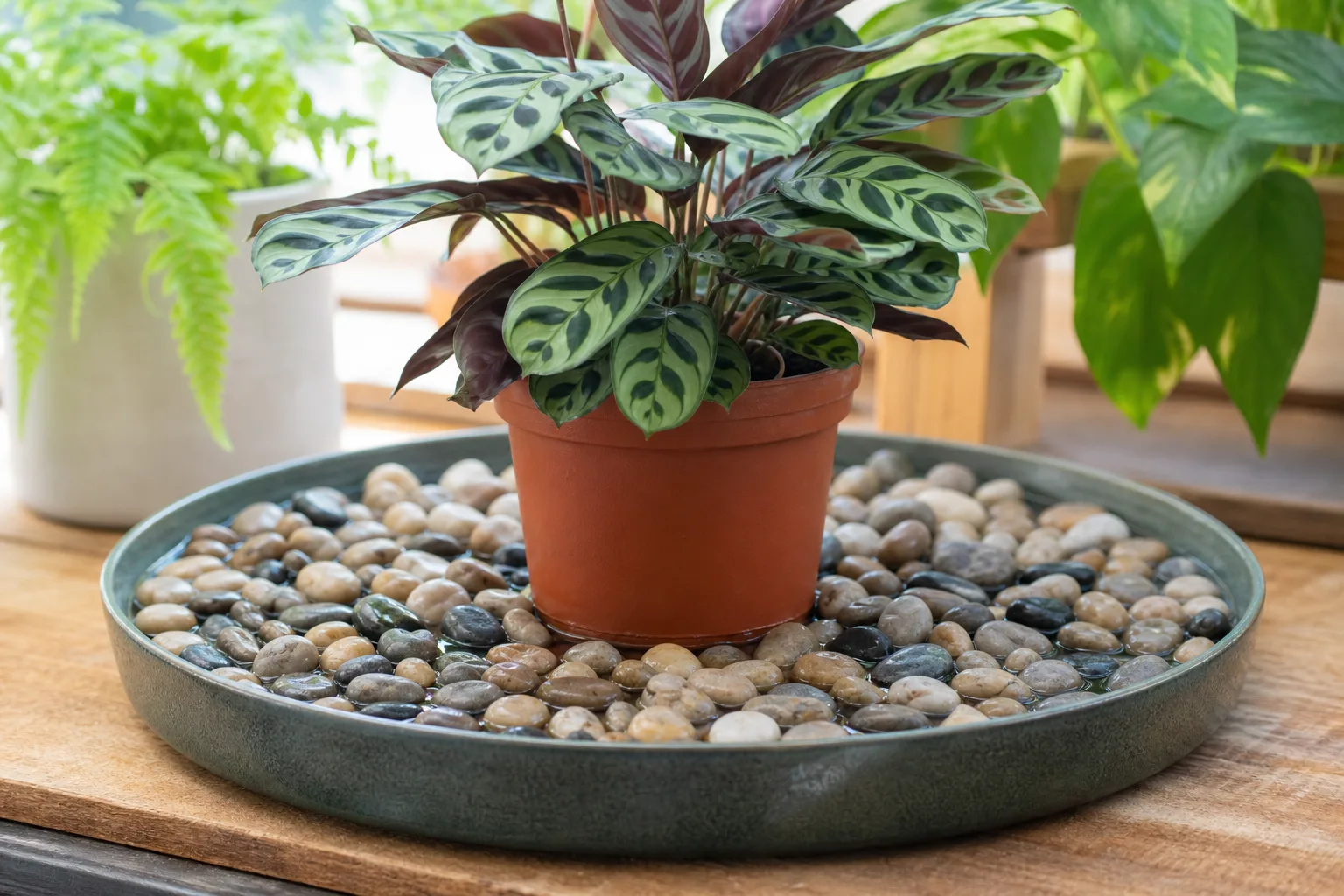
Pour stones into the tray and shake gently for an even bed 1 to 2 inches deep. Press lightly with a flat hand to find wobble points. The pot should sit level—not rocking on a peak of gravel.
Step 3: Add Water Below the Top of the Pebbles

Add water slowly until it pools in gaps without covering stone tops. You should see water shimmer between pebbles, not a pond across the whole surface. Stop before water touches where the pot rim will rest.
Step 4: Set the Pot and Check Clearance
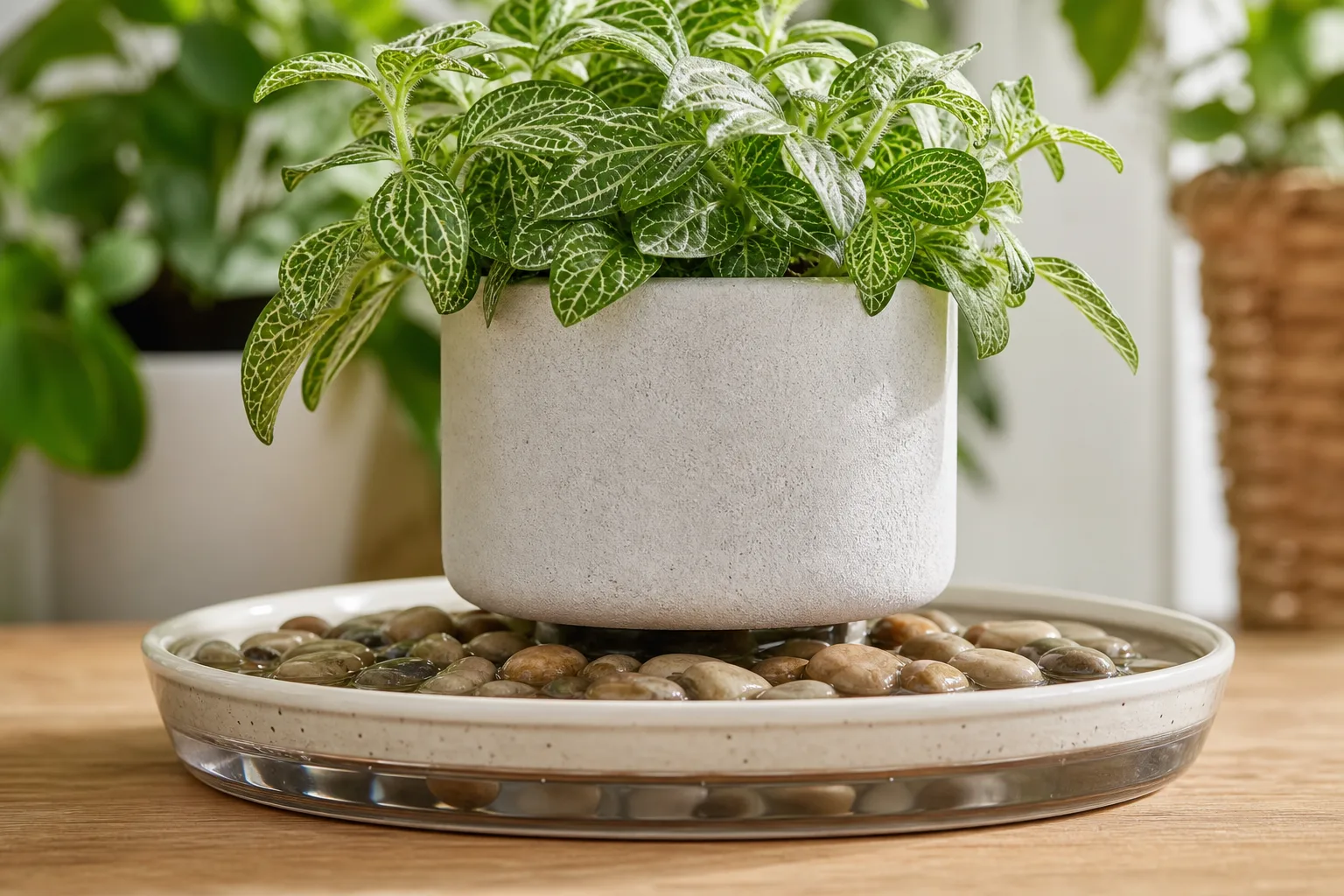
Lower the pot onto the center of the stone bed. Peek from the side if you can: drainage holes and pot base must stay dry. Press the pot lightly—if it sinks and holes approach water, add more stones or pour off excess.
Lift the pot after thirty minutes on a dry day and check the bottom of the pot and tray water level. Wicking sometimes shows up slowly.
Step 5: Move the Assembly to Its Growing Spot
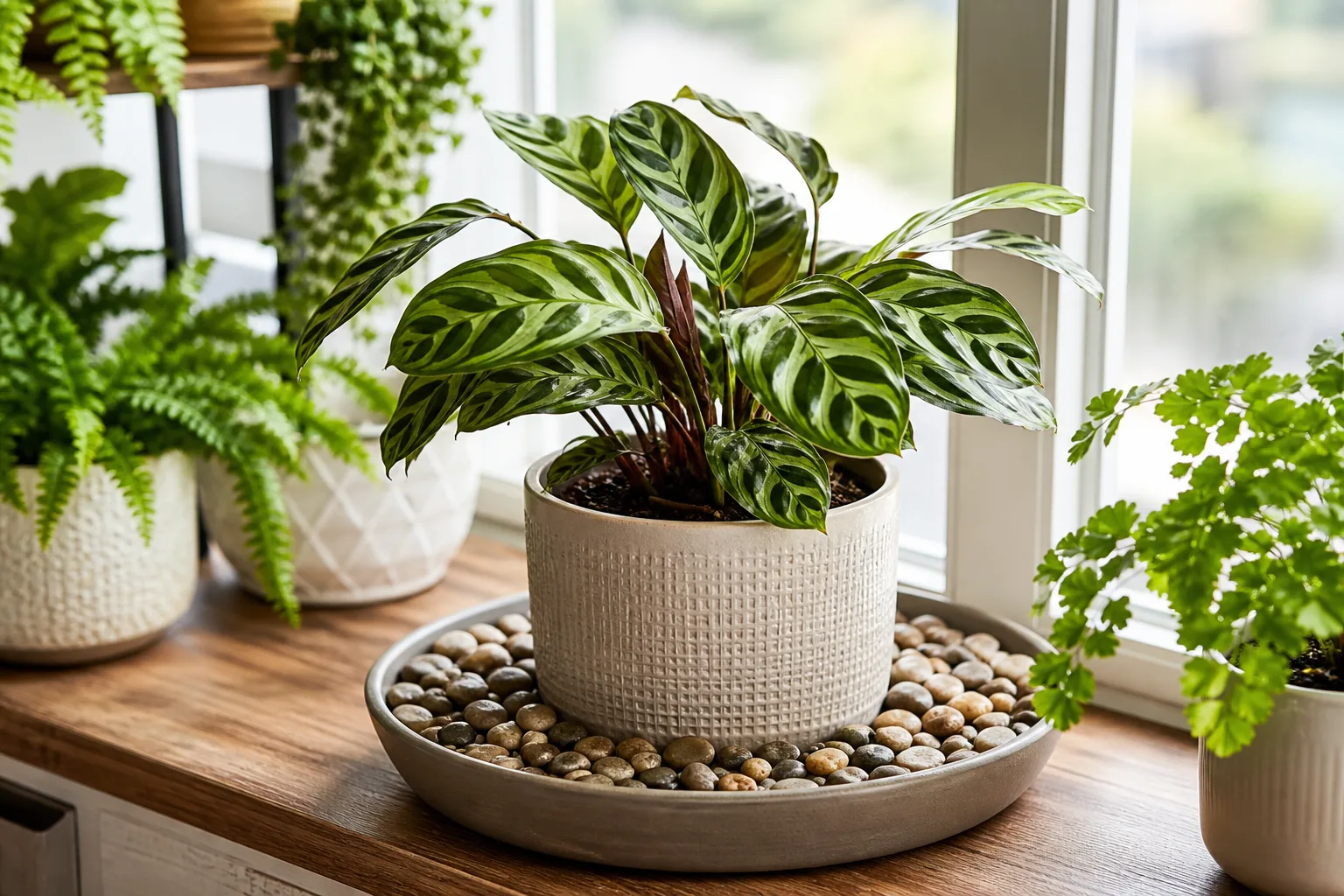
Carry tray and plant together—do not build on the kitchen counter and drip across the house. Place the finished unit where the plant already lives: bright indirect light for most tropicals, away from blasting heat vents. Good placement is part of the build, not an afterthought.
Test the Build Before You Trust It
A DIY tray is a hypothesis: this spot is dry enough that local evaporation might help this plant. Test it.
Place a hygrometer at lower leaf height beside the plant and another across the room as a control. Log morning and evening readings for seven days. A working tray often nudges RH a few percentage points near foliage while the far hygrometer barely moves. No change at leaf height after a correct build usually means airflow, plant size, or room dryness—not “pebble trays are fake.”
Empress of Dirt argues pebble trays and misting do not meaningfully fix dry indoor growing at room scale. That skepticism is fair for whole-room goals. DIY trays still earn their keep as microclimate tools for compact plants when geometry and measurement match the problem. Do not expect a tray to rescue a large room reading in the teens all winter—that is humidifier territory. See pebble tray vs humidifier before you buy bigger hardware.
Also watch new growth, not old damage. Softer emerging leaves on a calathea or fewer fresh crisp edges on a small fern suggest the local air improved. Brown tips already desiccated will not uncurl when humidity rises.
Placement Rules After the Build
The best DIY tray underperforms beside a heat vent, ceiling fan, or open window in January. University of New Hampshire Extension notes that calmer air helps local humidity tactics work longer.
Avoid: forced-air registers, portable heater paths, dehumidifier exhaust, dark corners that already stress the plant.
Prefer: stable shelves, east or north windowsills with adequate light, grouped plant tables where several pots share still air.
Bathroom placement is overrated for many homes—humidity spikes during showers then crashes when the door opens. A tray plus consistent light often beats a windowless bathroom. If you try both, measure.
Match the plant to the tool before you celebrate the build. Better DIY candidates: compact ferns, fittonias, prayer plants, small peace lilies, some orchids on benches. Poor candidates: cacti, most succulents, tall floor trees—see can you use a pebble tray for succulents and cacti.
Maintenance Schedule for DIY Trays
Open water indoors needs hygiene. University of Maryland Extension and EPA moisture guidance both remind growers that wet surfaces deserve deliberate care—not neglect until slime appears.
Refill: When the exposed water surface is mostly gone and evaporation has slowed. Heated winter air may drink a wide tray in three to five days; a cool shaded shelf may last longer. Refill to the same below-pebble level—do not “top off” into submerged-hole territory.
Rinse: Weekly or biweekly in many homes—more often if dust, algae, or biofilm appears. Dump stones into a colander, scrub the tray, rinse stones, reassemble.
Deep clean: When white mineral crust (hard water) or green algae coats stones. Vinegar soak on glazed trays only if manufacturer guidance allows; rinse thoroughly before refilling.
Skip additives: Perfume, essential oils, and random “plant booster” drops in tray water add residue without helping humidity.
Stale trays can contribute to fungus gnat pressure when organic film collects at the water line—especially if potting mix is also kept too wet. Clean tray water plus appropriate watering beats blaming the tray alone.
Common DIY Mistakes and Fast Fixes
Tray too narrow. Symptom: water lasts forever but leaves still crisp; far hygrometer unchanged. Fix: wider dish with more edge exposure—resize per table above.
Pot touches water. Symptom: mix stays wet at bottom; sour smell; gnats. Fix: add stones or pour off until side-view gap returns. This is the most common DIY failure.
Pebbles too shallow or too small. Symptom: pot sinks after a few days. Fix: deeper bed of larger stable stones.
Building for the wrong plant. Symptom: perfect tray, indifferent cactus. Fix: move effort to a humidity lover or stop tray use on drought-adapted plants.
Expecting room humidity to jump. Symptom: “tray failed” because the bedroom hygrometer never moved. Fix: measure at foliage height or accept room-scale tools.
Never cleaning. Symptom: green water, gnats, musty smell. Fix: rinse cycle on calendar; treat tray like a pet water dish, not set-and-forget decor.
Iowa State Extension does not treat misting as meaningful long-term humidity care. A maintained DIY tray beats misting on duration for local evaporation. Neither replaces a humidifier when the whole room is the problem.
When a DIY Tray Is Enough—and When to Upgrade
Stay with DIY when:
- One or a few compact humidity-sensitive plants need a local bump.
- Room RH is moderately low, not catastrophic all winter.
- Drainage and watering are already sound.
- Hygrometer logs show a modest lift at leaf height or new growth improves.
- You want a low-cost experiment before buying a humidifier.
Upgrade to humidifier or broader strategy when:
- Whole-room RH sits in the low teens for months.
- You maintain a large collection of tropical foliage.
- The plant is tall and foliage sits far above any reasonable tray.
- Constant HVAC airflow strips the moisture pocket immediately.
- You built correctly, measured honestly, and foliage still declines.
The DIY tray is a small tool. Some gaps need the bigger tool. That is not a failed project—it is correct sizing of effort.
For routine placement in a mixed collection, see pebble trays for plants. For symptom triage before you build, see can pebble trays prevent crispy leaves. For indoor RH targets and EPA-aligned ranges, see indoor humidity and pebble trays.
Conclusion
Making a DIY pebble tray for indoor plants is one of the simplest useful projects in houseplant care: wide shallow tray, washed stones, water below the pebble tops, pot above the waterline, then place and maintain the assembly where the plant actually grows. Material brand matters less than width, stability, and the root-safety rule every extension sheet repeats.
Build for compact humidity lovers, measure at leaf height if you are unsure, clean the tray on a regular rhythm, and escalate to a humidifier when the room gap is larger than a saucer can bridge. Get those decisions right and you have a low-cost tool worth testing—not a Pinterest prop, not a root-rot trap, and not a substitute for fixing underwatering or vent blast first.
Understand the build, verify the waterline, and you can decide in one evening whether a DIY tray belongs under your plant—or whether your time is better spent elsewhere in the cluster.