DIY Kokedama Guide: Make a Moss Ball That Actually Lasts
Create a kokedama moss ball with the right soil, moss, wrapping technique, watering routine and display ideas.
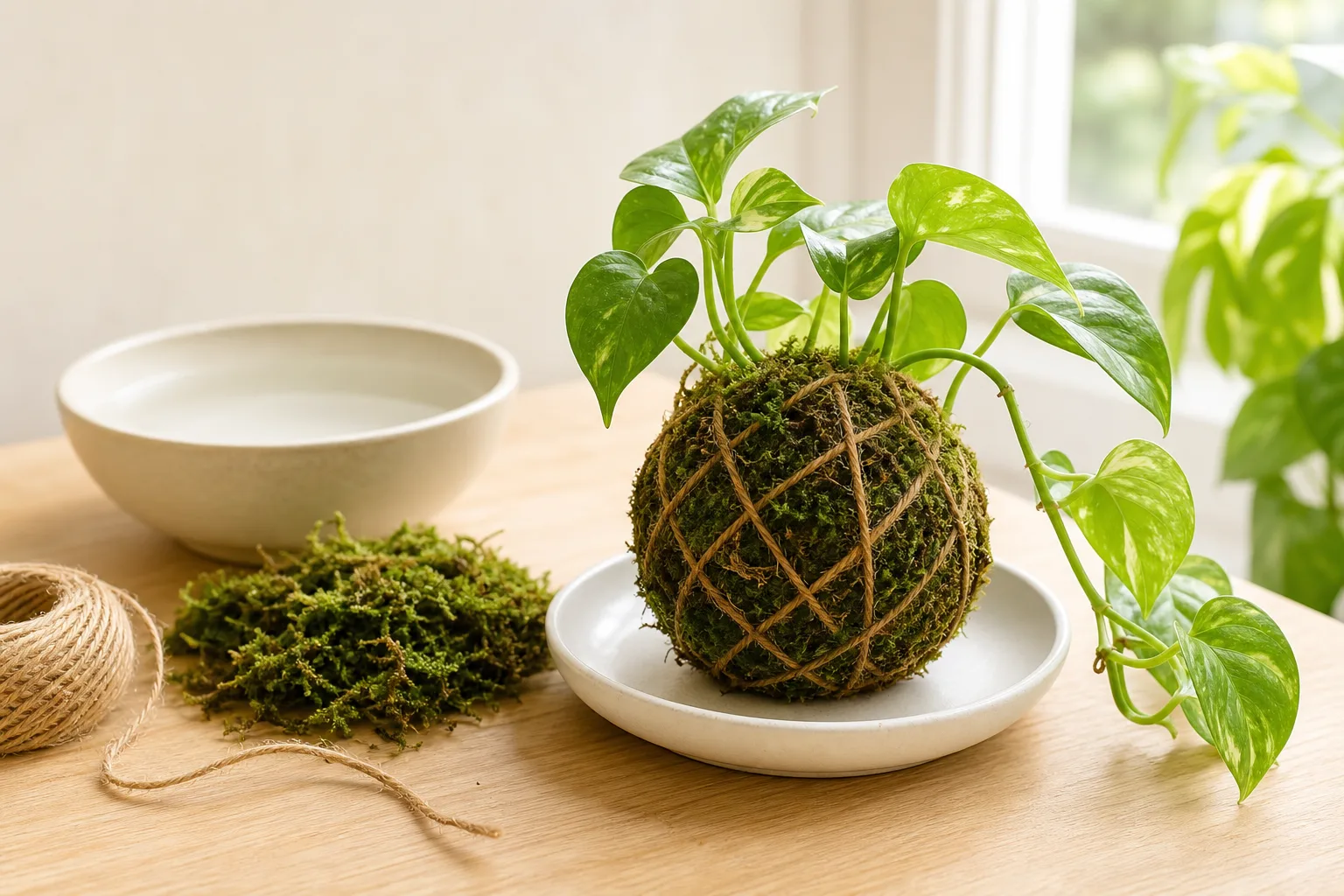
A DIY kokedama turns a small houseplant into a living sculpture: roots in a shaped soil ball, wrapped in moss, held with string. It looks refined, needs no fancy tools, and fails quickly when structure is wrong. The difference is not artistic talent. It is plant choice, a mix that holds shape without suffocating roots, moss damp enough to wrap, and watering based on weight—not a calendar.
Missouri Botanical Garden’s kokedama method stresses dampening sphagnum moss until pliable before wrapping, which keeps the project cleaner and the ball more stable. (Missouri Botanical Garden) This guide covers definition, plant selection, peat-free media options, the classic 70/30 soil ratio, a photographed build sequence, soak watering, troubleshooting, and when to rebuild. For everyday watering habits before you reshape a plant, see How to Water Indoor Plants the Right Way. Plan 45–60 minutes for a first small ball and expect a moderate mess—tray, gloves, and pre-cut string save frustration.
Editorial build note (June 2026): In a LeafyPixels test build, a 4-inch nursery pothos in a 3.5-inch-diameter ball weighed about 185 g dry and 320 g after a 15-minute soak. A hanging hook rated for 0.5 kg felt secure; we still recommend testing over a soft surface before suspending any soaked ball.
What Is Kokedama?
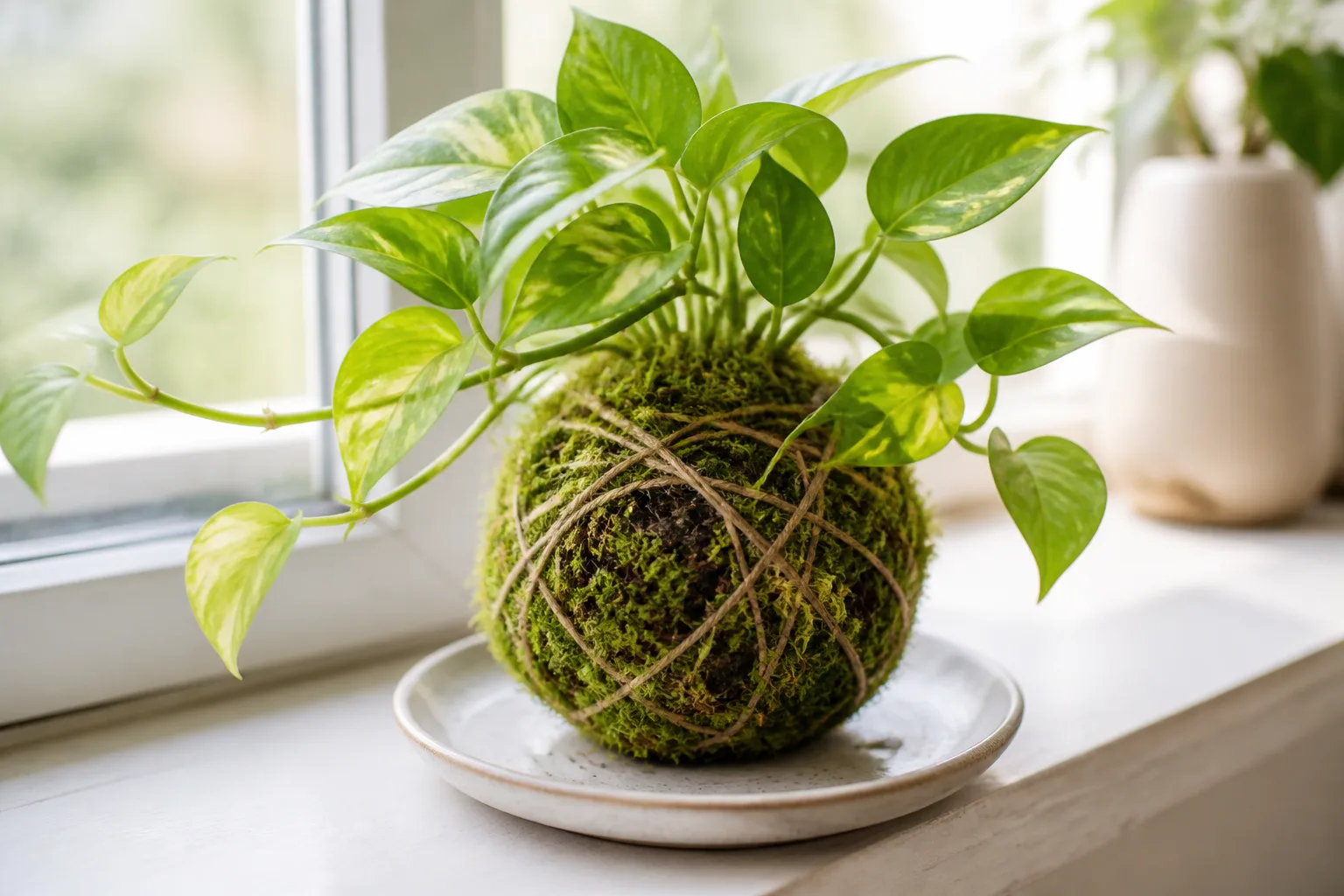
Kokedama is a Japanese display technique where a plant’s root ball is shaped, covered in moss, and secured with string—often translated as “moss ball.” Contemporary kokedama is a bonsai-inspired way to show plants without a visible pot, on a dish, stone, tray, or hanging line. (The Guardian)
Think of it as a potless container garden: the soil ball is the pot, moss is the finish, string is the wall. You still manage light, drainage, humidity, and root growth—just in a more exposed format. If the inner mix is too loose, the ball crumbles. Too dense, roots rot. Too large a plant, watering becomes unpredictable.
Kokedama vs Marimo Moss Ball
Kokedama and marimo are not the same. Kokedama is a planted root ball wrapped in moss, displayed in air. Marimo is an aquatic algae ball kept underwater. Kokedama holds ferns, pothos, peperomia, or orchids; marimo is the living organism in the water. Water kokedama by soaking the moss-wrapped root ball and draining. Marimo needs cool freshwater and water changes. Treating one like the other kills the plant.
When shopping, buy sheet moss, sphagnum, jute, bonsai soil, and houseplant mix—not aquatic marimo balls.
Best Plants for DIY Kokedama
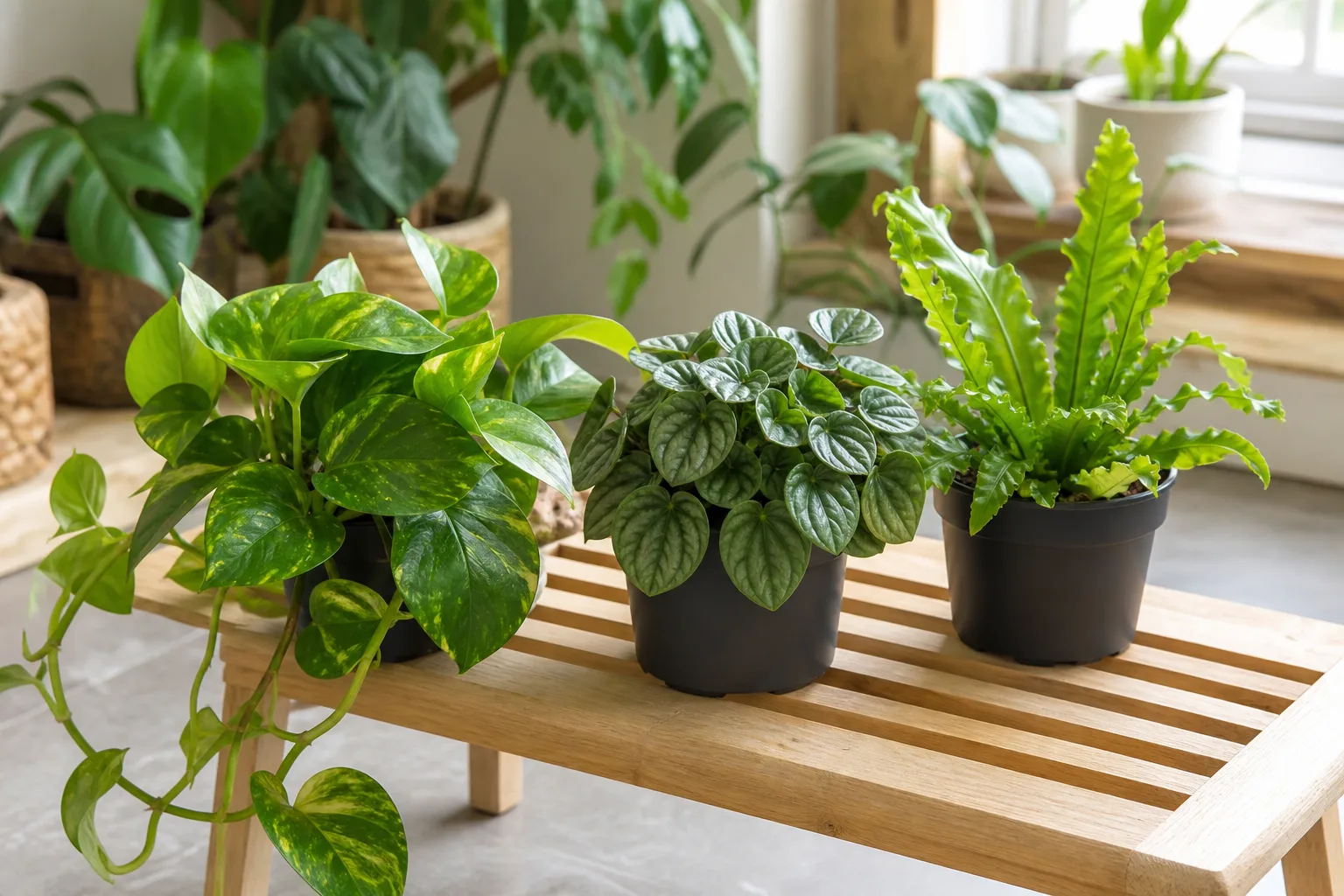
Choose compact, forgiving plants comfortable with moderate moisture. Small root systems make lighter balls and easier wrapping. Match the plant to display: bright windowsill plants tolerate faster drying; desk kokedama need bright indirect light and steadier moisture.
A good rule: pick a plant you already keep alive in a small pot. Kokedama removes the buffer of a normal container.
Beginner-Friendly Plant Choices
| Plant | Why it works | Best display | Difficulty |
|---|---|---|---|
| Pothos | Forgiving, trailing, adaptable | Hanging or dish | Easy |
| Heartleaf philodendron | Similar to pothos | Hanging or shelf | Easy |
| Bird’s nest fern | Moisture-loving, sculptural | Dish or pedestal | Easy–moderate |
| Button fern | Compact, moss-friendly | Dish | Moderate |
| Peperomia | Small roots, stays compact | Desk dish | Easy |
| Fittonia | Colorful, humidity-loving | Dish | Moderate |
| Spider plant pup | Tough, easy small start | Hanging | Easy |
| Mini orchid | Elegant, needs airy mix | Dish | Advanced |
A pothos kokedama is usually the safest first project because pothos tolerates imperfect watering better than many decorative plants. Ferns look traditional but complain fast if the ball dries—open the indoor fern care guide or your species hub (Boston fern, bird’s nest fern) before pairing a thirsty fern with a hanging display. Peperomia suits desks. Fittonia wilts dramatically when dry, so it rewards growers who check weight often. Mini orchids need loose bark-heavy mix—not a dense soil core.
Plants to Avoid
Skip very dry-root plants (most succulents and cacti), aggressive growers, and top-heavy specimens. Large fiddle-leaf figs, monsteras, and palms make heavy, unstable balls. Sensitive-root plants may shock if stripped bare—disturb roots minimally or wait until you are comfortable with repotting houseplants.
Materials You Need
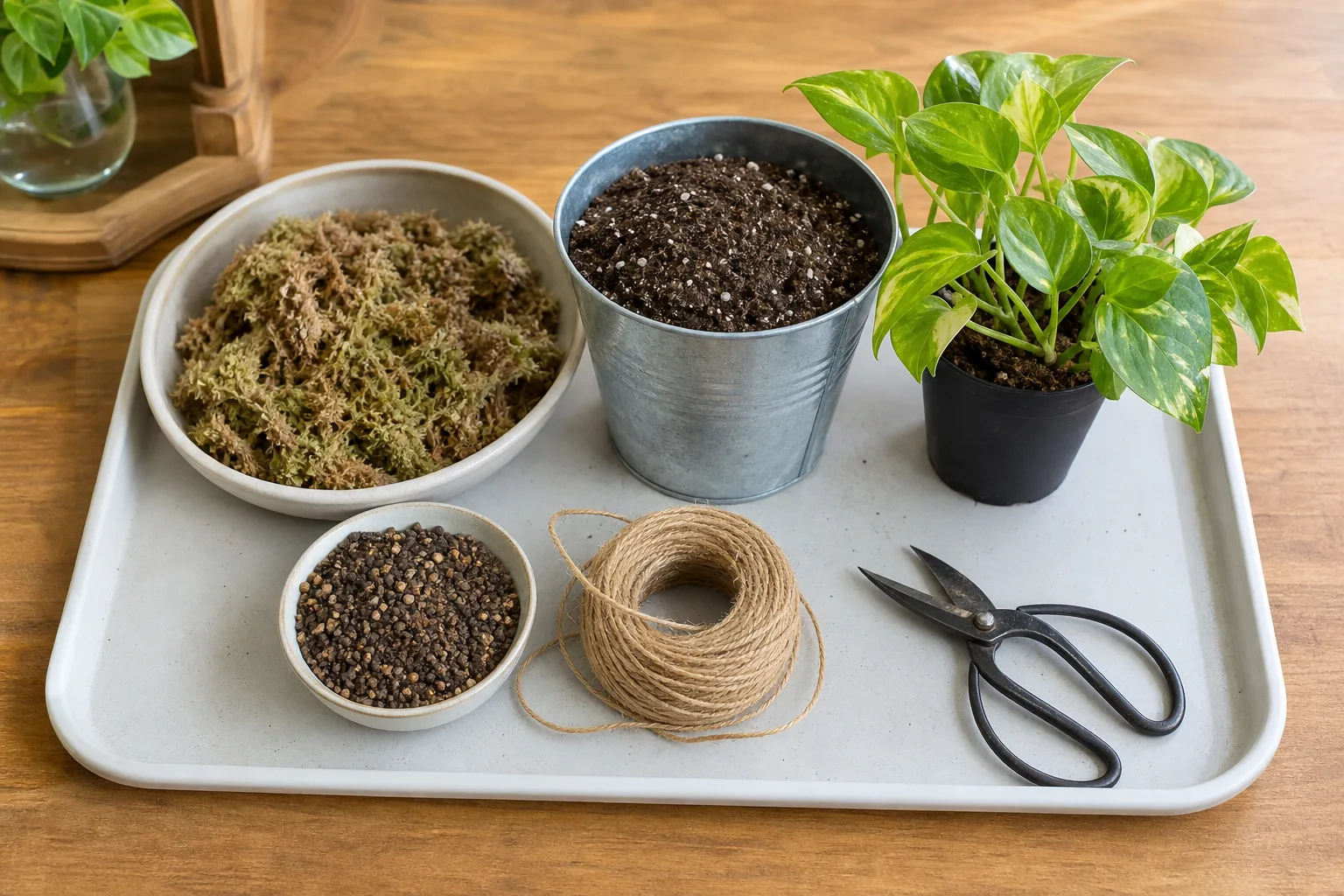
Gather before you start:
- Small plant in a 3–4 inch nursery pot (for a first build)
- Peat-free houseplant potting mix
- Bonsai soil, akadama, or fine pumice (~30% of mix)
- Sheet moss (outer wrap) and optional sphagnum (binding layer)
- Jute or cotton string, scissors
- Bowl of room-temperature water
- Tray, gloves, saucer or shallow dish for display
- Optional: spray bottle for light moss freshening
Illinois Extension lists lightweight potting mix or peat moss, akadama or bonsai soil, moss, string, scissors, and water, with a 70% potting mix / 30% bonsai soil blend moistened until it presses into a firm ball. (Illinois Extension) Use that ratio as a starting point, not a law for every species.
Sphagnum is fibrous and water-retentive around roots. Sheet moss is usually the decorative outer layer. Jute is visible and easy to tension; fishing line is nearly invisible but can cut moss if overtightened.
Sustainable Moss and Peat-Free Choices
Traditional recipes lean on peat because it binds and holds water. The RHS notes peat extraction damages peatland habitats, releases carbon, and increases flood risk. (RHS) For craft-scale projects, peat-free houseplant mix plus coir, bonsai soil, akadama, fine bark, or perlite is a responsible default.
Coir holds water well but holds fewer nutrients than some alternatives; (RHS) long-term kokedama may need lighter feeding. Buy moss from reputable suppliers; avoid wild harvesting. Check whether moss is dyed, preserved, or living—preserved moss will not grow, and dye can bleed when soaked.
The Best Soil Mix for DIY Kokedama
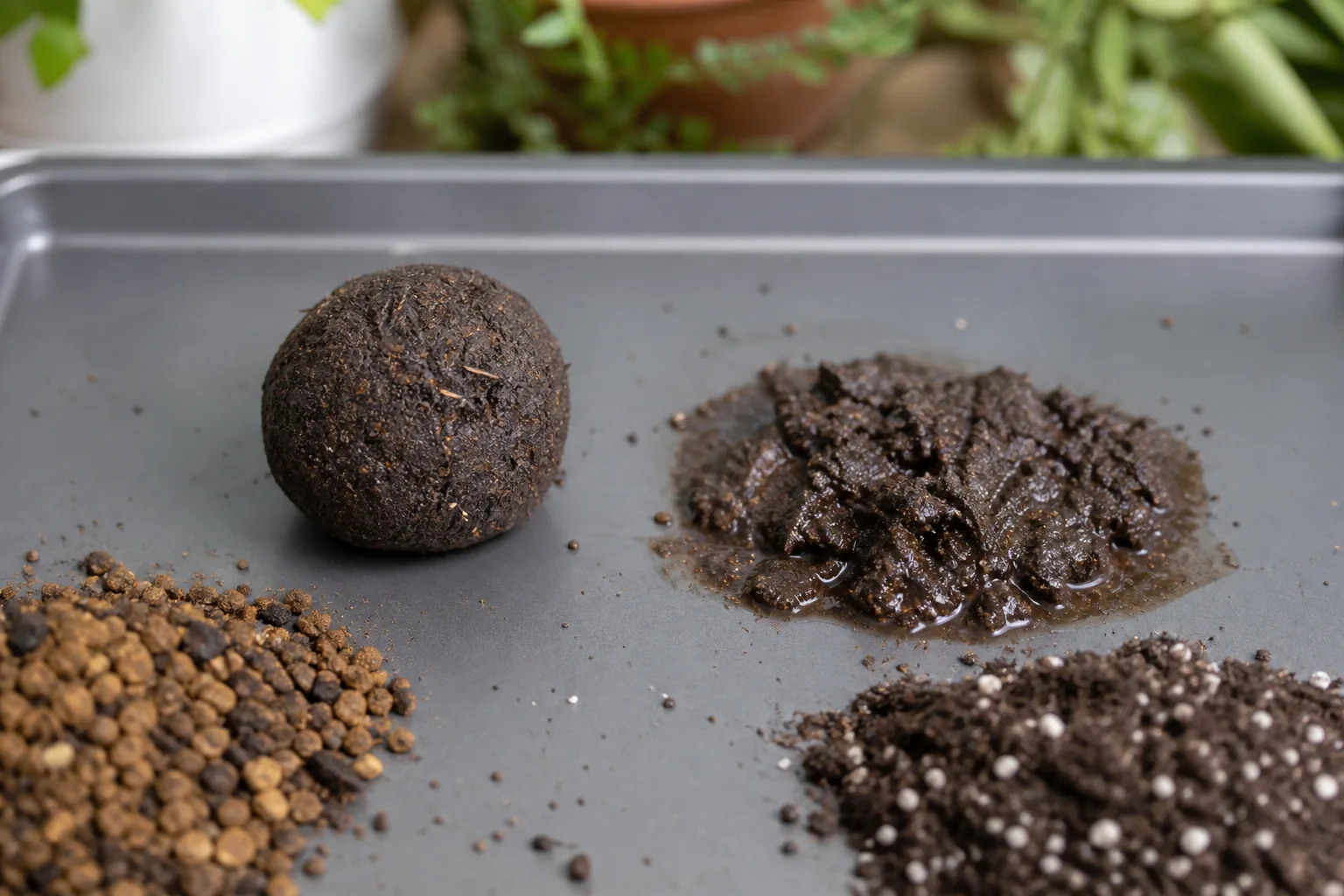
Good kokedama mix must hold together, hold water, and let roots breathe. The classic beginner formula is 70% potting mix and 30% bonsai soil or akadama, matching Illinois Extension’s fact sheet. (Illinois Extension) Squeeze test: damp mix should form a ball under light pressure—not crack dry, not smear like paste, not drip when squeezed.
Err airy over swampy. Moss slows drying; a dense core plus frequent soaking is a common rot path.
Standard Soil Ratio
- 2 parts peat-free houseplant mix
- 1 part bonsai soil, akadama, or fine pumice
- Optional: small handful of damp chopped sphagnum for binding
- Water added slowly until shape holds
Let mixed soil rest 5–10 minutes so moisture spreads before shaping. Do not pre-soak into mud.
Soil Adjustments by Plant Type
Ferns and fittonia: slightly more coir or sphagnum; display on a dish, not a hot breezy hang—see houseplant humidity if leaf edges crisp. Pothos, philodendron, spider plant pups: standard mix; add perlite if the ball stays wet too long. Orchids: loose bark-heavy mix with minimal fine medium—specialized variation, not a beginner default.
Step-by-Step: How to Make DIY Kokedama
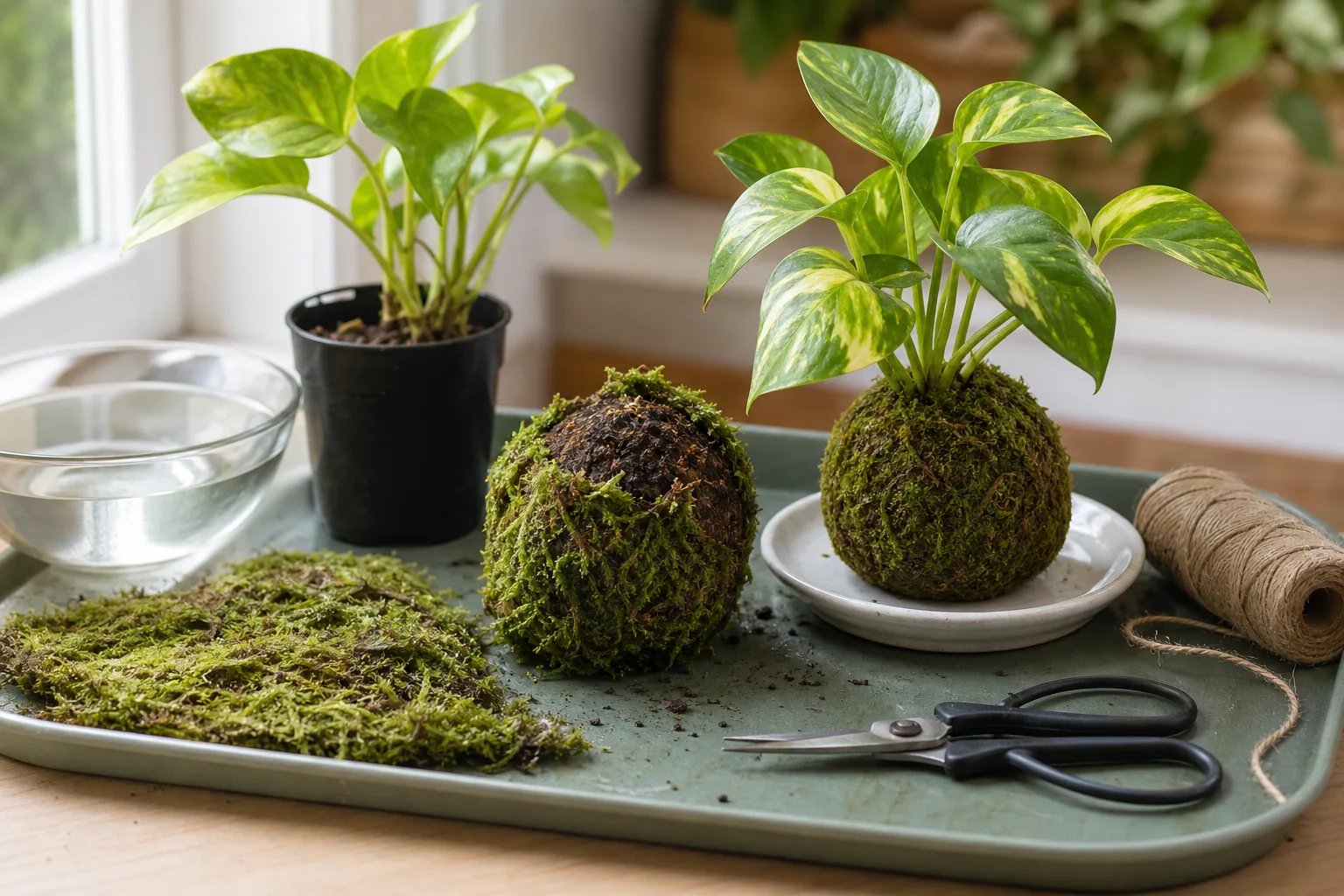
Work over a tray. Pre-cut string, soak moss, mix soil, then handle the plant.
Moss prep: Soak dried sheet or sphagnum moss until pliable (Illinois Extension suggests up to an hour for very dry moss; MOBOT uses warm water for sphagnum). Squeeze out excess—cracking moss is too dry; dripping moss makes wrapping slippery. (Missouri Botanical Garden)
Choose a healthy plant; water lightly a few hours ahead if soil is bone dry.
Prepare the Plant
Remove from pot and inspect roots. Loosen only the outer circling layer—keep some old soil to reduce shock. Trim dead leaves and mushy roots. Severe rot means repot and recover first, not kokedama today.
Center the root mass in the future ball. Trailing pothos can lean; top-heavy ferns should sit straighter.
Build the Soil Ball
Mix until evenly damp. Press a ball slightly larger than the root mass—orange-sized for small starters, grapefruit for larger. Make a hole, insert roots, and close—or split the ball in two, sandwich roots, and press halves together. (Illinois Extension) Press firmly without packing concrete. Optional thin sphagnum layer before outer moss; keep the crown above the soil line.
Wrap the Moss and Tie the String
Lay sheet moss green-side down, center the ball, pull moss up, patch gaps. Tie a starter knot, then wrap equator, diagonals, vertical passes—like a parcel with no flat sides. Snug, not slicing. Lift with one hand to test security. For hanging, add a dedicated loop; test wet weight over a soft surface. Beginners: start on a dish.
Kokedama Care After You Make It
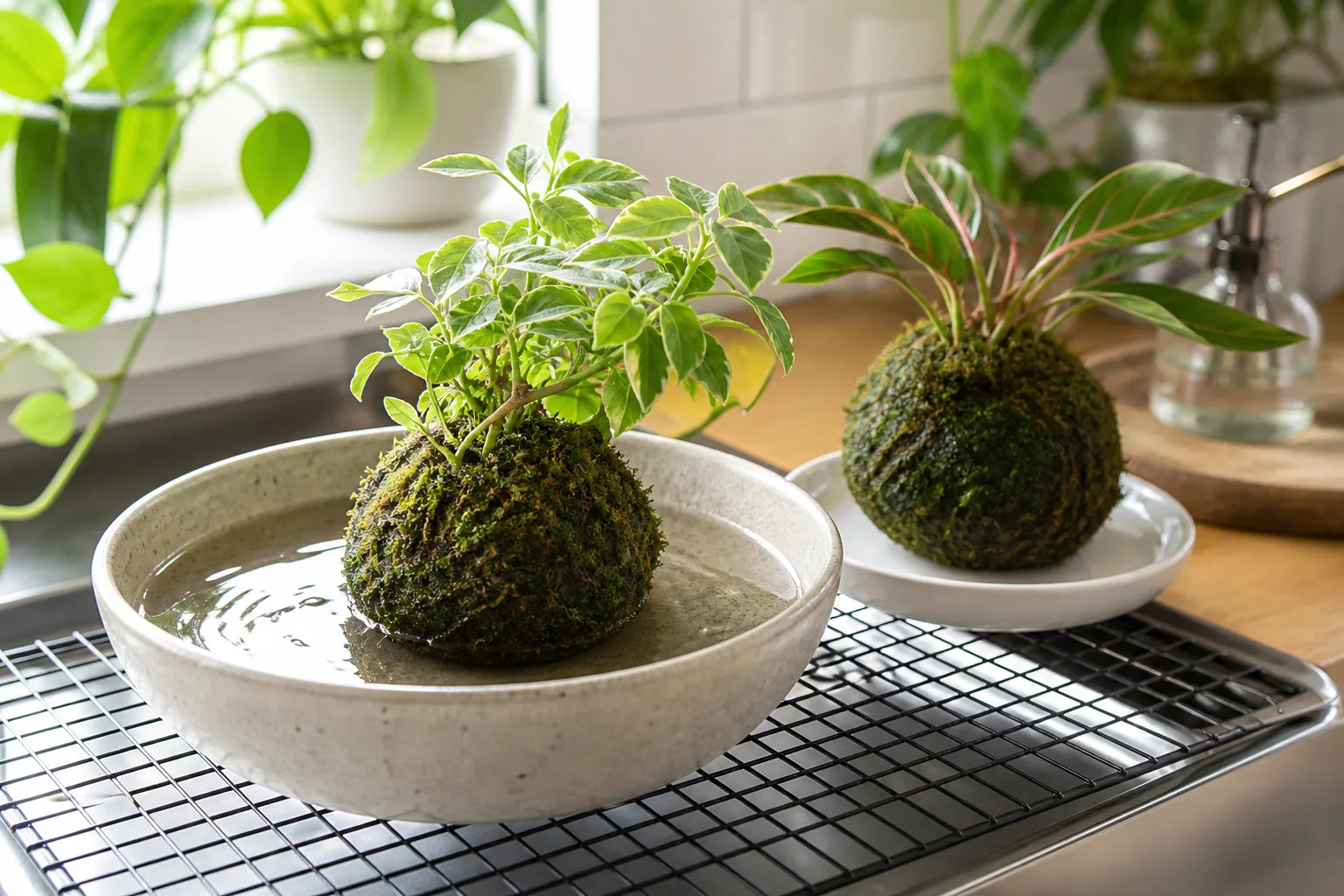
Week one is observation: bright indirect light, no fertilizer, no harsh sun or HVAC blasts. Minor droop after root handling is common on ferns and fittonia—check weight before soaking again. Moss color may fade indoors even when the plant is fine.
Watering the Right Way
Use the soak method: room-temperature water, submerge the ball plant-side up until hydrated. Illinois Extension recommends 15–20 minutes for many balls; their blog also allows 10–25 minutes or until bubbles stop. (Illinois Extension) Drain on a rack or colander; do not drip on wood or electronics.
| Ball size (approx.) | Typical soak time | Weight cue |
|---|---|---|
| Small (3–3.5 in / 8–9 cm) | 10–15 min | Light when dry; ~1.7× dry weight when soaked |
| Medium (4–5 in / 10–12 cm) | 15–20 min | Finger dry near crown + light feel |
| Large (5+ in / 13+ cm) | 20–25 min | Heavier; test hook before hanging |
Water when the ball is noticeably lighter and the plant shows normal thirst—not on a fixed calendar. Winter heating and summer AC change drying speed.
Light, Humidity, and Feeding
Bright indirect light suits most indoor kokedama. Direct sun dries moss fast. Low light slows growth and keeps cores wet longer. Misting freshens moss but rarely hydrates the root ball—soak when the plant needs water, as explained in indoor plant watering basics. Feed lightly in active growth with diluted liquid fertilizer; peat-free mixes may need more attention over months. (RHS) Rebuild when roots outgrow the moss, drying is extreme, or decline persists despite good care—many kokedama are medium-term displays, not permanent pots. When you refresh, treat it like a specialized repotting session with a new wrap instead of a larger pot.
Troubleshooting and Styling
Falls apart: drier mix, more bonsai soil or sphagnum binder, more wrap passes. Wilts after build: check weight—soak if dry; if wet and heavy, give bright indirect light and time; yellow soft stems suggest rot. Brown moss: often cosmetic on dried sheet moss; judge by leaves and roots. Mold: improve airflow, let surface dry slightly; sour smell or collapse means unwrap and inspect roots.
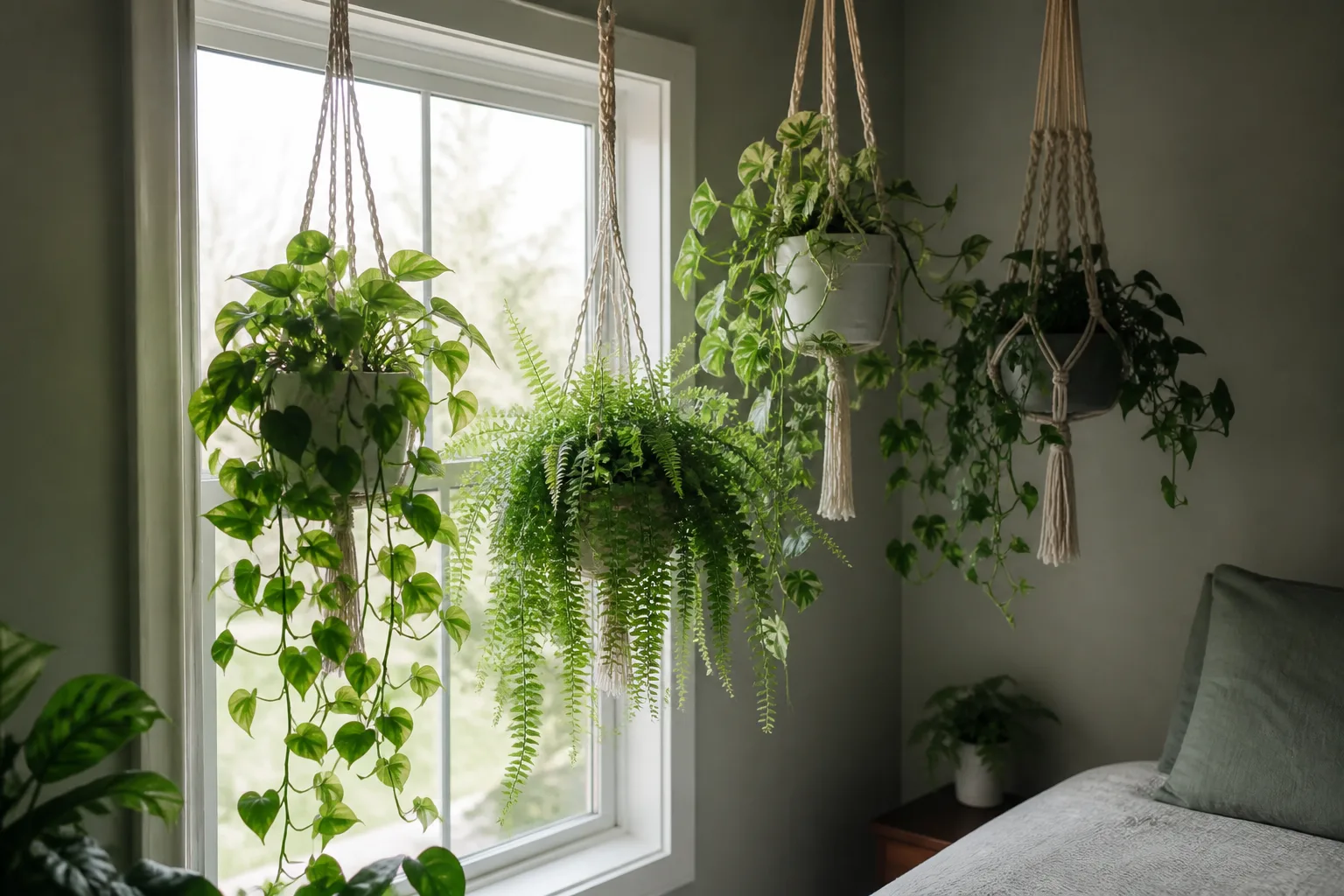
Dish vs hang: dishes ease watering, drainage checks, and rotation. Hanging dries all sides faster and doubles weight when soaked. Architectural Digest notes hanging is less practical for many homes while dishes and stones simplify care. (Architectural Digest) Test hook load after soaking; keep away from walkways and afternoon sun on glass.
Group kokedama with similar light and water needs—do not pair a thirsty fern with a dry-tolerant peperomia in one routine.
Related guides
This page is the site’s kokedama build reference. Moss-forward DIY siblings:
- DIY moss pole for climbing houseplants — another sphagnum-and-string project for upright climbers instead of soil balls
- How to create a DIY terrarium — closed or open glass gardens; pairs well with fittonia and small ferns
- Houseplant humidity guide — when misting, grouping, or a pebble tray helps fern and fittonia kokedama
- Pothos care guide — deeper species care after your first moss ball
Conclusion
A lasting DIY kokedama is structure plus observation: forgiving plant, peat-free mix that holds shape, responsibly sourced moss, even string tension, and soak-and-drain watering by weight. Start small on a dish with pothos or peperomia, note dry and wet weights once, and rebuild when roots demand more space—the craft stays flexible once those basics are automatic.