Peperomia Plant Care: Light, Water & Tips
Peperomia spp.
Peperomia needs bright to medium indirect light, watering every 10–14 days when soil is completely dry, fast-draining mix, and minimal fertilising. Non-toxic to pets.
Peperomia Plant Care: Light, Water & Tips
Start with wateringThe most common care mistake for PeperomiaWatering guide →Peperomia care essentials
Light
medium to bright indirect light, low indirect light
Water
Every 10–14 days in summer - allow soil to dry completely. Every 3–4 weeks in winter. Semi-succulent leaves store water - do not water before soil is dry.
Soil
50 % potting compost + 50 % perlite. Fast-draining - essential. pH 6.0–7.0.
Humidity
40–50%
Temperature
18–27°C (65–80°F)
Fertilizer
Feed lightly during active growth. Diluted balanced liquid fertilizer at half strength and stop if the plant is stressed, newly repotted, or not actively growing.
About Peperomia
Peperomia has a upright growth habit.
| Detail | Information |
|---|---|
| Growth habit | Upright |
| Scientific name | Peperomia spp. |
Peperomia Plant Care: Light, Water & Tips
What Is Peperomia?
Peperomia is one of the most useful houseplant genera for people who want compact, forgiving greenery without committing to a full succulent collection or a humidity-hungry tropical. The genus Peperomia spp. includes more than 1,000 species - a scale that sounds intimidating until you realize most nursery pots fall into a handful of familiar types with overlapping care. What they share matters more than what separates them: small stature, ornamental foliage, semi-succulent water storage, and tolerance of the imperfect conditions found in real homes.
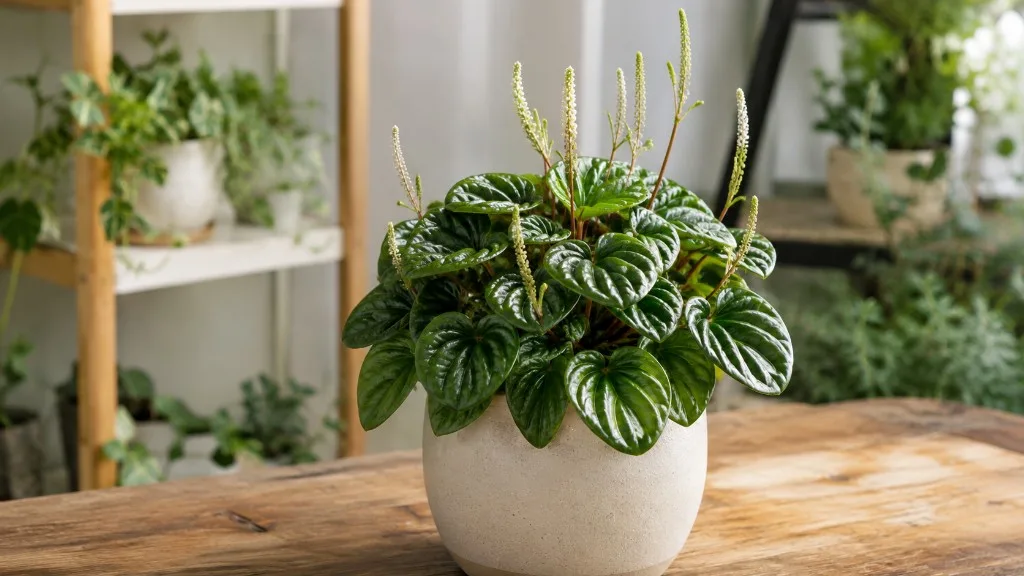
Indoors, most peperomias stay 6 to 12 inches (15 to 30 cm) tall and wide, forming tidy mounds, rosettes, or short trailing stems depending on species. Growth is moderate in bright, warm conditions and nearly stalls in cool, dim winter rooms. Many produce slender rat-tail flower spikes in spring or summer - greenish, white, or brown inflorescences that look nothing like showy blooms and are best treated as a botanical curiosity rather than a reason to buy the plant. The leaves are the point: glossy ovals, deeply corrugated ripples, silver stripes, burgundy undersides, and textures thick enough to feel almost waxy between your fingers.
If you are deciding whether peperomia fits your space, the honest summary is this: peperomia rewards Peperomia light guide, well-draining soil, and patience with watering - and it punishes soggy roots, cold drafts, and calendar-based watering. It is easier than a calathea, more interesting than a pothos for small desks and shelves, and one of the few large, popular genera the ASPCA lists as non-toxic to cats and dogs. That last point matters enormously in pet households, though it does not mean you should encourage chewing.
Botanical Background and the Pepper Family Connection
Peperomia belongs to Piperaceae - the pepper family - making it a distant relative of black pepper (Piper nigrum), not of rubber trees or succulents despite some common names. The family connection explains a few care patterns that confuse beginners: shallow, sensitive roots, preference for ** airy, fast-draining mix**, and intolerance of standing water even when the plant comes from humid forests.
Many peperomias are epiphytes or lithophytes in nature - they grow on trees or rocks for support without parasitizing the host. Their roots evolved to grab moisture and oxygen from thin organic layers, not to sit in wet potting soil for days. That biology is why a peperomia in heavy, peat-compacted indoor mix often fails while the same plant thrives in a terrarium or a small pot with extra perlite. Clemson HGIC notes that peperomias can remain in the same container for several years when drainage is good, which aligns with their modest root systems and slow Peperomia repotting guide needs compared with fast colonizers like pothos.
The genus is native to Central and South America, the Caribbean, and parts of Mexico, with species adapted to tropical forest floors and canopy edges where light is filtered and rainfall is intermittent. Indoors, you are approximating dappled bright conditions and dry-down cycles, not deep shade and not desert drought. Peperomias are sometimes called radiator plants because early twentieth-century growers discovered they thrived on warm, bright windowsills above steam heat - a useful mental model even if your home uses forced air instead of radiators.
Are peperomias succulents? Not technically, but many species behave like semi-succulents: they store water in thickened leaves and stems and tolerate missed waterings better than true tropical foliage plants. Thick-leaved types such as Peperomia obtusifolia lean hard into drought tolerance. Thinner-leaved types such as Peperomia argyreia (watermelon peperomia) and Peperomia caperata (ripple peperomia) still prefer drying between drinks but show stress faster if you let them go bone dry for weeks. Treat “semi-succulent” as a watering philosophy, not a license to ignore the plant entirely.
Popular Species at a Glance
Commerce concentrates on a few species that cover most of what you will encounter at garden centers and online shops. Knowing which one you have fine-tunes watering slightly; ignoring species differences still gets you most of the way there because the genus-wide rules - bright indirect light, drainage, dry-between-waterings - apply broadly.
Peperomia obtusifolia (baby rubber plant) is the workhorse. Upright stems carry thick, glossy, rounded leaves in solid green or variegated cream-and-green forms. NC State Extension describes it as succulent-like in leaf thickness, with low water needs and an erect, bushy habit to about 2 feet (60 cm) in ideal conditions, though many indoor specimens stay shorter. This is the most forgiving peperomia for beginners and offices with medium light. It roots readily from stem cuttings in water or soil.
Peperomia caperata (ripple peperomia, emerald ripple pepper) forms a compact rosette of deeply corrugated leaves in green, silver, or burgundy-red, including popular cultivars such as ‘Rosso’ with red undersides. Leaves feel thinner than obtusifolia and the plant stays 8 to 12 inches (20 to 30 cm) wide in most pots. It prefers the top inch of mix to dry before watering and can drop leaves if kept too wet or too dry for extended periods. The texture is the selling point - rippled surfaces catch light in a way flat leaves cannot.
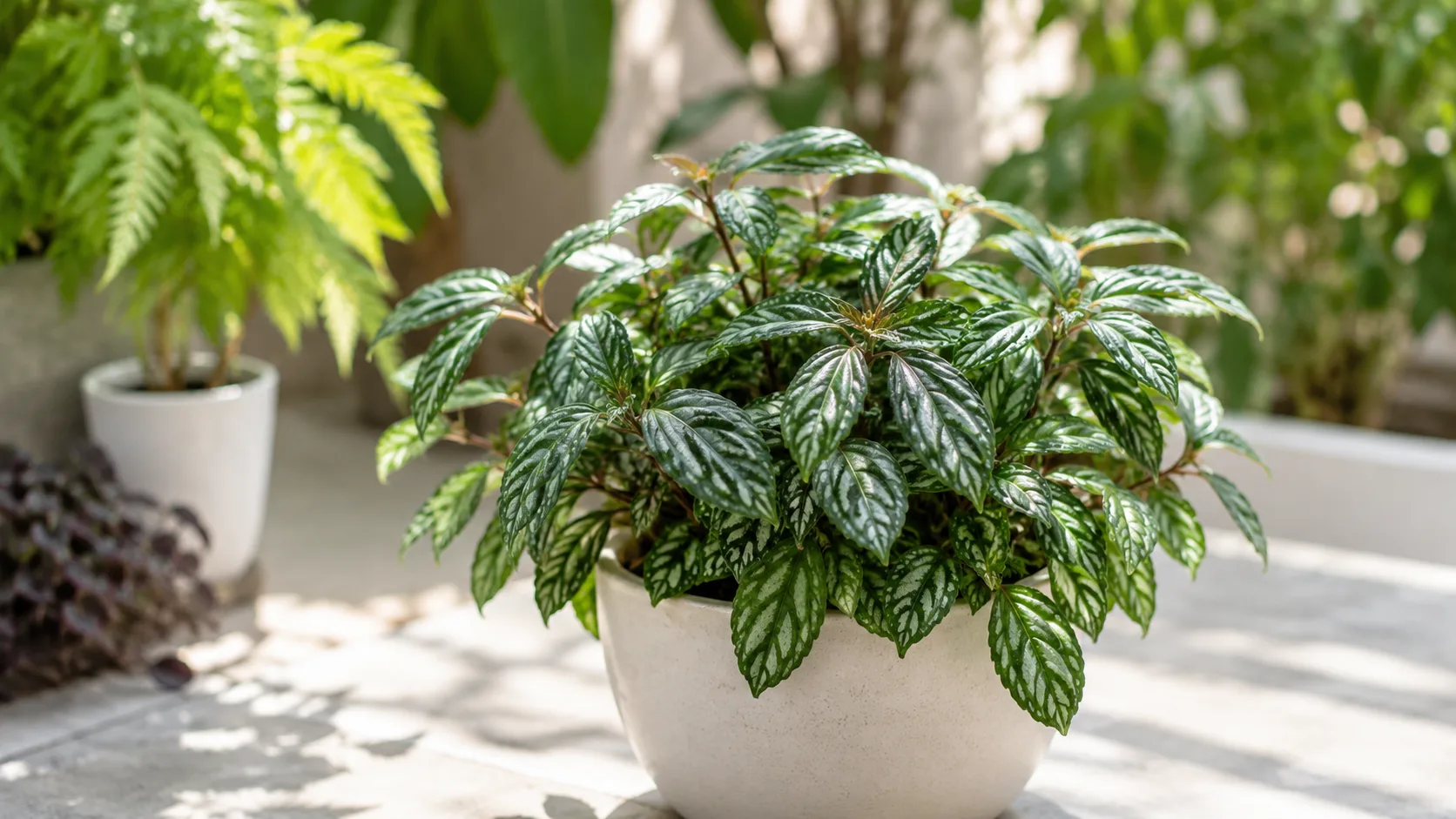
Peperomia argyreia (watermelon peperomia) is the pattern plant. Round leaves carry silver and dark green stripes resembling watermelon rind, on pinkish petioles that make the whole plant read as designed rather than random. It stays 8 inches (20 cm) or less, making it ideal for terrariums and small shelves. Variegation needs brighter indirect light than solid green types to stay crisp; dim rooms produce smaller leaves and weaker striping. Propagation is often done by leaf petiole cuttings, a method that feels magical the first time a new plantlet emerges from a severed leaf.
Other worthwhile species - Peperomia clusiifolia with red-edged leaves, trailing Peperomia tetraphylla, and collector favorites like Peperomia prostrata (string of turtles) - follow the same core playbook with minor adjustments. When your tag is missing, use leaf thickness and growth habit as your guide: thicker leaves and upright stems mean more drought tolerance; thin rippled or striped leaves mean check moisture more often and avoid extended dry spells.
Best Growing Conditions for Peperomia
Peperomia performs best when your room approximates a warm forest edge: stable temperatures, filtered light, airy soil, and time to dry between waterings. The four variables that decide almost every outcome are light, water, soil, and temperature. Align those and feeding, repotting, and propagation become routine maintenance. Misalign one - especially water or light - and the plant declines in ways that look mysterious until you inspect roots and placement.
Light Requirements
Peperomia needs bright, indirect light for compact growth and strong leaf color. A practical placement is 1 to 2 meters (3 to 6 feet) from a south- or west-facing window, directly in an east-facing window, or near a north-facing window in a bright room. The Old Farmer’s Almanac recommends east- or west-facing exposures or several feet back from brighter south windows - positions that deliver strong ambient daylight without the leaf-scorching intensity of midday sun on the glass.
Peperomia tolerates medium light better than many non-succulent houseplants, which is why it survives in offices and rooms far from windows. Tolerance is not the same as preference: in low light, growth slows, internodes stretch, variegation fades, and the plant becomes more vulnerable to overwatering because the pot dries slowly. If new stems look leggy and leaves shrink, move the plant closer to the window or add a full-spectrum grow light on a 12- to 14-hour timer, positioned 12 to 18 inches (30 to 45 cm) above the foliage.
Direct sun is the main light mistake. Two to three hours of harsh afternoon sun can bleach or scorch variegated and rippled leaves, showing up as crisp brown patches or washed-out color before you notice wilting. Gentle morning sun through east glass is usually fine. Acclimate any plant moved from a dim shop shelf to a bright sill over one to two weeks to avoid shock. Rotate the pot weekly so rosettes and upright types do not lean permanently toward the light source.
Temperature and Humidity
Peperomia prefers stable indoor temperatures between 65 and 80°F (18 and 27°C) during active growth. The RHS cites an ideal range of 18 to 30°C (65 to 86°F) in bright filtered light. Most homes already sit inside that band. Problem spots are predictable: cold window sills in winter, direct air from AC vents, and radiators that blast dry heat within inches of the foliage. Sudden cold drafts below about 50°F (10°C) can cause leaf drop on sensitive specimens.
Humidity is helpful but secondary compared with light and watering for most species. Peperomias evolved in humid forests yet their semi-succulent leaves buffer dry air better than true ferns or calatheas. Average home humidity in the 40 to 50% range is acceptable. Very dry winter air - below 30% - can encourage spider mites and brown leaf tips, especially on thinner-leaved types. Grouping plants, using a pebble tray with the pot elevated above the water line, or running a small humidifier nearby all outperform misting, which raises humidity briefly and can leave wet foliage that invites fungal spotting if airflow is poor.
Terrariums and steamy bathrooms suit peperomias beautifully when light is adequate - The Old Farmer’s Almanac specifically mentions terrarium culture - but enclosed glass also slows drying, so adjust watering downward compared with open pots in the same room.
Soil and Drainage
Use a light, well-draining houseplant or cactus-style potting mix amended with extra aeration. Clemson HGIC recommends well-drained houseplant or cactus potting mix; the principle matters more than a branded bag. A reliable home blend is two parts quality peat-free or peat-based houseplant mix, one part perlite, and one part orchid bark or pumice - increase perlite for obtusifolia in bright, warm rooms, or add a little extra organic matter for caperata if your home runs very dry and pots shrink quickly.
Target neutral to slightly acidic pH around 6.0 to 7.0. Hobbyists rarely need to meter pH for peperomia; the bigger practical enemies are compaction, stale mix, and salt buildup from hard tap water and over-fertilizing. Repot into fresh, airy mix every two to three years even if the plant is not root-bound, because broken-down peat holds water like a sponge and suffocates epiphytic roots.
Always use a container with a drainage hole. Peperomia is not a candidate for permanent planting in sealed decorative pots without a nursery pot inside. If you use a cachepot, empty runoff after every watering - roots sitting in stale water for 48 hours cause more failures than any pest.
How to Water Peperomia
The general rule for peperomia is let the potting mix dry substantially between waterings. More precisely: water when the top 1 to 2 inches (2.5 to 5 cm) of mix feel dry and the pot has lost noticeable weight. Thick-leaved species such as P. obtusifolia tolerate - and prefer - approaching near-complete dryness in the root zone before the next soak. Thinner-leaved P. argyreia and P. caperata do better when you water slightly earlier, as soon as the upper layer is dry and the middle is barely damp, because extended drought can trigger leaf drop even though the plant is not a heavy drinker.
In warm, bright summer conditions, many peperomias need water roughly every 7 to 14 days; in cooler, dimmer winter months, every 2 to 4 weeks is common for the same pot. Your interval depends on pot size, mix composition, light, humidity, and species, so treat calendar numbers as reminders to check, not commands to pour.
Water thoroughly until a small amount runs from the drainage hole, then empty the saucer. Peperomia roots are small and fragile; shallow sips that wet only the surface train weak roots and leave the center dry. A full soak followed by a dry-down mimics forest rain cycles far better than daily teaspoons.
Peperomia watering guide for Semi-Succulent Leaves
During active growth - typically spring through early fall when new leaves appear - peperomia uses water steadily but never greedily. The goal is a dry-down cycle, not constant moisture. Check with a finger, bamboo skewer, or moisture meter at depth before every watering. If the skewer pulls up clean and dry from the middle of the pot and the container feels light, it is time to water. If the surface is dry but the center is still damp, wait.
Watch the leaves as a secondary signal. Slightly soft, flexible leaves on obtusifolia often mean thirst; firm, turgid leaves mean the plant is hydrated. Watermelon and ripple peperomias may curl or cup slightly when dry and flatten after watering. Do not rely on leaves alone - a rotting plant can wilt while the mix stays wet. Pair visual cues with a physical moisture check every time.
After purchase, expect a short acclimation period. Greenhouse peperomias often arrive in peat-heavy mix that dries on a different schedule than your home. Do not increase watering frequency to compensate for transplant shock unless the pot is genuinely dry; stabilize light first, then refine the interval.
Seasonal Adjustments
In cooler, dimmer months, growth slows and evaporation drops. The same summer rhythm that kept the plant healthy will overwater it in winter. Stretch intervals, skip fertilizer, and check moisture more carefully before each drink. The most common winter failure is treating a semi-succulent like a thirsty fern because the heating is on - warm air plus low light still means slow root activity and slow drying.
If you move plants outdoors for summer, acclimate them to deep shade or dappled light after nights stay consistently above 60°F (15°C), as Clemson HGIC recommends. Outdoor pots often dry faster than indoor ones; check daily in heat waves. Bring plants back inside before nights drop toward 50°F (10°C) to avoid cold shock.
Common Watering Mistakes
Overwatering kills more peperomias than any other single mistake. Soggy mix causes root rot on Peperomia, followed by yellow leaves, mushy stems, and sudden leaf drop. The plant looks thirsty; beginners water again and accelerate the collapse. Always verify moisture at depth before reacting to drooping foliage.
Other frequent errors include watering on a fixed schedule without checking the pot, letting the plant sit in a full saucer, and using heavy, water-retentive mix that never dries in low light. Underwatering is less common but still happens - especially on thin-leaved species left dry so long that leaves shrivel and drop. The fix is consistent checking, not a rigid calendar.
Peperomias can be sensitive to fluoride and chlorine in tap water, which may cause brown leaf tips over time according to the RHS. Rainwater, distilled water, or tap water left out overnight are reasonable alternatives if tips persist despite correct watering. Tips already browned will not revert; judge success by new growth.
How to Feed Peperomia
Peperomia is a light feeder. These are small plants with modest root systems; they do not need aggressive fertilizing to look good. During active growth, a balanced water-soluble houseplant fertilizer - such as 10-10-10 or 20-20-20 - diluted to one-quarter to one-half of the label rate is sufficient. Apply to already-moist soil every four to six weeks from spring through early fall, or monthly at half strength if growth is vigorous and light is strong.
Hold fertilizer entirely during winter dormancy, after repotting until new growth appears, and while the plant recovers from root rot or pest damage. Overfeeding produces salt crust on the soil surface and brown leaf margins that mimic drought stress. If margins crisp despite good moisture, flush the pot with plain water at two to three times the pot volume and pause feeding for six to eight weeks.
Slow-release fertilizer mixed into potting soil at repotting can replace liquid feeding for a season, but go lightly - epiphytic roots burn easily when salt concentrations spike in a small root zone. When in doubt, underfeed rather than overfeed; peperomia looks better slightly hungry than salt-scorched.
Repotting and Root Health
Repot peperomia roughly every two to three years, or when roots circle drainage holes, water runs straight through without soaking in, or the plant dries out within a day of watering despite a previously normal interval. Many peperomias happy in the same pot for years when mix stays airy - repot on performance signals, not calendar anxiety alone.
The best timing is early spring as new growth starts. Choose a pot only one size larger - typically 1 inch (2.5 cm) wider - because oversized containers hold excess wet mix around small root systems and invite rot. Use fresh, well-draining mix, maintain the same planting depth, and water lightly for the first week while cut roots heal. Keep the plant in bright indirect light and withhold fertilizer until you see new leaves.
Signs It Is Time to Repot
Physical signs include roots emerging from drainage holes, a plant that wilts within hours despite recent watering (often indicating a root-bound or degraded mix problem), and mix that has broken down into fine mud that stays wet for a week after watering. Performance signs include stalled growth for months during warm, bright weather despite adequate light, or chronic tip burn that persists after correcting watering - sometimes indicating mineral-loaded old mix.
Do not repot a plant actively collapsing from overwatering until you inspect roots, trim any brown mushy tissue, and let the root zone dry slightly. Moving a failing root ball into fresh mix without fixing moisture habits rarely saves peperomia.
Propagation Methods for Peperomia
Peperomia is one of the easiest houseplants to propagate at home, which partly explains its popularity. Method choice depends on species and growth habit: upright types root from stem cuttings; watermelon peperomia and similar types also propagate from leaf petiole cuttings; clumping rosettes sometimes divide cleanly at repotting.
For stem cuttings on obtusifolia and similar upright species, take a 4- to 6-inch (10 to 15 cm) cutting just below a node with clean shears. Remove lower leaves, leaving one or two pairs at the top. Root in water - change water every few days - or directly in moist, well-draining mix. Clemson HGIC notes that obtusifolia roots readily in water; transplant to soil once roots reach 1 to 2 inches (2.5 to 5 cm). Keep cuttings in bright indirect light and warm temperatures near 70°F (21°C) until new growth confirms establishment.
For watermelon peperomia, cut a healthy leaf with petiole attached, insert the petiole into moist mix or water, and wait patiently - new plantlets emerge from the cut base over several weeks. A clear plastic bag or dome raises humidity; vent briefly every few days to prevent mold. Leaf sections without petiole are unreliable for Peperomia overview; include the stem that connected the leaf to the main plant.
Do not propagate stressed, diseased, or pest-infested plants. Cuttings inherit the parent’s problems, and weak material fails at high rates. Address the parent plant’s environment first, then propagate from firm, healthy growth.
Common Peperomia Problems
Most peperomia problems are environmental, not exotic diseases. The plant telegraphs trouble through leaf color, texture, and drop timing long before the whole specimen collapses. The useful diagnostic order is moisture, then light, then pests - not the other way around.
Yellow Leaves, Drooping, and Pests
Yellow leaves most often mean overwatering or root rot, especially if leaves are soft and the mix smells sour or stays wet for days. Underwatering can yellow lower leaves too, but they are usually crisp and dry rather than mushy, and the pot feels light. Low light yellows and stretches growth simultaneously. A single yellow lower leaf on an otherwise healthy plant is often normal aging - remove it and monitor new growth rather than overcorrecting every variable at once.
Sudden leaf drop after watering usually points to cold shock, draft exposure, or root damage from soggy mix, not a mysterious peperomia mood swing. Drooping with dry mix means water; drooping with wet mix means root stress - stop watering, inspect roots, and repot into fresh mix only after trimming rot.
Brown leaf tips commonly trace to fluoride in tap water, salt buildup from fertilizer, or very low humidity. Flush the pot if salts are suspected and consider alternate water sources. Curling leaves may indicate thirst, direct sun stress, or occasionally pests - check the underside with magnification.
Watch for spider mites in dry indoor air - fine webbing and stippled leaves are the tell. Mealybugs appear as white cottony clusters in leaf axils. Scale looks like immobile brown bumps on stems. Fungus gnats mean the surface of the mix stays wet too long; let the top layer dry and reduce watering frequency. Catch infestations early with weekly inspection. A strong shower, manual removal, and insecticidal soap applied per label directions handle most issues if you act before populations spread.
Fungal leaf spots can develop when foliage stays wet during watering. Water at the soil line, improve airflow, and remove badly spotted leaves. Prevention beats cure: peperomia hates wet leaves almost as much as wet roots.
Is Peperomia Safe for Pets?
Peperomia is generally non-toxic to cats and dogs according to the ASPCA’s plant database, which lists the genus as non-toxic to both cats and dogs. That makes peperomia one of the genuinely useful choices for homes where pets investigate greenery - alongside spider plants and certain calatheas, but with far less watering drama than the latter.
Non-toxic is not a free pass to turn the plant into pet food. The ASPCA notes that ingestion of any plant material can cause vomiting or gastrointestinal upset in dogs and cats even when the plant is not classified as poisonous. A chewed leaf is unlikely to require emergency care, but large quantities or pets with existing health conditions warrant a call to your veterinarian. For identification help or exposure guidance, the ASPCA Animal Poison Control Center is reachable at (888) 426-4435 (a consultation fee may apply).
Place pots where they will not be knocked over rather than only where they cannot be chewed - wet soil on carpet is its own problem. Hanging baskets, wall shelves, and terrariums out of jump range work well for cats; dogs are usually easier to redirect with placement on furniture. If your pet is an aggressive chewer, non-toxic still means monitoring behavior, not ignoring it.
This is general horticultural information, not veterinary advice. When symptoms are severe, persistent, or you are unsure of the plant identity, professional guidance is the right move. Keep nursery tags or photos of the botanical name - Peperomia obtusifolia, P. caperata, and P. argyreia are all covered under the same ASPCA genus entry, but accurate identification helps on any poison-control call.
Conclusion
Peperomia is a diverse, compact genus in the pepper family that rewards one core habit above all others: let the pot dry, then water thoroughly, then let it dry again. Give it bright indirect light, airy well-draining soil, warm stable temperatures, and modest feeding during active growth, and species from obtusifolia to caperata to watermelon peperomia will stay small, textured, and quietly handsome for years in the same pot.
When something looks wrong, read the plant in context: leggy pale stems mean more light; bleached or scorched patches mean less direct sun; yellow soft leaves on wet mix mean roots; drooping on dry mix means water. Propagate from healthy stem or leaf cuttings when you want backups, repot when mix degrades or roots outgrow the container, and treat the ASPCA non-toxic listing as real pet safety with normal caution, not a reason to skip placement thinking. Do that, and peperomia becomes one of the highest-return small houseplants you can grow - forgiving without being boring, and diverse without requiring a different care manual for every species on the shelf.
When to use this page vs other Peperomia guides
- Peperomia overview - Canonical hub for this species - care topics and problems branch from here.
- Peperomia problems - Symptom-first path when you already know something is wrong.
Related Peperomia guides
How to care for Peperomia?
How much light does Peperomia need?
medium to bright indirect light, low indirect light
- medium to bright indirect light, low indirect light - medium to bright indirect light, low indirect light.
When should you water Peperomia?
Every 10–14 days in summer - allow soil to dry completely. Every 3–4 weeks in winter. Semi-succulent leaves store water - do not water before soil is dry.
- Check top 2 inches - Stick a finger or knuckle into the soil; water only when the top layer feels dry.
- Drain excess water - Semi-succulent leaves store water - do not water before soil is dry.
What soil works best for Peperomia?
50 % potting compost + 50 % perlite. Fast-draining - essential. pH 6.0–7.0.
- Well-draining mix - Fast-draining - essential.
Grower notes for Peperomia
What makes mixed Peperomia different
A general Peperomia page has to account for a wide group of compact tropical plants, many with thick leaves and shallow root systems. The shared pattern is simple: they prefer bright filtered light, small pots, and a mix that dries before it turns stale. The trap is treating every Peperomia like a succulent; many are semi-succulent, but they still dislike long dry spells in hot rooms. Care works best when you watch leaf firmness and pot weight together.
Peperomia watering note
Most Peperomias fail from oversized pots and slow wet soil, not from missing one watering. Their roots are fine and compact, so a small container with fast drainage is usually safer than a deep decorative planter. If leaves feel soft and the soil is wet, wait and improve airflow instead of adding more water. If leaves wrinkle and the pot is light, water thoroughly and let the mix drain.
Peperomia buying note
Choose a plant with firm leaves, short internodes, and no blackening at the crown. Mixed Peperomia trays often include several species with different leaf textures, so check the care label against the actual plant. Avoid soggy nursery pots wrapped tightly in plastic sleeves. A compact plant in a small pot is often healthier than a larger one forced into wet soil.
What matters most with Peperomia
Peperomia has smaller root systems than many houseplants, so oversized pots are a common hidden problem. Firm leaves and a drying pot matter more than frequent watering. In practice, the care checkpoint is simple: medium to bright indirect light, low indirect light. Pair that with 50 % potting compost + 50 % perlite. Fast-draining - essential; pH 6.0–7.0, and avoid changing water, pot size, and placement all at once.
Best placement in a real home
Peperomia belongs where medium to bright indirect light, low indirect light is realistic for most of the day, not only where the pot looks good. Every 10–14 days in summer - allow soil to dry completely. Every 3–4 weeks in winter. Semi-succulent leaves store water - do not water before soil is dry. If the pot stays wet longer than expected, move the plant into better light or reassess the mix before watering again. Humidity target: 40–50%. Temperature comfort zone: 18–27°C (65–80°F).
Before you buy this plant
Choose Peperomia with firm new growth, clean leaf undersides, and soil that does not smell sour or feel compacted. Be cautious if you see root-rot, sticky residue, collapsed crowns, or a pot that is wet in poor light. Cosmetic old-leaf damage is less worrying than weak roots or active pests.
First month after bringing it home
Do not repot Peperomia on day one unless the mix is failing or pests are obvious. Quarantine it, learn how fast the pot dries, and keep care boring while it adjusts. Watch especially for root-rot, yellow-leaves, and leggy-growth. If problems appear, correct the condition first rather than stacking fertilizer, repotting, and pruning together.
Is it pet safe?
Peperomia is generally considered pet safe.
Watering Peperomia
Every 10–14 days in summer - allow soil to dry completely. Every 3–4 weeks in winter. Semi-succulent leaves store water - do not water before soil is dry.
Soil & potting for Peperomia
50 % potting compost + 50 % perlite. Fast-draining - essential. pH 6.0–7.0.
Humidity & temperature for Peperomia
Peperomia prefers 40–50%, though normal home humidity is usually fine. Keep temperatures around 18–27°C (65–80°F).
| Detail | Information |
|---|---|
| Humidity | 40–50% - normal home humidity is fine. |
| Ideal temperature | 18–27°C (65–80°F) |
Fertilizer & pruning for Peperomia
Use feed lightly during active growth. Diluted balanced liquid fertilizer at half strength and stop if the plant is stressed, newly repotted, or not actively growing. for Peperomia.
| Detail | Information |
|---|---|
| Fertilizer type | Feed lightly during active growth. Diluted balanced liquid fertilizer at half strength and stop if the plant is stressed, newly repotted, or not actively growing. |
Common problems on Peperomia
Likely cause: Sep 3, 2025 · Peperomia is a large genus of ornamental foliage tropical plants in the family Piperaceae native to Mexico, South America, and the Caribbean. With more than 1,500 known species, like …
Quick fix: Follow extension or botanical guidance for Peperomia ants on plant; adjust care before applying broad treatments.
Full fix guide →Mold on Soil
MediumLikely cause: Overwatering creating persistently damp soil surface
Quick fix: Allow soil to dry fully; reduce watering frequency
Full fix guide →Leggy Growth
MediumLikely cause: Insufficient light causing stretched stems
Quick fix: Move to brighter indirect light
Full fix guide →Root Rot
HighLikely cause: Overwatering before soil has fully dried - primary Peperomia killer
Quick fix: Allow soil to dry completely before watering; improve drainage
Full fix guide →Yellow Leaves
MediumLikely cause: Overwatering or too little light
Quick fix: Ensure soil dries completely; move to brighter position
Full fix guide →Aphids
MediumLikely cause: Aphids on Peperomia cluster on tender new leaves and spring-to-summer flower spikes, leaving sticky honeydew on fleshy foliage. First step: isolate the plant and rinse colonies from leaf undersides an
Quick fix: See plant-specific guide for step-by-step fixes.
Full fix guide →Brown Tips
MediumLikely cause: Brown tips on Peperomia usually trace to fluoride or minerals in tap water, fertilizer salt buildup, very dry winter air, or direct sun on variegated leaves - not a single generic stress. First step:
Quick fix: See plant-specific guide for step-by-step fixes.
Full fix guide →Drooping Leaves
MediumLikely cause: Peperomia stems and leaves droop when roots cannot move water - from soggy soil damaging roots, genuine drought, cold drafts, or weak growth in dim light. First step: push your finger 2 inches into th
Quick fix: See plant-specific guide for step-by-step fixes.
Full fix guide →Fungus Gnats
MediumLikely cause: Fungus gnats on Peperomia mean the soil surface stays wet too long-common when calendar watering meets semi-succulent leaves that hide how damp the mix really is. First step: stop watering until the t
Quick fix: See plant-specific guide for step-by-step fixes.
Full fix guide →Low Humidity
MediumLikely cause: Peperomia tolerates average home humidity better than calatheas, but thin-leaved types such as P. argyreia and P. caperata show brown tips when winter heating drops air below about 30%. First step: pl
Quick fix: See plant-specific guide for step-by-step fixes.
Full fix guide →Mealybugs
MediumLikely cause: Mealybugs on Peperomia cluster as cottony white masses in leaf axils, crown centers, and stem joints. First step: isolate the plant and dab every visible colony with 70% isopropyl alcohol on a cotton
Quick fix: See plant-specific guide for step-by-step fixes.
Full fix guide →Not Enough Light
MediumLikely cause: Not enough light makes Peperomia stretch, fade variegation, and grow slowly. Move the pot to bright indirect light-an east window or a filtered spot one to two feet from south or west glass-not a dim
Quick fix: See plant-specific guide for step-by-step fixes.
Full fix guide →Overwatering
MediumLikely cause: Overwatering on Peperomia shows as limp leaves and yellow lower foliage while the mix stays wet-semi-succulent leaves store water, so wilt does not mean thirst. First step: stop watering until the top
Quick fix: See plant-specific guide for step-by-step fixes.
Full fix guide →Slow Growth
MediumLikely cause: Peperomia is a naturally slow-growing genus, and a winter pause with little or no new foliage is often normal-not a failure. Stalled growth in spring or summer usually traces to insufficient bright in
Quick fix: See plant-specific guide for step-by-step fixes.
Full fix guide →Spider Mites
MediumLikely cause: Spider mites on Peperomia cause fine stippling and webbing in dry winter rooms, often hiding in compact rosette crowns. First step: isolate the plant and rinse leaf undersides with lukewarm water-avoi
Quick fix: See plant-specific guide for step-by-step fixes.
Full fix guide →Underwatering
MediumLikely cause: Underwatered Peperomia shows a light dry pot, thin slightly wrinkled leaves, and mix dry through the top half-not limp foliage on wet soil. First step: bottom-water in a tray until the surface moisten
Quick fix: See plant-specific guide for step-by-step fixes.
Full fix guide →Wilting
MediumLikely cause: Wilting on Peperomia usually means roots cannot move water to semi-succulent leaves - either because the mix is too dry or because overwatering has damaged roots while soil stays wet. First step: lift
Quick fix: See plant-specific guide for step-by-step fixes.
Full fix guide →Curling Leaves
MediumLikely cause: Common curling leaves pattern on Peperomia under indoor care stress.
Quick fix: Inspect roots, watering, light, and pests; adjust one variable and monitor new growth.
Full fix guide →Brown Leaves
MediumLikely cause: Common brown leaves pattern on Peperomia under indoor care stress.
Quick fix: Inspect roots, watering, light, and pests; adjust one variable and monitor new growth.
Full fix guide →Black Spots
MediumLikely cause: Common black spots pattern on Peperomia under indoor care stress.
Quick fix: Inspect roots, watering, light, and pests; adjust one variable and monitor new growth.
Full fix guide →Holes in Leaves
MediumLikely cause: Common holes in leaves pattern on Peperomia under indoor care stress.
Quick fix: Inspect roots, watering, light, and pests; adjust one variable and monitor new growth.
Full fix guide →Pale Leaves
MediumLikely cause: Common pale leaves pattern on Peperomia under indoor care stress.
Quick fix: Inspect roots, watering, light, and pests; adjust one variable and monitor new growth.
Full fix guide →Distorted Leaves
MediumLikely cause: Common distorted leaves pattern on Peperomia under indoor care stress.
Quick fix: Inspect roots, watering, light, and pests; adjust one variable and monitor new growth.
Full fix guide →Scale Insects
MediumLikely cause: Common scale insects pattern on Peperomia under indoor care stress.
Quick fix: Inspect roots, watering, light, and pests; adjust one variable and monitor new growth.
Full fix guide →Thrips
MediumLikely cause: Common thrips pattern on Peperomia under indoor care stress.
Quick fix: Inspect roots, watering, light, and pests; adjust one variable and monitor new growth.
Full fix guide →Whiteflies
MediumLikely cause: Common whiteflies pattern on Peperomia under indoor care stress.
Quick fix: Inspect roots, watering, light, and pests; adjust one variable and monitor new growth.
Full fix guide →Leaf Miners
MediumLikely cause: Common leaf miners pattern on Peperomia under indoor care stress.
Quick fix: Inspect roots, watering, light, and pests; adjust one variable and monitor new growth.
Full fix guide →Caterpillars
MediumLikely cause: Common caterpillars pattern on Peperomia under indoor care stress.
Quick fix: Inspect roots, watering, light, and pests; adjust one variable and monitor new growth.
Full fix guide →Nitrogen Deficiency
MediumLikely cause: Common nitrogen deficiency pattern on Peperomia under indoor care stress.
Quick fix: Inspect roots, watering, light, and pests; adjust one variable and monitor new growth.
Full fix guide →Iron Deficiency
MediumLikely cause: Common iron deficiency pattern on Peperomia under indoor care stress.
Quick fix: Inspect roots, watering, light, and pests; adjust one variable and monitor new growth.
Full fix guide →Magnesium Deficiency
MediumLikely cause: Common magnesium deficiency pattern on Peperomia under indoor care stress.
Quick fix: Inspect roots, watering, light, and pests; adjust one variable and monitor new growth.
Full fix guide →Potassium Deficiency
MediumLikely cause: Common potassium deficiency pattern on Peperomia under indoor care stress.
Quick fix: Inspect roots, watering, light, and pests; adjust one variable and monitor new growth.
Full fix guide →Calcium Deficiency
MediumLikely cause: Common calcium deficiency pattern on Peperomia under indoor care stress.
Quick fix: Inspect roots, watering, light, and pests; adjust one variable and monitor new growth.
Full fix guide →