Leggy Growth on Peperomia: Causes, Checks & Fixes
Quick answer
Leggy Peperomia shows long gaps between leaves, smaller pale new foliage, and lean toward the brightest window-usually from months in dim corners despite the easy-houseplant label. First step: move to bright indirect light today and compare new internode spacing in two to three weeks; prune stretched stems only after compact side shoots appear.
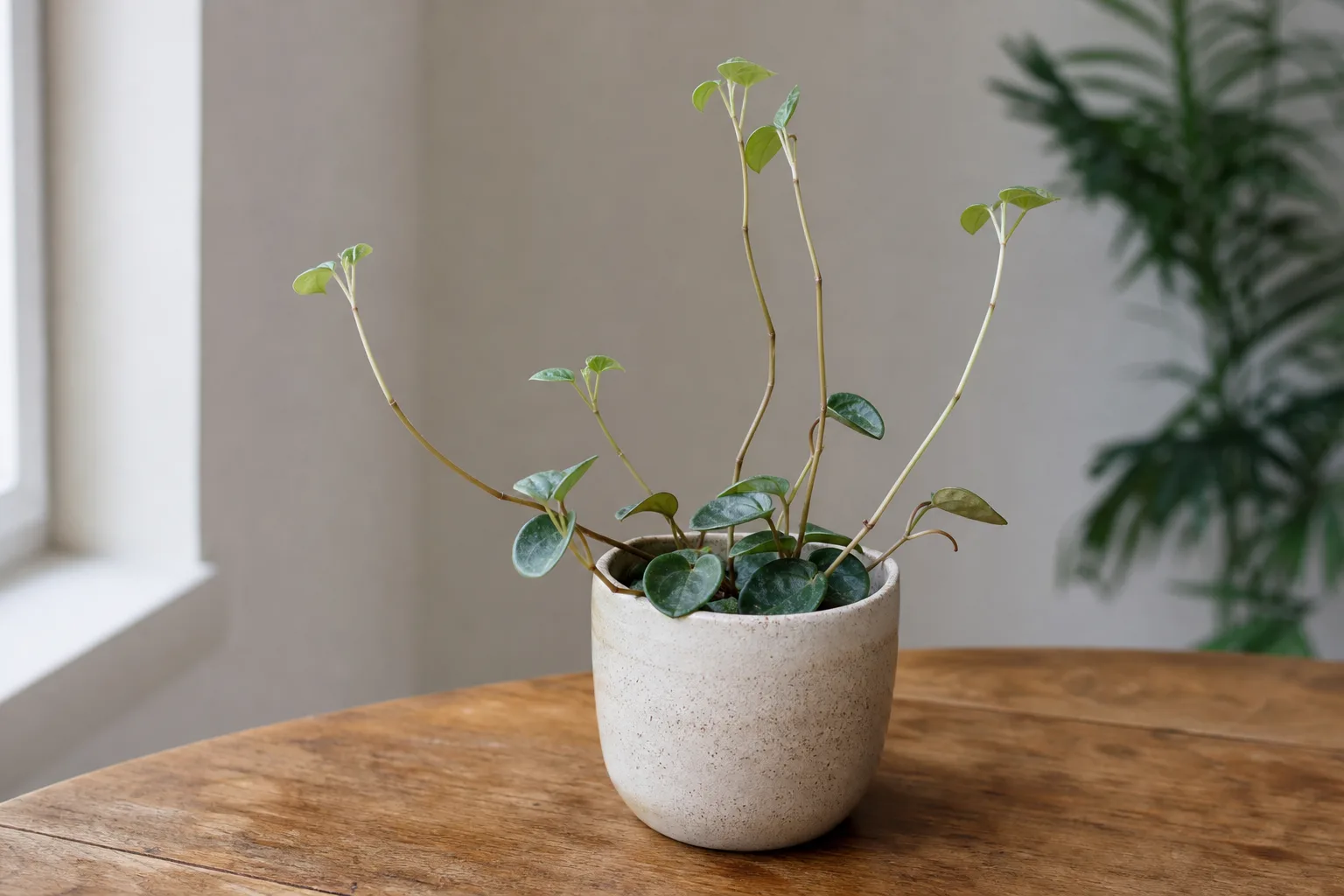
Leggy Growth on Peperomia: Causes, Checks & Fixes
This guide covers leggy growth on Peperomia. See also the general Leggy Growth guide, watering, and light pages for this plant.
Leggy Growth on Peperomia: Causes, Checks & Fixes
Quick answer
Peperomia (Peperomia spp.) is marketed as an easy low-light houseplant, and that reputation is partly why leggy plants show up on interior shelves months after purchase. The genus carries thick, semi-succulent leaves and shallow roots built for filtered tropical brightness-not a dark hallway. When light falls short, stems stretch between nodes in classic etiolation, new leaves shrink and fade, and the whole plant leans toward the nearest window.
First step: move the pot to bright indirect light today and hold your watering rhythm steady for one week so you can read the plant’s response. An east windowsill, a bright north exposure, or a filtered spot one to three feet from south or west glass is the usual target-full placement detail lives on the not-enough-light guide.
This page covers recovering shape after stretch: comparing internode spacing, timing optional pruning, and accepting that old bare stem sections never shorten. If your main question is whether the current spot is bright enough-or you need grow-light specs-start with not enough light on Peperomia and the Peperomia light guide instead.
Original symptom photos (wide internodes with faded P. argyreia striping vs. compact crown after light upgrade) are pending for a future update.
Leggy growth vs. not enough light - which guide to read
| What you see most | Start here | Why |
|---|---|---|
| Already stretched stems; want reshape and pruning timing | This page (leggy growth) | Post-stretch recovery workflow |
| Dim room placement; need grow lights or two-week light test | Not enough light | Proactive light diagnosis |
| Window direction, scorch limits, warning signs before stretch | Peperomia light guide | Full placement reference |
| Wet soil, yellow leaves, soft crown in a dark corner | Overwatering or Root rot | Root failure layered on dim light |
| Almost no new tissue for months | Slow growth | Stall, not just stretch |
Both pages often apply to the same plant. Fix placement first when color fade and window lean dominate; return here for internode comparison and optional pruning once brighter growth proves the plant has energy to branch.
What leggy growth looks like on Peperomia
Leggy Peperomia is a structure change, not a single damaged leaf. Healthy plants hold a compact crown with leaves spaced closely along fleshy stems. Etiolation opens that silhouette.
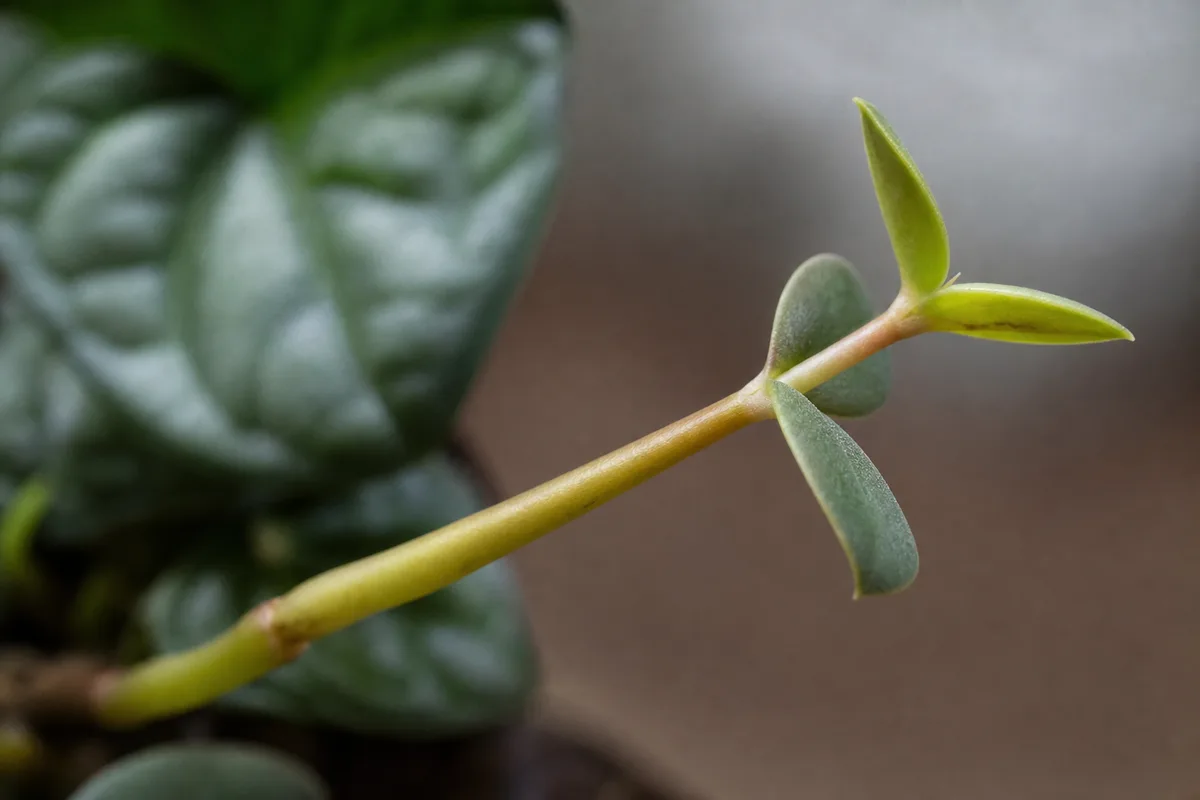
Leggy Growth symptoms on Peperomia - compare with healthy tissue on the same plant.
Typical leggy-growth signs:
- Wide gaps between leaf pairs on new stem sections-internodes longer than older compact growth near the crown
- Smaller, paler, or dull new foliage compared with mature leaves lower on the plant
- Loss of variegation or patterning on cultivars such as Peperomia argyreia (watermelon peperomia) or variegated P. obtusifolia before full stretch is obvious
- One-sided lean toward glass, a lamp, or the brightest corner of the room
- Bare lower stems where older leaves dropped and no replacements formed in dim conditions
- Top-heavy or wispy upright form on species sold as bushy desk plants-especially P. polybotrya (raindrop peperomia) and compact P. caperata types
- Long bare vines on trailing forms such as P. scandens (cupid peperomia), P. rotundifolia, or P. prostrata (string of turtles) when a hanging basket sat too far from glass
Leggy stretch is also different from drooping leaves on Peperomia: drooping means stems and petioles sag downward while spacing may stay normal. If internodes are long and stems still reach upward toward light, you are looking at etiolation-not a watering emergency (though wet soil in a dim corner can stack on top).
Why Peperomia gets leggy growth
Easy-houseplant placement on dim shelves
Peperomia tolerates medium indirect light better than many trending tropicals, which is why it survives offices and bookshelves that would stall a fiddle-leaf fig. Clemson HGIC notes peperomia can tolerate somewhat lower light near a large north-facing window-tolerance is not preference. The RHS warns that too much shade leads to poor, straggly growth. A pot six feet from a sunny window wall often lives in medium or low light even when the room feels bright to human eyes.
Light-water mismatch on shallow roots
In bright indirect light, peperomia transpires steadily and mix dries on a predictable rhythm. Drop the same plant into dim light without cutting water, and soil stays wet longer even when the surface looks dry. That combination-stretch plus soggy mix-is a common path to overwatering stress and root rot on this genus. Leggy growth and wet soil in a dark corner need both light correction and drier watering, not fertilizer.
Variegated cultivars stretch sooner
Variegated and patterned leaves often need more light than solid-green forms because less chlorophyll covers each leaf area. Watermelon peperomia may lose silver striping weeks before stems look dramatically long. Solid-green P. obtusifolia can hide stretch longer-which is why two plants on the same shelf may look fine and leggy at different rates.
Seasonal daylight without moving the pot
Short winter days reduce intensity even when the pot never moved. A peperomia that held compact form through summer may add long internodes from autumn through early spring in the same interior spot. Seasonal dimming is still etiolation even without a location change.
Greenhouse compact, home leggy
Shop plants often grew under brighter greenhouse or nursery light than your interior shelf provides. The stretch you see two to three months after purchase is frequently acclimation to a darker room-not a sudden disease. Compare new internode spacing against the plant’s form at purchase, not against the bushy photo on the tag.
How to confirm the cause
Work through this Peperomia-specific checklist before you repot, fertilize, or hard-prune:
- Internode spacing - Measure the gap between the two newest leaf pairs on the longest stem. Compare with compact sections lower on the same stem or in photos from purchase. Widening gaps confirm ongoing stretch.
- Light at the leaf level - Stand where the pot sits at midday. A soft diffuse shadow on your hand means usable indirect light; no shadow suggests the dim placement driving etiolation. Light intensity drops quickly with distance from glass.
- Variegation check - On patterned cultivars, fading silver, cream, or ripple texture often precedes obvious stem length. Solid-green types may only show smaller new leaves at first.
- Soil moisture rhythm - Stick a finger into the top of the mix. If it stays damp two weeks after watering while stems stretch, metabolism is too slow for your current schedule-often because light is low. Firm roots and normal dry-down support a light-first recovery path.
- Lean direction - Strong lean toward one window or lamp confirms the plant is actively seeking photons. Even stretch on the shaded side can mean harsh direct sun on the window-facing half-read the light guide before moving deeper into shade.
- Root sanity - Lift the pot. Heavy, sour-smelling mix with soft stems at the base is rot risk, not pure legginess. Inspect roots if decline continues after the mix dries.
Confirmation test: Move to brighter indirect light for two to three weeks without other major changes. If the next leaf set emerges closer together and richer in color, light was the limiter. Placement detail and grow-light hours are on the not-enough-light guide.
Light-first vs. root-inspect vs. prune timing
| Symptom cluster | Internode spacing | Soil / crown | Urgency | Next step |
|---|---|---|---|---|
| Pure etiolation | Wide on new growth; firm stems | Mix dries slowly in dim room; crown firm | Low - shape problem | Move to bright indirect light; compare spacing on third new leaf |
| Active low light | Every new leaf wider spaced | Lean toward one window | Medium - fix before stretch worsens | Relocate or add grow light per not-enough-light; hold pruning |
| Dim + wet rot stack | Any spacing | Sour soil, mushy base, yellow lower leaves | High - same week | Light + dry-down together; root rot if crown softens |
| Light fixed, old stretch remains | Old internodes long; new leaves compact | Normal dry-down after move | Low - cosmetic reshape | Prune above nodes once compact flush appears |
| Three-week light test failed | New leaves still pale and wide-spaced | Firm tissue | Medium | Re-measure window distance, add supplemental LED, then inspect roots |
| Trailing bare vines | Long gaps between tiny leaves on hanging stems | Often firm if not overwatered | Low–medium | Brighten first; shorten vines and root cuttings after compact side growth |
First fix: move to bright indirect light
Relocate the pot to the brightest indirect location you can sustain-one change only.
For most homes that means an east windowsill, a bright north sill in a light room, or three to five feet back from filtered south or west glass. Do not simultaneously repot, fertilize, soak heavily, or hard-prune on day one. Peperomia already stalls when stressed; stacking variables hides whether light was the real issue.
If the plant lived in deep shade for months, acclimate over seven to fourteen days rather than jumping onto unfiltered west afternoon sun. Fleshy leaves scorch when light intensity jumps faster than the plant can adapt-start behind a sheer curtain or farther from glass, then move closer every few days while watching for bleached patches.
When natural light is insufficient, add a full-spectrum LED grow light per the not-enough-light guide. Combine artificial light with the best window you have when possible.
Step-by-step recovery
After the first move to brighter indirect light, follow this order:
- Hold watering steady for one week - Note how fast the top of the mix dries compared with the old spot. Brighter light usually means faster dry-down; dim corners meant slower use. Adjust only after you see a new rhythm-let the top dry before the next soak.
- Rotate the pot a quarter turn weekly - Stems lean quickly toward glass. Even exposure helps new growth fill around the crown instead of only on one side.
- Wipe dust from fleshy leaves monthly - Clean foliage intercepts more usable light than dusty matte surfaces.
- Compare internode spacing on the third new leaf - Success is tighter spacing and firmer, correctly colored new tissue-not old stems magically shrinking.
- Prune stretched stems only after compact new growth appears - Cut just above a node where a healthy leaf attaches, removing the bare tip while leaving nodes that can branch. Clemson HGIC recommends pruning a stem above a leaf node so the plant branches. On trailing types (P. scandens, P. rotundifolia, P. serpens), shorten long bare vines in stages-remove no more than one-third of living length per session-and root the cuttings in water or moist mix as backup plants. Upright bushy forms (P. argyreia, P. polybotrya, P. caperata) respond better to tip pruning above a node than to stubbing bare stems to soil level before new buds break.
- Shorten severely bare upright stems in stages - A second trim two to three weeks later is safer than one aggressive chop on a stressed indoor plant.
- Escalate if wet soil persists - Yellow lower leaves plus heavy pot weight in the brighter spot may mean root damage from the dim-corner phase. See overwatering and root rot if the crown softens.
Make one major change at a time when diagnosing. Light first when stretch and lean dominate; root inspection first when wet soil and softness dominate.
Recovery timeline
Expect the first noticeably compact leaf within two to three weeks after a meaningful light upgrade in warm room conditions. A second leaf pair with tight spacing confirms the trend.
Old stretched internodes never shorten. Bare stem sections stay long permanently; judge success by the next leaves and any side shoots emerging lower on the plant-not by old tissue reverting to a shop-perfect silhouette.
Variegation recovery on patterned cultivars often lags behind spacing improvement. Silver striping on P. argyreia or cream edges on variegated P. obtusifolia may return on the second or third compact leaf after light correction-not on the first. If patterning stays dull after four to six weeks in clearly brighter indirect light, the spot may still be marginal; revisit the not-enough-light guide before pruning again.
If new growth stays pale and widely spaced after three weeks in a clearly brighter spot, revisit placement with the not-enough-light guide or add supplemental lighting before pruning again. Pruning cannot substitute for photosynthesis.
Severe stretch accumulated over many months may need two to three light seasons plus staged pruning before the plant looks bushy again-especially on upright cultivars that show every centimeter of reach.
Lookalike symptoms to rule out
Not enough light (placement phase) - You are still deciding whether the current spot is adequate, or you need grow-light wattage and a two-week confirmation test. See not enough light on Peperomia.
Overwatering in a dim corner - Yellow lower leaves, soggy mix, soft stem base, fungus gnats. Stretch can coexist, but root trouble needs separate treatment. Wet soil with decline after light correction points here-not more fertilizer.
Root rot - Sour smell, mushy crown, blackened roots on inspection. Escalate to the root rot guide if stems collapse at the base while mix stays damp.
Too much direct sun - Bleached, papery, or translucent patches on leaves facing the window-not long internodes reaching toward it. Move back or filter harsh afternoon rays per the light guide.
Slow growth - Little or no new tissue for months in warm weather. Different from vigorous upward reach with wide spacing. See slow growth on Peperomia.
Drooping leaves - Stems hang limp while spacing may stay normal. Check soil moisture first on the drooping leaves guide.
What not to do
Do not fertilize a stretched peperomia hoping for bushiness-feed only after compact new growth returns in bright light, and keep doses light on this slow-growing genus.
Do not hard-prune bare stems to stubs before new buds break; you may remove the only active growing points left.
Do not relocate a shade-adapted plant to harsh unfiltered south-window midsummer sun the same day you trim-acclimate over one to two weeks to avoid scorch on fleshy leaves.
Do not stack repotting, heavy pruning, and pesticide on the same day. Give the plant one stress at a time.
Do not keep watering on the old calendar when soil stays wet longer in a dim corner-that deepens root stress while stems stretch.
How to prevent leggy growth next time
Default to bright indirect light as the baseline-not “anywhere the pot fits the décor.” The Peperomia light guide covers east-window defaults, sheer curtains on south glass, and scorch warning signs before stretch starts.
Rotate the pot weekly so all sides receive even exposure and stems do not lean into a one-sided wispy form.
Reassess each autumn when daylight shortens; add grow lights before internodes lengthen on interior shelves.
Match watering to light level-dimmer spots need longer dry-down between soaks. See the watering guide for finger-depth checks by species thickness.
Buy compact, but plan to move - Shop plants often grew under brighter greenhouse light. The stretch you see at home is frequently acclimation to a darker shelf, not a sudden disease.
When to worry
Pure legginess is a shape and placement problem-your peperomia is not dying because stems look long.
Escalate when:
- Wet soil, yellow leaves, and a soft crown suggest root trouble layered on months in a dim corner
- The plant topples from extreme top-heavy stretch on a thin upright stem
- No tighter internodes after three to four weeks in a clearly brighter location-revisit light specs, roots, or pests
- Sour smell or blackened roots appear during recovery-pause pruning and address rot first
Gradual stretch over weeks is fixable with light and staged reshaping-no panic, but do not wait until lower stems are completely bare before you move the pot.
Related Peperomia guides
Use this page as the structural recovery hub after you confirm etiolation; branch to sibling guides by symptom:
- Peperomia overview - species hub, pet safety, and baseline care
- Not enough light - placement trial and grow-light specs before bare stems form
- Light - window direction, scorch limits, and long-term placement
- Overwatering - wet-soil stress stacked with slow dry-down in dim rooms
- Root rot - mushy crown when dim corners keep mix wet too long
- Slow growth - stall with little new tissue, not vigorous upward reach
- Drooping leaves - limp stems with normal node spacing
- Watering - matching drinks to brighter post-recovery dry-down
Conclusion
Leggy Peperomia is a triage sequence, not one fix for every stretched stem. If light is still marginal, move the pot and run the two-to-three-week internode comparison before any scissors touch the plant-pruning in dim corners only re-stretches. If light is fixed but old internodes stay long, prune above nodes on upright forms or shorten trailing vines in stages and root cuttings for backup density; stretched tissue never compacts. If wet soil, sour smell, or a soft crown accompany stretch in a dark room, fix light and dry-down the same week and follow the root rot workflow-shape pruning alone will not save rotting roots. Judge success on tight new leaves at the crown, not on old bare internodes filling in along their length.
FAQs
How can I confirm leggy growth on Peperomia?
Measure the gap between the newest leaf pairs on an upright stem. Gaps wider than older compact growth near the crown, combined with lean toward glass and smaller or faded new leaves, confirm etiolation. If soil stays wet for weeks while stems stretch, low light is slowing water use-pair light correction with drier watering.
What should I check first on a leggy Peperomia?
Note window distance and direction, then compare newest leaf size and internode length to mature foliage lower on the stem. Feel whether the pot is heavy from chronically wet mix-a dim corner plus unchanged watering is a common rot setup on shallow peperomia roots. Fix placement before pruning when stretch and lean dominate.
Will stretched Peperomia stems shorten after more light?
No. Old elongated internodes stay long permanently. After two to three weeks in brighter indirect light, compact new growth at the crown proves the fix is working. Prune above a node only once that compact flush appears.
When is leggy growth urgent on Peperomia?
Stretch alone is cosmetic. Act quickly when wet soil, yellow lower leaves, and a soft crown appear together in a dark room-that is root stress layered on low light. Sour smell or collapsing stems at the base while mix stays damp needs the root-rot protocol the same week.
How do I prevent leggy Peperomia next time?
Place where bright indirect light reaches the crown most of the day, rotate weekly, reassess each autumn, and add supplemental LEDs in dark rooms. Match watering to slower dry-down in dimmer spots.
Is leggy Peperomia the same as drooping or slow growth?
No. Leggy means long internodes with stems still reaching toward light-etiolation. Drooping means limp sag with spacing often normal; check soil moisture first. Slow growth means little or no new tissue for months, not vigorous upward stretch. All three can share low light as a root cause, but the first fix path differs-use the decision table above to choose light-first, root-inspect, or reshape-after-compact-growth.
Related tool
Use the Plant Problem Diagnosis Tool to narrow causes for leggy growth on this plant before changing multiple variables at once.